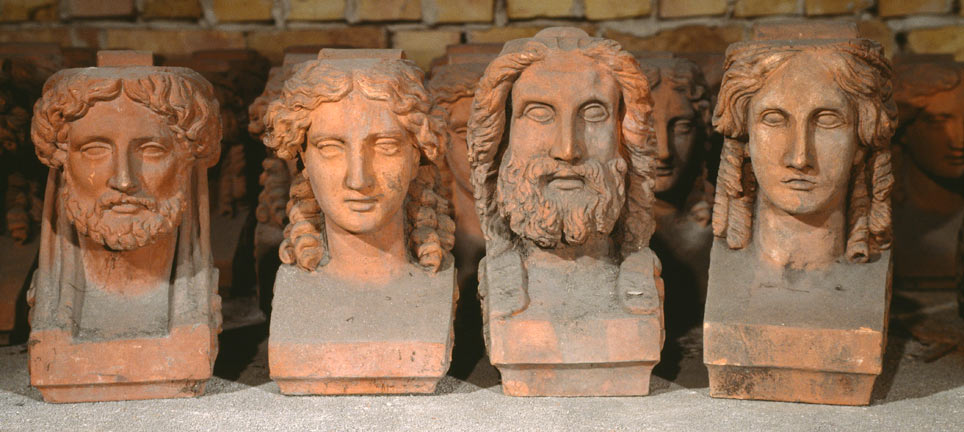
In 2016, the Bundestag approved the reconstruction of Berlin’s Bauakademie. Joachim Brand, Director of the Art Library of the State Museums, explains why this decision is both right and important, what Schinkel’s concept of a ‘factory of thought and creativity’ might look like in the 21st century, and what role the SPK could play in the new architecture centre.
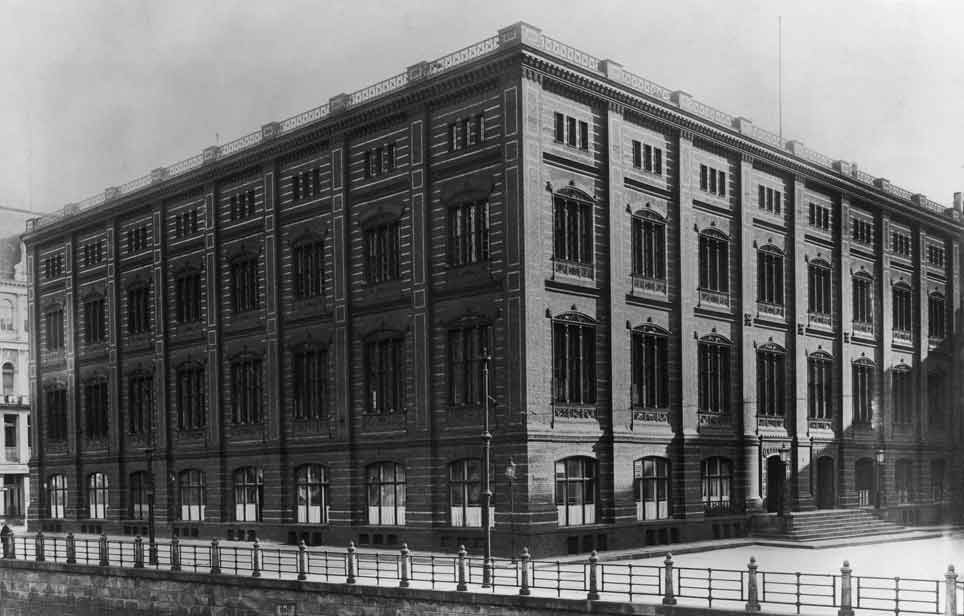
Completed in 1836, the Bauakademie served as Karl Friedrich Schinkel’s home, workplace and his masterpiece as Prussia’s state architect. As a vehicle for innovative technical and design ideas, the revolutionary ‘red box’ quickly became an iconic symbol of the dawning bourgeois era, shaping Berlin’s cityscape.
The Bauakademie anticipated the aesthetics and building techniques of Modernism in terms of materials, standardisation, grids and seriality. It represented both the architectural gaze into the past and the future at a single point on the timeline, a point with which one could associate the beginning of modern architecture in Prussia.
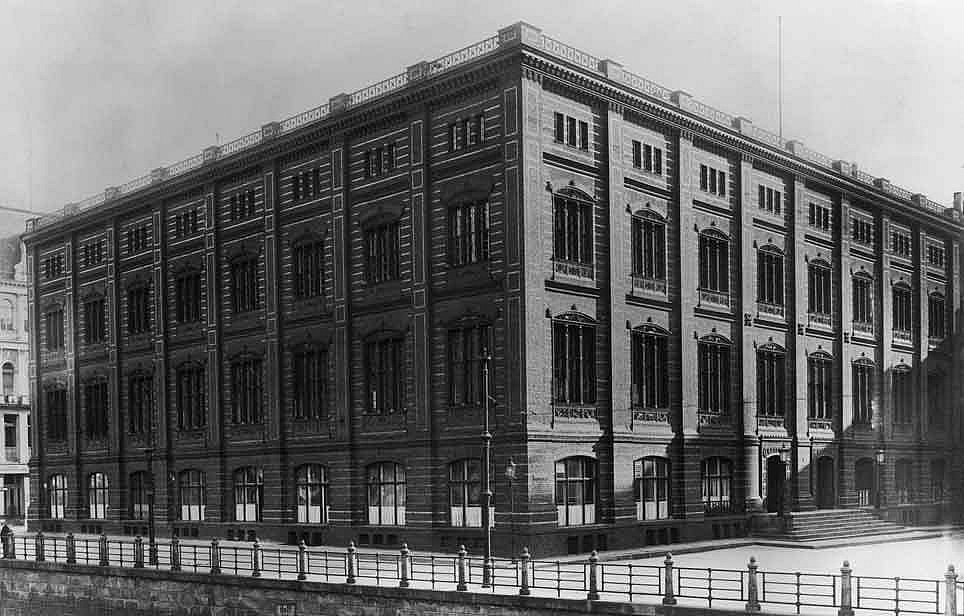
Photo: The Bauakademie on Schinkelplatz in 1890 © bpk
At the same time, the Bauakademie was, alongside the opera house, the library, the university and the (Altes) Museum, the keystone of Berlin-Mitte’s educational landscape. It marked the culmination of a century-long process of establishing the bourgeois state as an educational state, a concept that had become Prussia’s raison d’état during the Napoleonic Wars. In 1841, Frederick William IV adopted the educational ideas of Weimar Classicism and the Humboldt brothers in his famous dictum to ‘transform the entire Spree Island behind the museums into a sanctuary for art and science’. During the ‘Schinkel era’, cultivating an appreciation of beauty and the pursuit of education were the citizen’s most noble duties. The path to freedom led through the realm of the arts and sciences. Through Karl Friedrich Schinkel’s aesthetic refinement and completion of central Berlin, the state of Prussia itself became a work of art, and an area unique in its spatial and intellectual density was created.
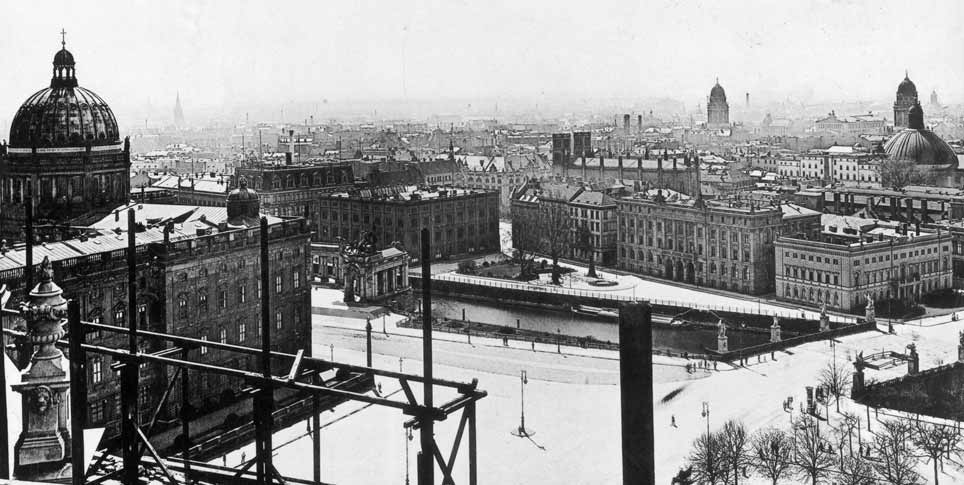
Between the Lustgarten and the Brandenburg Gate, the Humboldt Forum and the Charité, science and research, opera and museums, education and the appreciation of art, and cultures of text, image and object will once again come together in the near future within the resurrected urban landscape of the early 19th century. The rebuilt Bauakademie, together with Museum Island and the Humboldt Forum, will play a decisive role in shaping Berlin’s new centre and, as a cultural showcase, will serve as a calling card for the capital and the state. The external appearance of the buildings and the layout of the squares will largely be restored to the state planned and implemented by Schinkel. To ensure that this new centre of Berlin does not remain a mere historicist backdrop, but that Museum Island, the Humboldt Forum and the New Bauakademie form an interconnected system, considerable effort is still required on the part of the institutions responsible for them.
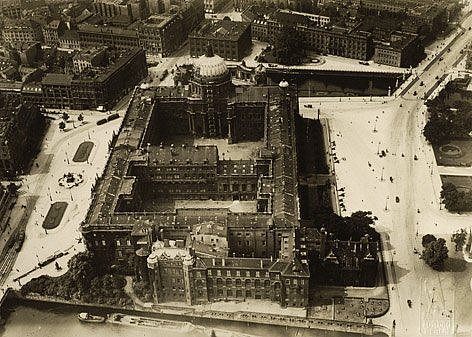
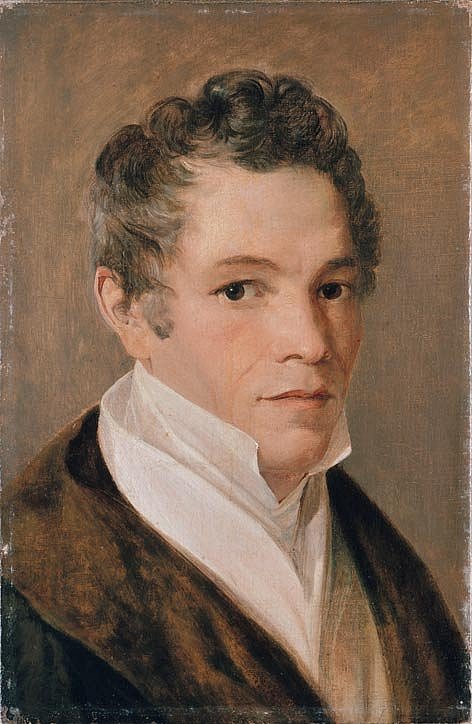
Karl Friedrich Schinkel’s concept of a ‘factory of thought and creativity’—which brings together science and art, technology and economics, research and teaching, architectural theory and building practice under the umbrella of architecture in a forward-looking way—can realise its full potential at the Neue Bauakademie and promote the education of all citizens in every aspect of architecture and building.
At the same time, the Neue Bauakademie represents Berlin’s extraordinary architectural history, which stands out even by global standards. There is scarcely any other place where such a wealth of important buildings by top-class architects can be viewed. They reflect the defining political forces and creative ideas of the past centuries: from Prussian Baroque through early Modernism to the totalitarian regimes of the 20th century and the new beginning following reunification. The Neue Bauakademie thus becomes the ideal starting point for people from all over the world to experience the fascination of architecture in Berlin.
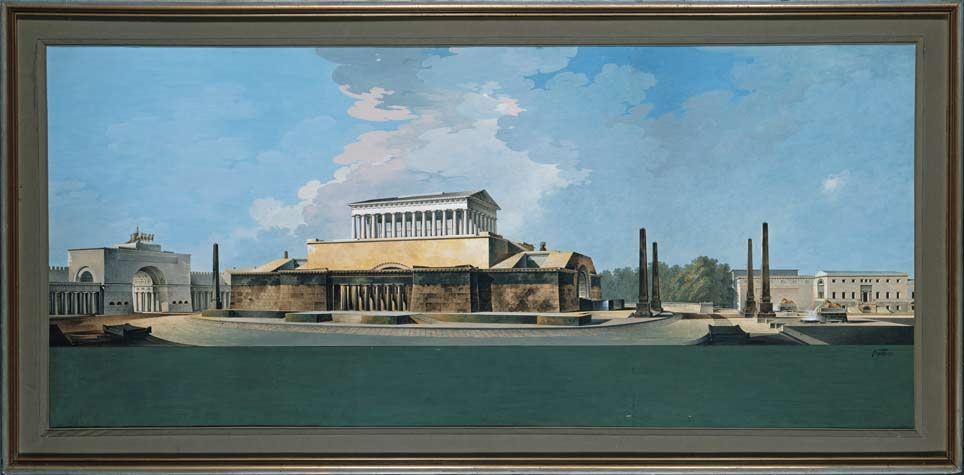
The SPK preserves, within its facilities, the extensive artistic estate of Karl Friedrich Schinkel, as well as comprehensive archival materials and written sources relating to his life and work. It aims to incorporate this legacy of Prussia’s greatest architect into the programme work of the Neue Bauakademie. Schinkel is not only a figure of relevance to architectural historians, but has also always been a magnet for the public.
The motto “as much Schinkel as possible”, repeatedly expressed in the dialogue forums, therefore applies not only to the building’s design but also to its appeal to Berliners and the many tourists. Schinkel can be one of the anchors with which the SPK and the other institutions supporting the Bauakademie and the Humboldt Forum can succeed in developing the centre of Berlin into a democratic landscape of knowledge and education, in which the Prussian educational tradition forms a living foundation for a rich and varied programme of learning, teaching and dialogue opportunities.
Schinkel could be one of the cornerstones that enables the SPK and the other institutions supporting the Bauakademie and the Humboldt Forum to transform the heart of Berlin into a democratic landscape of knowledge and education, in which the Prussian educational tradition forms a living foundation for a rich and varied programme of learning, teaching and dialogue.
The Prussian Cultural Heritage Foundation aims to contribute to a collaborative plan for the use of the Neue Bauakademie. It sees the focus of its expertise in the realisation of the permanent exhibition on Karl Friedrich Schinkel, participation in temporary exhibition projects, and programmatic links with Museum Island and the Humboldt Forum. The SPK stands for openness and connectivity and is committed to ensuring that the Neue Bauakademie does not become a place of institutional and disciplinary boundaries, but rather to establishing an open, participatory architectural forum that helps to overcome these boundaries. The Neue Bauakademie as a platform is an experiment and an opportunity to test a new, contemporary type of exhibition and event venue in the heart of Berlin.