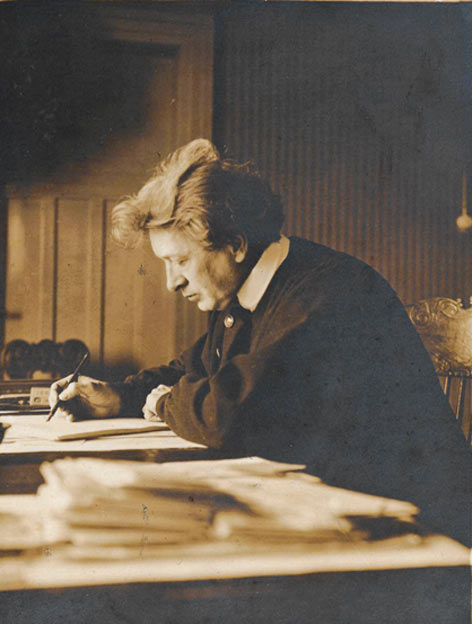
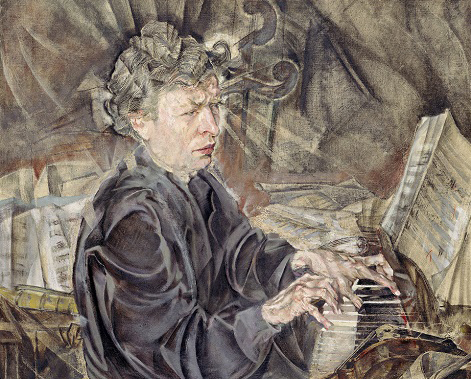
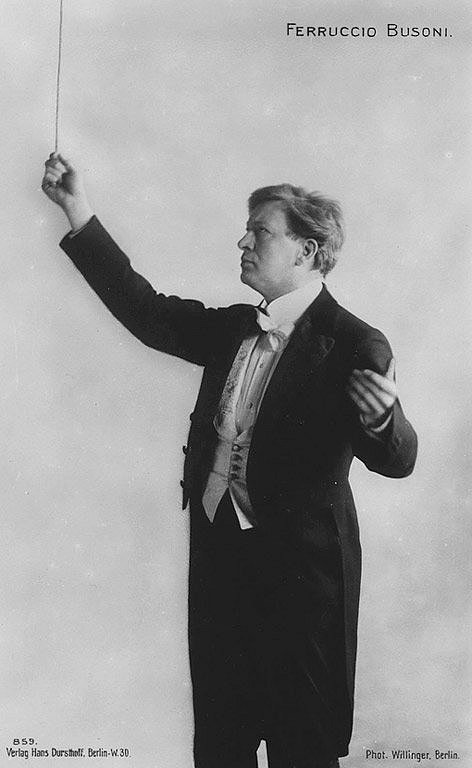
With his unconventional music, Ferruccio Busoni opened new doors – whilst demanding a great deal from performers. Yet his audience tended to revere him as a virtuoso pianist – a label he resisted throughout his life. Berlin-based pianist Holger Groschopp knows just how to bring this master of two faces back to life today.
Mr Groschopp, what made Busoni a virtuoso?
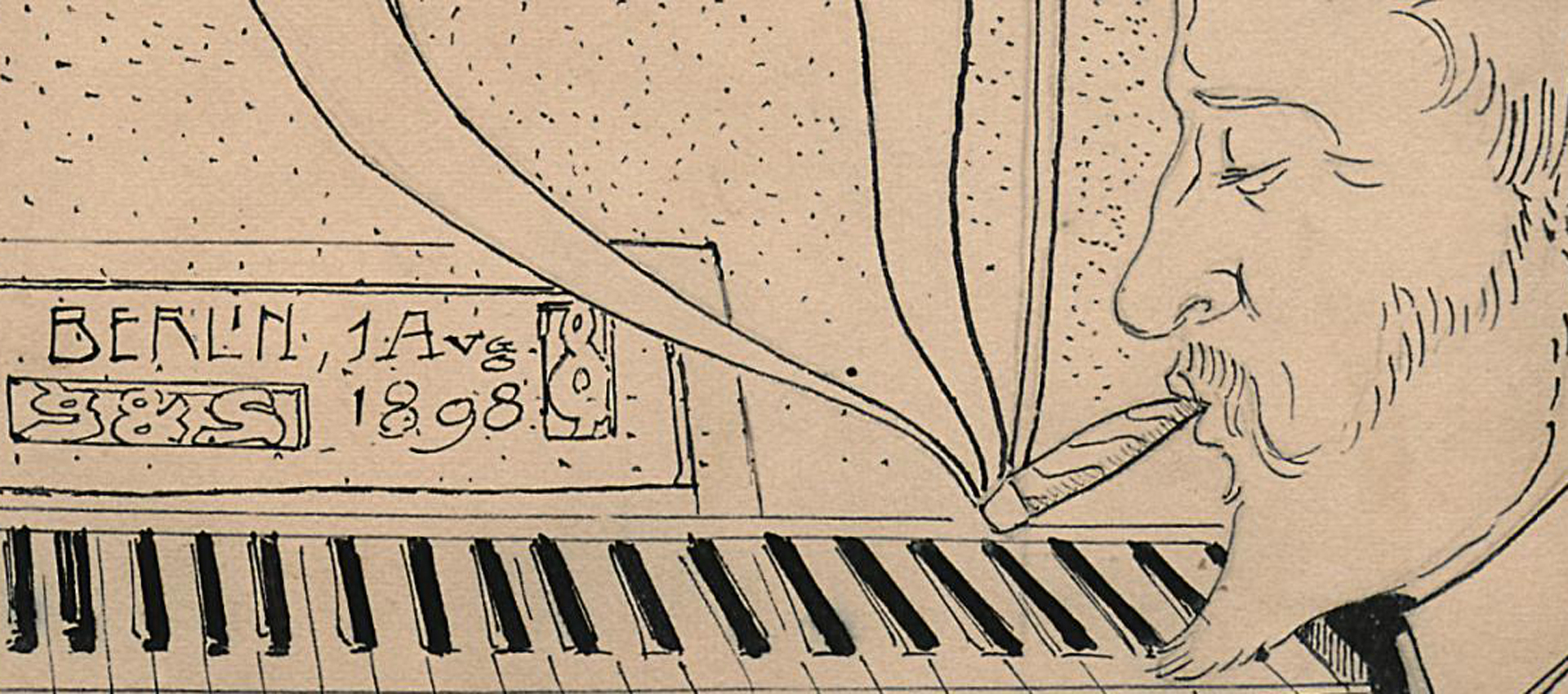
Very few audio recordings of Busoni as a pianist have survived that give us any idea of how he actually played. If one is to believe contemporary accounts, his performances were of the highest perfection, but not for everyone. On the one hand, Busoni played very subjectively, yet on the other he also maintained a certain distance. He was sometimes accused of playing as if behind a curtain. He did not pander to the audience.
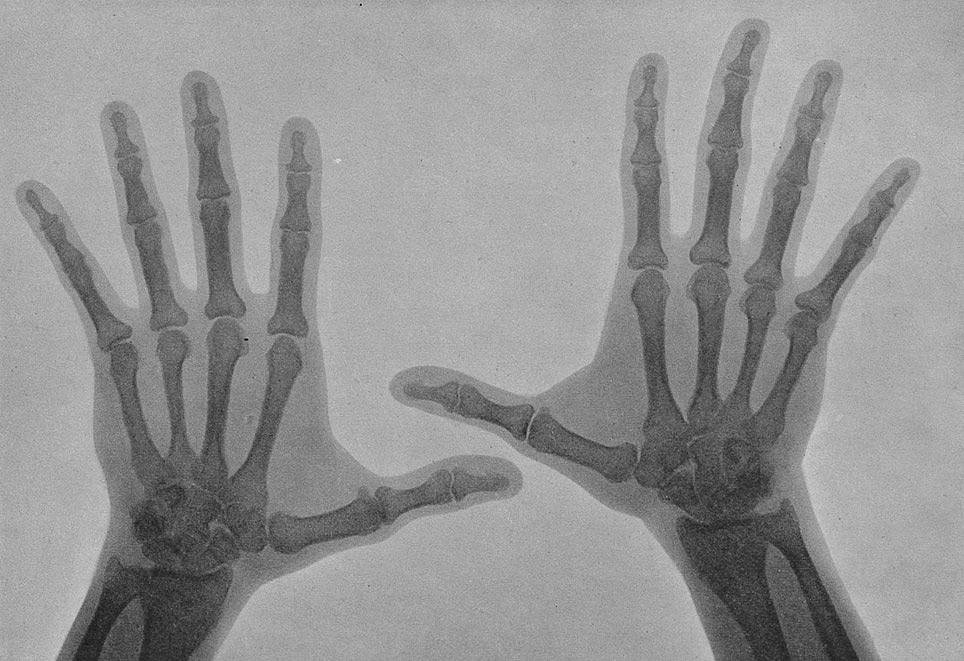
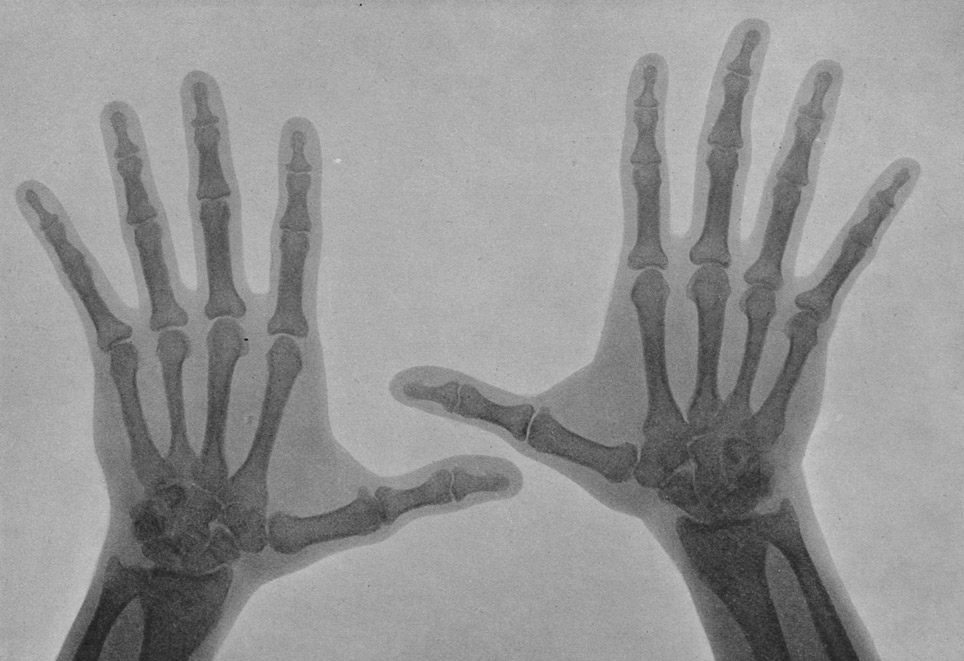
X-ray of Ferruccio Busoni’s hands
Busoni was also famous for his piano arrangements of works by Johann Sebastian Bach. In the margin of one of his Bach arrangements, he noted: “The performance of a polyphonic six-part movement represents more or less the absolute limit of what is possible on the pianoforte.” Busoni was therefore well aware of what he was asking of the pianist. How does one deal with this?
One naturally asks oneself: should one play as Busoni himself would presumably have played Bach? One cannot simply answer “yes” to that, for he himself often deviated from what he had actually written down. Busoni simply had that freedom. But that does not mean that we must do the same today. When in doubt, the written word prevails – as the lawyers say.
How do you approach Busoni’s own compositions?
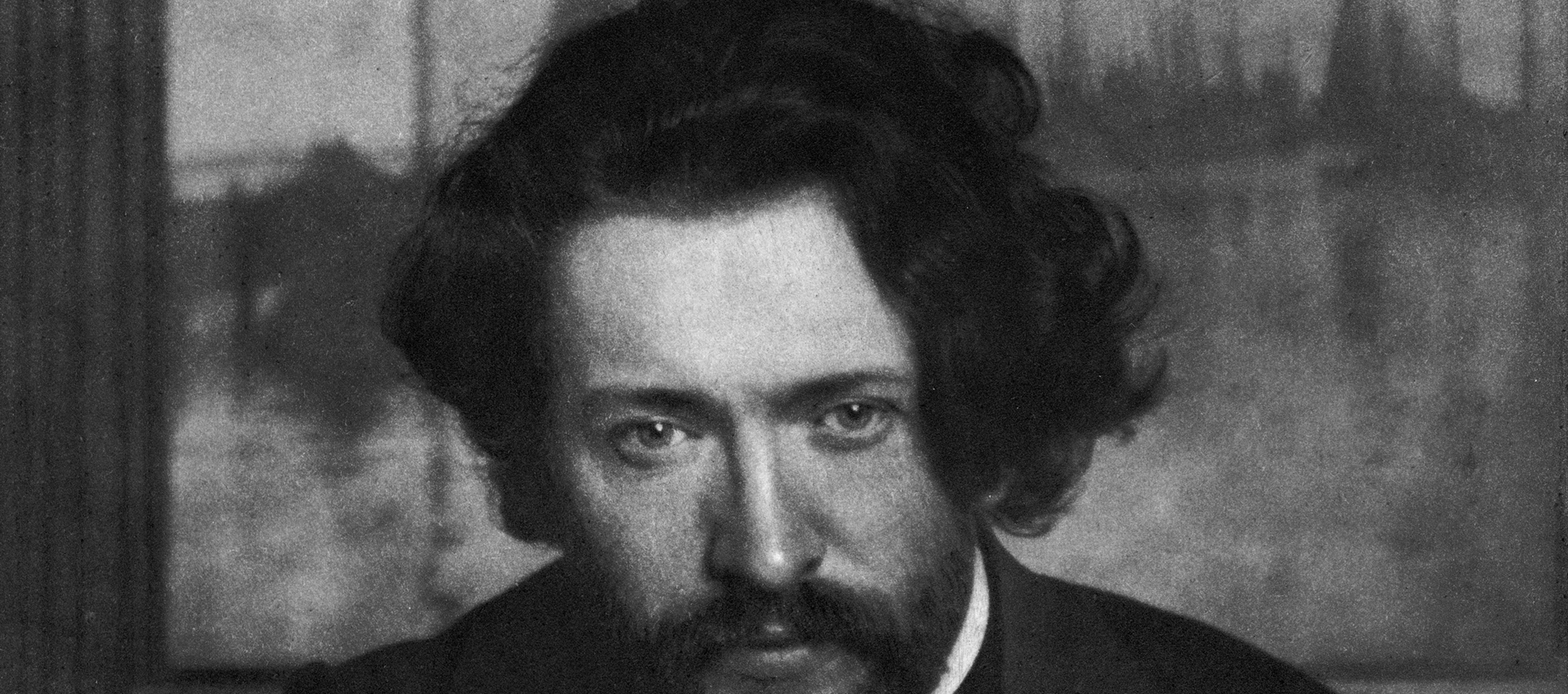
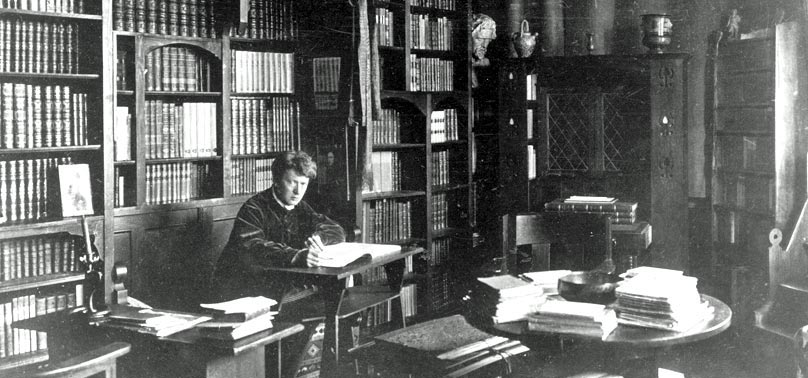
I believe that if you want to understand them, you have to engage with Busoni’s personality. Busoni was a man with an extremely wide artistic network and was in contact with many of the great minds of his time – not just musicians. He taught and wrote theoretical and aesthetic treatises. If you ignore that and concentrate solely on his pieces, particularly those from 1907 onwards, you sometimes find yourself a bit at a loss.
Why at a loss?
From this point onwards, his compositions become very idiosyncratic, as he begins to break with the academic rules of music. Busoni wanted music to free itself from all constraints. At the same time, however, he is not as iconoclastic or aggressively expressionistic as other greats of the early 20th century such as Prokofiev or Bartók. They wanted to release energy through movement. When their compositions seem incredibly shrill and dissonant, one understands why.
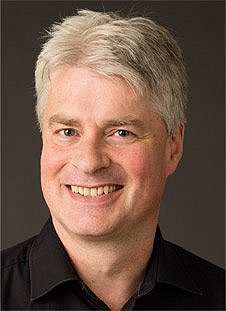
Holger Groschopp
The pianist Holger Groschopp studied at the Berlin University of the Arts with Georg Sava, as well as composition with Isang Yun and song interpretation with Aribert Reimann and Dietrich Fischer-Dieskau. His concert tours have taken him throughout Europe, West and East Asia, and to North and Central America. He has participated in many world premieres and first performances and is a regular guest in recording studios. He has close ties with the DSO Berlin. A key focus of his work is 20th-century music. To mark the exhibition “Busoni. Freedom for Music!”, he performed Busoni’s works in numerous special concerts.
So, does that mean one has to gradually come to terms with Busoni’s musical thinking?
Yes, because compared to some of his contemporaries, he seems less spectacular. But he wasn’t conventional either. That’s why his original works met with less interest from the public. Pianists who don’t delve into his life may intuitively get a lot right. But I believe that to learn to love his music, you have to look at the whole package, and that can then be very fascinating.
How did you yourself approach the ‘whole package’?
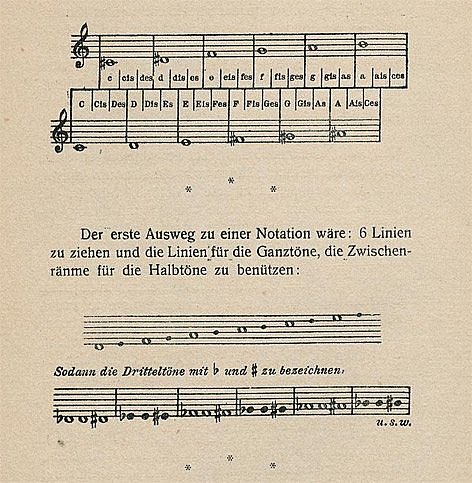
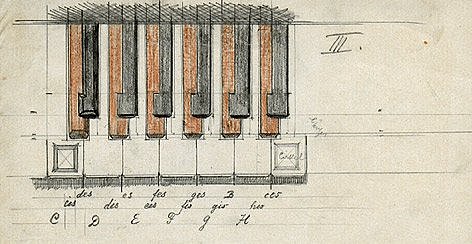
Busoni’s writings are, of course, central. There is a whole series of open letters, essays, reviews, etc. Most important, however, is his little book “Outline of a New Aesthetics of Music” (1906/1917). In it, he merely sketches out ideas for a new kind of music, but in doing so he attempts to open windows and develop visions. Busoni describes, for instance, third-tones and sixth-tones and imagines electronic musical instruments. Alongside this, however, his personal correspondence – Busoni was a tireless letter-writer – is of inestimable importance. Only recently, for example, has his correspondence with his publisher or with his wife, who was his first audience for new ideas, been published.
So a lecture rather than a love letter?
Not quite. In his correspondence with her, he simply reflected very intensely on everything that was going through his mind at the time. That is quite important. There are also many comments from his students.
Are there any major role models who help us understand him better?
Absolutely. As I said, Busoni engaged intensively with Bach and was also deeply influenced by Liszt. The latter is quite astonishing. The cliché, of course, is that Liszt was an outwardly seductive performer with plenty of tinkling and theatrical fanfare in his playing. That didn’t really fit with Busoni’s character. Nevertheless, he felt a deep kinship with Liszt. This was partly due to the incredible openness of Liszt’s work, for Liszt sought to express simply everything through the piano – visions of landscape, poetry, all manner of things. This boundlessness in Liszt’s compositions, in which he incorporated many forward-looking elements, appealed to Busoni.
Busoni is least rooted in the Romanticism of Schumann, Brahms, Chopin and Mendelssohn. Their style of musical emotional exuberance was not really his cup of tea. But I must immediately qualify that, for at least his early work and up to 1900 – there is a great deal of Brahms and Schumann in there. He absorbed a great deal, particularly in his younger years.
Where, then, lie the pitfalls in Busoni’s works?
His harmonic progressions, for example, are unusual: he often uses sounds that no longer correspond to the harmonies of the past, yet are not so dissonant as to give rise to a new sonic quality. It is a mild dissonance that glides or hovers between the harmonies. In his rhythm, however, he is mostly very regular, almost square. The melody is also easy to follow. But it doesn’t all fit together quite as it used to.
Generally speaking, it is difficult to pin Busoni down to a single style or characteristic. That is perhaps the problem. There are pieces by Debussy or Ravel or Prokofiev where you hear two bars and you know who wrote them. They have a definitive signature. Busoni never sought to develop a clearly defined style. He always wanted to find a new solution to a musical problem. And so there are works of his that boldly venture into musical uncharted territory and challenge the pianist. I am delighted that now – over 90 years after his death – Busoni’s compositions are once again receiving greater attention.
“BUSONI. Freedom for the Art of Music!”
The exhibition catalogue – a musician’s life in 14 essays
From 4 September 2016 to 8 January 2017, the exhibition at the Kunstbibliothek recounted 11 stages of Busoni’s life and work: from ‘child prodigy’ to ‘teacher’, from ‘travels’ to ‘exile’. It was organised by the Berlin State Library, the State Institute for Music Research and the Art Library of the Berlin State Museums. The catalogue expands on the exhibition and, for the first time, sheds light on Busoni’s universalist interest in the music, art and culture of his time.