The plaster casting workshop is a traditional institution – yet the very nature of its work, which involves preserving and reproducing cultural artefacts, means that new methods are quickly tested and implemented. Workshop manager Stefan Kramer has already overseen a number of digitisation projects. In this interview, he talks about his experiences and the convergence of old and new technologies.
The plaster casting workshop has already carried out a number of digitisation projects in the past – what was the last major project you worked on?
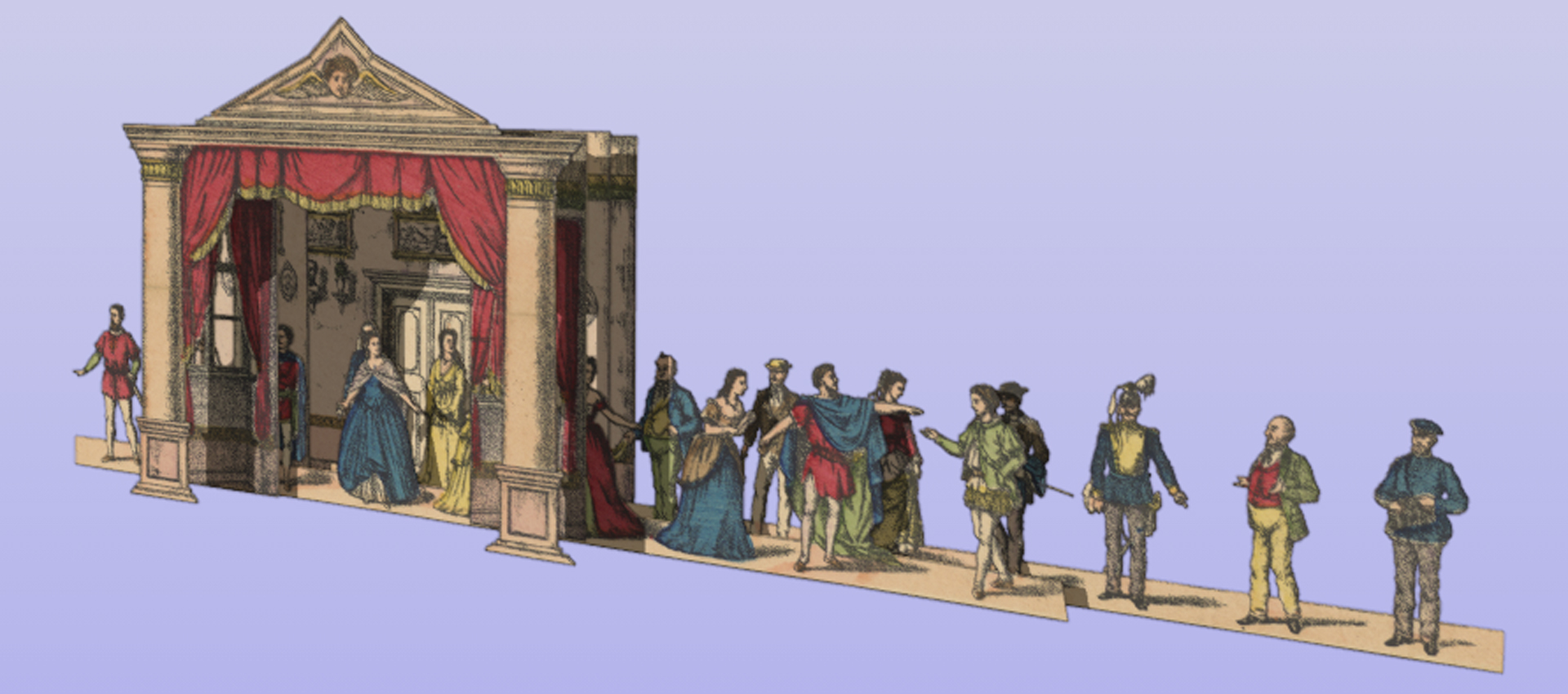
Stefan Kramer: We recently spent a considerable amount of time working on a project in collaboration with the 3D laboratory at the Institute of Mathematics at TU Berlin. The aim was to scan and reproduce the tea room figures from the former Berlin City Palace. All 14 figures were scanned and digitally printed in a smaller form. The process involved 3D printing with plaster foil, whereby a powder is hardened in layers using a liquid, and quite good surface finishes can be achieved. However, some printing marks do remain.
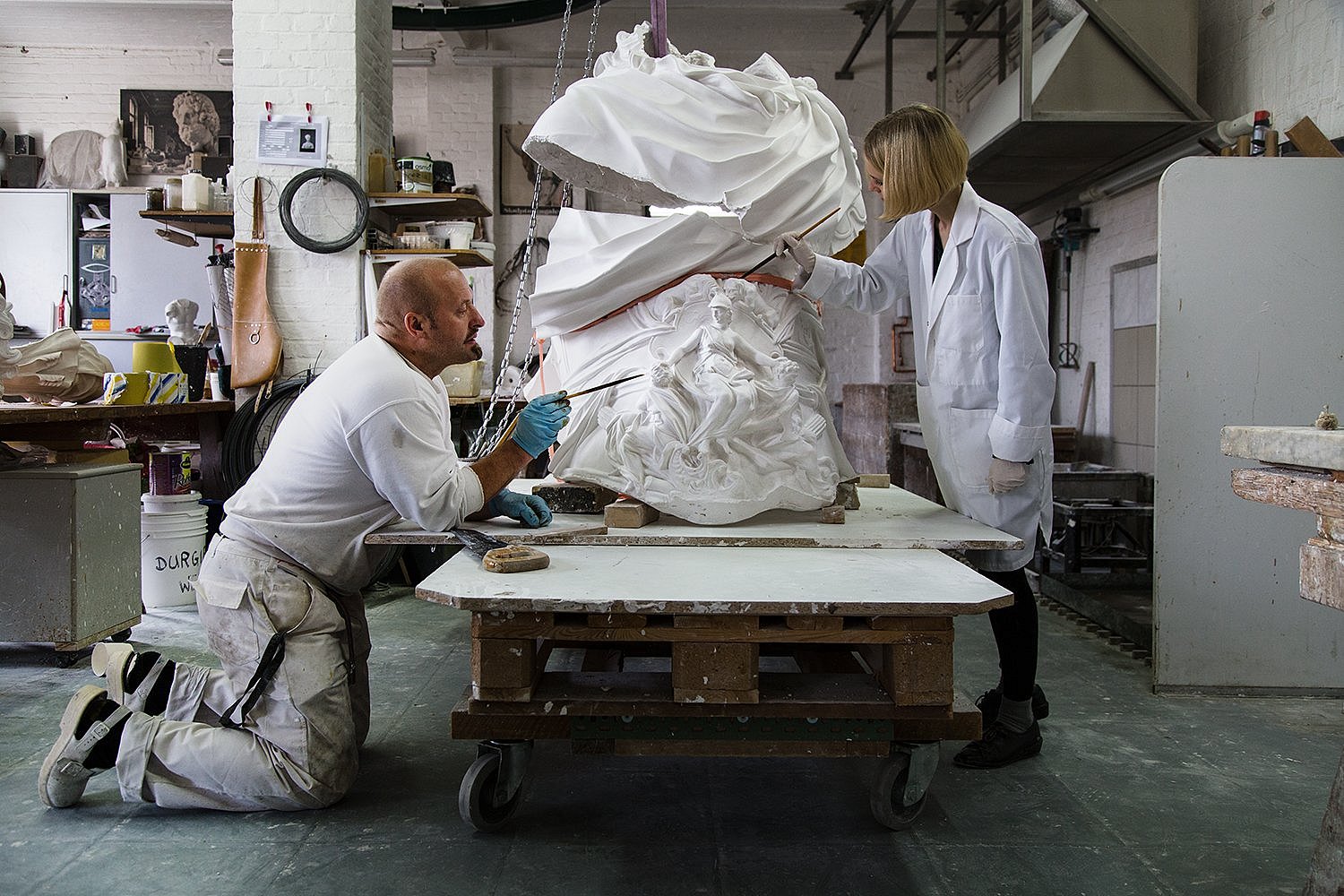
So the print marks have to be removed by hand?
Exactly. Although we’ve only produced test prints in a smaller format so far. The original figures are between 80 centimetres and one metre tall. But we can’t print them at full size, as the print bed of the printer at TU Berlin is only about 35 by 40 centimetres. So you can either only print smaller projects, or you print parts and then assemble them.
What is the specific objective of the project?
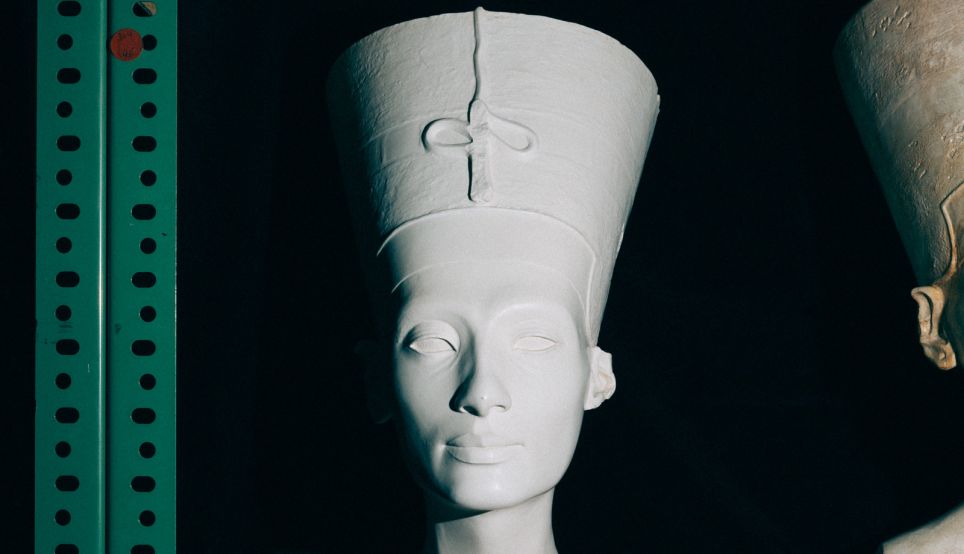
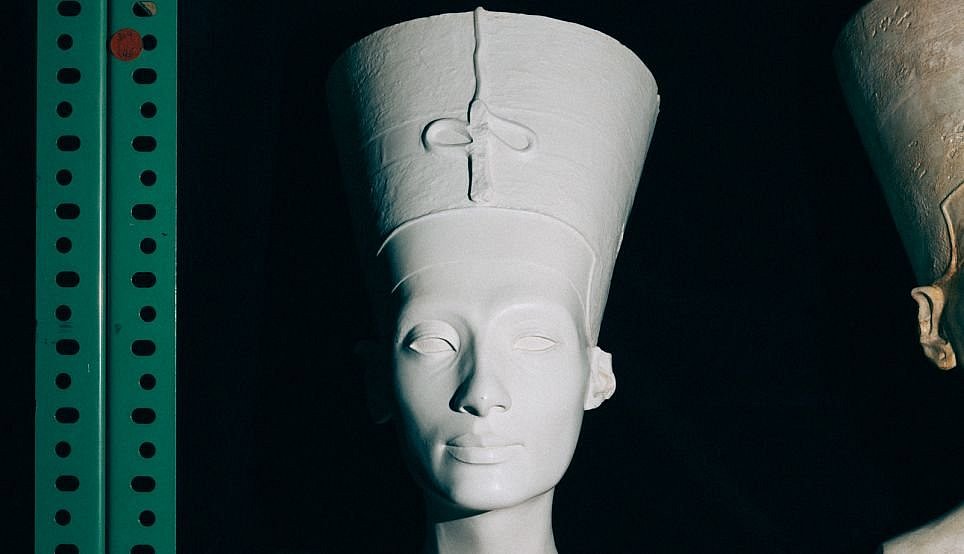
The benefit of the project was initially to see how objects can be scanned perfectly and what the print quality is like for our organisation. Another factor was digital archiving. We had already carried out individual similar projects before, e.g. Nefertiti, though these were not on the same scale and were not carried out in cooperation with TU Berlin.
What are the biggest challenges and problems when working on such projects?
The major difficulty with digitisation methods such as scanning or raster lighting is capturing recesses and undercuts that the naked eye cannot detect. When we look at an object, we cannot immediately see everything without moving or turning the object this way and that. You have to pick things up, examine them closely with a magnifying glass or a mirror. An optical scanner can only do this to a limited extent. When we make silicone casts of objects, the silicone fills every indentation. None of this can yet be reproduced in the digital process and can therefore be lost. That is why the traditional method remains important.
Were there similar challenges with the Tea Salon project with TU Berlin?
There were other challenges. At the start, we were missing one of the 14 figures, namely Achilles. He used to be here in the building, but he went missing and we don’t know where the mould has gone either. That happens, as our building has been around for so long and has survived two world wars. We then started researching where we could get the figure back from. It turned out that two casts had been delivered: one to Tegel Palace, where we found what we were looking for, and one to the Goethe House in Weimar. At Tegel Palace, however, we weren’t allowed to handle the object, and in Weimar we were only allowed to scan it, which we then did. But printing out Achilles again in his original size proved too complicated.
A real detective story …
As we continued our research, we found another copy in Potsdam, in the Archive of Prussian Palaces and Gardens. This copy was in poor condition; part of the foot and the spearhead were missing. We were able to make a silicone mould of this object and then add the missing parts using the previously scanned model. This allowed us to bring this mould back into our collection; it was a wonderful side project linked to the Tea Salon project with TU Berlin.
What proportion of your daily work do such digitisation projects now account for, and what advantages and changes do they bring?
Such projects are not yet an integral part of our daily work in the plaster casting workshop. However, we always try to explore all possibilities and incorporate new digital methods into our considerations accordingly. For objects that can no longer be cast using conventional methods, it is of course useful to be able to scan and print them. But for the workload we have here in the plaster casting workshop with 15 people, the new methods are not yet sufficiently developed.
In the plaster casting workshop, the primary aim is to produce duplicates that are ultimately intended for sale. Do you also find other projects exciting, where scans are made and posted online to make them accessible to the whole world?
I think the efforts to scan and archive cultural artefacts so that they can be used worldwide for research and measurement purposes are wonderful. However, as far as printing and the analogue reproduction of objects are concerned, I believe the technology is still in its infancy. The quality isn’t as good as what we can achieve using conventional methods.
Is the loss of quality down to the printing or the scanning?
It’s in the printing. We recently scanned a relief using the polygon mesh method. The result is a very smooth surface; if the surface has a uniform colour, it looks very abstract. Only when you overlay the photographic texture – and thus the colour – does it look lifelike. You can then no longer tell whether it is an original or a copy. However, if you were to print it out using the smooth surface from the scan and lose the colouring again, no contours would be visible because the computer can represent it in three dimensions, but it cannot reproduce it in this way with the printer. We were surprised when we compared the computer renderings with the prints. Because of these differences in quality, traditional plaster casting techniques will remain necessary for the foreseeable future.
Just like the painters who paint the figures in the plaster moulding workshop and reconstruct the patina...
Exactly. And there are some areas where these craft techniques are indispensable. Because, as a plaster casting workshop, we are not only here to copy and reproduce objects, but also to serve as an archive for the historical condition of objects. We have models and moulds that are well over 100 years old and of which only black-and-white photographs from the past exist. Many of these objects have since been lost or damaged, and it is only through our mould archive that we now have three-dimensional records of these old object conditions.
So, in the plaster moulding workshop, do you expect to see a combination of analogue and digital technologies in future to achieve the best results?
Yes, I think that will be the way forward. I also don’t believe that the goal is actually a complete switch to digital: sometimes you simply want to feel objects, turn them over and explore them physically. For that, we need the analogue pieces, which are still of great importance today.