Multispectral imaging has great potential. At the Berlin State Library, Andreas Janke is exploring its possibilities.
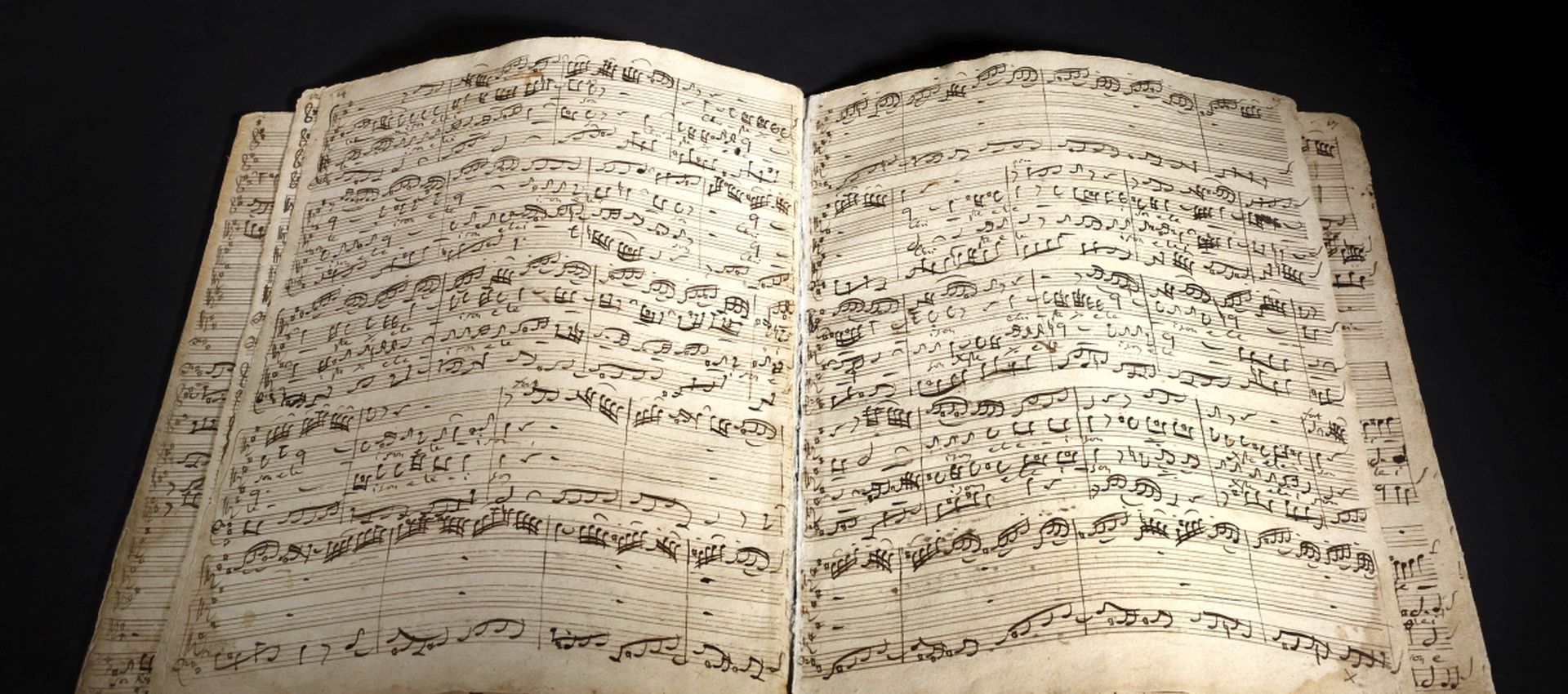
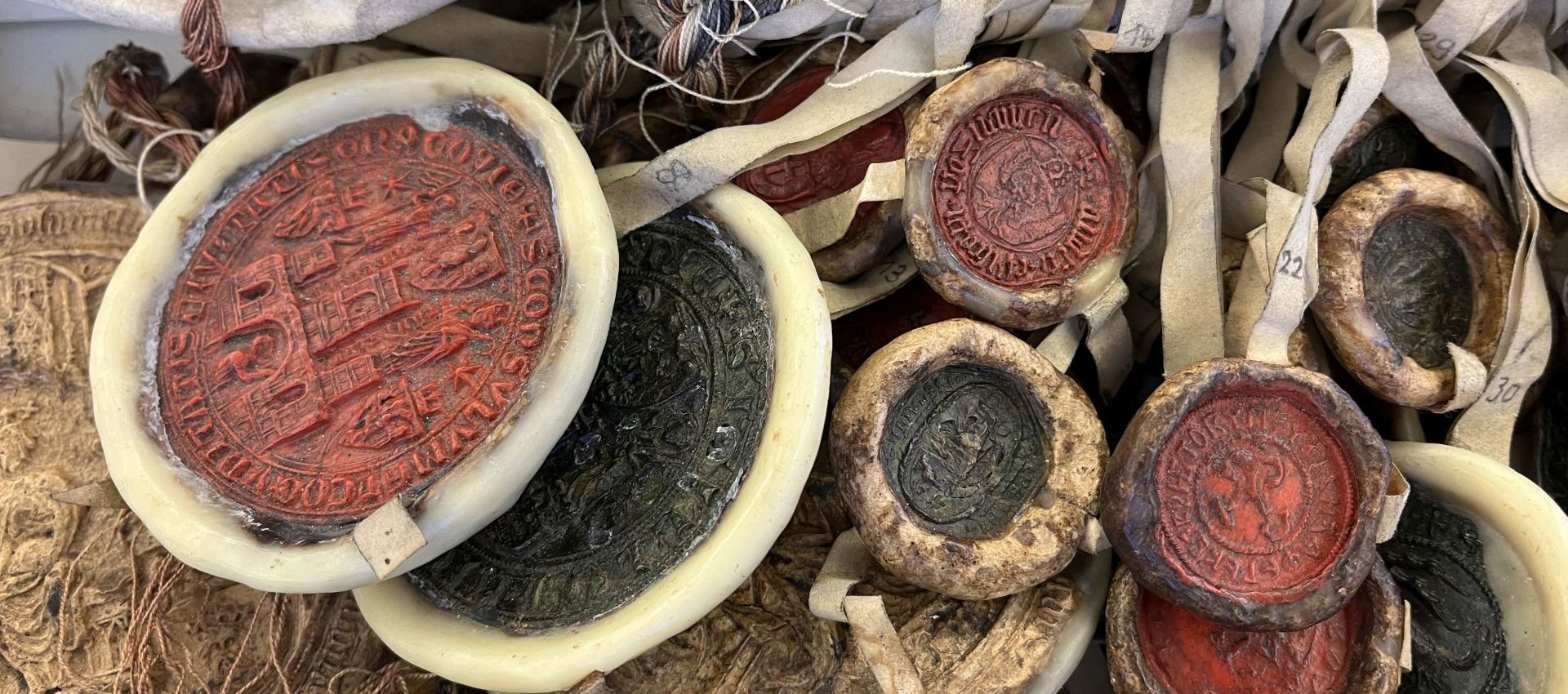
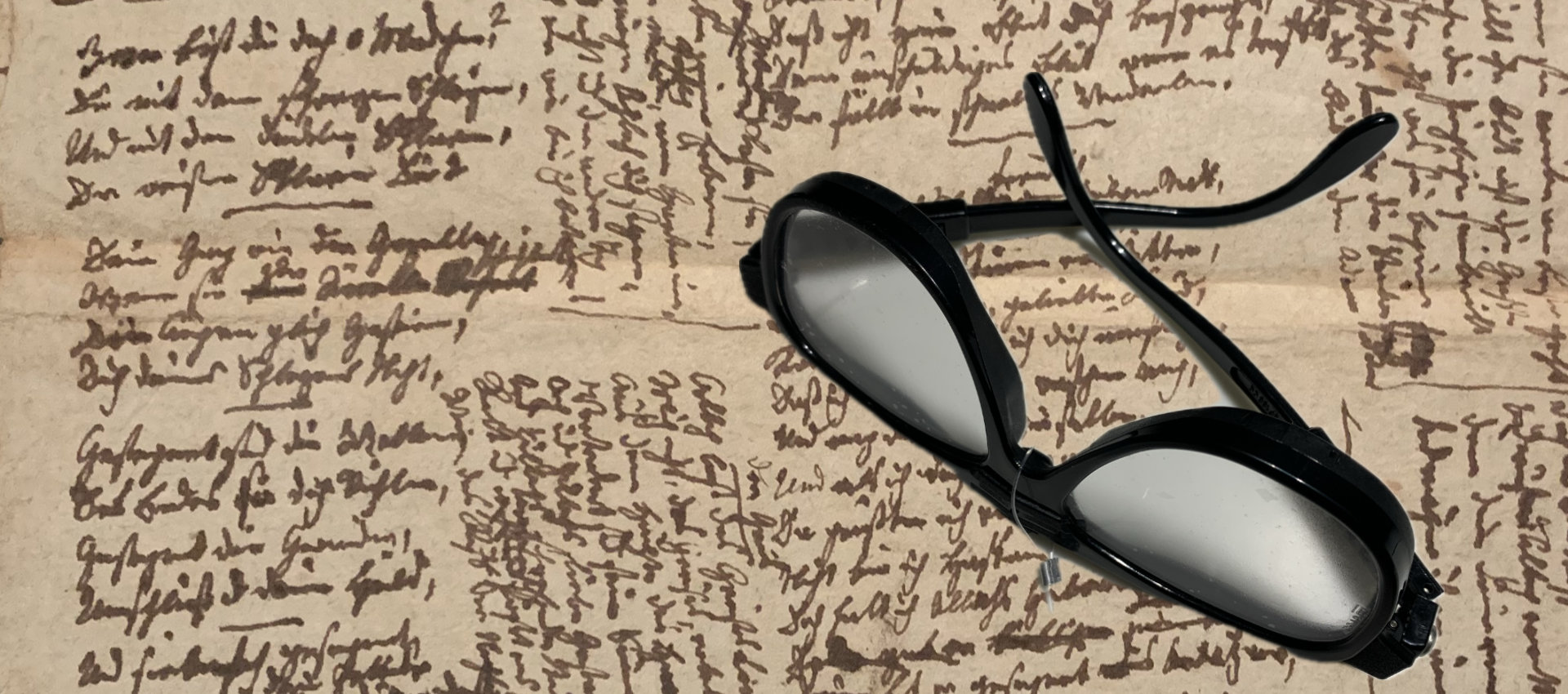
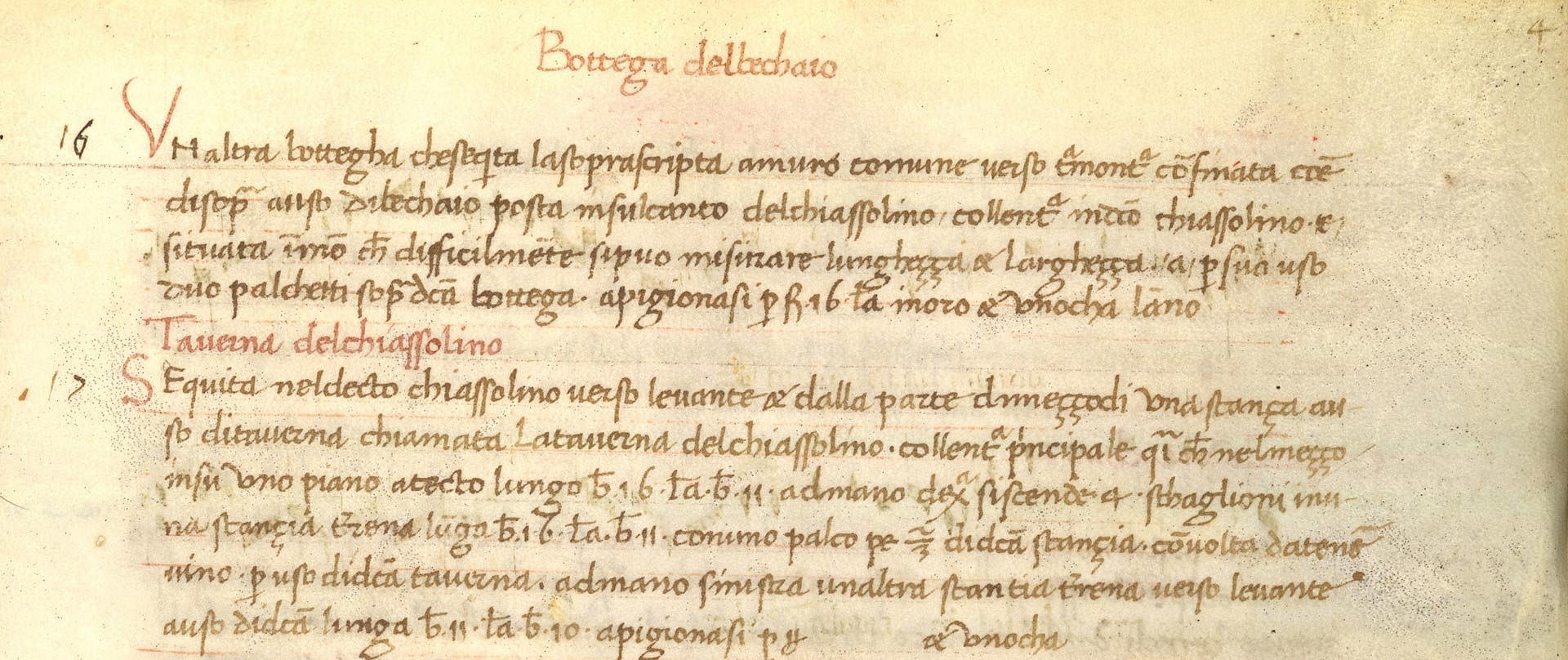
And then there were these strange marks – round, blue, on the edges of certain pages, six in total. They could only have come from spectacle lenses, from spectacles that a reader might have left behind amongst the old parchment pages of the so-called San Lorenzo Palimpsest. Andreas Janke has taken a very close look at the document from late medieval Florence, or rather: he has examined it using state-of-the-art multispectral imaging. And in doing so, he has gained many new insights. He says: “It is not only the text that interests us in an old manuscript, but also the material – and the story it tells.”
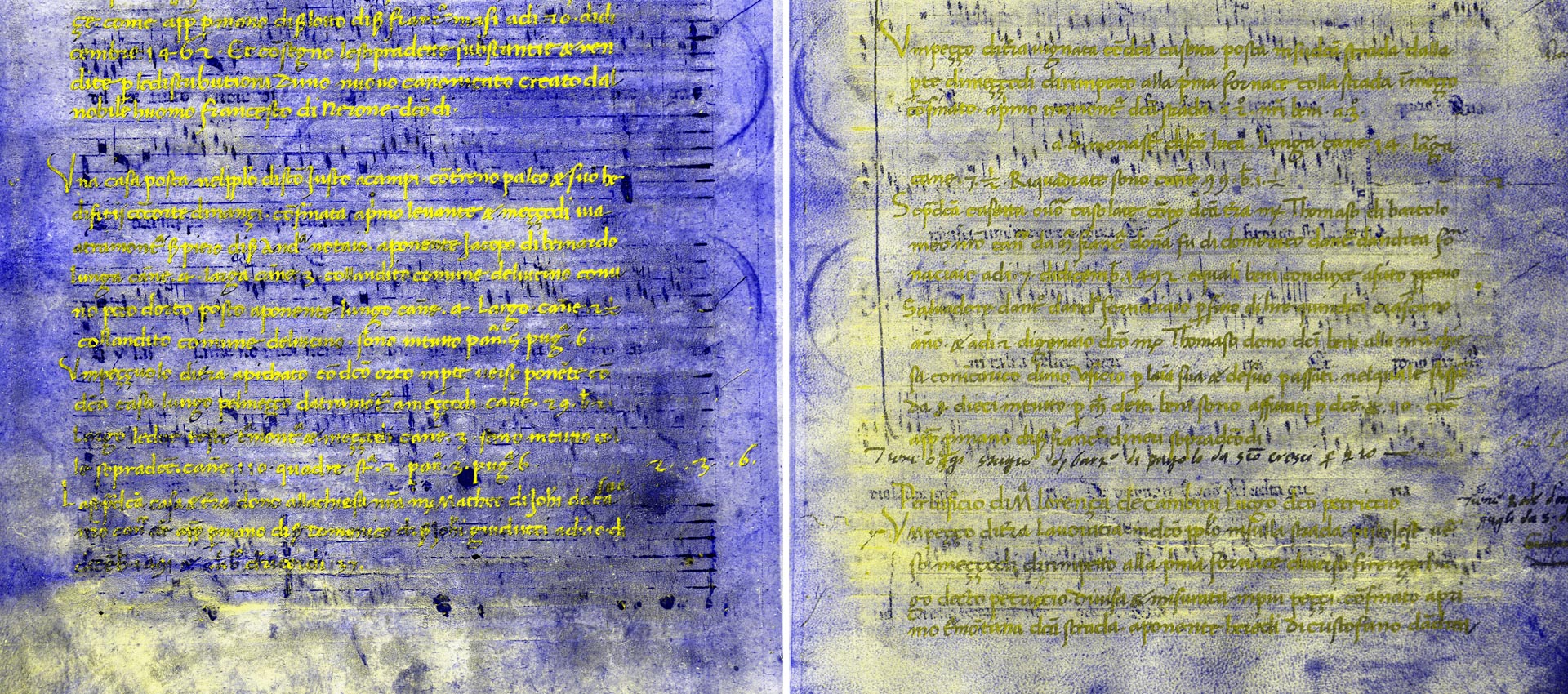
Multispectral imaging technology is the key to this hidden history: with the aid of a special camera setup, LED lamps and filters, it is possible to capture wavelengths of light that are invisible to the naked eye – particularly infrared and ultraviolet. In this way, the invisible becomes visible. The method is particularly well-established for palimpsests, i.e. manuscripts whose original text has been scraped off and overwritten. The precious palimpsest from Florence is one such example. It describes church property. It was only when Andreas Janke examined it using modern technology, together with colleagues at the University of Hamburg, that it became clear that the parchment sheets originally contained something quite different: wonderful music, 14th-century polyphonic secular compositions. A spectacular discovery. During which, incidentally, the marks left by spectacles came to light.

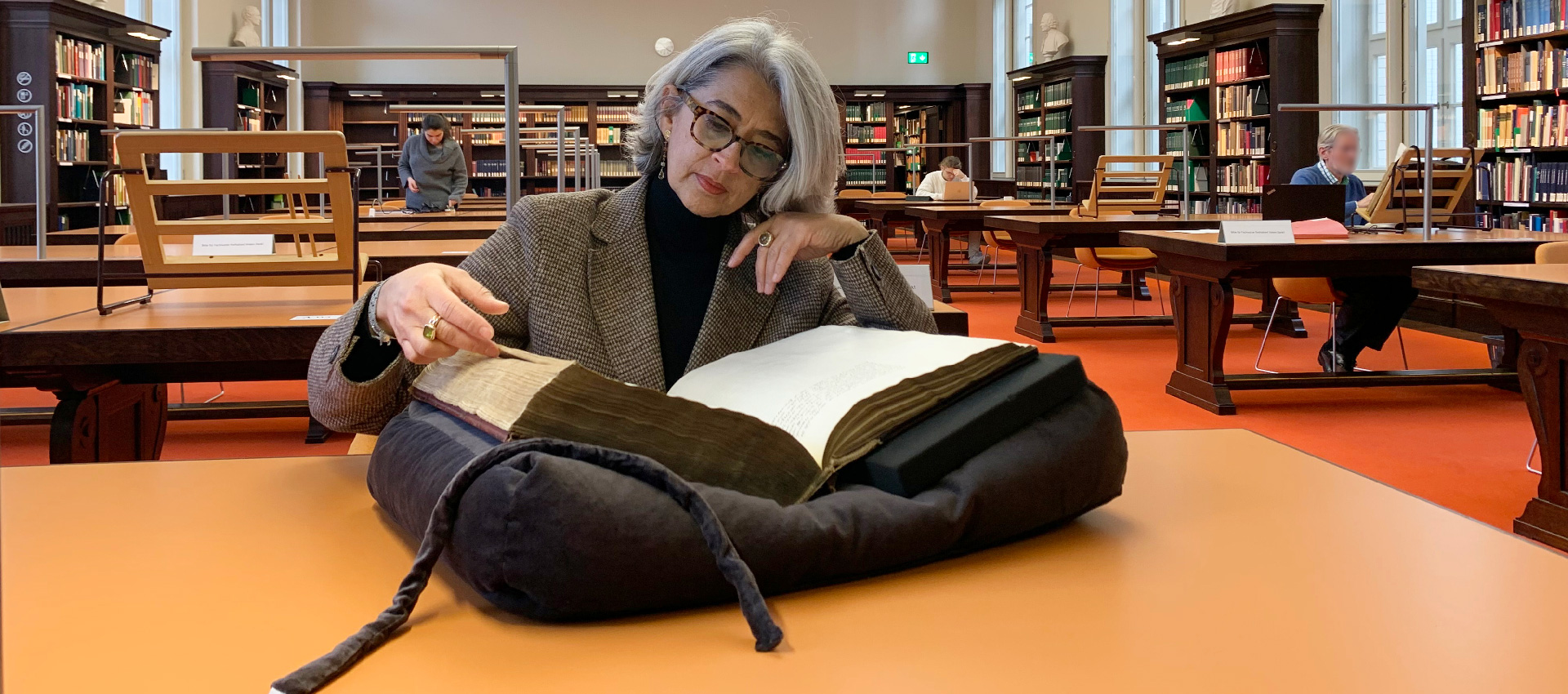
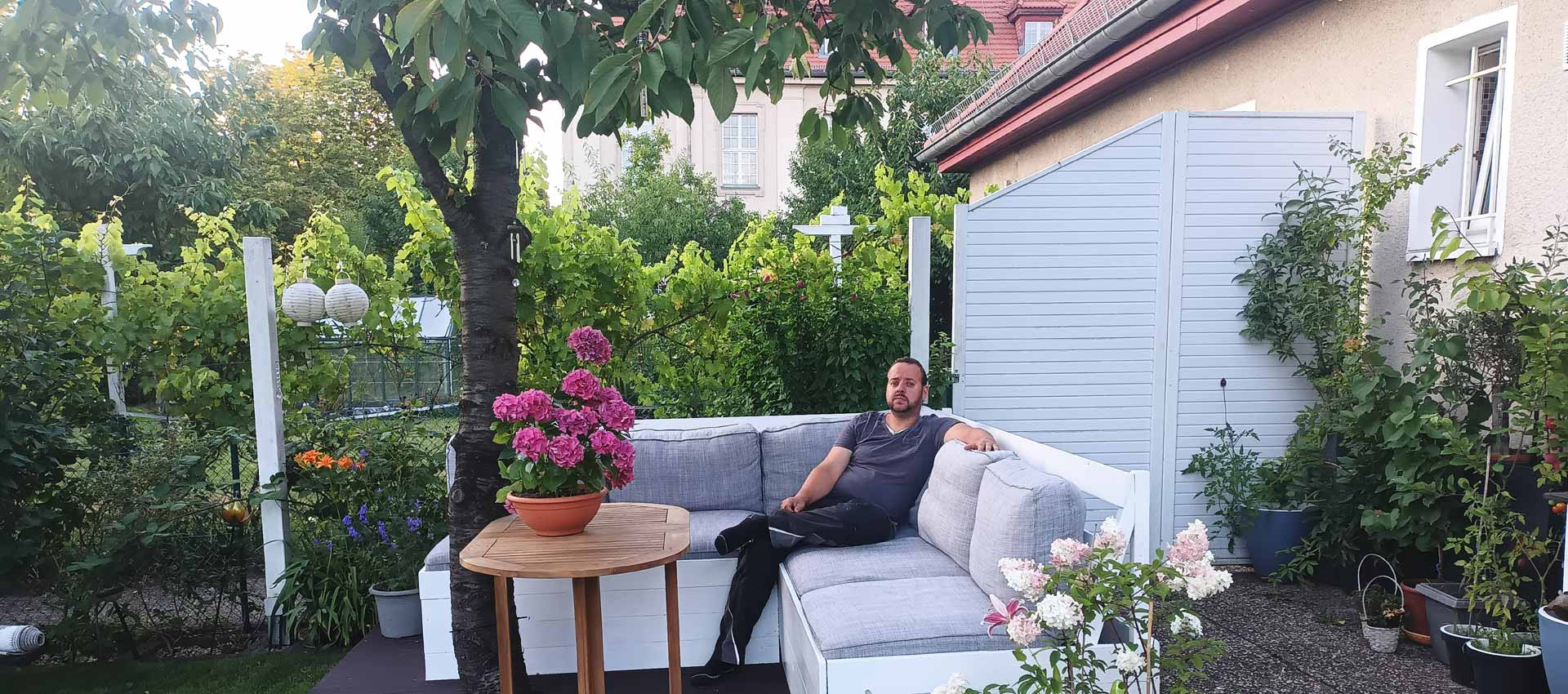
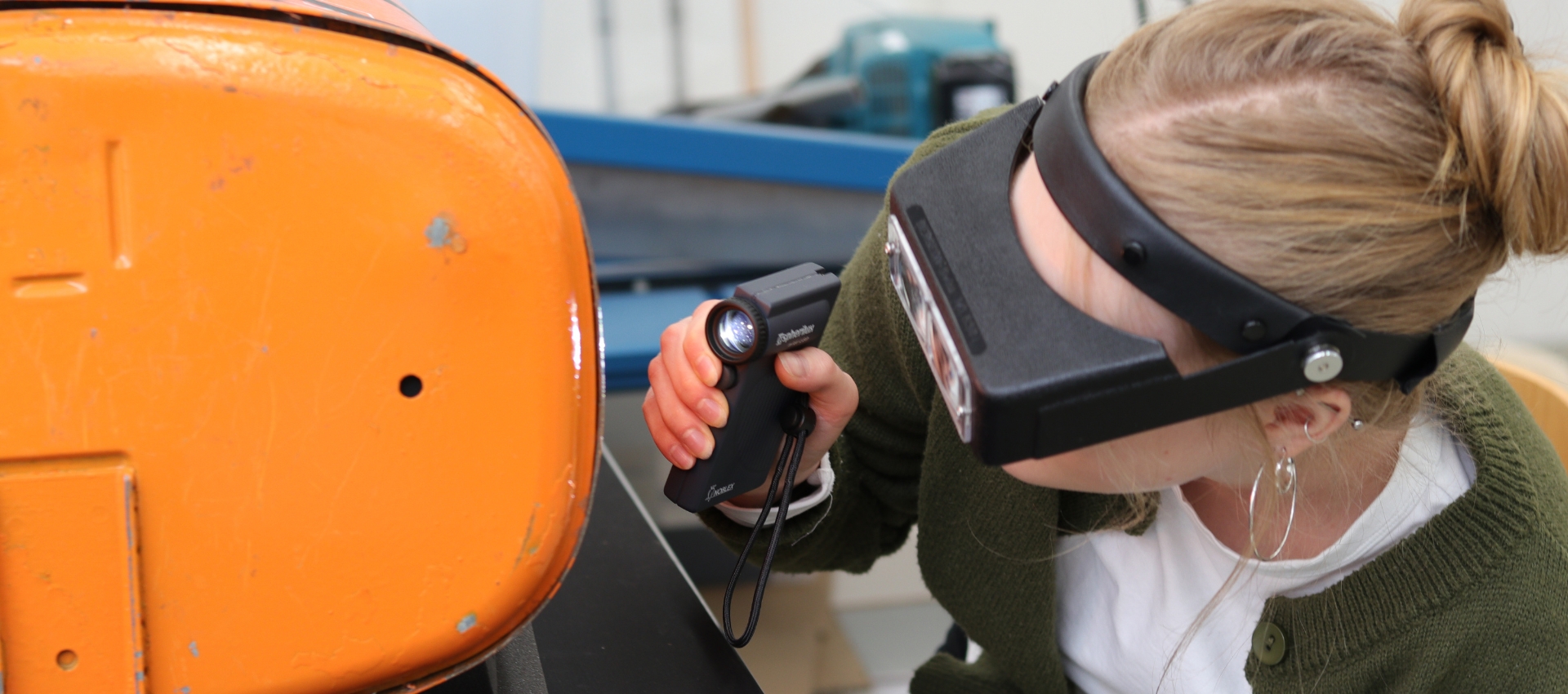
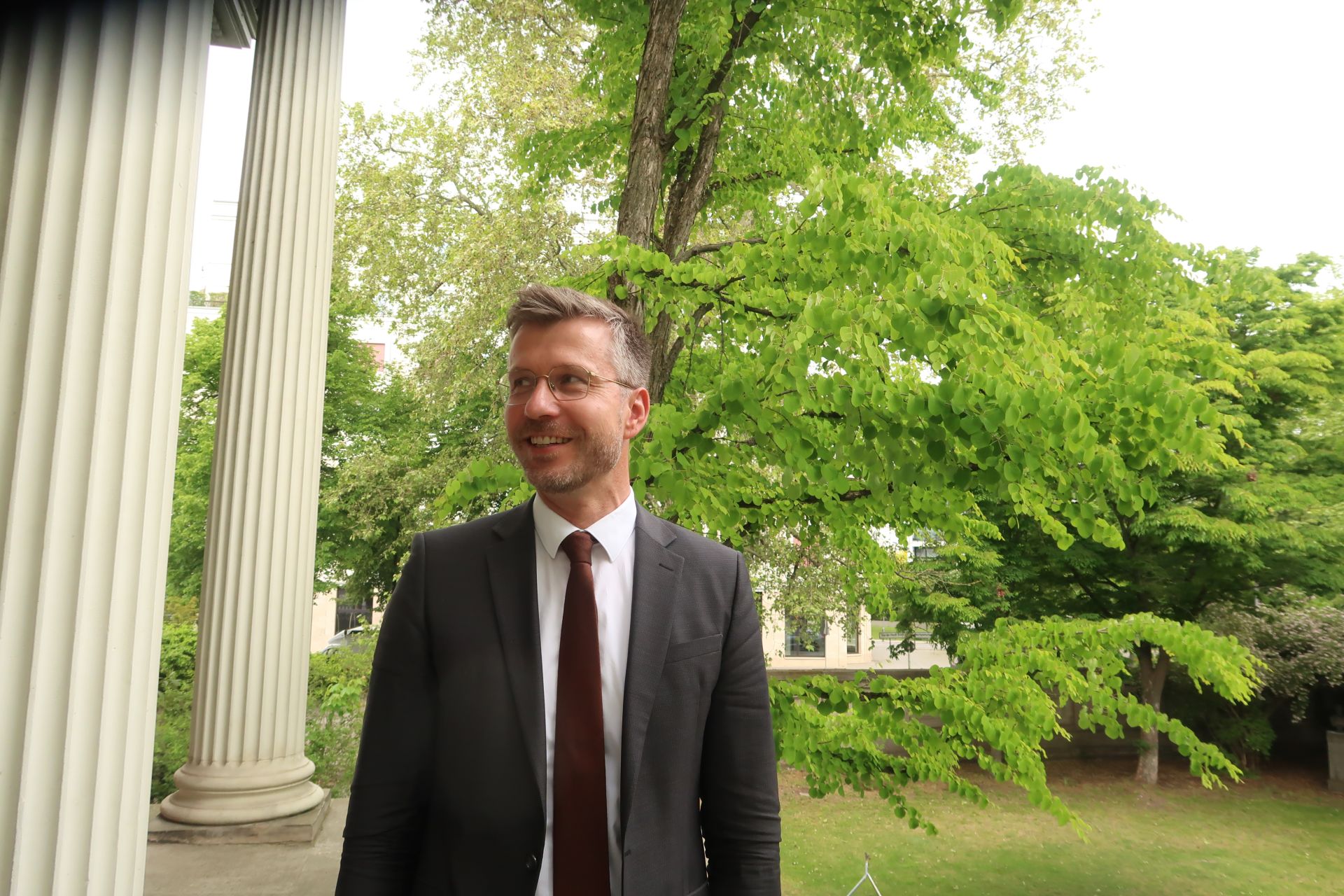
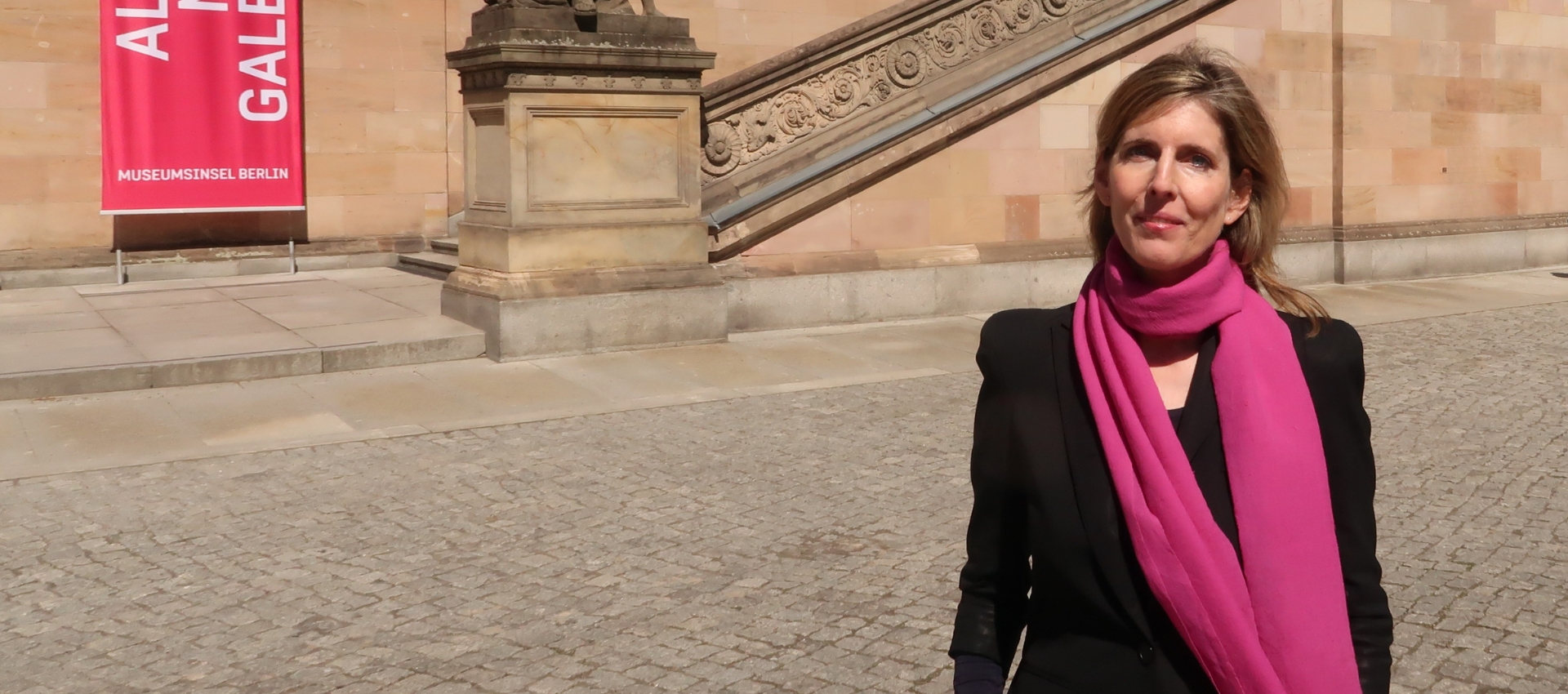
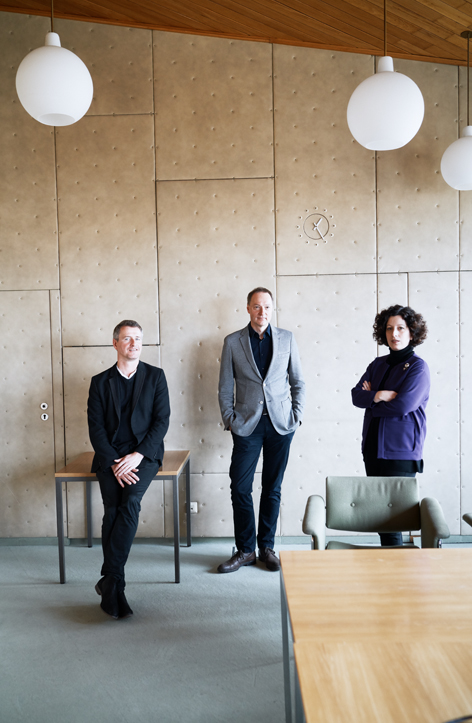
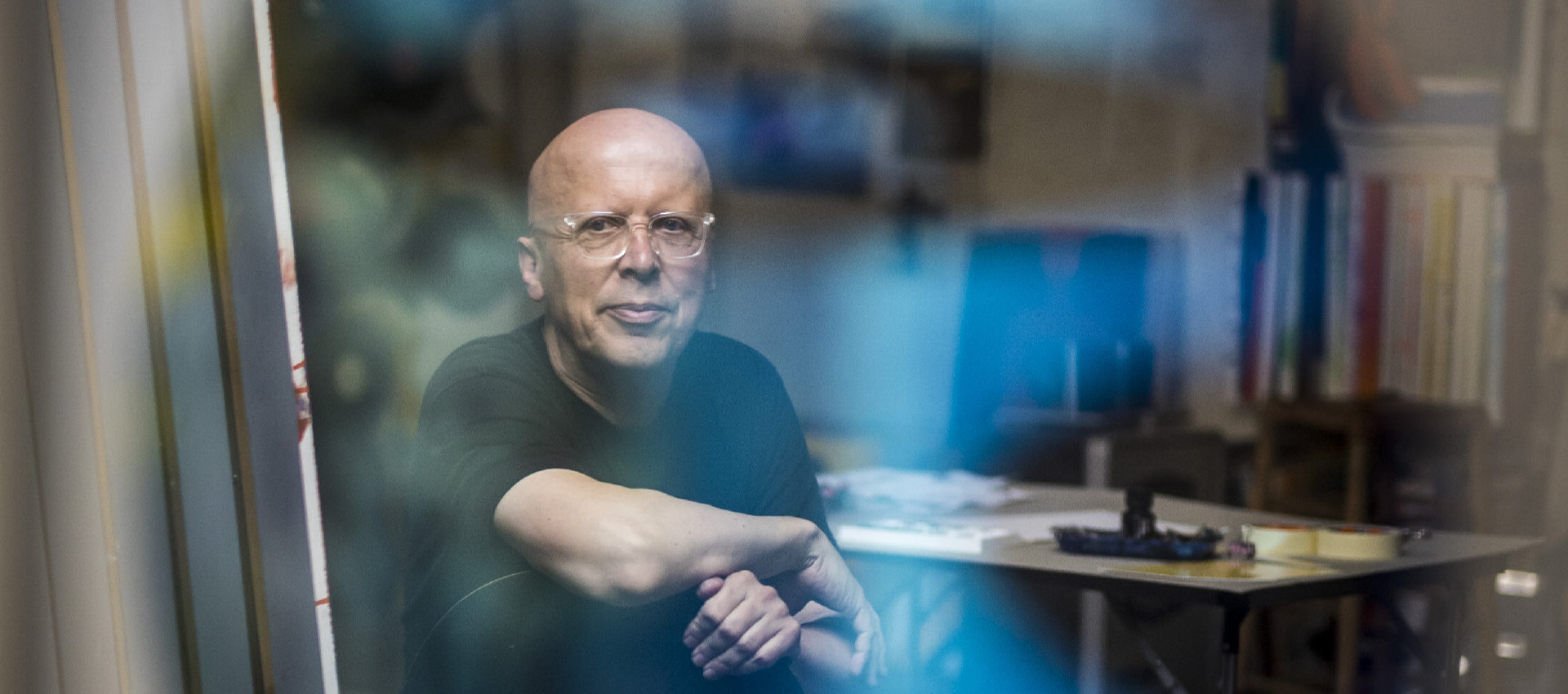
Andreas Janke, a trainee librarian at the Berlin State Library, examined medieval documents using state-of-the-art multispectral imaging.
Photo: Masa Yuasa
The object has long been known, but the research questions are new: were the spectacles perhaps used as bookmarks, placed between the pages at particularly important points? Do they come from one of the opticians, of whom there were several in the neighbourhood of the Church of San Lorenzo? One thing is clear: MSI, or multispectral imaging, is generating new insights into reading habits of the time, into the significance of individual passages of text, and into how regularly the book was used. This is because different colours can reveal different texts on a single page; they can make the writing process visible, or even a change of ink. “We visualise information,” says Janke.
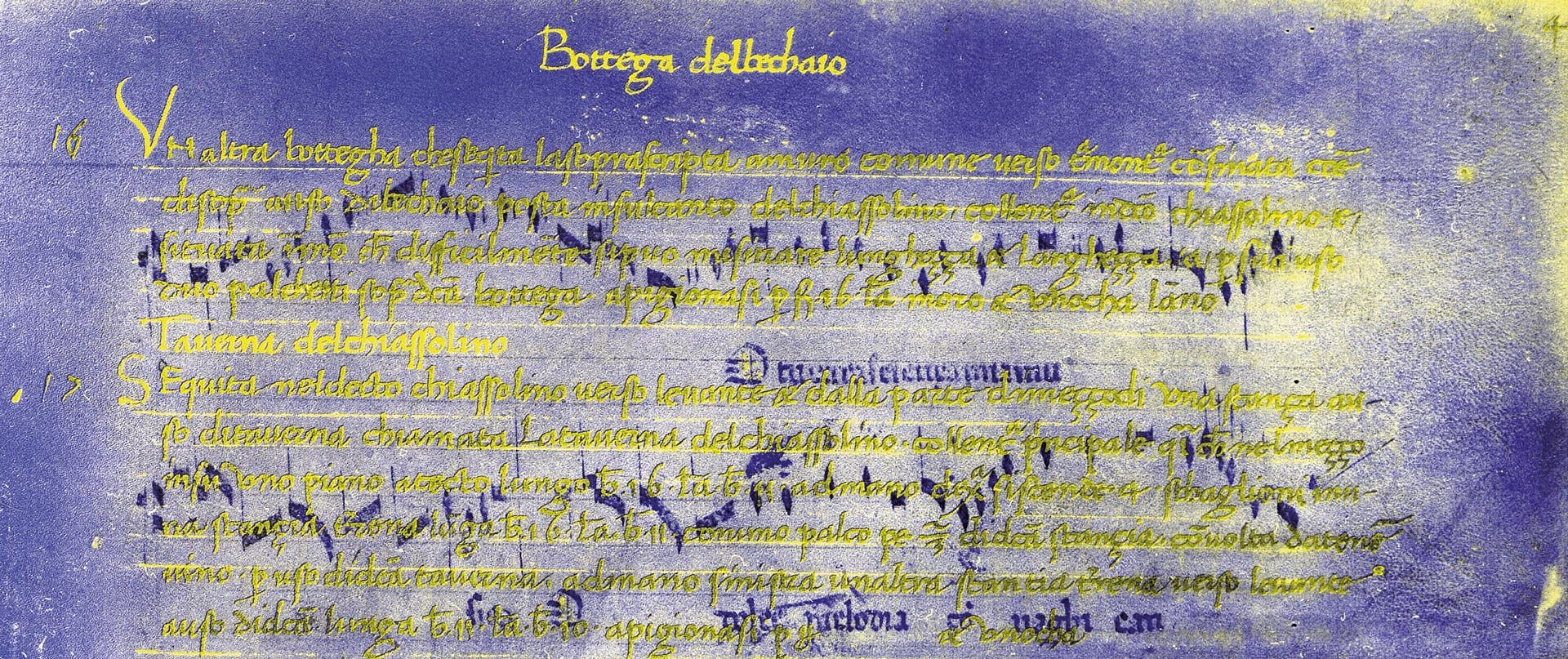
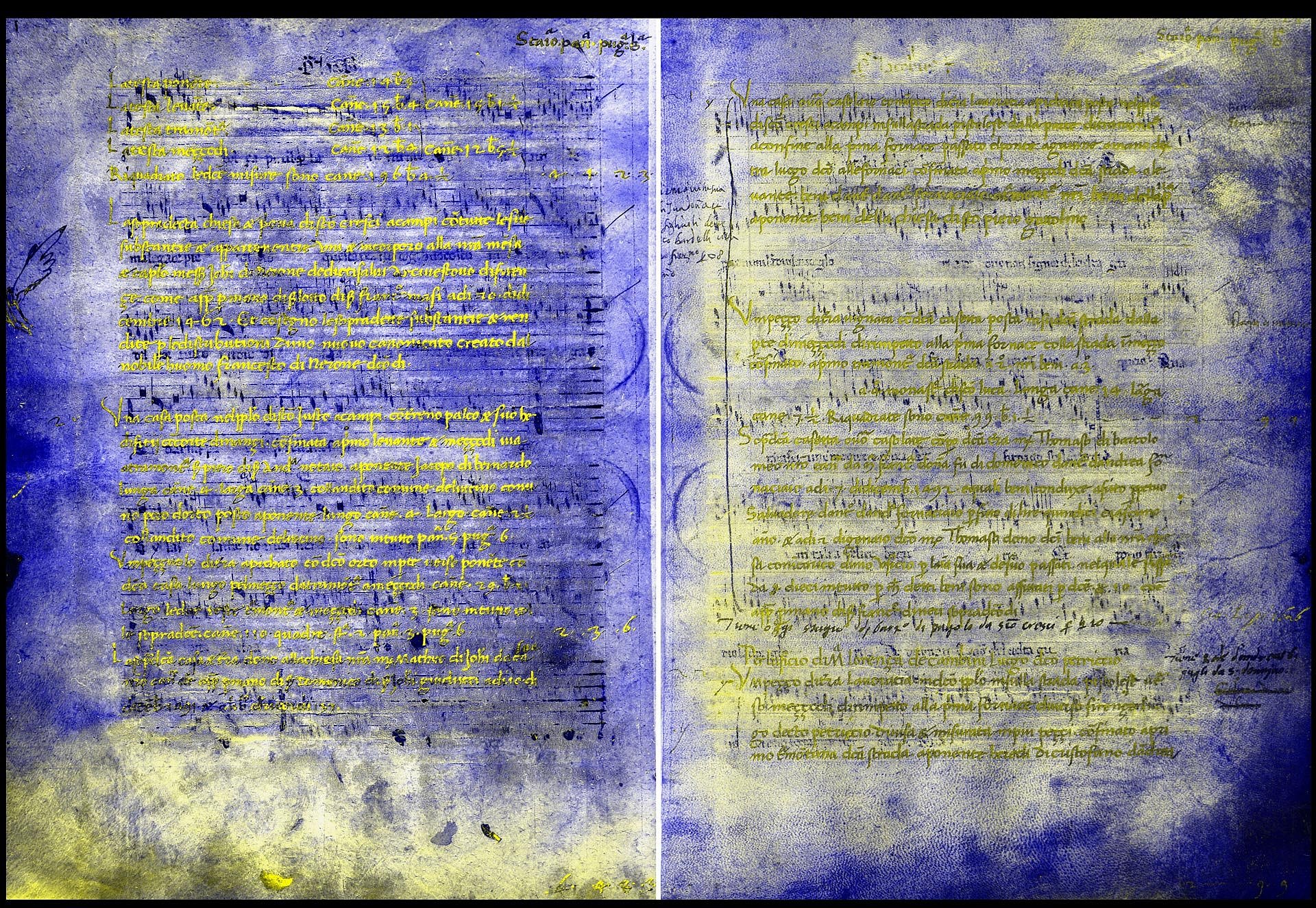
In his work at the Berlin State Library, he demonstrates what this actually means: ‘Digital Humanities’. And also: the ‘Material Turn’ – the shift towards materiality. It involves collaborative work across disciplinary boundaries. ‘Multispectral imaging is a good example of why there is such added value in humanities and natural sciences researchers working ever more closely together. Chemists and materials analysts, librarians and conservators – these mixed, interdisciplinary teams make research particularly successful,” says Janke, who will soon complete his library traineeship. He himself is a musicologist, manuscript researcher and Italianist. But he is more than just that: the natural sciences and technology also fascinate him.
He talks enthusiastically about iron gall ink, which penetrates deep into the parchment and can therefore be made visible again later, even if an attempt was once made to remove it. He is well versed in modern software, algorithms and pixels – and can explain clearly what modern multispectral imaging technology means for handling data volumes and storage capacities. “For me, it’s not about taking pretty pictures, but about collecting data from which new information can then be gleaned. And asking: what research questions can be answered with this?”
After all, ‘palimpsest photography’ is nothing new – ultraviolet light was already being used more than a hundred years ago to make erased writing visible. What is new are the volumes of data generated by modern multispectral imaging. They need to be processed and made available. Should they all be preserved? How do they actually fit into the library’s existing systems, catalogues and repositories? How can the various data types be made compatible?
One thing is clear: digitisation has long since reached a new stage. Whereas previously only a single photograph of a manuscript page was taken to make it accessible online in the ‘Digitised Collections’, the new imaging technology produces up to fifty images – in other words, a great deal more data. To catalogue them, one would need staff with specialist expertise: image scientists. But they are in short supply. Andreas Janke is therefore working on a concept. What exactly can be done with the technology – and what cannot? He will draw up proposals and present them at the Berlin State Library this summer.
Unlike libraries in Göttingen or Munich, Cambridge or Copenhagen, the State Library of Berlin does not yet have its own infrastructure for multispectral imaging. Instead, mobile research teams regularly visit with their laboratories, bringing multispectral cameras and, for example, X-ray fluorescence devices. They come when there is a specific research interest in one or more manuscripts. Andreas Janke and his colleagues are now considering what it would be like if, in future, all interesting manuscripts were systematically analysed using multispectral imaging. What kind of team would be needed for this, and what skills would they require? How would this be coordinated?
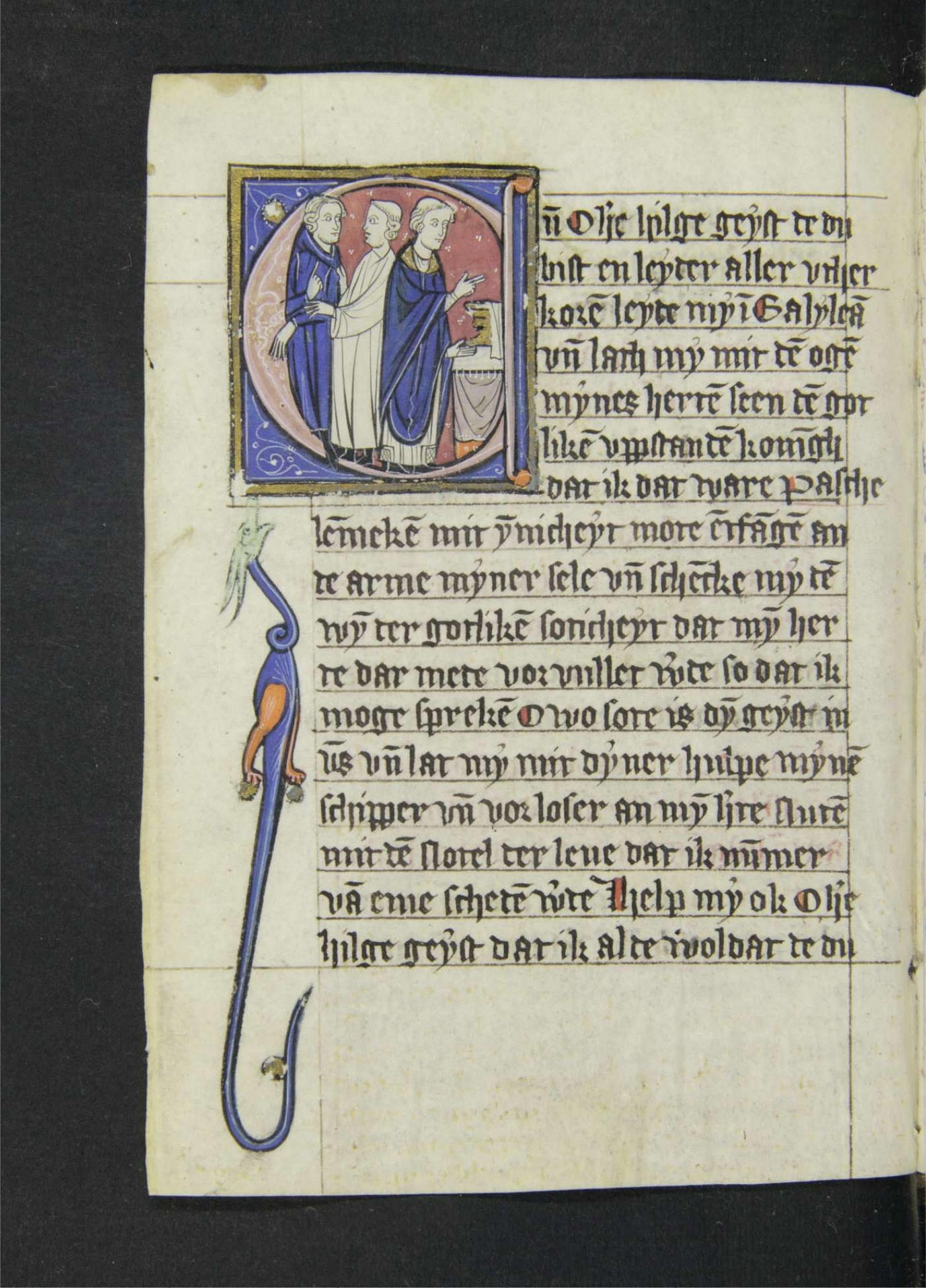
There are many secrets to be discovered: in the magnificent Gerhart Hauptmann Hall of the State Library on Unter den Linden, Andreas Janke, together with research librarian Nicole Eichenberger, displays the palimpsest originating from a nunnery, bearing the call number Ms. germ. oct. 48 – a work of art featuring magnificent marginal decorations, initials and miniatures. And there – isn’t a lower layer of text visible on one page? Wasn’t an old text scraped away and rewritten over, perhaps centuries later? A simple search on the Manuscript Portal, the central catalogue for European book manuscripts, reveals 27 palimpsests held by the State Library – but there are likely many more palimpsests that have simply not yet been discovered.
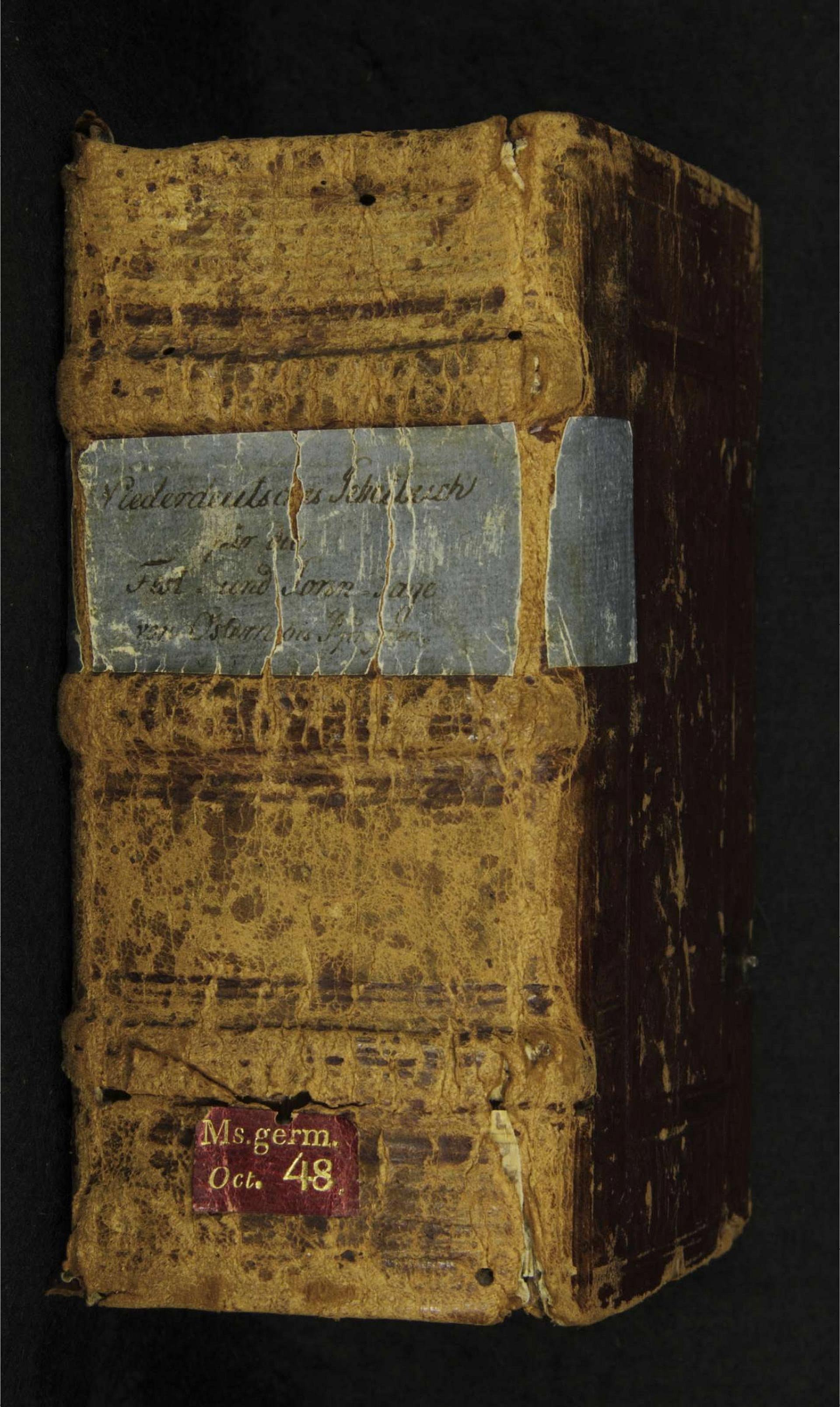
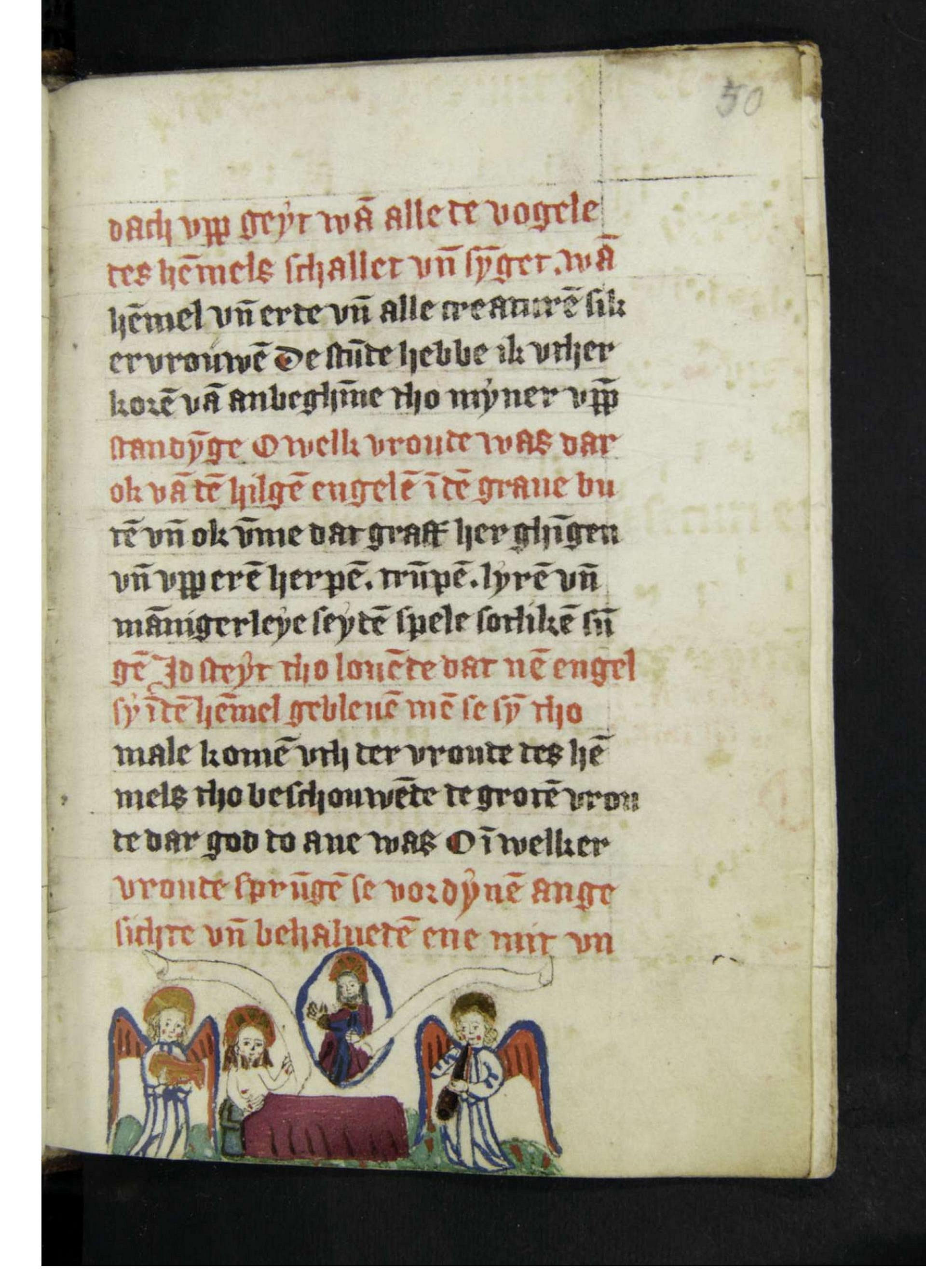
One thing is certain: it’s well worth it. Because MSI isn’t just useful for understanding old manuscripts. It also helps to identify what may have been blacked out, crossed out or censored in more recent documents. It makes text visible that has become illegible due to mould, water, fire or excessive sunlight. Andreas Janke hopes that in future there will be more and more workshops dedicated to working with these complex techniques and data, and that young manuscript researchers in particular will take part. It is a key objective of the recently published ‘Stabi 2030 Strategy’ to advance research using new technical methods.
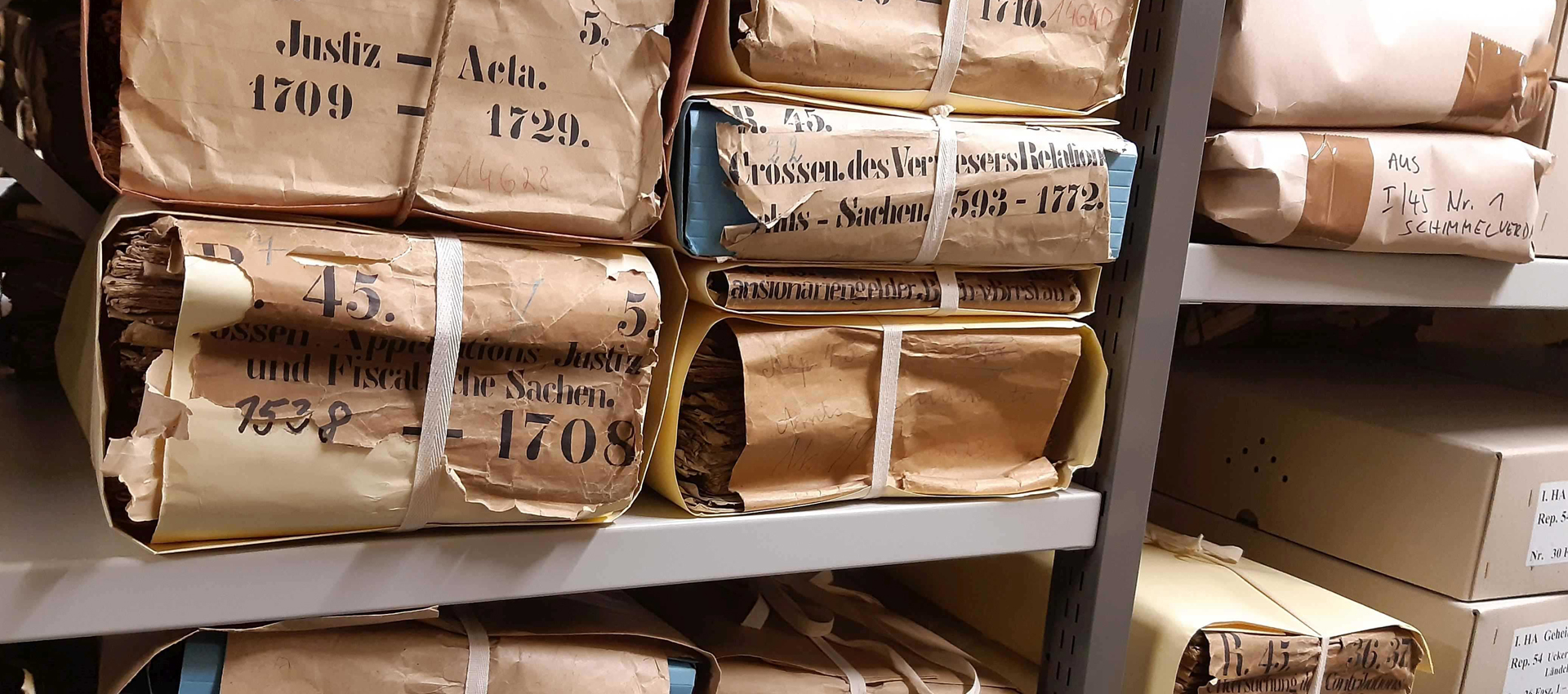
In this way, the State Library is in the process of sharpening its profile as a service-oriented research library. With the “Stabi Lab”, there is already a venue where experiments with digital humanities methods and data are taking place and where interdisciplinary collaborations are being pursued. And above all: other institutions within the Prussian Cultural Heritage Foundation have also already gained experience with multispectral imaging. Everyone can benefit from a foundation-wide exchange. Andreas Janke has already held discussions on this, including with colleagues from the Kupferstichkabinett, the Secret State Archives and the Rathgen Research Laboratory. And this is only the beginning.
The Enoch Palimpsest
Various scholars from the humanities and natural sciences have also examined the so-called Enoch Palimpsest (Petermann II Addendum 24), an ancient Ethiopian manuscript held in the Oriental Department of the State Library. Using multispectral imaging, the international team was able to identify the original text, of which only a few letters were legible to the naked eye: collections of sermons, accounts of martyrs and liturgical chants. The researchers had set up a darkroom in the basement of the State Library. The manuscript was examined using multispectral imaging and X-ray fluorescence analysis to make the valuable palimpsests legible and to learn more about the inks.