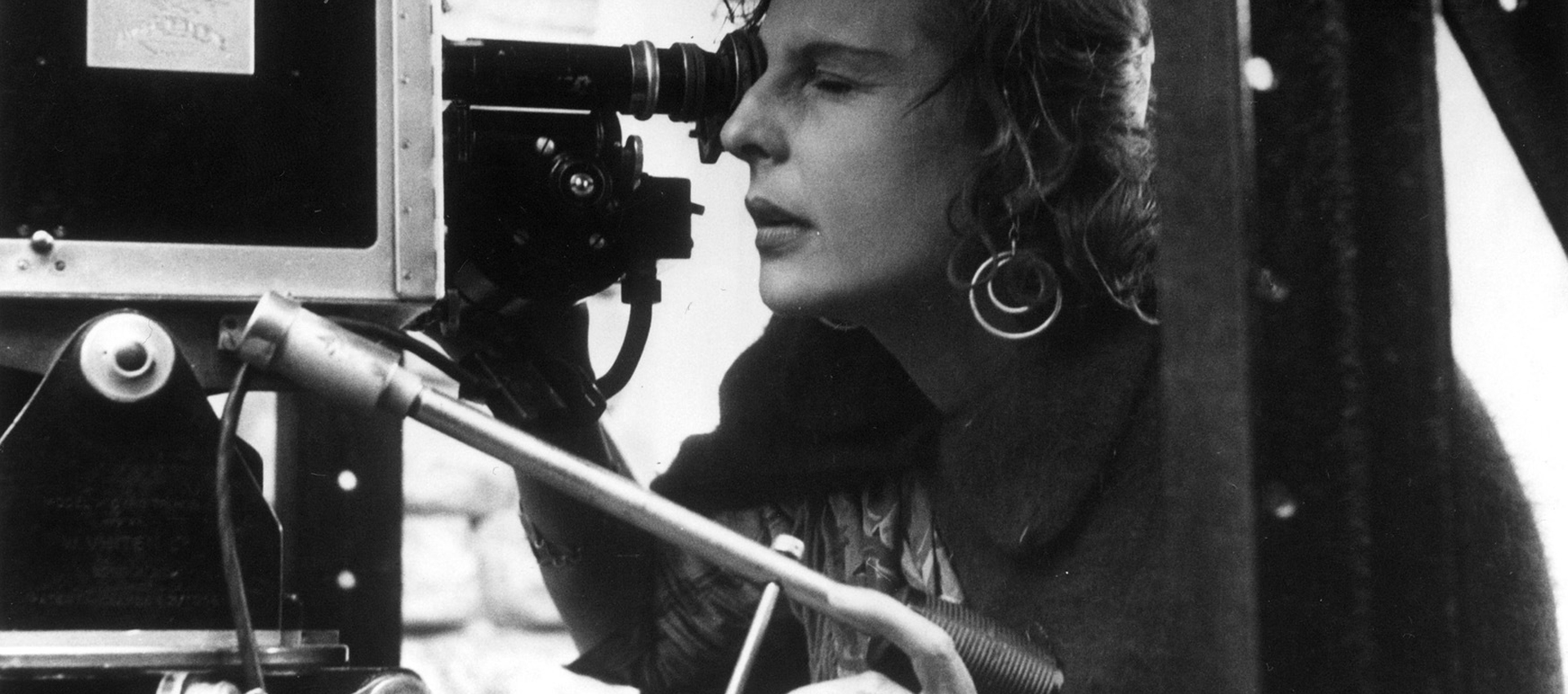
It was a heavy legacy that the SPK took on eight years ago: when Horst Kettner – cameraman, partner and executor of Leni Riefenstahl’s estate – passed away in 2018, the estate of the litigious filmmaker of the Nazi party rallies, Hitler’s confidante and lifelong defender of her innocence came into the foundation’s care. But it is precisely for these complex cases that the SPK, with its interdisciplinary approach, exists, and in recent years it has, layer by layer, uncovered what lies within the estate meticulously curated by Riefenstahl and Kettner.
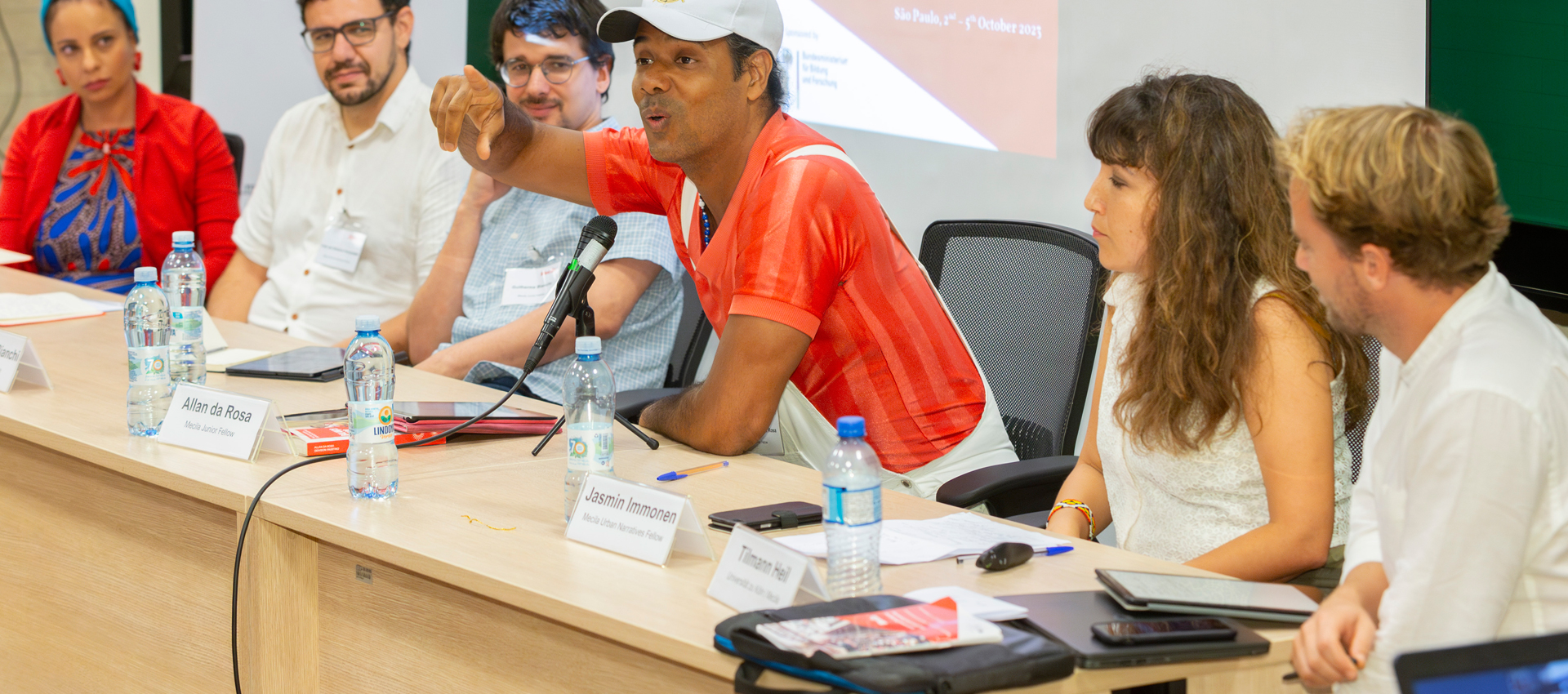
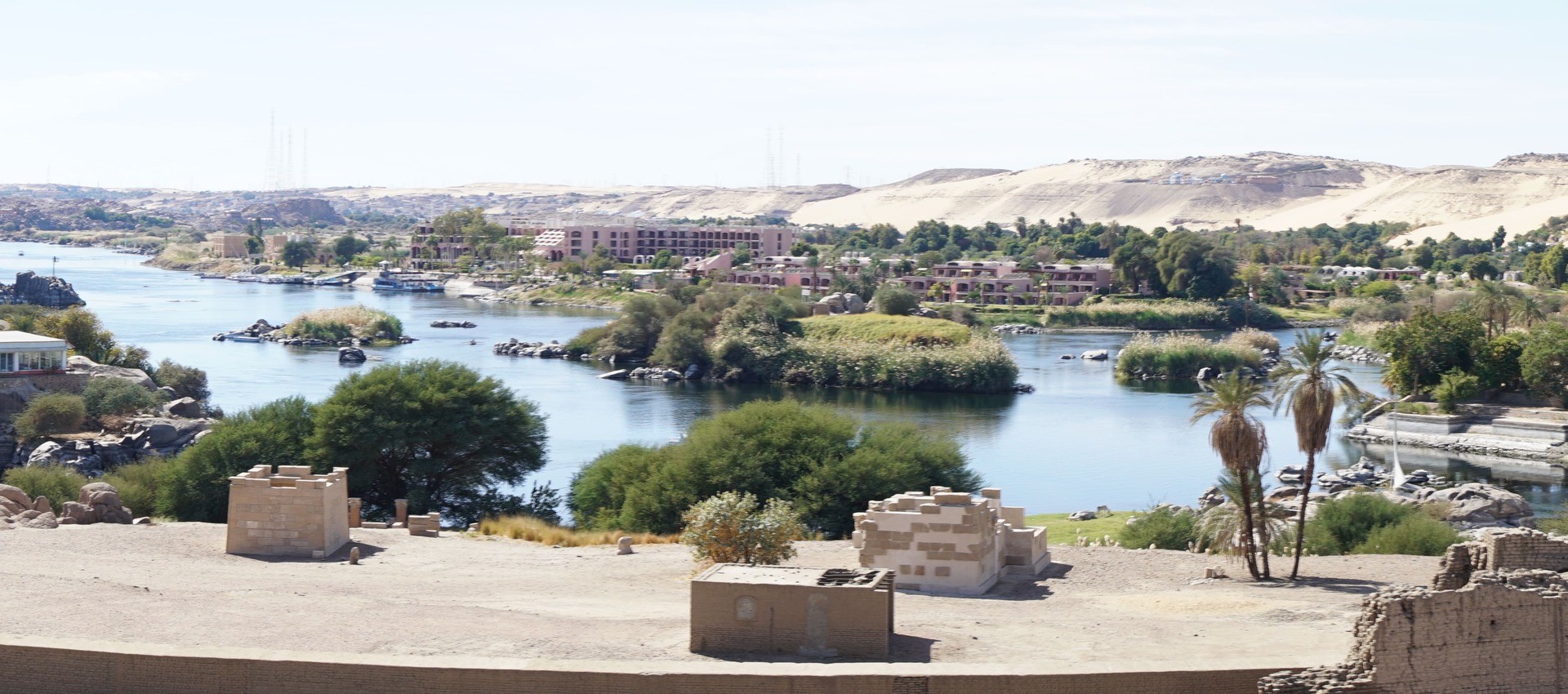
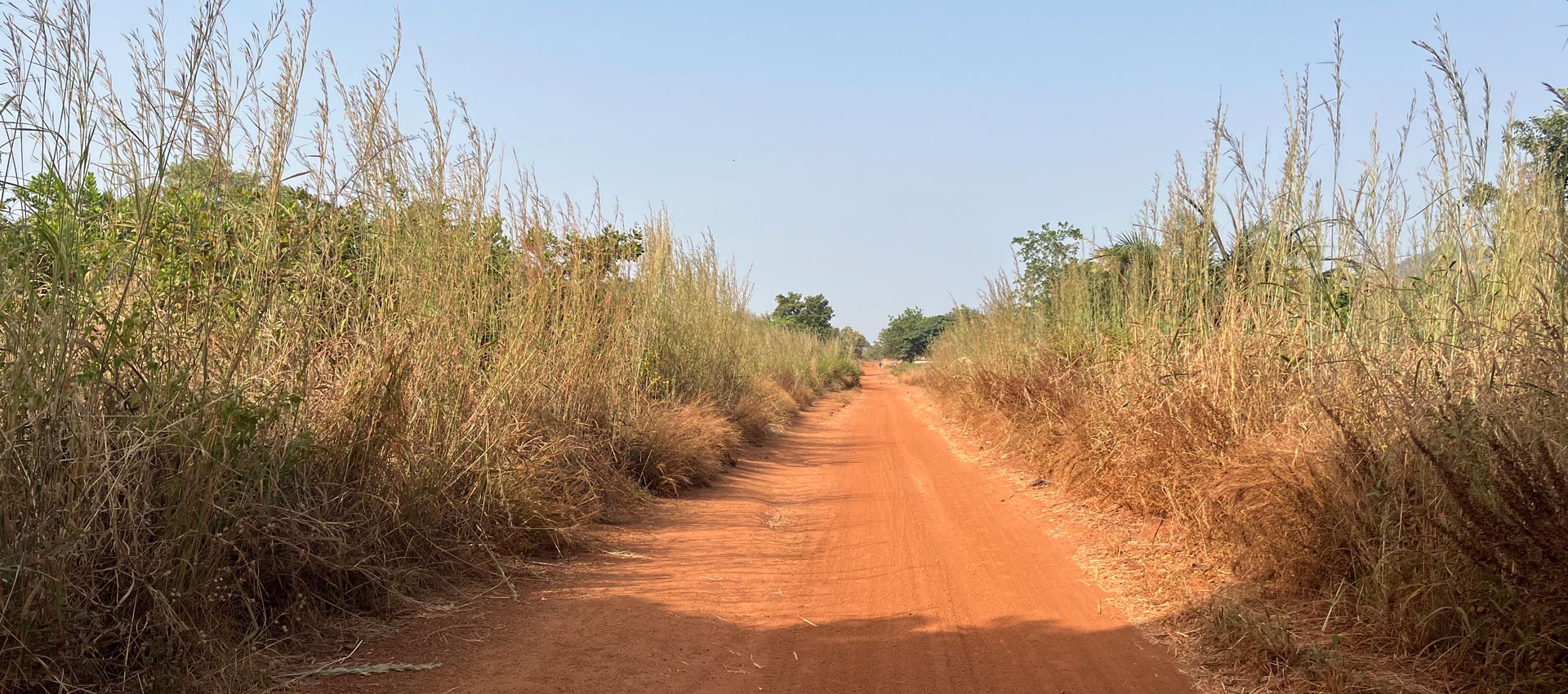
This consists of sub-collections, such as photographs and films of the Nuba, an ethnic group in Sudan, to whom Riefenstahl devoted herself in the 1960s and 70s. This material, which had previously been relatively unexplored, was examined with regard to its colonial-racist context and in equal partnership with the Nuba. In addition to a symposium and the website presenting the research findings, nuba.images.smb.museen, the exhibition project “Inside Archives” by students from the Berlin University of the Arts (Art in Context programme) will be realised at the Museum of Photography in May 2026.
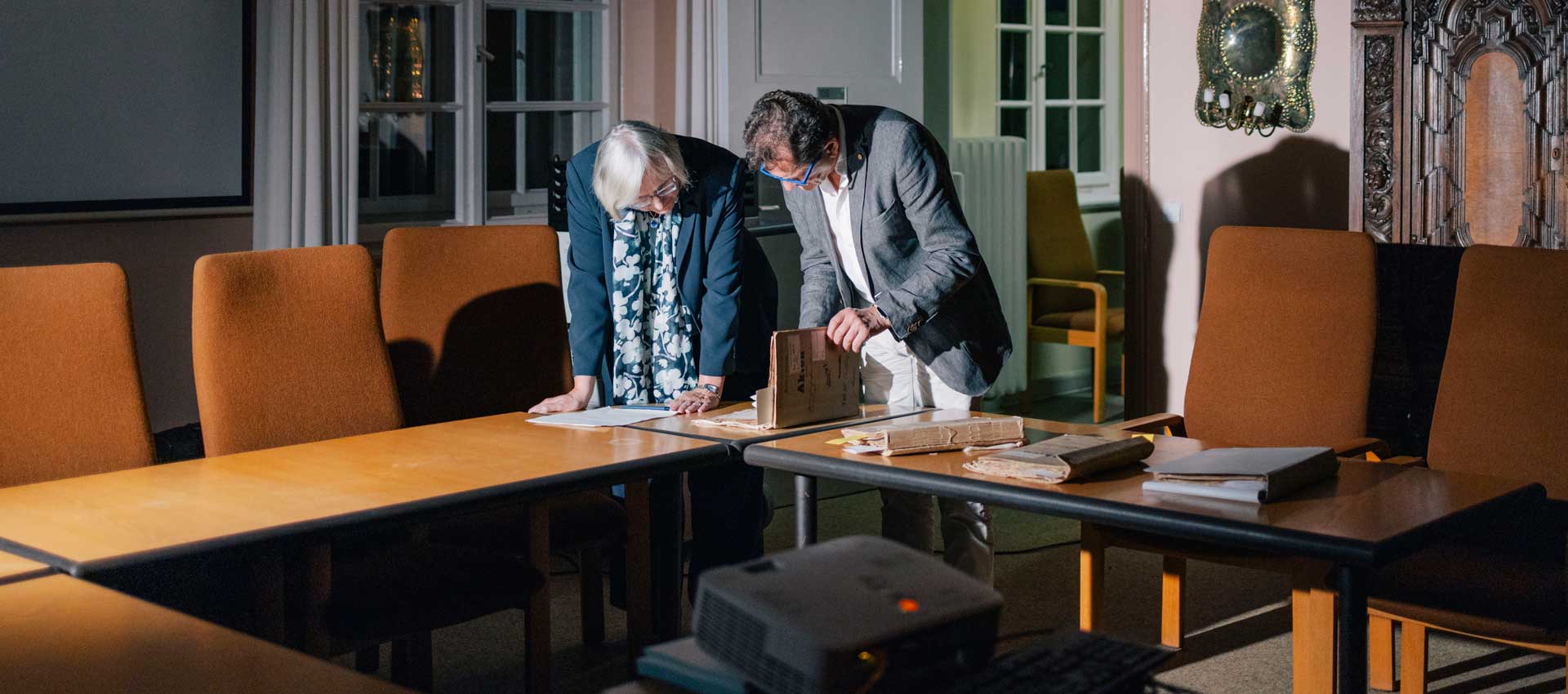
The State Library, on the other hand, has devoted itself to the collection of writings, cataloguing, digitising and making it accessible online – essentially ready for research. In an interview, research officer Christian Mathieu discusses the current state of affairs, what can be found (and what cannot) in Riefenstahl’s writings, and why a second project on the legal framework was necessary.
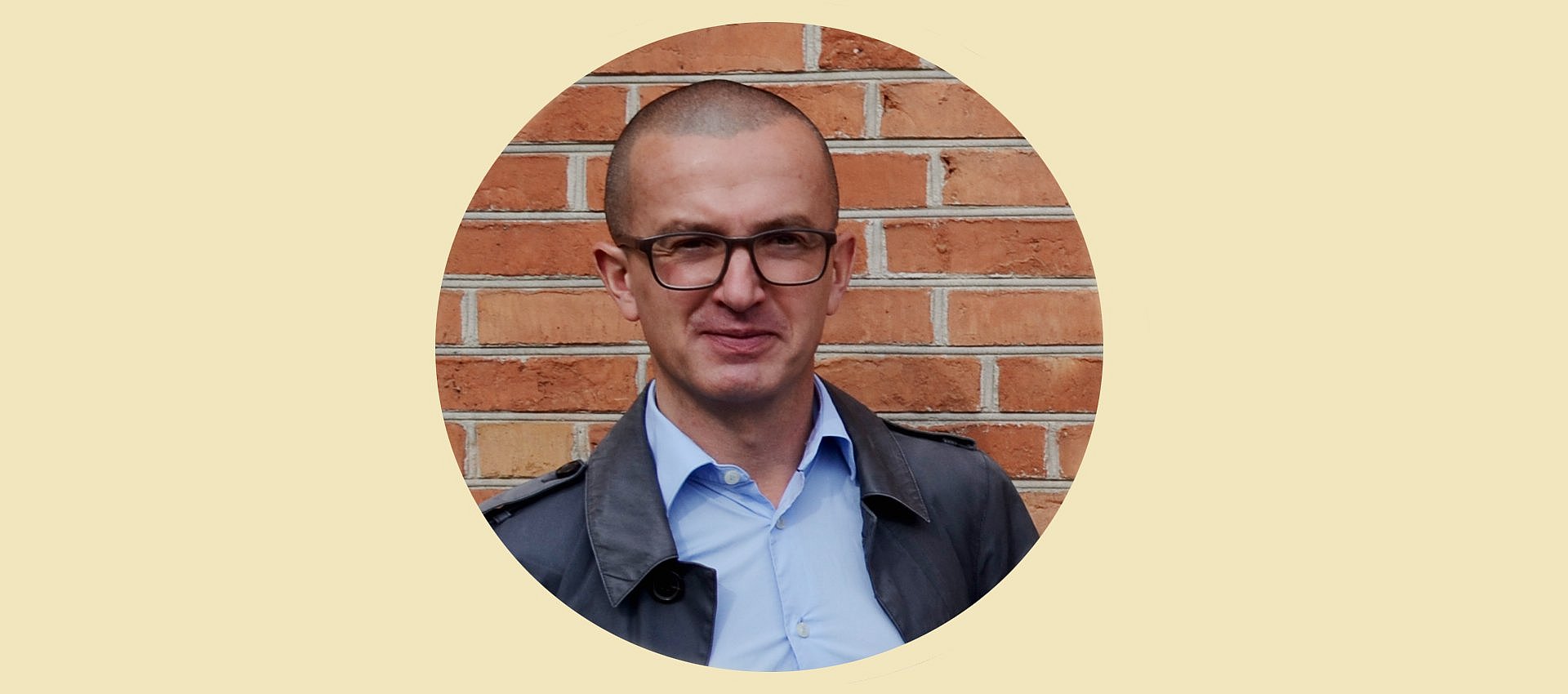
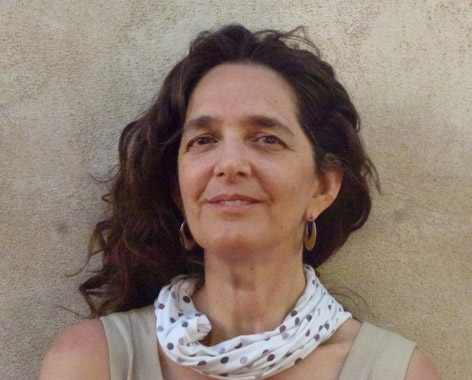
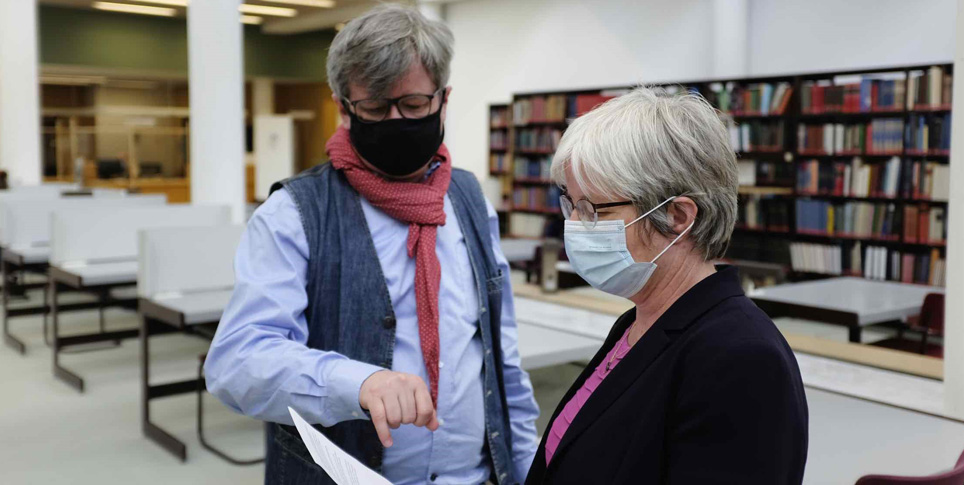
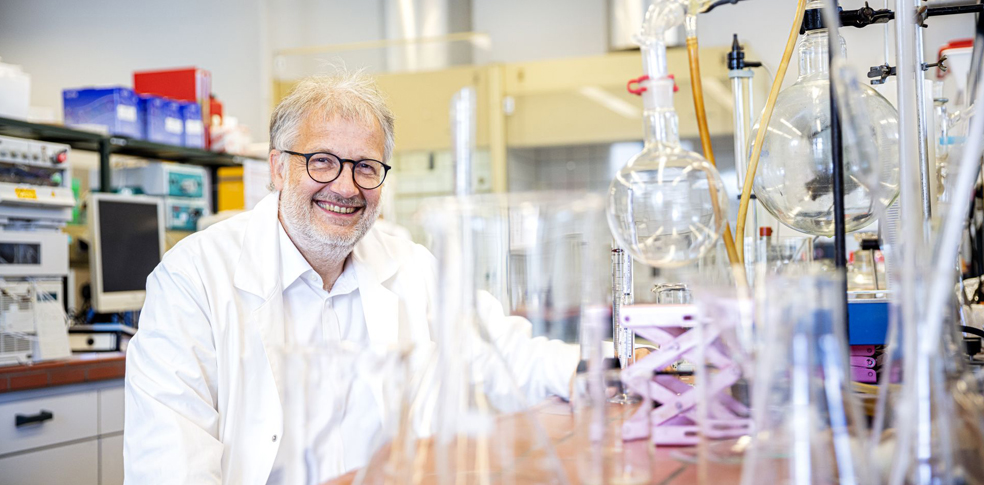
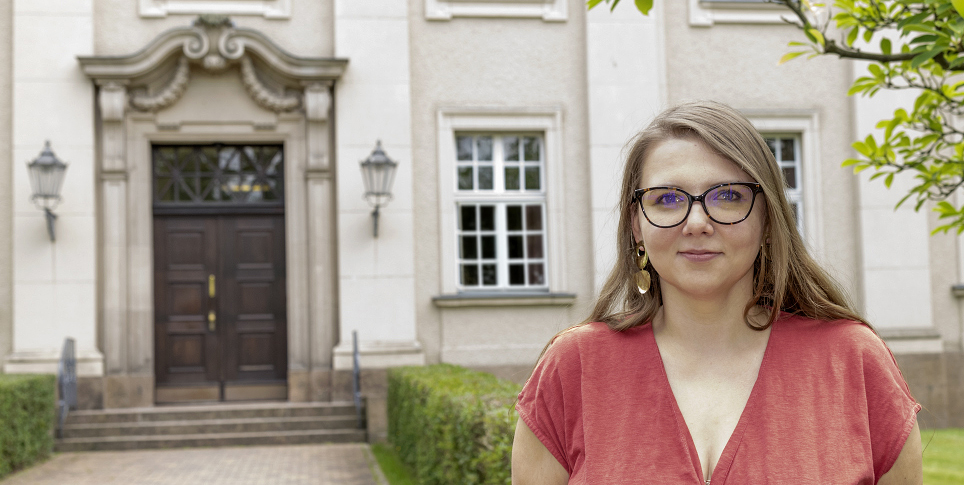
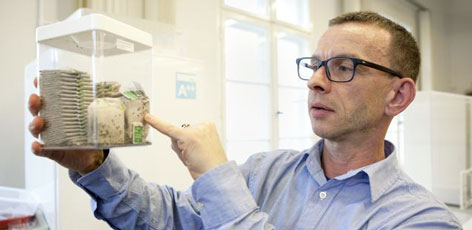
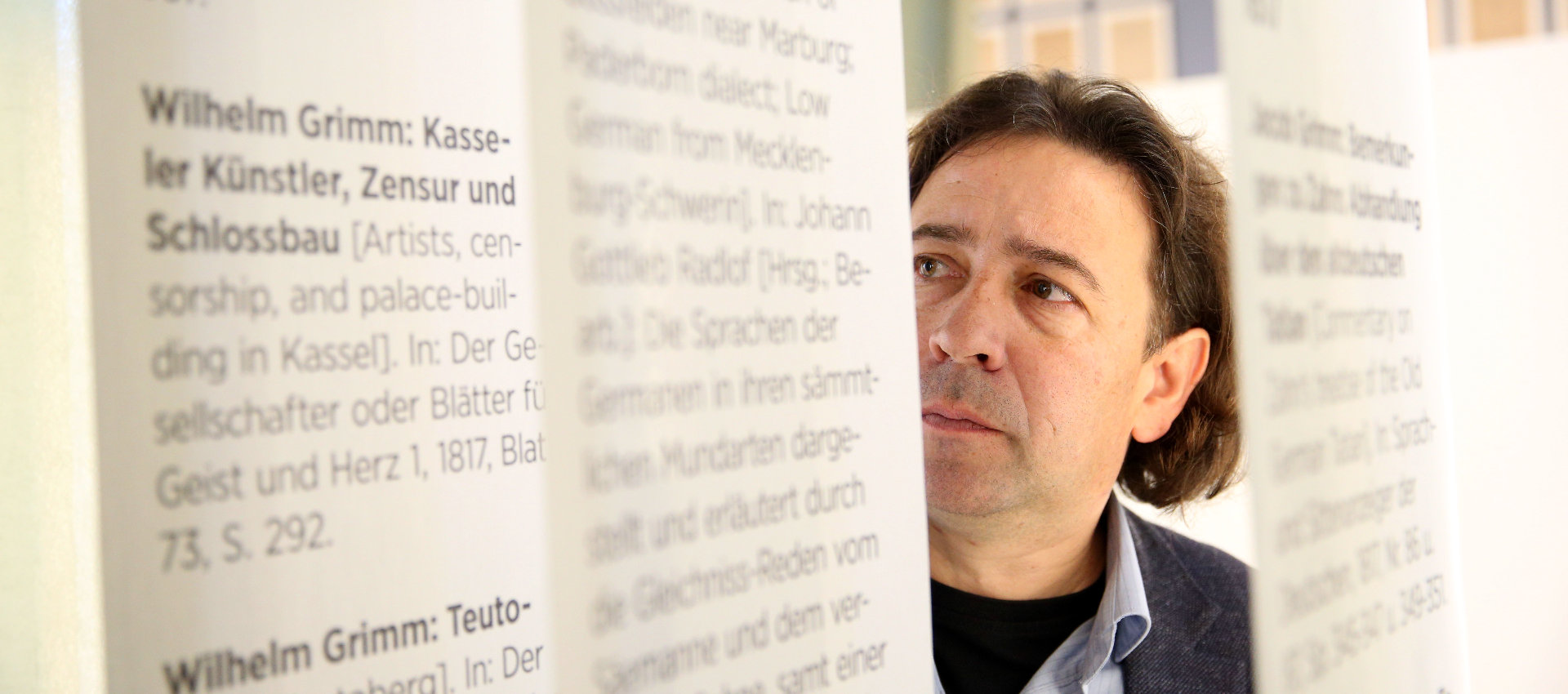
Dr Christian Mathieu is a research officer at the General Directorate of the Berlin State Library (SBB)
Photo: SPK/Jonas Dehn
What is the current status of its scholarly cataloguing and digitisation?
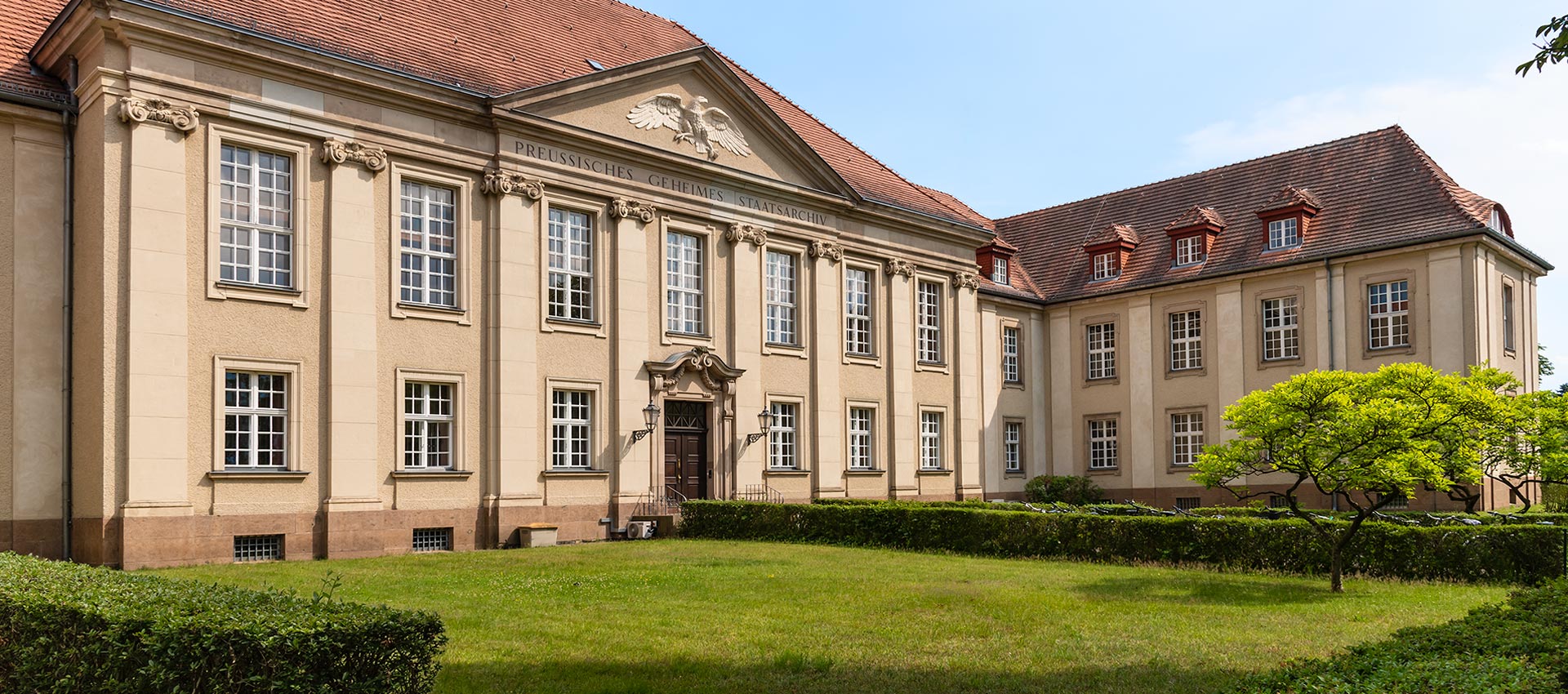
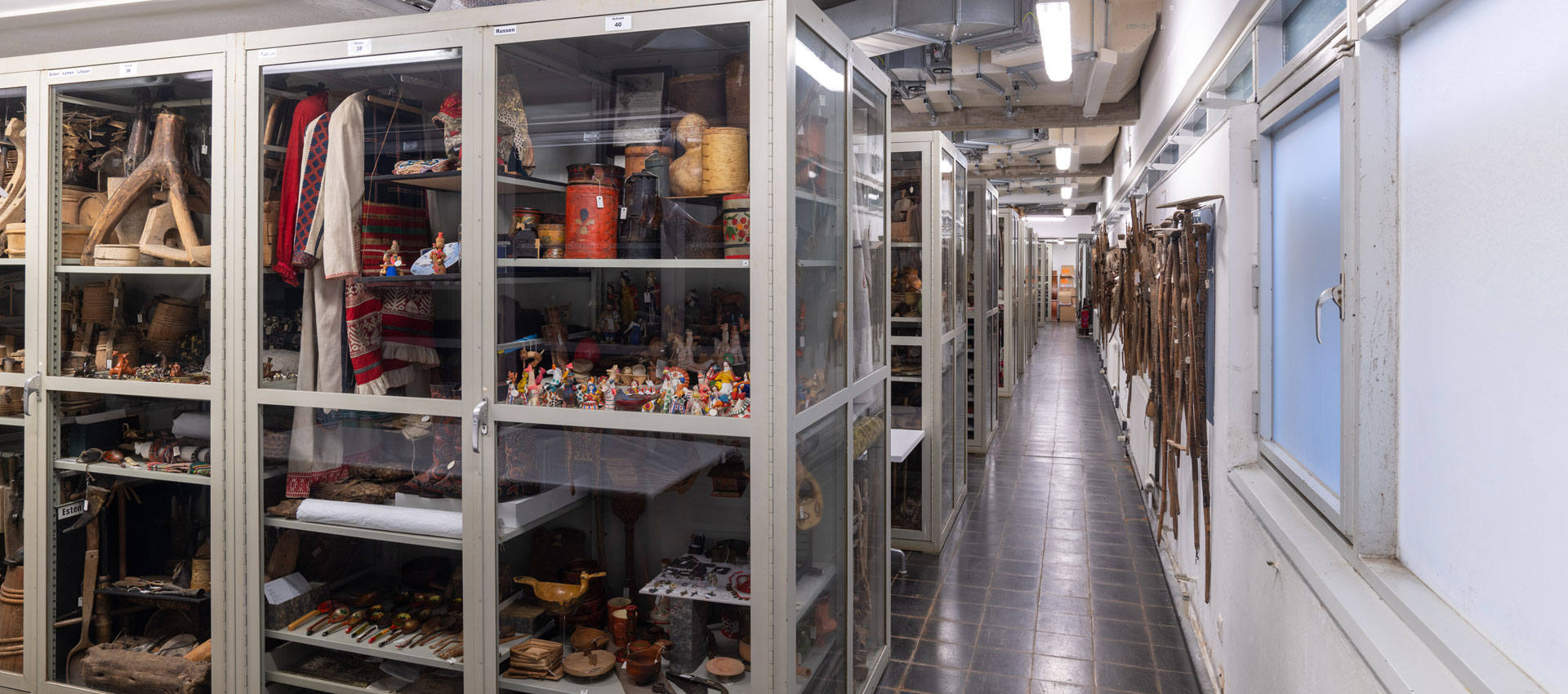
Mathieu: Due to its sheer volume and media diversity, Leni Riefenstahl’s estate is held in a decentralised manner according to material-related criteria at the Staatliche Museen zu Berlin – in the Photography Collection of the Kunstbibliothek and the Ethnological Museum respectively –, at the Staatsbibliothek zu Berlin (Stabi) and at the Stiftung Deutsche Kinemathek.
Given the unusual legal challenges posed by this collection – in terms of copyright, neighbouring rights and personality rights – a phased approach has been agreed for making it accessible in both analogue and digital form: The Stabi kicked off the process in 2022 by securing funding from the German Research Foundation (DFG) for a multi-year project – with the aim of scientifically cataloguing the approximately 590 screenplays, typescripts and other textual works, 17,000 letters (excluding fan mail) and 700 personal documents, and to digitise parts of them. All catalogue data and digitised material produced in the course of this project will be published in open access in Kalliope, the national catalogue of estates, autographs and publishing archives operated by the Stabi.
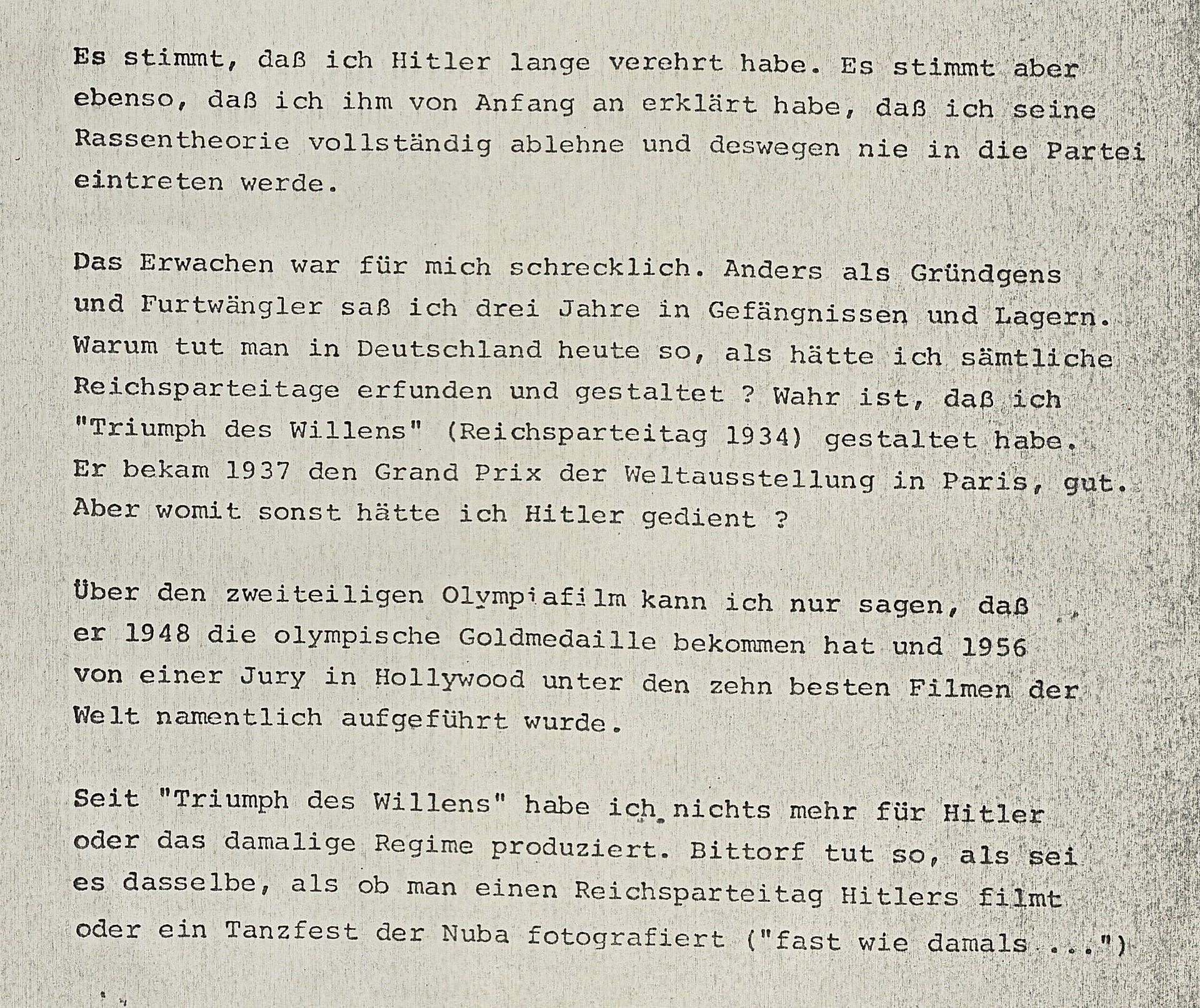
However, legal restrictions are by no means the only obstacle to the digital availability of large parts of Leni Riefenstahl’s estate – the Stabi is currently addressing these normative hurdles as part of a new joint legal research project, also funded by the DFG.
In order to address the ethical requirements for an appropriate online presentation of the (moving) images contained in the Riefenstahl estate in particular – e.g. with regard to the use and portrayal of victims of Nazi violence in the film Tiefland (1944/54) – a further accompanying research project has been carried out in recent years at the Prussian Cultural Heritage Foundation (SPK): the project funded by the Federal Government Commissioner for Culture and the Media, led by the Art Library and the Ethnological Museum, ‘Racism – Colonialism – Fascism? German-Sudanese collaborative cataloguing and presentation of Leni Riefenstahl’s Nuba work aims to incorporate the perspectives, wishes and needs of the indigenous populations depicted when digitising these photographs.
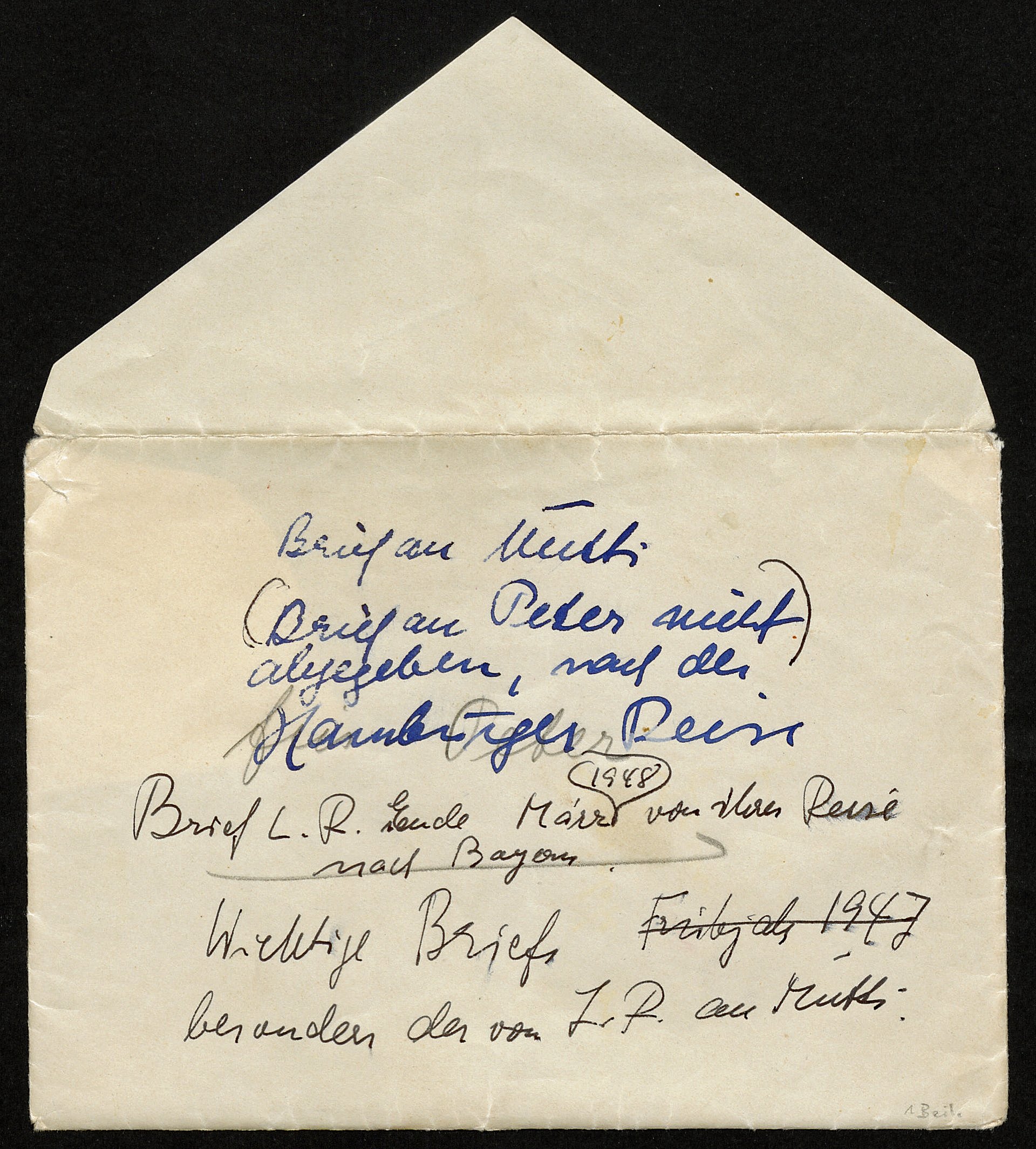
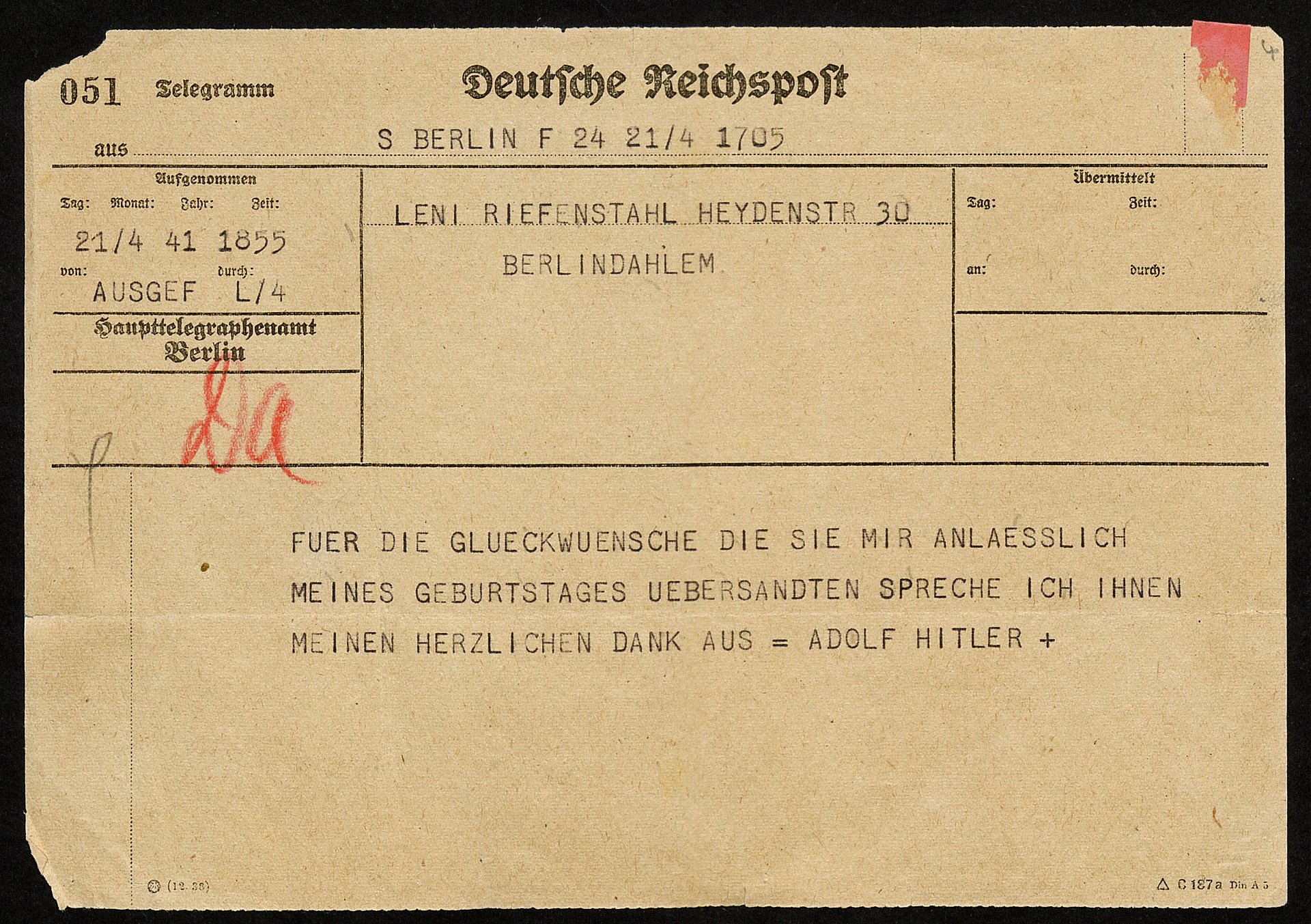
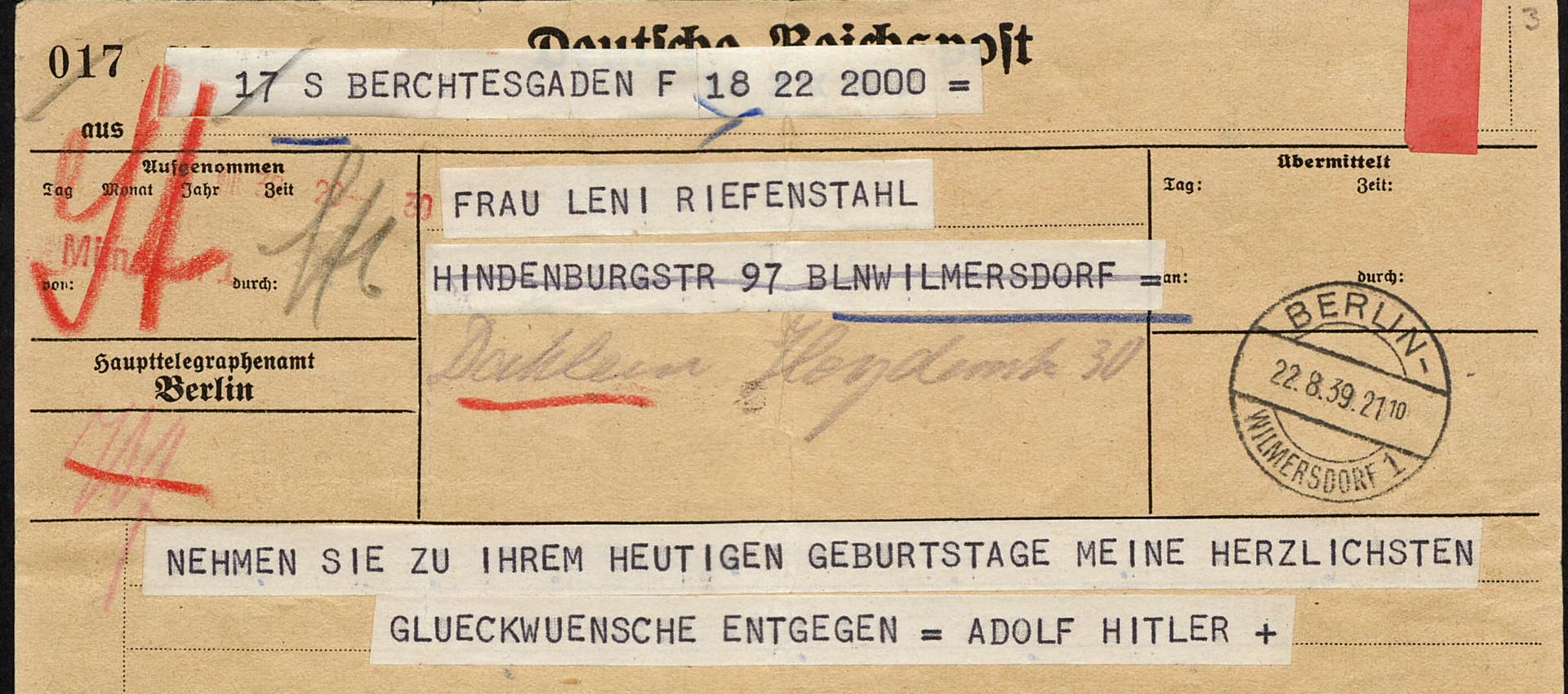
The collection acquired from the Stabi comprises Riefenstahl’s extensive private and business correspondence. Who did she correspond with?
Mathieu: As an artist who was particularly litigious and remained productive well into old age, Leni Riefenstahl maintained an extensive international network of correspondents. The bulk of her business correspondence was exchanged with law firms, her production companies, publishers and galleries. Otherwise, mail was sent to photographers and filmmakers such as Gunter Sachs, Maximilian Schell, Jodie Forster, Sharon Stone and Paul Verhoeven – these three Hollywood stars were, in fact, planning a biopic about Leni Riefenstahl.
Of particular relevance to research – for instance in the context of the Leibniz Centre for Contemporary History in Potsdam’s collaborative project ‘The Radical Right in Germany (1945–2000)’ – is above all her correspondence (as well as the telephone conversations she recorded) with Albert Speer, Hjalmar Schacht and other members of the Nazi elite. The letters addressed to these recipients in her estate, however, date almost exclusively from the period of the Federal Republic, which supports the thesis put forward plausibly in Andres Veiel’s documentary film that Leni Riefenstahl deliberately curated her estate in order to present herself as an apolitical aesthete devoted solely to art.
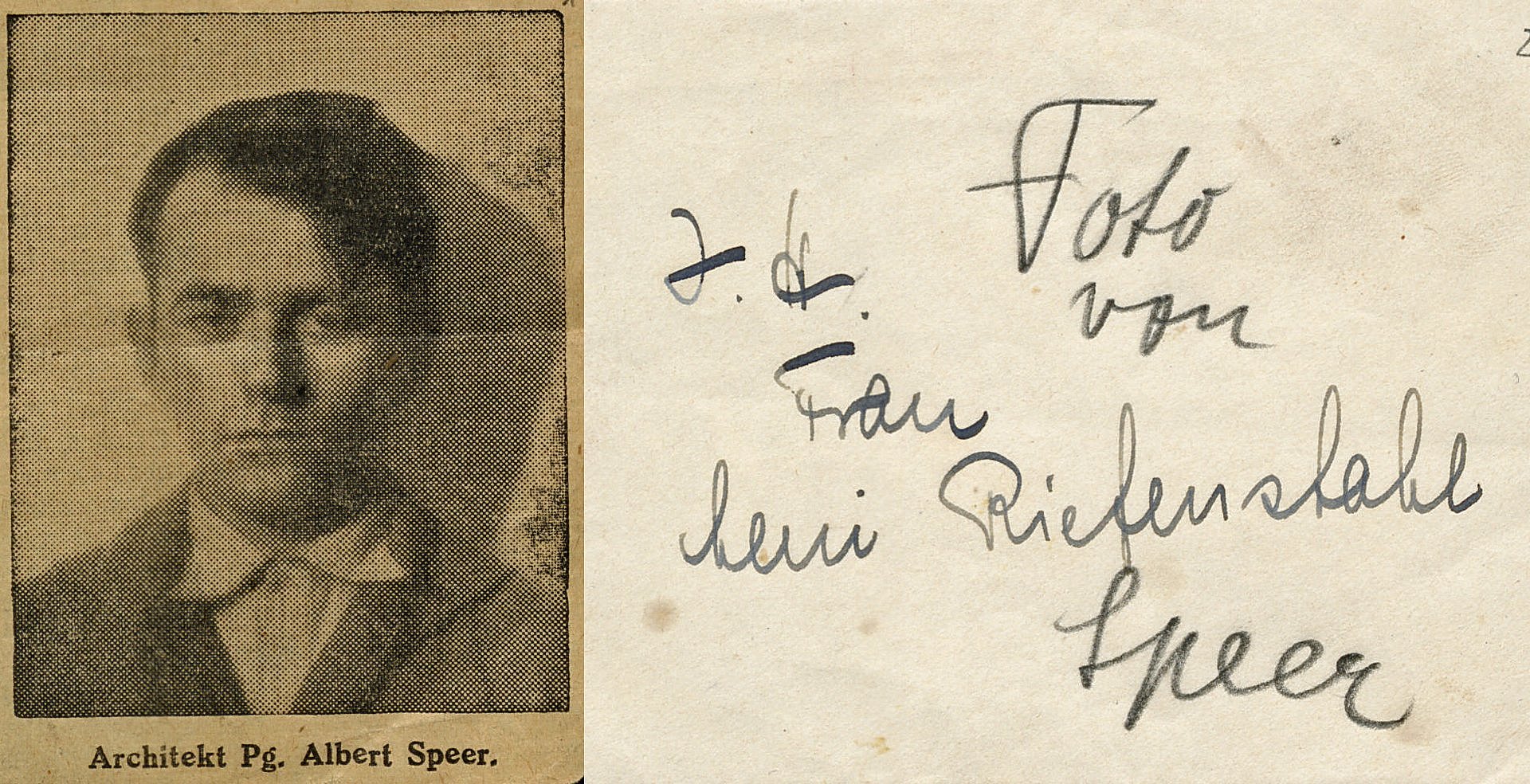
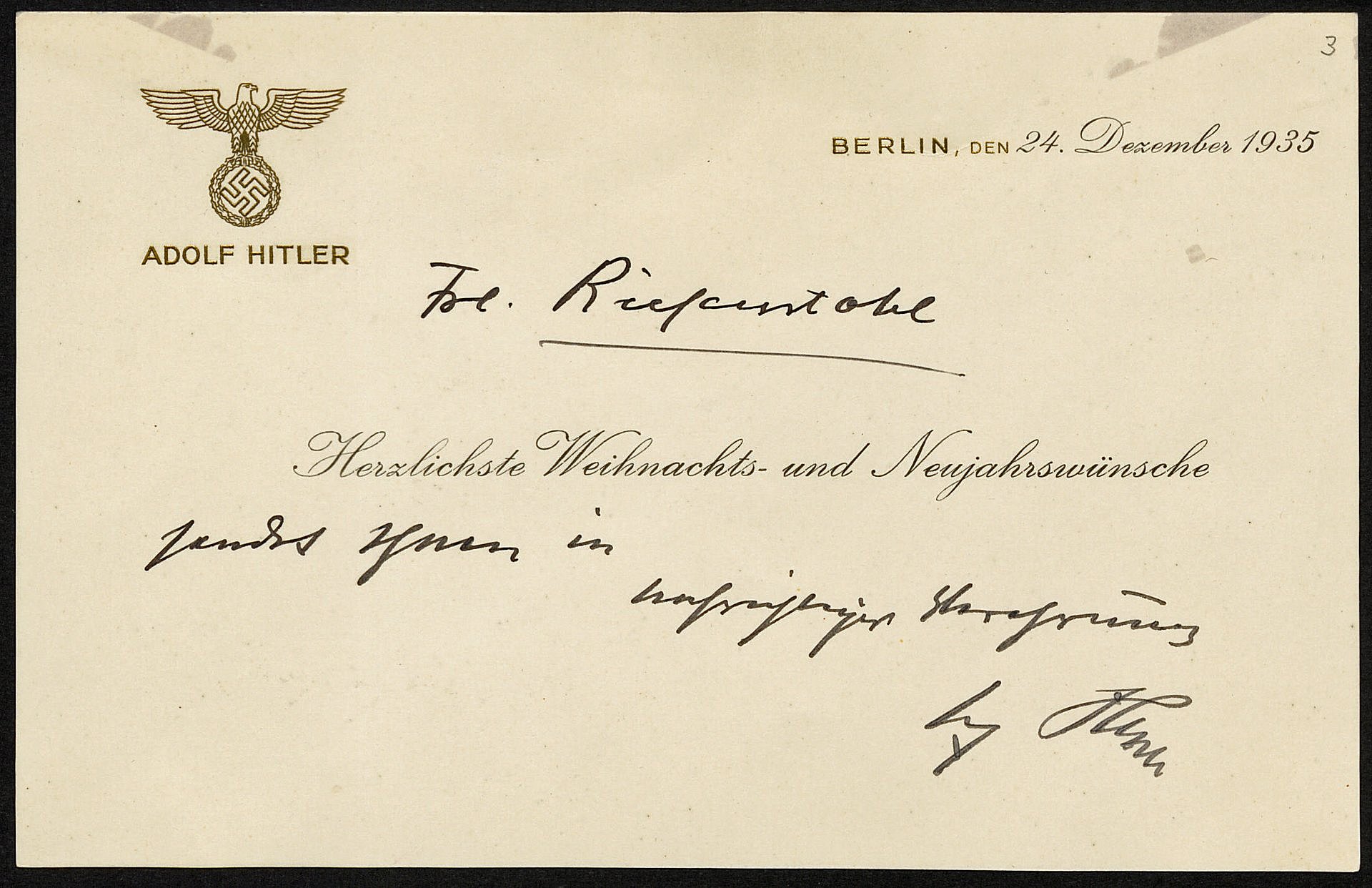
How else can one tell that Leni Riefenstahl curated her own legacy? And is it possible to counteract this intention to control one’s own posthumous reputation, and if so, how?
Mathieu: The remarkable volume of her written legacy from the period after 1945 stands in a peculiar contrast to the number of documents from the years prior. This finding may be due to the hardships and destruction of the Second World War, or the result of deliberate interventions, as suggested by the missing pages in Leni Riefenstahl’s address books.
Her intention to shape her posthumous legacy—or the reception of her work beyond her death—through deliberate self-stylisation is evident, at any rate, in her long-standing practice of archiving countless versions of her various statements, identical in text or differing only marginally, across a wide variety of contexts. This almost pervasive redundancy, characteristic of her entire estate, applies above all to the various memoranda on her films and the typescripts of her memoirs, published in 1987 – evidently, these texts were not to be overlooked.
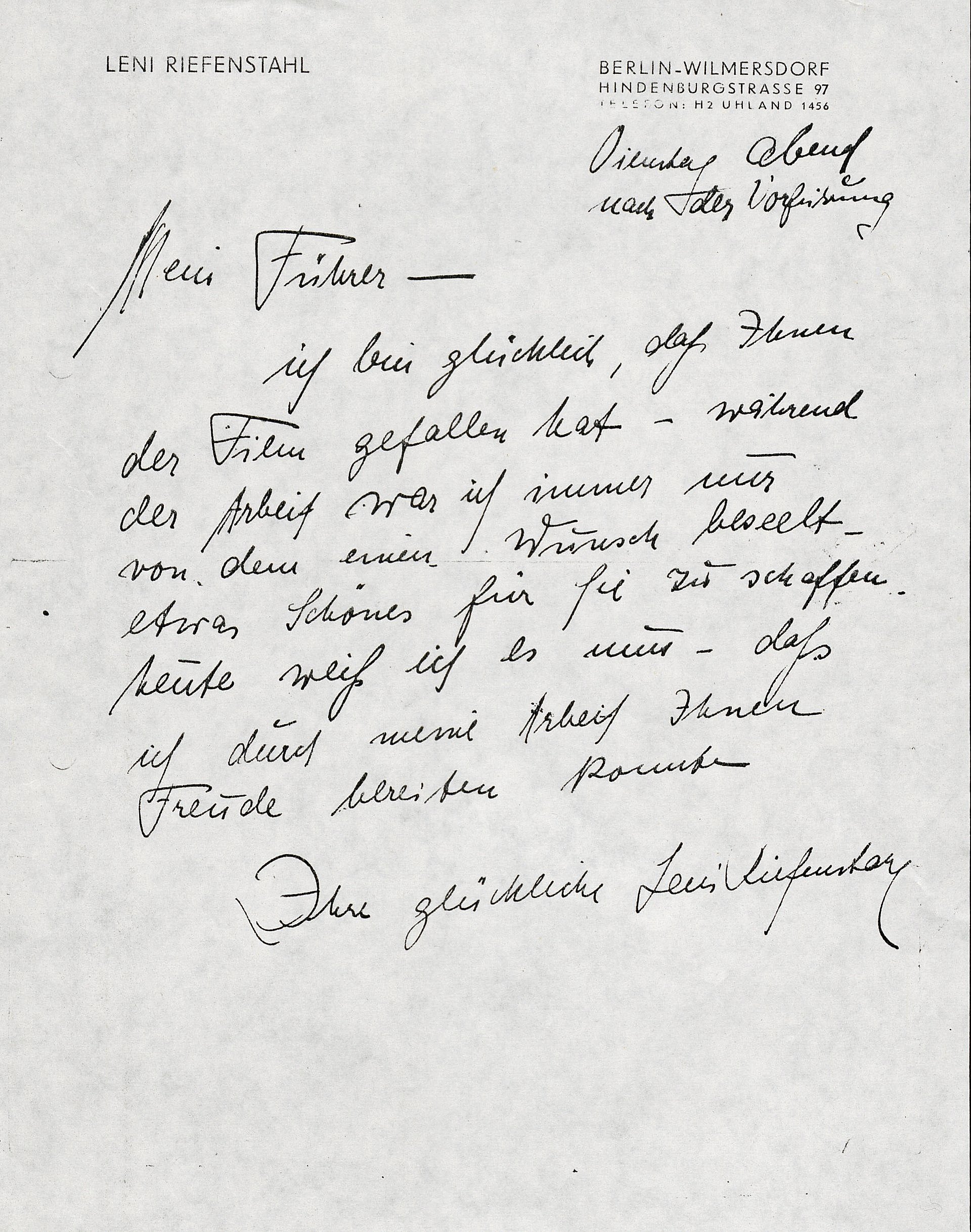
In a sense, our digitisation project inadvertently reinforces her intention: for with the donation of the estate, the SPK was also granted the right to make Leni Riefenstahl’s own works available online via open access – a step that is otherwise far too often prevented by the copyright or personality rights of the other individuals involved or depicted.
We intend to tackle this problematic imbalance head-on and make targeted use of the law as a tool to enable the virtual accessibility of larger sections of the content in her estate that was not authored by Leni Riefenstahl alone:
As mentioned at the outset, our institution, the Kunstbibliothek and the Hamburger Bahnhof – Nationalgalerie der Gegenwart have joined a further project as part of a DFG-funded collaborative initiative coordinated by the Stabi. The aim of this so-called pilot phase is to test legal, organisational and technical solutions for the digitisation and provision of collection items from archives, libraries and museums that are (still) subject to copyright. This legal sub-project, involving the three SPK institutions, is led by Prof. Dr Katharina de la Durantaye (Humboldt University of Berlin) and Prof. Dr Benjamin Raue (University of Trier).
In addition to musical works and contemporary media art, it focuses on the multimedia estate of Leni Riefenstahl in all its legal complexity: using these case studies, the aim is to assess the normative framework and legal options for making cultural heritage that is not yet in the public domain accessible across different media and disciplines.
This project is linked, not least, to the expectation that lowering the barriers to access will stimulate research into Leni Riefenstahl’s estate – let us see whether the self-image she painted will stand up to more intensive scholarly scrutiny. After all – at least according to the historian Heike B. Görtemaker – “in such an extensive estate, there is always something that may have been overlooked during the initial review.”
Further links
Project on the Riefenstahl estate
Website: Reclaiming Nuba Images
Riefenstahl in the Stabi’s digitised collections
Magazine article: These weren’t ‘your’ Nuba, Leni Riefenstahl!
Research Questions: How to deal with a sensitive legacy?
Blog post: In the witch’s cottage: A visit to Leni Riefenstahl