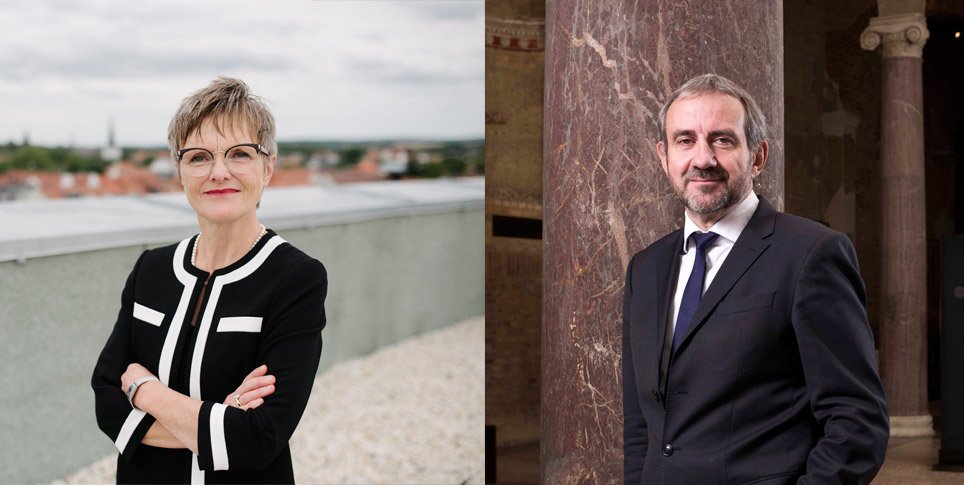
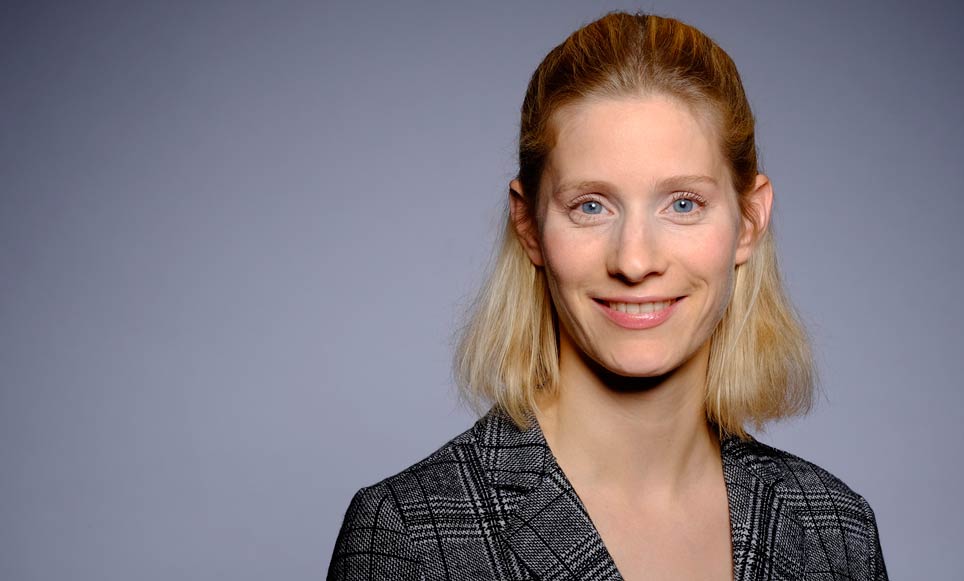
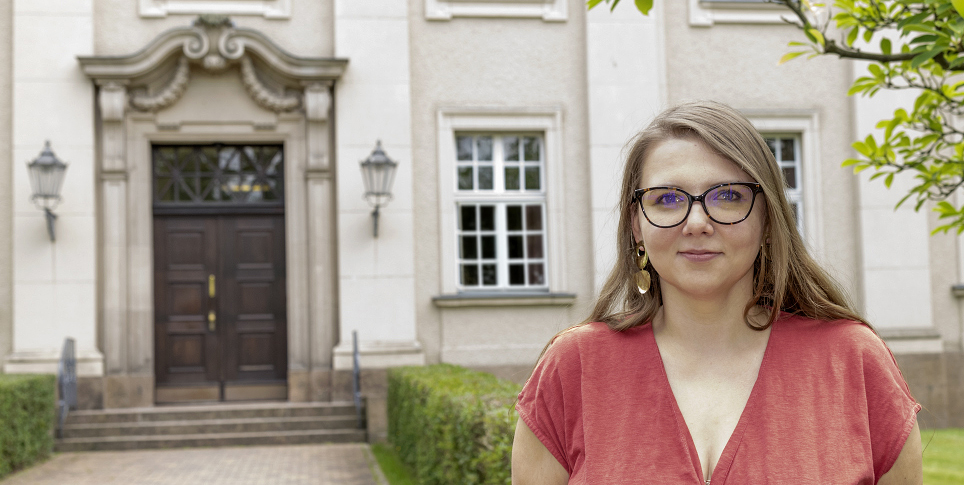
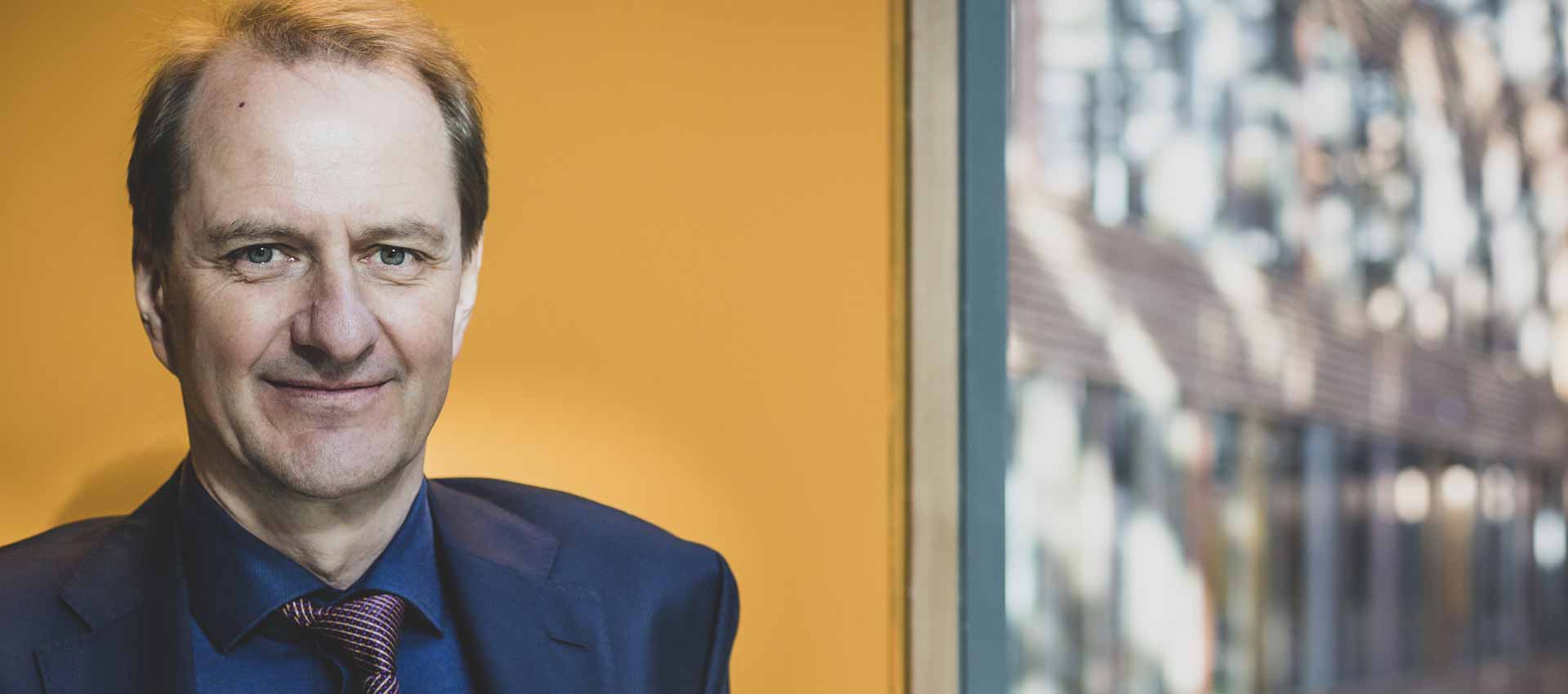
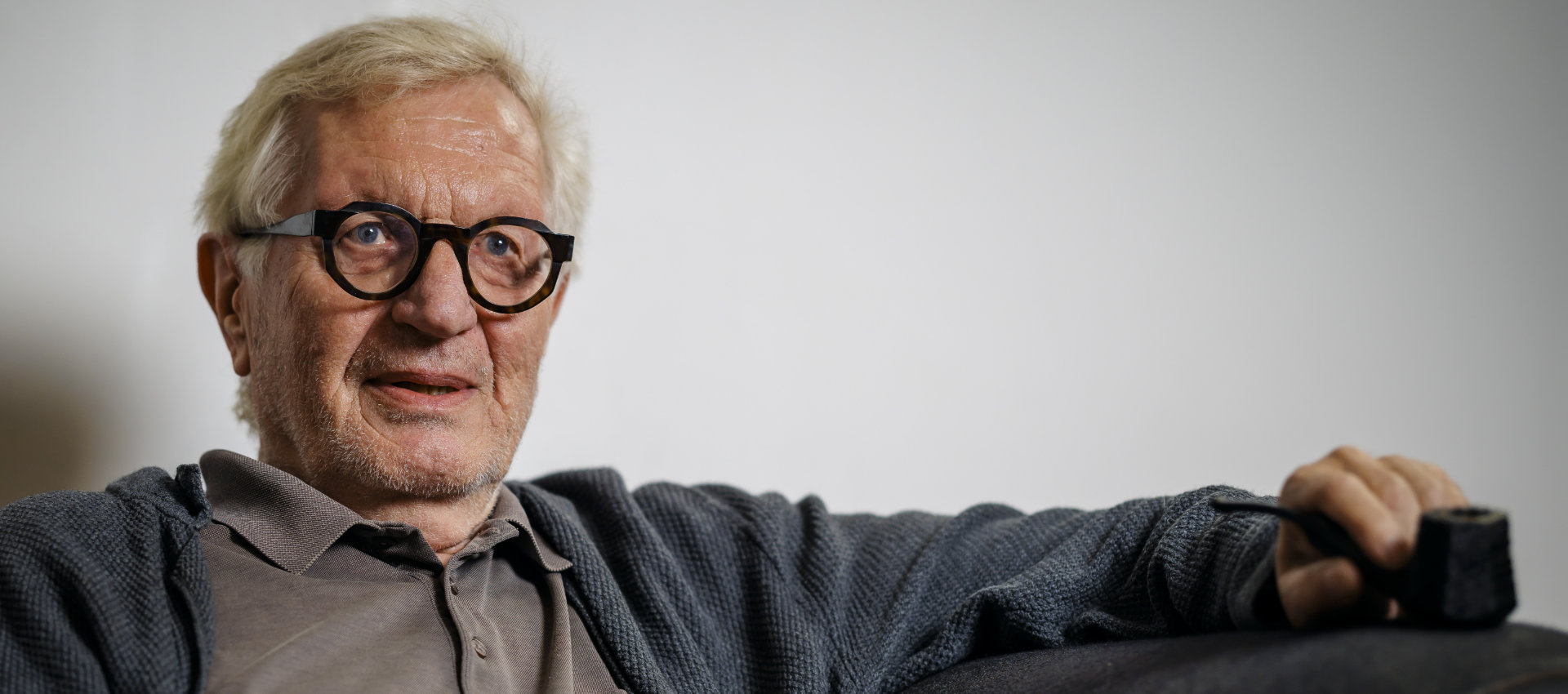
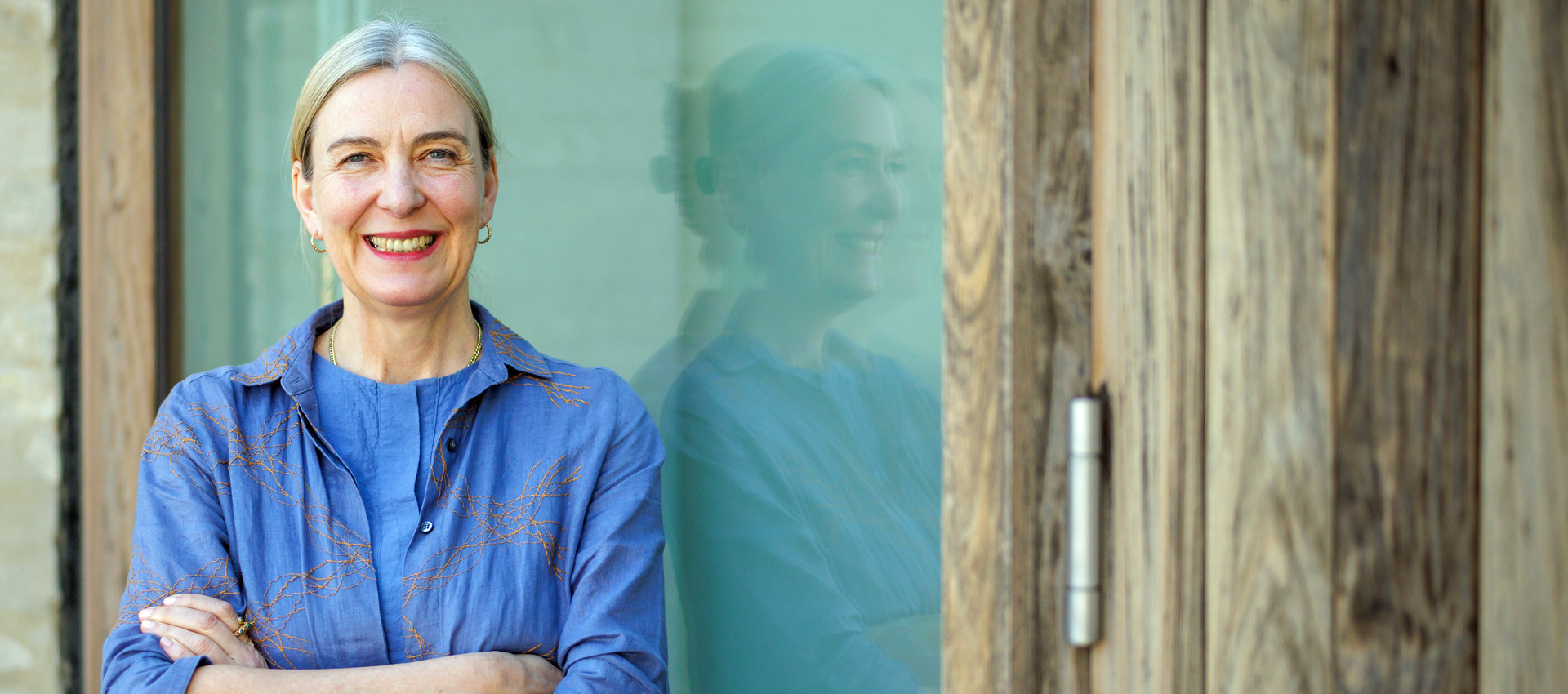
Freya Schlingmann is thrilled. She has been working at museum4punkt0 since December 2021, and the collaborative project has a big year ahead of it. As head of the central project management team, she is right at the heart of everything: a role tailor-made for this digitally savvy German studies graduate and museum enthusiast who appreciates the benefits of meditation.
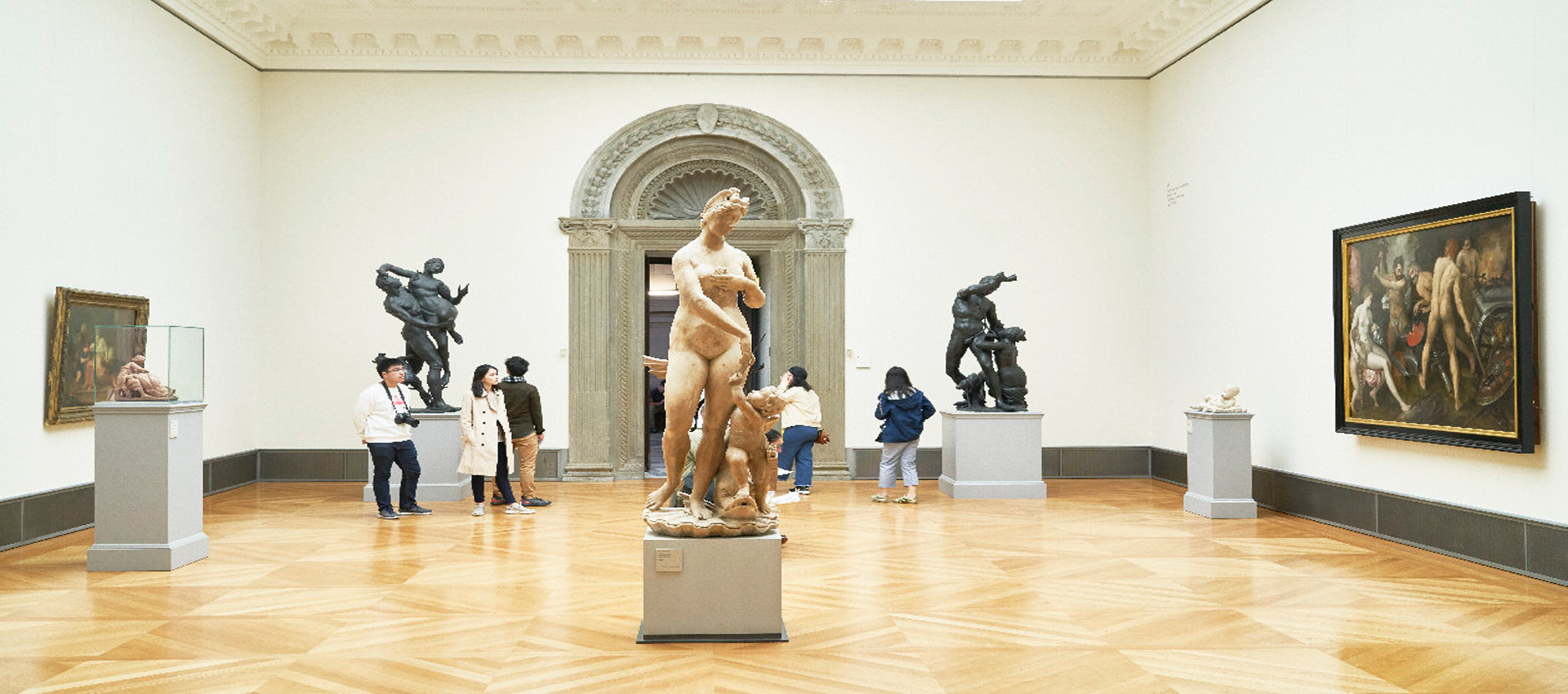
The fact that Freya Schlingmann now works on the museum4punkt0 collaborative project is, in a way, thanks to London’s theatre scene. “During my studies, I worked a lot and enjoyed working in the theatre. That was my passion. So, during my year abroad in London, exploring the local theatre scene was right at the top of my list. However, it was far less experimental and progressive than I had expected.” The search for alternative cultural offerings brought the open-minded Frankfurt native into contact with the English museum scene. An encounter with consequences. “A spark definitely flew. I was so enthusiastic that I’ve been a regular visitor to all kinds of museums ever since. They’re simply incredibly exciting places of learning.”
Her fascination with museums has never left her since. Since 2014, the graduate in German studies has been working in and for museums. Her first post was at the “SCHIRN”, the art gallery in the beautiful old town of Frankfurt am Main. This was followed by the world-renowned Städel Museum. The focus has always been on how to harness the potential of digital technology to create experiences for visitors. For Freya Schlingmann, this is a matter close to her heart: “My aim is to strengthen the museum sector in the long term and to bring the benefits of digital technology more fully into the cultural sphere. That doesn’t mean we should make everything digital. But we must ask ourselves how we can make the most of the opportunities offered by digital applications. How we can combine the analogue and digital in such a way that both areas are strengthened and content can be conveyed more effectively.”
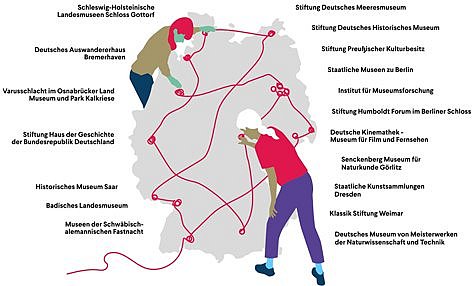
The same questions are also on the mind of museum4punkt0. Since 2017, this collaborative project has been working to guide museums into the digital age. A total of 18 cultural institutions of varying sizes are involved. Together, they test and develop digital tools and applications, and explore new ways of engaging with audiences at a time when visitor behaviour is changing.
At the heart of it all is the central steering team. Based at the SPK, the project team coordinates the work of museum4punkt0. It supports the individual projects, communicates the network’s work to the outside world and organises exchanges between the partners. Freya Schlingmann joined the team as the new team leader in December 2021.
One of her first tasks is to work on the new application for the third funding phase, running until the end of 2022. The project is funded by the Federal Government Commissioner for Culture and the Media. Originally, museum4punkt0 was set to run for three years, but it has since been extended several times and is currently scheduled to run until June 2022.
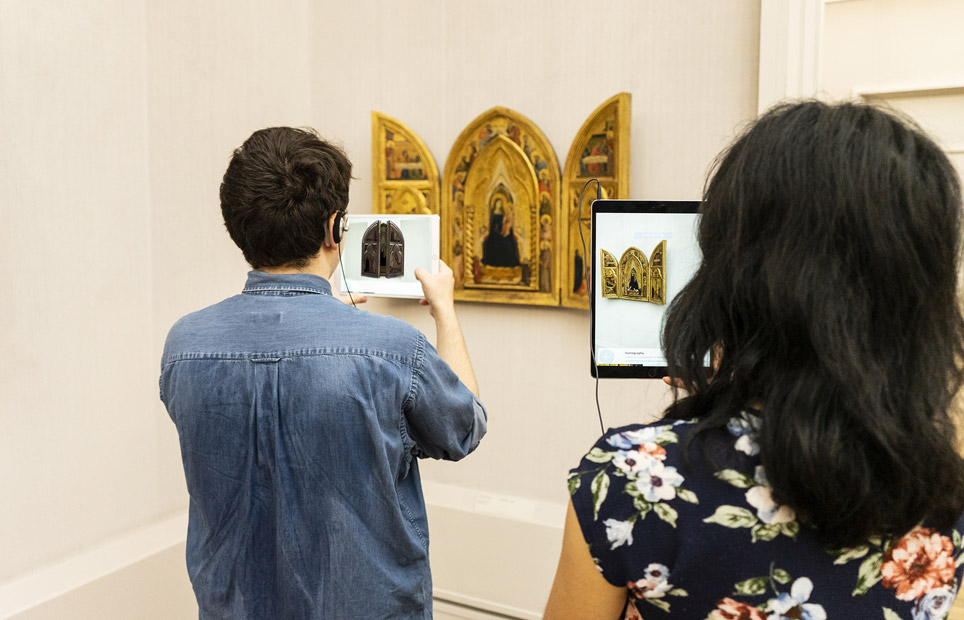
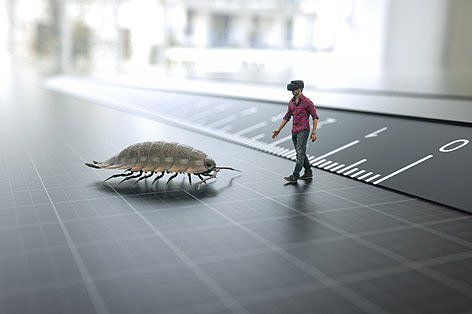
Schlingmann believes the collaborative project is well prepared for the coming year. “We already have project partners spread across the whole of Germany. For the new funding application, we are currently compiling a list of the apps and results produced so far. This really brings home just how much creative potential lies within the network, and how beneficial and versatile the applications are. If the project application is approved, a further 9 partners and 4 federal states will join in 2022.” Schlingmann leaves no doubt that we can expect a great deal more from museum4punkt0. Her enthusiasm is evident when she talks about the planned conferences in May and the autumn. Once again, the programme will feature exhibitions where the consortium partners present their projects. The public will then be able to try out the applications for themselves. “Shrinking to the size of a woodlouse via virtual reality and discovering the animal life beneath the ground, or engaging in a dialogue with the museum objects themselves using apps – these are impressive experiences that would not be possible without digital applications and which give a glimpse of just how much more is still possible.”
As a passionate museum-goer with a keen interest in digital technology, she has often found herself in the role of the user. However, since working at a digital agency and later at SCHIRN and Städel, she has also become fascinated by the development process of digital applications – how experts from different departments and disciplines must collaborate to achieve the best possible result. Both experiences are valuable for understanding what will be important in the future and where the cultural sector is heading.
“We will have to consider how we want to handle code in future. Do we continue to build disposable code, or do we ensure from the outset that it won’t become obsolete with the next update, or that it can be reused by other cultural institutions? In the long run, the cultural sector cannot afford to invest resources in apps or digital collections that take years to build up and then have to be rebuilt from scratch because they are no longer compatible with current technologies, devices and browsers. “We must bear in mind right from the design stage that digital products have a half-life and that technical requirements must also take product longevity into account.” This is a lesson learned from the early years of museum4punkt0 and, at the same time, highlights the great opportunities offered by the collaborative project. “Some of our applications are particularly exciting because several museums benefit from them at once. Different institutions can adapt them to their needs and objects with relatively little effort,” explains Schlingmann. The application “Ping! The Museum App” is one such example. It was originally developed on behalf of the Humboldt Forum Foundation at Berlin Palace, and initially designed and tested in cooperation with the Bode Museum. Further development took place in collaboration with the Badisches Landesmuseum, where it is also in use today. Most recently, the Senckenberg Museum of Natural History implemented the application for its Görlitz branch under the name “Mein Objekt”. According to Schlingmann, this is the key to transforming the museum landscape in Germany: developing innovative projects together and sharing knowledge with one another.
Does the digital world play such a significant role in her free time as well? Freya Schlingmann has to smile at this question. “I do organise myself very much using digital tools, and that certainly applies to my leisure activities too. But when I have the choice, I prefer to go for a long walk or meditate. When sitting facing the wall, our curiosity and beginner’s mind are called upon: What will I encounter today? How do I look openly at everything that comes my way? An important ritual that I – not just when sitting – prefer to practise daily. And then in the traditional way, without an app.”