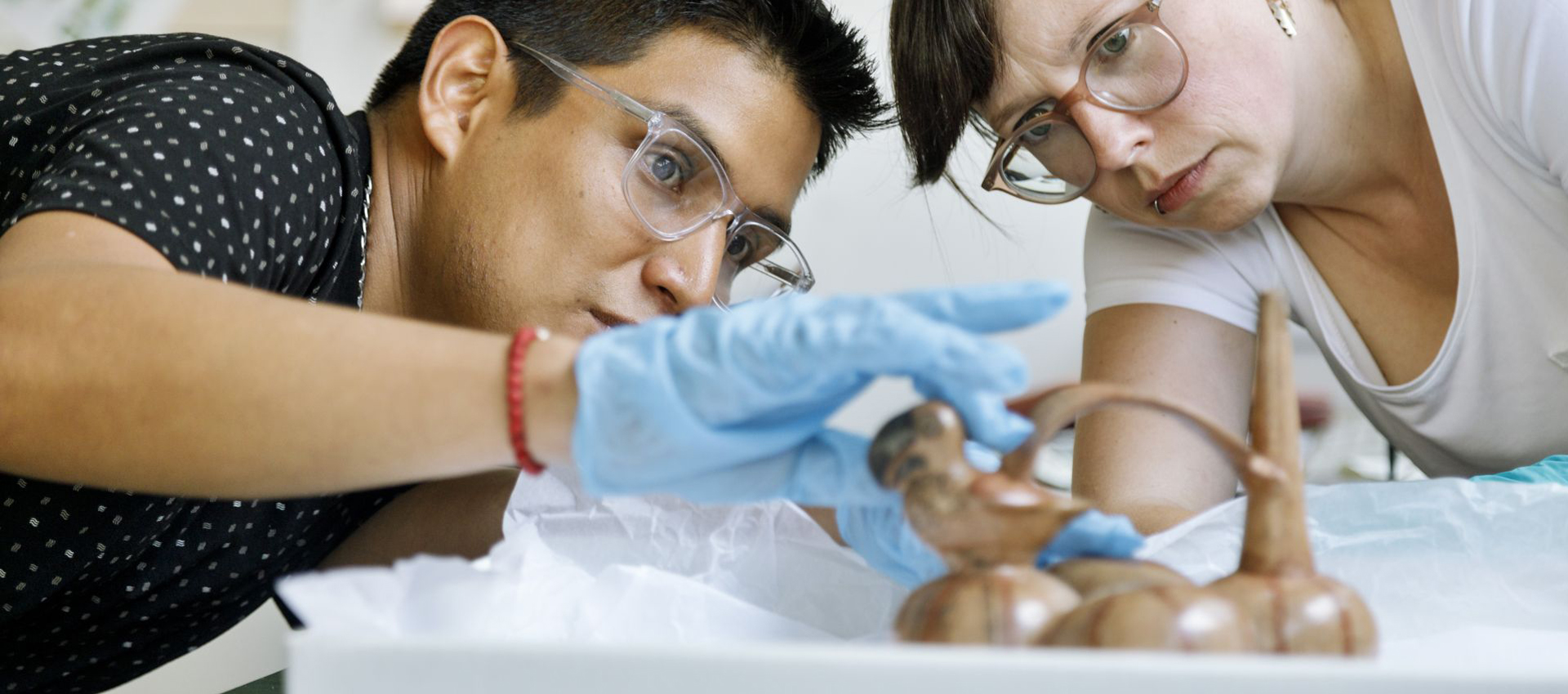
Dahlem is a place of collaboration. The Director of the Botanical Garden, the President of the FU and the Director of the Institute for Museum Research discuss common ground and connections
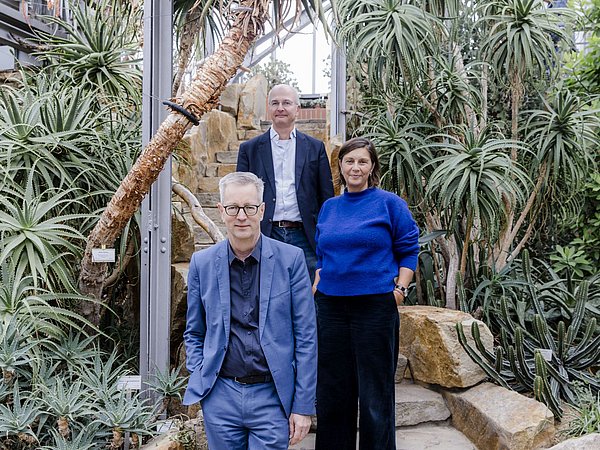
Mr Ziegler, in the 1990s, as East and West began to merge in Berlin, a process of re-centralisation took hold in the city. The focus was on Museum Island and the historic university buildings of Humboldt University. Did this mean that the museum and research landscape in Dahlem was overlooked?
GÜNTER M. ZIEGLER: I came to Berlin in 1992 and initially viewed events from the city centre myself – at the time I was conducting research at the Konrad Zuse Institute. And from that perspective, Dahlem and the Free University were indeed far out in the countryside. But this green space also had a special quality. That was already the case at the turn of the 20th century, when the Kaiser Wilhelm Institutes and the Botanical Garden established Berlin as the ‘German Oxford’, and it was still the case in 1992.
Back then, at the time of reunification, the FU had over 50,000 students; today there are 38,000. That certainly also draws attention away from this special district with its unique history.
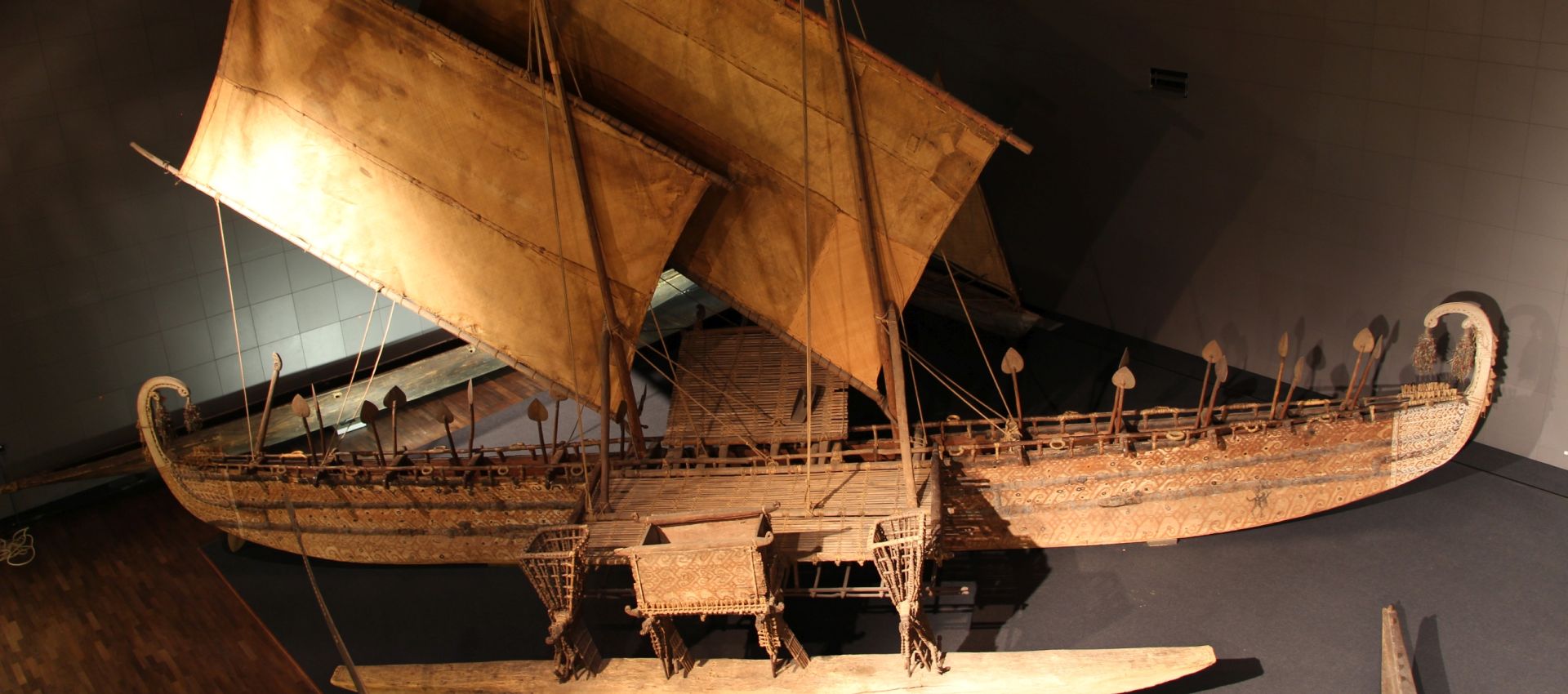
ZIEGLER: The FU has become significantly smaller, but also better. Its status as a University of Excellence has further boosted an already existing dynamic. But with the SPK in the neighbourhood and the truly spectacular collection of the Ethnological Museum, there are incredible treasures for research and scholarship right here on site.
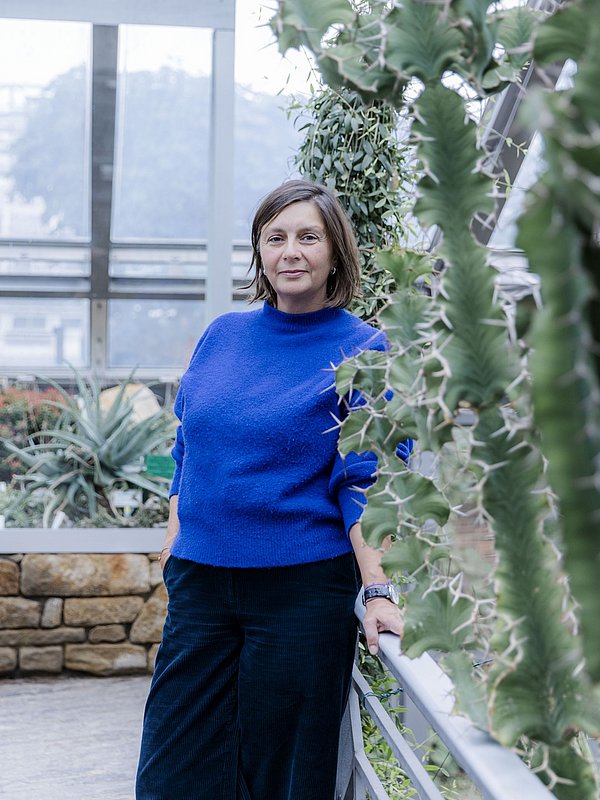
The SPK’s collections have indeed remained in Dahlem, but the exhibitions are now on display at the Humboldt Forum. Doesn’t it sometimes feel a bit lonely on the outskirts of the city, Ms Rahemipour?
PATRICIA RAHEMIPOUR: A museum is, of course, much more than its exhibitions, which are based on prior research. It consists of its collections, which are researched, preserved and used for collaborative work. All these aspects are still very much alive in Dahlem. Ninety-eight per cent of the Ethnological Museum’s objects are located here. Moving the exhibitions to the Humboldt Forum was a logical step from an urban planning perspective.
On the other hand, many major cities have long been experiencing overuse of central areas. Will this mean that the periphery will become more important again in the future?
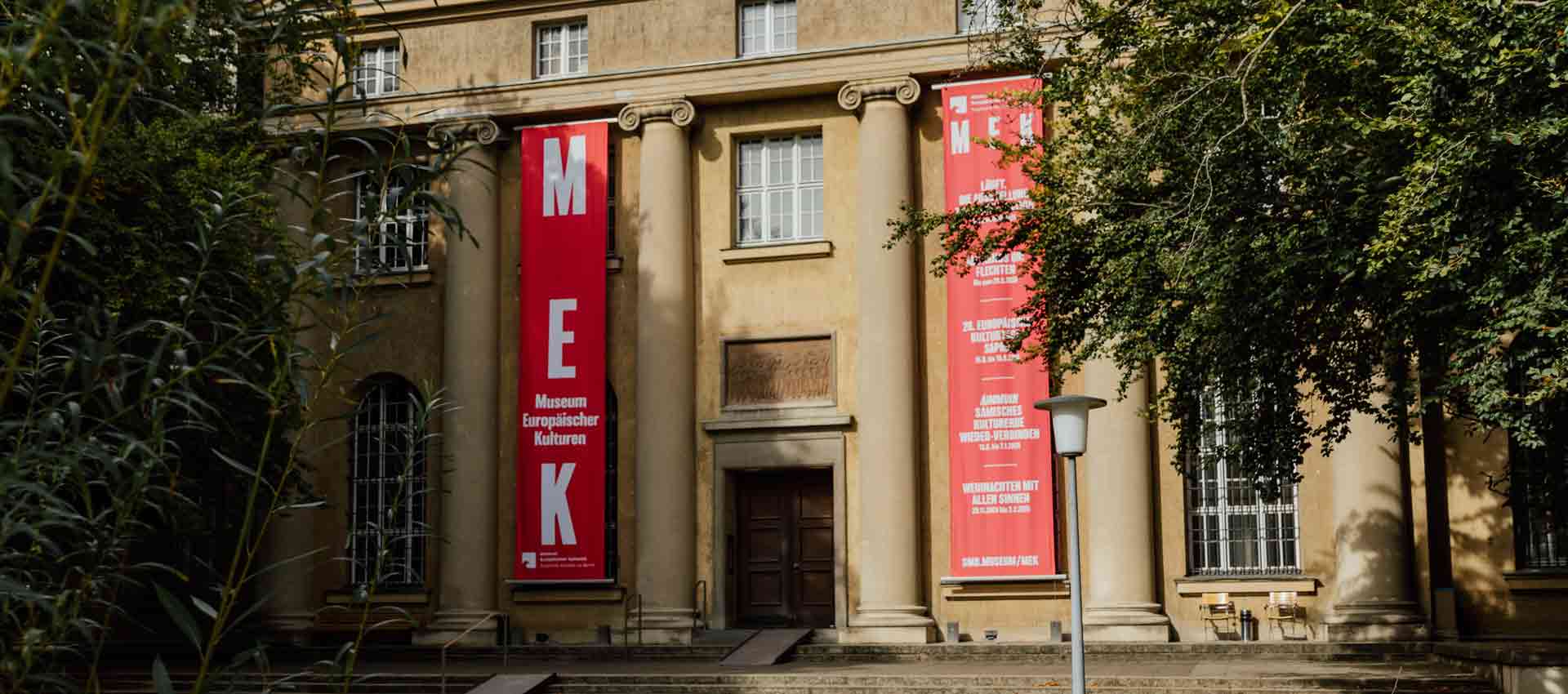
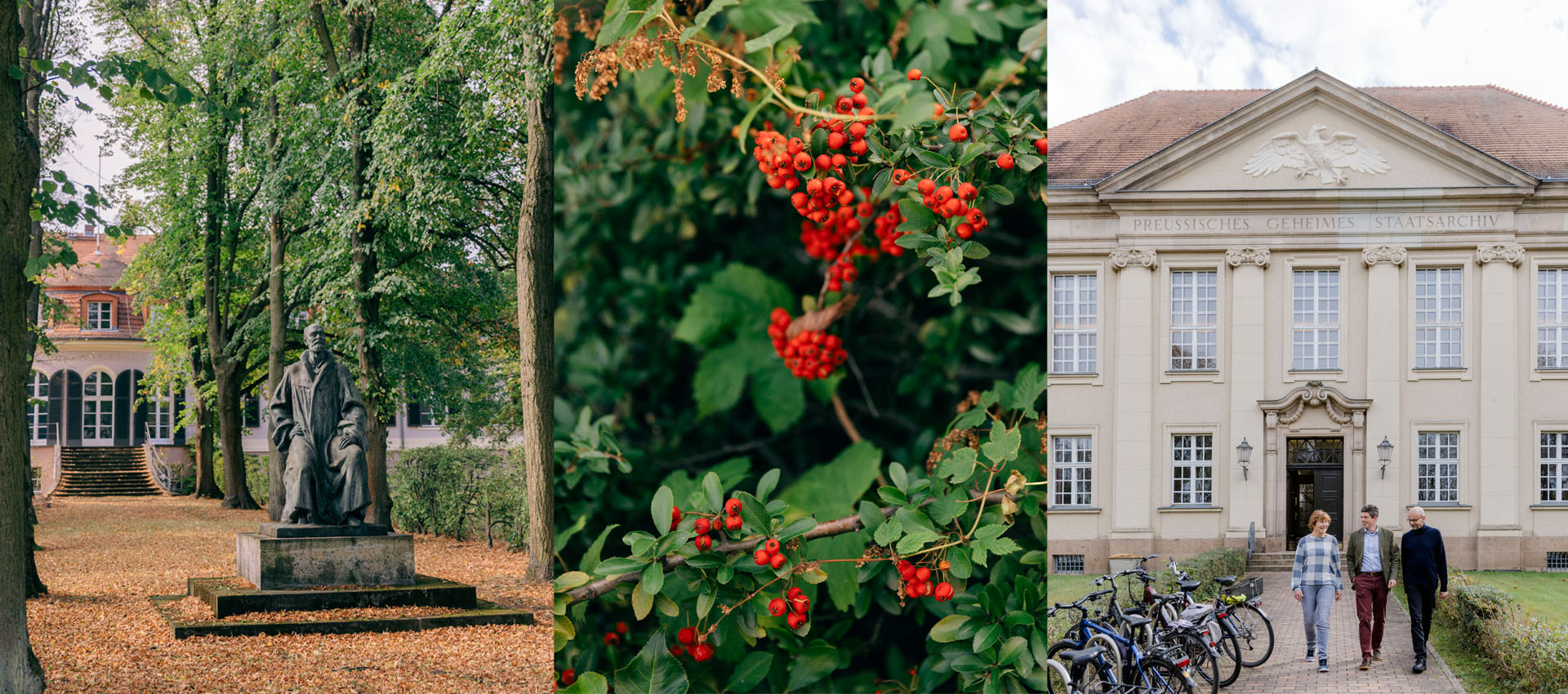
RAHEMIPOUR: We must make it clear that we need a decentralisation of cultural offerings for the future. City centres are reaching the limits of their capacity. Dahlem will play a more important role in the future: we have great museums and research institutions here. There is the FU with its Botanical Garden and Botanical Museum, the Museum of European Cultures, the Dahlem Estate, the Secret State Archives and the Institute for Museum Research. We don’t have to look far to give this place a purpose.
What is it like at the Botanical Garden, Mr Borsch – even when it first opened in 1903, it was a favourite with many Berliners. How popular is it with the public today?
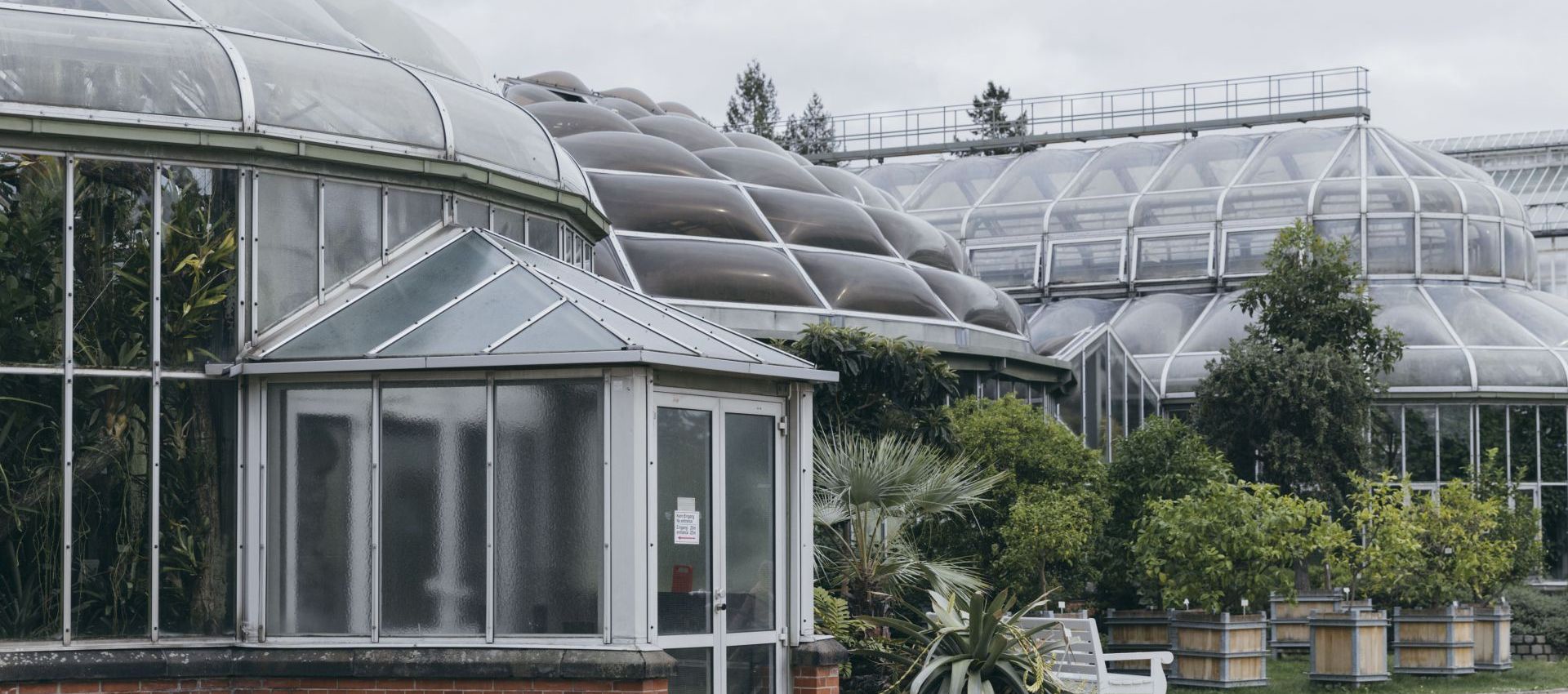
THOMAS BORSCH: The Botanical Garden reaches the public in a different way to a museum. It is not just a place of learning, it is also a place of relaxation. Our Botanical Garden, in particular, is accessible in the best sense of the word. Moreover, many of our themes – sustainability, biodiversity, the climate crisis – are now firmly embedded in the public consciousness. This may not automatically be reflected in visitor numbers, but we are closely intertwined with society and its current debates.
For Dahlem, ‘interconnectedness’ is a key concept. After all, even when this ‘German Oxford’ was founded by the Prussian cultural politician Friedrich Althoff, one of the core ideas was to bring different disciplines together. How much of that old spirit is still alive today?
BORSCH: Many connections arise simply from the joint study of objects from the collections. There was a time in Germany when objects were literally ‘out of fashion’. The reductionism of the post-war period had made everything related to biological systematics seem outdated. Today, however, it is clear that objects are once again playing a major role in all fields of knowledge.
ZIEGLER: Even in mathematics, people are beginning to reflect on the value of collections once more.
BORSCH: In many scientific disciplines, the verifiability of knowledge depends on objects. The evolutionary history of organisms, and thus biodiversity, can only be researched in this way. The motivation for collecting therefore does not lie in a research institute wanting to add something new to its shelves, but because this is how knowledge is generated.
RAHEMIPOUR: In science, just as in a museum, it is always about thinking about objects together, categorising them, restoring them and working with them.
ZIEGLER: Through our collections, we aim to understand global interconnections. The FU’s collections reflect every issue facing the world – from climate change to the food crisis; or, to turn to the SPK’s ethnological collections – from colonisation to global justice.
BORSCH: Our collections are growing rapidly due to ongoing research. Every year, 40,000 objects are added to the Botanical Collection.
Won’t you run into space issues at some point?
BORSCH: Many specimens aren’t very large. And the types of specimens are closely linked: we don’t keep every plant permanently as a living specimen; seeds from many of them are then stored at minus 20 degrees in our Dahlem seed bank. Accessioning and deaccessioning are interlinked.
I’d like to return to Althoff’s interdisciplinary approach …
RAHEMIPOUR: Interdisciplinarity was quite normal back then. In that respect, Althoff was a child of his time.
Nevertheless, collaborative work needs to be coordinated. In this respect, Friedrich Althoff is said to have possessed great talent – people even spoke of an ‘Althoff system’. What does the interdisciplinary approach look like in everyday practice today?
BORSCH: Interdisciplinarity isn’t always that straightforward. Different disciplines speak different languages. At the FU, we carried out a biodiversity research project with partners in Colombia. Scientists from the Latin American Institute, the Department of Political Science, the Department of Geography and the Botanical Garden were involved. It took quite some time before we even understood who thinks how and how the same terms are associated with different ideas.
RAHEMIPOUR: Nevertheless, collaboration here in Dahlem is the norm – even between institutions. I don’t have to say: ‘Come on, do something with the FU!’ It’s not top-down. Structures are established and discussions initiated. It’s about breaking down hierarchies of knowledge.
ZIEGLER: That’s precisely the famous Dahlem spirit.
RAHEMIPOUR: Exactly. It’s much more fun that way, isn’t it? It allows for innovation and new ideas to emerge.
Another relatively new initiative is the Dahlem Research Campus, which initially aims to foster collaboration within the SPK. What is it all about?
RAHEMIPOUR: At the Dahlem Research Campus, we have brought together eight SPK institutions that demonstrate how knowledge is generated within our organisation and aim to make the processes of our daily work visible. Our first project involved exploring the theme of time and temporality from various perspectives and using objects from a wide range of collections. The result was not a conventional exhibition, but a representation of the genesis of knowledge. There are workshops and events designed to facilitate collaborative thinking and further development. And all of this is guided by the principle of transdisciplinarity.
So Dahlem will continue to be a place of diversity in the future
ZIEGLER: Above all, it remains a vibrant diversity – and that includes the living museum collections.
PATRICIA RAHEMIPOUR was born in 1972. An archaeologist, she is Director of the Institute for Museum Research and a member of the interim board of the Prussian Cultural Heritage Foundation.
GÜNTER M. ZIEGLER was born in Munich in 1963. He has held a professorship in mathematics at the Free University of Berlin since 2011. He has been President of the University since 2018.
THOMAS BORSCH was born in Königstein in 1969. He holds a chair in Plant Systematics and Geography and is Director of the Botanical Garden and Botanical Museum Berlin.