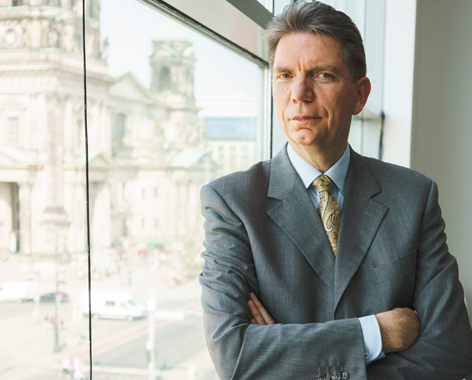
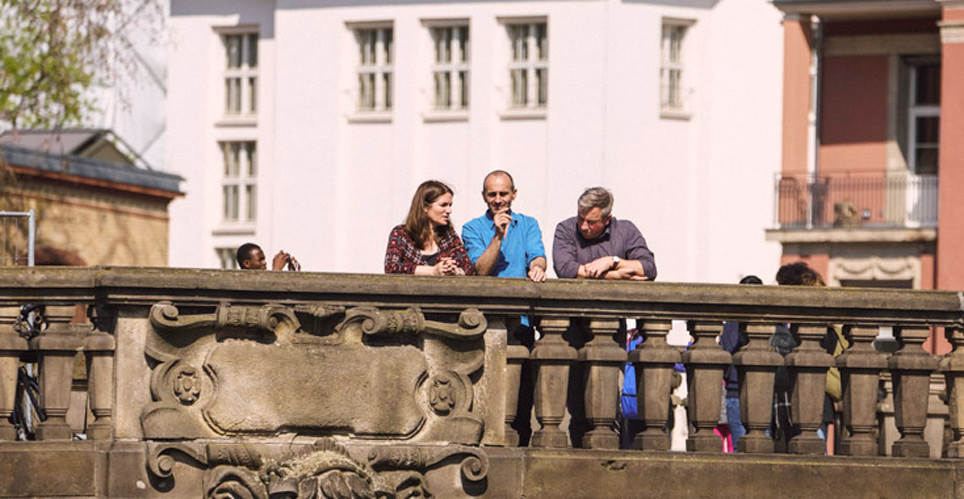
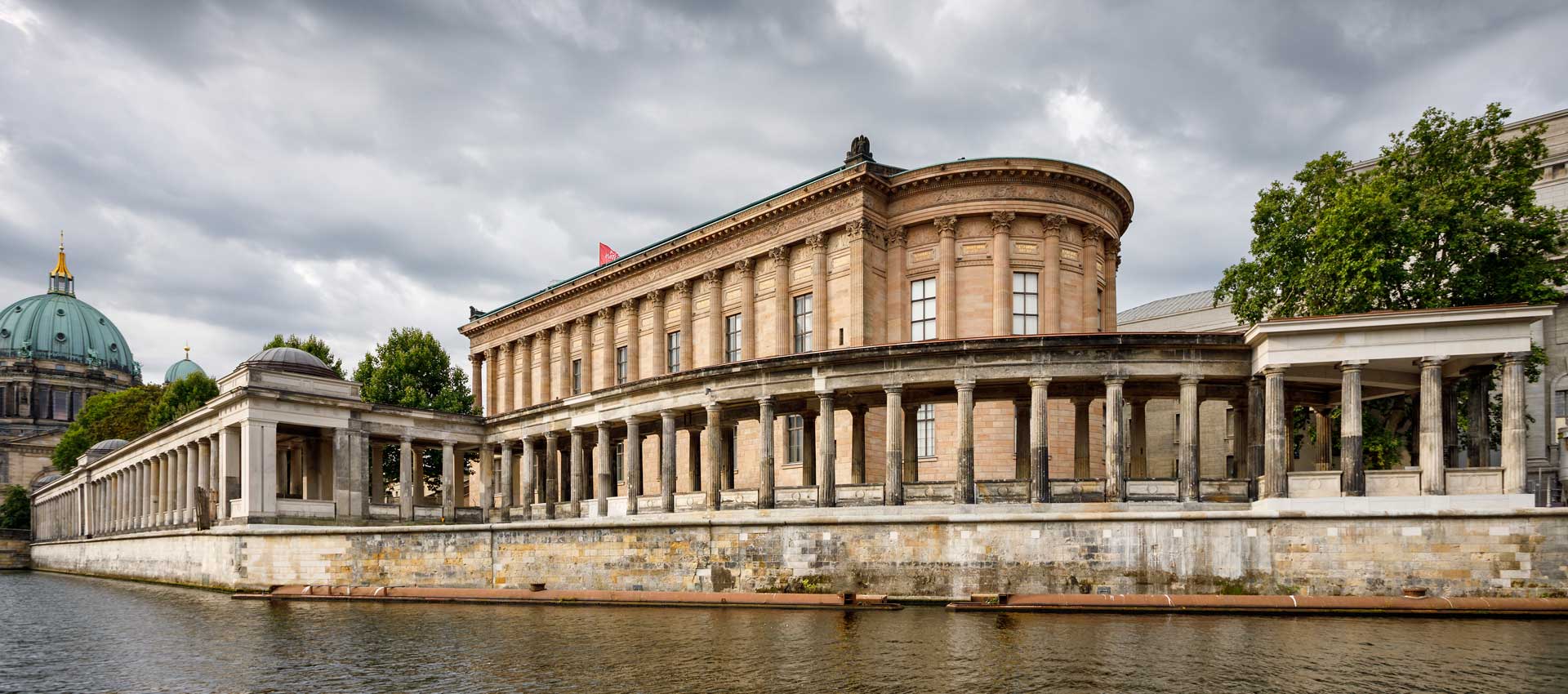
Two men, two worlds, perhaps one theme: surgeon Axel Ekkernkamp visits archaeologist Martin Maischberger at the Altes Museum to discuss the human body and its injuries.
Axel Ekkernkamp arrives at the Altes Museum without his white coat. What the Medical Director of the Berlin Trauma Hospital (ukb) wishes to discuss with Martin Maischberger, Deputy Director of the Collection of Classical Antiquities at the State Museums of Berlin, has nothing to do with the archaeologist’s health. Rather, at our request, two men from two different worlds are meeting here who perhaps have one thing in common: a perspective on humanity.
One of them encounters people from nearly 50 different nations every day, suffering their greatest pain and physically maimed, and knows why the connection between mind and body is no mere cliché. The other explores the reality and the ideal of humanity in stone. Martin Maischberger knows the accident and emergency department as a patient; Axel Ekkernkamp has never been among the gods.
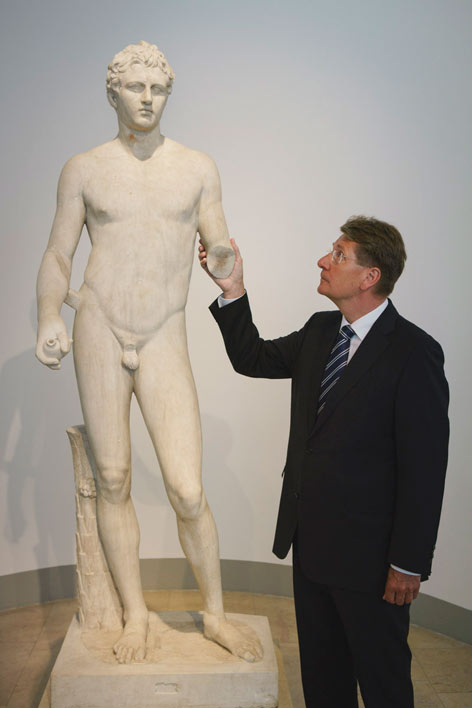
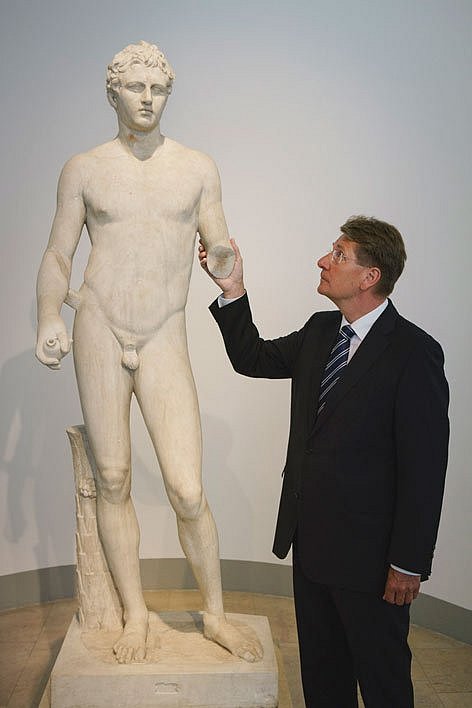
Is it possible to hold a dialogue, to let art influence medicine – and vice versa? Martin Maischberger has selected three objects from his collection for this purpose. A short while later, we stand before a Roman marble statue modelled on a Greek original, which they call the ‘Berlin Athlete’ here. It is missing its left forearm.
Whilst Maischberger is still explaining that both original arms are actually missing and have been reconstructed several times, most recently by Christian Daniel Rauch, Axel Ekkernkamp explains what the loss of body parts means in his field: “The loss of an arm is predominantly due to traumatic causes. In many countries around the world, machete blows result in people looking like this sculpture. Here, it’s more often machine or motorcycle accidents. With myoelectric prostheses, arms and hands can now be controlled in such a way that one can hold a cup just as elegantly as an iron bar.”
Maischberger looks at his statue and then says: “What constitutes progress for you is, in archaeology or art restoration, a passing fad. There was not always a consensus on whether and how to replace missing body parts. In the 18th and early 19th centuries, antiquity was copied exactly; this was followed by a radical break, and the statues were de-restored. Earlier restorations were simply discarded.”
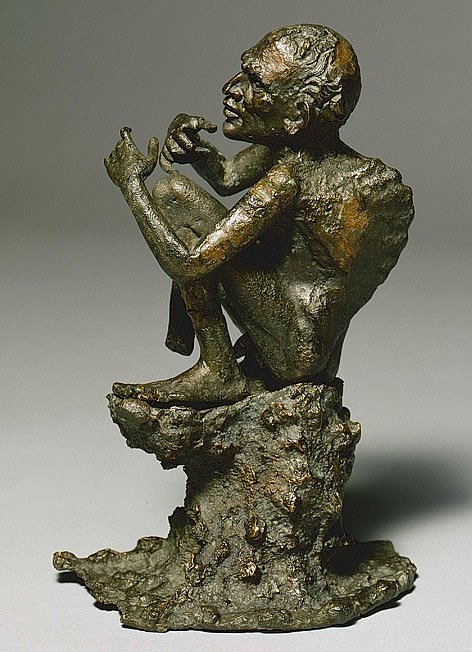
Today, the conservative middle ground seems to prevail. The Hellenistic bronze statuette of a ‘hunchback’, on the other hand, depicts a medical phenomenon that now appears only in textbooks: tuberculosis has led to a gibbus, a deformation of the spine.
As early as 1913, when the object entered the collection, the orthopaedic surgeon Franz Schede was consulted, and he suspected spondylitis. Ekkernkamp notes that the frail beggar is actually able to move his hip and knee joints with remarkable ease: “That is phenomenal. Today we would treat him with anti-tuberculosis drugs.”
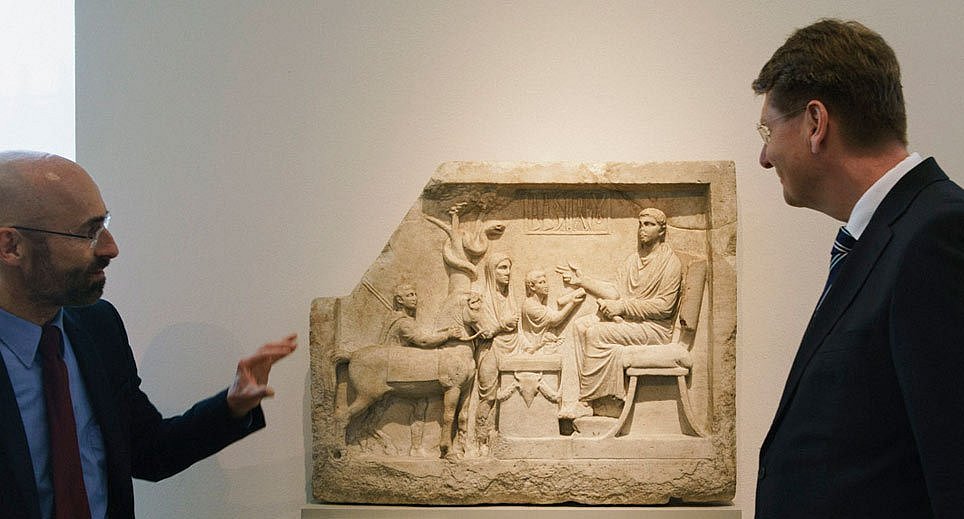
Finally, we stand before a Hellenistic funerary relief of a surgeon, which Axel Ekkernkamp is particularly delighted with. Martin Maischberger explains that this doctor was not only active in medicine but, as evidenced by the scrolls depicted, also wrote poetry. The forceps and scalpels on the wall show that a wide range of conditions were treated in this ancient practice. “Look at this instrument; it could have been a bladder stone remover, as used around the time of Christ’s birth,” says the museum curator. And the head of the UKB recalls how, in the 1990s, he witnessed in an Asian country how ureters were severed to remove stones: “This treatment method differed little from that of antiquity. Today, we have shockwave therapy, amongst other things, and we shatter the stones.”
The hour at the museum is over; Martin Maischberger shows Axel Ekkernkamp his Cleopatra, perhaps still a role model for aesthetic surgery alongside Nefertiti. Then both disappear into a young, noisy group of visitors.