Star architects David Chipperfield and HG Merz are collaborating with Christina Haak from the Staatliche Museen to design the exhibition space of the future.
The average museum visitor has been thoroughly studied and analysed. For instance, researchers from New Zealand recently found that in 2001, visitors spent a good 27 seconds in front of an exhibit, rising to 29 seconds in 2016. Whilst the selfie was still unknown at the turn of the millennium, it is now an integral part of every museum visit. Can we draw conclusions about tomorrow’s museum visitor from such data?
Christina Haak: No one can say with any certainty today where the journey will take us or where we will be in ten years’ time. That is why, as a museum, we need spaces that are flexible. Of course, we will still need traditional galleries. But my ideal vision of the museum of the future is spaces that can meet a wide variety of needs. It will no longer be solely about whether and for how long visitors linger in front of individual exhibits. We need to think about how we can actively integrate visitors into the museum environment and how we can encourage them to participate.
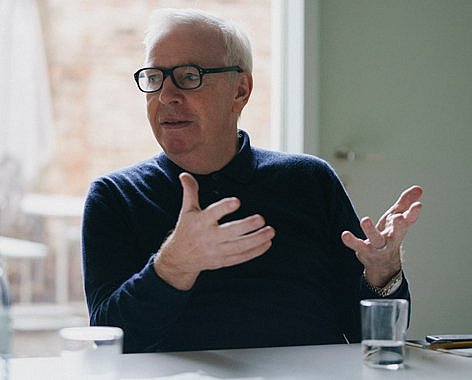
David Chipperfield
Born in London in 1953, Chipperfield studied architecture in the 1970s and subsequently worked in the practice of star architects Norman Foster and Richard Rogers. Today, Chipperfield is himself regarded as one of the world’s leading figures in his field. His most significant buildings and projects include the Saint Louis Art Museum, the Elbtower in Hamburg and the Museum Folkwang in Essen. In Berlin, his name is associated with the reconstruction of the Neues Museum, the construction of the James Simon Gallery and the refurbishment of the Neue Nationalgalerie.
David Chipperfield © Max Zerrahn

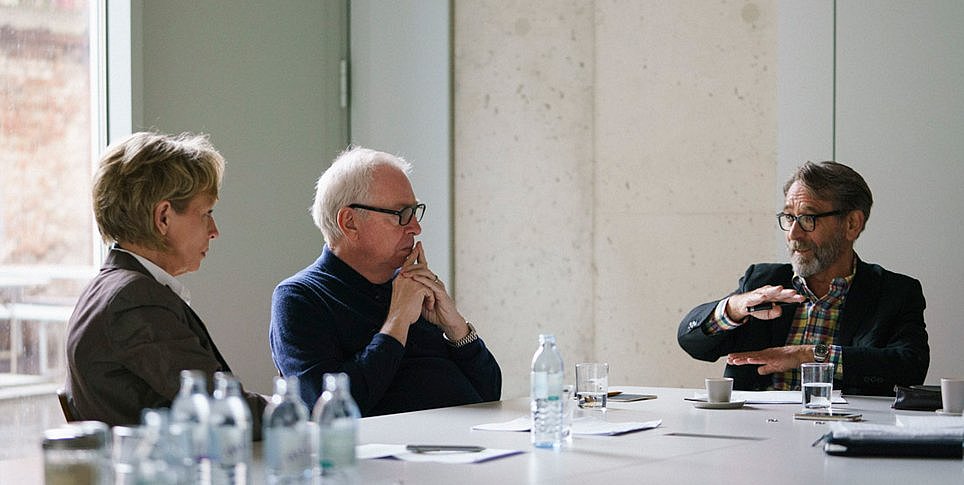
Hans-Günter Merz: Yes, participation will become extremely important in the future. The question is, however: how is participation defined? Participation means that everything you see in a museum belongs to the visitors. This idea must be made clear to everyone. Only then can we begin to develop participatory formats. To do that, however, we need to create new spaces – spaces where people want to linger. This means we need to open up the museum more and merge the traditionally semi-public space with the public space.
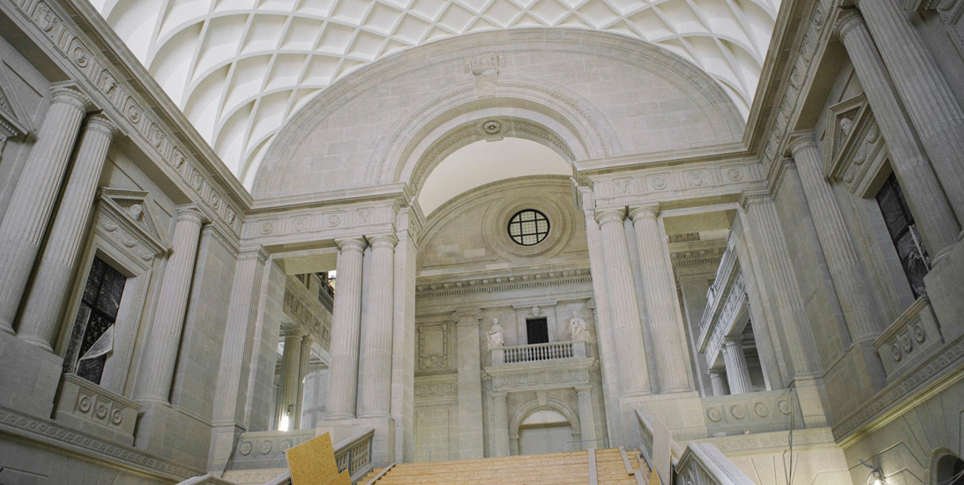
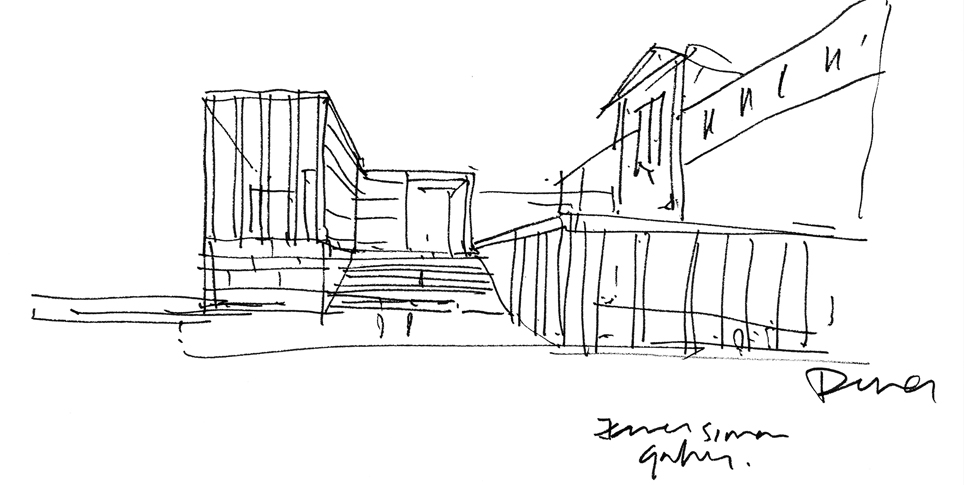
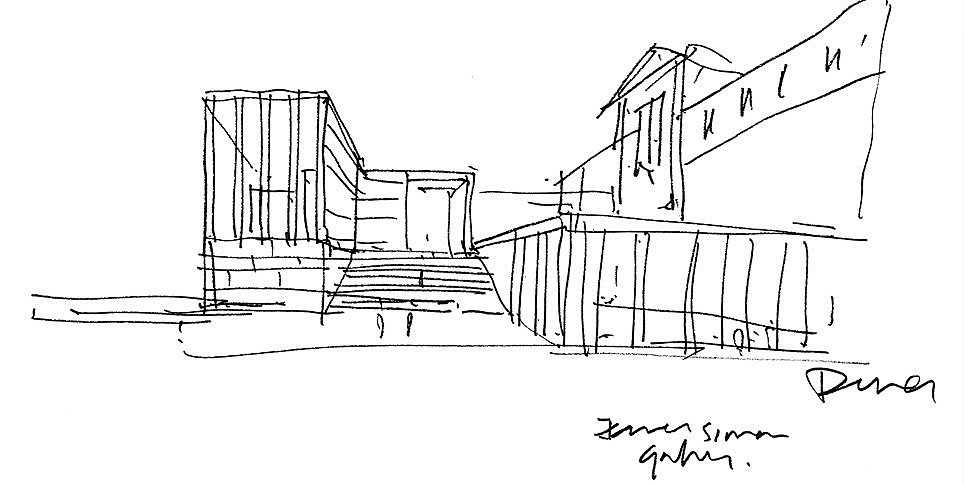
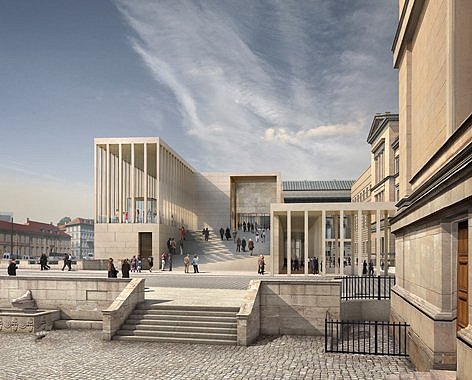
I think something like this could work well at the new James Simon Gallery. I can imagine that the gallery’s staircase, for instance, will be full of visitors in the summer and that the museums will be received quite differently as a result. And perhaps it will be much the same at the Museum of the 20th Century at the Kulturforum: thanks to its two intersecting passageways, this museum will be more closely connected to its surroundings.
David Chipperfield: Museums in major urban centres such as Berlin face a key challenge: they must forge a new connection with a particular type of visitor. These museums are increasingly dominated by tourism. At the same time, however, these same museums must find ways to continually attract local visitors anew.
If they fail to do so, they will lose public support. In the past, people went to a museum when they wanted to see something specific. But museums such as the Tate Modern in London now offer a much broader experience: they are places that are always worth a visit because there is always something to see there. The modern museum is thus an alternative to a shopping centre, a restaurant or a stadium.
Haak: I’d like to return to Mr Merz’s comment: I find it interesting that you specifically mentioned two new buildings as successful examples for use by tomorrow’s visitors – the James Simon Gallery and the Museum of the 20th Century. As architects, you have both renovated historic buildings. You, Mr Merz, the Alte Nationalgalerie, and you, Mr Chipperfield, the Neues Museum. Does your statement imply that new buildings might be better suited to the needs of future visitors than restored historic buildings?
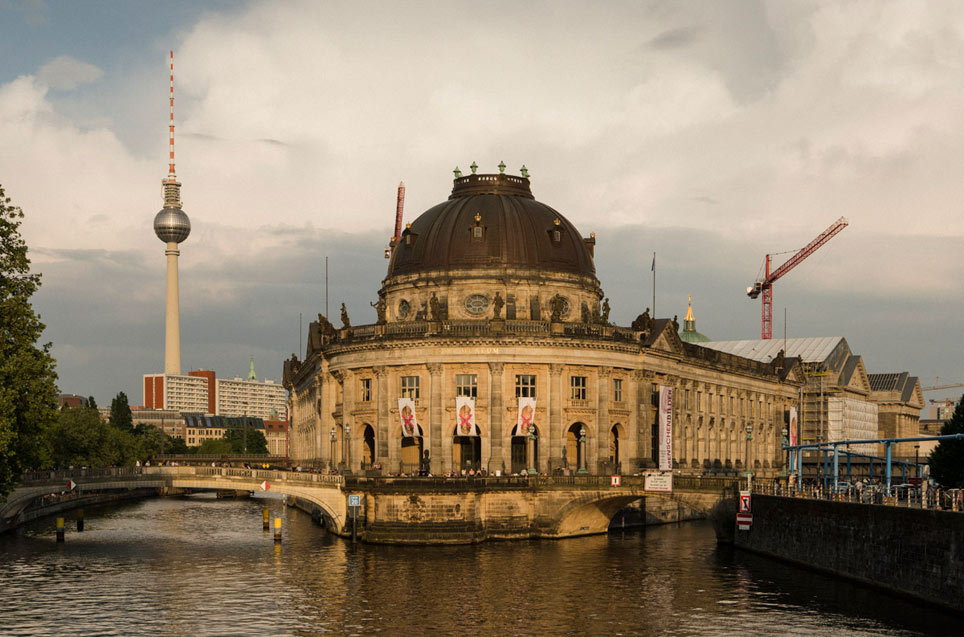
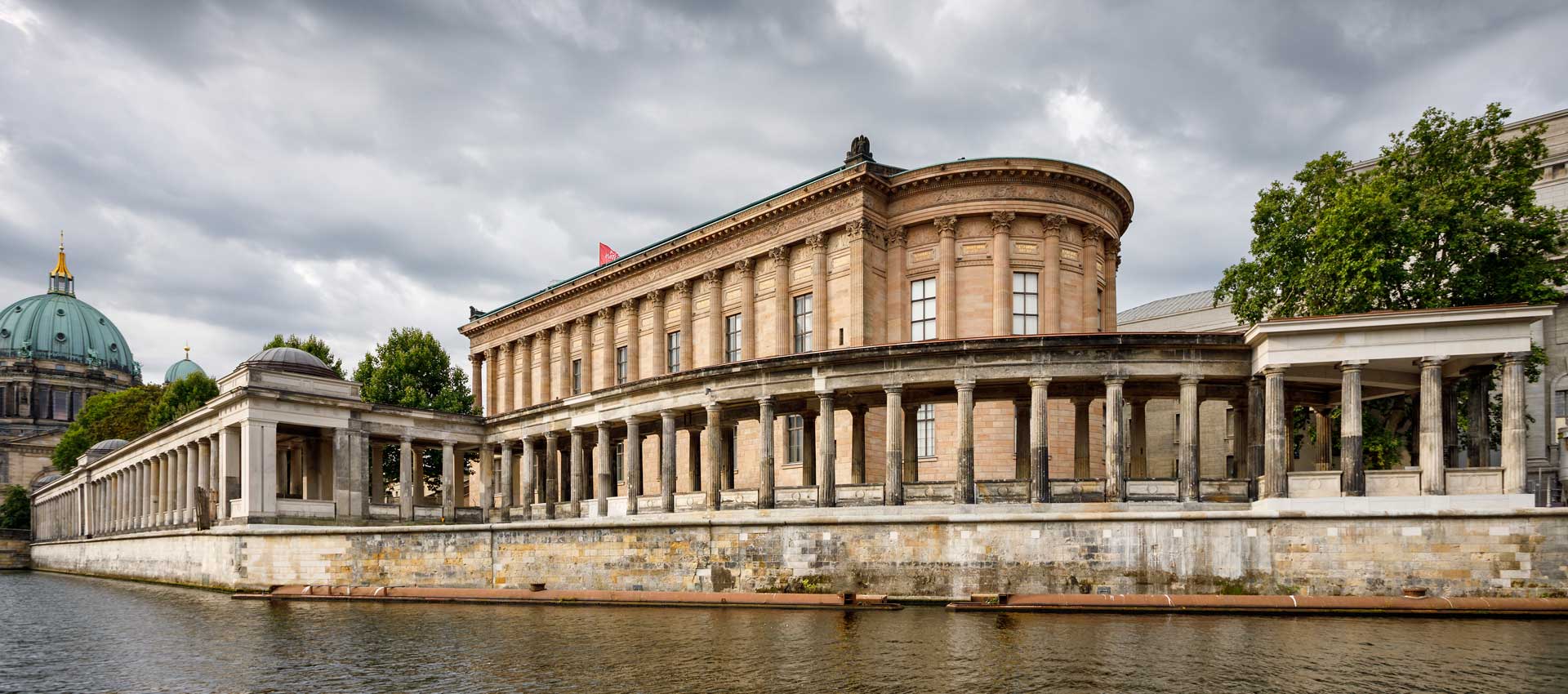
Merz: The Alte Nationalgalerie is a typical 19th-century museum. Here, one cabinet room follows another. It is a series of interconnected rooms. A modern museum, however, should be characterised by the space between the exhibition halls. In this context, I too would like to cite the Tate Modern as a successful example: it features a huge hall at the front that literally draws the public in, and through its interstitial spaces it integrates the public. Applied to Museum Island, this would mean that the individual museums represent the exhibition halls and the outdoor spaces and green areas represent the interstitial spaces.
Chipperfield: At first glance, older museums lack these new ‘social spaces’. That is, after all, the reason why we built the James Simon Gallery. The original plan for the Neues Museum envisaged turning the building into a central gateway to Museum Island – complete with restaurants and shops. After we won the competition for the reconstruction, we said that this wasn’t actually a good idea. However, I believe that even old buildings can meet modern requirements.
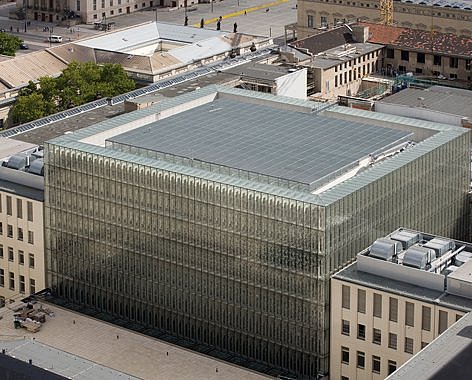
The Pergamon Museum, for example, caters very well even to the visitors of the future. The building allows you to view the exhibitions and move between the rooms in a very pleasant way. Just take the Pergamon Altar: is that a place to move around? A lobby? An exhibition space? I would say it is all of these things at once. It is a space where you can view the exhibits, and it is a very social place. In the context of Berlin, I have always believed that the Pergamon Museum is actually the perfect museum: here, you can seek out a specific exhibit and explore it, but you can also stroll around and be a flâneur in a small, covered city.
In 1999, the SPK adopted a masterplan designed to prepare Museum Island for tomorrow’s visitors. Alongside the fundamental refurbishment of the five buildings, a central entrance and the so-called Archaeological Promenade—which was intended to connect all the buildings underground—were planned. What is the current status of this plan?
Chipperfield: I am somewhat concerned about the masterplan. I wonder what would happen if the Archaeological Promenade between the Neues Museum and the Pergamon Museum were not built. This connection is an essential part of a concept that has aged very well. Back then, we tried to find answers to the challenges of mass tourism – to the coachloads of people who want to see the museums in 40 minutes along a set route as part of a tourist package. There is something cynical about offering these visitors just the highlights. Is that really the way people should experience museums in the future?
We chose this solution back then because it addressed a practical problem: it separates the one-off tourists from those visitors who come to the museums repeatedly. The masterplan was intended to provide different types of visitors with various opportunities to experience the museums on Museum Island. Furthermore, it was meant to link and bring together the collections, which are, after all, somewhat artificially divided between the various museums.
Haak: The masterplan remains the foundation of our work. Even though those involved at the time certainly believed that all this could be realised much more quickly. The masterplan, however, remains essential. It emphasises that Museum Island must be constantly developed further. It is about the connection to the city and its residents, as well as to tourists. The link between the Archaeological Promenade and the Pergamon Museum has by no means been shelved, but merely postponed for financial reasons.
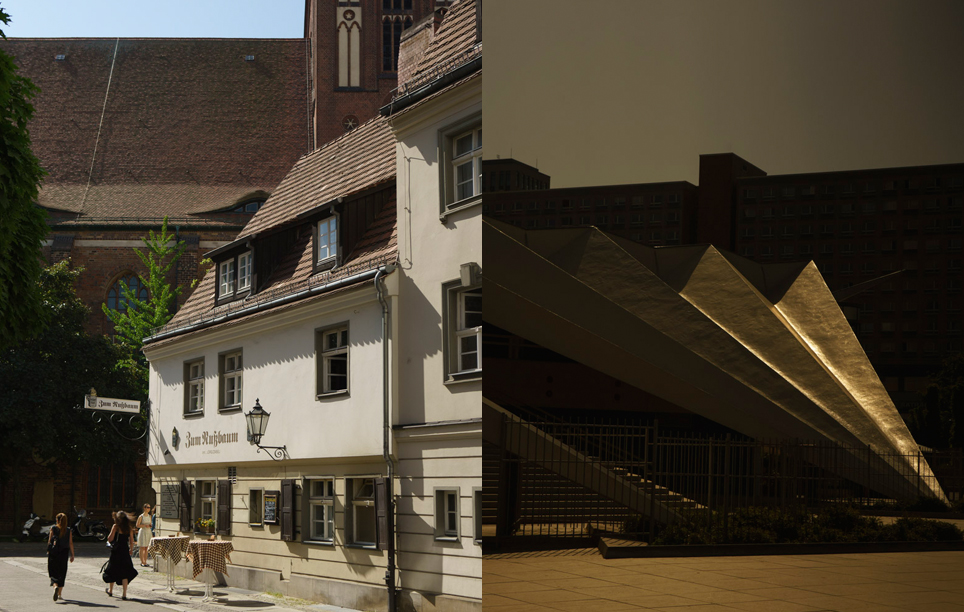
Merz: I’d like to return to the subject of the Museum Island’s outdoor spaces. In my view, there are too many roads criss-crossing the island. I also see a problem in the fact that the island lies away from the bustling Hackescher Markt and other urban centres. This means that, ultimately, there is no urban environment here. It’s different at other museums. The Louvre, for example, borders the lively Rue de Rivoli.
When I step out of the museum in Paris, I’m right in the thick of life. In Berlin, however, everything is very museum-like and lacks vitality. That won’t change with the Humboldt Forum and the palace either.
Chipperfield: That’s a good point: I’d be interested to know what you expect from the Humboldt Forum. What impact will it have on Museum Island?
Haak: The major challenge for Museum Island will be the free admission that is to be offered at the Humboldt Forum. In itself, that is of course a brilliant idea. But if it comes to that, we would have a palace with free admission to the collections and, in the immediate vicinity, we would have museums charging standard admission fees. That would be problematic in terms of public perception, especially as the palace will attract a great deal of interest in the early years anyway.
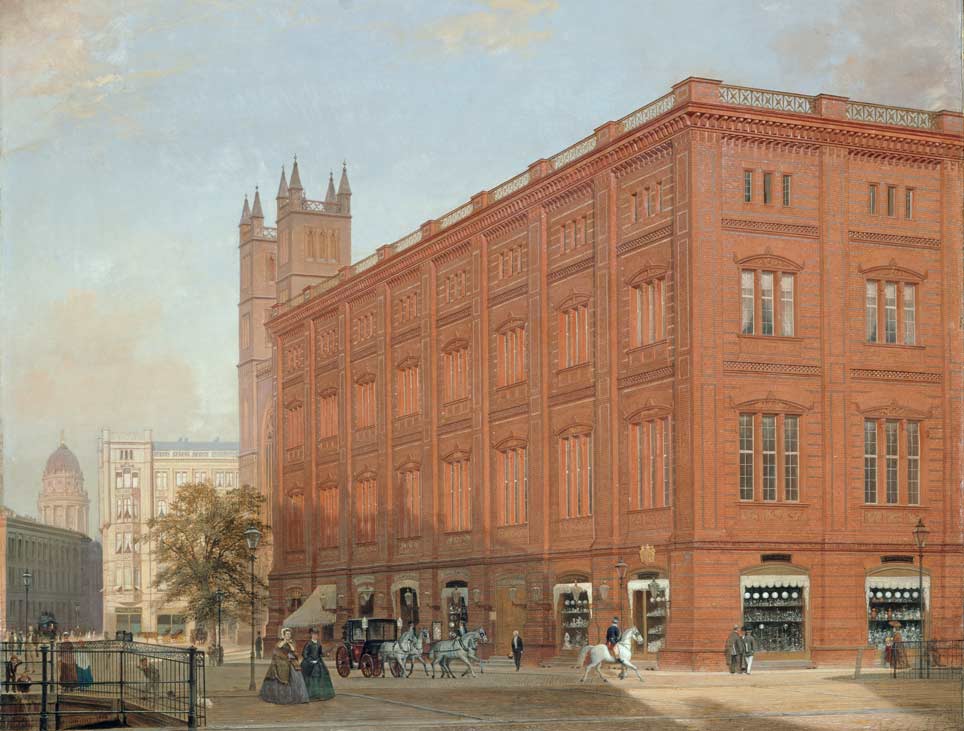
Merz: I hope the palace will become a welcoming place. David Chipperfield and I were on the jury back then. And I still believe, even today, that there could have been better solutions for this site. Because what Mitte lacks is something fresh. But that freshness won’t come about simply by, for example, rebuilding the Bauakademie.
But if we design a good programme for the Humboldt Forum that looks ahead to the next 20 to 30 years, then this could provide a vibrant impetus for the entire site. Perhaps the ‘musealisation’ of the site through the reconstruction of the palace will also lead to a shake-up within the individual institutions.
The question is how the individual museums will distinguish themselves from one another in future. Perhaps the palace will ultimately ensure that the programmes of the individual institutions become more focused and differentiated. What we need are bridges between the temporary and permanent exhibitions. Special rooms aren’t always necessary for this. One could also rearrange the artworks and in this way bring more dynamism to the ‘permanent’ spaces. Museums are always utopian places too, places of experimentation and confrontation. Only if I organise bold exhibitions in this spirit will people return from a museum visit feeling inspired and carry that inspiration back into their own surroundings.
Haak: Of course, we too are thinking about such bridges. But they are by no means cost-neutral. Moreover, they involve a great deal of effort. But why do you actually believe that we art historians and curators would not also create bold exhibitions in the future?
Chipperfield: Well, if you ask me: Berlin is obsessed with the concept of ‘hardware’. In this city, the prevailing belief seems to be that all problems can be solved through building. And so they build a palace here and a museum for 20th-century art there. But just think of a venue like the Komische Oper: try getting a ticket there today. They’re completely sold out. Is that hardware or software? It’s software, quite clearly. It’s down to an artistic director like Barrie Kosky. People love Berlin for both the software and the hardware – for the informality as well as the formality. I’m a bit worried that Berlin might lose this very special energy. I say this as a Londoner, knowing full well that we have the same problem in my home town.
In the 60s and 70s, London produced a lot of great music and fashion. Was this trend driven by the efforts of any institutions? No, it came from the young people. It came from King’s Road, the record companies and the small bands. It was definitely not the success of big ‘cultural machines’.
Merz: I’d like to add to what David Chipperfield said about London: back in the 60s and 70s, there were also institutions there like the Victoria and Albert Museum. It had an early instinct for what was happening on the streets. The lively and enticingly racy, the other Berlin, finds little echo in today’s institutions. Let’s go out onto the streets, let’s breathe the air of the people who are supposed to come to our museums later. Despite all the conservation requirements, the sterile environment of the museum must be infused with this fresh air in order to become relevant.
Chipperfield: In my view, the forthcoming construction of the Museum of the 20th Century on Potsdamer Straße is yet another result of Berlin’s obsession with hardware. I would have taken more time to consider what is already there. I am sure someone like Barrie Kosky could transform all of that into something exciting – and do so without a new building.
Haak: It remains a fact, however, that the National Gallery needs more space for its collection. Currently, two-thirds of the works are in storage at any given time. And I think it’s good that the new building will enable us to showcase 20th-century art in all its major shifts and extremes, in its spirit of experimentation and provocation.