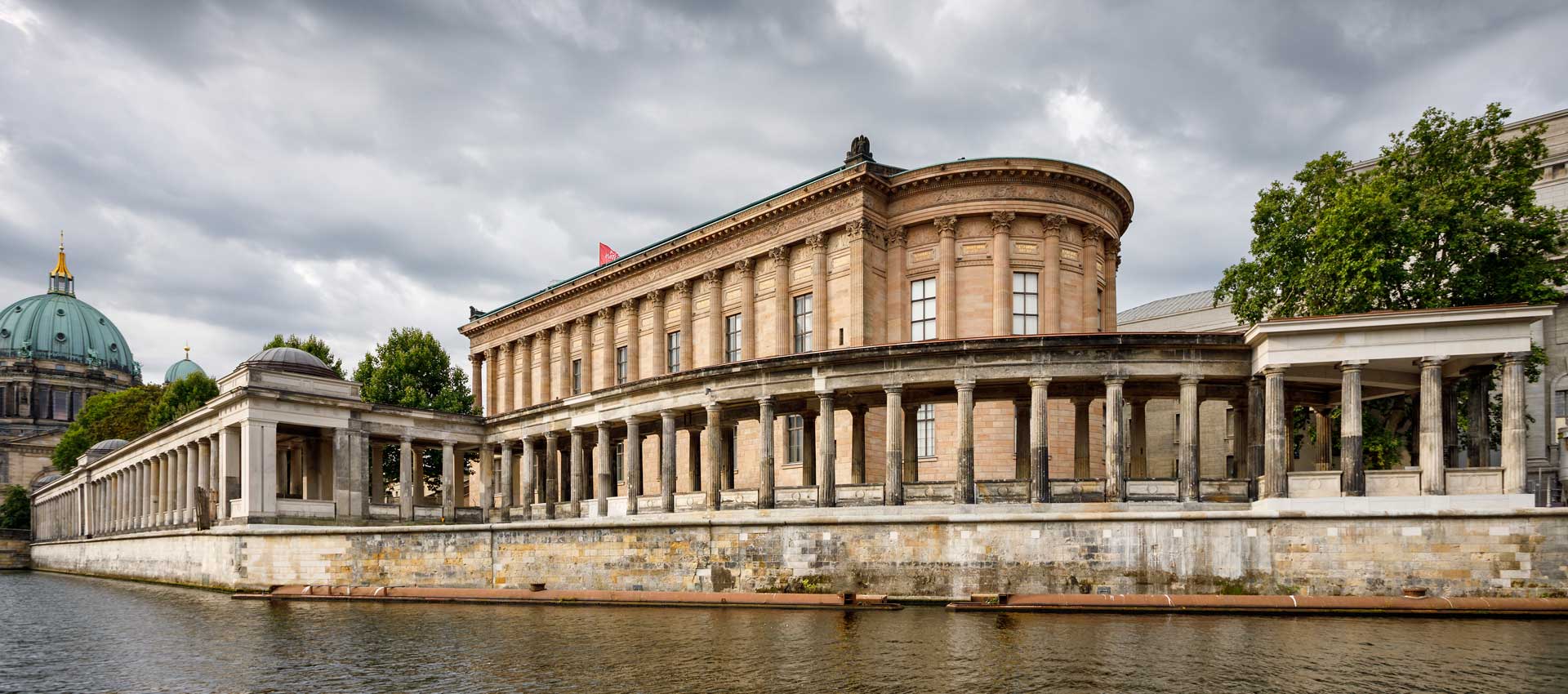
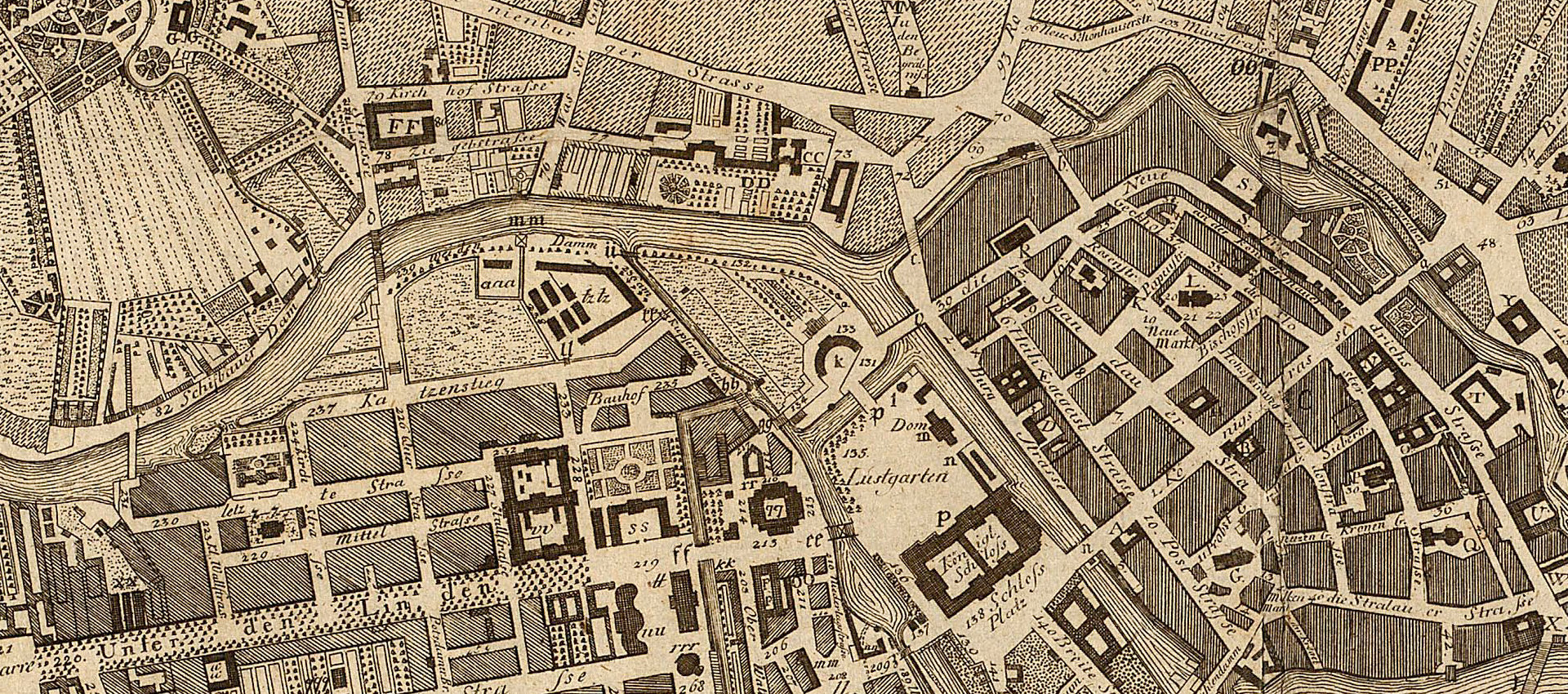
Opinions are divided on Berlin’s city centre redevelopment plans. Some welcome the new, whilst others are attached to the splendour of the old. Two comments
In favour of reconstruction: Petra Kahlfeldt
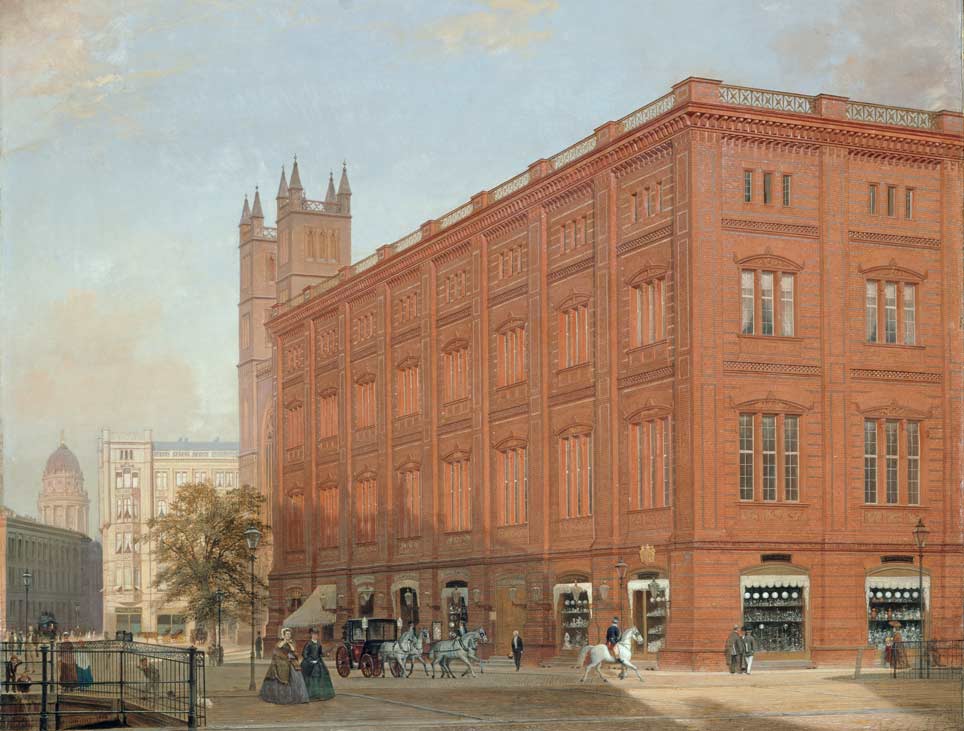
Like all city centres in major Central European cities, Berlin’s Mitte has been continuously developed and adapted to the changing needs of the times. The pace and scale of this modernisation accelerated steadily from around 1850 right through to the first decade of the 20th century. By 1910, the city had achieved a compact and undoubtedly contemporary urban condition that would still do Berlin credit today.
Paradoxically, however, from this time onwards, Berlin’s town planners and politicians dreamed of a far-reaching transformation of the organic city they detested and its tried-and-tested structure, and sought an unprecedented modernisation to overcome the old ways. As is well known, these authoritarian and city-destroying plans were only implemented two decades after the destruction of the Second World War – and, driven by political motives, they were far more radical than in most other European cities also scarred by the war. No one shed a tear for the historic city layout and the history embedded within it; rather, it was seen as a unique opportunity to rebuild the city according to modern requirements.
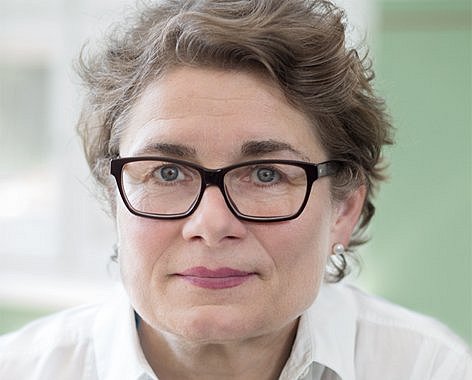
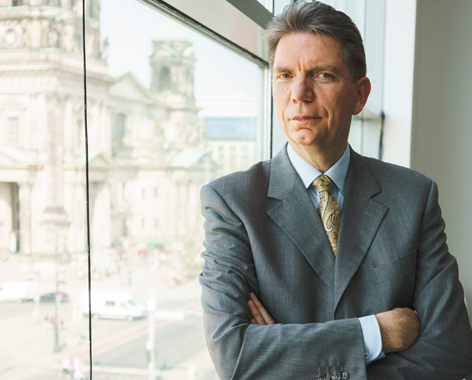
Petra Kahlfeldt
Born in 1960, the architect works independently at the architectural practice Kahlfeldt Architekten. Since 2004, she has been a professor of historical building structures, heritage conservation and design in Hamburg. She is a member of the Stadtkern planning group, an association of experts committed to the reurbanisation of Berlin’s Mitte district.
Petra Kahlfeldt © Susanne Tessa Müller
We call for: a revival of the town centre!
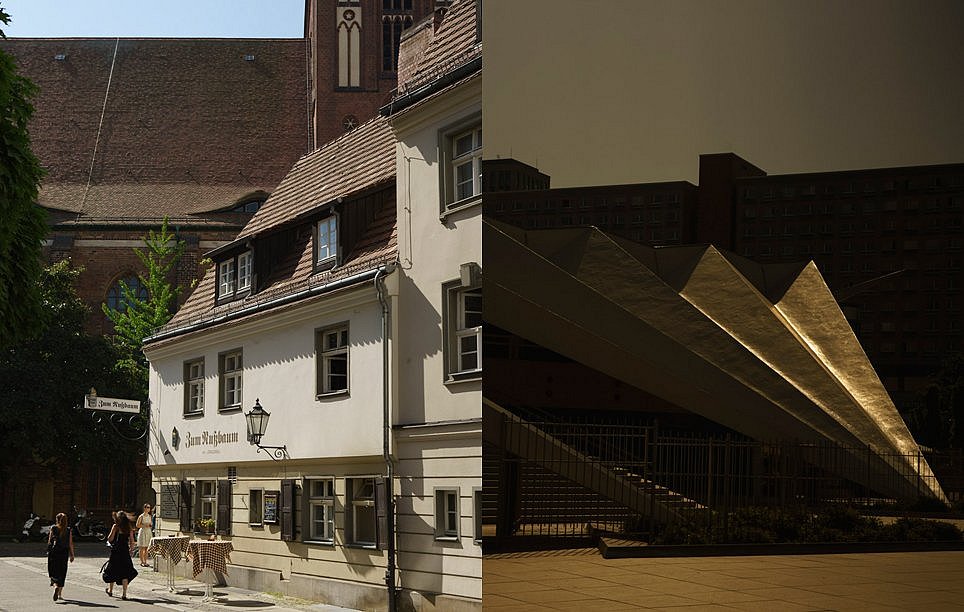
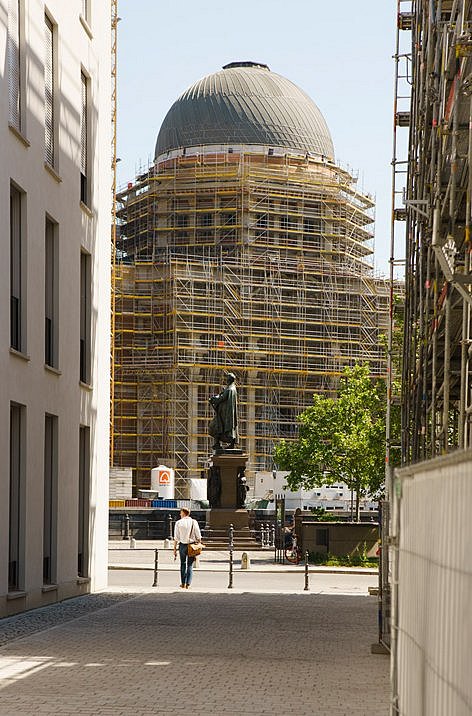
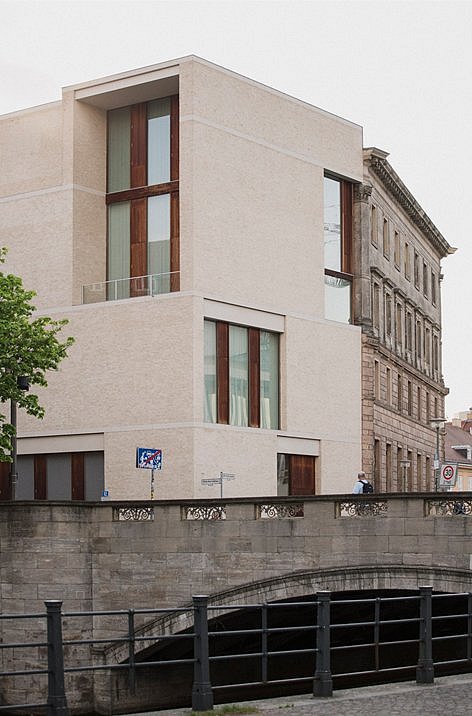
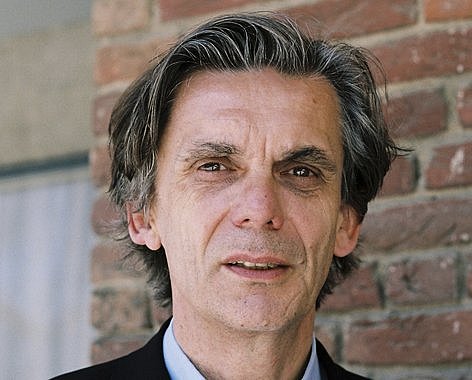
What role should the city centre play in a sustainable, sprawling metropolitan region? The city centre embodies its uniqueness and its rich, contradictory architectural history; it overcomes the burdens of authoritarian and car-centric ‘modern’ urban planning; it offers spaces and buildings with which all Berliners and their visitors can identify, regardless of their social and ethnic background, or their religious and gender orientation. As a coherent ensemble, it sets architectural benchmarks for the symbolic, functional and design form of tomorrow’s city centre. Berlin, with its unique history, is called upon and uniquely suited, more so than any other major European city, to master all these challenges.
Through the redevelopment of the historic centre, Berlin would have the opportunity to rethink its past – including the 500 years prior to the Thirty Years’ War, which have been almost entirely forgotten by the public. The project of historical reaffirmation through the reconstruction of the historic centre is not a project of the past, but a project of the future, a project to present Berlin as a city of tolerance and sustainability. This includes places and institutions that serve this purpose, but it also includes an urban development programme in which these places and institutions are embedded.
Against Reconstruction: Matthias Sauerbruch
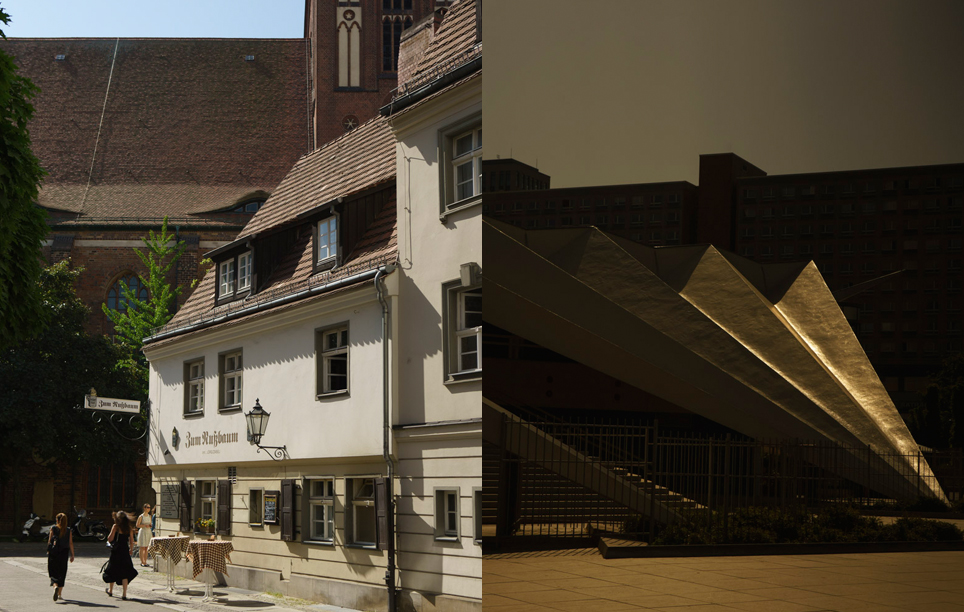
If one were to look for arguments from the city’s perspective as to why the area on the east bank of the Spree between the Nicolaiviertel, ‘DomAquaree’ and Spandauer Straße absolutely must be developed, only two arguments come to mind (apart from commercial considerations): Firstly, the urge to fill the void of this central location with a beautiful urban quarter, and secondly, the need to pay appropriate tribute to the history of this place.
In my view, neither of these wishes is served by a reconstruction of a (roughly) historical state prior to the wars. For to link new development to the state of affairs at the end of the 19th century would be to deliberately ignore the history of the 20th century. That would be less a respectful tribute and more a misappropriation of history – namely, of the most controversial part of our city’s history, which has so significantly shaped its present state.
To design a new development that echoes the state of affairs at the end of the 19th century would be to deliberately ignore the history of the 20th century
But then, of course, there would undoubtedly be the additional argument that the small-scale, historic buildings from the 18th and 19th centuries, with their ornate façades, bay windows and gables, are so much more beautiful than the prefabricated blocks from the GDR era or the faceless office blocks of today. Opinions may differ on this, but to be fair, one should ask what actually constitutes a beautiful city, and above all, how one might recreate it.
If one wishes to draw an analogy with people, we are familiar with a canonical notion of beauty with which we are bombarded daily in endless repetition: shapely youthful bodies, beaming smiles, blonde hair, blue eyes… But there is also another kind of beauty to be discovered—that of children, for example, whose charm seems to arise entirely from the unconscious harmony between their outward appearance and an inner expression, defying any categorisation.
Applying this to the city, we are therefore not looking for the hundredth rehash of the usual clichés of a cosy European town, which the consciousness industry repeatedly recommends to us as a stage for fleeting happiness, but rather for authentic places that may initially seem new and uncomfortable, yet will ultimately prove more enduringly attractive to both residents and visitors. This applies in particular to Berlin, a city whose idiosyncratic idyll was long to be found in the desolate remnants of a destroyed metropolis and which is still searching today for its own, original and contemporary expression of its new existence, situated between the start-up scene, tourist hotspots, entertainment districts, high culture and state representation.
If anything, Berlin was the metropolis of the 20th century in all its facets.
How embarrassing was French President Macron’s reception at the Humboldt Forum construction site the other day. Whoever came up with this faux pas probably wanted to show the guest that Berlin will soon have a palace of its own! The city (and the state) has needlessly embarrassed itself, and Mr Macron was placed in a situation that quite clearly made him feel awkward, as it brought the disparity in the historical architectural heritage of the two European capitals to the front pages – a disparity that had already caused the Prussian electors and kings great displeasure, and which Macron himself would surely never have brought up, out of tact. Berlin will not – like Paris – pass for a major European metropolis of the 18th and 19th centuries, no matter how much we rebuild. If anything, Berlin was the metropolis of the 20th century in all its facets.
Today, however, we live in the 21st century, and Berlin would be well advised to harness the obvious momentum of its renewed growth to work, within the concert of European architectural culture, towards a sustainable future. Berlin’s Mitte district would be well suited to this.
However, until better ideas emerge than simply reconstructing the historical status quo, it would be better to design the empty space and turn these plots into a wonderfully carefree park, where the statues of Marx and Engels would find their home just as naturally as the Neptune Fountain on the other side of Spandauer Straße.