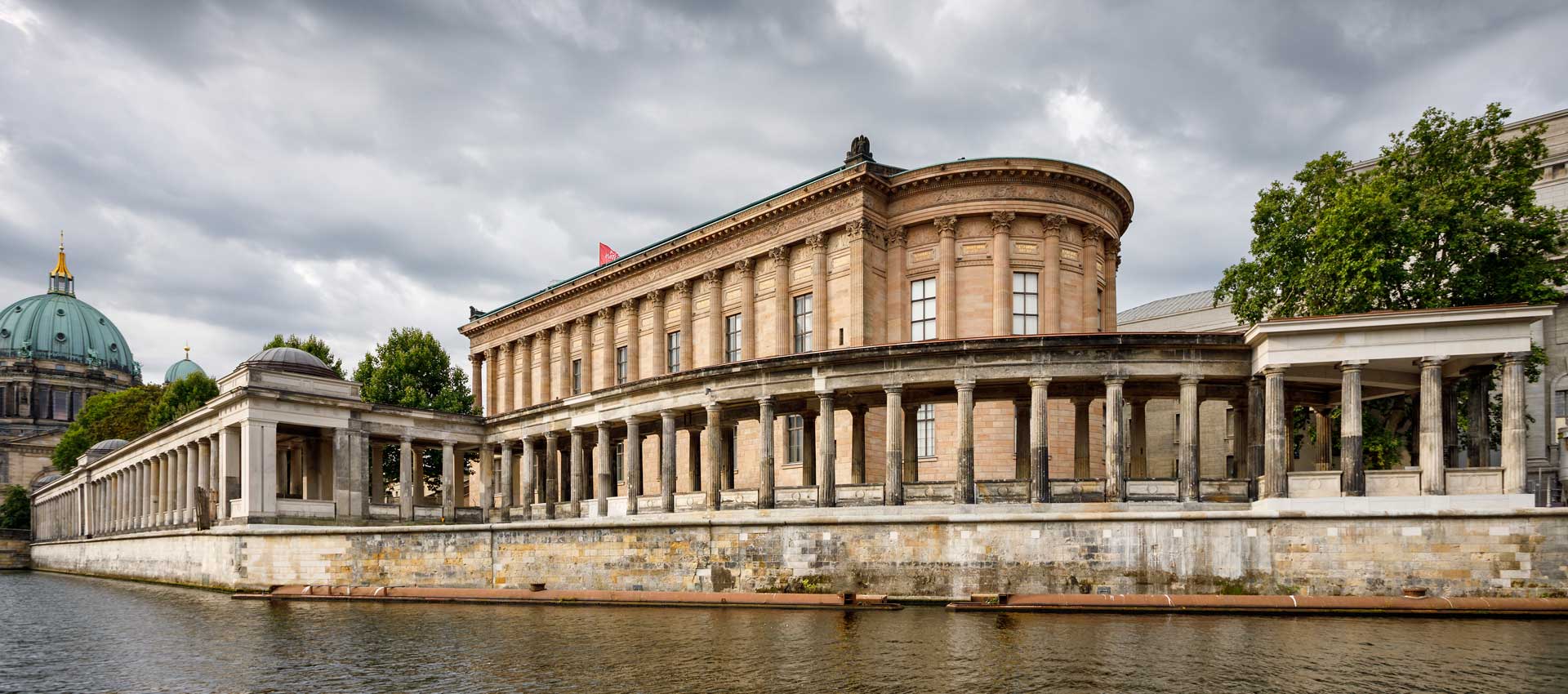
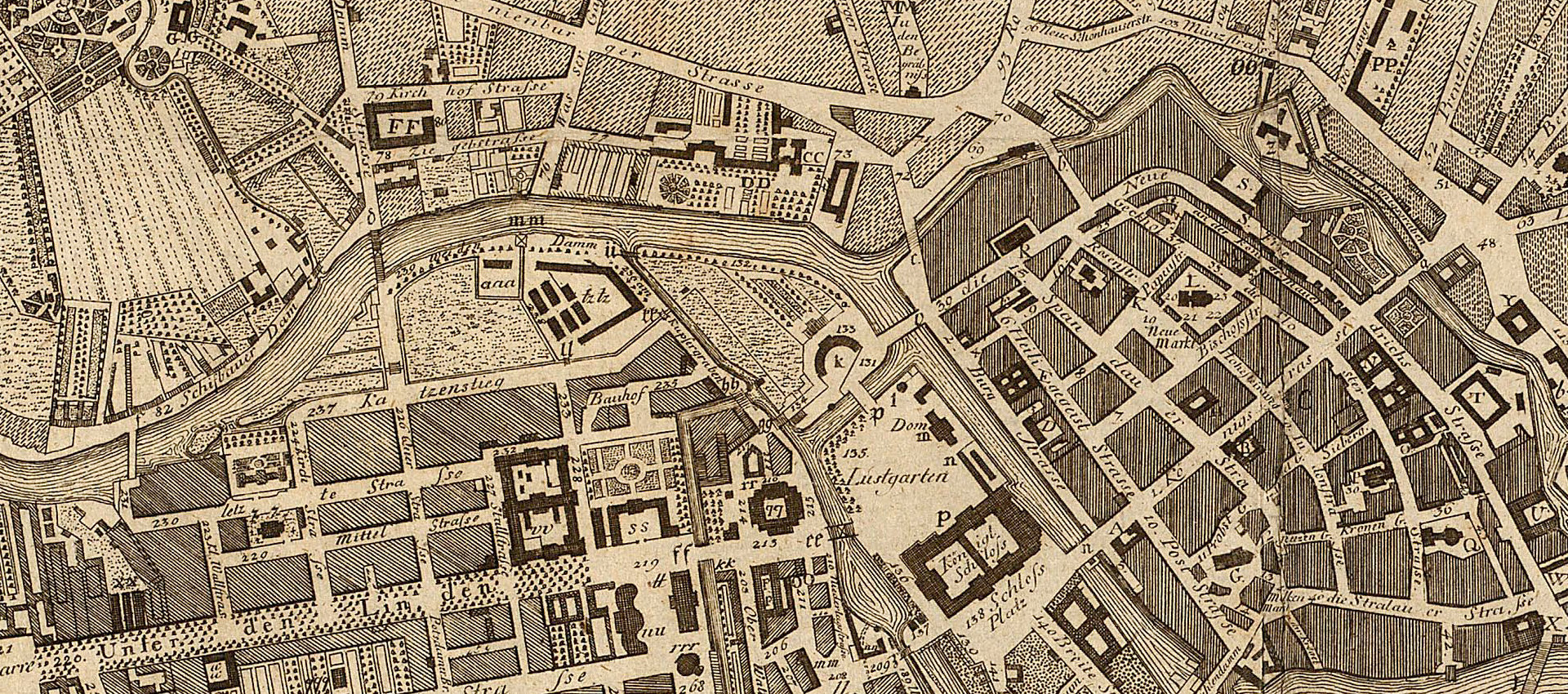
In Berlin-Mitte, countless groups are vying for space and attention. But who really holds the heart of the city? We met with a pastor, a museum director and an architect for a debate.
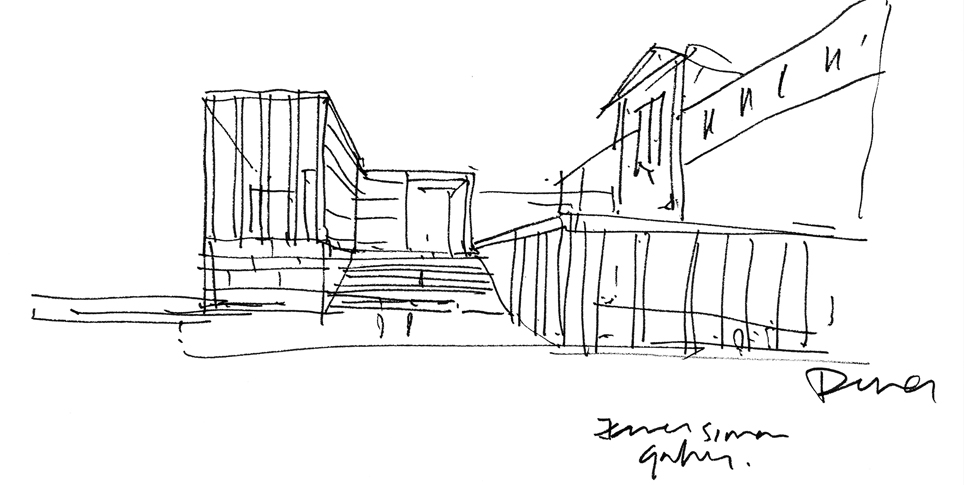
Mr Edler, for 19 years now you have been campaigning for a river bathing area in the immediate vicinity of Museum Island. At the end of last year, the Berlin House of Representatives pledged cross-party support for your initiative. Has the time now come for you to pack your swimming trunks?
Tim Edler: Not just yet. But the cross-party resolution by the House of Representatives has at least signalled a positive willingness to make values such as sustainability, diversity and community tangible in this place of high culture.
Matthias Wemhoff: As for me, I certainly haven’t packed my swimming trunks just yet. I consider the project to be out of place here. We don’t need an 800-metre-long river bathing area in the middle of the Spree Canal. There are plenty of lovely lakes outside Berlin. The city centre is not the place to open a bathing facility.
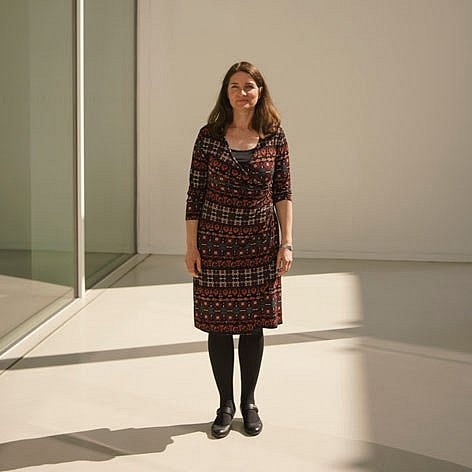
Cordula Machoni
Born in 1971, this theologian has been a pastor at the parish of St. Petri-St. Marien, the Bishop’s, Council and City Church on Alexanderplatz, since 2013. Prior to that, she was a pastor responsible for community outreach in the Stadtmitte church district.
Cordula Machoni © Max Zerrahn
The debate over the river bathing area highlights a conflict that is typical of a central location like Mitte: on the one hand, there are high demands from the tourism sector; on the other, the needs of an established residential community. You, Ms Machoni, are the vicar at St Mary’s Church, west of Alexanderplatz. You know the district’s residents very well. What sort of demographic profile do we see in Mitte?
Cordula Machoni: The residents have often lived here for a very long time. Many have not kept pace with the dynamism and turnover that central Berlin brings with it. People often have ideas that are difficult to reconcile with this place. On the one hand, there are the small and often mundane questions of daily life; on the other, the major challenges one must juggle in such a historic location. As a parish, we must constantly rebalance these differing interests. There are the many people seeking a sense of belonging, and there are the many issues that extend far beyond Berlin’s Mitte.
Your river bath, Mr Edler, also has an impact far beyond the boundaries of the capital’s historic centre. Were you actually aware of the impact your idea would have when you first committed to the project in 1998?
Edler: Certainly, even though Mitte was a very different place back then compared to today. There was a young creative culture here that has since almost disappeared. Yet amidst this dynamic environment, the essential aspects of our river bathing project have remained the same to this day. It is still about ecology and the environment, and about access to the river as a natural resource. It is about the city’s population, and it is also, in particular, about reflecting on the Museum Island district.
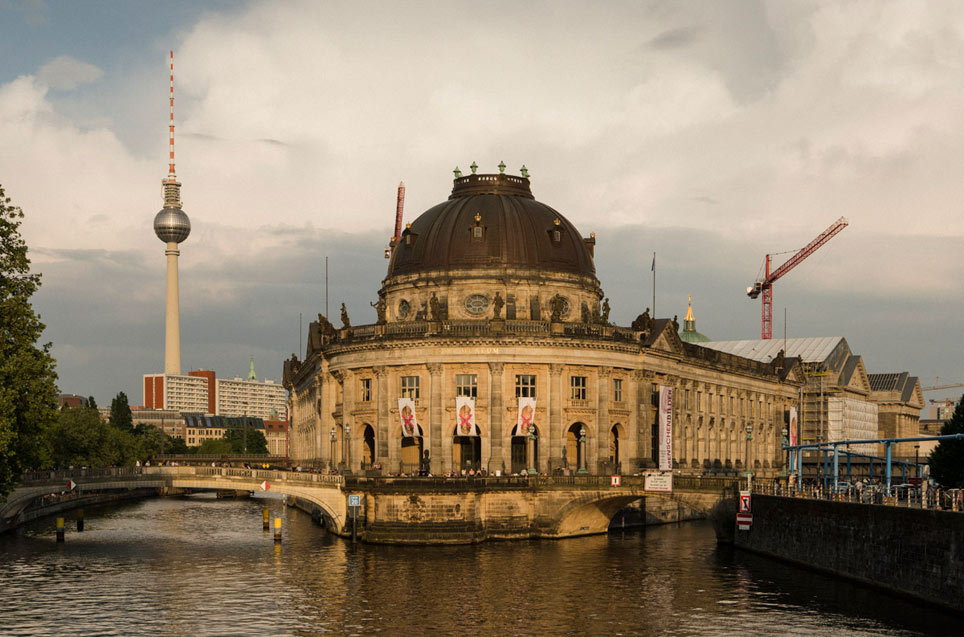
Early on in this reflection, the question arose as to whether a river bath, which would require, among other things, the construction of steps down to the water, might not jeopardise the Museum Island’s World Heritage status. How does the director of one of the island’s major institutions, Mr Wemhoff, view this?
Wemhoff: I see a river bathing area as a risk. If the project is really to be realised at the proposed location, it will have consequences for the entire surrounding area. Changing rooms, toilets, sunbathing areas and access to the water would be required. This would alter the character of the place. A city thrives on having spaces that operate differently. These are often places with cultural significance. They require a certain grandeur and should radiate tranquillity and focus. And then there are places for sport, leisure or relaxation. You don’t have to mix it all up. Today, many people often want to do everything everywhere, and every place is supposed to be usable for multiple purposes. I view this very critically.
But wouldn’t such a river bath also have a positive impact on Museum Island – an area that often seems deserted, particularly after dark, and where visitor numbers are currently declining?
Wemhoff: Such a river bathing area wouldn’t help with the darkness either – or do you want to end up installing floodlights there? Moreover, it isn’t true that visitor numbers are declining. What is currently declining is the accessibility of many buildings. We have restrictions due to construction work – think of the Pergamon Museum or the Neue Nationalgalerie. Key venues within the State Museums are currently closed. Visitor numbers at the open venues remain stable. But I’d also like to mention something else: I believe there is already a very heavy influx of visitors to Museum Island today. So it’s certainly a good thing when there are times when it’s not so busy. In other parts of the world, we have long been able to observe what happens when a place is ‘overused’ – just think of Barcelona or Mallorca. This means that we must also protect urban spaces from overuse.
Machoni: I wholeheartedly agree with Mr Wemhoff on this point. Berlin prides itself on the fact that here, 24 hours a day, seven days a week, one can experience a blurring of the boundaries of daily rhythms. Yet a person – and here I am also speaking as a theologian – needs a set rhythm. Only within a structure can they gain insight into themselves and their lives. For this, they also need the structure of the city. Berlin was always there first. And a place like St Mary’s Church has stood here for 750 years as a symbol of a rhythm that mirrors our life story: this church embodies youth, maturity, death and eternity. Such a rhythm is also reflected in other urban spaces. The city is like a text that we must learn to read. Such a text has something to do with our lives. The city sets out certain parameters for us. And we are the ones who must deal with these parameters.
Wemhoff: Perhaps we sometimes lack humility in this regard. We should be more restrained. We do not have to utilise everything and develop everything in a contemporary style. It is not an attack on our present if we occasionally reflect on older structures.
Edler: I would like to emphasise at this point that a project such as the river bath is in no way aimed at turning the city centre into an ‘event’. We see the water, once naturally purified, more as an antidote, a calming constant: the rampant transformation of old city centres in Europe has a great deal to do with tourist marketing. In this sense, museums are more of a driving force behind this development, as they thrive on diverse events and fluctuating visitor numbers. We started from the question of how to reintroduce something into such a neighbourhood that will endure in the long term – something that is entirely everyday and universal. What we do not want is a bathing facility designed to attract as many users as possible. We want to create an everyday relationship with the river and make it accessible. This also has an educational aspect. It is about reflecting on water as a resource and on the city as a habitat.
Mr Wemhoff, you are also Berlin’s State Archaeologist. Would you say that the city, which once quite literally grew out of a boat, has moved away from the river over the centuries? Do we now live with our backs to the Spree?
Wemhoff: No, Berlin is still strongly shaped by the Spree. Just look at the endless line of boats you see on the river on an ordinary summer’s day. Perhaps the river even plays a greater role today than it did 200 or 300 years ago. Back then, the Spree was a transport route and a drainage system, but people certainly didn’t go boating on it purely for pleasure. Incidentally, it’s interesting that in this war-torn Berlin, the riverbank has remained largely intact. The river has survived many disasters. The same cannot be said of the built-up areas in the city centre. I think that is a major problem in this district today: in many places, people feel out of place. This applies, of course, particularly to Alexanderplatz. Despite all the design measures, this place simply does not work. Presumably, neither visitors nor locals feel at home there.
This assumption is supported by a figure revealed in 2015 by the citizens’ forum “Alte Mitte – Neue Liebe”. According to this, two-thirds of Berliners do not feel at ease in the area between Alexanderplatz station and the banks of the Spree.
Machoni: When you read Alfred Döblin, you realise that this square has always been a focal point. And it will probably remain one. The people who come here want to be seen – in their joy, but also in their misery and their pain. All of that needs visibility. But we must also make the archaeological finds lying beneath the paving here more visible. It really pains me to think of everything that lies buried here. There’s a word I rather like in this context: consideration. Consideration means opening oneself up to history in order to anchor one’s own life story and to build a future from what has been found. That is what I wish for this square.
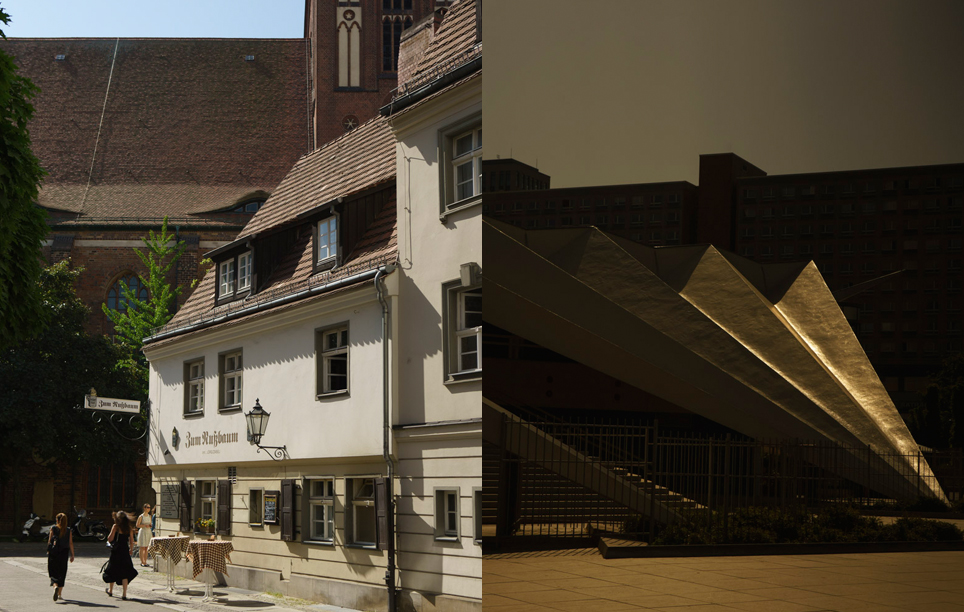
Wemhoff: I think that, given the current state of the buildings in Mitte, it is often impossible to trace the city’s origins. Six hundred years of history are missing. Today, there are only 40 buildings in the city centre dating from before 1850; from the Middle Ages, there are just five. That is very few. And the consequence is that the longest period of the city’s history is not visible.
Can the Palace and the Humboldt Forum remedy this?
Wemhoff: That will be the really exciting question. Will the courtyards within the palace and the squares on its periphery be given a quality that makes them places people want to linger in – so that even Berliners will eventually say: ‘When I really want to treat myself to something special, I’ll go for a walk in Mitte’? I certainly believe that’s possible. The central corridor in the Humboldt Forum, for instance, will create a connection between exciting spaces. There will also be three squares around the palace. I hope that this will help us find our way out of the emptiness in Mitte to some extent and bring the area closer together again.
Machoni: I would like to see Mitte become a place again where people engage in conversation with one another; a place to which we bring a great deal, but which also offers us a great deal in return. After all, every stone in Mitte already has a story and a meaning.