With the planned reconstruction of the Bauakademie, Berlin aims to pay tribute to its most modern architect
Karl Friedrich Schinkel was no fan of the Baroque. And yet Prussia’s most significant architect was able to find enthusiasm for two Berlin buildings from that era. In a report for King Wilhelm III, he wrote in 1817: “Of truly classical buildings, which in their very conception possess something truly distinctive and supremely magnificent, Berlin has only two: the Royal Palace and the Armoury. They stand as monuments to art and will become ever more important the less time is able to produce such grand and perfect new works.”
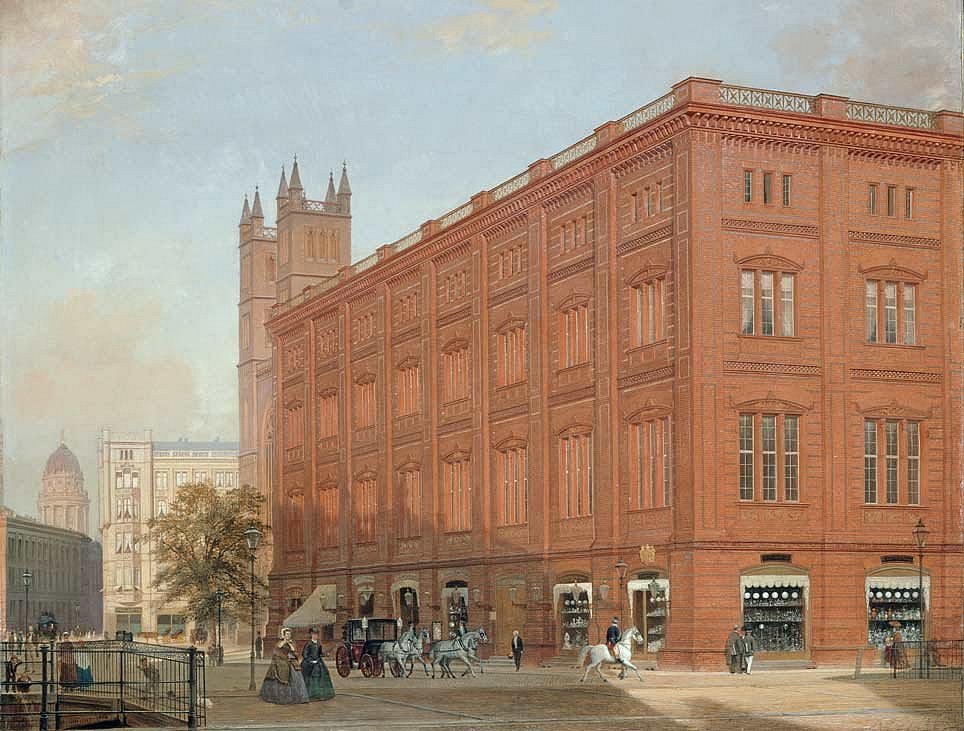
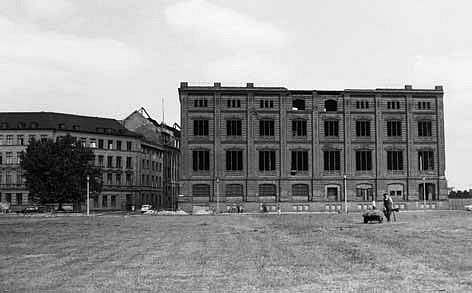
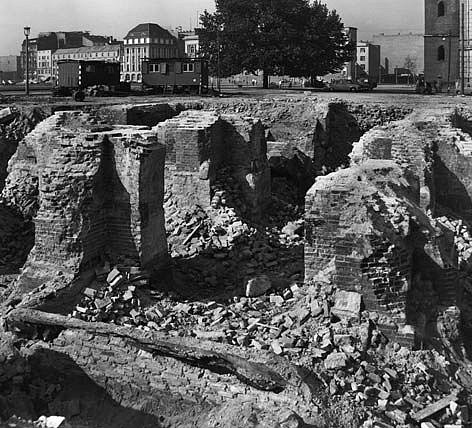
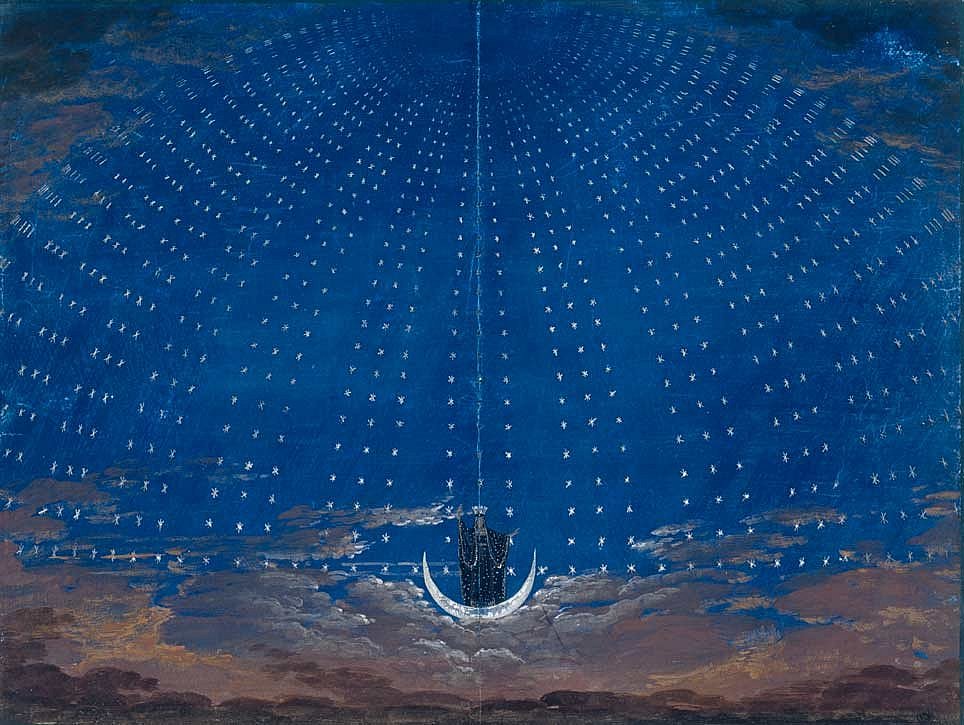
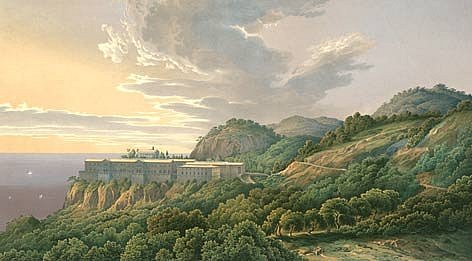
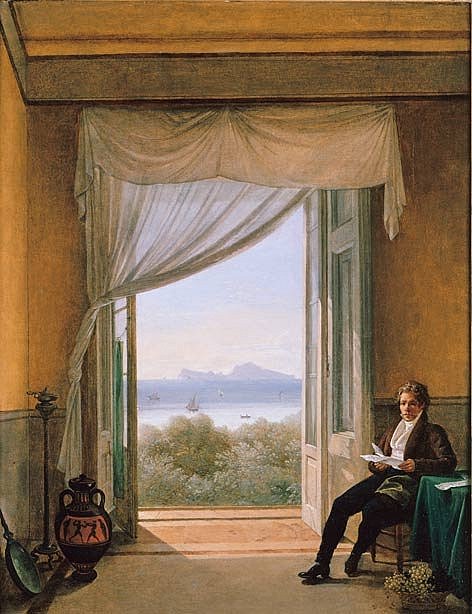
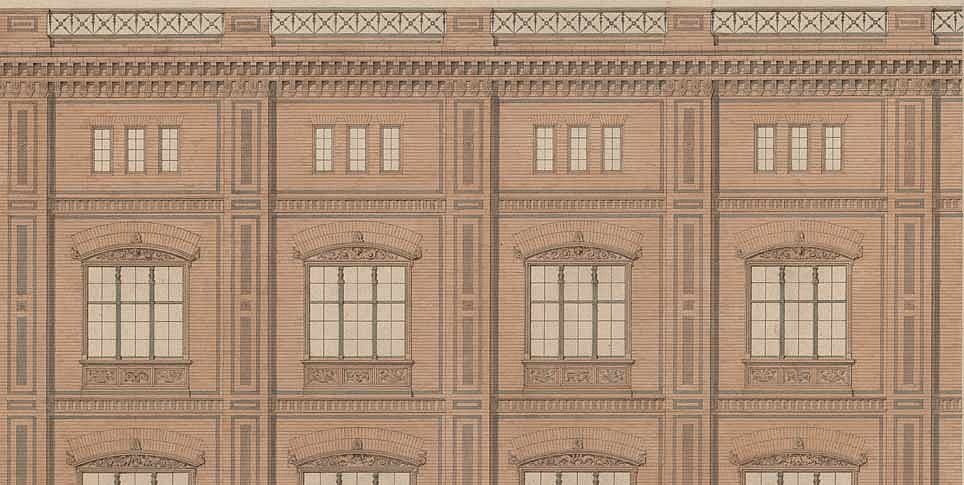
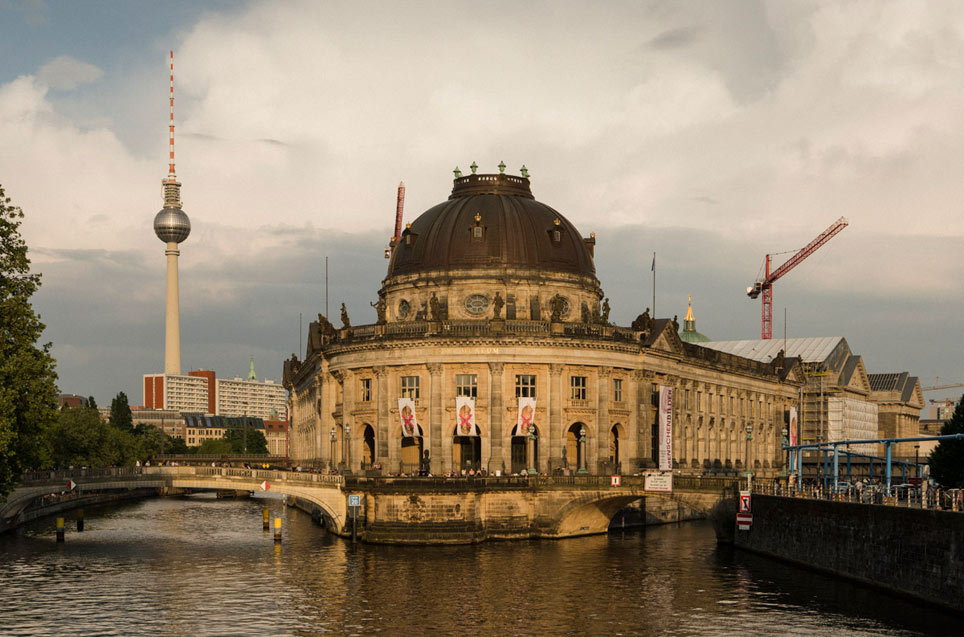
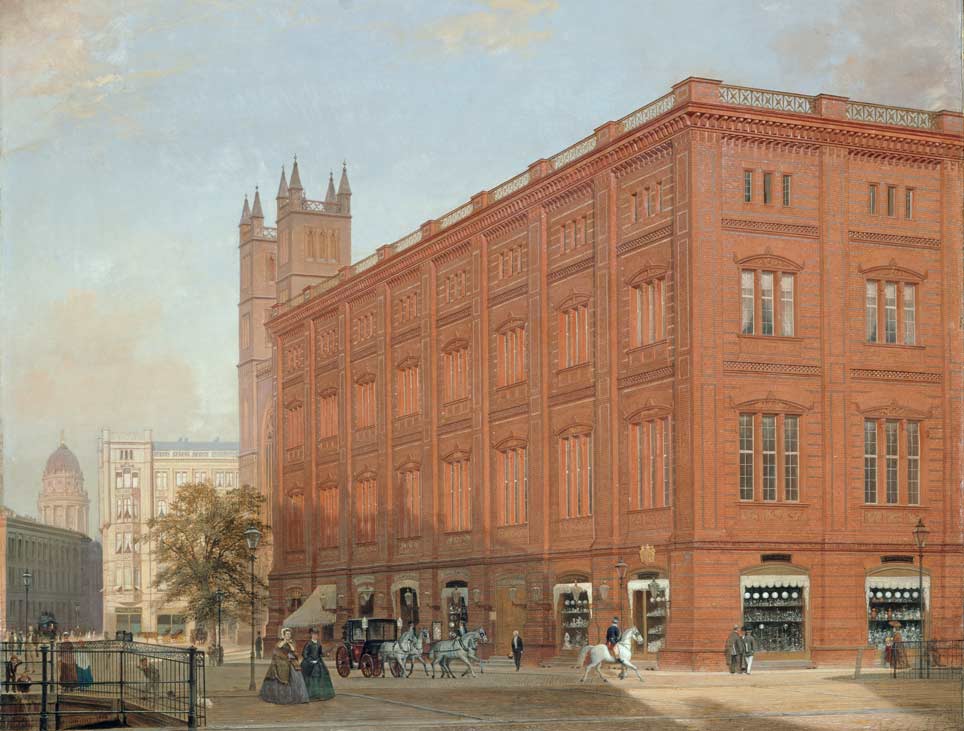
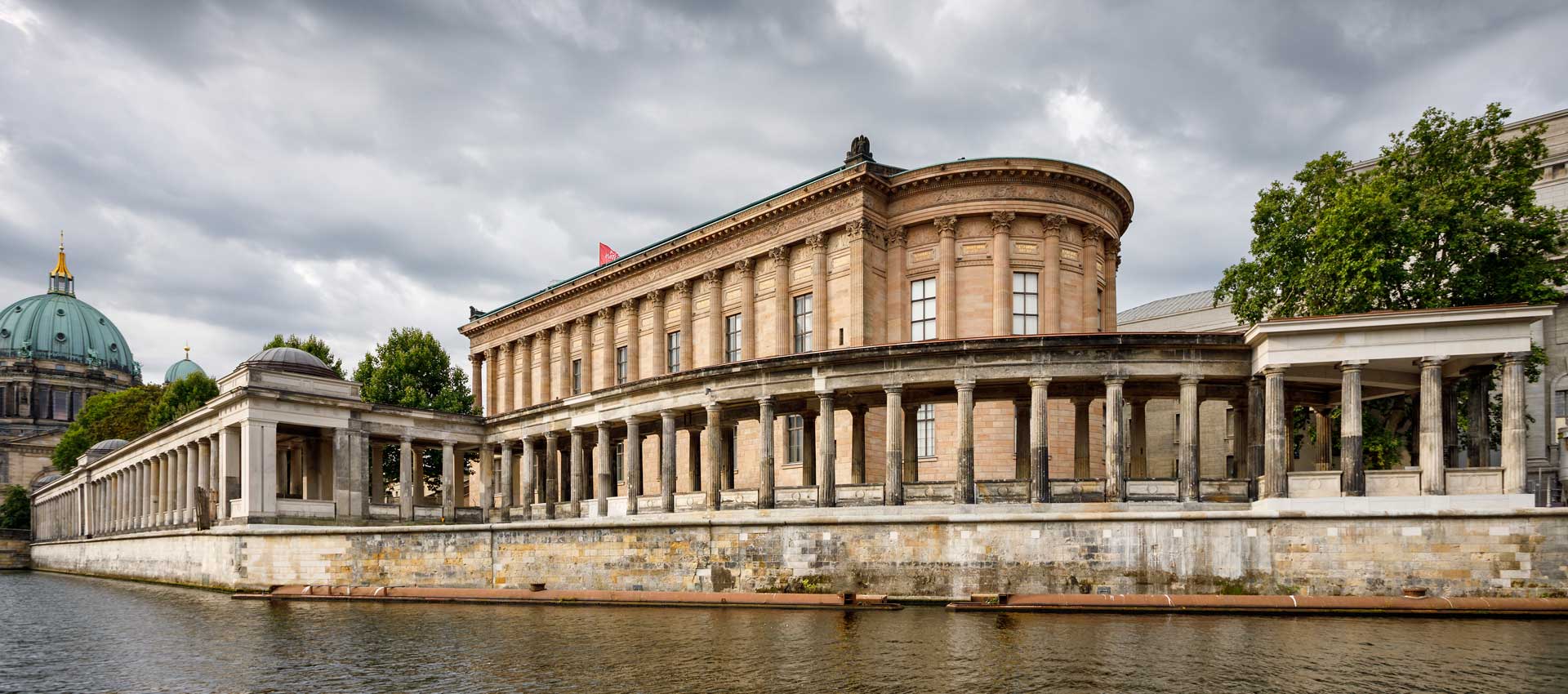
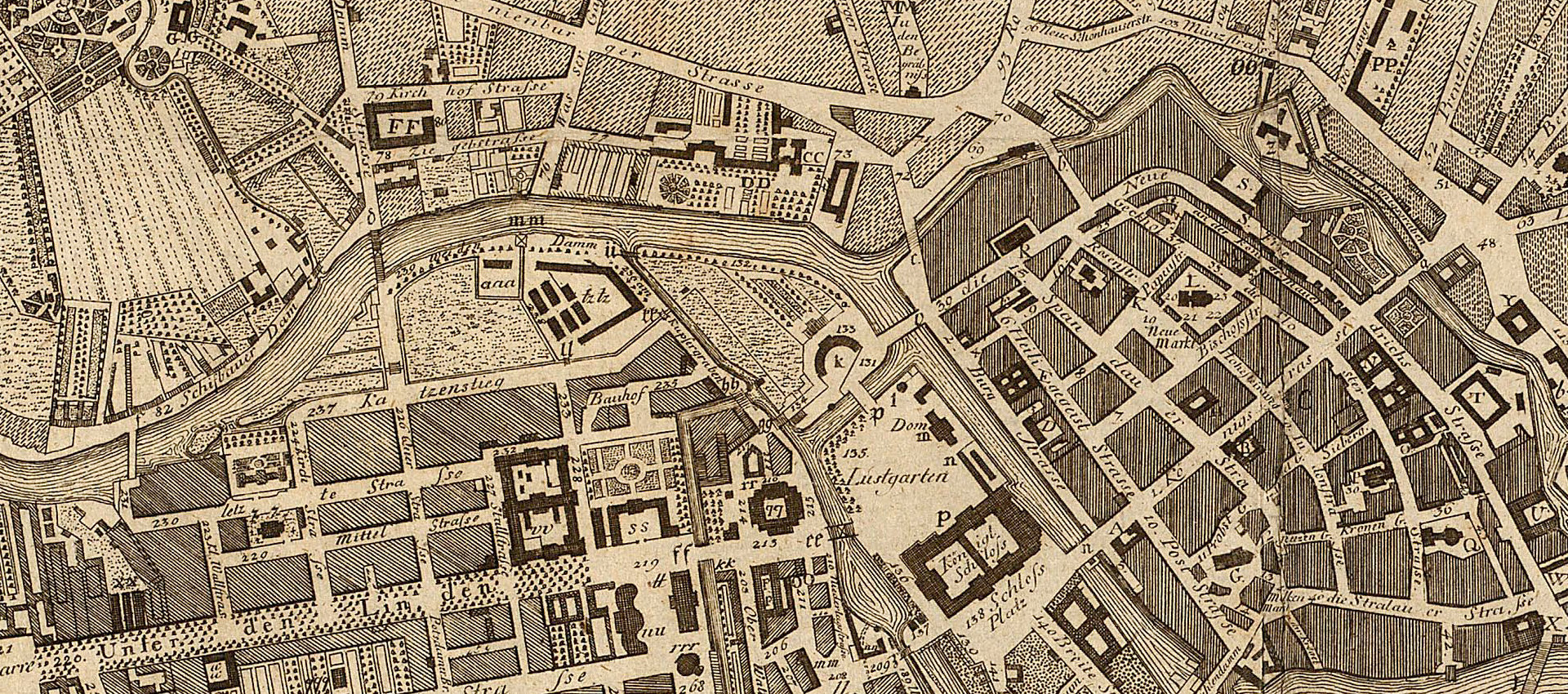
When Schinkel died a quarter of a century later, he had flanked these two monumental cubic buildings, which he held in such high regard, with two of his own: the Altes Museum on the Lustgarten and his pioneering late work, the Bauakademie, which opened in 1836 opposite the Berlin Palace on the other side of the Kupfergraben. This dynamic ensemble of four interrelated masterpieces has been almost complete again since the reconstruction of the Berlin Palace – only the Bauakademie is missing. Although it had come through the war relatively unscathed, it had to make way in 1962 for the new building of the GDR Foreign Ministry, which in turn was demolished in 1995.
The fact that the Bauakademie has still not been rebuilt is surprising insofar as a reconstruction of Schinkel’s ‘red box’ was less controversial from the outset than that of the former Hohenzollern residence. Large sections of the architectural profession also spoke out in favour of the Bauakademie’s return to the cityscape, because the cube of brick and terracotta was not a feudal structure, but rather, with its four identical façades, the grid without a central axis and its serial construction, an early modern building that had a major influence on the further development of architecture – right up to the skyscrapers of the School of Chicago and the Bauhaus. Moreover, the top floor of the Bauakademie once housed the master’s own apartment, where he died in 1841 and which, after his death, housed the first Schinkel Museum. Furthermore, the Bauakademie is the only one of Schinkel’s masterpieces to have been completely lost.
For years, associations and prominent figures campaigned for its reconstruction. Since 2004, the cube has been a feature of the urban landscape – in the form of a mock-up made of painted tarpaulins and an exemplary reconstructed model corner. Nevertheless, no viable concept for its use and financing materialised – until November 2016, when the Budget Committee of the German Bundestag allocated 62 million euros for the reconstruction.
Once again, a discussion began regarding the form and content of a new Bauakademie at the old site, moderated by the Federal Ministry of Construction with Barbara Hendricks (SPD) at the helm. She envisaged a “think tank and creative hub” for building culture, “bringing together science and art, research and teaching, theory and practice under one roof”, and where discussions on building in times of “climate change” and “integration” would also take place – an open house for all stakeholders in the sector.
This brought hordes of institutions onto the scene who, alongside the Federal Ministry of Construction, wish to play a part in this broad field: the Federal Foundation for Building Culture; the numerous organisations of architects, town planners and engineers; the associations of the construction industry; the 14 institutions in Berlin that maintain archives on architecture, including the Prussian Cultural Heritage Foundation, which holds Schinkel’s estate and a significant collection of architectural works, the Technical University with its extensive holdings, the Bauhaus Archive and the Berlinische Galerie.
With the planned reconstruction of the Bauakademie, Berlin aims to honour its most modern architect to this day.
An open design competition was launched to generate ideas on what elements should be incorporated into a rebuilt Bauakademie and how this might be implemented in the spatial programme; the competition deliberately omitted the question of the building’s external form and aimed first and foremost to clarify its future use. 78 firms from Germany and abroad took part, and the results were presented in early May. However, the jury could not bring itself to reach a clear decision and instead selected five very different projects as joint winners. These included detailed floor plans with specific square metre figures, but also more abstract ideas such as the proposal for rotating directors or façades as ‘interchangeable frames’ that look different depending on the current exhibition. This did not take us much further than the 20-year-old study by the Berlin Senate Building Administration, which had already developed precise floor plans for the usage variants “German Building Forum”, “European Building Academy” or “Berlin Architecture Museum”.
The planning competition has evidently made it clear to all involved just how important it would be for this project to have a client who provides the architects with a concrete programme of use and spatial requirements. For this reason, the Ministry of Construction – now part of the Ministry of the Interior led by Horst Seehofer (CSU) – intends, as a next step, to establish a National Academy of Architecture Foundation, which would then act as the client to determine the future use of the building. One conceivable layout would be a rough division by floor: on the ground floor – as in Schinkel’s day – shops, ideally including a specialist bookshop, alongside catering facilities; the central section would be occupied by the National Academy of Architecture as an interdisciplinary think tank on architecture and urban society, with spaces for events, exhibitions, seminars and offices; and under the roof – as in the past – a Schinkel Museum.
Given Schinkel’s significance and the fascination he exerts on architecture and art enthusiasts worldwide, such a programme seems the bare minimum that Berlin ought to present in memory of the master architect. For as yet there is no place where visitors can immerse themselves in the extensive oeuvre of this versatile artist. The new Bauakademie should become this place; it should provide space for architectural models of his buildings, for his precise drawings, for his diary sketches, his Romantic paintings, his porcelain, his furniture and lighting, including objects some of which are still being reproduced today.
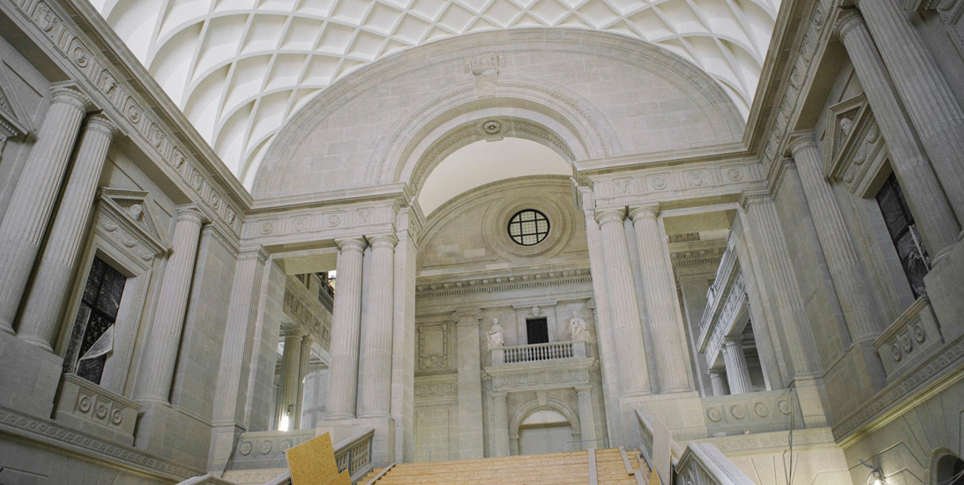
And, of course, the history of the Bauakademie itself would need to be told there, including through the display of preserved fragments of the building. The Prussian Cultural Heritage Foundation possesses hundreds of moulded bricks found in the ground following the demolition of the GDR Ministry of Foreign Affairs – and more are likely still hidden beneath the mock-up. With a few exceptions, the decorative programme of the Bauakademie is preserved through original elements. The 24 remarkable terracotta reliefs on the first floor are almost entirely intact: In three panels beneath each window, Schinkel had allegorically depicted moments from the development of architecture, such as ‘Dying Genius of Architecture with Ruins of Columns’, as well as fundamental activities and concepts of building, e.g. ‘Laying of the Foundation Stone’ or ‘Completion of a Vault’. These motifs were identical on all four façades. It is inconceivable that one day an interchangeable modern cube might stand on Schinkel-Platz, with a room containing a bust of Schinkel and touchscreens tucked away in its furthest corner.
Advocates of a thoroughly contemporary solution argue: a building must be created ‘in the spirit of Schinkel’, not in his forms. And they quote the master himself: ‘One is truly alive only where one creates something new.’ However, very few are aware of how Schinkel continues at this point: “This new style will not emerge from everything that came before in such a way that it is like a phantasm imposing itself on everyone; on the contrary, many will scarcely notice the new in it, whose greater merit will lie in the consistent application of a host of inventions made over time, which previously could not be combined in an artistic manner.”
Schinkel was one of the first architects in Prussia to recognise the value of old buildings for the present day. Hence his reverence for Berlin Palace and the Zeughaus, hence his enthusiasm for the Gothic Marienburg. He was among the driving forces when it was decided to complete Cologne Cathedral, which had remained unfinished for centuries, in strict accordance with the original plans. Schinkel restored ruined castles in the medieval style and toyed with the idea of reconstructing Roman villas. How he would view a faithful reconstruction almost 200 years after the opening of the Bauakademie remains an open question. It cannot be ruled out that he might have liked it.
More about the Bauakademie
Schinkel’s Bauakademie is set to be rebuilt in the heart of Berlin by 2023. A design competition organised by the Federal Ministry of Building is currently underway, aimed at generating ideas for the building’s use, and is due to be concluded in May 2018. For the Prussian Cultural Heritage Foundation and the National Museums in Berlin, there can be only one thing for the rebuilt Bauakademie: celebrating Schinkel!