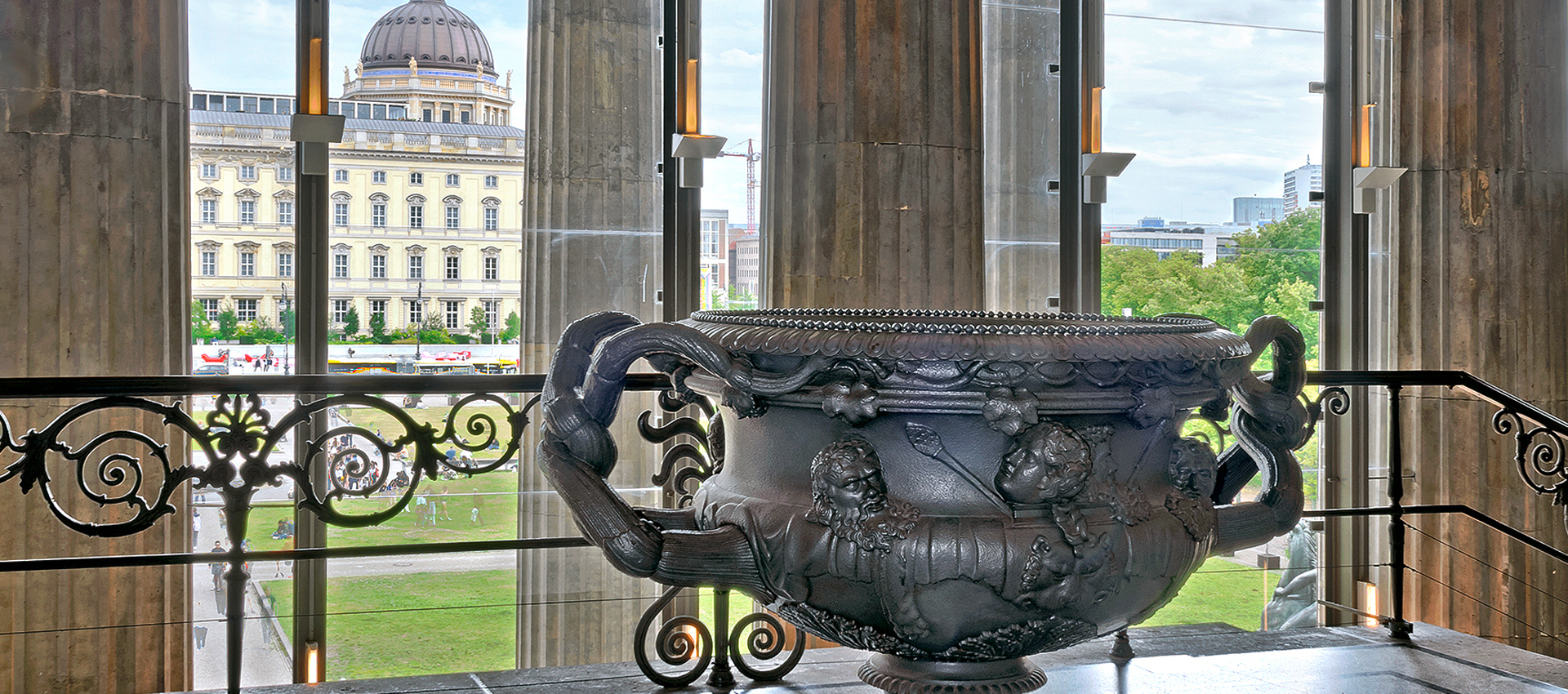
The colonnades on Museum Island celebrate the joys of symmetry and are a wonderful place to reflect whilst on the move: open, elegant and offering enticing urban views
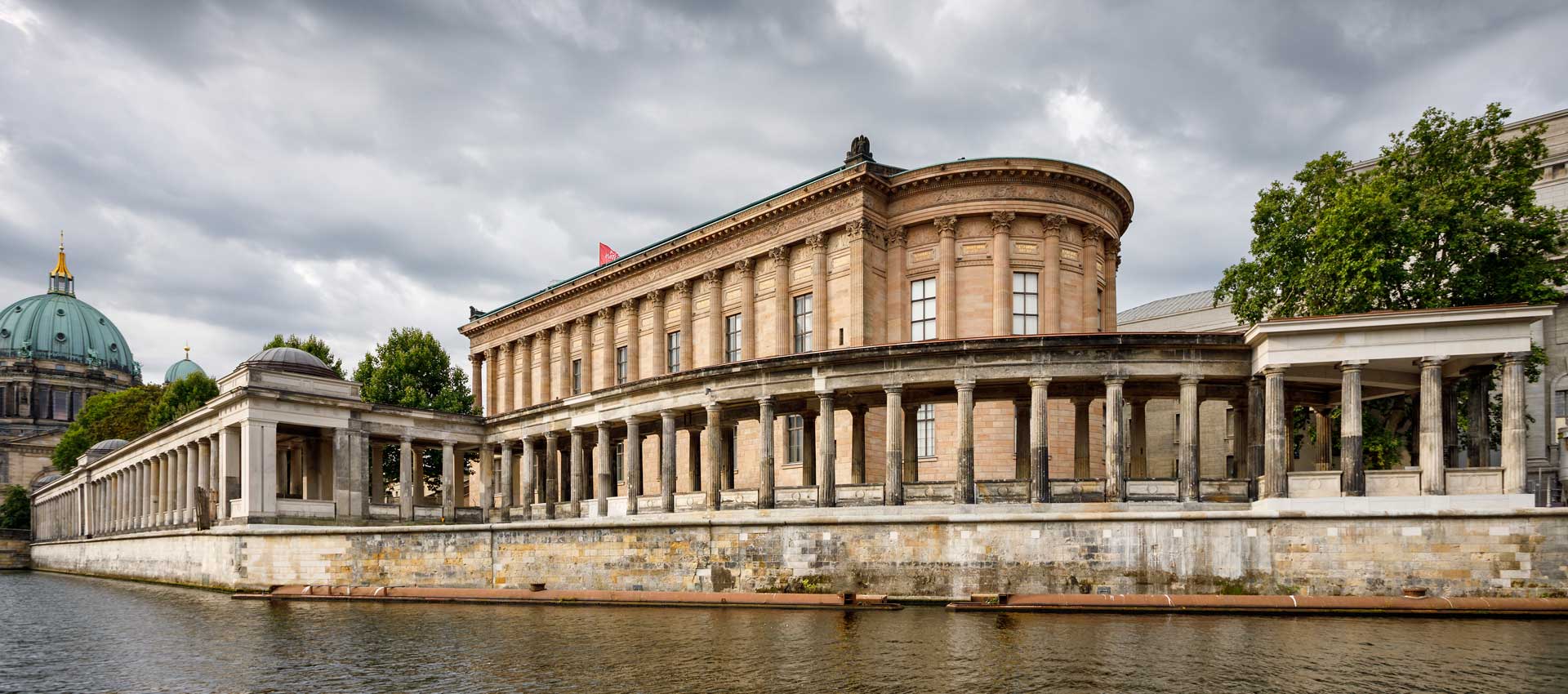
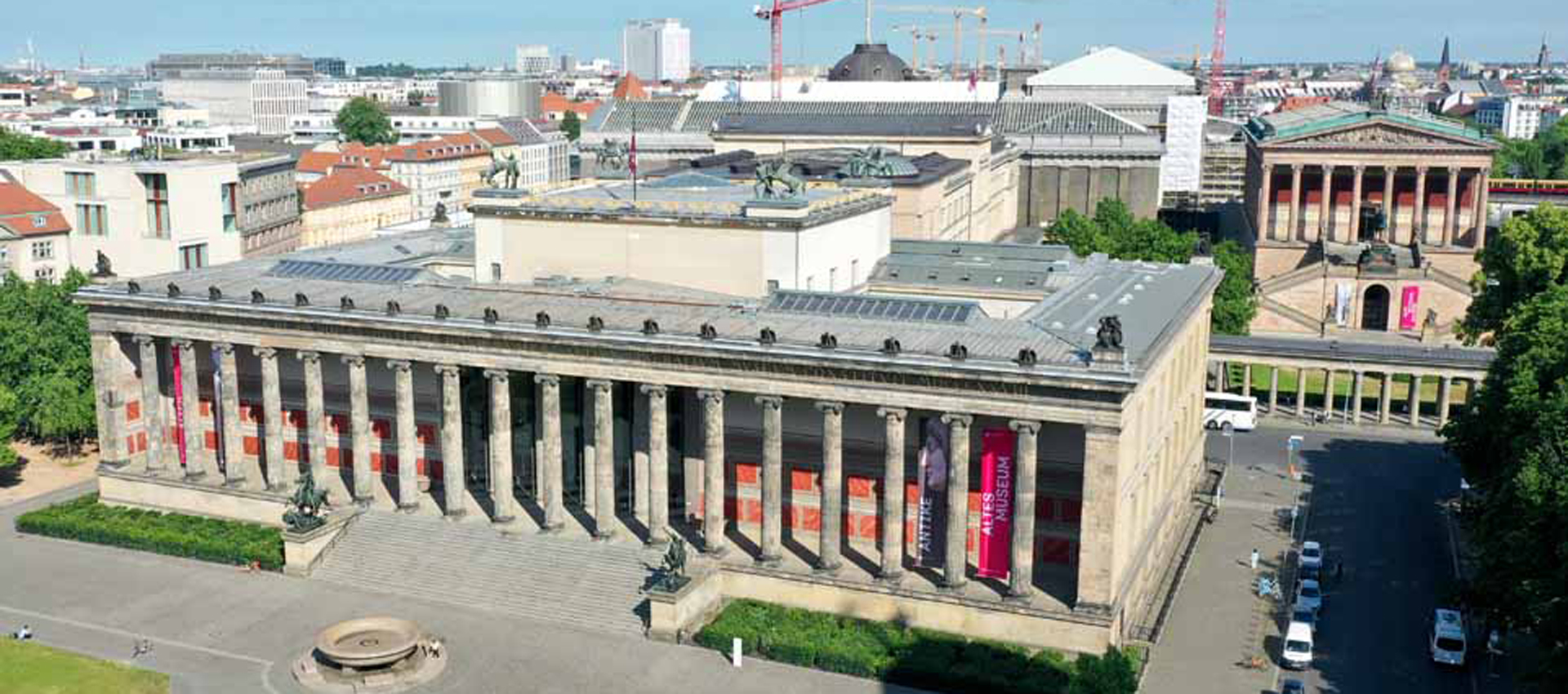
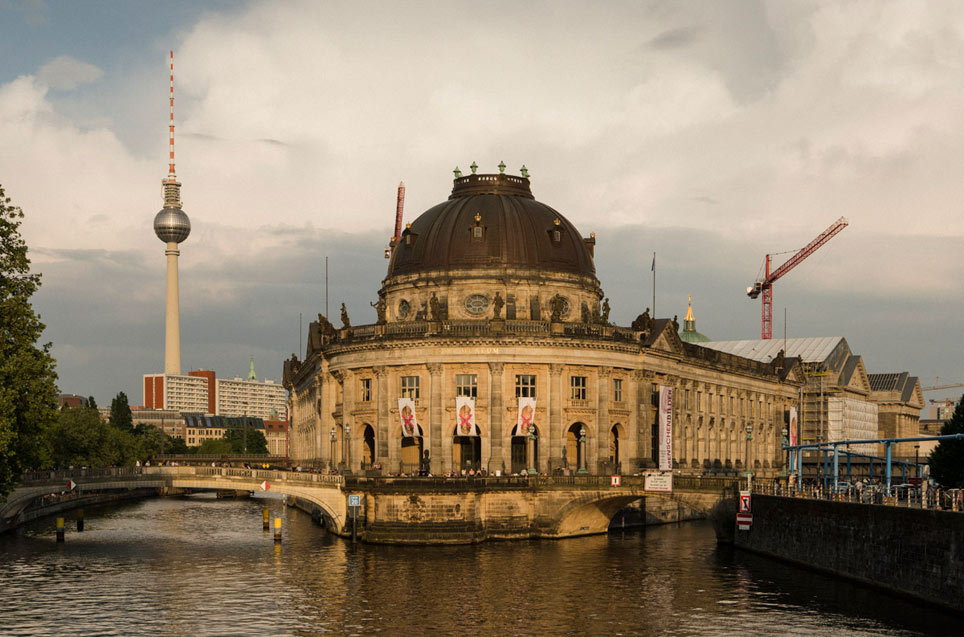
The five museum buildings on Museum Island, with their incredible treasures, invite visitors to marvel and admire, to learn and enjoy: the Altes Museum, the Neues Museum, the Alte Nationalgalerie, the Bode Museum and the Pergamon Museum. But because, for all our love of art, this can be tiring, there are not only cafés where you can rest and recharge your batteries, but also a charming architectural feature that marks the site and aims to restore your energy. These are the colonnades, which not only line a courtyard between the Alte Nationalgalerie, the Neues Museum and the Spree, but also extend a little further north-east along the water’s edge.
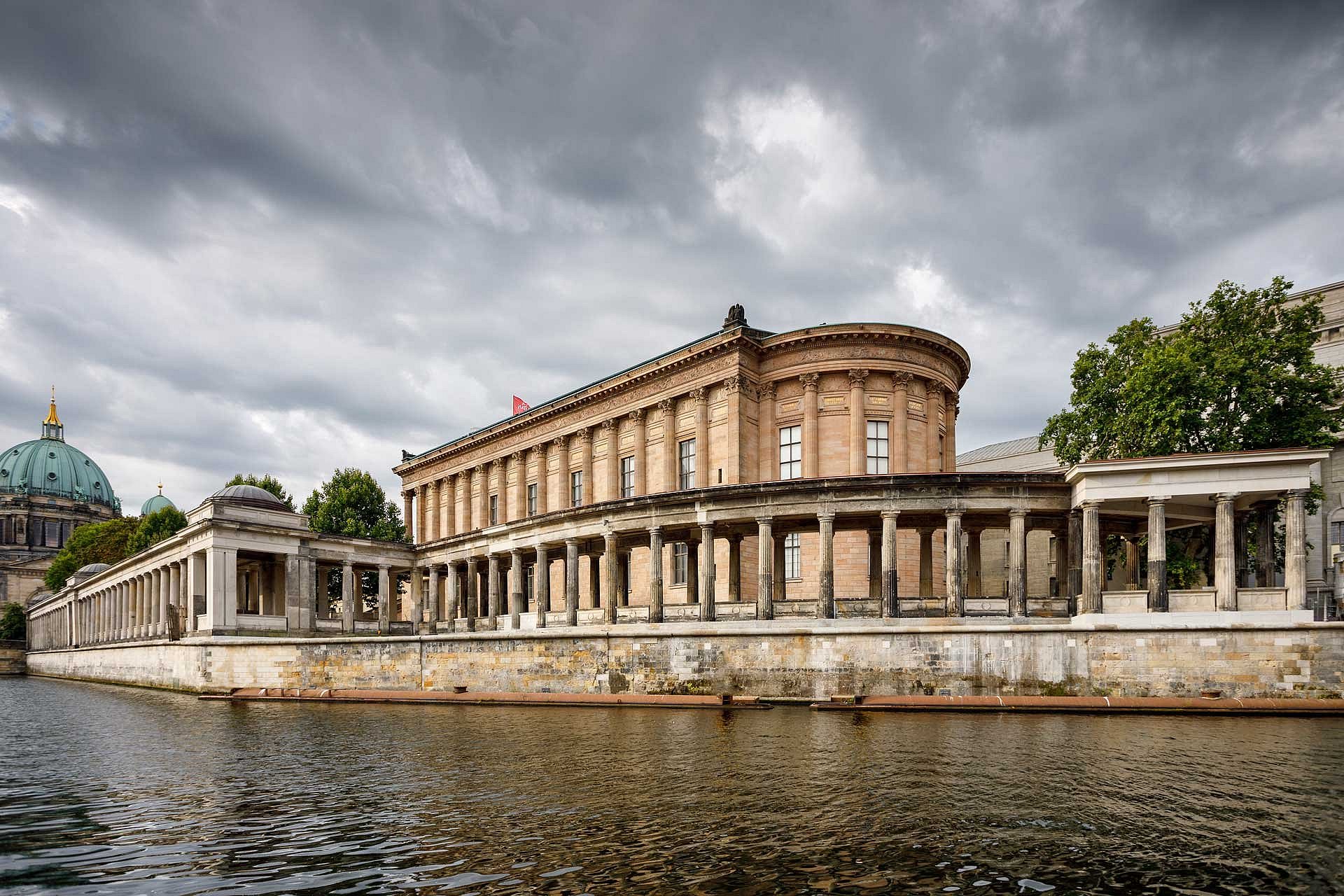
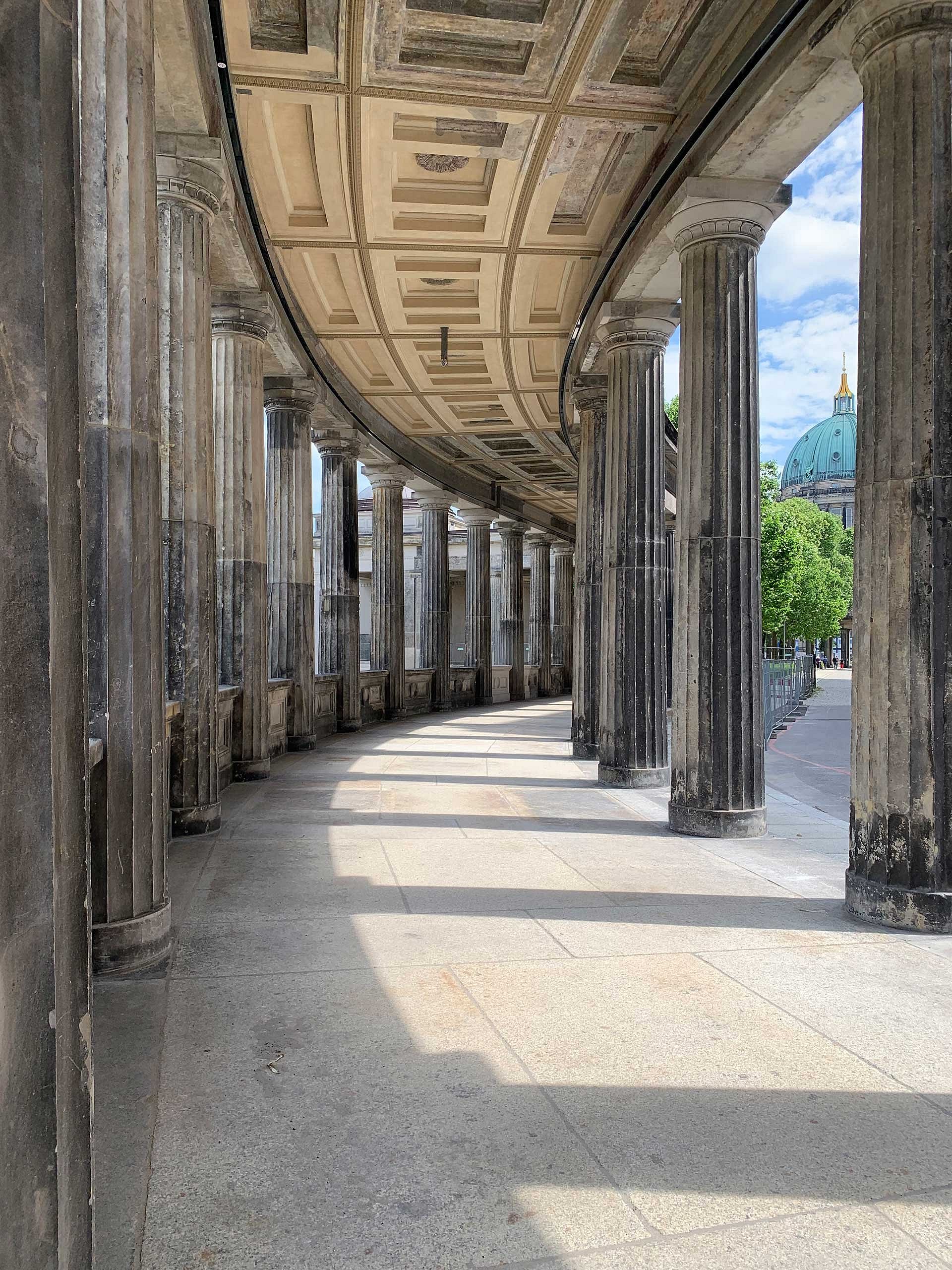
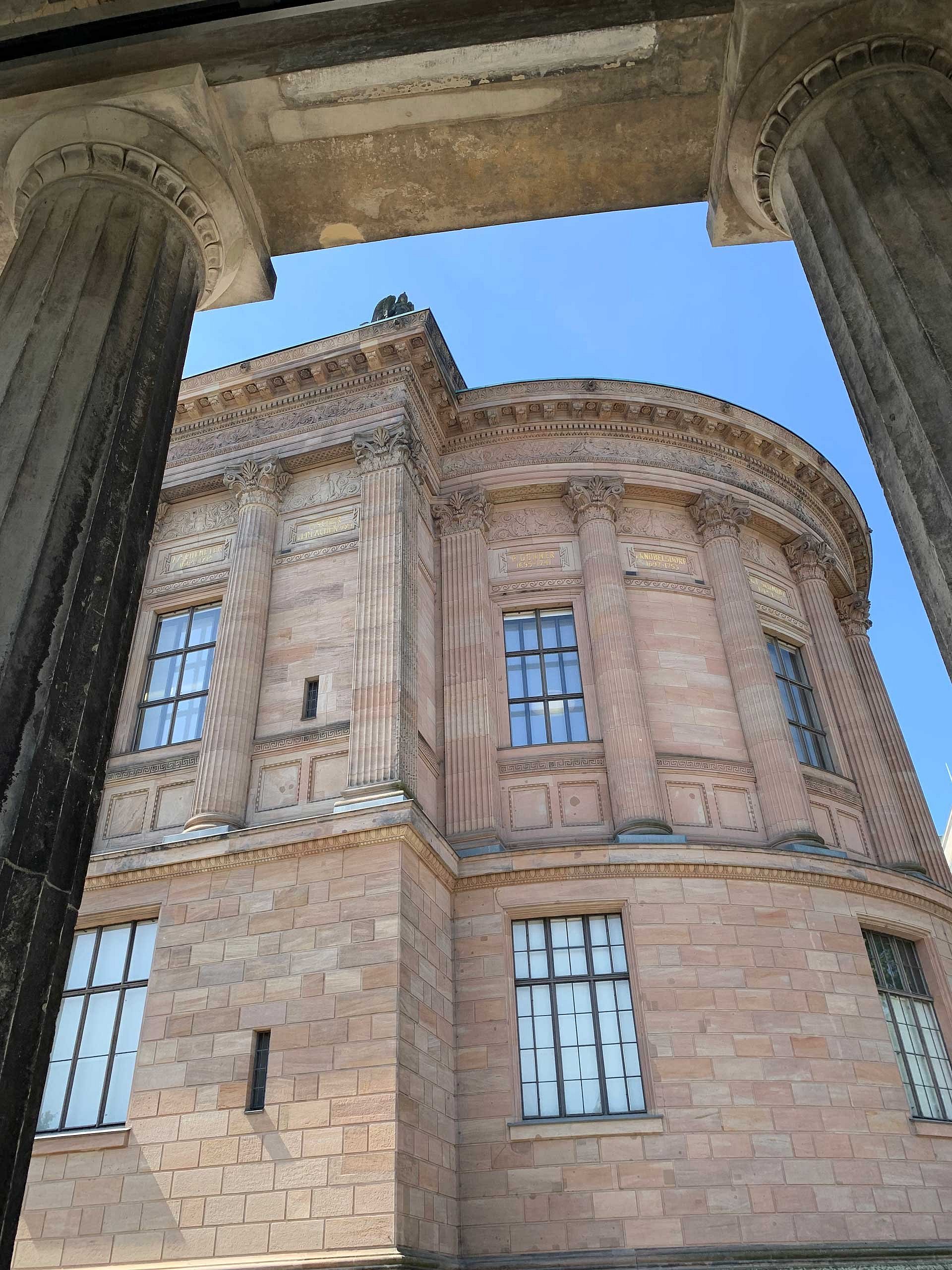
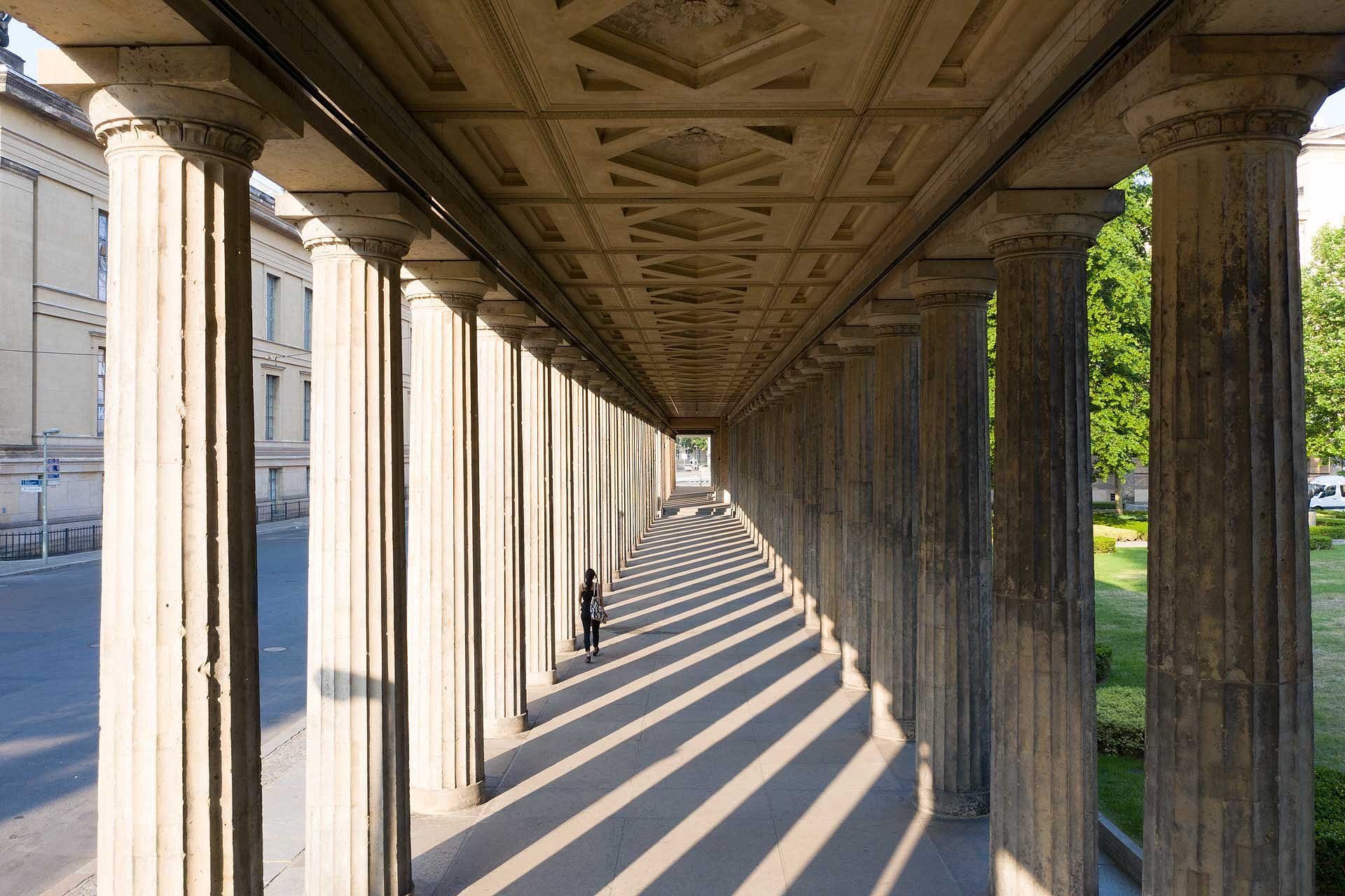
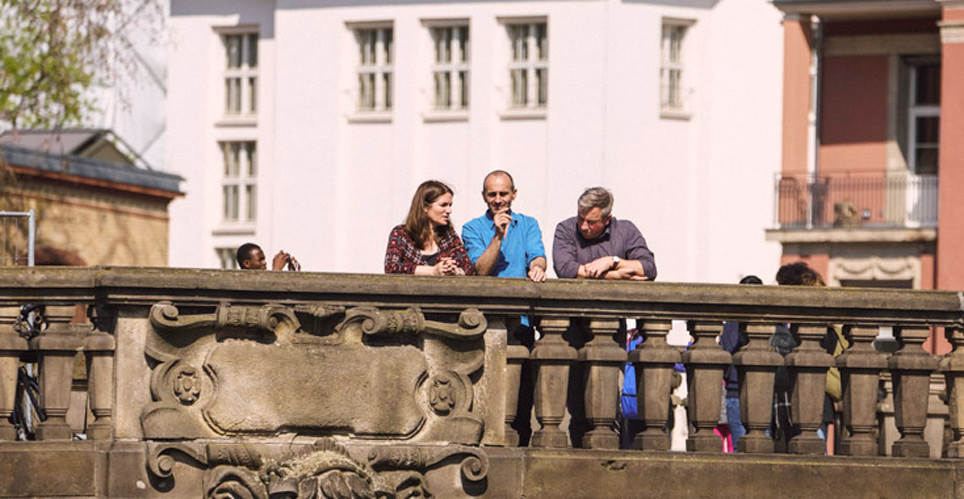
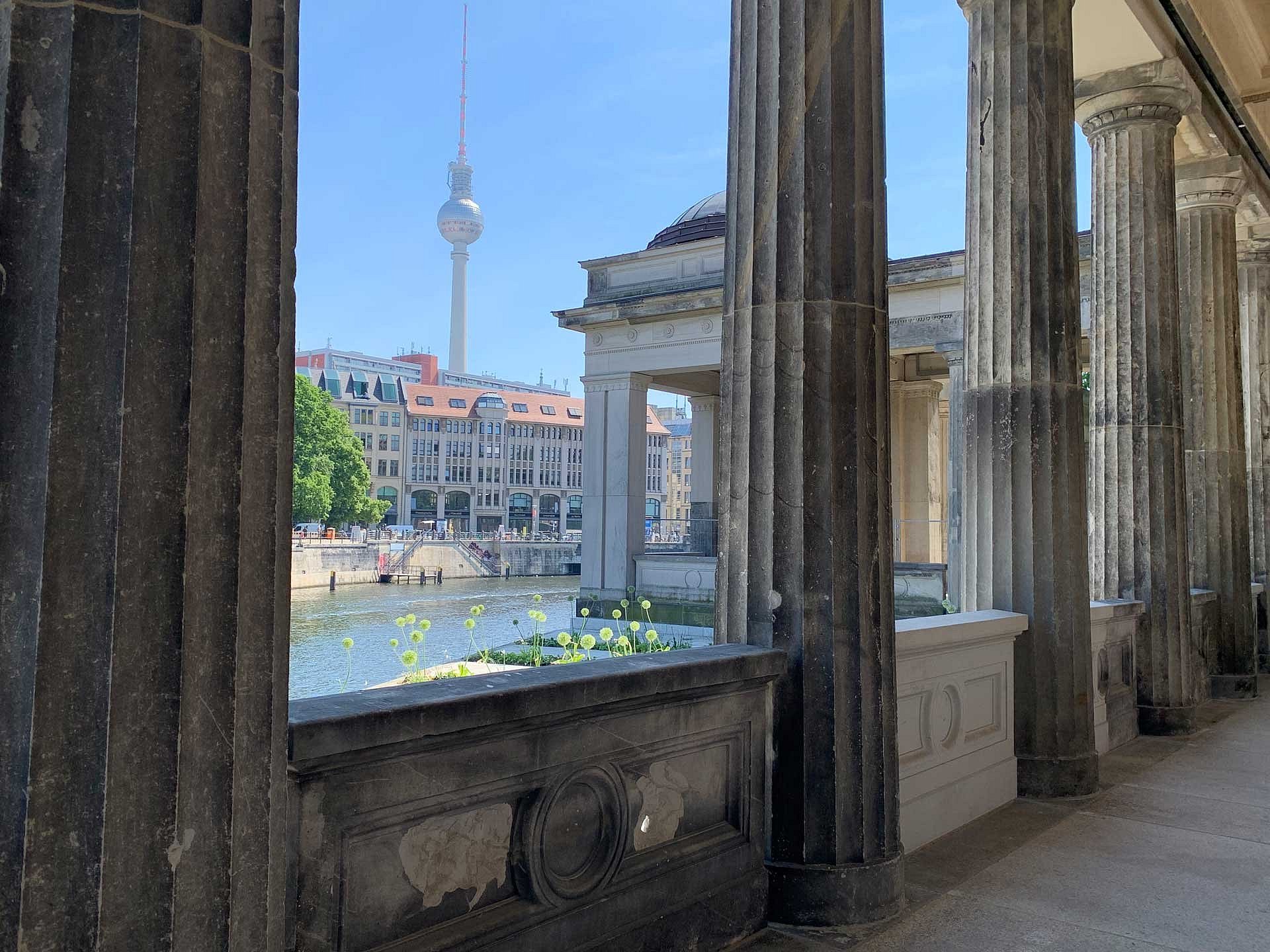
Thanks to their roof, they allow visitors to enjoy a pleasant stroll sheltered from the ice and rain in winter, whilst in summer they provide shade and a gentle breeze, creating a refreshing atmosphere. In the 19th century, there was even a refreshment hall within the colonnades. In recent years, this tradition has been revived and supplemented on some summer evenings with events – discussion panels, DJ sets and cool drinks. The view is first-class: from the colonnades, you can see the golden dome of the synagogue on Oranienburger Straße in one direction and the TV tower in the other.
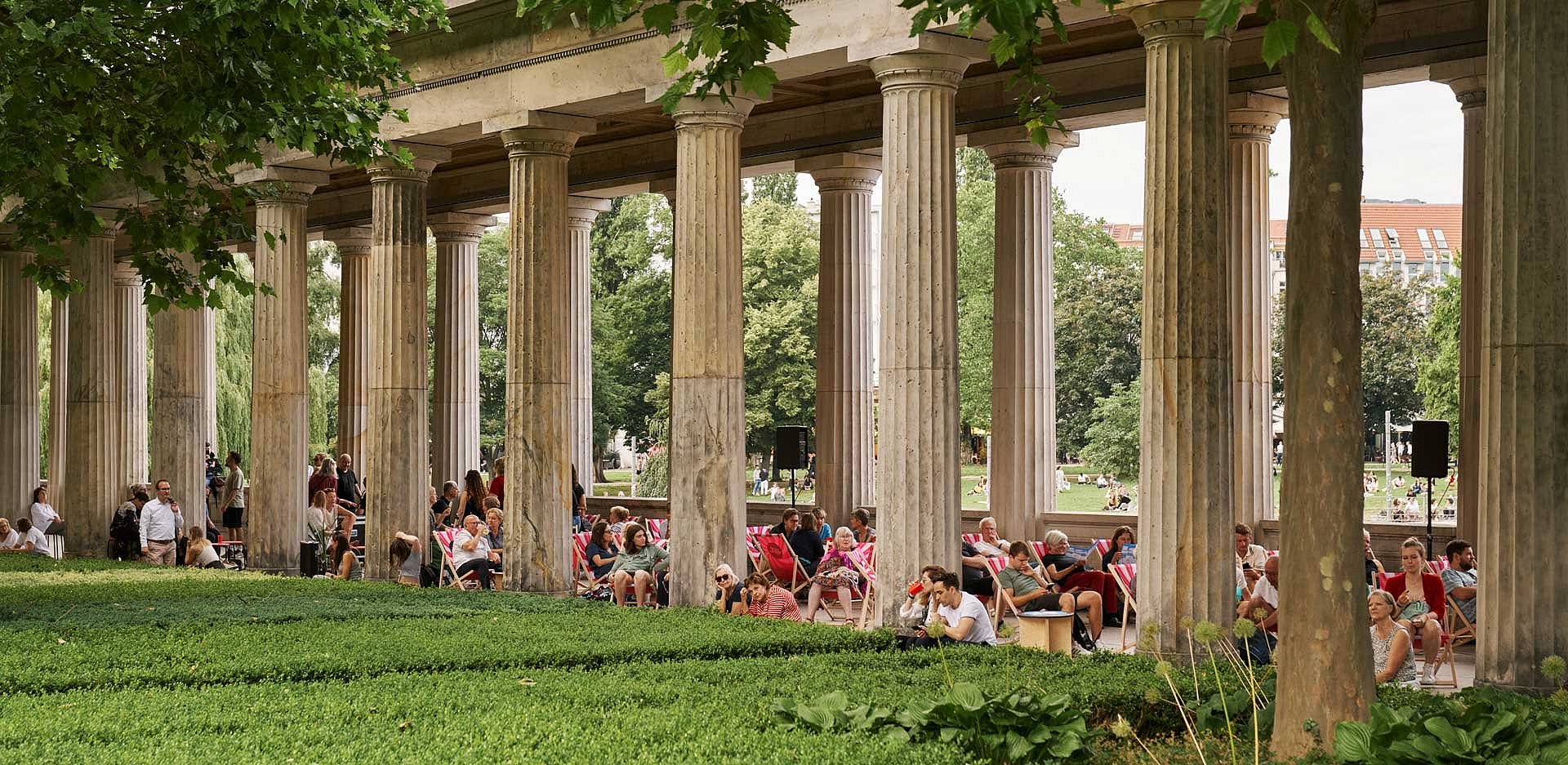
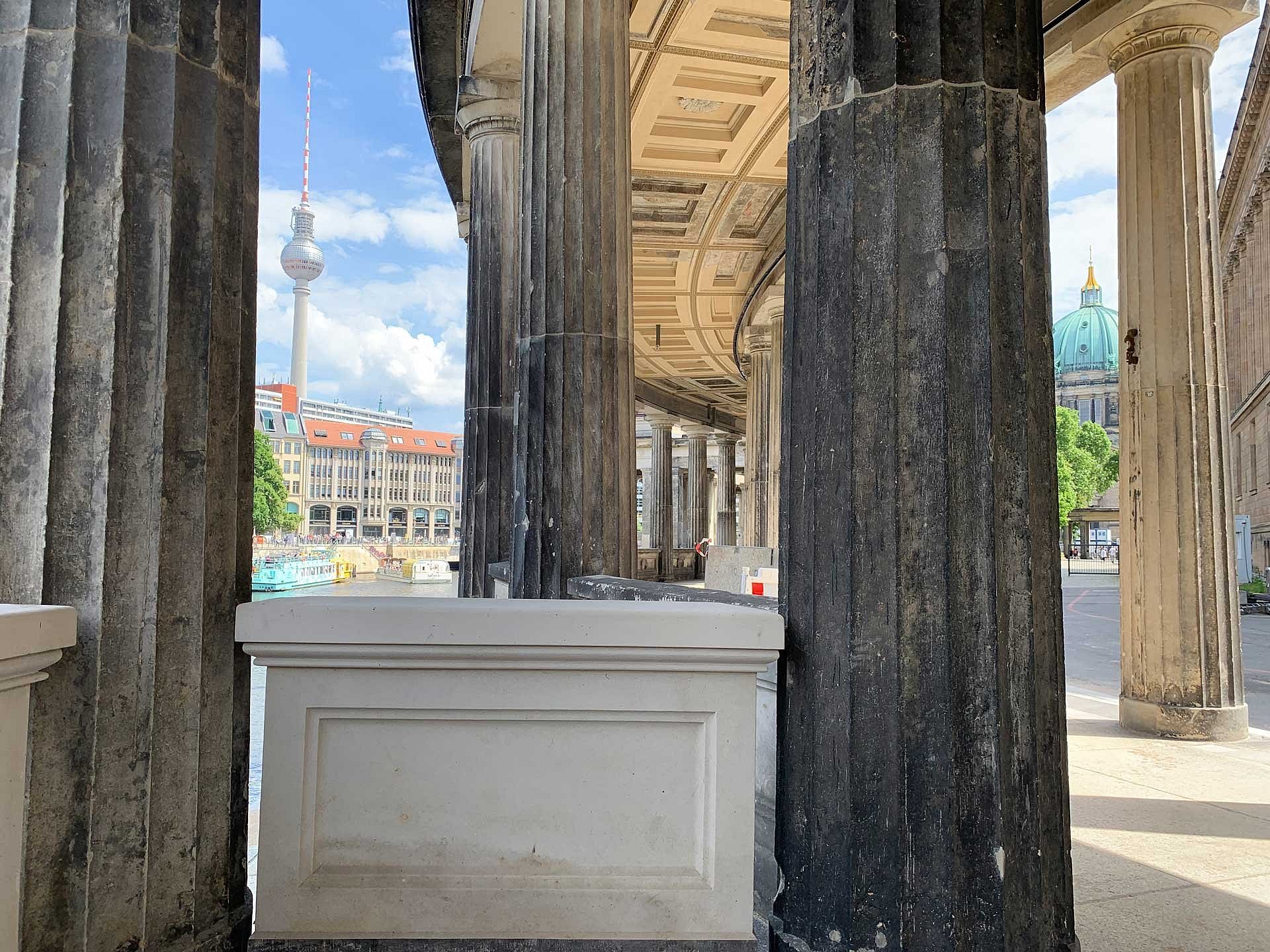
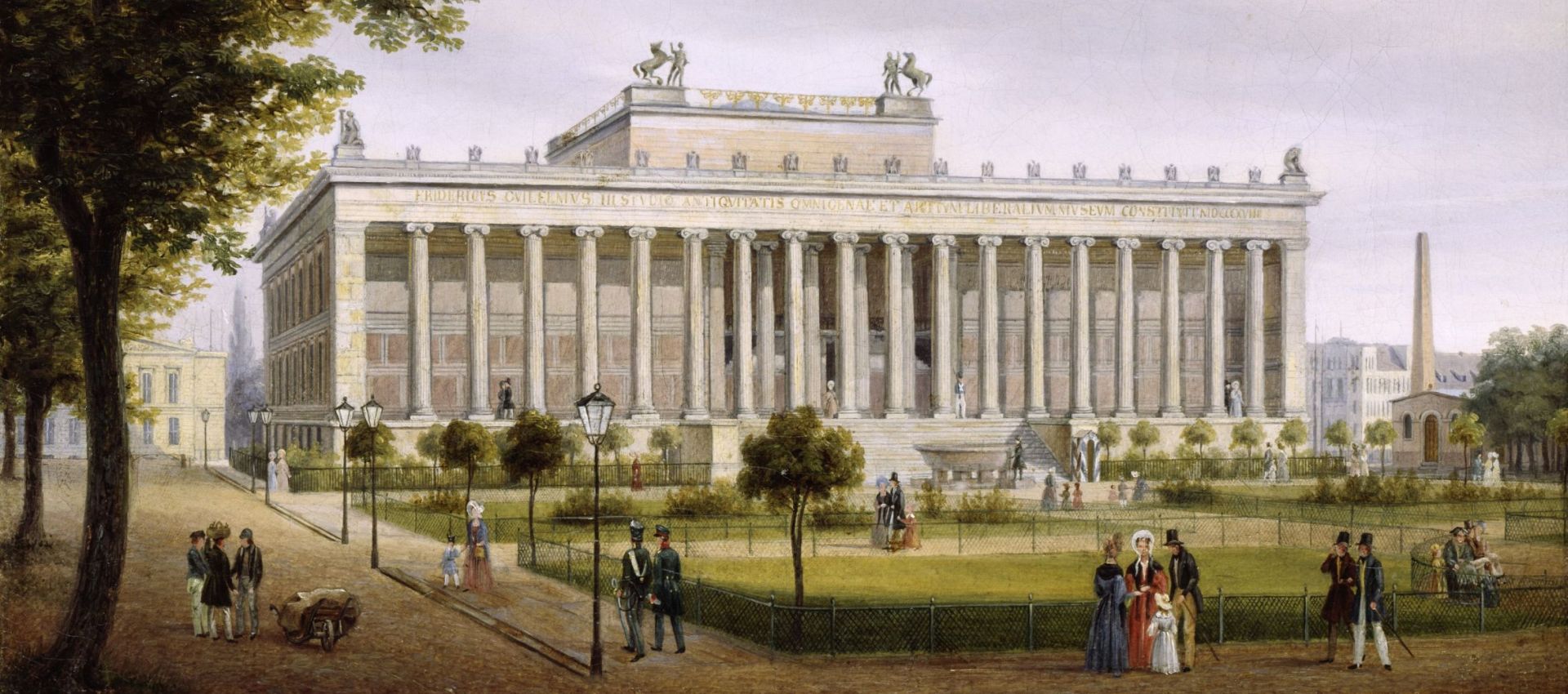
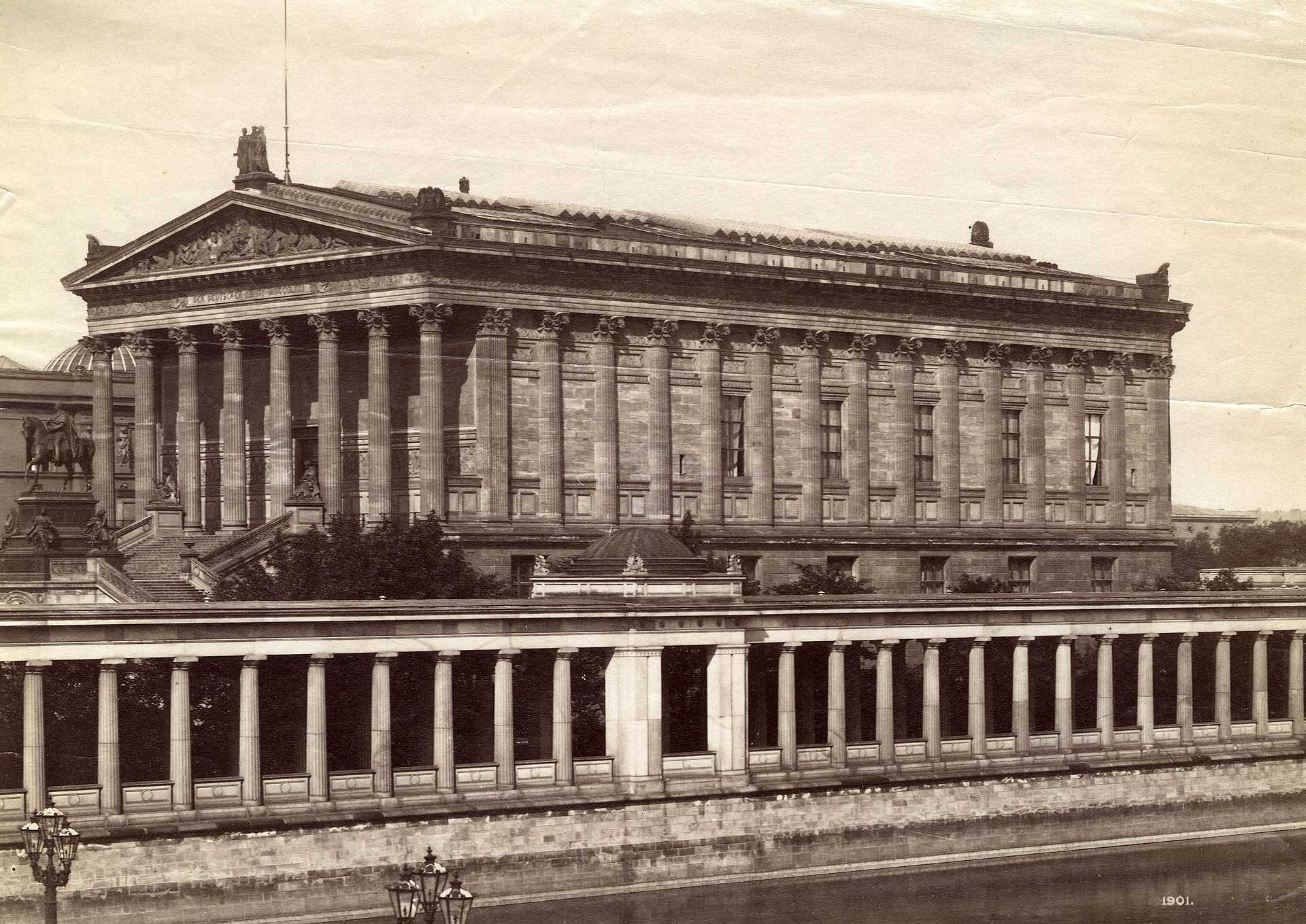
If the heart of Berlin’s cultural life beats on Museum Island, then the colonnades are its coronary arteries, providing visitors with a fresh burst of energy. At least, that was the plan when the first colonnades on Museum Island were built between 1841 and 1880, based on a design by Friedrich August Stüler: to stroll, to reflect, to exchange ideas with others, to delight in the symmetry of the forms, and to savour the city in peace and quiet.
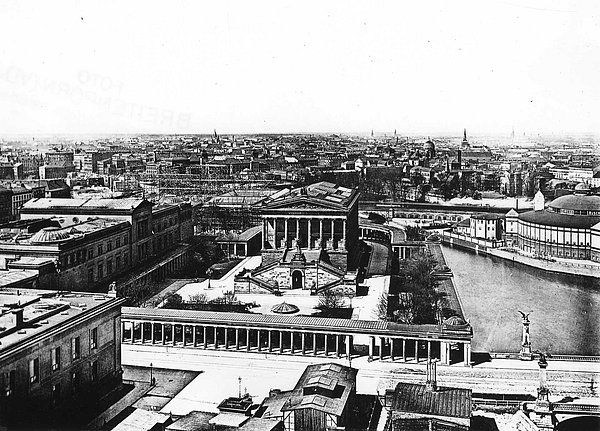
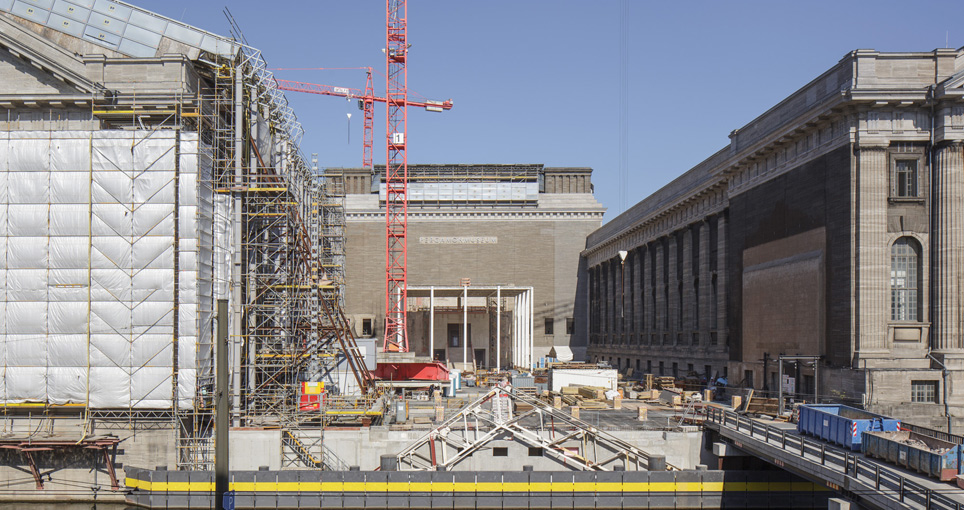
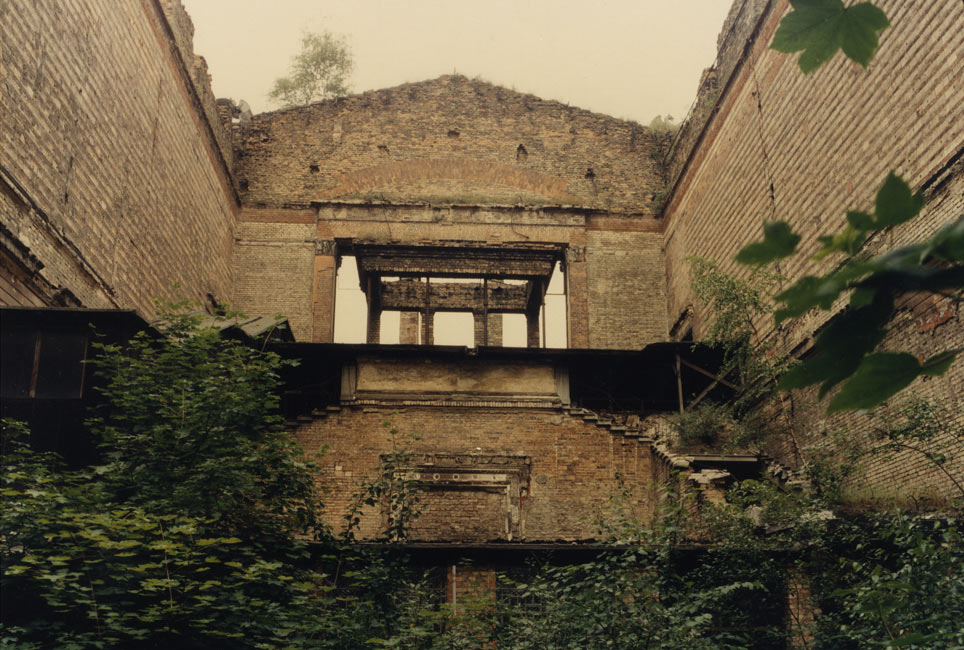
However, due to the new buildings being added – particularly the Pergamon Museum – the colonnades, which had originally been arranged in a covered ‘U’ shape around the Alte Nationalgalerie, soon had to be significantly dismantled. And because space quickly became a problem, walls and windows were installed between the columns and ceilings were fitted. The resulting two-storey rooms served as storage facilities for art objects, and later as restoration workshops, where damaged sculptures were repaired until the early 2020s. There was also uncontrolled building growth all around – where necessary, new service buildings were simply erected between the museums, such as a canteen during the GDR era.
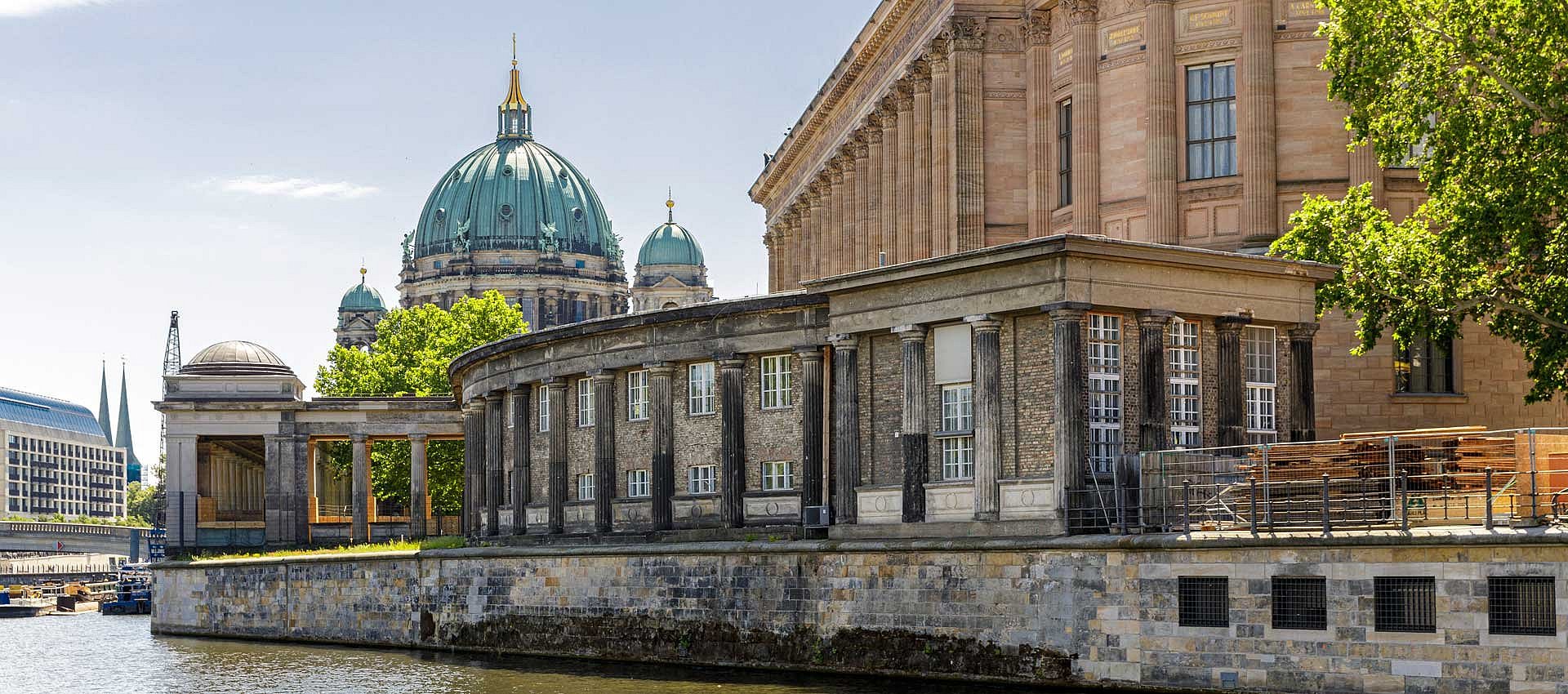
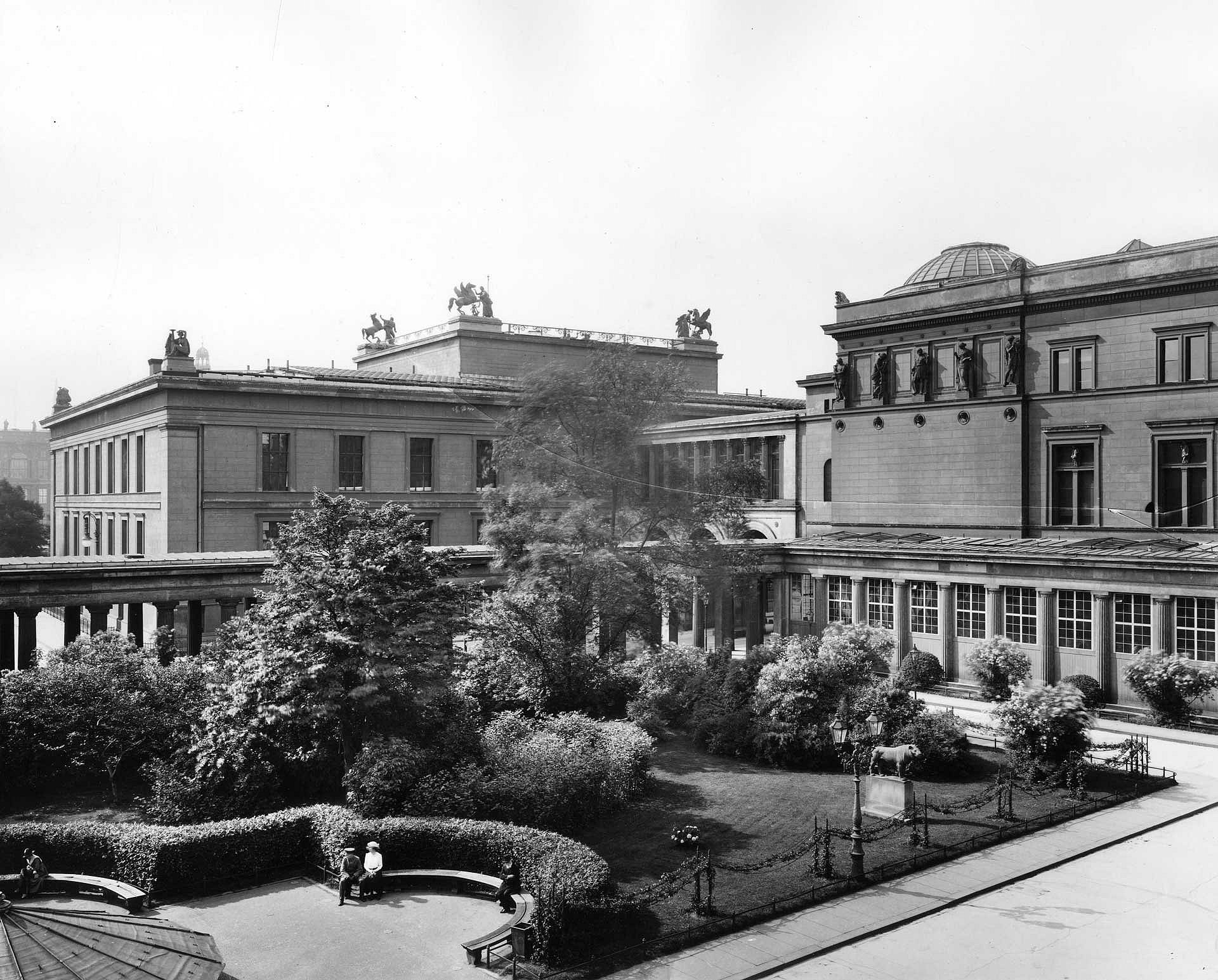
The traces of history should remain visible
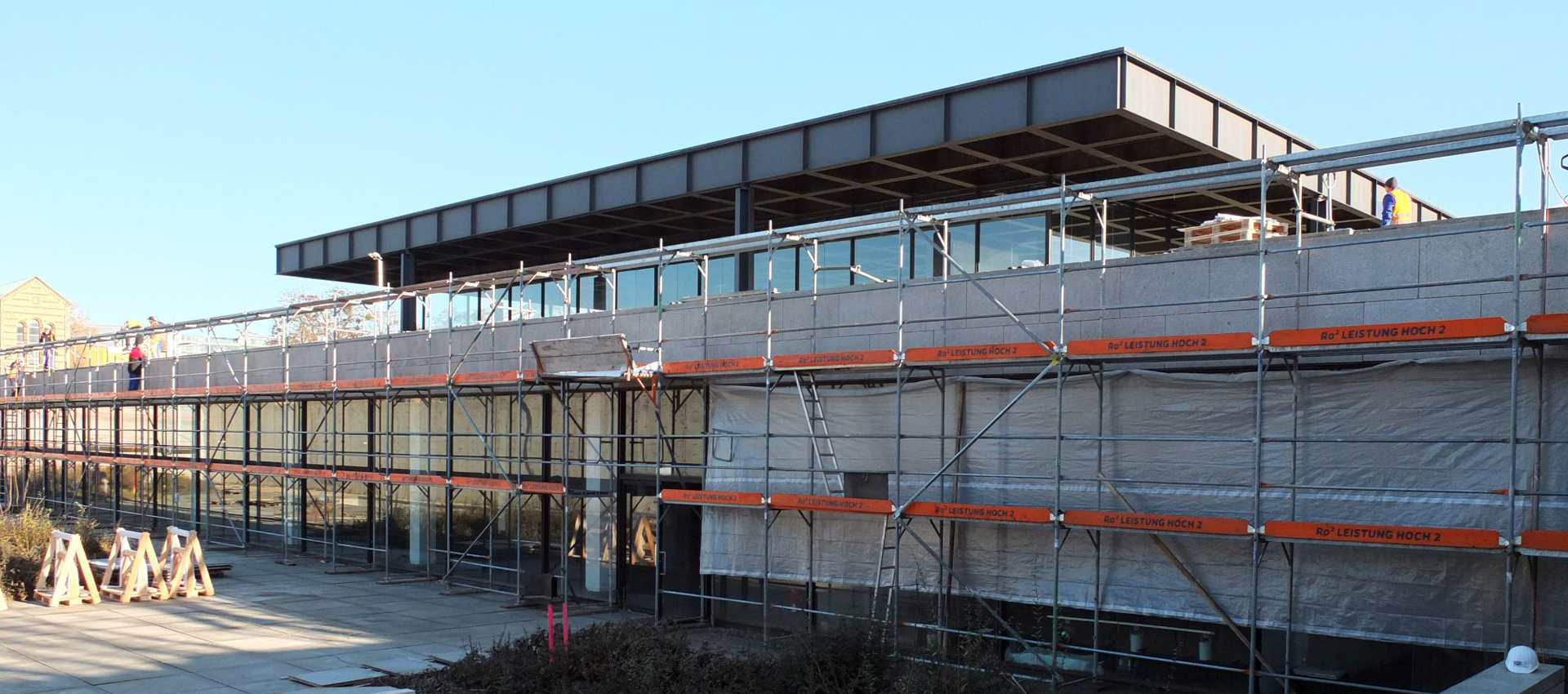
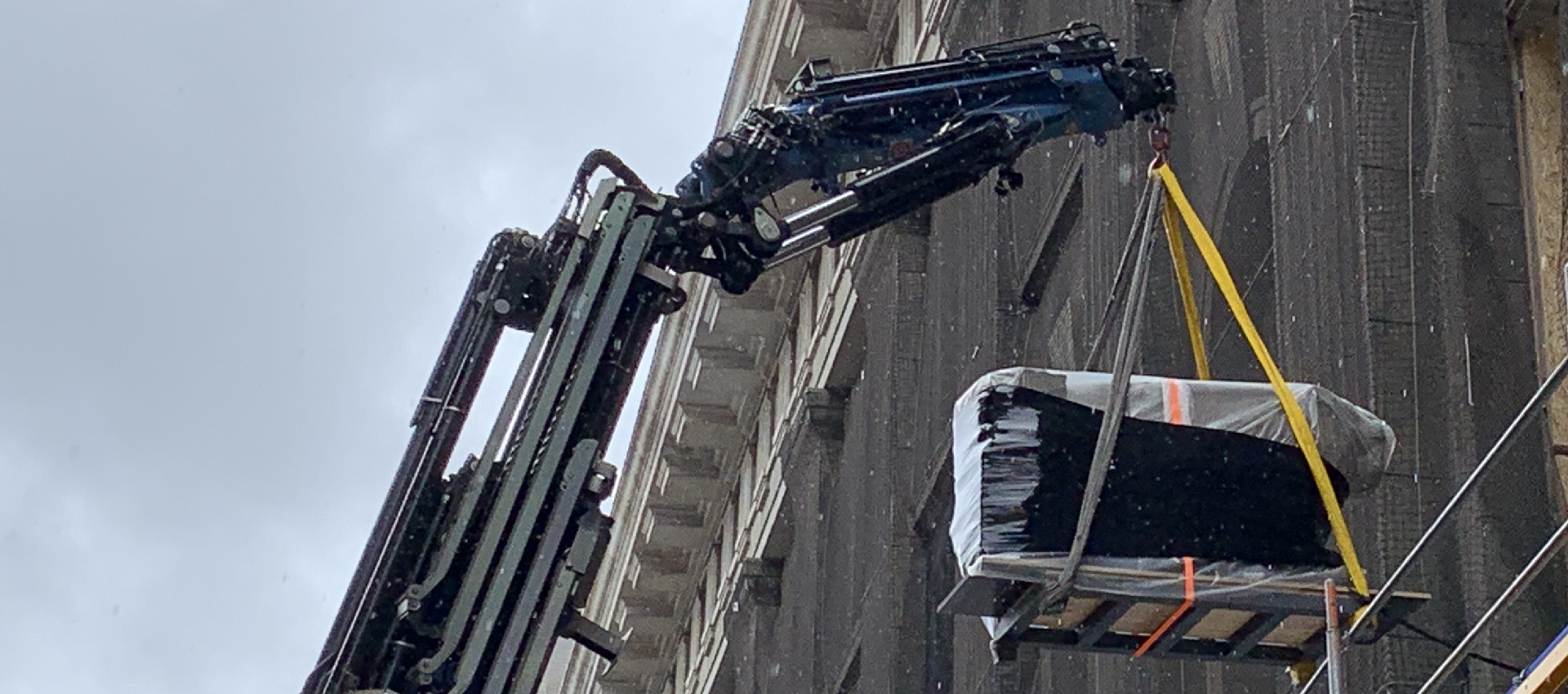
The masterplan for Museum Island was intended to put an end to this and reveal the original, clear architectural structure. And the colonnades were to regain their inviting promenade character, standing free and inviting visitors to stroll in the shadow of world culture. It worked, but the process was highly complicated and labour-intensive. For example, the ceiling had to be hydraulically raised by two centimetres at a time in precisely measured sections in order to remove the columns – which had tilted and sagged by several centimetres due to the poor ground conditions – repair war damage to the structure, and then reinstall the columns vertically.
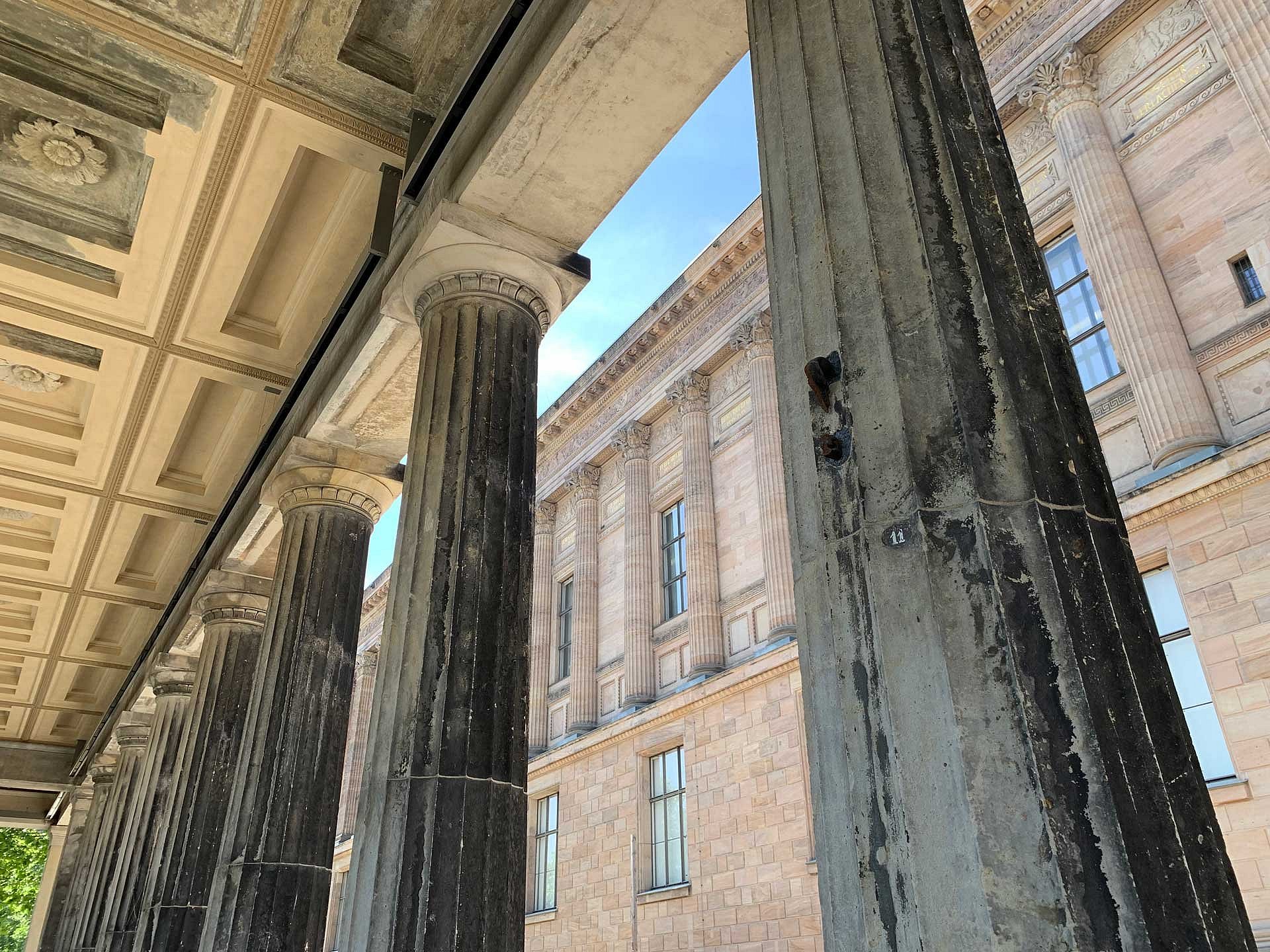
Furthermore, the lighting concept had to be adapted to the new technical requirements and implemented in accordance with heritage conservation guidelines, as the old candelabras – whose mountings can still be seen on some of the columns – were no longer suitable for the purpose. After all, the 19th-century colonnades are a defining feature of the UNESCO World Heritage Site.
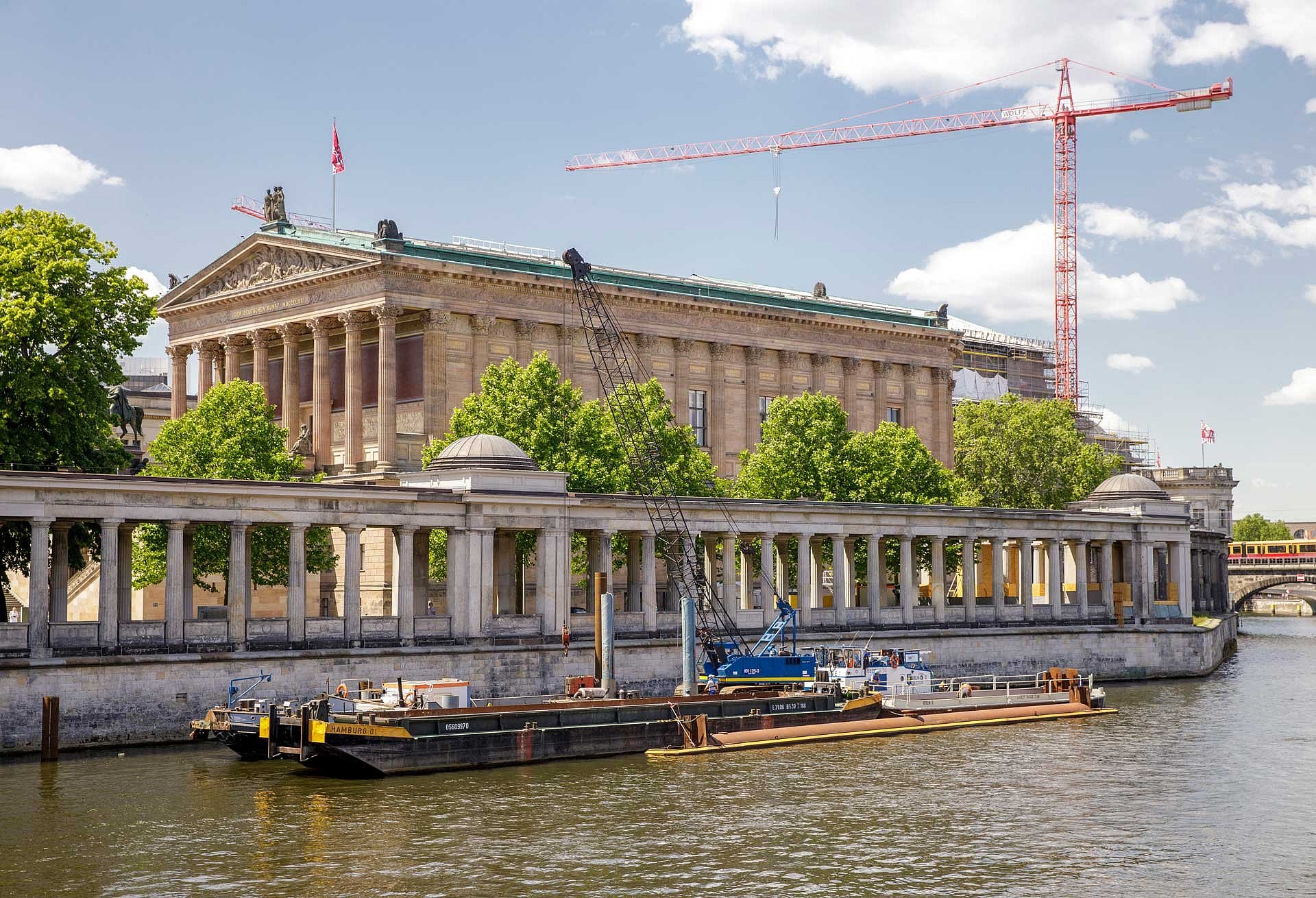
However, this was preceded by a general debate on how the reconstruction should be carried out: should everything be made to look brand new, or should the traces of history be preserved? The decision was made to do the latter, aiming to preserve and reuse as much of the old structure and original materials as possible, in order to showcase the buildings’ historical development. And all this had to be carried out as carefully as possible so as not to endanger the adjacent museums with their precious exhibits and numerous glass display cases.
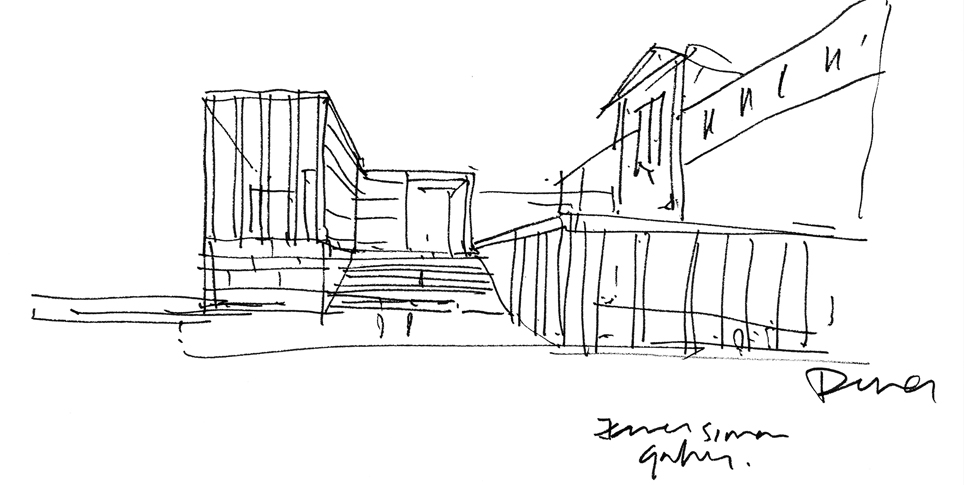
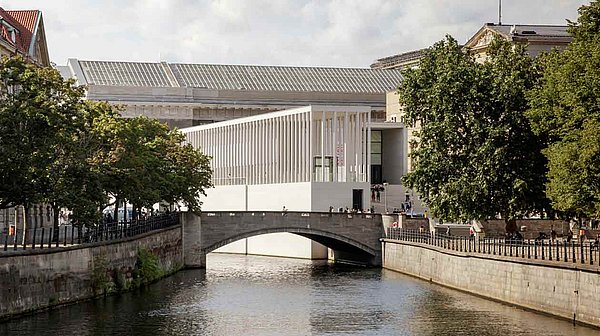
Ralf Nitschke, Head of the Construction Planning Unit at the General Directorate of the State Museums in Berlin, is pleased to highlight the consistent approach to heritage conservation, “despite there having been several construction phases and two architectural firms involved”. David Chipperfield Architects renovated the first section of the colonnades as part of the major refurbishment of the Neues Museum and incorporated the colonnade element in a modern form for the James Simon Gallery, whilst on the other side Christina Petersen of Petersen, Gesellschaft von Architekten mbH oversaw the heritage-sensitive restoration of the second section of the historic colonnades. Most of them, as well as the Colonnade Courtyard, have been gradually restored since 2010.
The building tells us a lot about its history
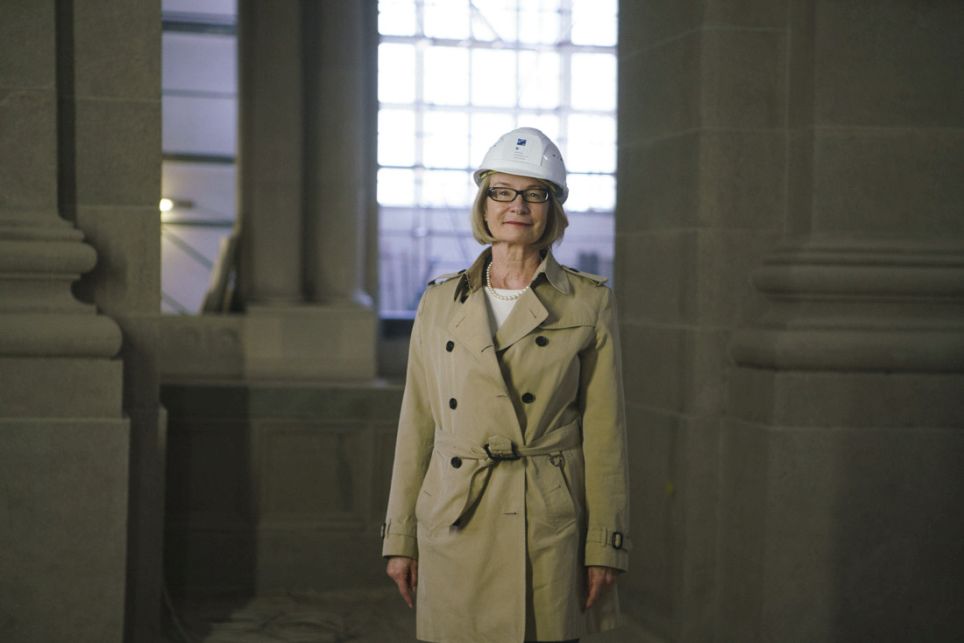
The final section was completed in May. Christina Petersen is delighted that everything has turned out so well: “Visitors won’t notice much of the bulk of our work, as the thick bundles of cables – some of which are necessary to supply the museums – run through the vaulted cellar beneath the colonnades. The original floor slabs had to be removed and restored to allow for waterproofing work. For example, we sealed the round holes we found in them. This is because, when these parts of the building were used as workshops, the water and heating pipes ran through them.”
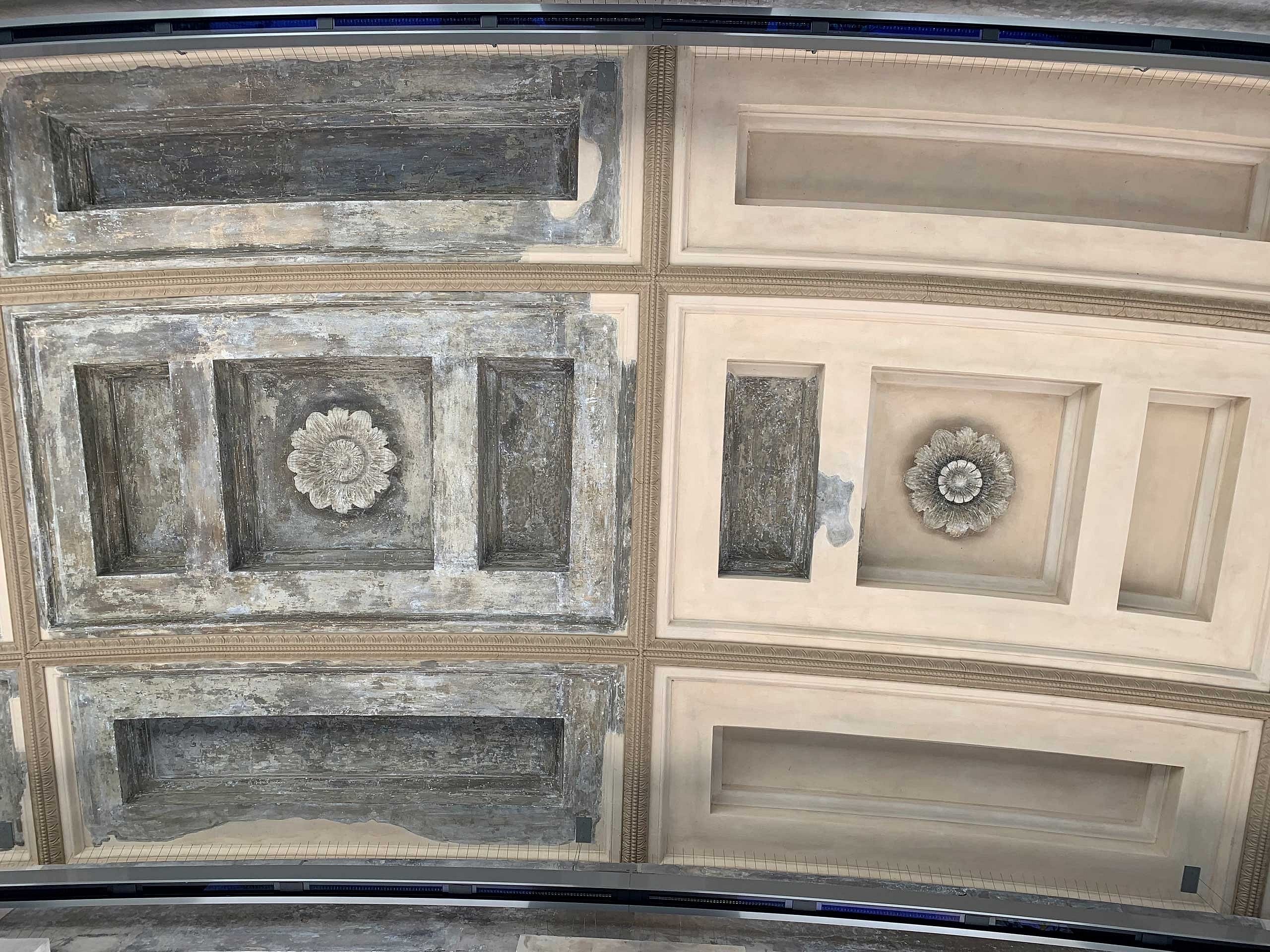
Fire protection, CCTV, electrical wiring – all of this was part of the construction project, but it was not to be visually intrusive. That is why the lightning protection was discreetly housed within the columns using core drilling. The columns, in turn, were cleaned of oil paint and tar residues as far as possible without damaging the structure. The coffered ceilings were also renewed where necessary, and in some cases stainless steel support members were installed in the architraves – the horizontal beams – which can now counterbalance any dynamic forces, much like in bridge construction.
The signs of wear and tear over time were not concealed: light-coloured new components blend in with the darkened old ones, and bullet holes from the Second World War are visible. Repairs using materials faithful to the original took precedence over the replacement of parts. “We have preserved everything that could be preserved,” explains Petersen: “The building should be able to tell its story. And there is a lot to tell.”
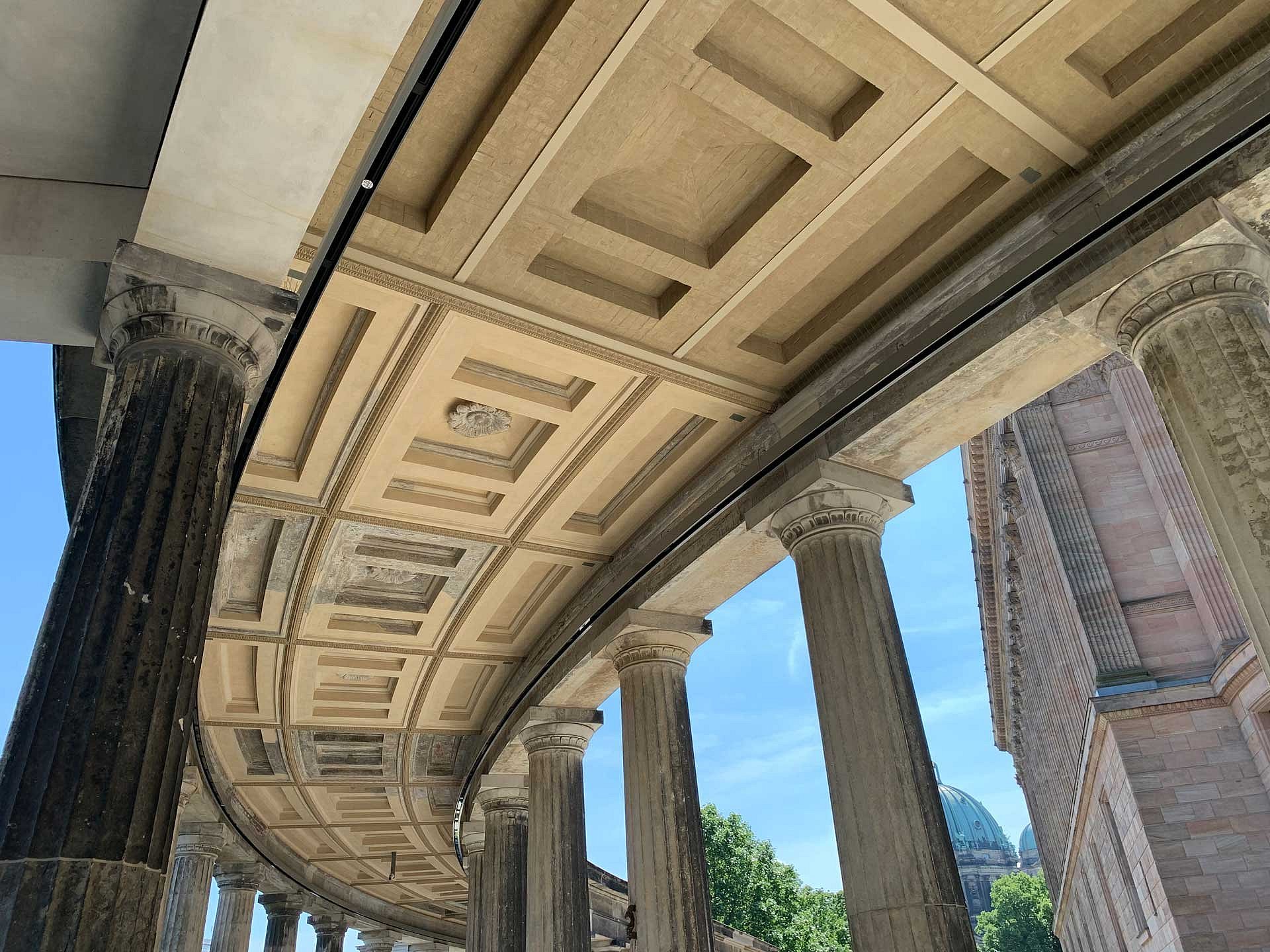
Naturally, this sensitive approach to tradition and history did not come without its challenges. But Sven Ahlfeld, who has been the on-site project manager for the Federal Office for Building and Regional Planning (BBR) since 2019, almost waxes lyrical when he talks about how creatively they dealt, for example, with the lack of space for the site facilities and for storing materials – by constructing a working platform that jutted out two metres above the quay wall in places and depositing materials on push barges on the water, whilst a specially constructed floating fender was installed during the construction period to protect ships from impact.
A successful blend of heritage conservation and inclusion
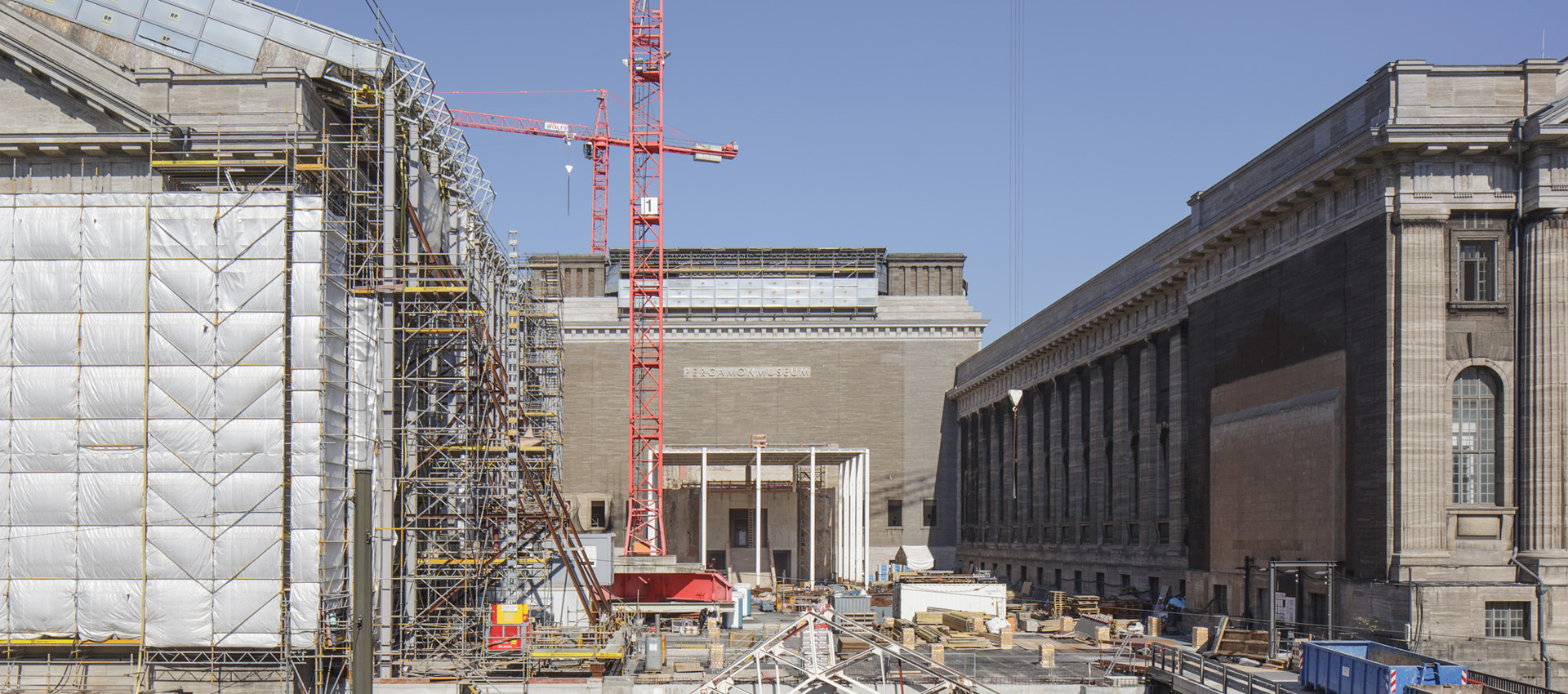
A particular highlight in the final stage of the reconstruction is the front building, where the colonnade’s arch came to an end. It was a built-up section of the building that the architect Seiler had designed as the conclusion to this colonnade. Ralf Nitschke calls it an “architectural pastiche from the GDR era in Stüler’s style”, created as a new building in the 1950s. Now that the columns stand free and their elegant sweep is clear for all to see, however, this end building formed an unexpected wall against which no one was to be allowed to walk. After much discussion and deliberation, Christina Petersen’s heartfelt wish could be realised: for structural reasons, the end building was demolished and rebuilt with a slightly altered, open arrangement of columns.
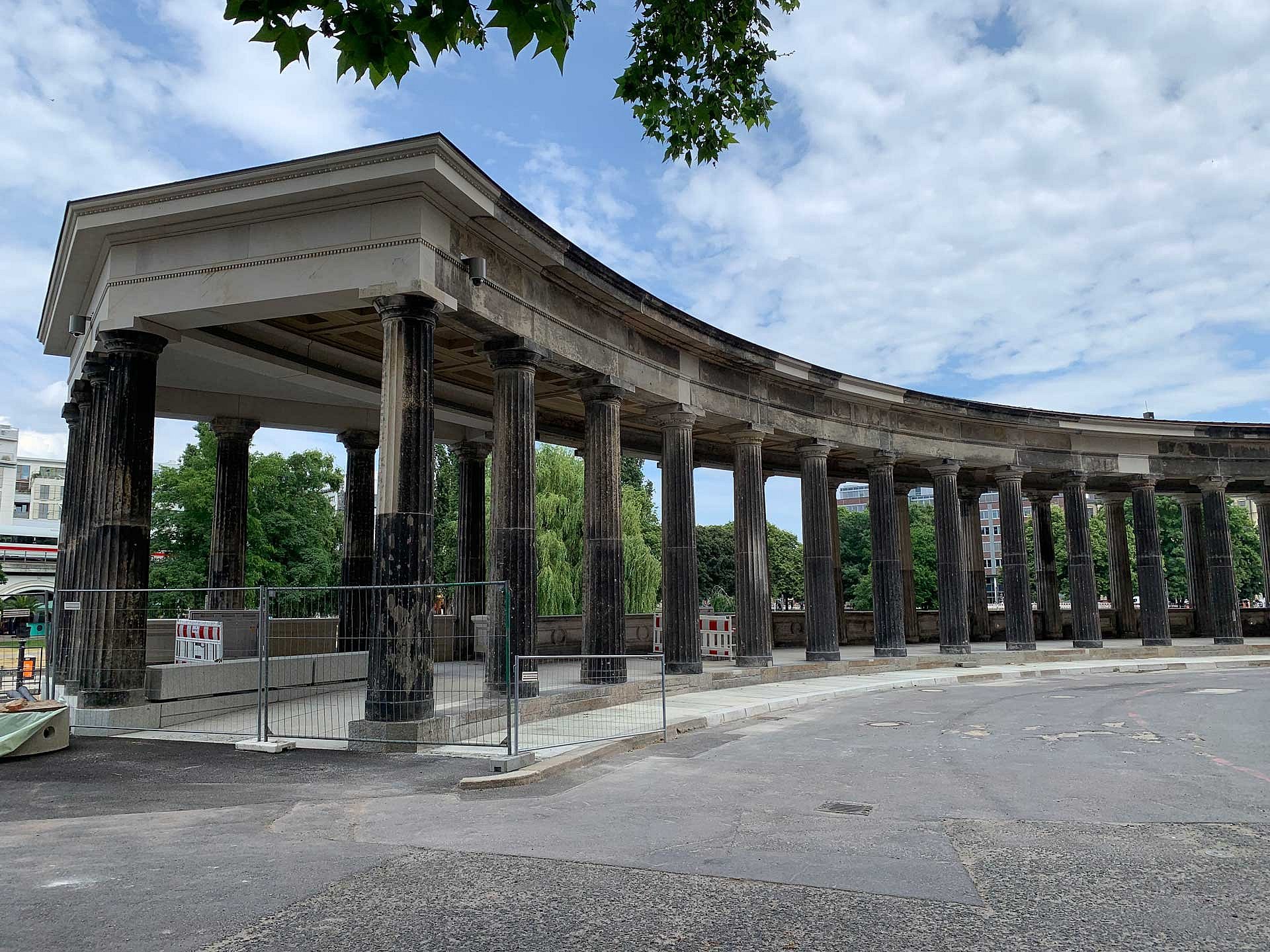
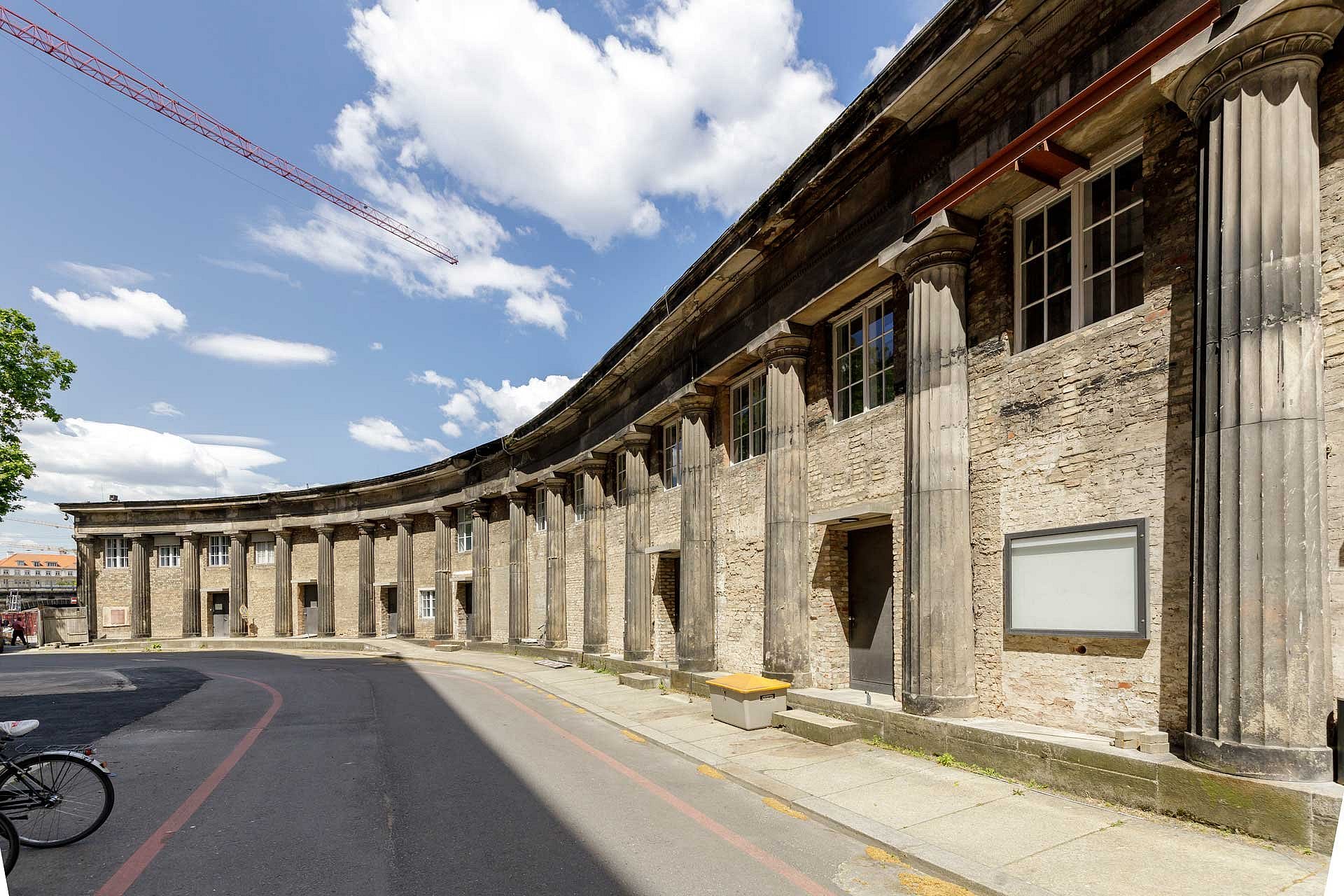
The colonnades now lead, across their entire width and without any steps, to a small square behind the Pergamon Museum, almost right up to the plane tree that has bravely weathered the ages there. “Design for all!” says Ralf Nitschke enthusiastically: “There is no separation here between pedestrians and wheelchair users. This architectural solution is a particularly successful example of combining heritage conservation with inclusion.”
It will take on central importance in the coming years, when part of the Pergamon Museum reopens but cannot yet be accessed via the main entrance. Access will then be via the colonnades, which will also serve as an emergency exit. The lighting for this comes from newly installed, suspended ceiling lights – a specially designed lighting structure whose glow illuminates only the floor and ceiling.
On the one hand, this ensures safety and minimises the risk of tripping; on the other, the ensemble is “not blindingly lit”, as Nitschke puts it. Dimly lit, one sees only the colonnades and their architectural movement, as on a night of the full moon, which is why the lighting concept for the entire Museum Island bears the enchanting name “Moonlight”.
The original section of the Seiler building’s front façade, however, remains intact as a small balcony overlooking the Spree, separated from the path by a curved bench. “This will be a wonderful spot for the city,” Sven Ahlfeld is certain.
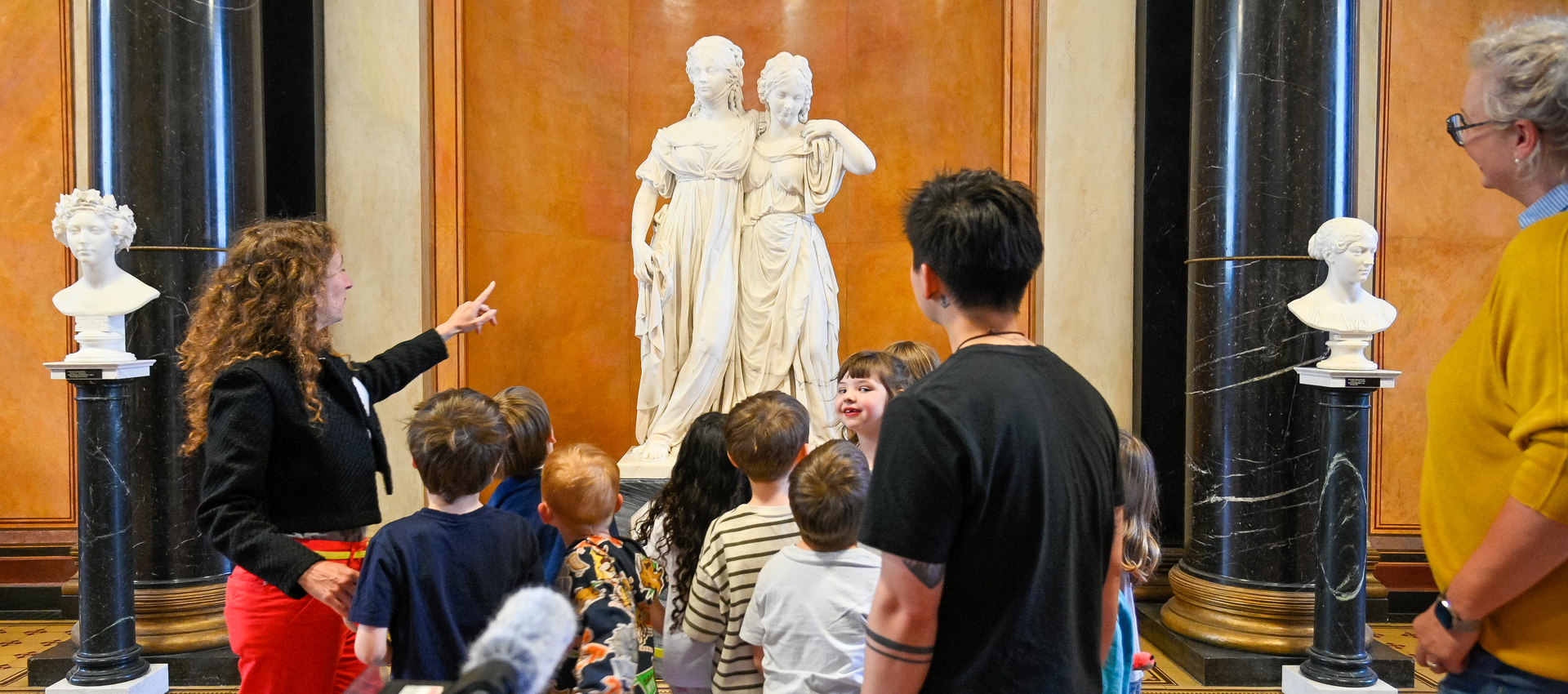
From the bust of Nefertiti to Böcklin’s “Isle of the Dead”, from Johann Gottfried Schadow’s “Princess Group” via the Ishtar Gate to Auguste Renoir’s “Washerwoman” in the Colonnade Courtyard: what a journey one can take on Museum Island! And then a sundowner in the Colonnade Bar, with a view of the Spree and your mind lost in the centuries that lie behind us: you couldn’t be in a better place in Berlin’s here and now, and certainly not in a more beautiful one.