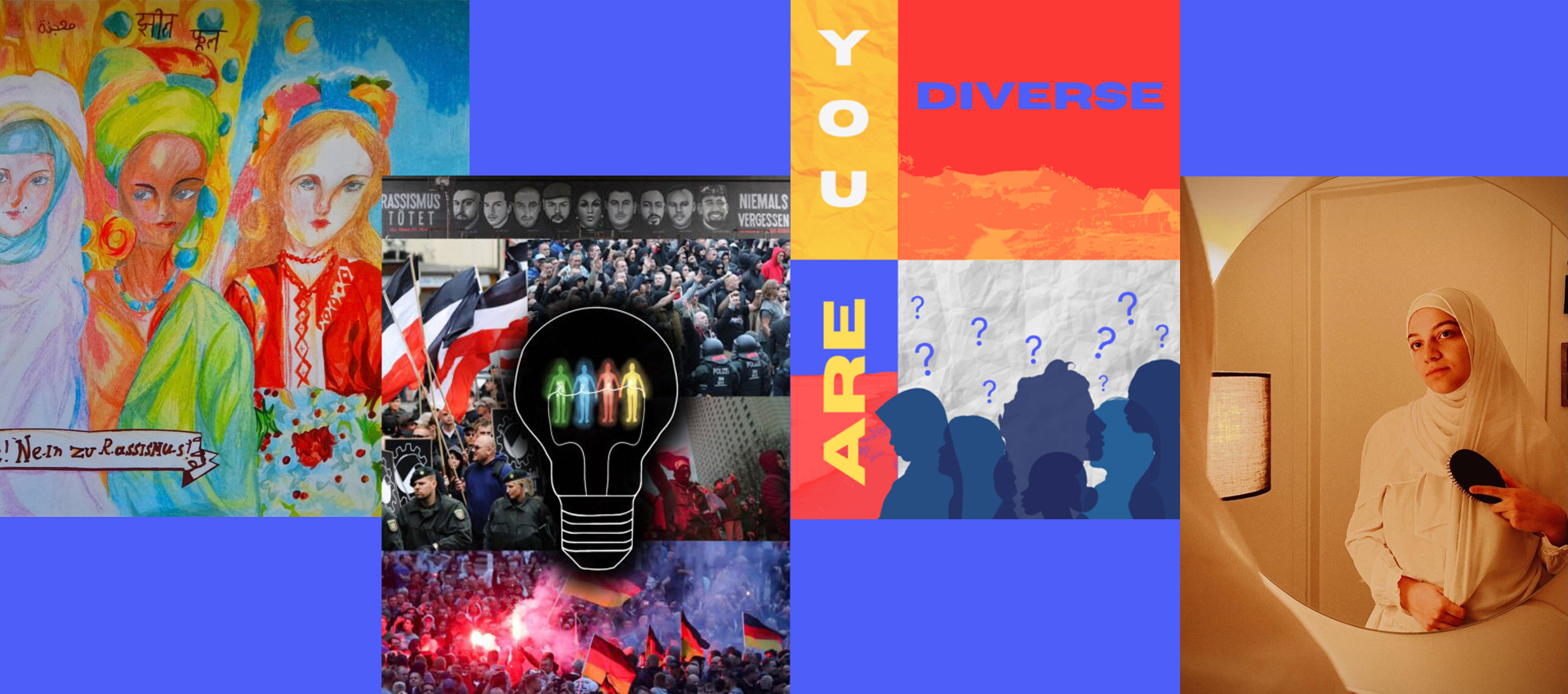
175 years ago, Hoffmann von Fallersleben wrote the “Song of the Germans”. But do we still sing what we feel? We have commissioned three “new” songs about Germany.
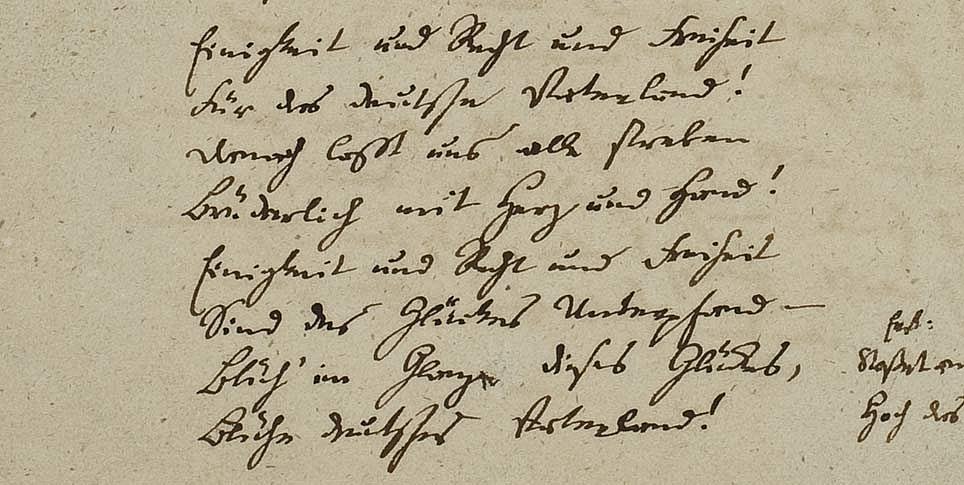
Among the greatest treasures of the national and global written cultural heritage preserved by the Berlin State Library and made available for research and cultural purposes is, without question, the handwritten manuscript of the ‘Song of the Germans’. In 1903, the then Royal Library acquired the estate of Hoffmann von Fallersleben. At the time, hardly anyone suspected that the poem – in combination with its musical setting by Joseph Haydn – would be designated the German national anthem for the first time just under twenty years later, in 1922.
As is so often the case with poets’ literary output, this is not the only manuscript that Hoffmann von Fallersleben produced. And yet: simply by virtue of its location in the formerly divided library of a formerly divided city, the manuscript held by the State Library takes on special significance in terms of its core message – the commitment to unity, justice and freedom.
175 years ago now, in August 1841, the ‘Song of the Germans’ was composed on Heligoland. Hoffmann von Fallersleben had fled from the German states to the island – which was still under British rule at the time – as a revolutionary. His thoughts wandered back to the mainland. In his memoirs, he writes of his time on Heligoland: “When I walked alone on the cliffs, seeing nothing but sea and sky around me, I felt so strangely moved that I had to write poetry, even if I hadn’t wanted to. And so, on 26 August, the song was born: ‘Deutschland, Deutschland über Alles!’”
The ‘Song of the Germans’, sung to the melody of Haydn’s ‘Kaiserlied’, built a bridge to the Old Empire through this melodic borrowing – but the focus was no longer on the monarch, but on the German nation. Although criticised by other nations for the line “über alles in der Welt” and appropriated for propaganda purposes during the First World War, Reich President Friedrich Ebert declared the Deutschlandlied the national anthem of the Weimar Republic. In the Third Reich, only the first verse was sung, followed by the Horst-Wessel-Lied.
Konrad Adenauer caused a scandal after the war when, on his first visit to Berlin as Federal Chancellor, he had the third verse sung – yet Federal President Theodor Heuss made it the national anthem shortly afterwards. London and Paris were outraged, viewing the anthem as a continuation of a nationalist mindset. Meanwhile, in the GDR, people sang the ‘Peace Hymn’ ‘Auferstanden aus Ruinen’ (Risen from the Ruins), with lyrics by Johannes R. Becher and music by Hanns Eisler.
Today, almost no one remembers Hoffmann’s wish to create a unified state from the numerous German principalities, bound together by a common language and shared values. Unity, justice and freedom – are these really the values that define our country today – or are there others?
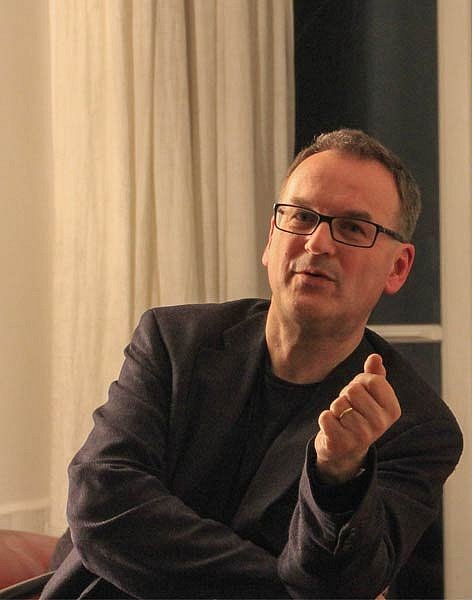
TANJA DÜCKERS
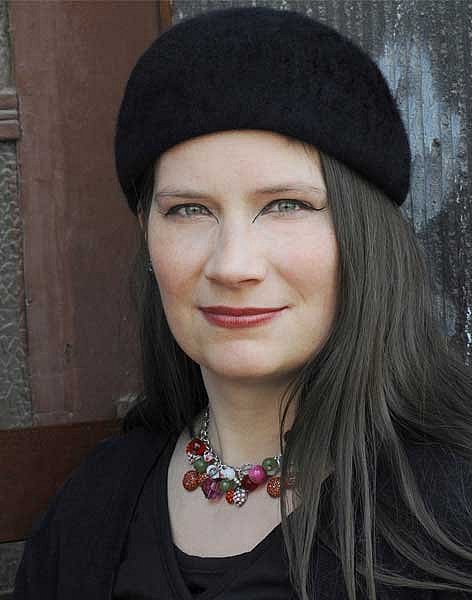
As a staunch European, it was important to me to highlight the idea of overcoming centuries of bitter wars in Europe, as well as the end of the bipolar world order of the Cold War that once tore Europe apart. Furthermore, I did not want to write a ‘German anthem’ that pays homage to the old, limiting, narcissistic nationalism – nationalities are constructed anyway, a fiction. I envisage a transnational Europe in which individual countries by no means perish without a chance. In such a Europe, I see Germany standing alongside other countries – as Brecht wrote, ‘neither above nor below / other peoples do we wish to be’.
Tanja Dückers was born in 1968 in West Berlin. She lives and works in Berlin.
Mother-tongue country
Multicolour, resonance &
heart-ships for the German mother tongue land.
The open borders, multifaceted – growing
fearlessly towards freedom, towards brightness,
are an empowerment of otherness.
German words, the German world is never singular. The world
is foreign even within one’s own.
Only thus does it become a narrator of clarity,
allied in a state of mystery. God has not died so
that we might possess but a single passport and betray the alphabet.
Heart and hand unite; in the land of the mother tongue
, everything becomes the world and can be spoken: after all, there are no German birds.
Everything belongs to language; it is not for sale, a landscape:
even beyond words, freedom is no boat hire.
Unity, justice and freedom
play out in the lives of all people.
The horizon blooms across the entire alphabet; let
those who can pluck it
marvel at every single comma.
Land of the mother tongue, do not let yourself be tamed;
expand with every new word,
with every foreign landscape of the soul.
For you cannot be bought;
you can only be inhabited
, and one can be free in your imperishable sound.
Marica Bodrožic
MARICA BODROŽIC
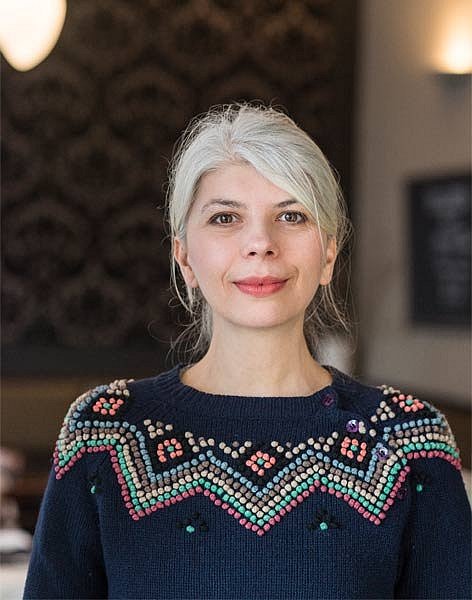
“For me, what matters most is that today’s Germany is a country where every citizen can and may have their own song – regardless of which language is their mother tongue. This polyphonic diversity creates the vision for a new, fearless way of thinking, which I associate with inner beauty. Even though our society today is subject to many tensions, I still believe in this underlying form of aesthetics – and I trust it, as I have experienced it in this country for over thirty years.”
Marica Bodrožić was born in 1973 in Zadvarje, Dalmatia. She lives and works in Berlin.
A new song in the old style
Germany, Germany: Department store chains,
high-rise estates on the outskirts,
growth rates, product ranges
, Daimler, DAX and bottle deposits,
plastic bags – meatballs –
beer – and schnapps – Fatherland
Germany, Germany: Department store chains,
high-rise estates on the outskirts
German hubris, German remorse,
efficiency and hysteria
Between the Loire and the Danube, a new
hegemony: Made in Germany
German unity and loyalty:
corporate harmony
German hubris, German remorse,
efficiency and hysteria
Law that applies and money that holds sway
free monetary flow
respect for borders woe betide those who fare ill!
Asylum for refugees ablaze
Motherland struck by misfortune
once more your lovers: hollow as they are crude
Law that applies and money that holds sway
free monetary flow
Jan Koneffke
JAN KONEFFKE
“Recently, the slogan ‘Those who do not love Germany should leave Germany’ has been chanted at demonstrations. Yet it is the self-appointed lovers of Germany who, with their intolerance and coldness, their selfishness and blind hatred of everything that is different, inflict the greatest harm on the country, its inhabitants and themselves. Nationalism is becoming the gravedigger of the homeland. History teaches us this. Von Fallersleben could not have known this in his day. His ‘Song of the Germans’ deserves a contemporary response: a sober assessment rather than nationalistic fervour. Otherwise, the words of a distinguished Federal President apply: ‘I do not love states, I love my wife.’”
Jan Koneffke was born in Darmstadt in 1960. He lives and works in Vienna, Bucharest and the Carpathian village of Măneciu.
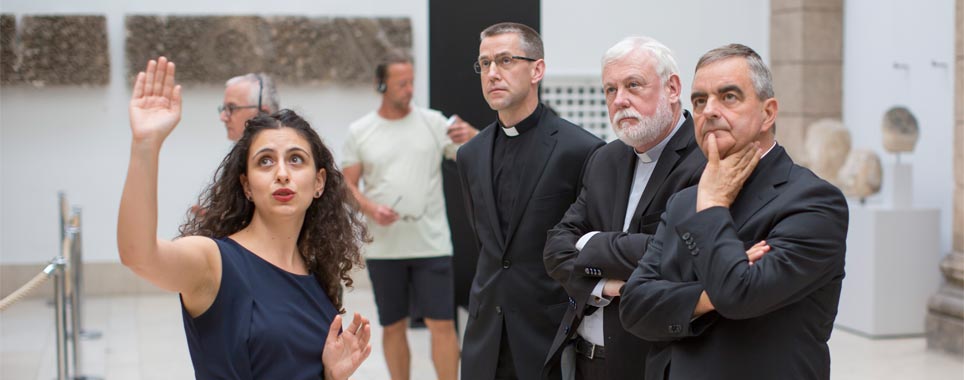
In 2016, the Berlin State Library marked the 175th anniversary of the composition of the “Song of the Germans” and put the autograph on public display on 26 and 27 August at its premises at Potsdamer Straße 33. A facsimile of the sheet was published at the same time. Also on display were the newly written songs by our authors. Their original manuscripts are also reproduced in the SPK Magazine, issue 1/2016.