The Hmong are an ethnic minority from South-East Asia. Thirty years ago, some of them fled from the Golden Triangle to the Swabian Alb. Their story will soon be told at the Humboldt Forum
Anyone wishing to visit the Hmong must venture deep into the Ländle. Coming from the direction of Reutlingen, the route initially winds through tight hairpin bends. Lichtenstein Castle comes into view, then the riverbeds of the Seckach and Lauchert. Finally, a steep climb of a few hundred metres up to Neufra. A few dozen steps then lead from the village street to the Vang family’s house, which nestles close to the mountainside. This, then, is where they live, the Hmong. They are a minority who once had to leave their homeland, the rugged mountainous region of Laos: many Hmong had fought in a CIA-backed guerrilla army during the Second Indochina War. The Vangs fled to escape the re-education camps set up by the communists who had seized power in a coup. They dreamed of a new home.
A political decision, taken in Buenos Aires some 17,000 kilometres away, was to determine their fate in November 1979. When Cha Soua and Cha My Vang, their son Yao Vang and a niece travelling with them arrived at the refugee camp in northern Thailand after a long odyssey, they were initially told they would be flown to Argentina. But the government there imposed an entry ban. Five families remained in Bangkok; the Federal Republic of Germany eventually took them in.
“Actually, we were very lucky here; Germany is, after all, much stronger economically and offers better job opportunities,” says Yao Vang in a broad Swabian accent. However, the early days were very difficult for him and especially for his parents. As simple rice farmers, Cha Soua and Cha My Vang had never attended school and arrived in Germany as illiterate people.
Initially, it was impossible to communicate with the German Red Cross volunteers. An appeal entitled “Hmong seeks Hmong” was therefore launched in the DRK members’ magazine – though without success. The five Hmong families in Gammertingen were on their own in the vast Federal Republic. A Laotian priest was at least able to establish contact with other Hmong families in France. “These days, it’s all much easier. American Hmong in particular are very interested in genealogy,” says Yao’s son Tchoua Vang. It has often happened that Hmong from overseas have driven through Gammertingen and Neufra in search of “compatriots”. “Most of the time they ask at the petrol station in Gammertingen. They send the people to me because I speak the best German,” reports Yao Vang with a mischievous grin.
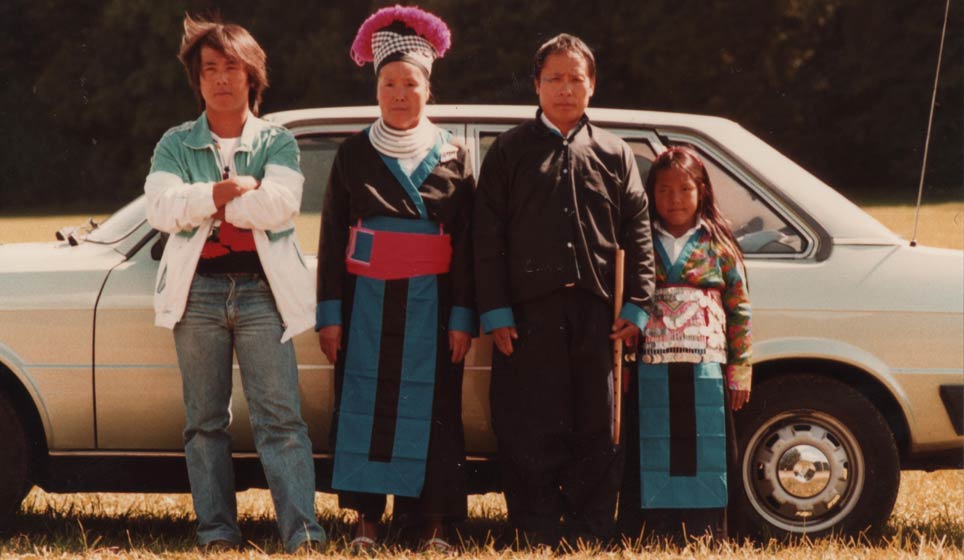
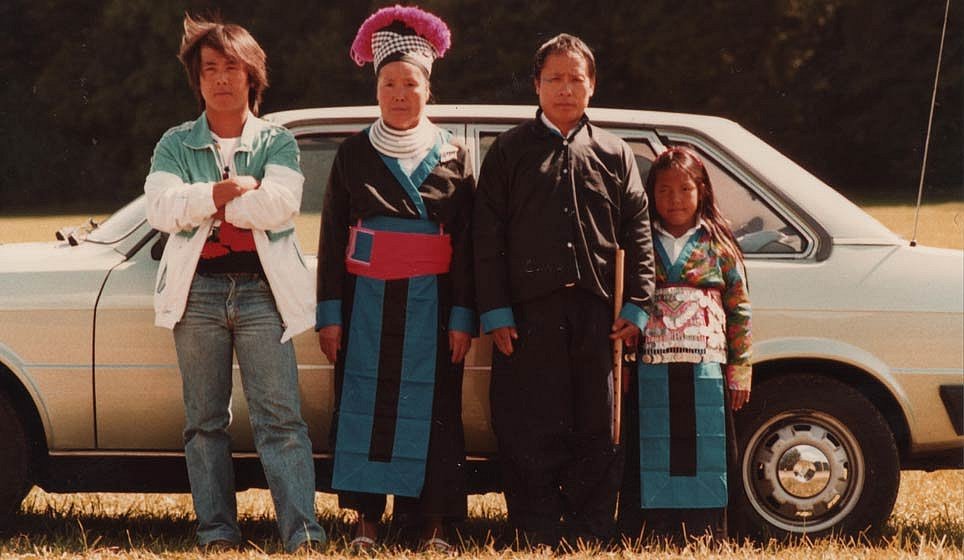
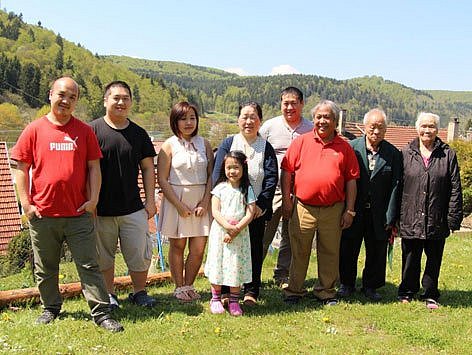
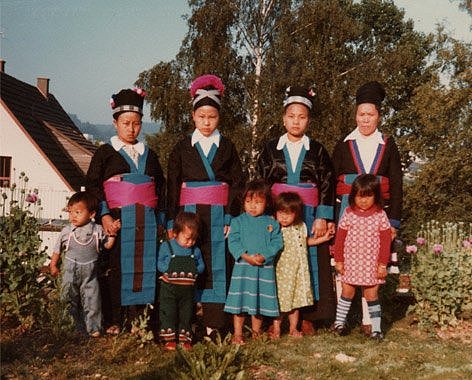
As one of ten Hmong families living here today, the Vangs are the third generation to reside in Baden-Württemberg. In their cosy, very German living room, Yao Vang shows old family photos from the refugee camp and the early years in the Swabian Alb. Fearing repression from the still-ruling communists, no family member has yet returned to Laos. Cha Soua and Cha My Vang in particular suffer from this and still miss their lost homeland to this day.
The Vangs didn’t have birth certificates – a nightmare for the German authorities
“In Laos, we were independent farmers and lived off our own land,” says Grandfather Cha Soua Vang, describing his former life. “We didn’t know anything about industry, and in Germany everything was different for us,” Yao Vang translates from Hmong for his father. To this day, his parents Cha Soua and Cha My Vang speak only broken German and have to be accompanied by their children and grandchildren to deal with the authorities and visit the doctor.
Although they have spent half their lives in the Swabian Alb, they never seem to have really settled in. The family is their main source of support and their link to the outside world. Yao Vang estimates that his parents must be between seventy and eighty today, though no one can say for certain. Birth certificates were unknown in their homeland at the time. “My father is supposed to have been born on 1 August, my mother on 1 July – that can’t be right,” says Yao Vang with a laugh. “When our first identity documents were issued for us in Germany back then, they simply picked a date.”
Yao Vang doesn’t have a birth certificate either, and he still remembers well the astonished faces at the registry office. “The officials couldn’t believe that such documents didn’t exist. They even wrote to Laos, but received no reply.”
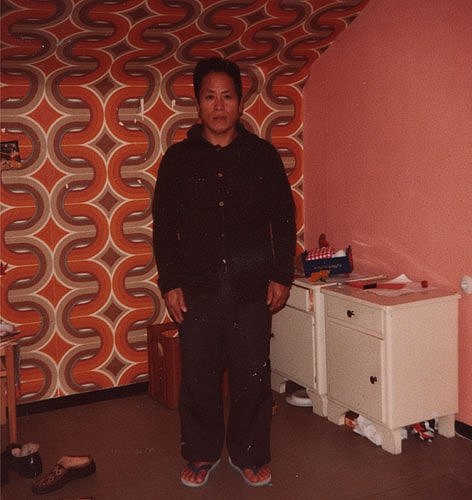
Until his two-year stay in a Thai refugee camp, he had never attended school. In Gammertingen, he first attended a class for foreign pupils, then went to a secondary modern school, and finally transferred to the agricultural college in Sigmaringen.
He has now been working for a metalworking company in Albstadt for almost 30 years, where he also completed his apprenticeship. He has proudly hung the certificate from the Chamber of Industry and Commerce in his living room so that it might also impress his youngest son, Blong, who is following in his father’s footsteps.
As modern as the family is in everyday life, their celebrations are just as traditional, the most important of which heralds the New Year. Family and friends are invited, and everyone wears new traditional costumes, which are handmade to old patterns but feature new elements. Most importantly, however, is to match young Hmong women with young Hmong men. If there is no spark, relatives step in to help – then as now. Festivals become marriage markets. Even in the diaspora, young Hmong hearts are meant to be drawn first and foremost to other Hmong. If they do end up elsewhere, it usually doesn’t work out so well. Marriages with Europeans often didn’t last very long, says Yao Vang; the cultural difference is too great. Perhaps it’s also down to the food, his wife Lao interjects.
“For us, rice is simply part of every meal; many Hmong cook very traditionally.” “But our American relatives are much worse here,” replies Yao Vang with a laugh. “They eat rice three times a day, even for breakfast. We have bread and rolls, of course.” At that moment, Lao Vang serves coffee and apple pie. Is there also a traditional Hmong dessert? “Rice cake,” calls out Yao Vang, “we eat that at special celebrations.” And what do they drink with it? Rice wine. What else? The Vangs – a family not caught between two worlds, but with both feet firmly planted in both.
How they came to be who they are will soon be told at the Humboldt Forum. Bettina Renner has made a film about the Vang family entitled “Being Hmong”. Viewers will learn how the children have made their way in life: Yao Vang’s eldest son Tchoua works as an electrician, Tcheng is a welder and two of the daughters are medical assistants. Anja, the youngest child and the first to have a European name, will start school next year. For Yao Vang and his wife, the Swabian Alb has become home; for the children born here, it always has been. They enjoy village life, where everyone knows everyone else.
At the weekend, the Vangs like to go for walks. At eight o’clock sharp, they gather for the news. Everyone sits together in the living room. In which German family does that still happen? Tchoua Vang glances at his watch; he’s drawn to the football pitch. After all, FV Neufra has an important home match today.
Humboldt Forum
How can the universal themes and global developments of humanity be presented in a museum? The Humboldt Forum, currently under construction in Berlin’s historic city centre, aims to do nothing less. The backbone of this mammoth project: the non-European collections of the Berlin State Museums.