The debate on Islam is also changing museums. They want to showcase the diversity of Islamic culture, yet find themselves confronted with a fearful society and Muslims searching for their place
Ah yes, home. Difficult, difficult. Some are looking for a new one, others want their old one back, and in between there are those who don’t even know what their home is. In the old days, the little house stood on the hillside and a little bridge spanned every little stream. Often sung about. And today? The little house still stands on the hillside. But can you still bathe naked in the stream, because now refugees live by the stream too and might feel disturbed? Trivial questions. Important questions. But there are answers too.
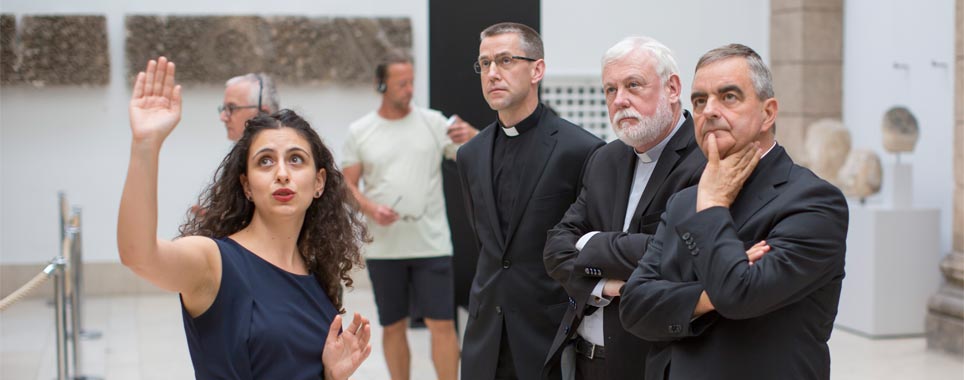
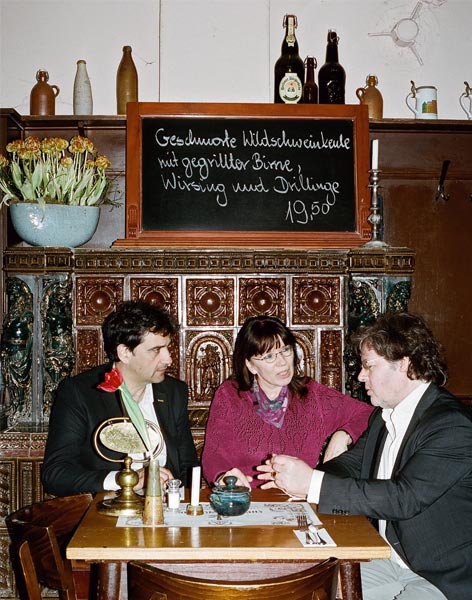
For example, in the office of Stefan Weber, Director of the Museum of Islamic Art at the Berlin State Museums, where the beauty of the décor is measured by the delicacy of calligraphic scripts, a sophisticated carpet pattern or all manner of oriental vessels. Nanette J. Snoep, director of the State Ethnographic Collections of Saxony, has come from Dresden; Bülent Uçar, an Islamic studies scholar, from the University of Osnabrück; and, just around the corner, Sascha Braun, legal adviser to the police union. A small integration summit.
We want to discuss what the future holds for a country that swings back and forth between cheers of welcome and cries of rejection, that has politicians who include Islam in German society and then exclude it again, and in which intellectuals feel so overwhelmed that they prophesy the impending demise of the nation in the arts pages. It will be a conversation about stereotypes, real and ridiculous threats, but above all about hope, the kind that perhaps only museums can offer.
Before we begin, Stefan Weber reminds us that museums are neutral places where one can argue about things and talk to people to one’s heart’s content, precisely because there is no need to think in political or religious terms here. An impartial place.
If it were up to him, he would of course like to continue staging exhibitions in his museum. But that is not enough for him. He is concerned with identities that are becoming increasingly global. But who belongs today, who are ‘we’ and who are the ‘others’? Weber has shown that all those burdened and displaced do not merely want to be looked after or given craft projects, but are multipliers. For the museum, but also for society
Whether in his “Multaka” project, where refugees guide other refugees through their own and German history, or in the youth work he organises in mosque communities to prevent extremism, his aim is always to inspire self-empowerment.
For Weber, “home” is a complex matter, because he does not wish to recognise either a pure German identity or a pure Islam. “It is particularly the case with third-generation Muslims that they define themselves as Muslims within their social contexts, whereby the culturally multifaceted Islam is reduced to a few religious markers. This forces them to come out: ‘Who am I?’” This is precisely where Bülent Uçar and he intend to start with their joint project, which is aimed at future imams and pastoral staff in mosque communities. In principle, says the Islamic studies scholar, the aim is to demonstrate the vitality and productivity of Islamic culture throughout human history, whilst also making it clear that a free country not only tolerates but also recognises diverse religious and cultural identities.
The aim is to highlight the vitality and productivity of Islamic culture throughout human history, whilst also emphasising that a free country not only tolerates but also recognises diverse religious and cultural identities.
Is that really the whole secret of integration? Does it really help us today to know that what we call ‘our own’ often arose through exchange and migration, and that, for example, we wouldn’t have the rock ’n’ roll guitar without the Arabic lute? Can this effectively combat Islamophobia and Islamism? Isn’t the knowledge that the Islamic world was once a hub of global exchange between China and Europe also a museum-like idealised image from days gone by? A bridge over the world, so to speak?
Sascha Braun shakes his head vigorously. No, he says, it is about the authority to interpret Islam and the fact that ignorance of it is dangerous. “Radical and violent jihadists are people who break down bridges, who find themselves in a closed system. Once young people have ended up there, no museum can get them out again. In that respect, it is right to empower young Muslims to understand and practise their religion, whilst at the same time being citizens.” But how is the so-called minority perceived by the so-called majority? Bülent Uçar quotes figures showing that 57 per cent of people in Germany are afraid of Islam, yet at the same time over 60 per cent say that Muslims enrich the country. How does that fit together? Germany’s paradox.
Radical and violent jihadists are people who burn their bridges and find themselves trapped in a closed system. Once young people have ended up there, no museum can bring them back.
Nanette J. Snoep believes that museums could serve precisely as these bridges. She goes on to explain that in Leipzig she doesn’t talk much about radicalisation at all, but instead tries to tell the Saxons – who are somewhat unaccustomed to religious diversity – about the everyday lives of Muslims. And about their pop culture. For example, about girls who chat on Facebook or Twitter about how they wear their headscarves. Meanwhile, some come and listen to others who are proud to be able to talk about themselves and their families. And then there’s the headscarf!
When Nanette J. Snoep was still at the Musée du quai Branly in Paris and France decided in 2004 to ban the headscarf in state schools – a move that meant Muslim mothers could no longer take their children to school – she spoke at her museum about how European women wore head coverings in the 1960s and about the pride of Catholic nuns. Stefan Weber chimes in: “Exactly! We should discuss the headscarf within its specific historical and social context – in other words: why didn’t middle-class mothers in Cairo and Damascus wear headscarves in the 1970s and 1980s, yet their daughters did from the 1990s onwards? If one simply explains the headscarf in culturalist terms as a marker of Homo Islamicus, one fails to understand the dynamics and reasons behind social change.”
Weber wonders how religion could be used as an explanatory framework in a museum. The five pillars of Islam do not explain objects, nor does the Koran say anything about art. On the other hand, a religious understanding of the world seems to recur time and again in the concept of beauty. “We must broaden our explanatory frameworks, rather than continuing to promote a narrow understanding of this culture through a few rudimentary interpretative models.”
We need to broaden our explanatory frameworks, rather than continuing to promote a narrow understanding of Islamic culture through a limited number of rudimentary interpretative models.
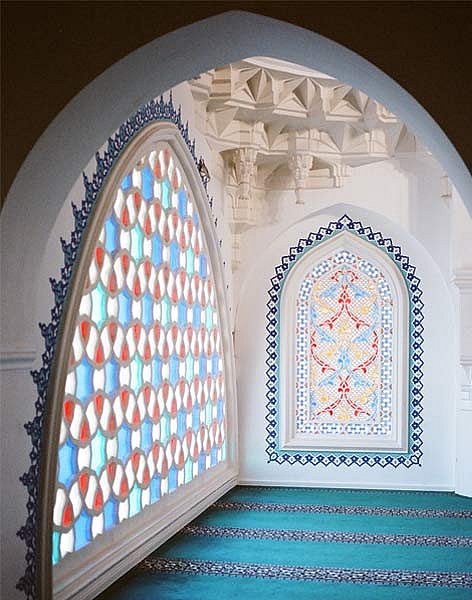
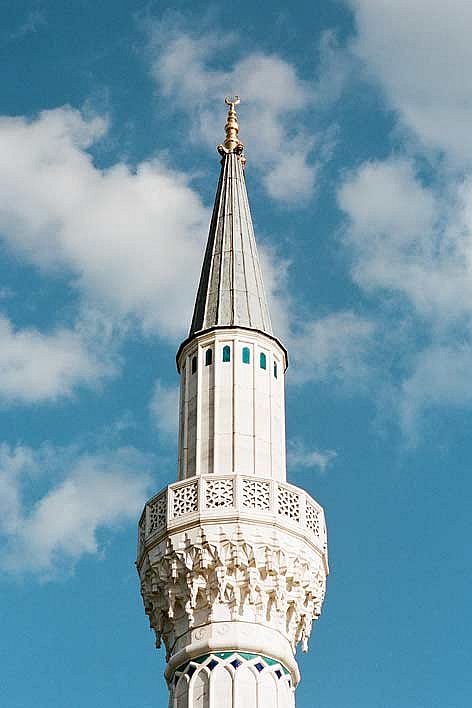
Demonstrating cultural diversity, allowing religious reality to take hold. Can that work? Sascha Braun hopes to see revolutionary, transformative processes within the Islamic religious world itself, including the identification of anti-democratic trends – for example, regarding the portrayal of women.
For Bülent Uçar, this is a golden opportunity. “Cultural developments take time. May I remind you? Right up until the 1960s, women in Germany were only allowed to work with their husband’s permission and needed his consent if they wanted to open a bank account. Muslims are facing a massive process of emancipation. It took Europe several centuries to achieve this, yet Muslims are expected to manage it within a few decades. Germany has its Catholic farmers from Rosenheim and its liberal spirit in the godless city of Berlin. Such phenomena exist in Islam too, but this diversity is currently being so dramatically erased because we view Islam in far too one-sided and narrow a manner.”
In Weber’s office, all the conflicts and opportunities are suddenly played out. On the one hand, the enlightened middle classes; on the other, Muslim parents who refuse sex education and swimming lessons for their children. Here, children who are allowed to call their parents by their first names; there, the ossified family structures of Anatolian origin; here, isolation; there, a sense of community. How on earth do we move forward? What does a hybrid identity mean in the concrete everyday lives of Muslims? Social issues cannot be resolved by referring to the Koran alone.
The museum is a place that highlights the roots of cultural connection. It cannot settle an internal Islamic debate, nor will the Germans be able to mould their Muslims to their liking. But consolidating identities to strengthen independent thinking and prevent people from becoming susceptible to radical ideologies – that is something the museum staff can certainly envisage. There are no simple answers to difficult questions, but perhaps sometimes fascinating ones.
When I arrived in Dresden in January 2015, I had left the Front National behind me and found myself right in the middle of Pegida. I never thought I’d have to deal with that in Germany. As director, I had to do something.
Museums such as those run by Nanette J. Snoep and Stefan Weber are setting entirely new standards. “When I arrived in Dresden in January 2015, I had left the Front National behind me and found myself right in the middle of Pegida. I never thought I’d have to deal with that in Germany. As director, I had to do something. My view of a museum has changed completely. Step by step, we can help overcome fear. On both sides. We may be small, but we can make a difference,” she says. Suddenly, Stefan Weber is in a hurry. He has to head over to the Pergamon Museum. In front of the Mschatta façade, there is to be a discussion about the present and future of a society of migration. A fitting place, a good place. A home.
Museum of Islamic Art
The Museum of Islamic Art, part of the Berlin State Museums, presents masterpieces of art and archaeological objects from Islamic societies dating from the 8th to the 19th century at the Pergamon Museum on Museum Island. The collection covers a region stretching from Spain to India.
The museum is one of the leading research institutions in its field. It is committed to the protection of cultural heritage and is active in the areas of restoration, international cultural exchange and (inter)cultural education in Germany.