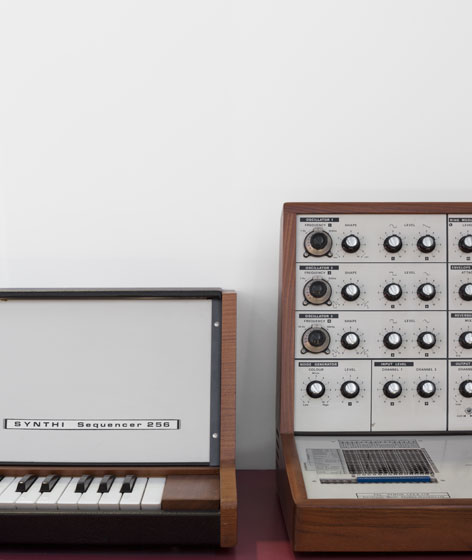
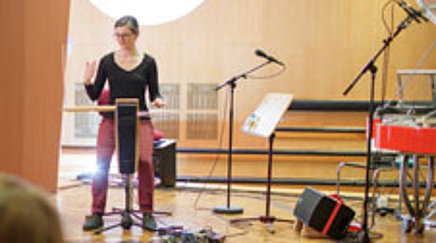
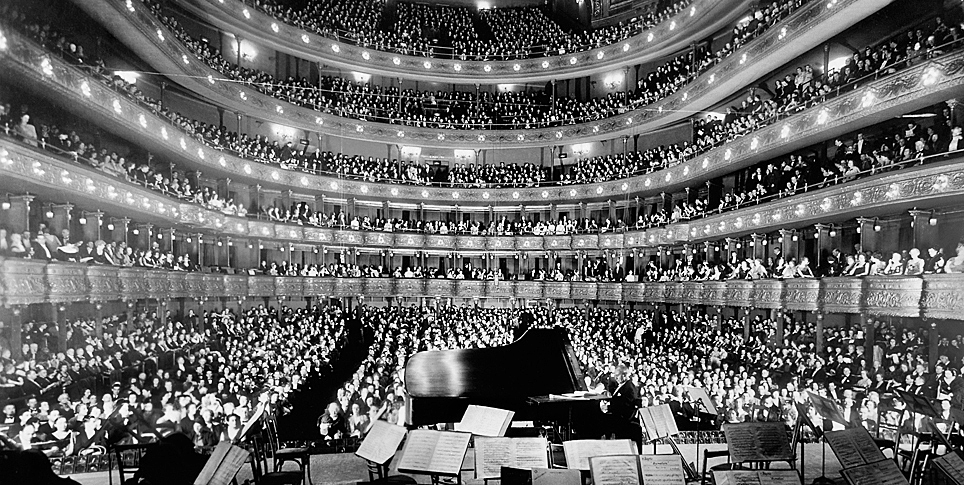
He made the synthesiser suitable for both the drawing room and the stadium, and created the anthems of every sci-fi fan – a true pioneer of electronic music. So Jean-Michel Jarre is keen to offer a few words of encouragement to the SIM for “GOOD VIBRATIONS”.
With the exhibition ‘Good Vibrations. A History of Electronic Musical Instruments’, the diversity of this group of instruments is being made publicly accessible to a wide audience on this scale for the first time. As a musician, I wholeheartedly welcome and support this initiative.

For almost my entire life, I have been exploring the artistic possibilities offered by electronic instruments. As creative tools, they naturally play a central role in the musical creative process, and so I became interested at a very early age in how I could harness the technical possibilities of the present day – which, alongside light and video, most certainly include electronic musical instruments – to realise my musical ideas.
It is precisely this aspect that has always driven the developers of musical instruments around the world: how can I create something, given the existing technical conditions, that enables me to realise a very specific sonic or musical vision?
For the inventors of the earliest electric and electronic musical instruments, who first generated sound using electricity towards the end of the 19th century, this must have been a challenge as exciting as it was promising. The first successful electronic instruments emerged as early as the 1920s, such as the Ondes Martenot developed by Maurice Martenot in Paris or the Trautonium constructed by Friedrich Trautwein in Berlin. With these instruments, a long-cherished dream for musicians and composers became a reality for the first time: the shaping of timbre, far beyond the capabilities of conventional instruments.
The technical advancement of phonographic processes in the following decades, which enabled the recording and subsequent editing of sounds, once again significantly transformed musical practice. Synthesizers such as those by Bob Moog, as well as sample instruments such as the Mellotron built in England, eventually made electronic instruments popular and saw increasing adoption among musicians worldwide.
Looking at current developments, it is difficult to imagine what the instruments of tomorrow might look like.
The extent to which popular music styles influenced the ever-increasing diversification of electronic instruments can be seen, among other things, in the wide variety of drum machines that flourished from the 1980s onwards. Towards the end of the 20th century, digital technology finally opened up entirely new ways of playing and gave rise to instrumental forms that seem to have little in common with traditional musical instruments. A glance at current developments makes it difficult to imagine what the instruments of tomorrow might look like: will they be apps? Sensors? Glasses? Or perhaps familiar forms once again? In any case, we will use them to enrich our world of sound and maintain our joy in playing.
I hope you enjoy exploring this diversity and that this exhibition will help to introduce electronic musical instruments to a wider public as fascinating artefacts with amazing stories, which deserve their place on stage, in the studio and in the museum.
GOOD VIBRATIONS: A History of Electronic Musical Instruments
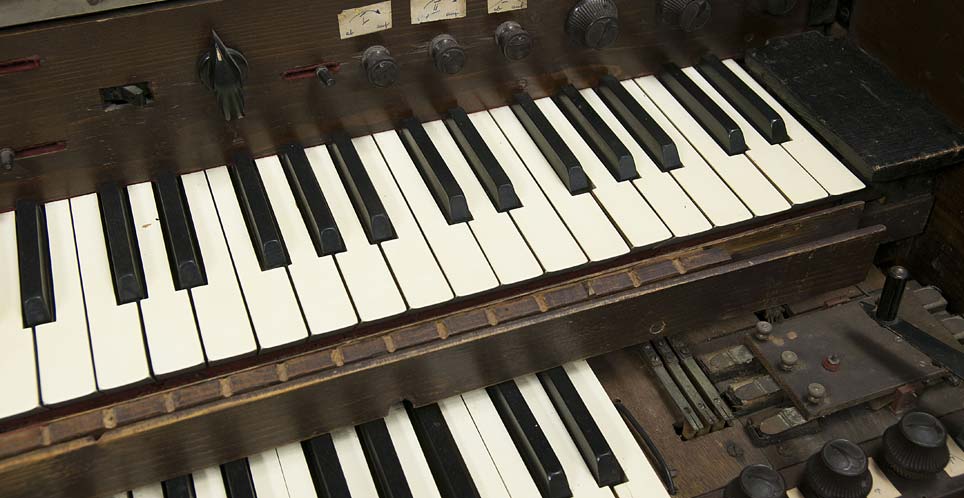
From 25 March to 27 August 2017, the Musical Instrument Museum of the State Institute for Music Research will be presenting over 60 pioneering electronic musical instruments. The exhibition will feature both the museum’s own extensive and previously rarely displayed collection, as well as items on loan from international partners. The extensive supporting programme offers visitors the chance to experience many instruments live or even try them out for themselves. Musicians will demonstrate their favourite instruments in action and offer insights into how to play them in workshops.
About the exhibition “GOOD VIBRATIONS. A History of Electronic Musical Instruments”