Josef Hofmann was one of the world’s greatest piano virtuosos, capable of playing to the rapturous delight of his audience. Rachmaninoff dedicated a composition to him, and he also made a name for himself as an inventor. His estate is one of the treasures of the State Institute for Music Research.
Soirée: ‘Josef Hofmann – Child Prodigy, Pianist, Inventor’
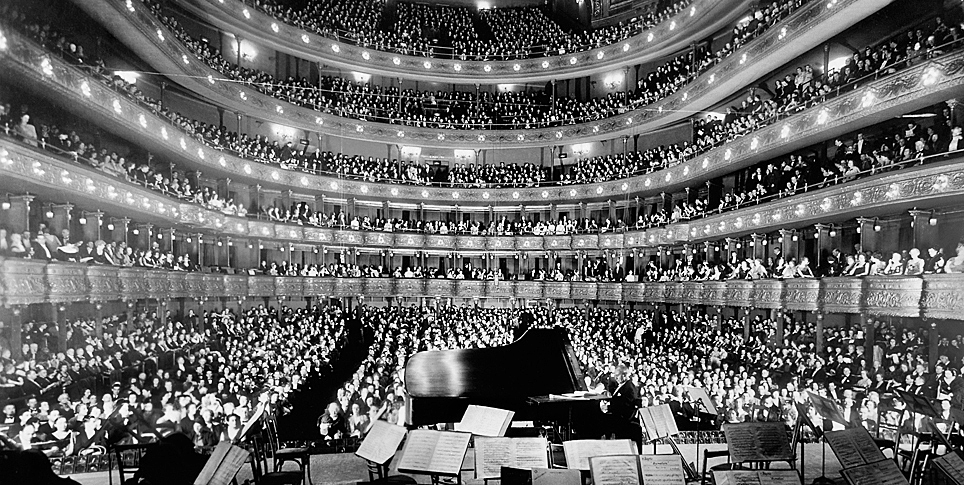
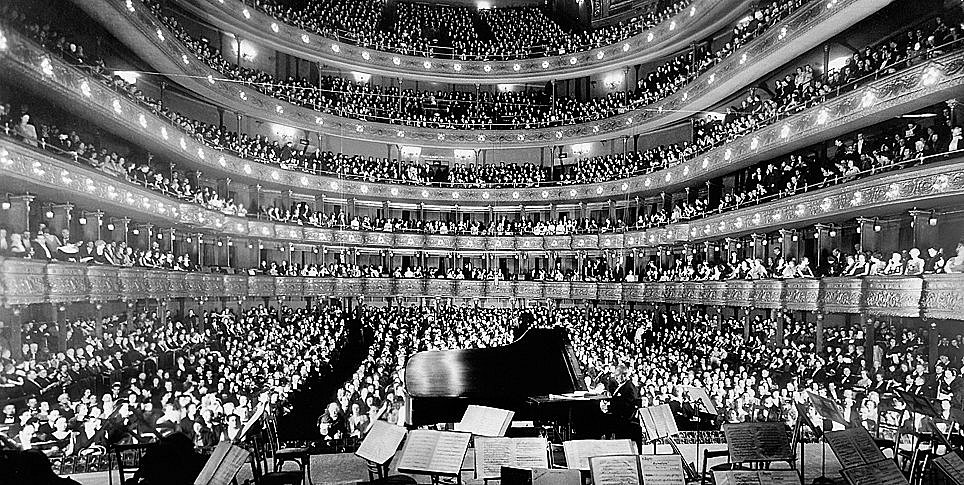
On 8 March 2018, the State Institute for Music Research will honour Josef Hofmann as a pianist, composer and inventor with a soirée. The event will showcase the artist’s estate and a life-size portrait of him as a young man. In 1937, Josef Hofmann celebrated his 50th anniversary on stage in New York © National Archives and Records Administration/NAID 541890
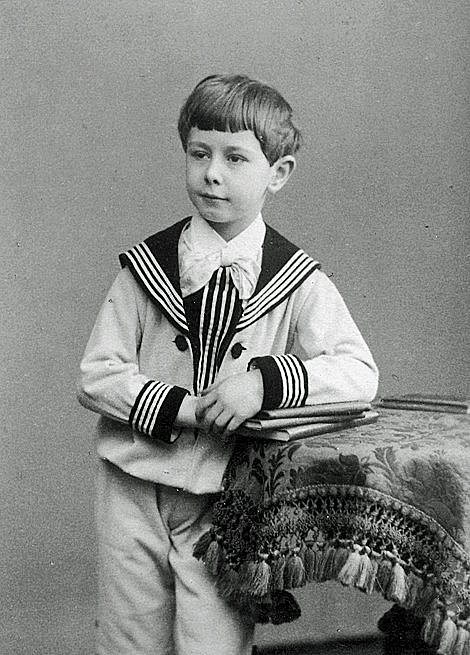
Once upon a time, there was a Polish child prodigy whose piano playing delighted the whole world. “I don’t believe in child prodigies,” the legendary Anton Rubinstein is said to have exclaimed, “but I believe in this one.” The young Josef’s debut at the New York Metropolitan Opera in 1887 sparked a kind of fever, the so-called “Hofmann craze”, which later also swept Russia. In the United States, the eleven-year-old had to perform so frequently that the “Society for the Prevention of Cruelty to Children” intervened out of concern. From then on, Josef was not allowed to give more than four concerts a week. The American philanthropist Alfred Corning Clark was deeply impressed by the child prodigy. He donated fifty thousand dollars so that the boy would not have to give any more public concerts until he turned eighteen.
Josef Hofmann came from a family of musicians near Krakow, “where his father was a conductor and professor at the Conservatoire”. Josef’s incredible musicality became apparent at an early age. In the 1880s, the family moved to Berlin to nurture their son’s talent more effectively. Here, the Berlin impresario Hermann Wolff took him under his wing. Wolff possessed an unerring instinct for rising stars and pulled out all the stops to make “the little artist” famous. On Unter den Linden, at the Hotel Du Rome – Emperor Wilhelm I’s favourite hotel – Josef had to improvise popular themes four-handed with Moritz Moszkowski, his new teacher, on demand. “Since time immemorial,” according to a press report, “no musical phenomenon has caused such a sensation in Berlin as this marvellous boy, whose nature and musical genius involuntarily evoke memories of Mozart.”
More important to Hofmann than Moszkowski was the ‘piano titan’ Anton Rubinstein, who was teaching in Dresden at the time. The 16-year-old pupil travelled regularly to Dresden to receive the finishing touches from the great Rubinstein. Right on time at the age of 18, Hofmann launched his legendary career. He soon also made a name for himself as a composer of elegant salon pieces. He was a box-office magnet; his performances were just as spectacular as those of Buffalo Bill or the magician Houdini. By the age of 28, he was already a legend: in St Petersburg, he organised a piano marathon of 30 concerts, during which he played a total of 255 works in succession without ever repeating a single piece.
The great Russian poet Osip Mandelstam, who witnessed Hofmann and the violinist Kubelik in St Petersburg during the 1903–1904 season, recorded the “wild, never-since-surpassed frenzy of Hofmann and Kubelik’s concerts in the aristocratic gatherings during the Great Fast”: “No subsequent musical triumphs that have remained in my memory, not even the world premiere of Scriabin’s ‘Prometheus’, can be compared to these Lenten orgies in the white-columned hall. It went on to the point of frenzy, to the point of ecstasy.”
In Russia, Hofmann also met Sergei Rachmaninoff. The composer, three years his senior, was fascinated by Hofmann’s masterful artistry. Rachmaninoff dedicated his Piano Concerto No. 3 in D minor, Op. 30 (1909) to him. Yet the dedicatee was never to play it, giving the simple reason that ‘it is not for me’. Rachmaninoff was impressed that this Josef Hofmann was not only an accomplished virtuoso, but also a skilled sailor and tennis player. He marvelled even more at Hofmann’s unusual technical talent, of which very few were aware:
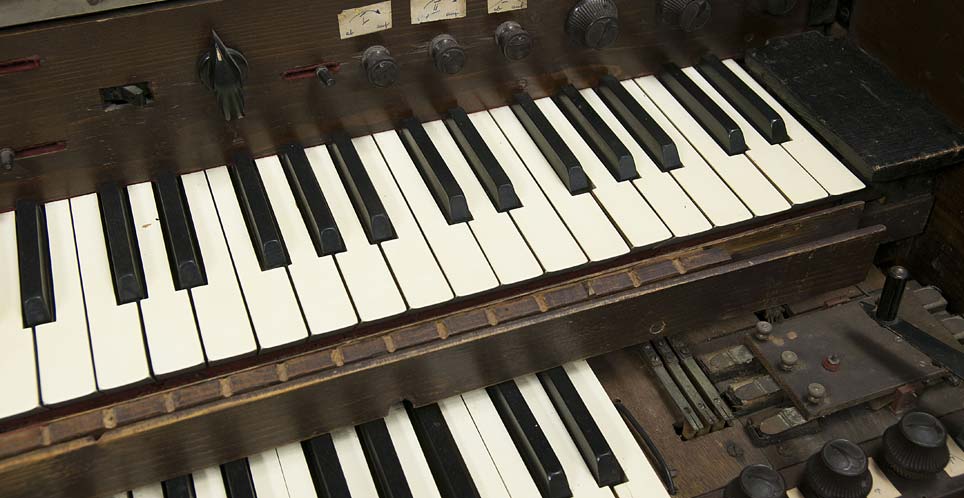
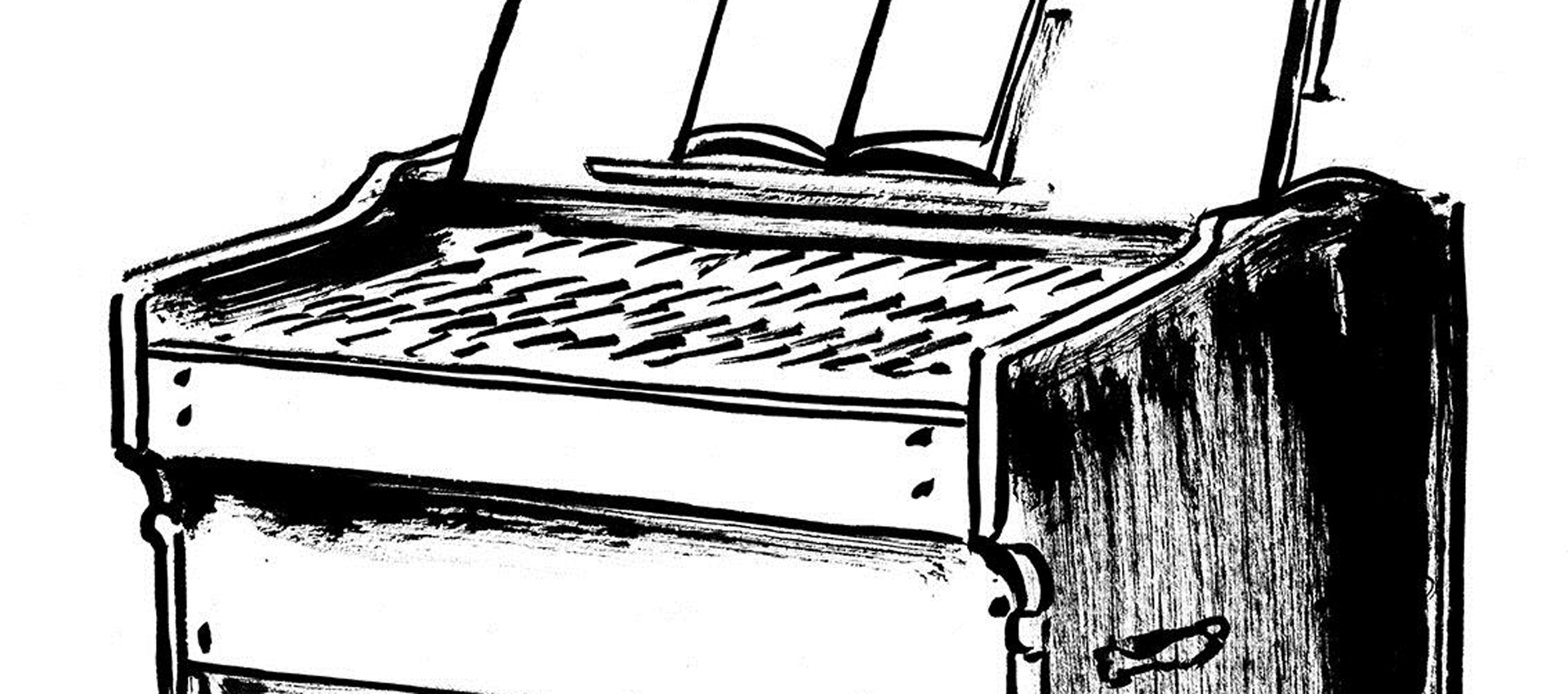
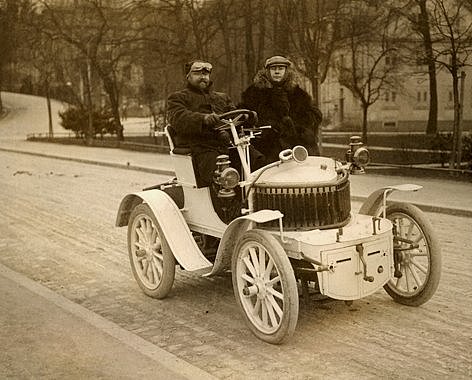
For there was another Hofmann, the passionate ‘motorist’ and inventor, who filed 70 patents – including a pair of foldable ice skates, a special keyboard for the piano and an air-cushion suspension which, according to Philipp Metz, became known as ‘Hofmann’s air suspension’ and was fitted in ambulances and aeroplanes.
In 1907, Hofmann moved to Switzerland – and after the First World War to the USA. He has not appeared in public in Germany since then. Hofmann also became a star in the USA. In the New York Hall of Fame of Steinway & Sons, he was honoured as an ‘Immortal’ alongside Horowitz, Rachmaninoff and Paderewski. And Steinway produced a grand piano especially for Hofmann with a narrower keyboard for smaller hands. In the USA, Hofmann headed the Curtis Institute in Philadelphia for many years. In November 1937, he celebrated his 50th anniversary on the American stage at the Metropolitan Opera in New York. The patronage was assumed by the then US President Roosevelt. Among the audience were many prominent musicians, including Arnold Schoenberg, the master of atonal music.
In 1946, at the age of 60, Hofmann gave his final concert and retired from the world’s concert halls. He died in Los Angeles in 1957.
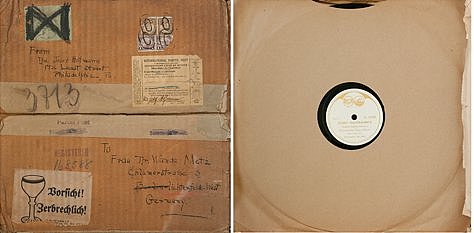
Numerous handwritten scores, letters and photographs from the estate of the great virtuoso were transferred to the collection of the State Institute for Music Research in 2016, where they are being studied.