Wurstfagott/Ranckett
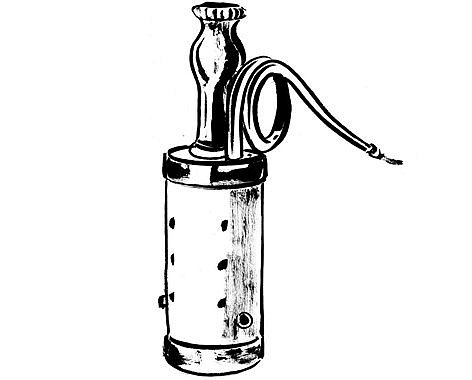
It has nothing to do with minced meat or ball sports, but is a masterpiece of space efficiency: what stretches over 1.50 metres in length on a bassoon – the tube – has here been coiled into a spiral and packed inside a handy case. You cannot see the ‘sausage’ – that is, the coiled tube – at all. Regarding its sound, Praetorius wrote in the 17th century: ‘When played by a skilled master […], it is a lovely instrument, particularly graceful and pleasant to hear in the bass.’
Wurstfagott/Ranckett © SPK/Studio Pong
Pochette
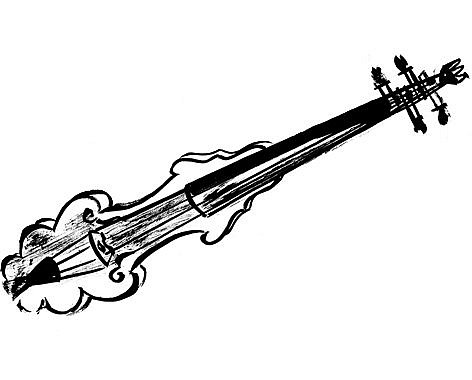
One of the oldest string instruments: the pocket violin enjoyed a renaissance among dance teachers at European courts in the 18th century – even though it produced a rather thin sound due to the lack of a sound box. It was probably valued above all for its ease of handling, which allowed the player to perform the dance steps whilst playing. And so the young Mozart was also introduced to the art of dance to the sounds of a pochette.
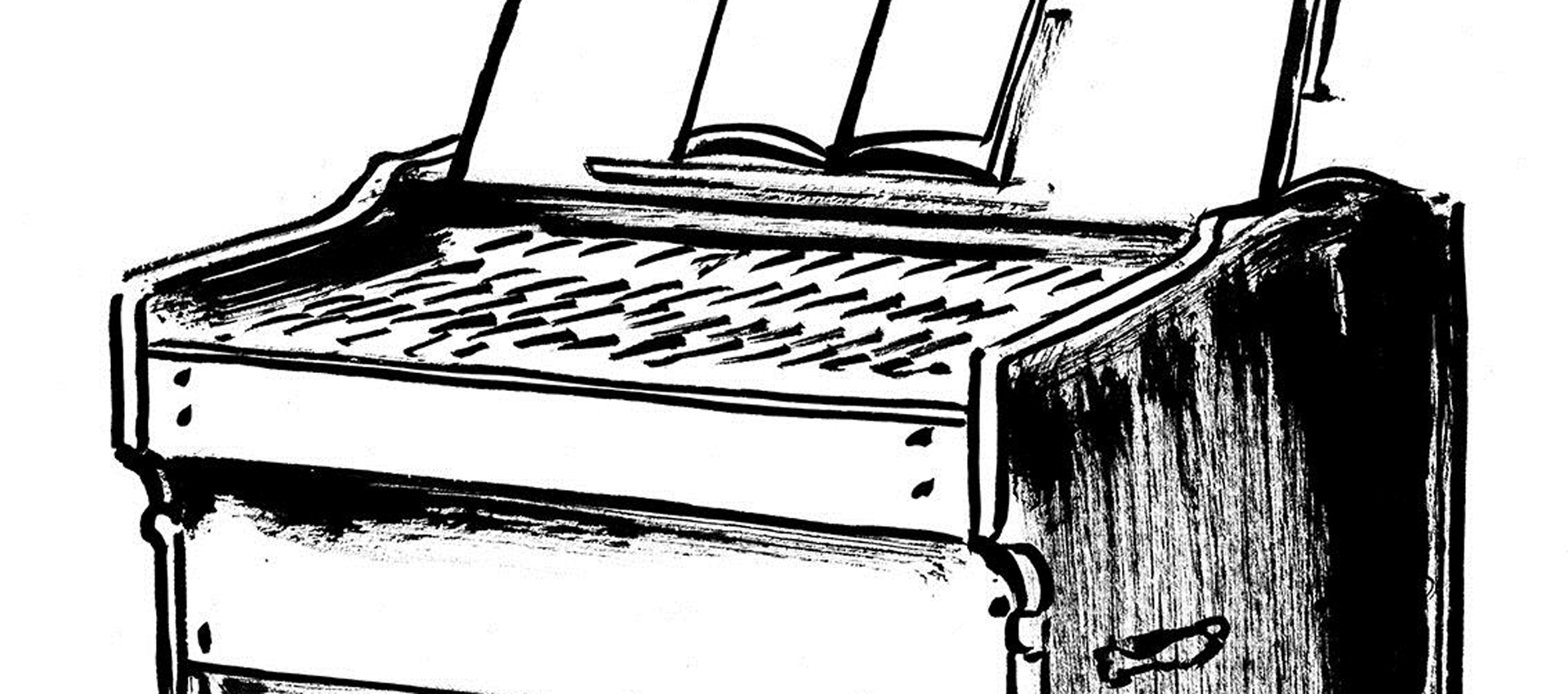
Orthotonophonium
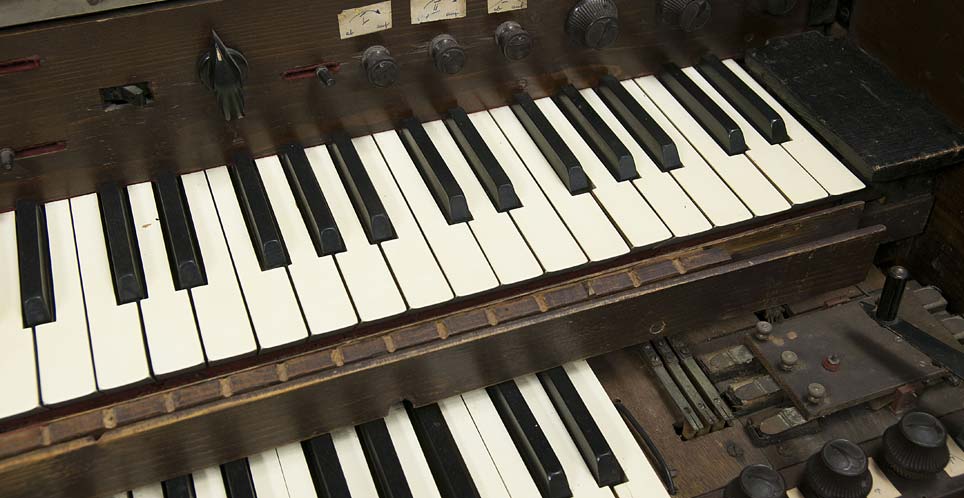
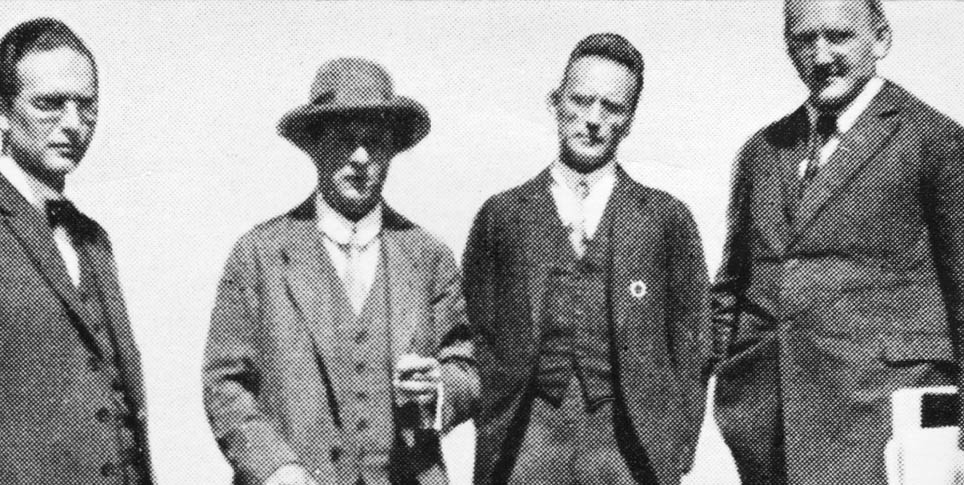
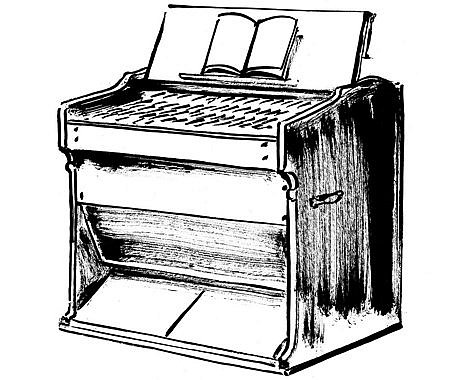
It’s all about the pure tuning – with the Orthotonophonium, that’s to be taken literally. From 1876 to 1916, its inventor Arthur von Oettingen tinkered with the harmonium featuring five rows of keys stacked one above the other, which, unlike ordinary keyboard instruments, can play pure intervals and chords even when moving through different keys. This experimental instrument beautifully illustrates the connection between mathematics and music.
Trumscheit
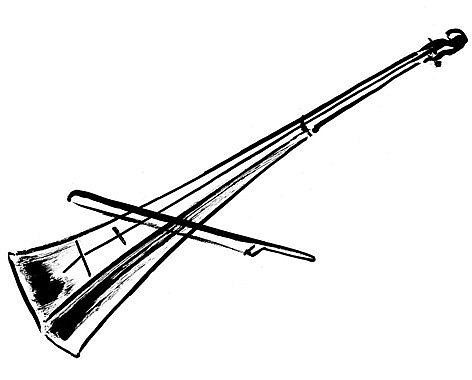
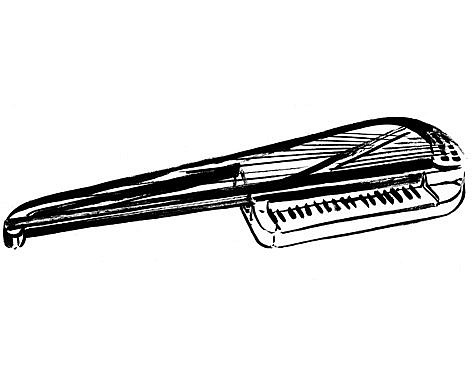
Also known as the ‘nuns’ violin’, the Trumscheit is the ‘Pharisee’ or ‘Maultasche’ of instruments: just as alcohol hides beneath the cream of a drink and meat within pasta dough in the sight of God, the holy sisters could produce a trumpet-like sound with this string instrument – for wind instruments were forbidden to them. When the string strikes the bridge, the false trumpet sound is produced.
Aeolian harp
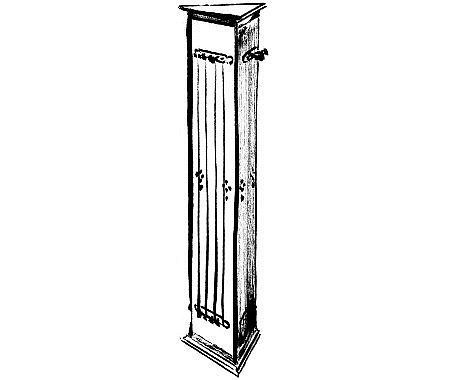
The Aeolian harp is known as a symbol of melancholy in Goethe’s works – and it really does exist. It is played by the wind, which explains its ethereal, otherworldly symbolism. All the strings are tuned to the same note, but of varying thickness. The intensity of the tones changes depending on the strength of the wind. People used to place Aeolian harps by open windows so that the changing sounds, stirred by draughts, would provide meditative inspiration.
Orphika
The name of this portable travelling piano goes back to the mythical figure of Orpheus, who, as is well known, could tame wild animals and make rocks weep with his singing. To emulate him, however, one first had to get outdoors, which the invention of the Orphika then made possible from the 18th century onwards. Whether the keyboard of around 37 notes is sufficient for this is not recorded. The situation is similar with the Orphika itself: only around 30 examples remain worldwide.
Glass harmonica
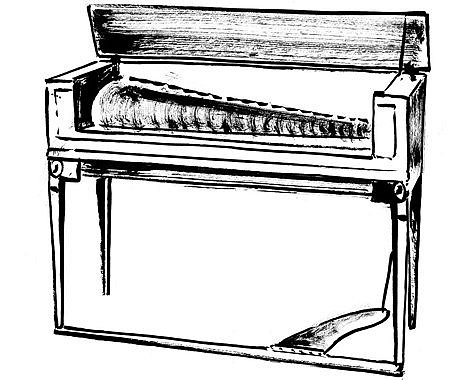
Invented in 1761 by Benjamin Franklin, it was prized by Goethe, Schiller and Herder for its beguilingly ethereal sounds. Mozart and Beethoven composed for the glass harmonica, and Richard Strauss also made use of it. In principle, it consists of oversized wine glasses mounted on a mechanical sewing machine. When the pedal is pressed, the glass hemispheres rotate, allowing a damp finger to produce the plaintive sounds at the desired pitch.
Dulcian
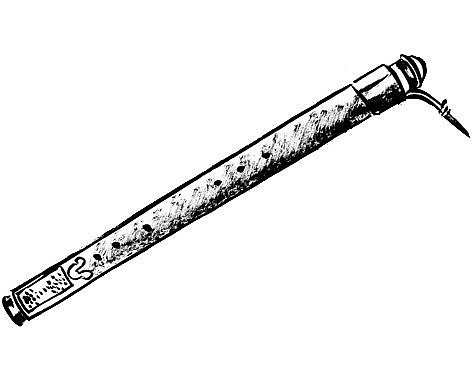
Brother of the great bass pommer, son of the shawm, father of the bassoon, uncle of the oboe: the dulcian has a large family. It was developed in the early 16th century and thus belongs to the older branch of the family of double-reed woodwind instruments. Its name derives from the Latin word for ‘sweet’ – presumably because of its lovely tones, at least in comparison to the pommer.
State Institute for Music Research
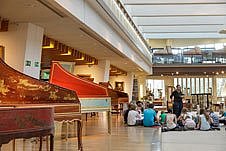
The State Institute for Music Research is the largest non-university research centre for musicology in Germany. It is dedicated to the historical and theoretical study of music and its dissemination. To this end, its Museum of Musical Instruments presents the development of European art music from the 16th to the 21st century to a wide audience. Founded as early as 1888, the museum houses over 3,000 historical musical instruments and offers a diverse range of events – from academic symposia and concerts to interactive sound installations.