The State Institute for Music Research is dedicating an exhibition to electronic musical instruments – on a scale never seen before.
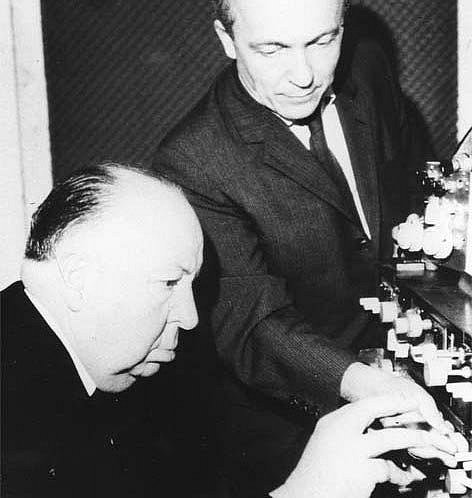
When it comes to electronic musical instruments, many people probably think first of techno, electro or groups such as Kraftwerk and the Berlin-based band Tangerine Dream. Yet the Beatles, the Rolling Stones, Pink Floyd, Stevie Wonder, synth-pop and countless compositions for radio and film would simply be unthinkable without these instruments. For example, Oskar Sala created the soundscape for Alfred Hitchcock’s psychological thriller *The Birds* on the Trautonium in his recording studio in Berlin-Charlottenburg. With the exhibition “GOOD VIBRATIONS”, the State Institute for Music Research is attempting to combine a music-historical perspective with a history of technology. The exhibits on display are viewed as both cultural and technical achievements and musical milestones. Electronic musical instruments have had a major influence on a wide variety of musical styles and genres, thereby permanently changing not only the way we listen to music but also the way we think about it. Nevertheless, they still represent a rather marginal field within the study of musical instruments.
In Berlin during the Golden Twenties, electronic music played
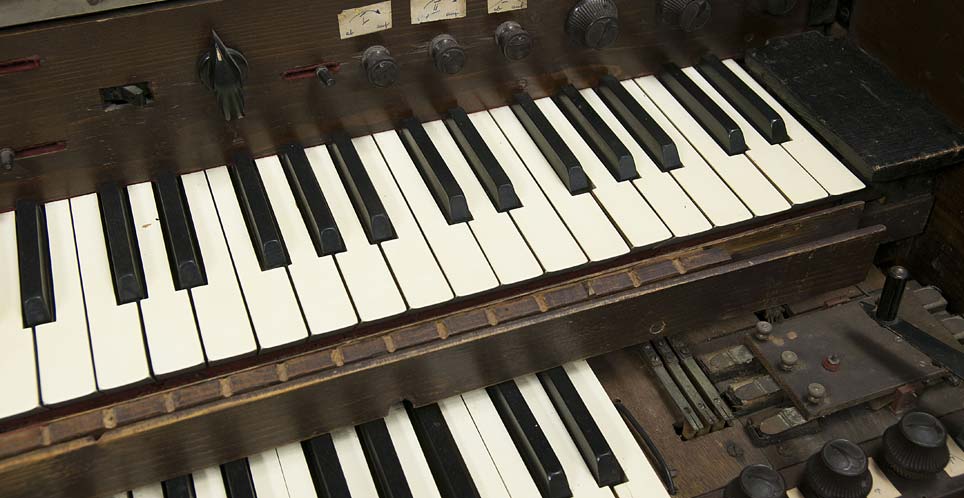
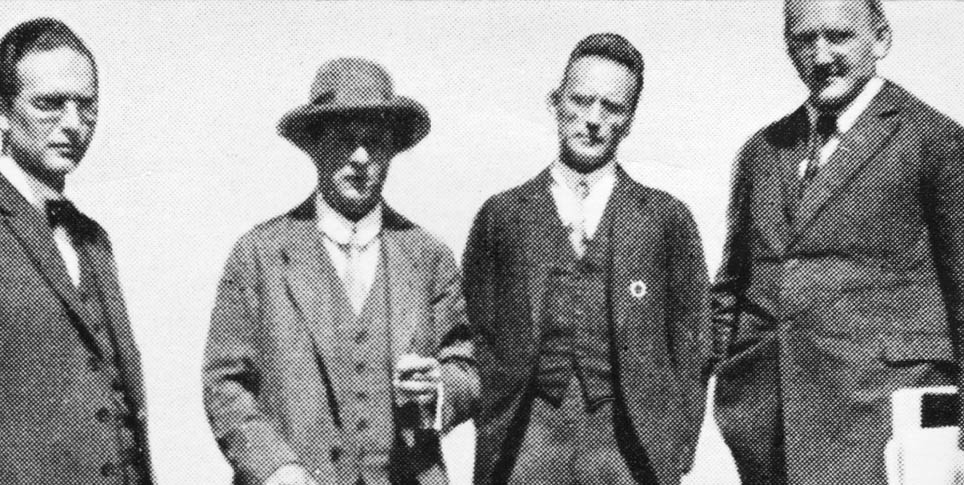
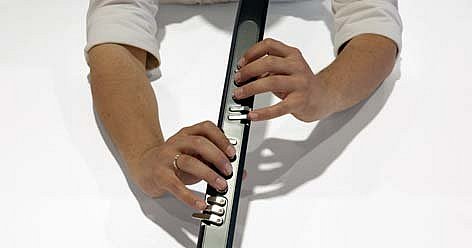
The history of electronic musical instruments is closely linked to the city of Berlin – and this does not refer solely to the so-called Berlin School, which experienced its first heyday as early as the 1970s. The Trautonium, in particular, had already undergone some forty years of development by that time. During the Trautonium’s formative years, in the Golden Twenties, Berlin experienced a period of cultural revival, but also of technological innovation. Numerous specialists, hobbyists and musicians were exploring electrical engineering and its potential, including for the generation of sound. One of the magical terms in music was coined by the Berlin-based Ferruccio Busoni, and people sought to realise it with the help of the new technology: microtonality. With the possibility of dividing the octave into more than twelve semitones – namely into thirds or even sixths – Busoni saw a way to compose new music, a path he himself, however, did not pursue.
Jörg Mager, an organist and amateur engineer who is virtually unknown today, was inspired by the idea of microtonality. Throughout the 1920s, he devoted himself almost exclusively to his visions and experiments, and gained considerable attention in Germany for his instrument and loudspeaker designs. The composer Paul Hindemith, who was world-renowned at the time and worked as a professor in Berlin, wrote an enthusiastic letter of recommendation for him. In contrast to Mager, Lew Termen (also known as Leon Theremin), hailing from the young Soviet Union, achieved enormous popularity in Berlin. He was the inventor of the Theremin, which is played without physical contact. Particularly in the USA, his instrument remained widespread in popular and film culture, as well as on the radio, from the 1940s onwards, and served as the soundtrack to futuristic visions and science fiction stories.
A wide range of instruments and operating methods
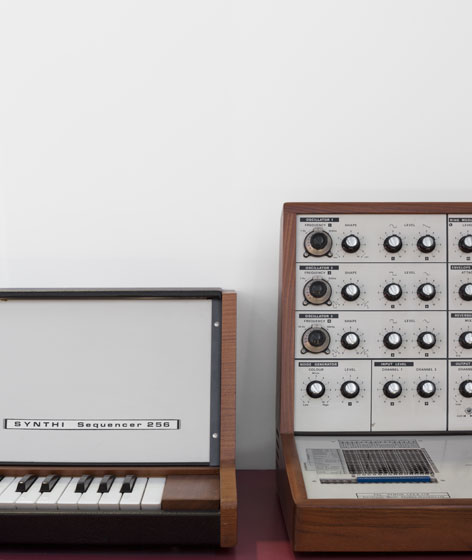
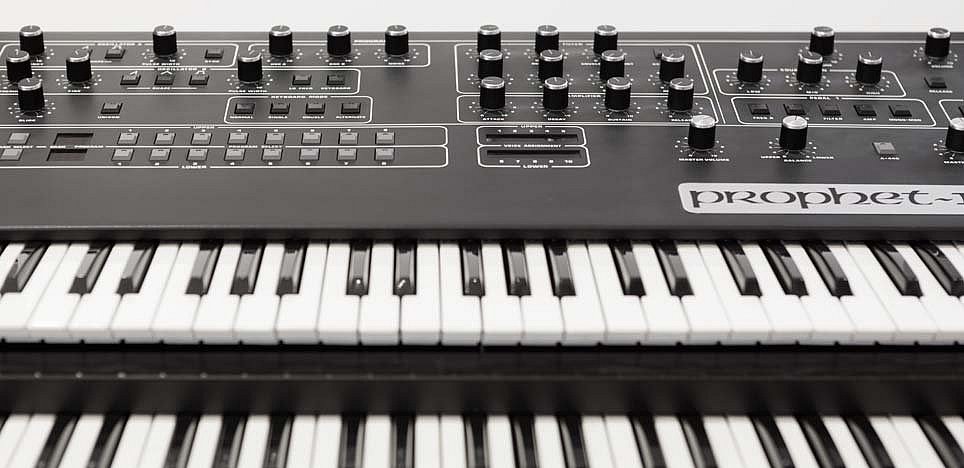
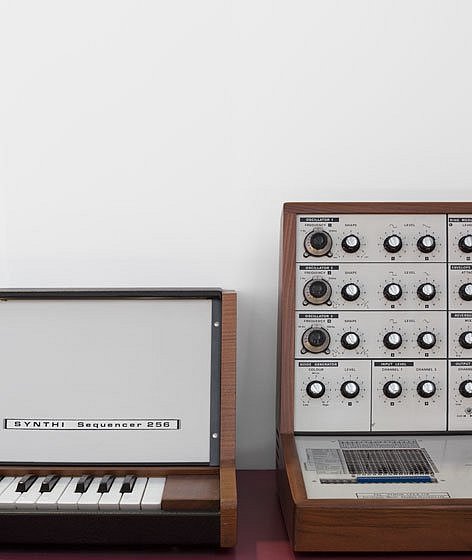
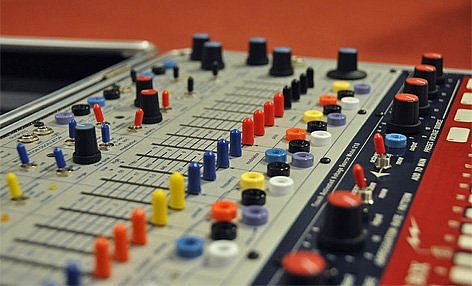
From the 1960s onwards, numerous groundbreaking developments emerged, such as the first modular synthesizers, which were still quite large and bulky. The designer Robert (Bob) Moog has since become a legend. He assembled his first instruments – in true American small-business tradition – in his garage. With the Moog synthesiser, electronics found their way into pop and rock music and also made their way into the living rooms and rehearsal rooms of amateur musicians.
The diversity of electronic musical instruments was also already becoming apparent in the 1960s. These years were still largely dominated by the synthesiser, which could be used to create a wide variety of timbres. During this period, however, the Mellotron was also developed in England, which can be described as the first widely used sample instrument. The desired timbres, such as those of strings or woodwind instruments, were stored on tape. These could then be played back via a keyboard, with a separate tape segment of up to eight seconds’ duration assigned to each key. The Beatles used the Mellotron to record such famous songs as ‘Strawberry Fields’.
From synthesizers to MIDI instruments and smartphone apps
Nowadays, synthesizers form only a small branch of the entire family of electronic musical instruments. Alongside them are rhythm machines or drum machines, as well as samplers and sequencers. In the 1980s, MIDI instruments (Musical Instrument Digital Interface) were introduced. Last but not least, there is a multitude of programmes and apps that make it possible to make music on even the smallest devices. The variety of electronic musical instruments today seems limitless. This is particularly true when one considers the possibilities offered by modern computer systems. With the help of appropriate software, almost all acoustic processes can be digitally recreated on these systems.
GOOD VIBRATIONS: A History of Electronic Musical Instruments
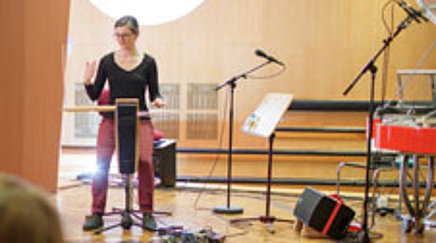
From 25 March to 27 August 2017, the Musical Instrument Museum of the State Institute for Music Research will be presenting over 60 pioneering electronic musical instruments. The exhibition will feature both the museum’s own extensive and previously rarely displayed collection, as well as items on loan from international partners. The extensive supporting programme offers visitors the chance to experience many instruments live or even try them out for themselves. Musicians will demonstrate their favourite instruments in action and offer insights into how to play them in workshops.
About the exhibition “GOOD VIBRATIONS. A History of Electronic Musical Instruments”