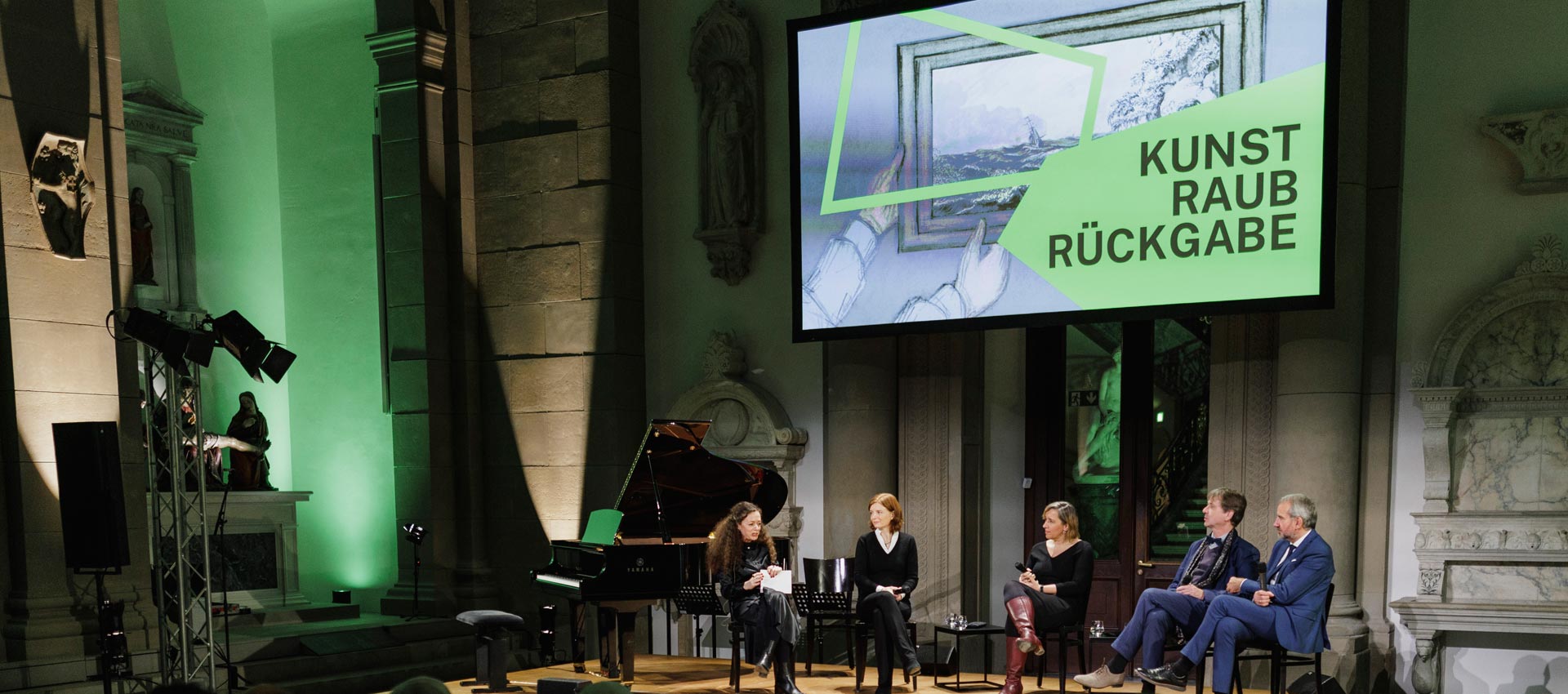
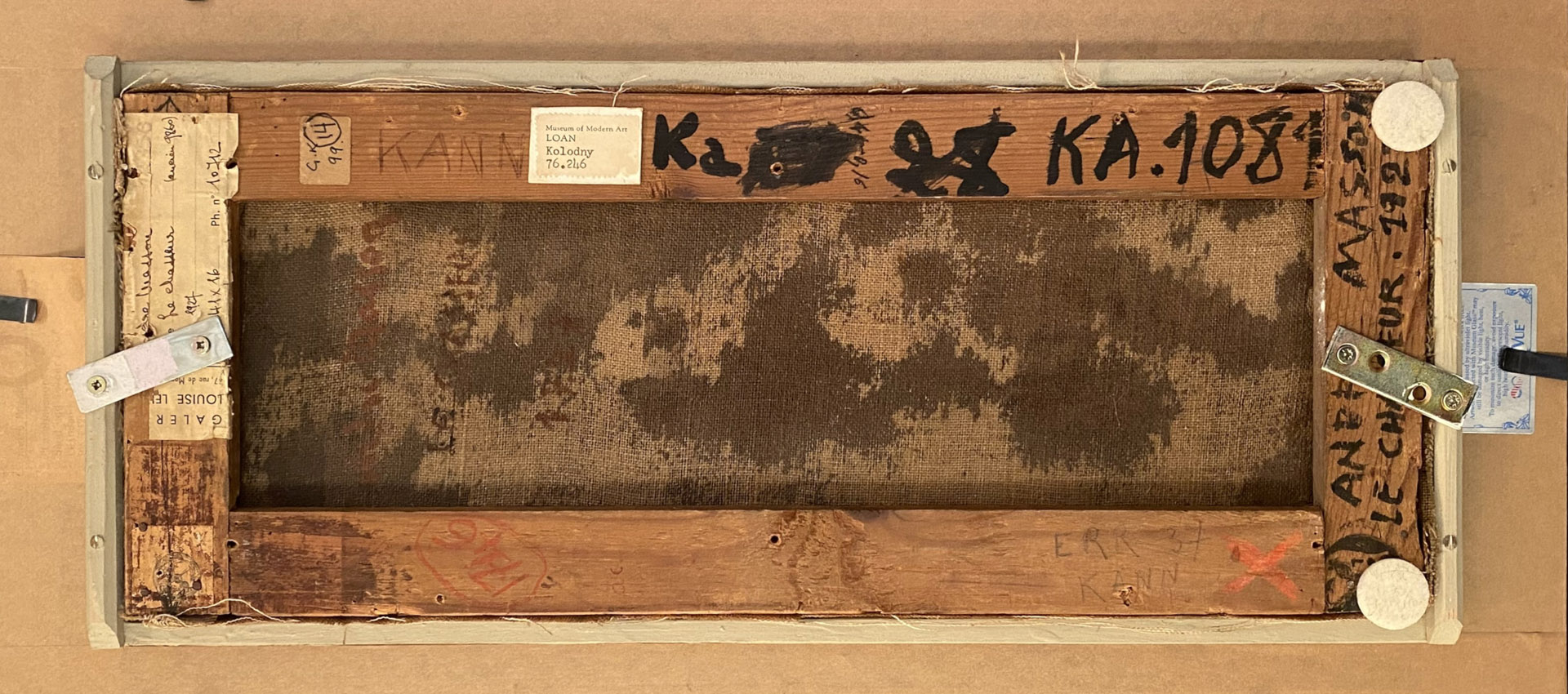
For three years, the Central Archive researched the provenance of the Berggruen Collection. The results are on display in the exhibition “Biographies of Pictures: Provenance at the Berggruen Museum”
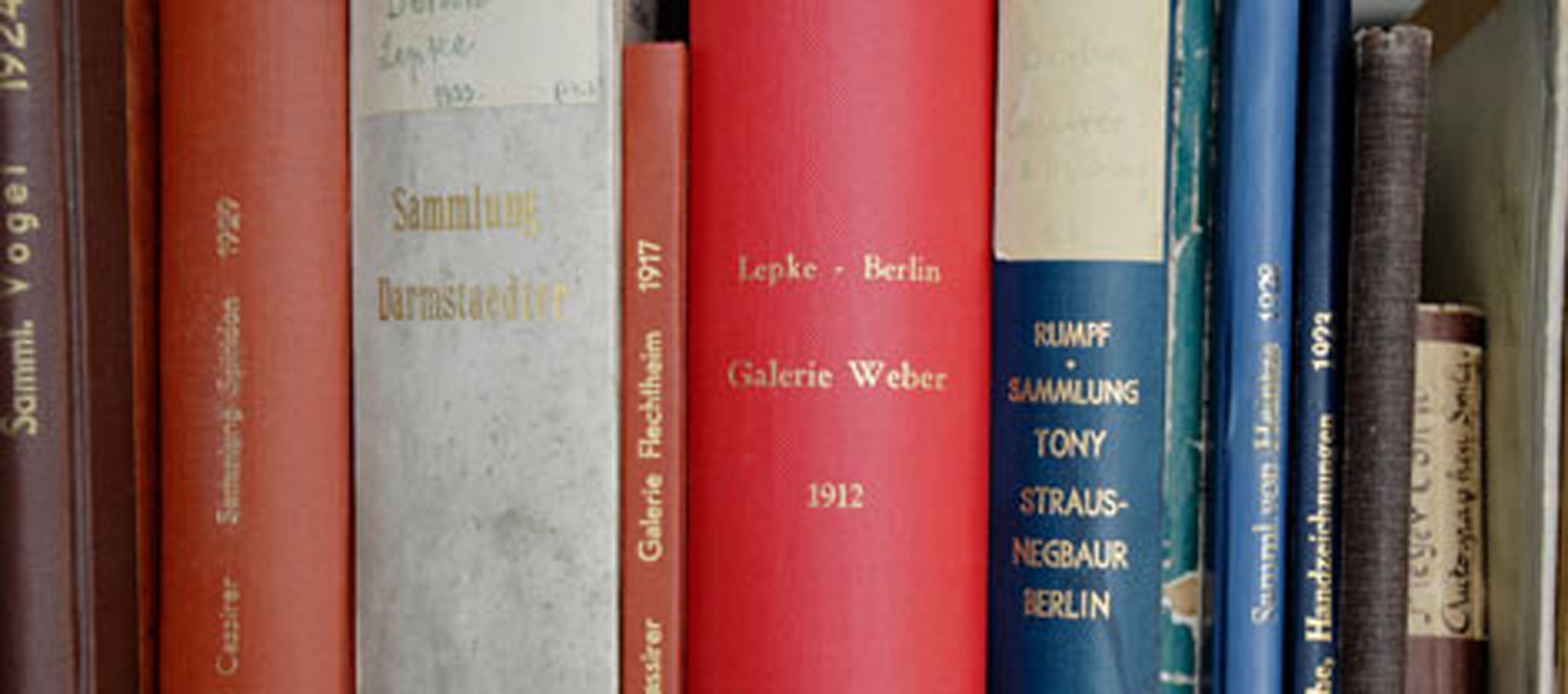
Does a work of art have a biography? Who were its owners? And under what circumstances did it change hands? These questions form the focus of the exhibition “Biographies of Pictures. Provenances at the Berggruen Museum. Picasso – Klee – Braque – Matisse”. Marking the conclusion of a three-year provenance research project, it reveals previously unknown journeys and stories surrounding paintings, drawings and sculptures, including works by Pablo Picasso, Paul Klee, Henri Matisse and Georges Braque, from the former private collection of Heinz Berggruen.
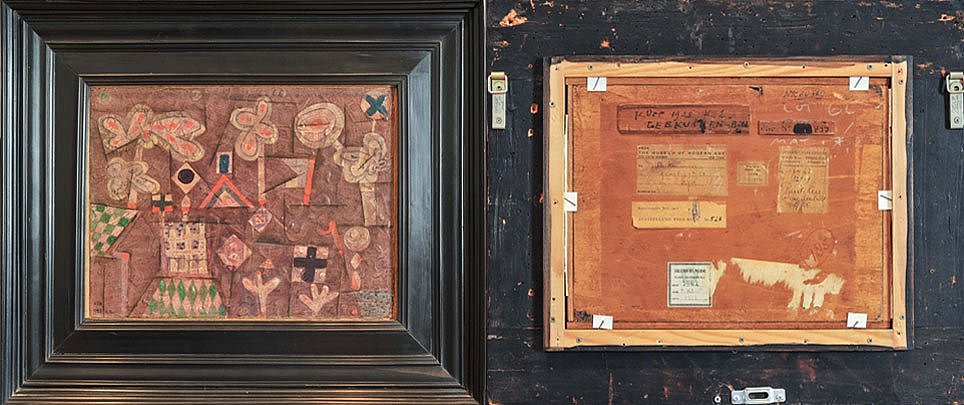
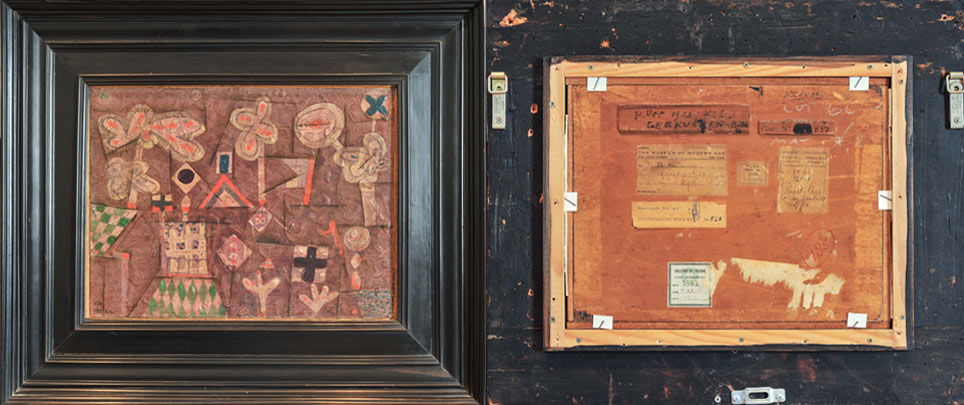
Left: Paul Klee, ‘Lebkuchenbild’, 1925; Right: Reverse side with provenance details © Staatliche Museen zu Berlin, Nationalgalerie / Andres Kilger
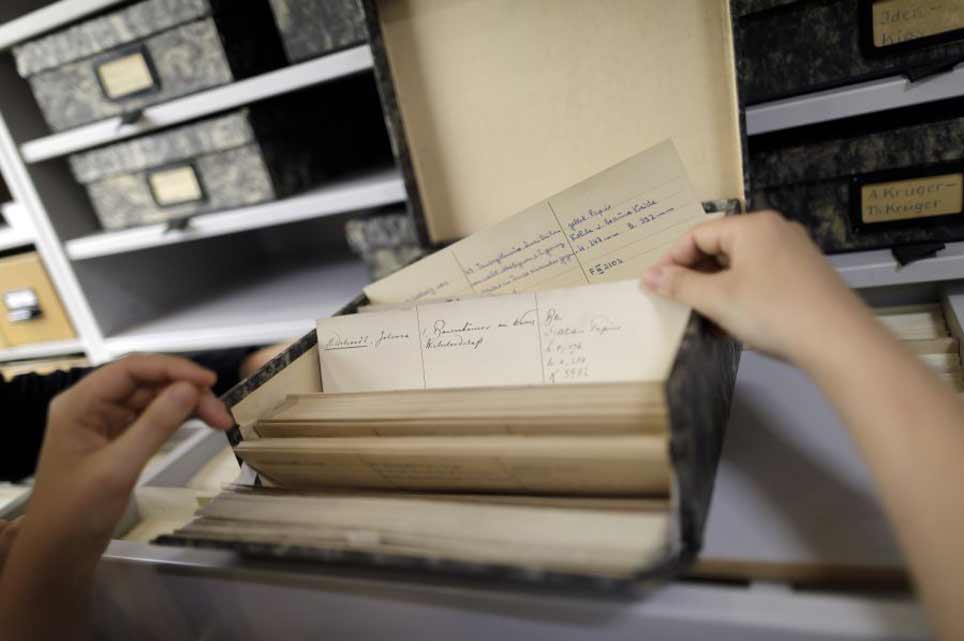
In this project, funded by the German Centre for Lost Cultural Property, the provenance of the 135 paintings, sculptures and works on paper in this collection of the Nationalgalerie, all created before 1945, was investigated. None of them were found to have been lost as a result of Nazi persecution, with the exception of four paintings; however, these had already been returned to their original owners in the post-war years and were subsequently sold by them.
As the history of the collection also reveals numerous links to the international art market of the early 20th century, this is a key theme of the exhibition. An introductory room on art dealers and collectors is followed by a section on Nazi art looting in France, illustrated by the examples of Alphonse Kann and Paul Rosenberg. One room is dedicated to the famous gallery owner Daniel-Henry Kahnweiler, another to Picasso’s circle. In keeping with the focus of Heinz Berggruen’s collection, the reception of Paul Klee and Pablo Picasso in the USA is also a theme. As the exhibition focuses on the history of ownership of the artworks prior to 1945, object biographies of selected artworks illustrate the individual thematic areas.
As an artistic exploration of the theme of provenance and looted art, the contemporary installation “La loi normale des erreurs – Projet Picasso, version Berggruen” by the French artist Raphaël Denis forms part of the exhibition. It addresses the expropriation of artworks by the Einsatzstab Reichsleiter Rosenberg (ERR), the main actor in Nazi art looting in occupied France. The installation is juxtaposed with works from the Museum Berggruen’s collection that were affected by the ERR’s seizures and were restituted after the end of the war, such as Picasso’s “Seated Nude Drying Her Foot” from 1921. The exhibition is a collaboration between the Nationalgalerie and the Central Archives of the Staatliche Museen zu Berlin.
A publication accompanying the exhibition supplements the Museum Berggruen’s inventory catalogue with, among other things, the provenances identified in the project. Essays and biographies on selected works illustrate the history of the collection and provide an introduction to the complexity of the provenance records and the research behind them. Photographs of the reverse sides, historical images, portraits of collectors and dealers, a catalogue raisonné and a glossary round off the volume.