Italy is to have 25 items from the Collection of Classical Antiquities returned: Deputy Director Martin Maischberger on theatre at funerals, the enigmatic art dealer Medici, and why loss can also be a blessing
Mr Maischberger, the Collection of Classical Antiquities is returning 25 objects to Italy. The reason is that they are of ‘doubtful provenance’. What does that mean?
Martin Maischberger: It’s a long story. We’re talking about 21 vases from southern Italy plus four other objects that we’re returning. Research spanning several years revealed that these objects almost certainly originate from illegal contexts. This means that they were illegally excavated in the 1970s or early 1980s and then smuggled out of Italy. They were then sold on the international art market at a very high price, with false provenance information provided. The main collection we are talking about, these 21 Apulian vases, was acquired in 1984 by the Antikenmuseum in Berlin-Charlottenburg, the West Berlin predecessor institution of the Antikensammlung.
What is so special about the Apulian vases?
The main collection of the 21 vases consists of pieces dating from around 340 BC. These are works produced by Greeks for non-Greeks in Italy. Vases, such as those that had been familiar in Athens for centuries, were produced particularly in Taranto, a Greek colony in southern Italy. And these objects were of great interest to the indigenous Italic peoples. They bought them and certainly also used them in a funerary context. This intercultural process between the Greek colonisers on the one hand and the indigenous Italic peoples on the other is a fascinating subject.
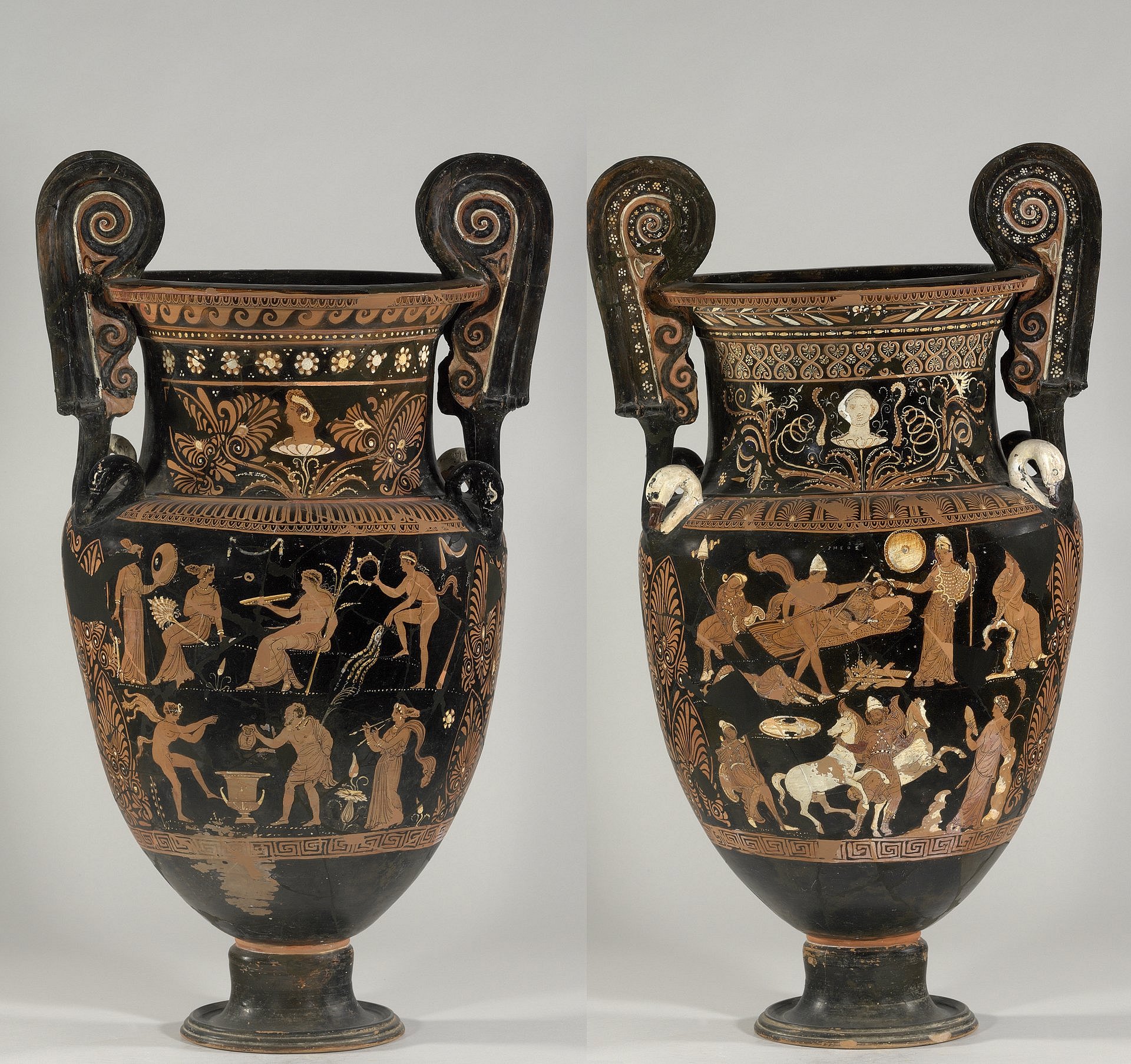
Front and back views of an Apulian volute krater, c. 340 BC, attributed to the Painter of Darius. Front: Odysseus and Diomedes stealing the horses of Rhesus; back: Dionysian revelry. Returned to Italy in 2024 © Collection of Classical Antiquities / Johannes Laurentius
What do the vases depict?
These vases, used as grave goods, are densely packed with imagery, primarily of a mythological nature, but also partly relating to everyday life. This is extremely interesting because some of these are versions of myths that differ slightly from those we are familiar with. It is thought that this was also linked to theatrical performances. What sort of funerals were these, researchers wondered as early as the 1990s. Were there perhaps singers or actors present who might have pointed to these vases whilst telling their stories? The Apulian vases have always stimulated the imagination and led us into realms that go far beyond the mere object itself.
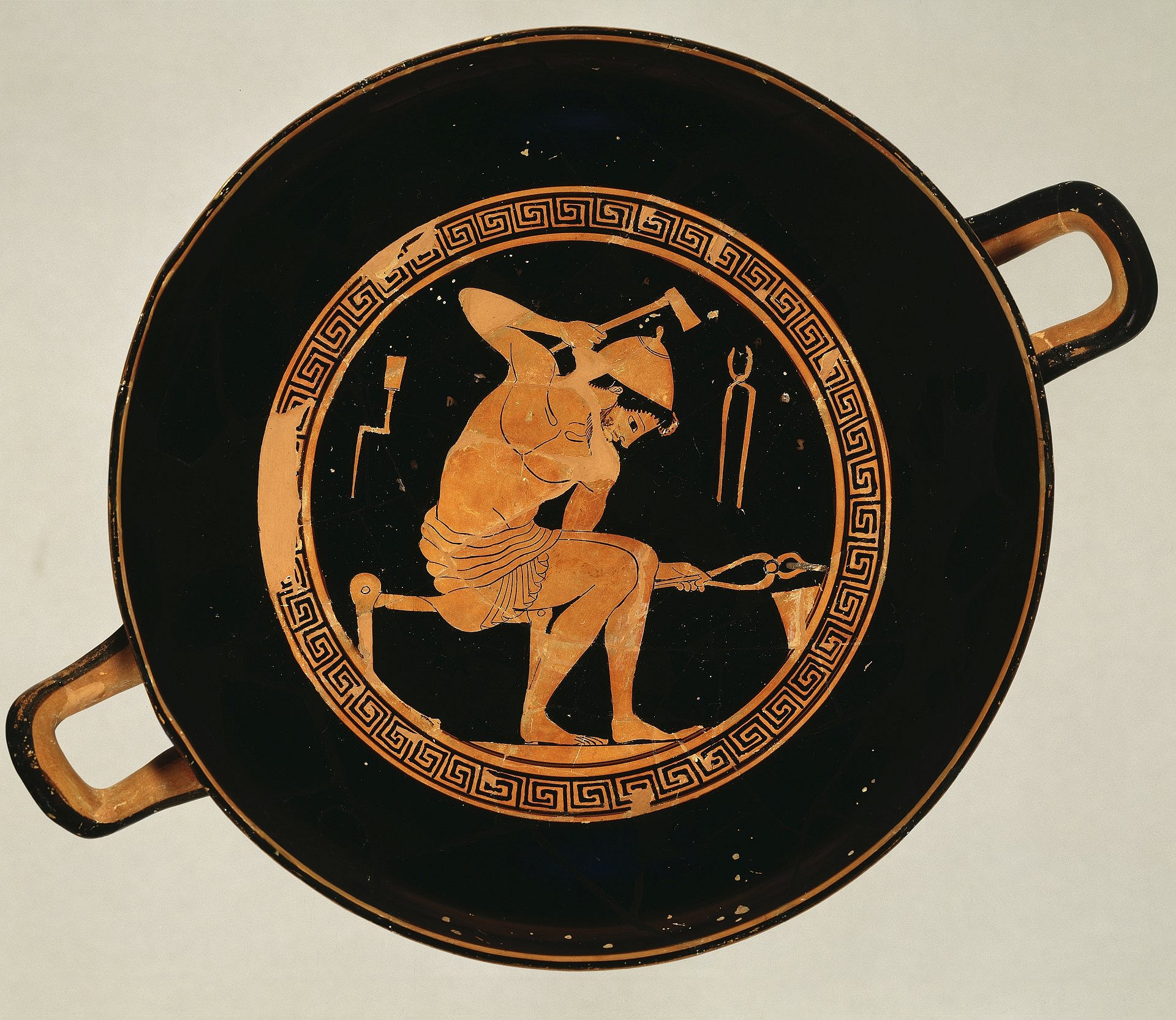
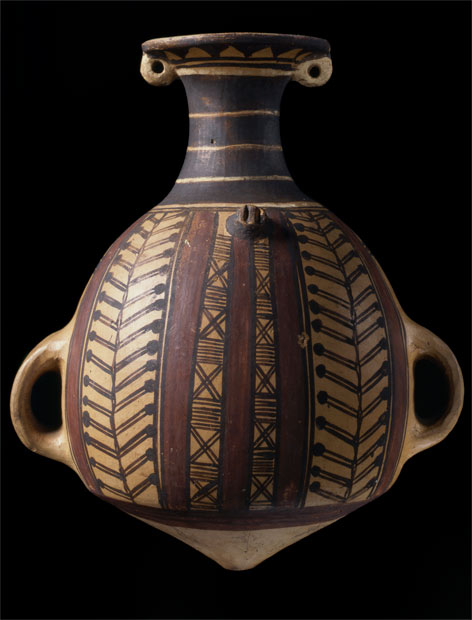
Attic drinking bowl (kylix), c. 510–500 BC. A photograph of the vessel was seized during the investigation into Giacomo Medici in Geneva from a room he used to store illegally exported artefacts. The photographs showed freshly excavated objects that had not been cleaned or restored. Given that a photograph of the kylix was found in this storage room belonging to Giacomo Medici, it is highly likely that the kylix originates from an illegal excavation in Italy. © Collection of Classical Antiquities / Johannes Laurentius
It is said that doubts about the legitimacy of the provenance have existed since as early as 1998. Why, then, has the return only taken place now?
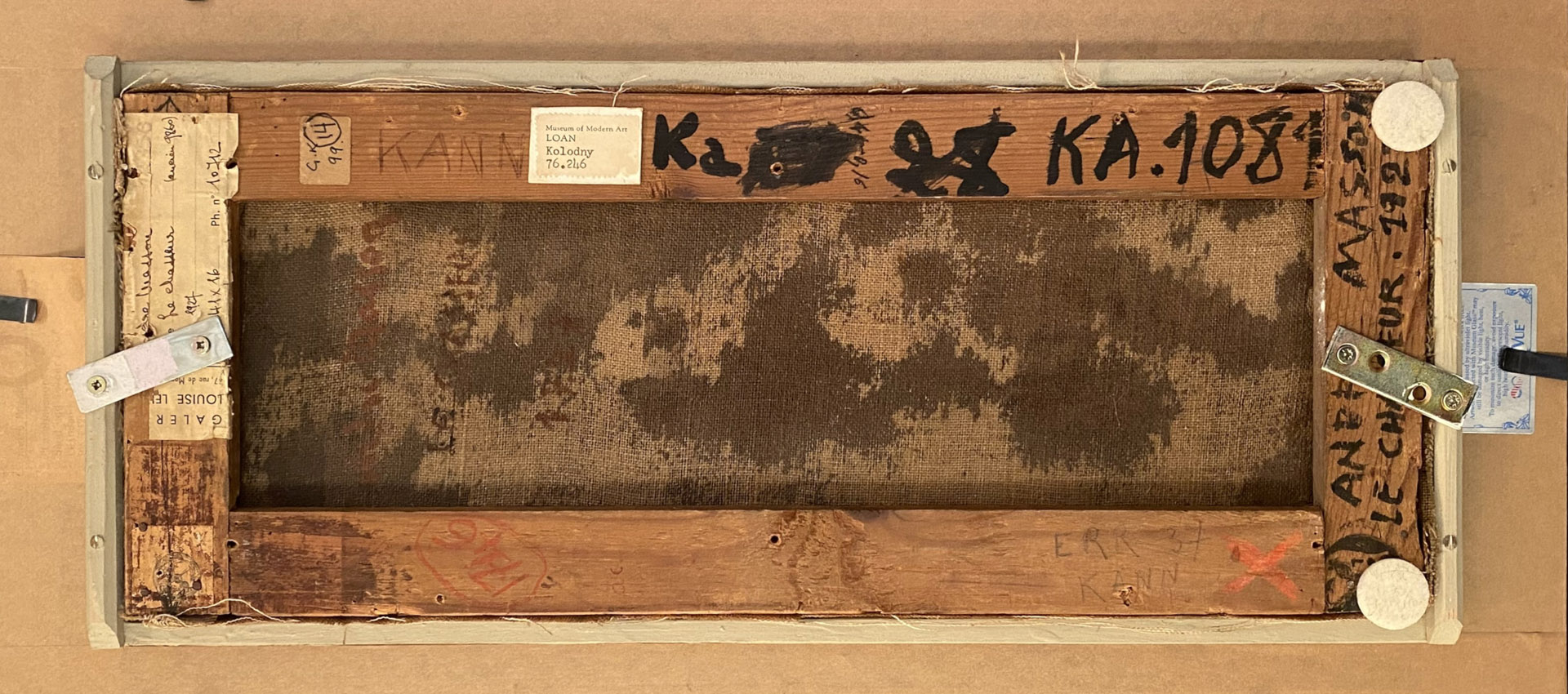
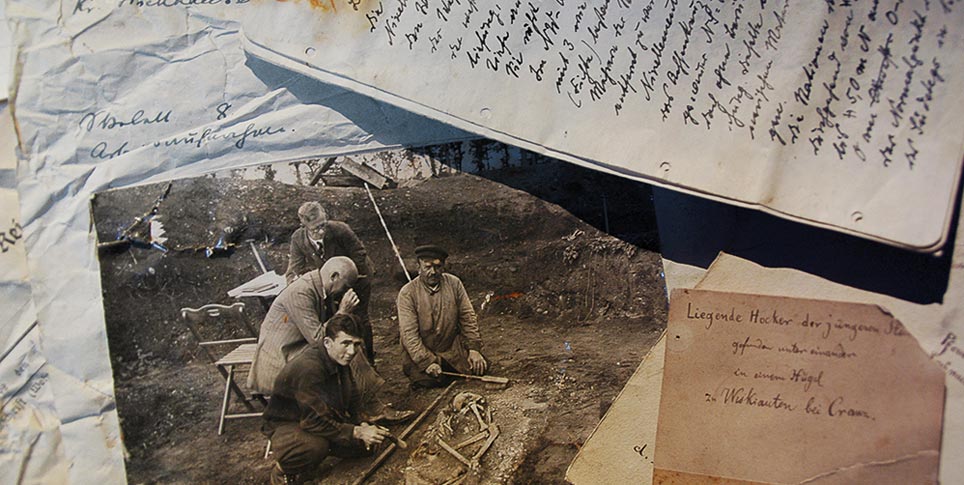
In fact, these doubts did not arise within our institution, but came from outside. The academic community raised objections to the Berlin Collection of Classical Antiquities’ initial publications on these objects. Initially, these were colleagues from both Germany and Italy. At some point, the public prosecutor’s office and the police also became involved, suspecting that these objects could not have come from an old Swiss private collection. However, definitive proof of this was not found until 1995 – at least for four objects – in the form of Polaroid photographs that had been seized from the office of the Italian art dealer Giacomo Medici in Geneva. These photographs show four of our vases in a fragmented state, in a series of objects that ended up in other museums and were later unequivocally identified as originating from looted excavations, thus suggesting a connection to looted excavations for our four vases as well.
Over the years, both scientific and further forensic evidence has emerged to substantiate these suspicions. One might now ask why we are only reacting now?
That would be our question too …
Initially, there was only concrete evidence for four of the 21 objects. We asked ourselves: could the other objects originate from different contexts? Are they perhaps ‘clean’? The scientific debate on this was highly controversial, and it is only recently that the evidence from the scientific side has finally accumulated to suggest that all the objects originate from a single context. Accordingly, it is also obvious that the remaining vases, for which we have no evidence, were illegally excavated, taken out of the country and therefore must be returned.
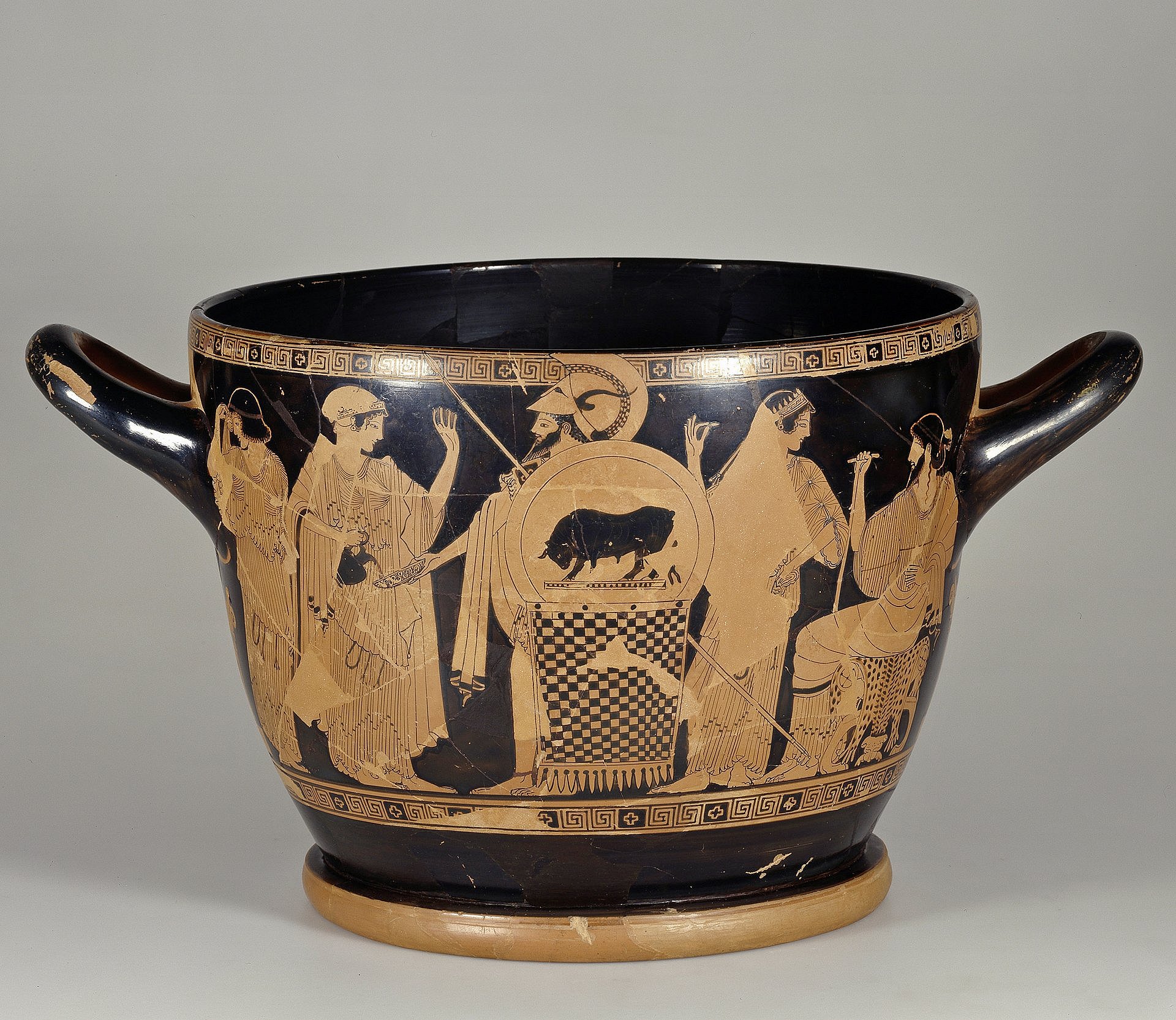
Attic red-figure skyphos, c. 480 BC. The vessel, reconstructed from fragments, was acquired in 1970 by the Geneva-based art dealer N. Koutoulakis. It is now known that he belonged to the circle of art dealers and art dealers Giacomo Medici and Robert Hecht, who were proven to have traded in looted artefacts. The correspondence contains a statement which, in the light of current knowledge, can be interpreted as referring to illegal excavations. The skyphos was also the subject of investigations by the Italian Carabinieri in connection with the criminal proceedings against Giacomo Medici, Marion True, Robert Hecht and Robin Symes. However, there has never been a request for its return to Italy. © Collection of Classical Antiquities / Johannes Laurentius
The linchpin of this crime thriller about illegal excavations is the enigmatic art dealer Medici. What is known about him?
Unlike many others involved, such as the archaeologist and art dealer Christoph F. Leon, who sold the complex to Berlin, Giacomo Medici is still alive. The Italian press has also put him in front of the camera on occasion, where he portrayed himself as the scapegoat, claiming that he was the only one who had to take the blame for this matter because he had been sentenced to a prison term and a fine. On the other hand, a court order stipulated that the corpus delicti – that is, the Polaroids – be returned to him as private property and that they could no longer be used as evidence.
What does this whole case say about the history of your organisation?
We do not condemn any of our former colleagues. It cannot be emphasised often enough that our predecessors had already initiated a turnaround: as early as the late 1980s, a commitment was made to acquire only objects with impeccable provenance. West Berlin certainly took the lead in this regard, including Wolf-Dieter Heilmeyer, the predecessor of the current director of the Collection of Classical Antiquities, who had purchased these vases.
But they were purchased nonetheless.
Times were simply different. Other museums still believe to this day that provenance research is somewhat overrated and continue to purchase objects with dubious provenance. In that respect, Berlin has been a pioneer. Nevertheless, we have not been thorough enough in reviewing what was purchased right up until the recent past and have been all too credulous in accepting the stories we were told.
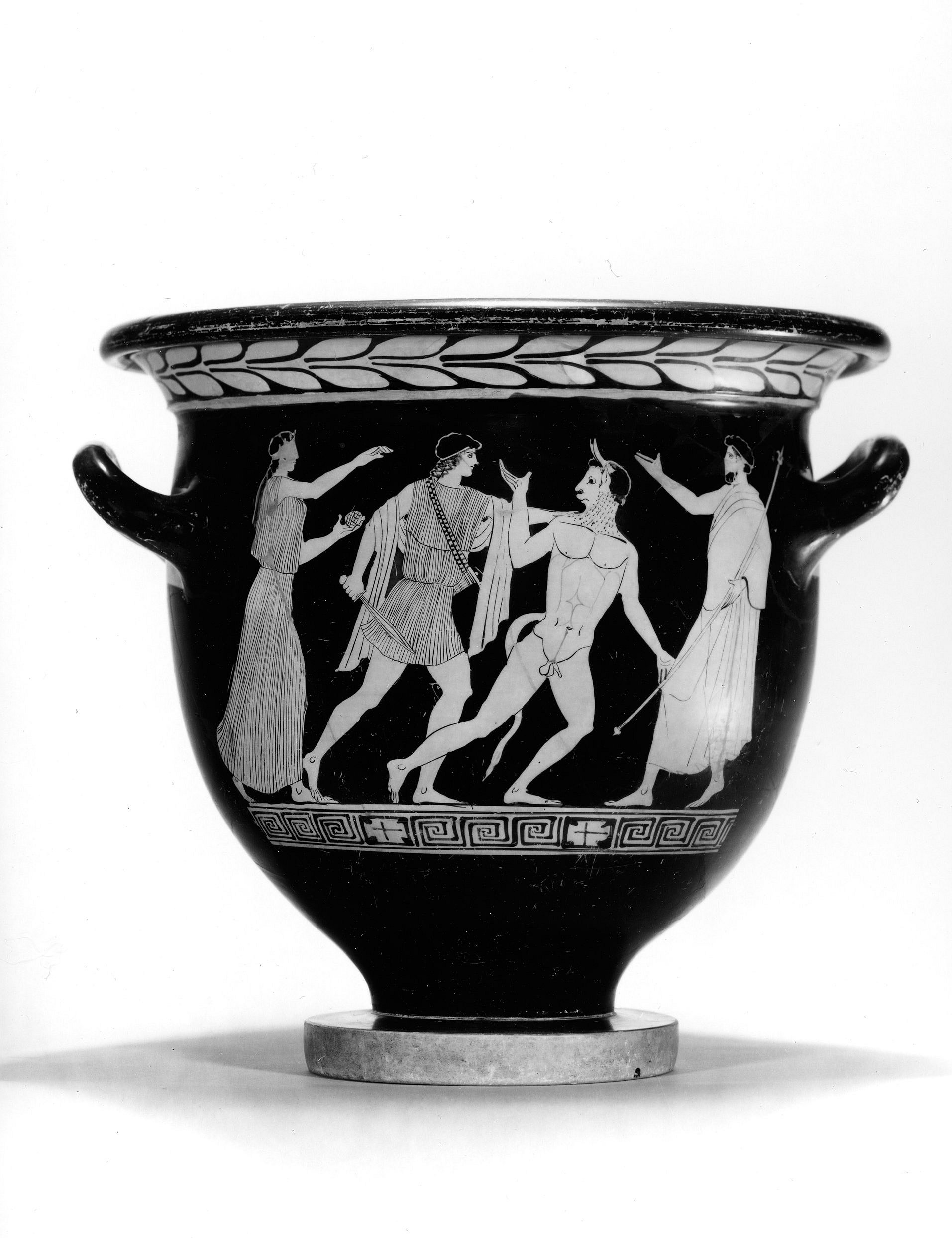
Lucanian bell krater by the Pisticci Painter depicting Theseus, 5th century. The vessel was acquired in 1993 as a donation from the Brommer Collection. He had purchased the bell krater in the summer of 1980 from the Swiss dealer Francesco Italiano. However, this vessel is also one of the objects linked to Giacomo Medici and was the subject of investigations by the Italian authorities into the art dealer. A photograph of this vessel in its unrestored state also exists; it was seized from Medici’s storage room for illegally excavated objects. This strongly suggests that it too was the result of an illegal excavation. © Collection of Classical Antiquities / Johannes Laurentius
Is this restitution linked to the State Museums’ position paper on the handling of antiquities?
Although these developments ran in parallel, there is nevertheless a connection. The State Museums’ archaeological collections have set themselves a clear mandate: we want to be transparent; we must engage with the public regarding the history of our collections and any issues they may raise. At the same time, there needs to be openness to discussion and dialogue with other archaeological museums. Alongside the legal dimension, there is also the moral one. Regardless of the position paper, the Italian side has repeatedly raised the issue of these vases with us. The position paper and the return of the vases are parallel strands, but ultimately they lead to one and the same goal.
Are Berlin’s museums also international pioneers?
Globally speaking, American museums such as the Metropolitan in New York and the Getty in Los Angeles have been coming to terms with their histories at least at the same time. In some cases, they were subject to even greater pressure. The Getty, in particular, has a collection that was only built up in the recent past and originates almost exclusively from the art market. In the European context, the focus is more on 19th-century excavations and the subsequent division of finds, which is also an issue here. The best example is the dispute between the British Museum in London and Greece.
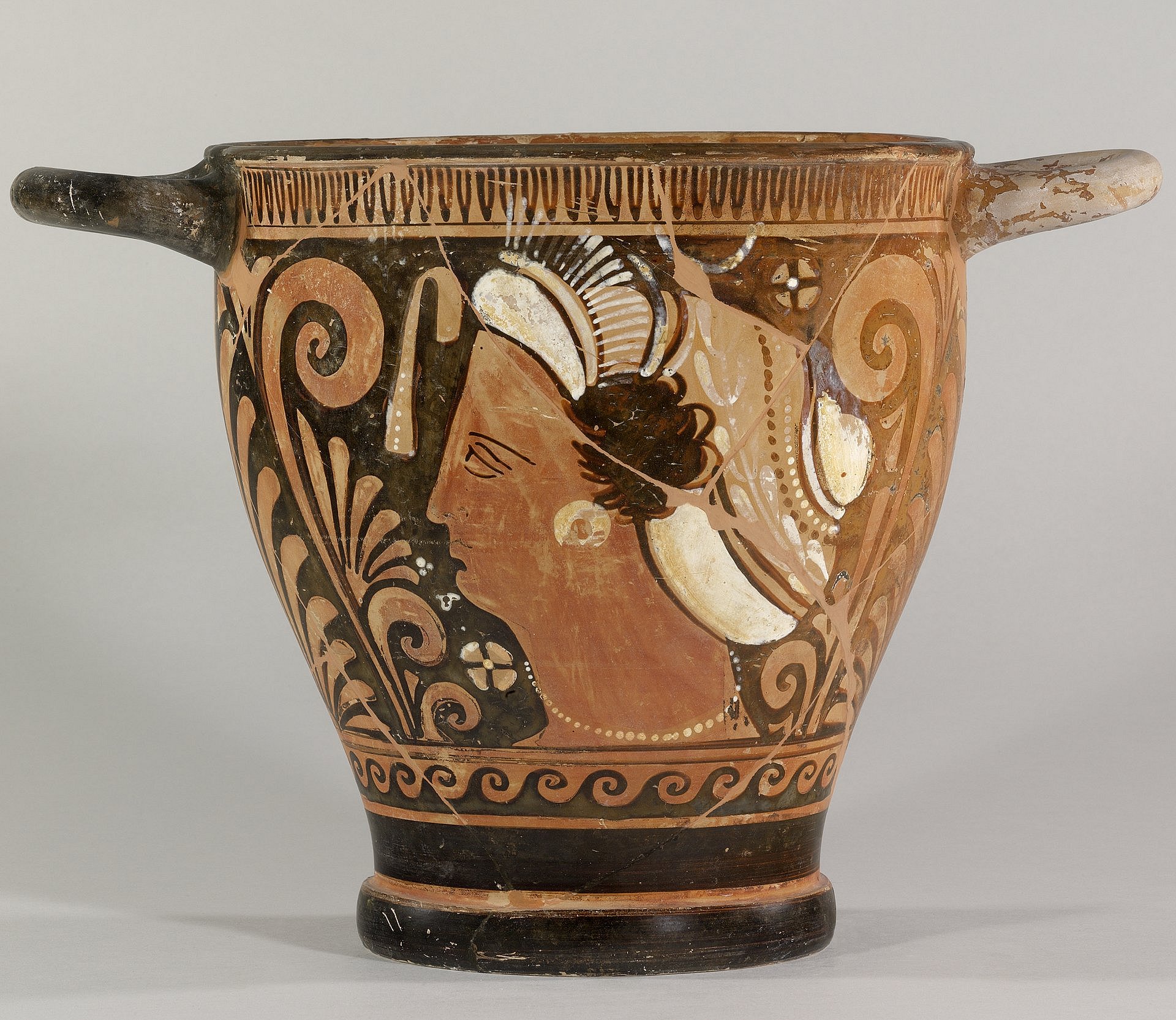
An Apulian red-figure skyphos, approximately 31 cm high, dating from the 4th century BC, depicting a female head, attributed to the Armidale Painter. Returned to Italy in 2024 © Collection of Classical Antiquities / Johannes Laurentius
Not only are 25 objects being returned to Italy, but something is also coming from Italy to Berlin in exchange. What will that be?
For us, this is one of the most important elements of this voluntary restitution initiative. Due to the statute of limitations and other factors, there is in fact no legal obligation to return these vases. A cooperation agreement has been reached whereby objects from Italy will come to Berlin on long-term loan. In making our selection, we have focused on objects that are virtually non-existent in our collection. These are primarily paintings from the tombs of the so-called Lucanians, a native Italian tribe which, in the fourth century BC, moved towards the Greek cities on the coast and left behind a great many warriors’ tombs adorned with corresponding decorations – that is, warriors on foot, on horseback, or warriors bidding farewell to their wives. So we are receiving objects that all come from the same region as the vases. And they date from a similar period.
The vases were a highlight of the collection. Doesn’t their return pain you too?
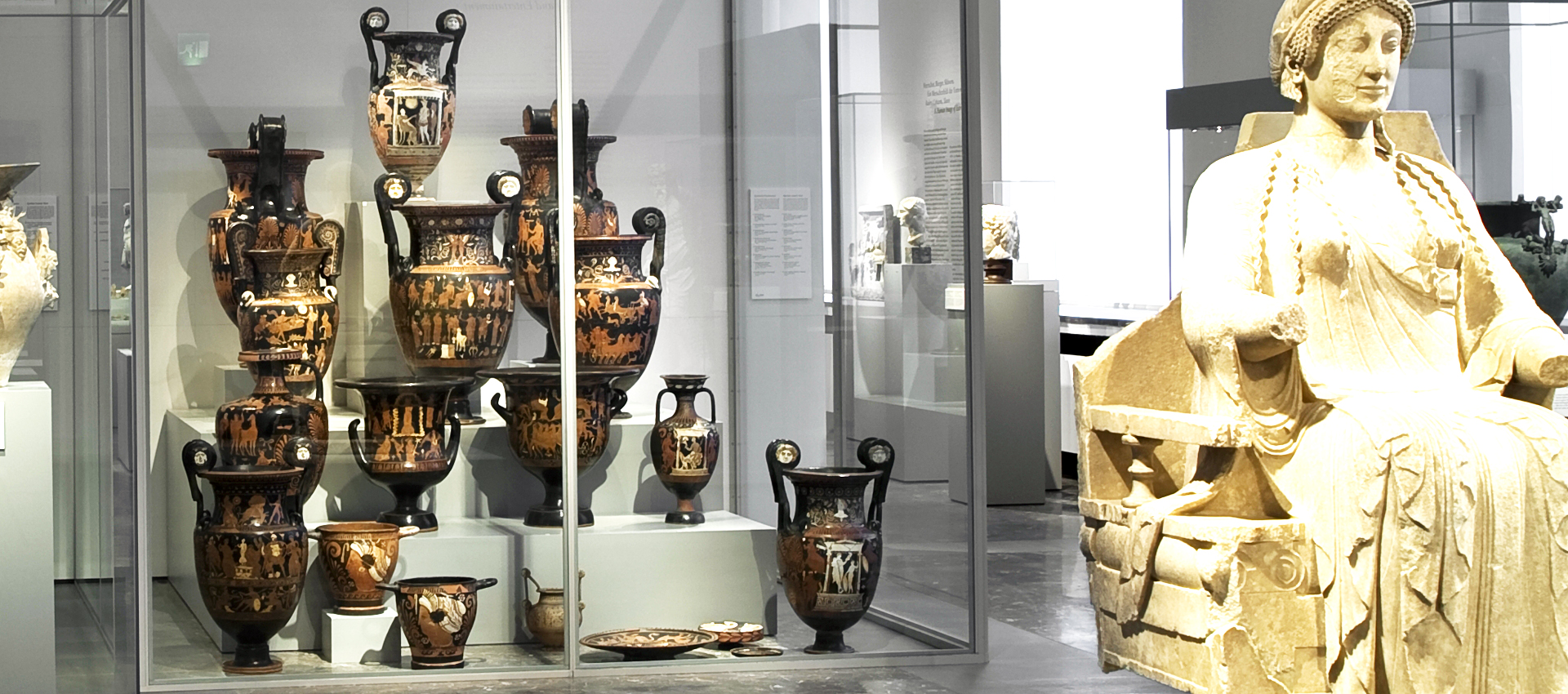
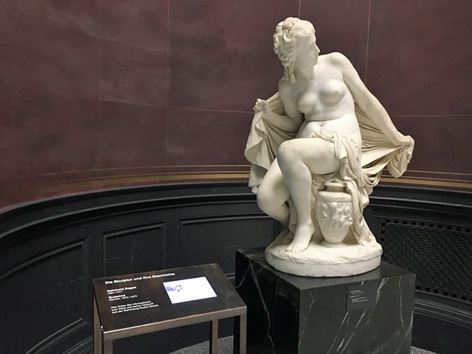
They were absolutely a highlight of the collection! Ever since the vases were in Berlin, they have been prominently displayed. That was already the case at the Charlottenburg Museum of Antiquities, where an entire room was set up especially for them. It was no different during the first exhibition at the Altes Museum from 1998 to 2010. Since 2011, the vases have stood directly behind the Goddess of Taranto, in a large display case, visible from almost all sides, beautifully arranged so that their full grandeur can be appreciated. That is a loss, no question about it.
These are vases of very high quality that stand out even within this genre – both stylistically and iconographically. One must also view the acquisition in the context of the time. Berlin was divided, and West Berlin possessed no Apulian vases, whereas East Berlin did. The East Berlin vases came from an old collection dating from the early 19th century. Today they are part of the unified collection, so the genre will continue to be represented. In that respect, the loss is significant, but not irreplaceable, because fortunately we have comparable pieces in the old collection. And now the loans are being added to that.
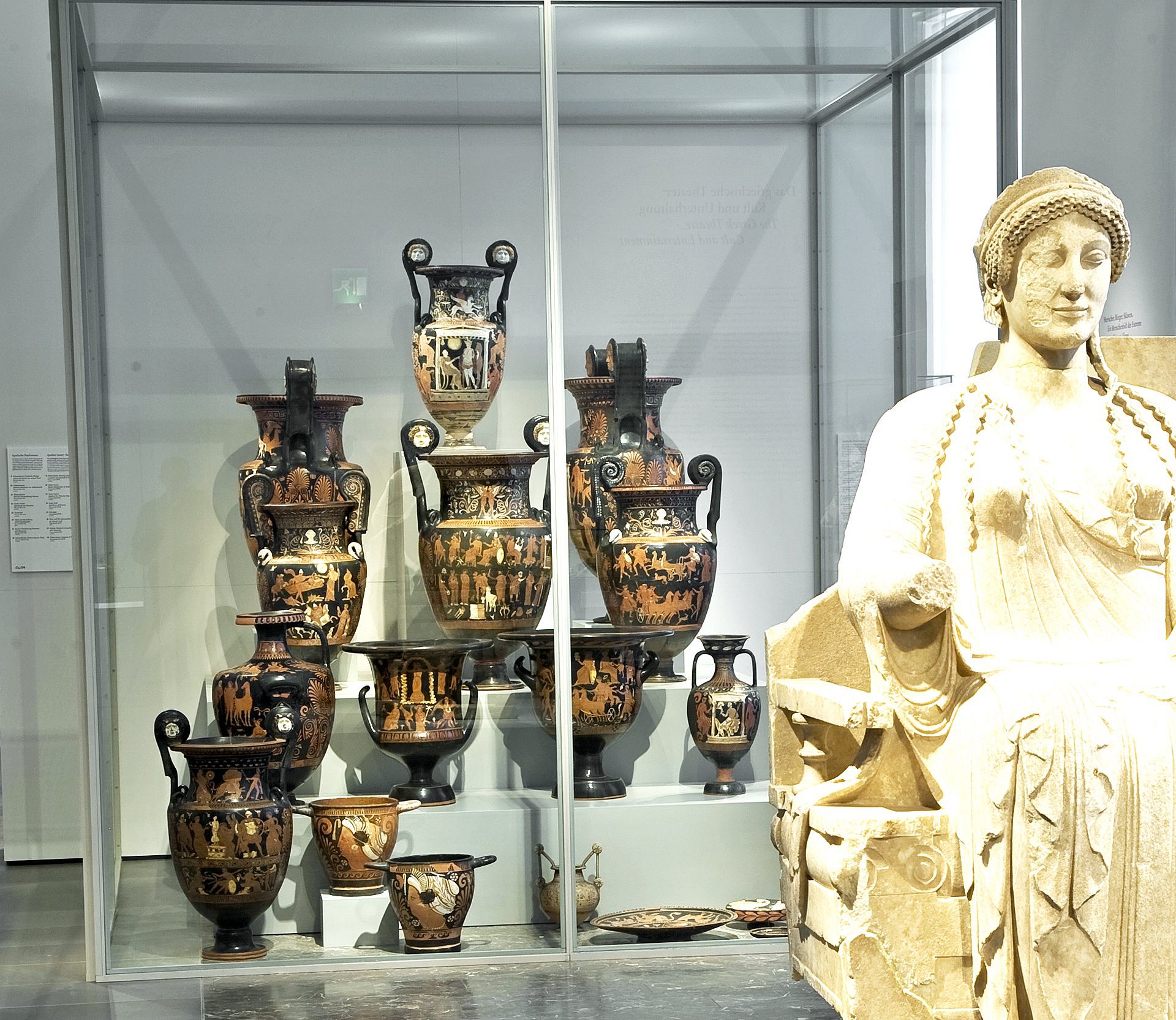
This highlight of the collection is returning to Italy: the Apulian vases in the Altes Museum© Collection of Classical Antiquities / Johannes Laurentius
Has it already been decided where and how the vases will be displayed in Italy?
Even the Italians probably can’t answer that yet. In Rome, there is a museum for treasures that have been repatriated from abroad. It is a very beautiful, octagonal, domed room within the complex of the Baths of Diocletian near the main station, Stazione Termini, which was refurbished a few years ago. That would be a possible venue. However, it is also possible that the vases will return to their region of origin. That is, to Apulia.