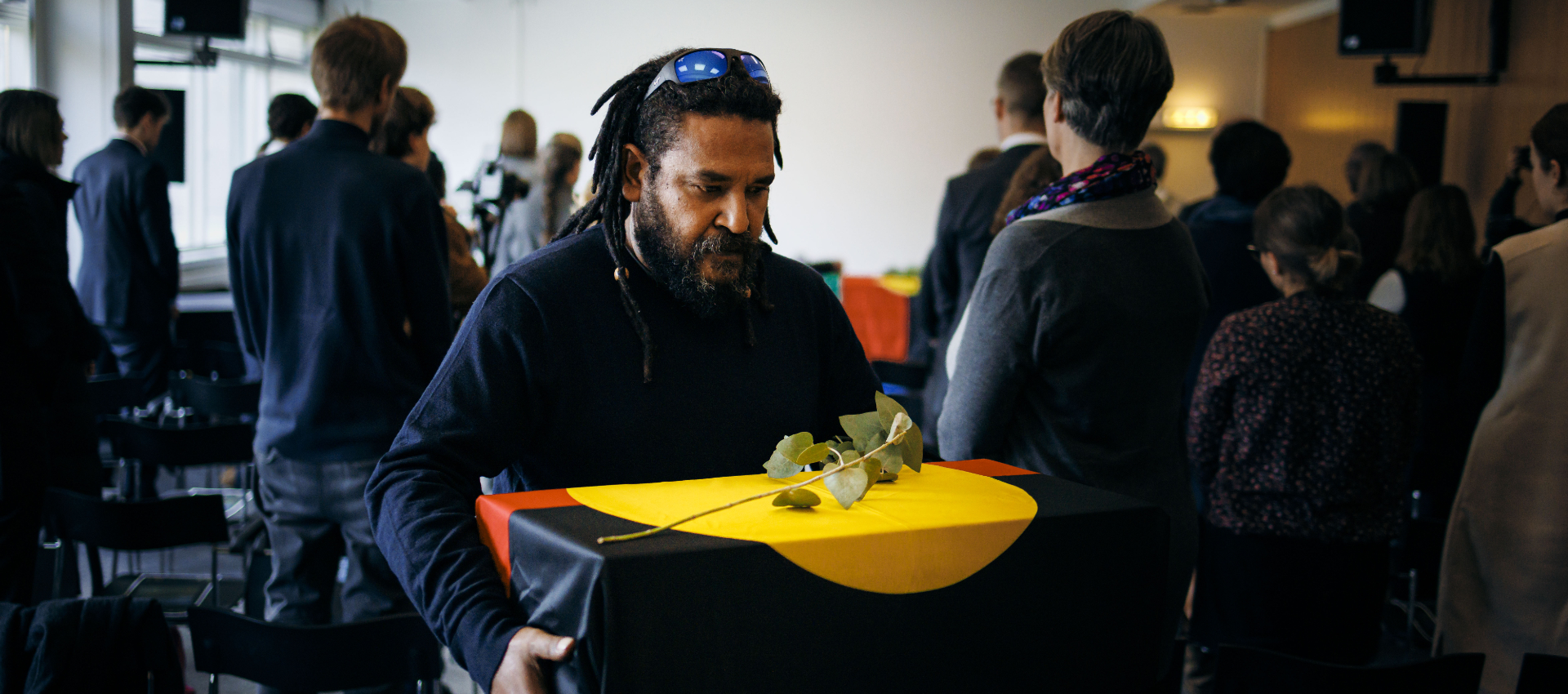
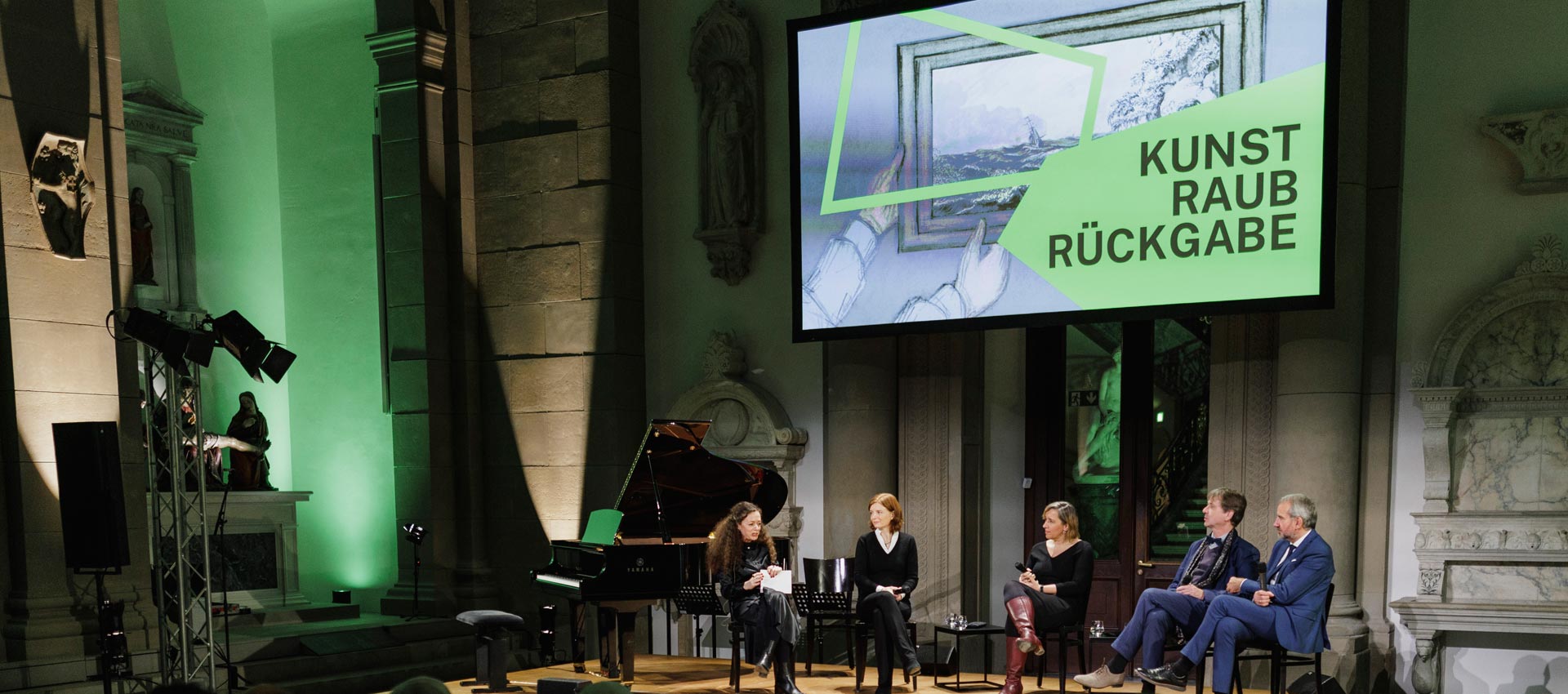
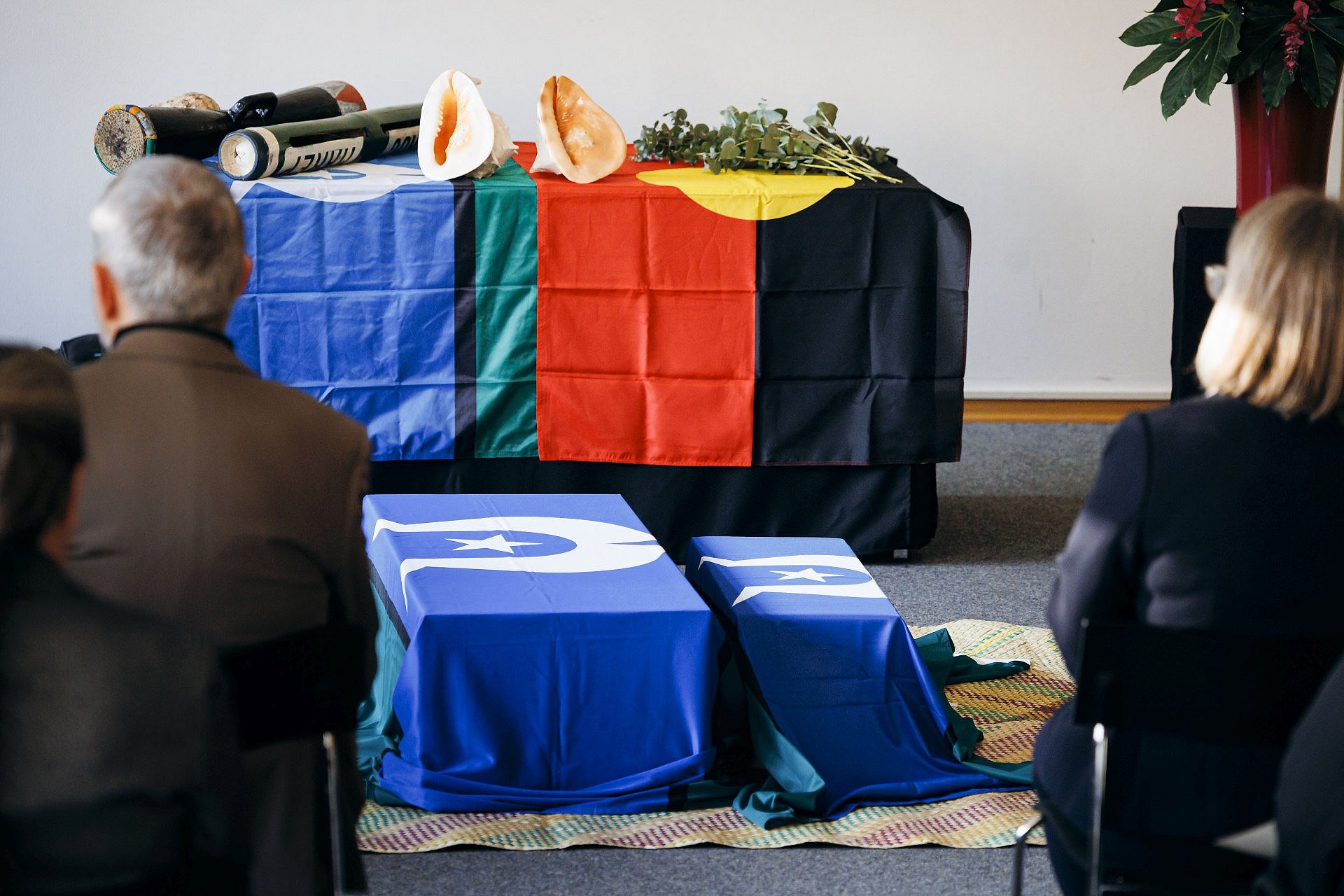
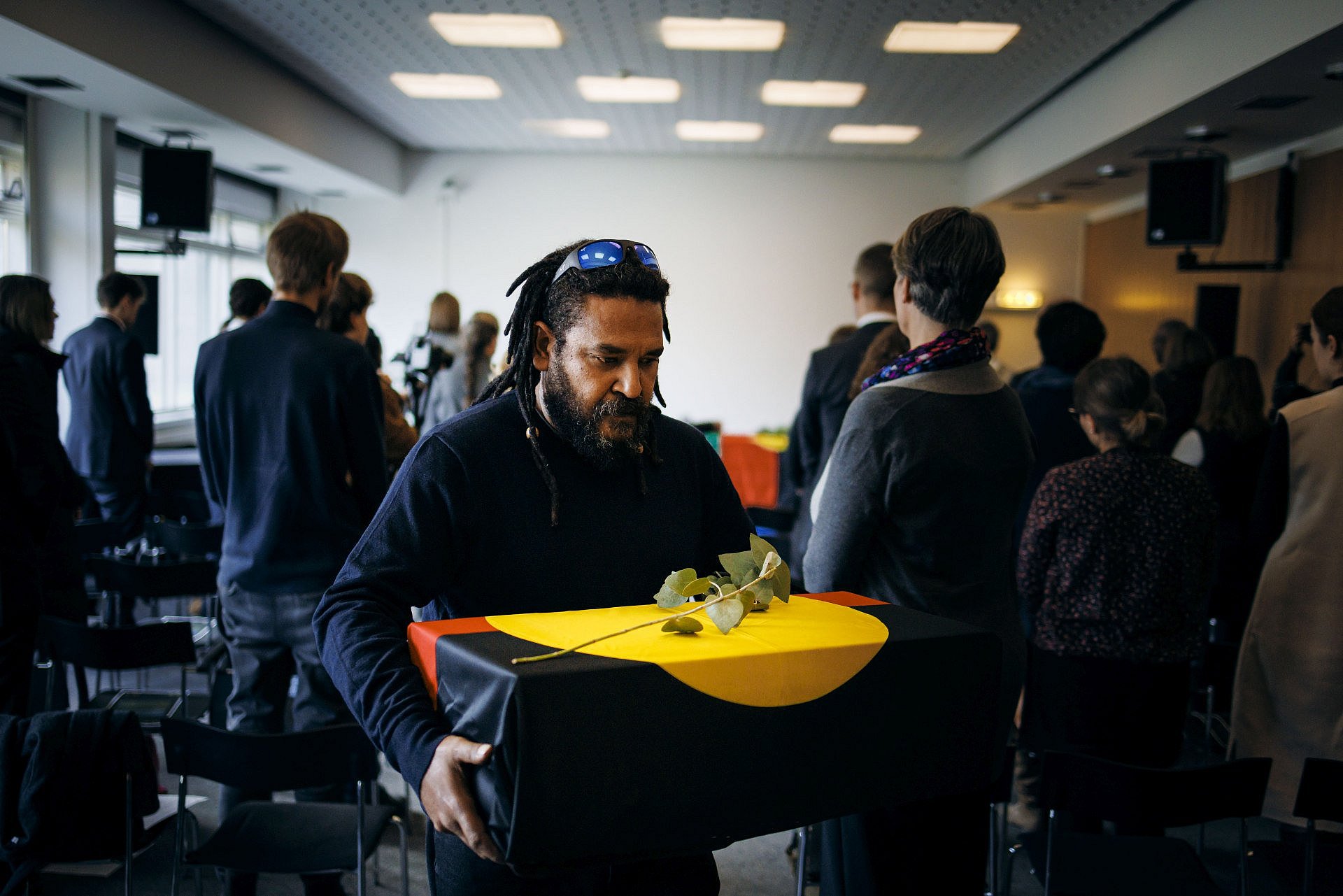
It marks the end of a long journey: after more than 140 years, human remains from the collection of the Ethnological Museum of the State Museums in Berlin have been returned to Australia in a formal ceremony. They were received by a group of men who had travelled a long way to witness this moment.
Having travelled far
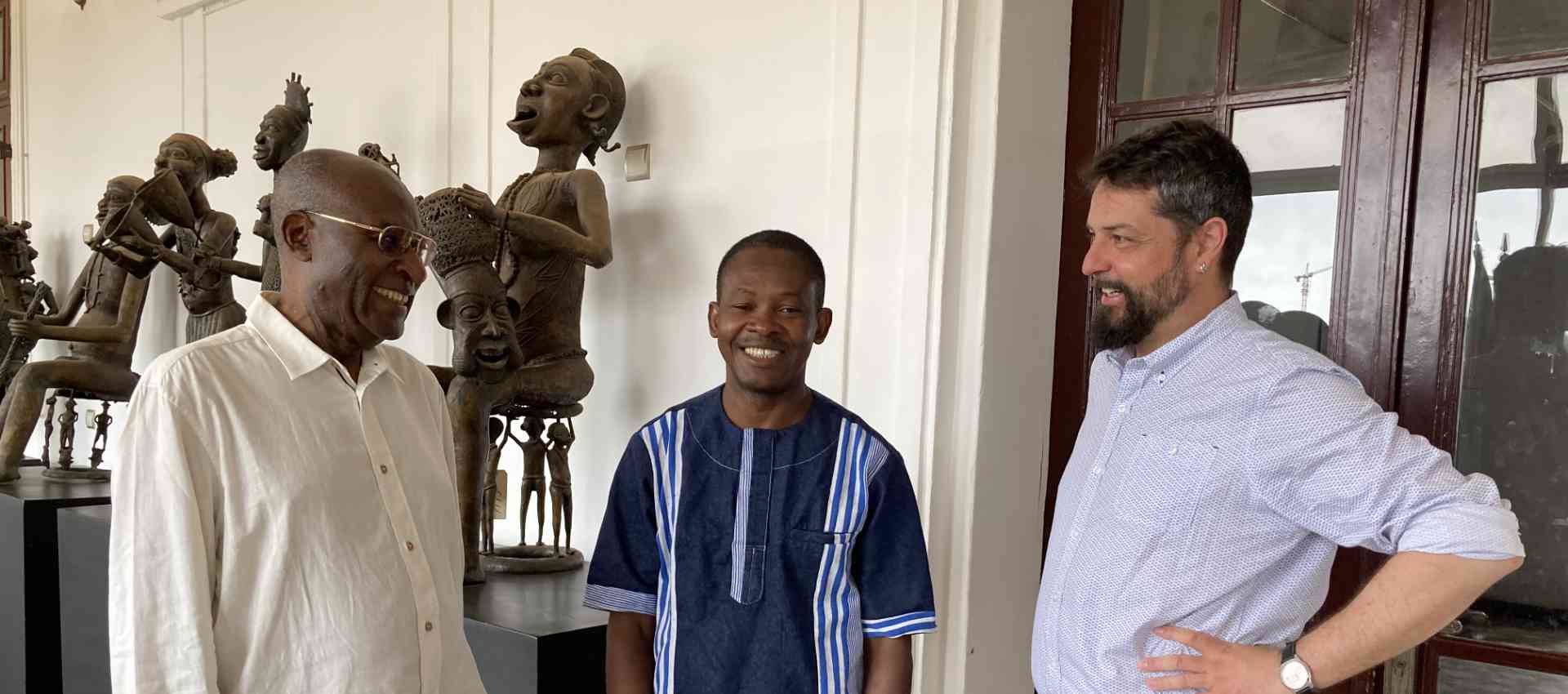
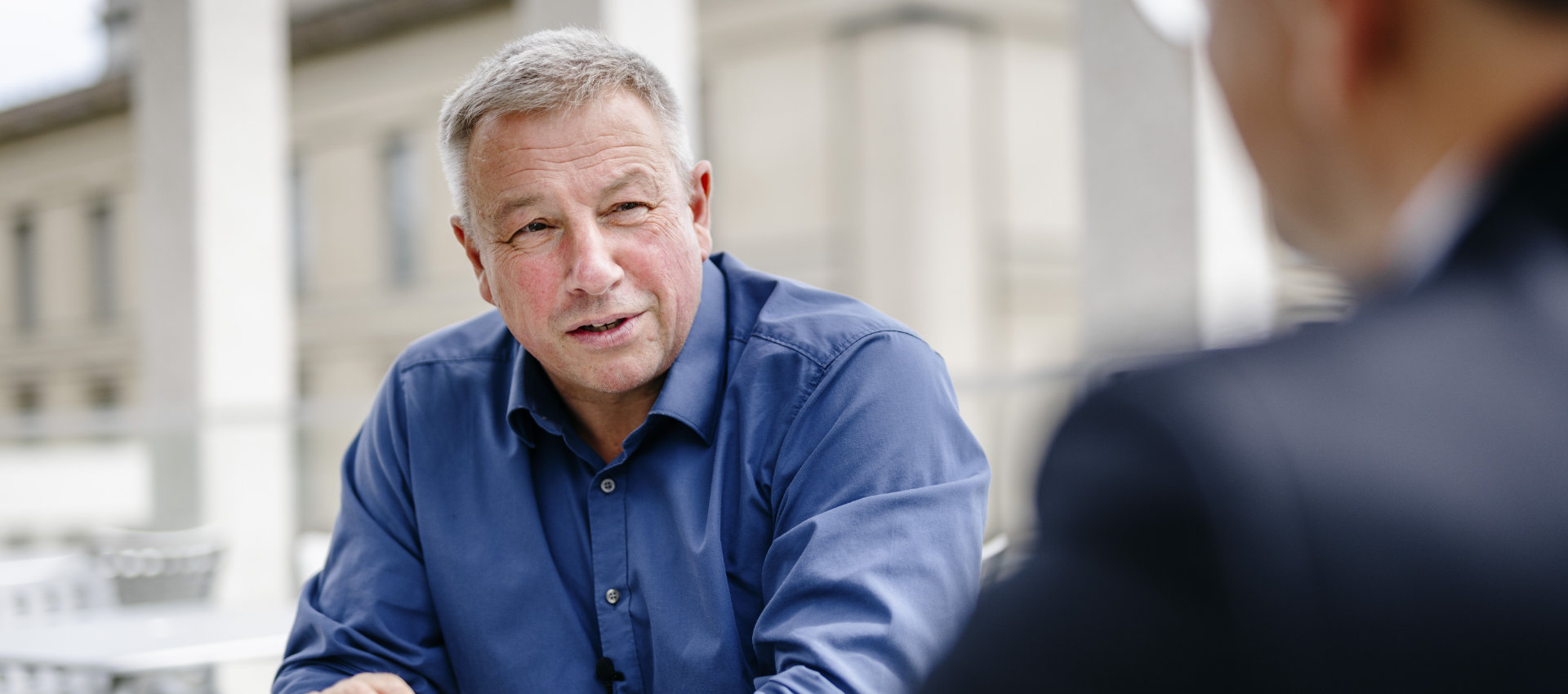
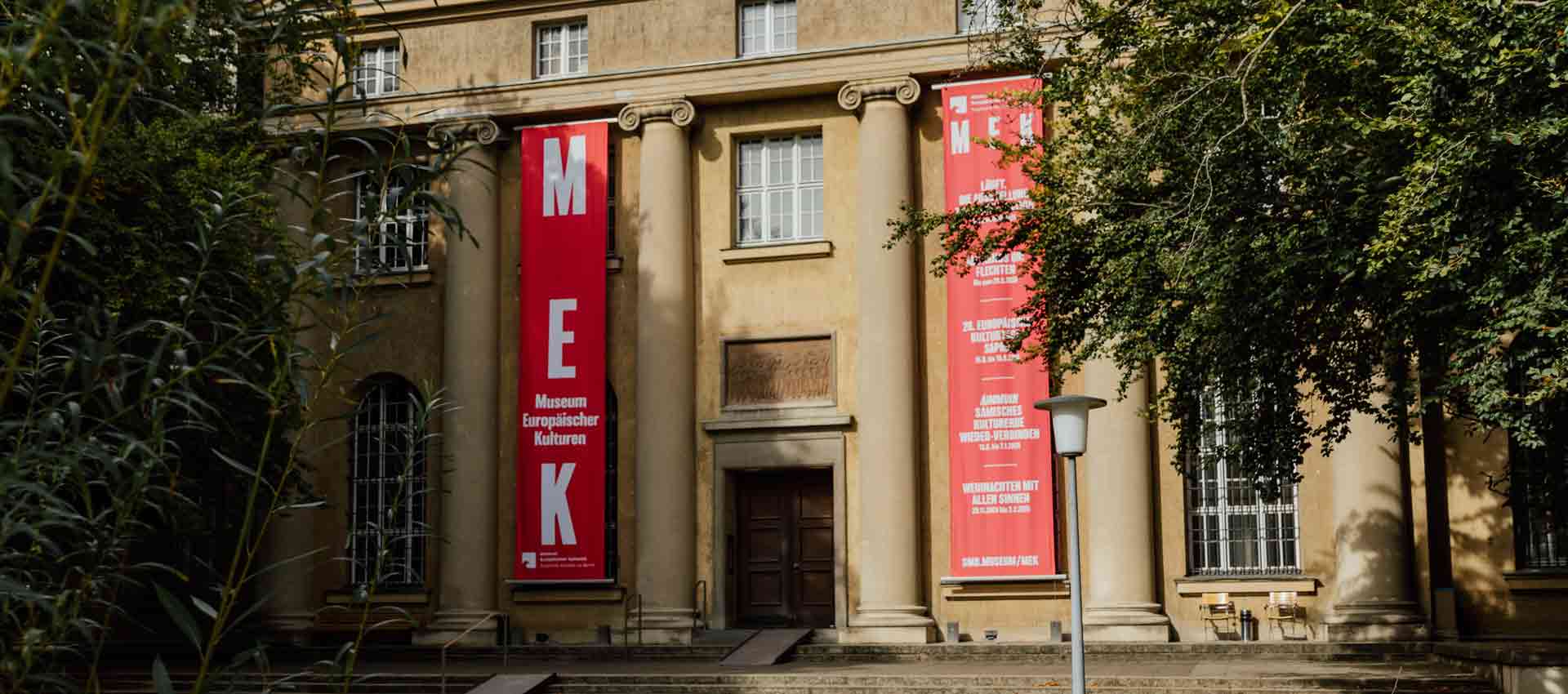
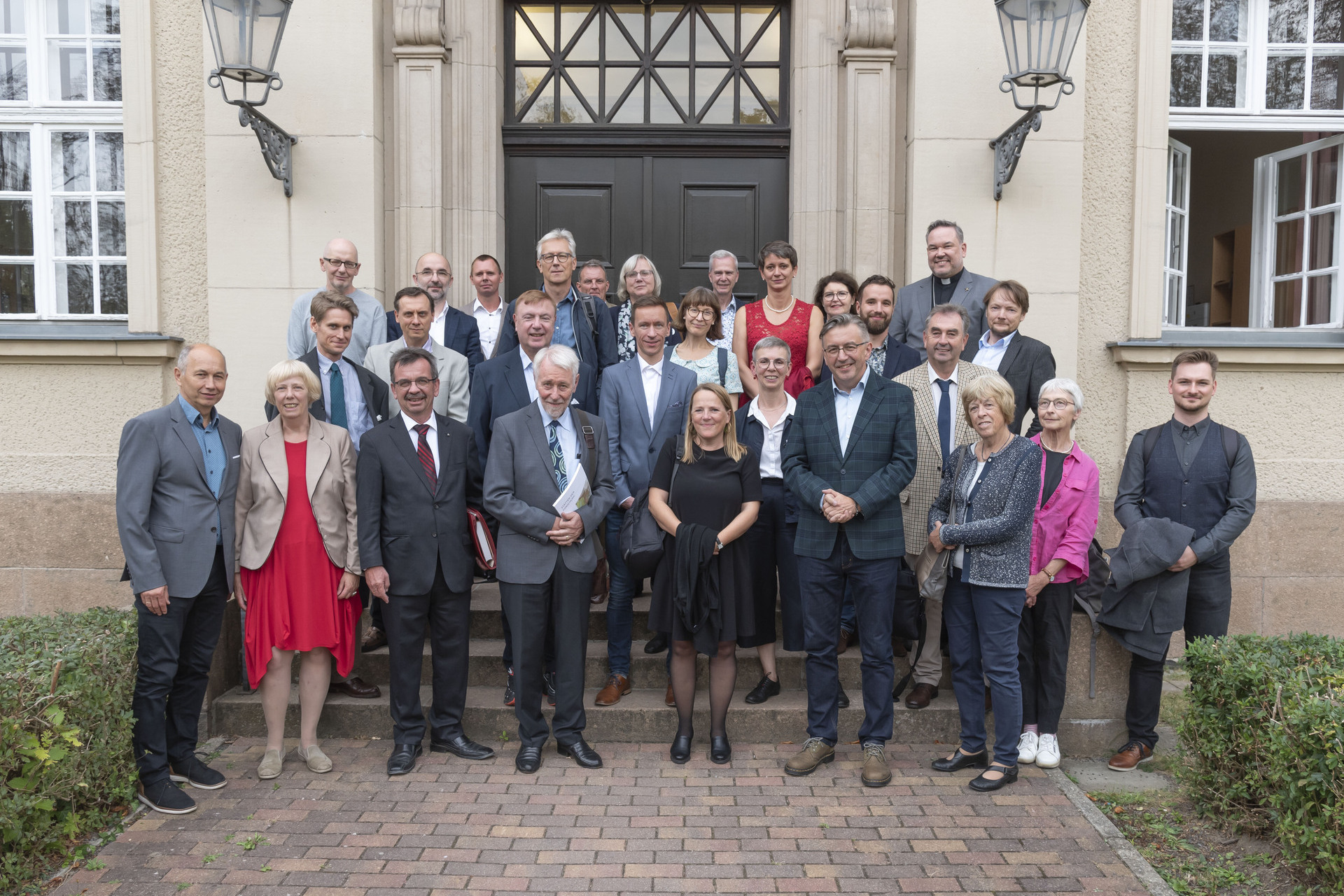
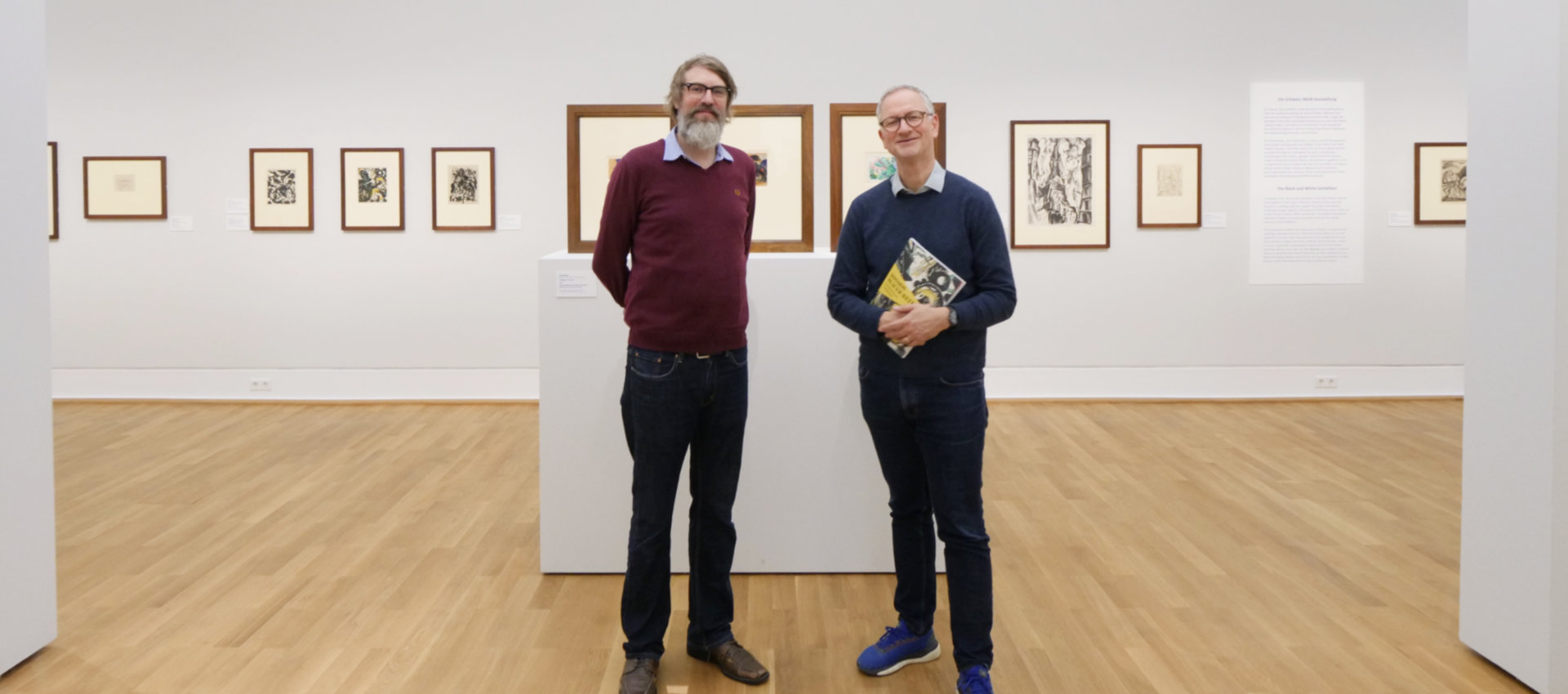
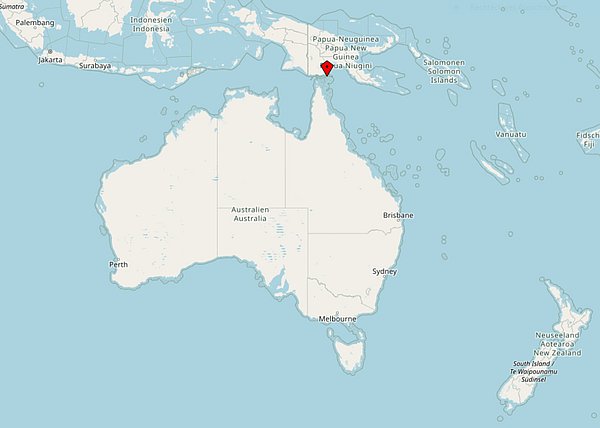
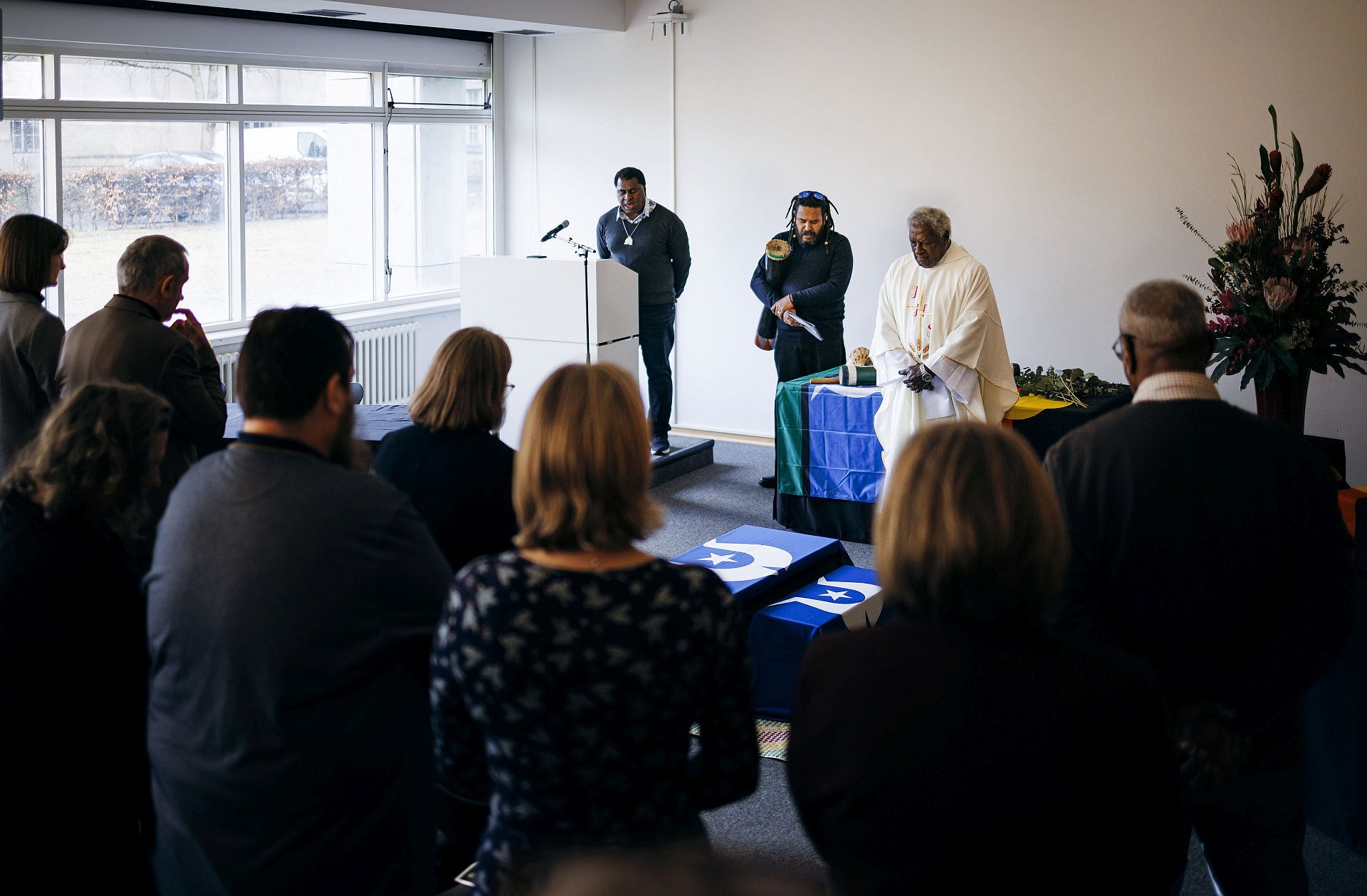
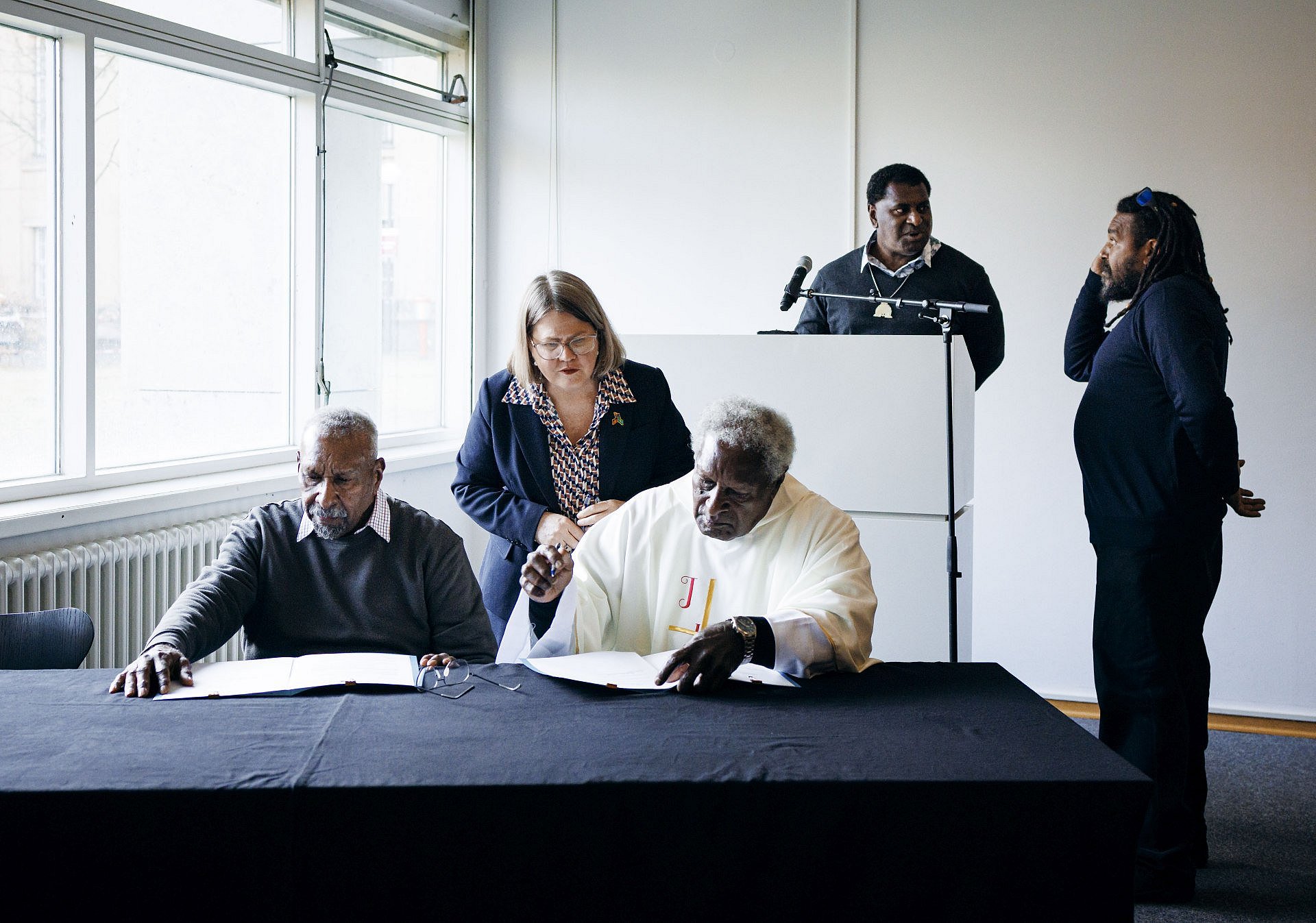
On a clear December morning in Dahlem: a group of people has gathered in the Ethnological Museum and is waiting eagerly. Among them are representatives from the worlds of culture, media and politics – and four men who have travelled a long way, 40 hours to be precise. They are representatives of the Ugaram Le people from the island of Ugar, part of the Torres Strait Islands, situated at the northernmost tip of Australia. Tomson Stephen, Father Daniel Stephen, Rocky Stephen and Yessie Mosby have made the long journey to cold Germany to receive a precious cargo and accompany it back to their homeland: the human remains of three of their ancestors. But how did these end up in Berlin, almost 15,000 kilometres away?
A painful loss
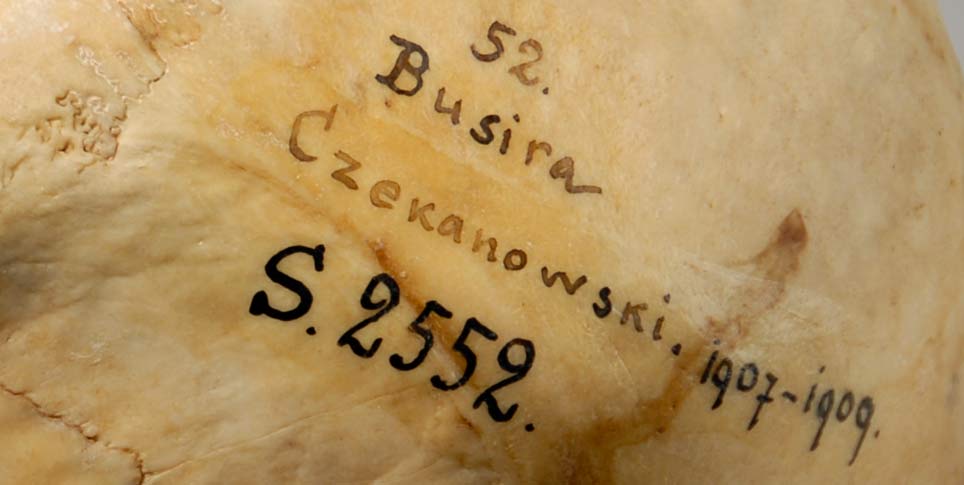
In fact, the three deceased have been part of the Ethnological Museum’s collection since 1880. They were acquired at a time when imperialism and colonialism had reached their zenith and European great powers were filling their collections with cultural artefacts and treasures from the Global South. These items were often of immeasurable significance to the cultures from which they were stolen, and the manner in which they came to Europe was all too often of a questionable nature.
The European mania for collecting did not even spare human remains: the three ancestors, who were returned to Australia together with two other deceased individuals from the Landesmuseum Natur und Mensch in Oldenburg, all originate from sacred burial sites and hold inestimable cultural and religious significance for the Ugaram Le. The loss left scars. The Ugaram Le who have travelled here speak repeatedly of their lineage, their ancestral group. The ancestors buried on the Torres Strait Islands are, for them, an integral part of their cultural heritage. Yessie Mosby uses the metaphor of a jigsaw puzzle with missing pieces to describe this.
A success story
The fact that some ‘pieces of the puzzle’ can now finally be put back together is also the result of tireless cooperation between all parties involved. The SPK has had its own guidelines on this matter for years and works with the communities of origin to facilitate the return of human remains. Australia supports members of the “First Nations”, which include the Aboriginal and Torres Strait Islander peoples, in their repatriation through a Repatriation Policy. The Queensland Museum, which played a key role in this repatriation, also has a special programme. As a result, 162 “First Nations” ancestors have already been returned to Australia from German collections alone.
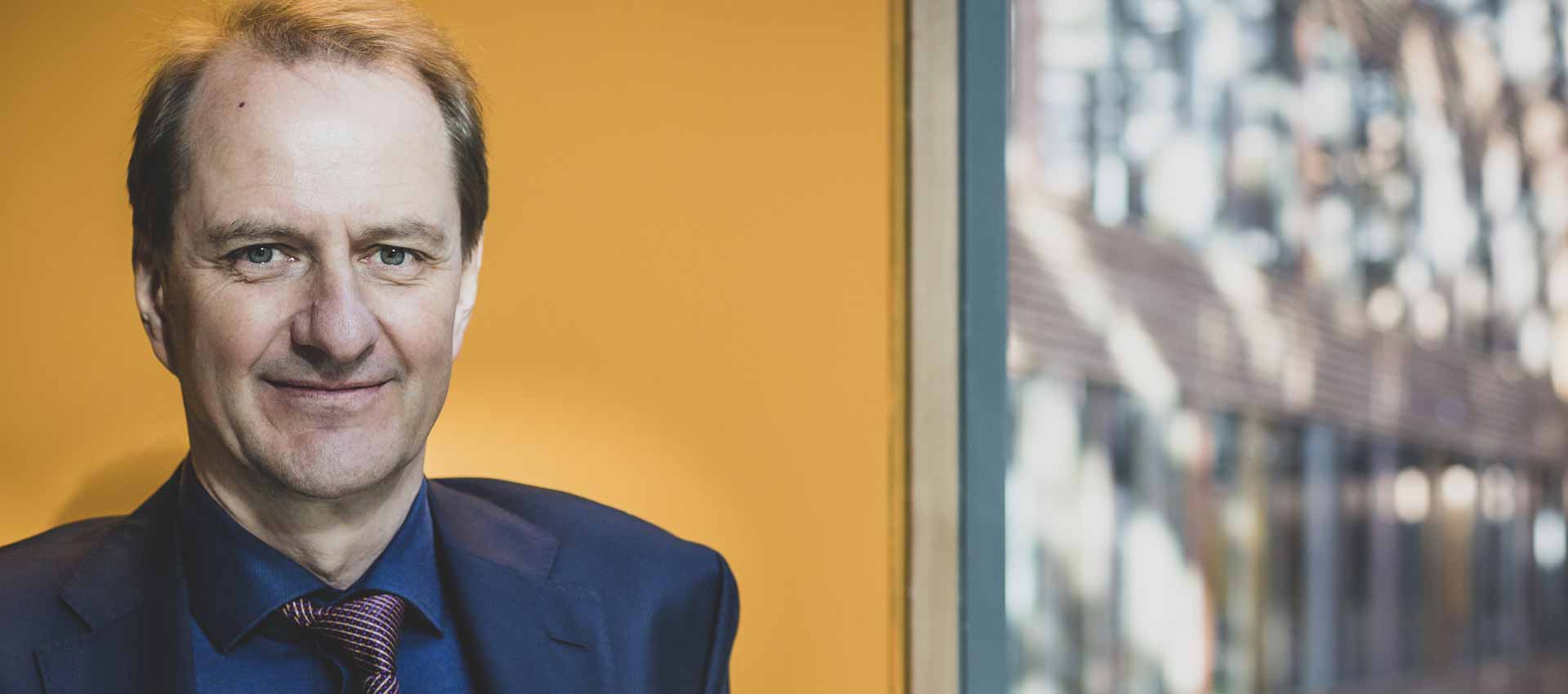
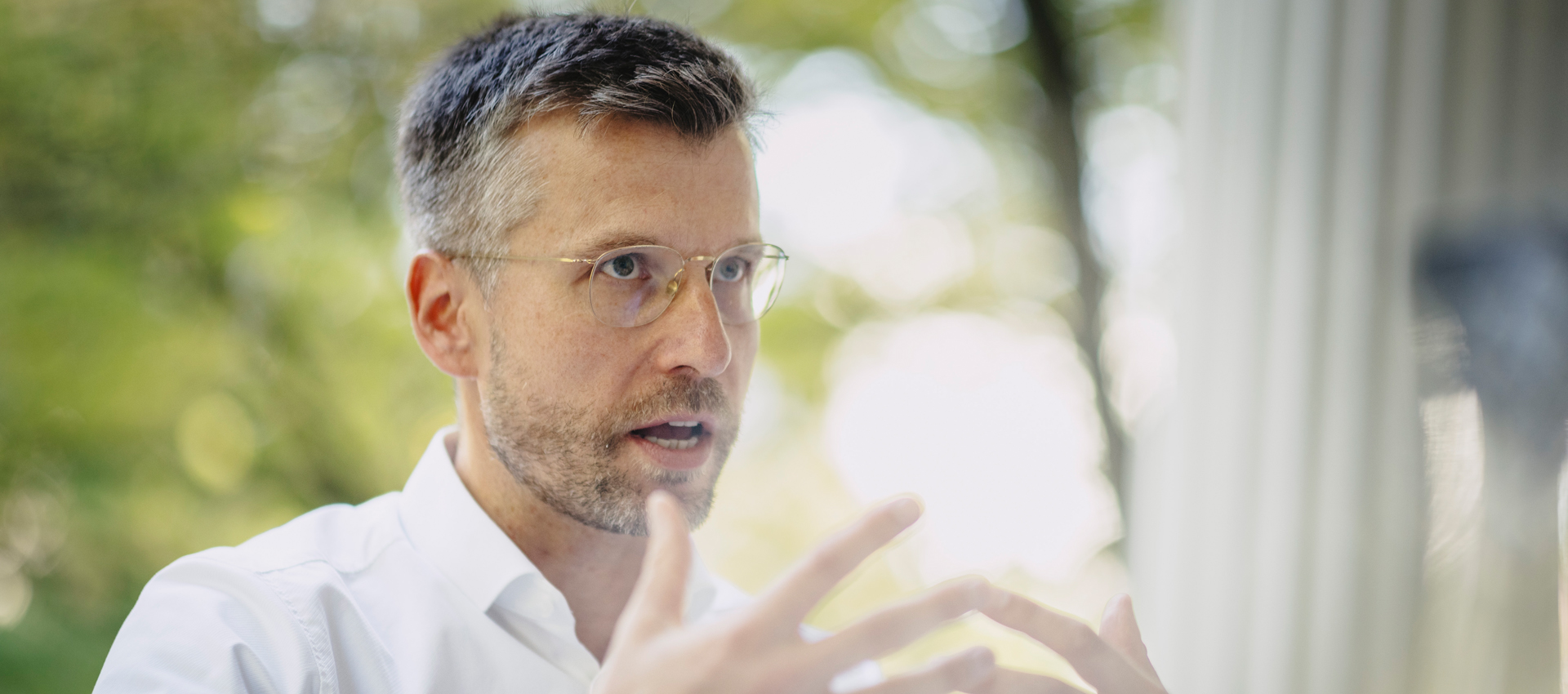
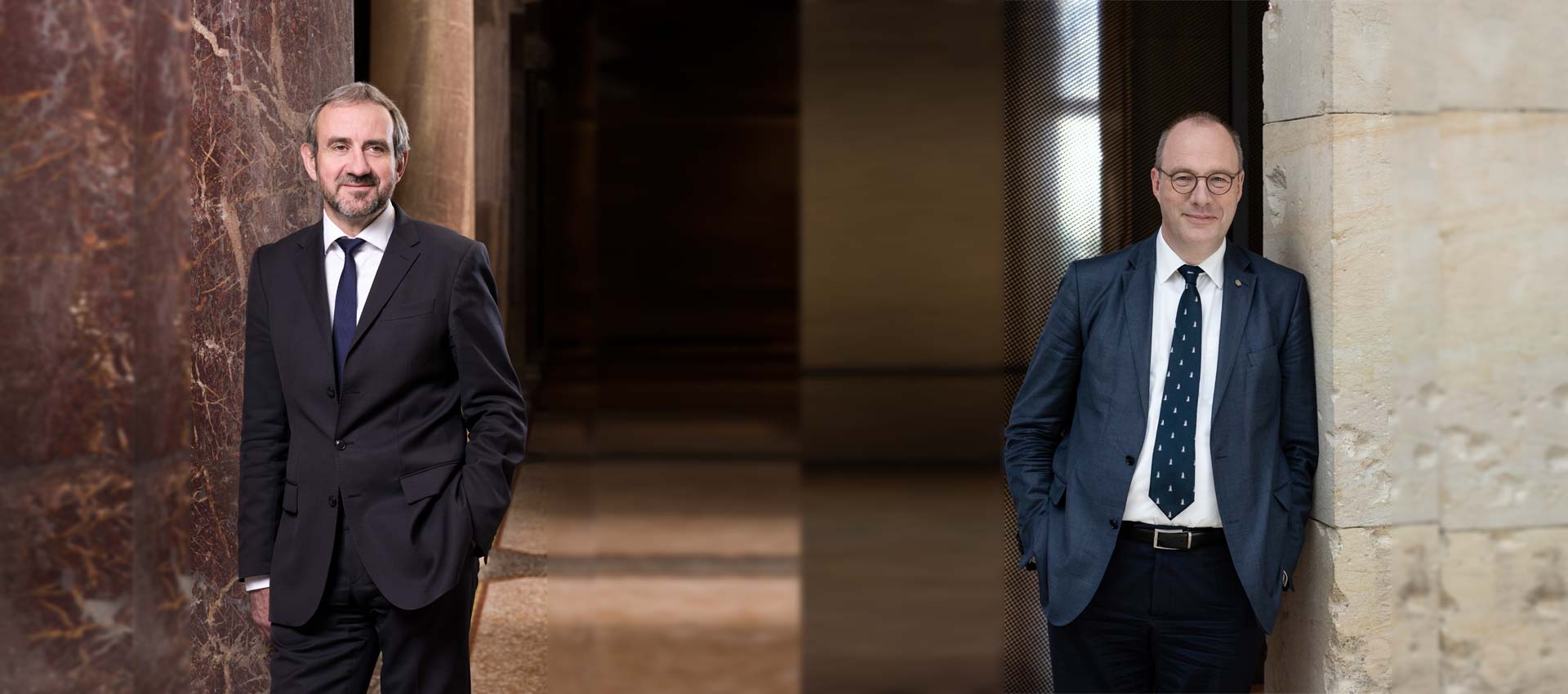
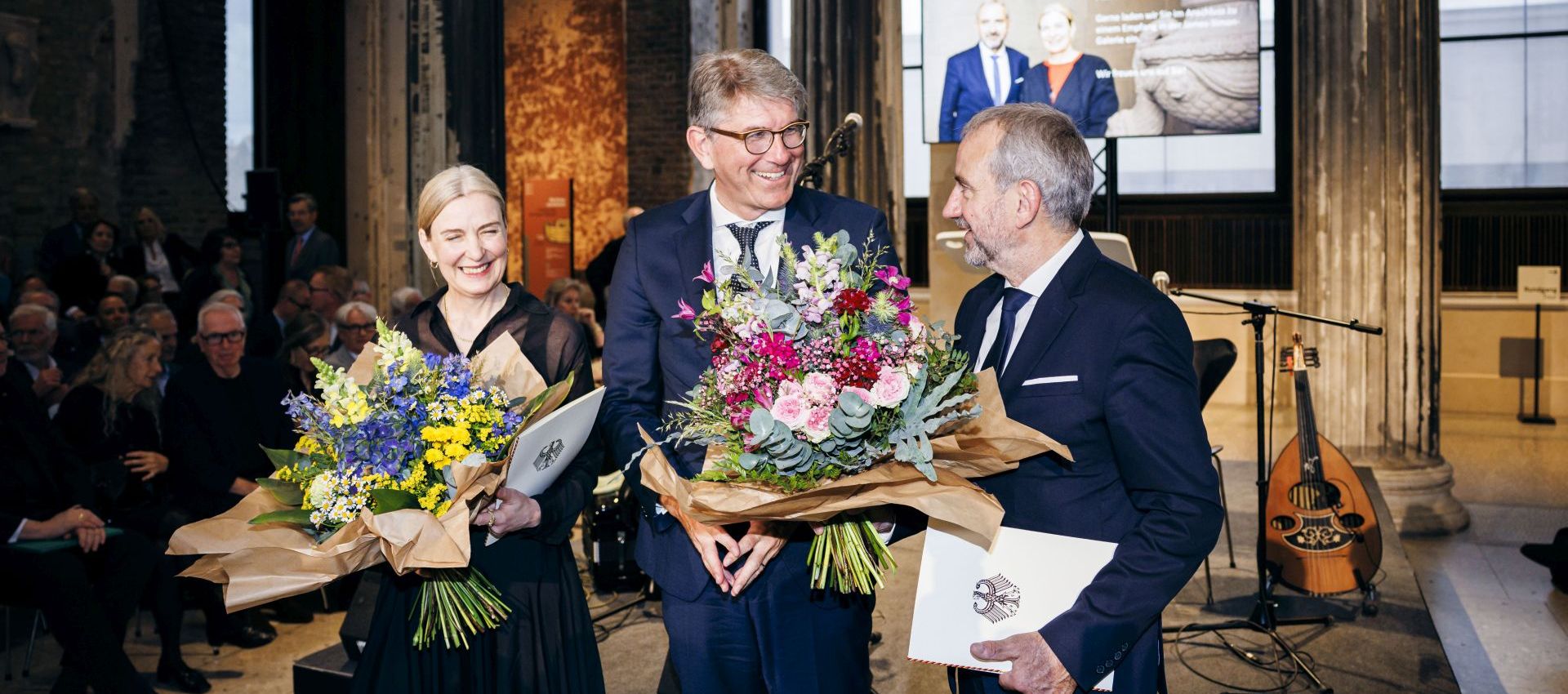
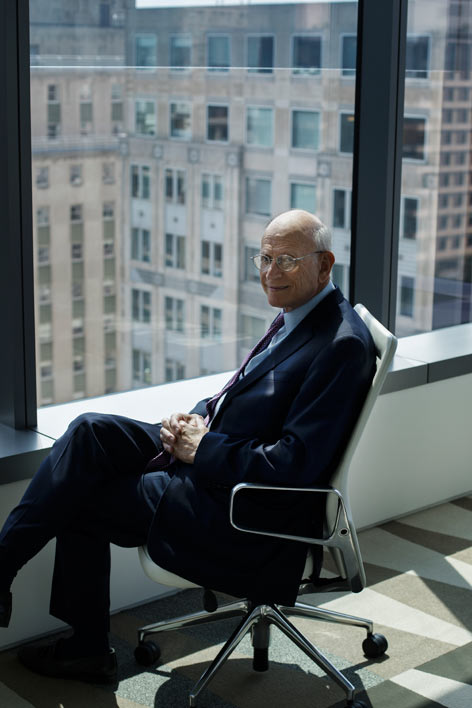
The joy and relief at the return are palpable during the ceremony. During some speeches, tears flow and voices break. SPK President Hermann Parzinger also speaks out clearly on a historical injustice: “They should never have ended up in our museum.” Missionaries, ethnologists and adventurers, driven by greed and a thirst for recognition, stole the human remains of Indigenous Australians and sold them on. They eventually ended up in European institutes and museums for “racial” studies. Here they have had to endure a long time far from home, witnessed two world wars, and can now finally return. For Tomson Stephen, it is “part of the process of redress and truth-seeking in Australia regarding past injustices against the ‘First Nations’”, who were oppressed for centuries.
They should never have been allowed into our museum
Hermann Parzinger
There is still much to do!
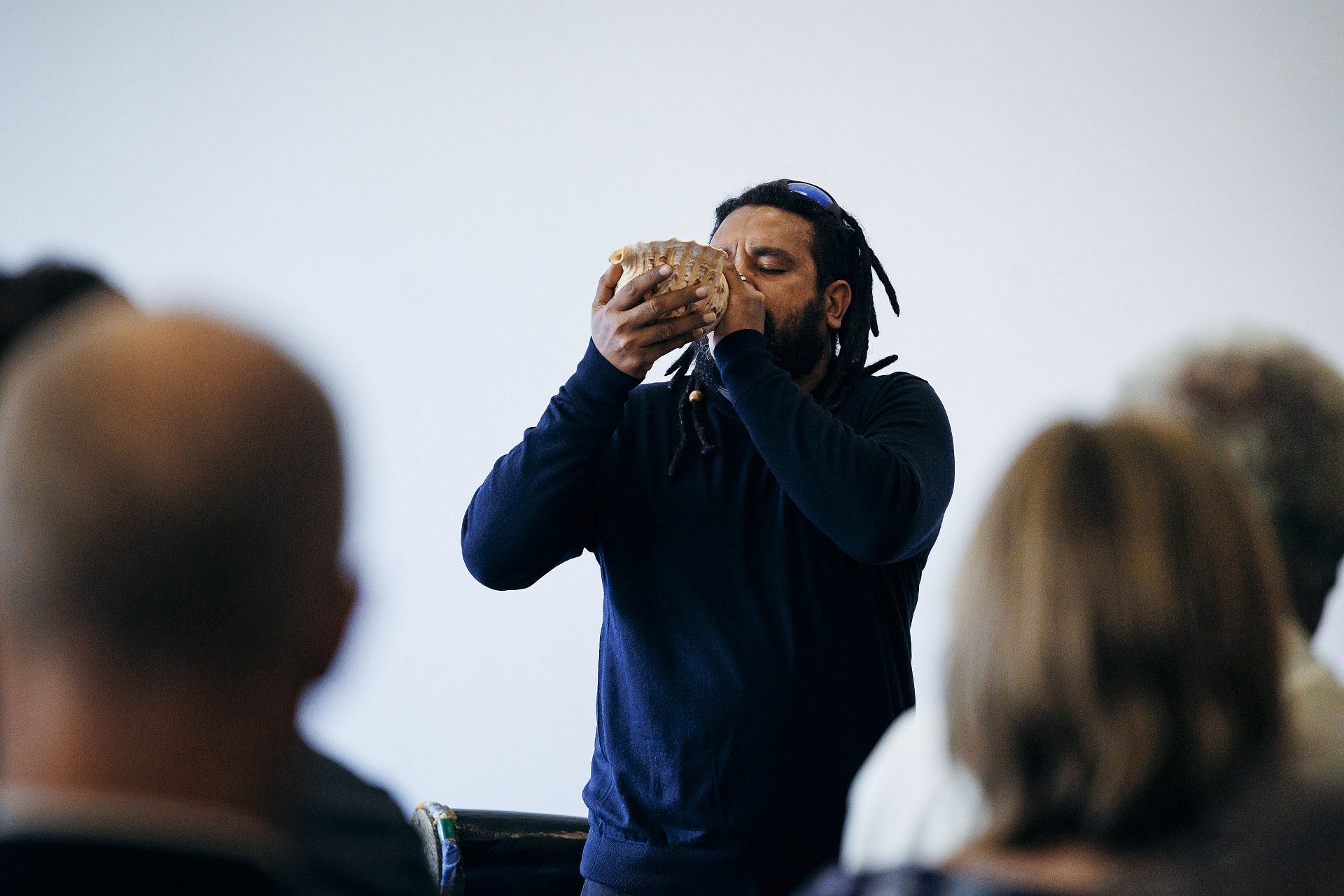
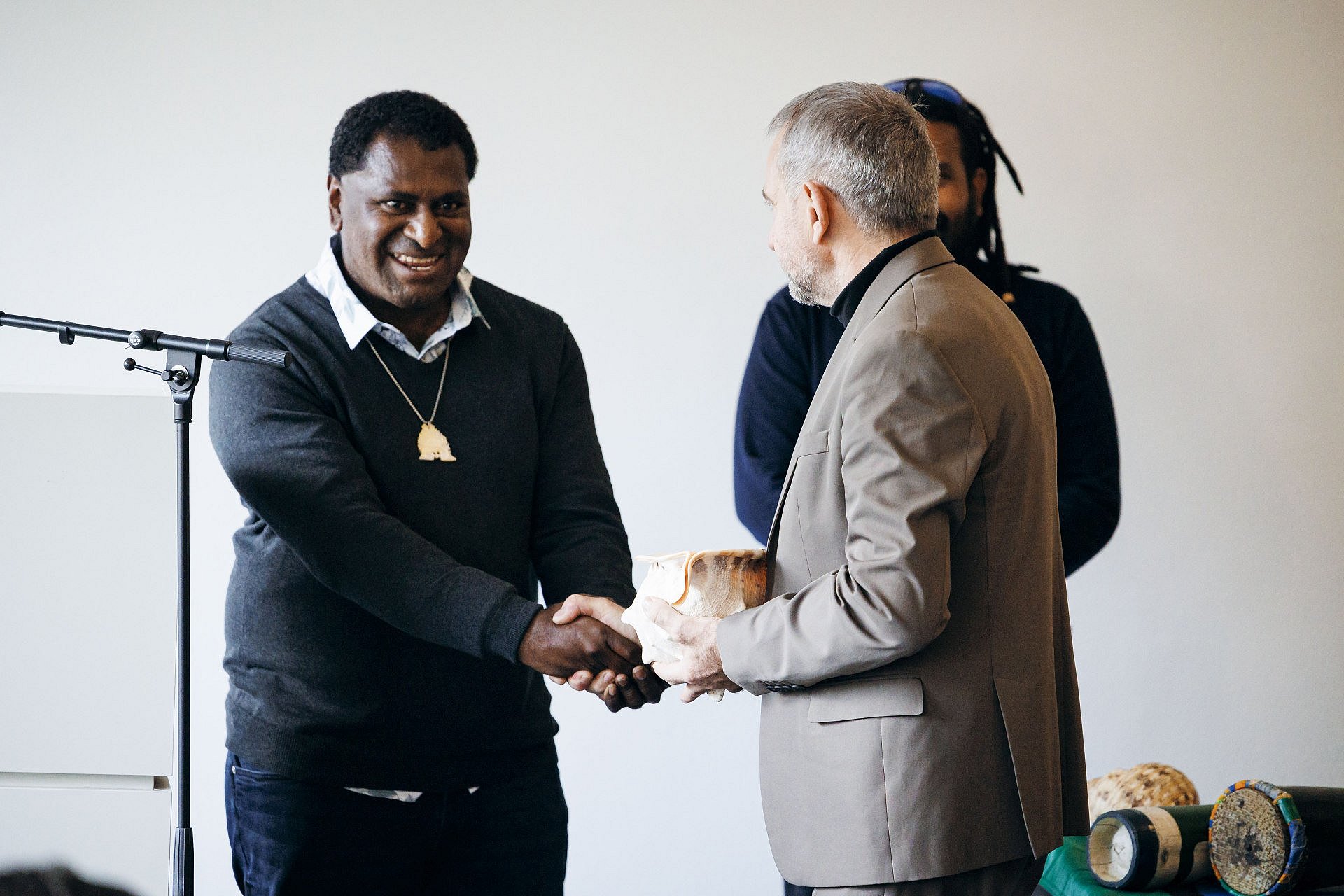
Following the solemn ceremony, which was accompanied by music, singing, a sermon and a blessing by Father Daniel Stephen, Rocky Stephen presented Hermann Parzinger with a gift: a conch shell made from the shell of a large sea snail. The ceremony was heralded and concluded with the blowing of the conch. The SPK President is visibly moved and promises that it will be given a special place in the Ethnological Museum – also to commemorate this historic moment. A moment that highlights just how important provenance research is. From the former German colonial sphere in the Pacific alone, there are over 1,200 human remains in the SPK’s collections. So there is still much to be done!
"Human Remains" at the SPK
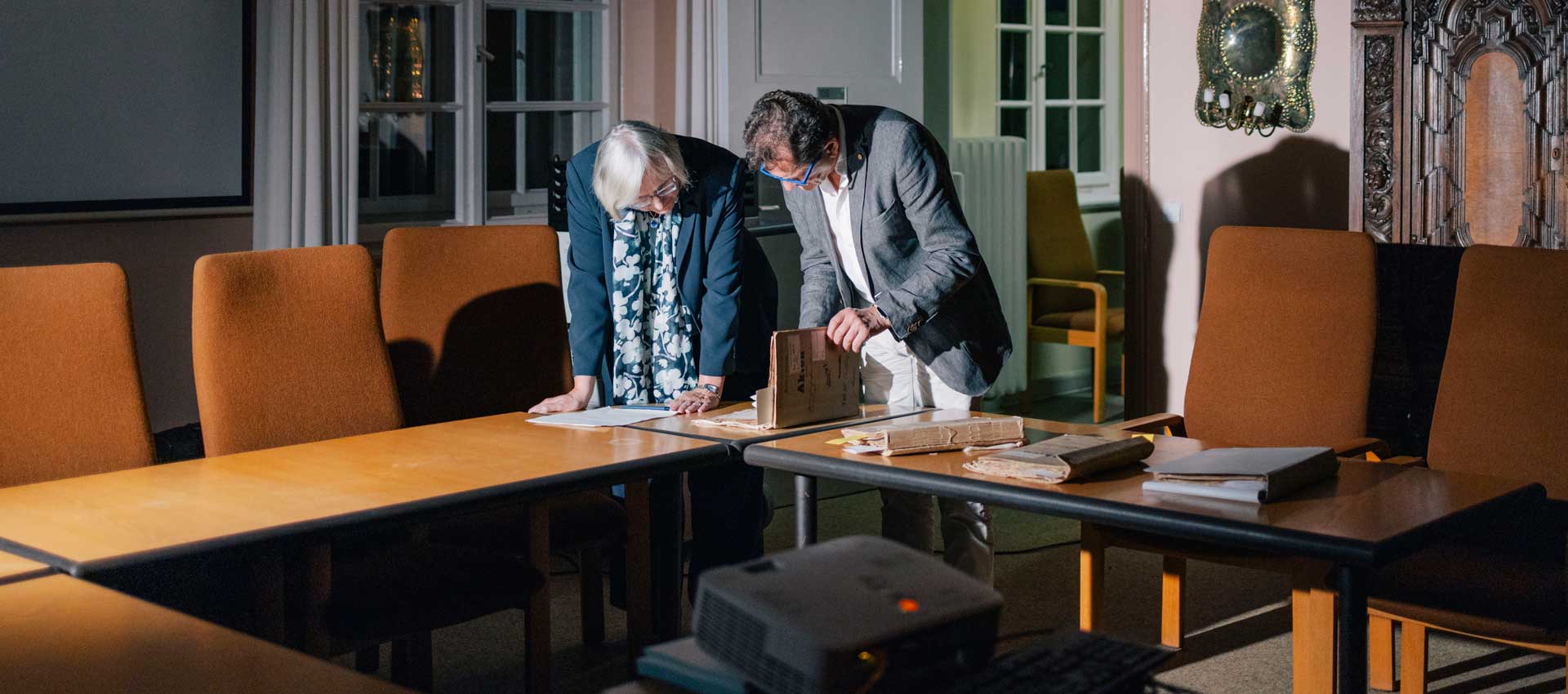
Human remains in museum collections require particular sensitivity. The Berlin State Museums also hold such so-called human remains. The SPK has developed a set of guiding principles for dealing with them.
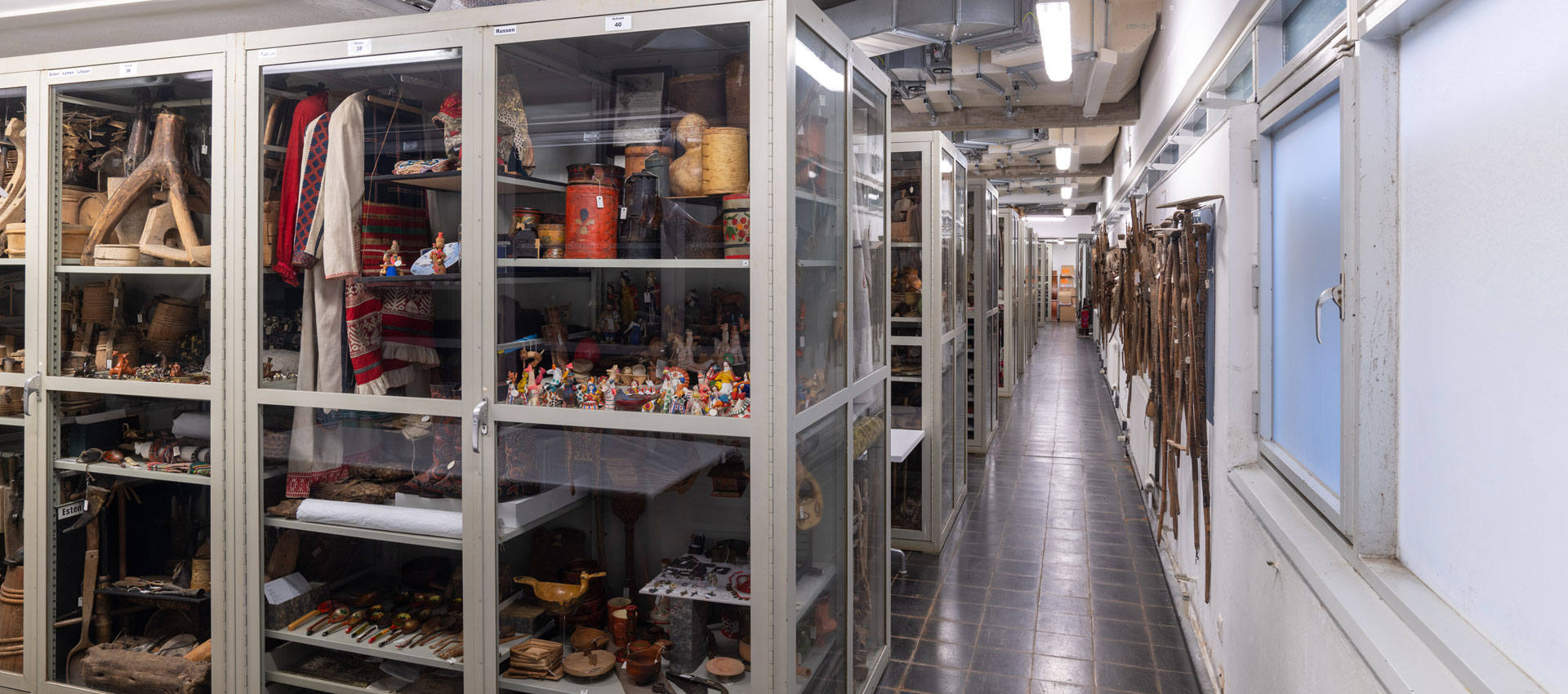
The extensive cultural-historical collections of the Staatliche Museen zu Berlin include, amongst other things, human remains. These may include skeletal parts, such as archaeological finds from graves or ethnological objects like bone flutes, or human hair or skin, which in some cultures were also incorporated into artefacts. In 2011, the SPK also took over an anthropological collection from the Charité Museum of the History of Medicine, the so-called Luschan Collection.
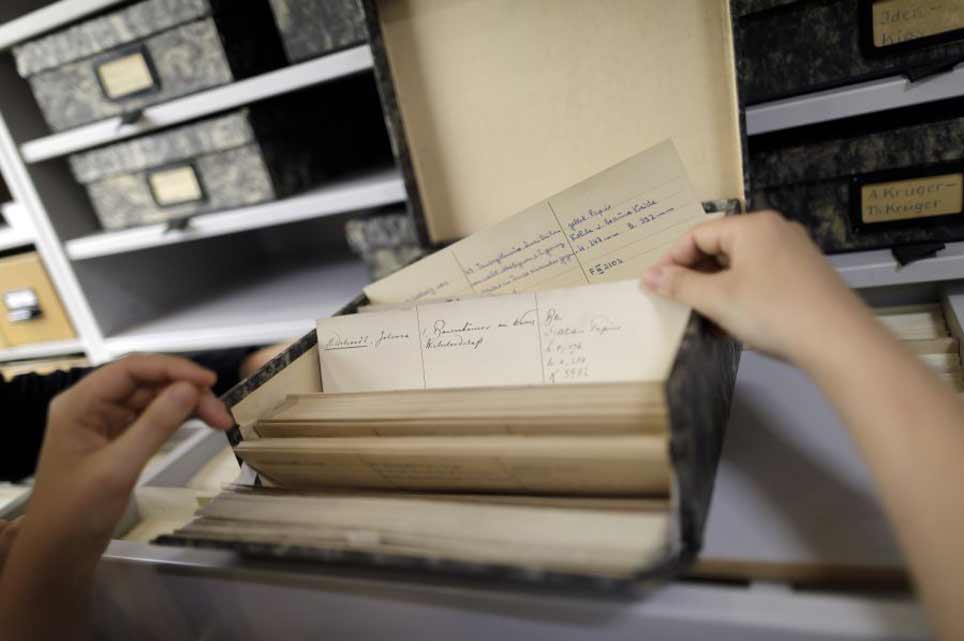
Against this background, the SPK has developed a basic policy on the handling of human remains in its collections. It contains guidelines for the storage of human remains, for their scientific handling and for their inclusion in collection displays. The Foundation’s aim is to gradually clarify the provenance of all human remains in the collections so that responsible decisions can then be made regarding their future handling. In doing so, every effort will be made to find a solution that is appropriate to each individual case.