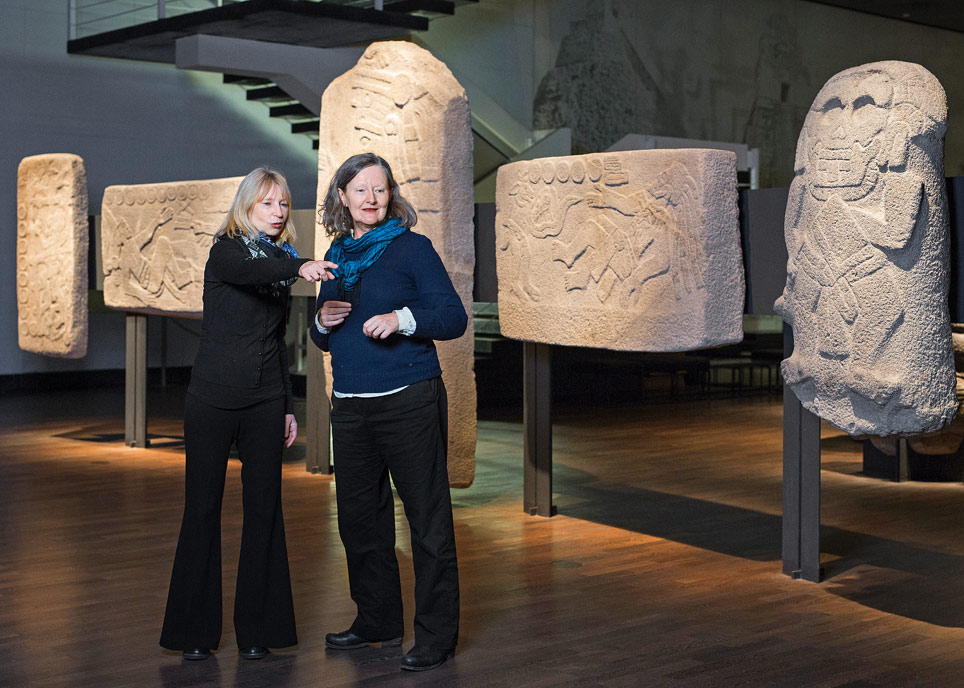
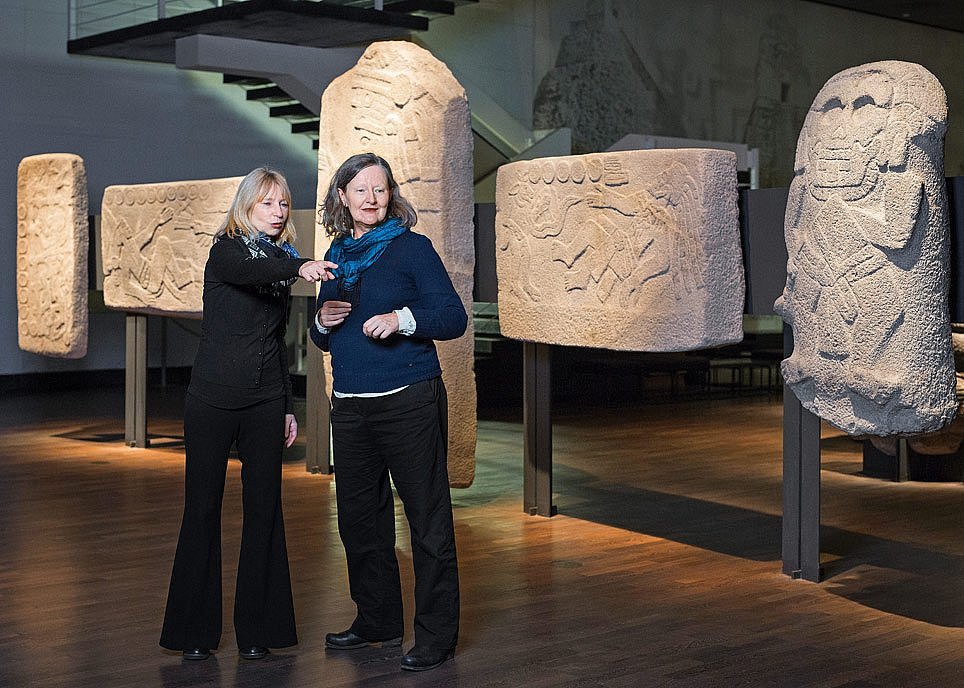
There will be a cinema at the Humboldt Forum. Viola König, Director of the Museum of Ethnology, and Maryanne Redpath, curator of the Berlinale’s special programme ‘Native’, discuss what might be shown there.
Since 2013, the Berlinale has featured the special programme “Native. A Journey Into Indigenous Cinema”. For the Ethnological Museum of the Staatliche Museen zu Berlin, this is an ideal partner for fostering a better understanding of its own collection. The director of the Ethnological Museum, Viola König, talks to “Native” curator Maryanne Redpath about the similarities and differences between the museum and the cinema.
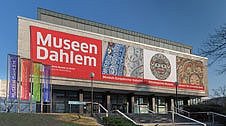
Ms König, the Ethnological Museum is still based in Dahlem. However, your museum will close on 8 January 2017, only to reopen in 2019 at the Humboldt Forum. What are your plans for the period leading up to the reopening?
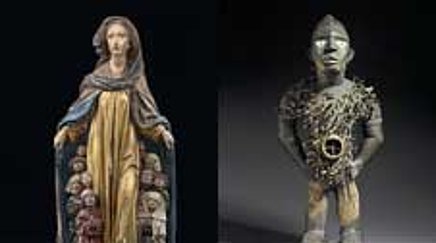
Viola König: We will have to close the exhibitions in the meantime, but we will remain what we are world-renowned for: a research centre. This means that registered visitors will continue to have access to the study collections and storage facilities. In addition, three exhibitions a year are planned in the temporary Humboldt Box until the opening of the Humboldt Forum. These exhibitions are something of a module for testing new interdisciplinary approaches. And then there will also be a number of highlight projects through which we will find temporary accommodation with our colleagues on Museum Island. In 2017, for example, we will be presenting African sculptures at the Bode Museum.
Ms Redpath, you are the curator of the Berlinale’s special programme ‘Native’. What does this name refer to?
Maryanne Redpath: With “Native – A Journey into Indigenous Cinema”, we have been focusing on indigenous cinema since 2013. The idea was conceived during a trip to Australia together with Dieter Kosslick, the director of the Berlinale. Kosslick was on board with great passion right from the start. That was important, because a special series like this is a complex undertaking. Developing a profile for it takes time. Every other Berlinale year, “Native” focuses on a specific regional theme. Initially, it featured films from Australia, New Zealand, the USA and Canada. This was followed by Indigenous films from Latin America. And for the next Berlinale in 2017, the focus will be on films from the Arctic. So it’s an exciting adventure we’ve embarked upon.
What does the collaboration between the Ethnological Museum and the “Native” film series look like?
Redpath: There has been a convergence between the two institutions right from the start. Over the years, we have increasingly considered how we can complement one another and work together.
König: During many of my earlier visits to the Berlinale, I had wishes and visions that couldn’t be realised due to a lack of contacts. The proportion of non-Western films has risen sharply over the last 15 years – from China, New Zealand, Latin America, Iran or Turkey. Many have won awards and have come increasingly into the media spotlight with each passing year. What I felt was missing, however, was professional
support for the content. I racked my brains for a long time over how this could be changed. And right in the middle of these deliberations, Maryanne and her ‘Native’ series came along, as if sent from heaven. It was a meeting of two needs, accompanied by a different kind of experience.
Our partnership is far from over
Redpath: The collaboration is very interesting. Of course, it also highlights the differences between our institutions. But I think such differences are a good thing.
König: Through this collaboration, we see opportunities to work differently with our extensive collections and the vast film archive. We can establish a direct link between them and the present day, thereby re-examining them. Much of what we have in our collections can actually be seen in the films. Our collaboration is far from exhausted.
König: Through this collaboration, we see opportunities to work differently with our extensive collections and vast film archive. We can establish a direct link between them and the present day, thereby re-examining them. Much of what we have in our collections can actually be seen in the films. Our collaboration is far from exhausted.
Redpath: Absolutely. “Native” does not work ethnologically, anthropologically, or even always historically. We have established a platform within the festival and created a curatorial system. We invite indigenous film experts as consultants, who suggest films from their region and provide us with conceptual guidance. “Native” has no collection and no archive. The body of work is continually rediscovered as part of our work. That distinguishes us from an institution such as the Ethnological Museum.
König: What we have in common is that we are all about telling stories. The method and the medium differ, but the protagonists are, in part, the same. They span vast periods of time and geographical spaces. What is always important to me with “Native” is that the films are shown in the indigenous languages with English subtitles. The spoken languages convey other impressions as well: the way people communicate with one another, emotions, gestures, and culture-specific forms of expression.
What role does collaboration with indigenous artists, academics and filmmakers play in your respective work?
König: Hermann Parzinger, the President of the Prussian Cultural Heritage Foundation, agrees with me and all the curators that in future we must collaborate with the present-day descendants of the producers. That is a very ambitious goal. It cannot be achieved using museum funds alone. It requires synergies. In that respect, we are looking with great curiosity at the various thematic focuses of ‘Native’. The Arctic, for example, is of great interest to us. We have close ties to that region. We have collections from Siberia and Canada.
Redpath: The films we are showing have mostly been shot using modern techniques. Of course, there are also stories about colonisation, legends, rituals and myths. But much of it focuses on contemporary life. ‘On the Ice’, for instance, a film from Alaska that won the ‘Glass Bear’ at the 2011 Berlinale, is a good example of this. The film shows what life is like for young Iñupiat today. It offers an intense experience – as good cinema generally does.
Ethnological Museum
The Ethnological Museum, which evolved from the Royal Cabinet of Curiosities, has been one of the most important museums of its kind internationally since its foundation in 1873. Its collections include objects from Africa, Asia, the Americas, Australia and the South Seas. These are supplemented by 140,000 ethnomusicological audio recordings, 285,000 ethnographic photographs, 20,000 films and 200,000 pages of written documents. In future, the Ethnological Museum will be represented as the largest partner in the Humboldt Forum on Schlossplatz in the centre of Berlin.