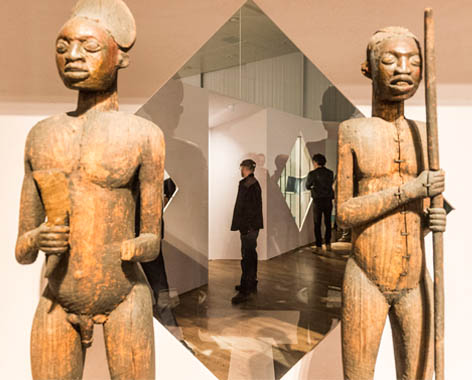
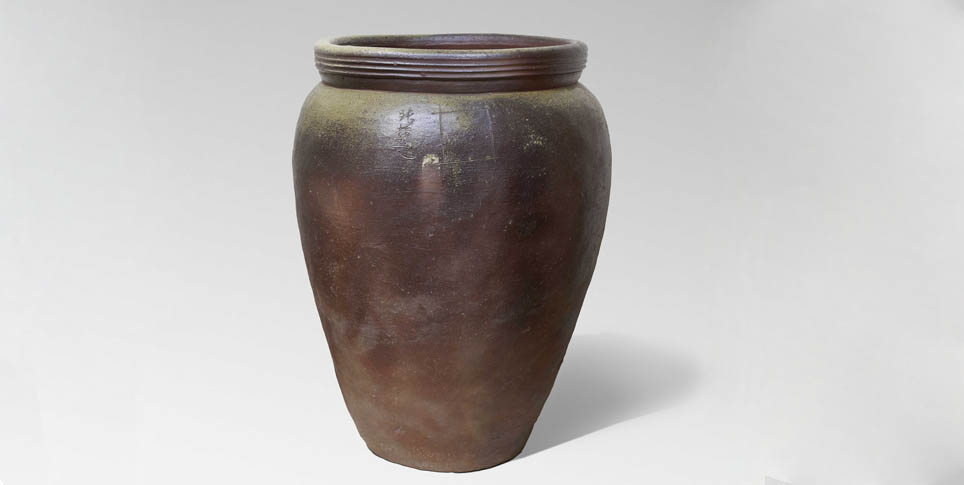
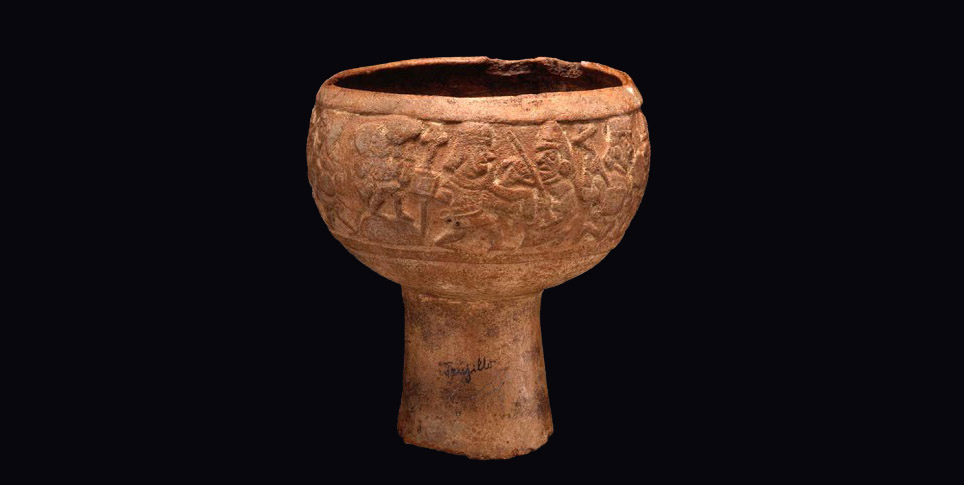
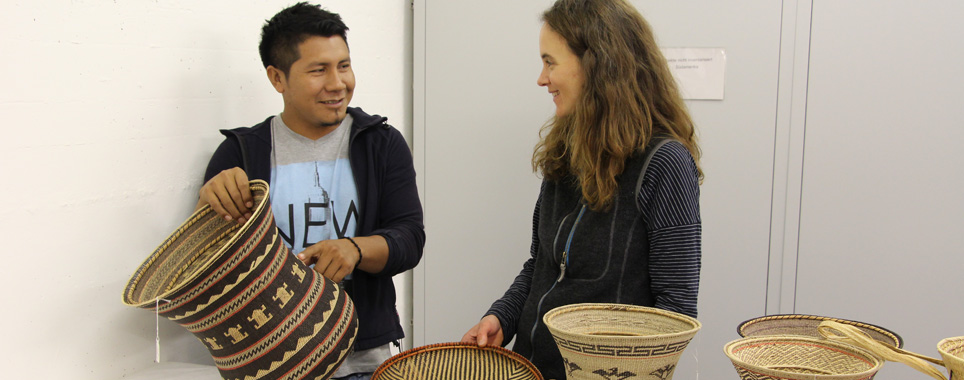
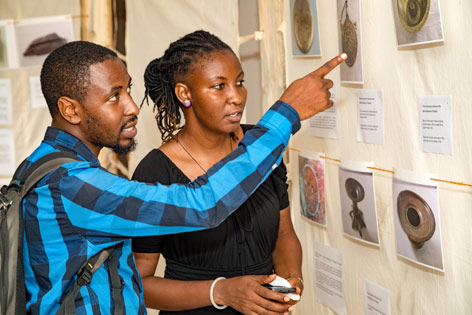
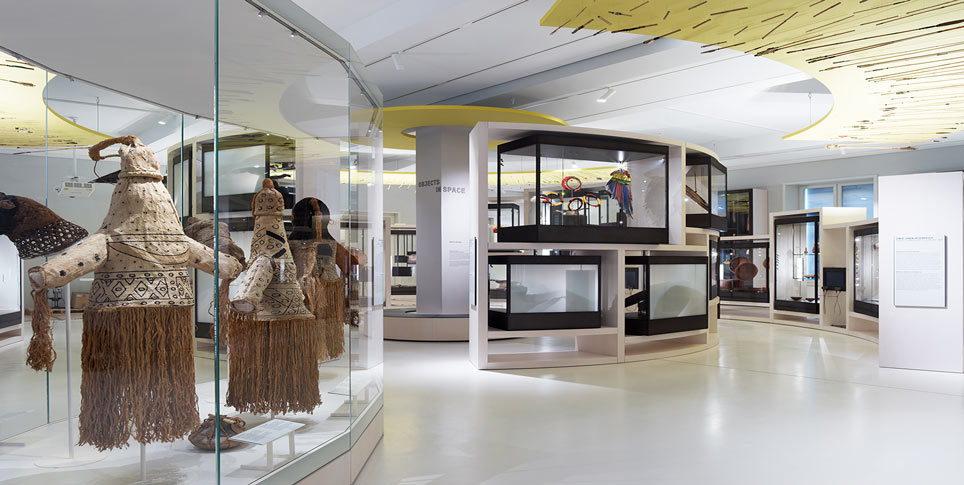
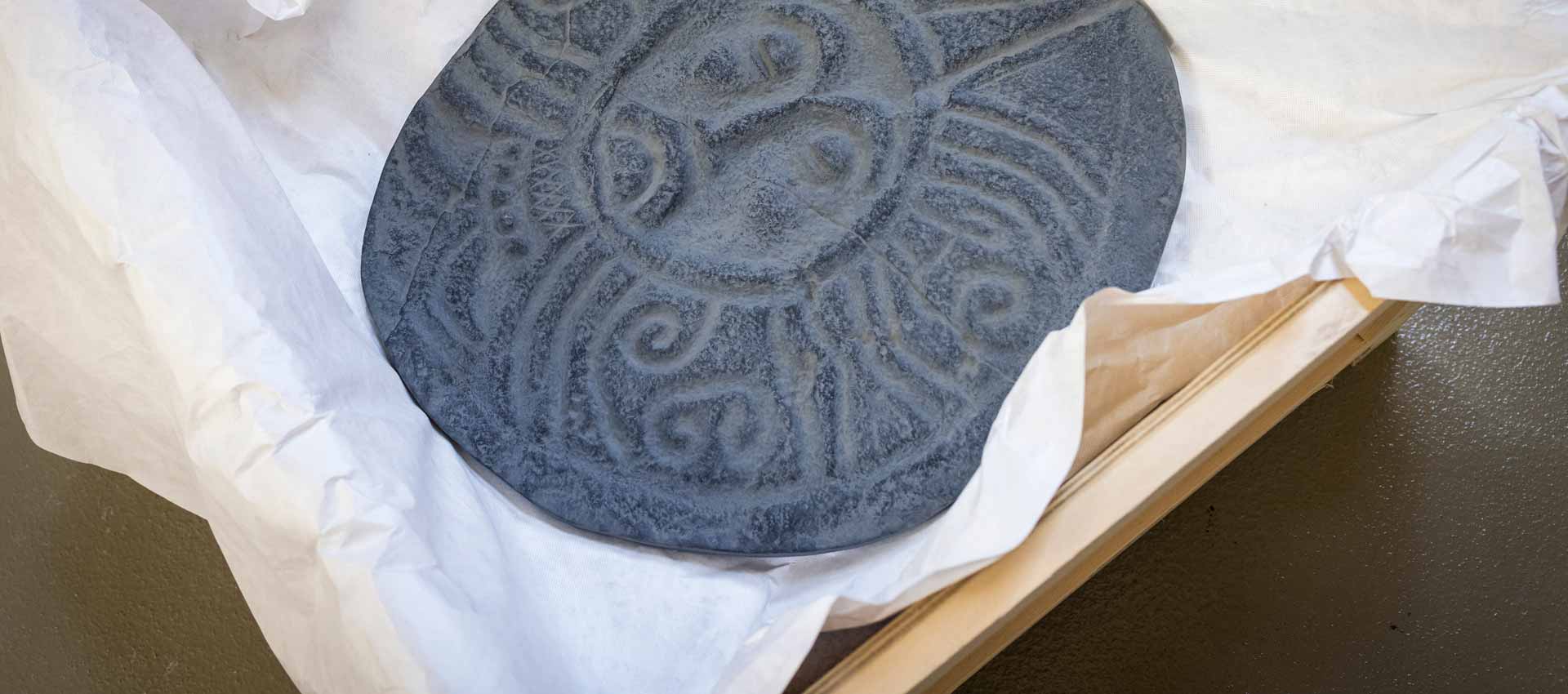
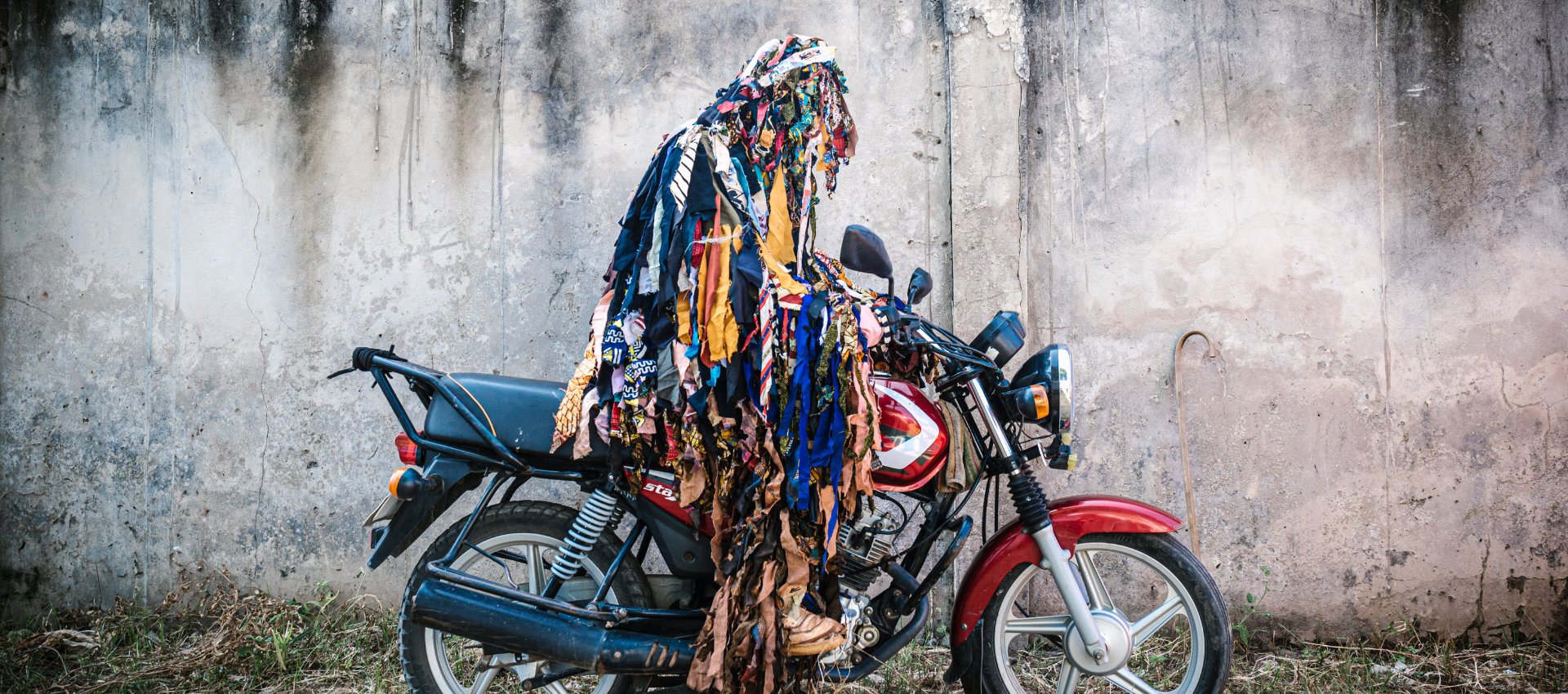
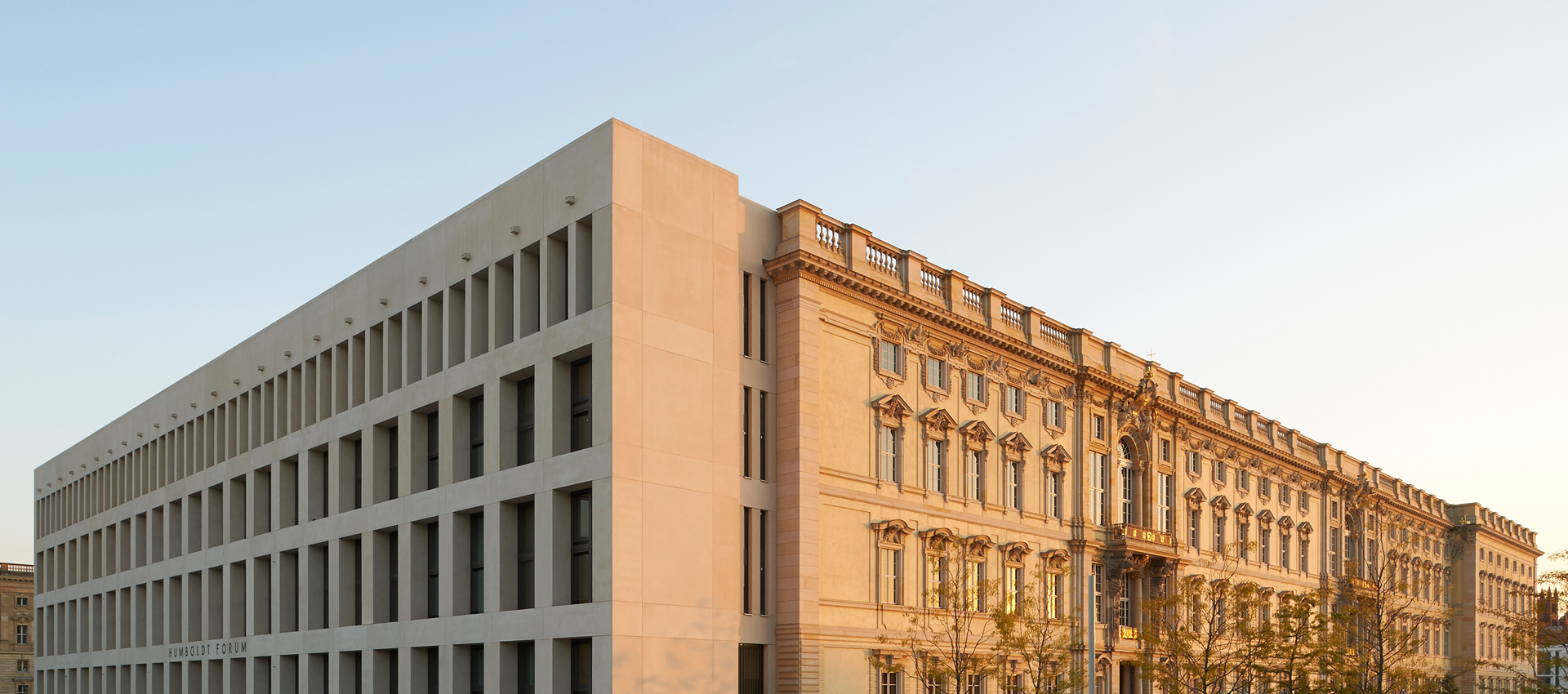
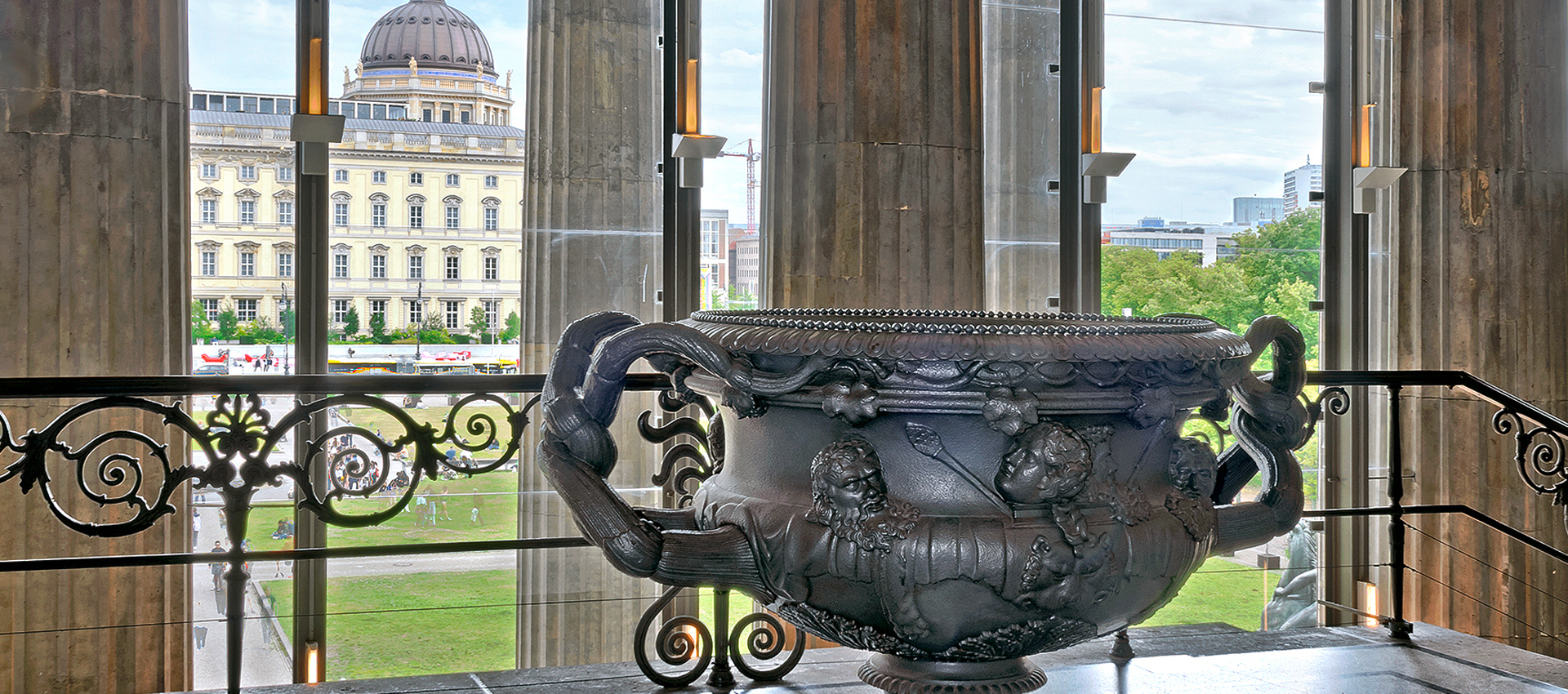
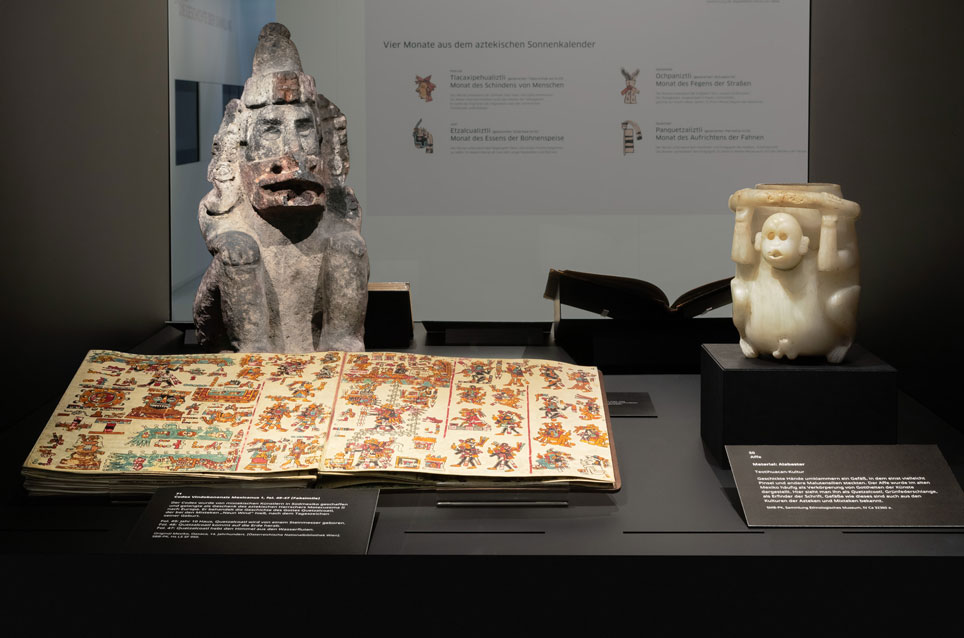
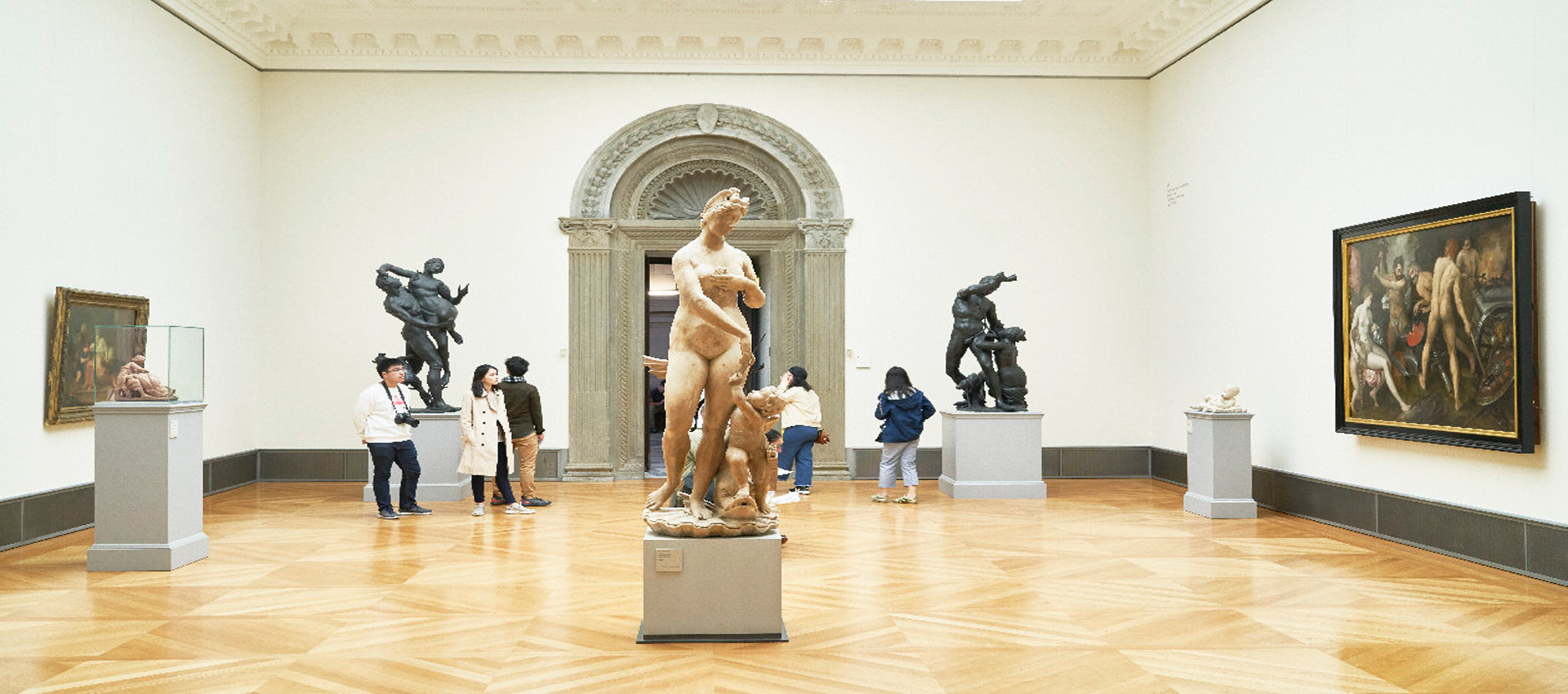
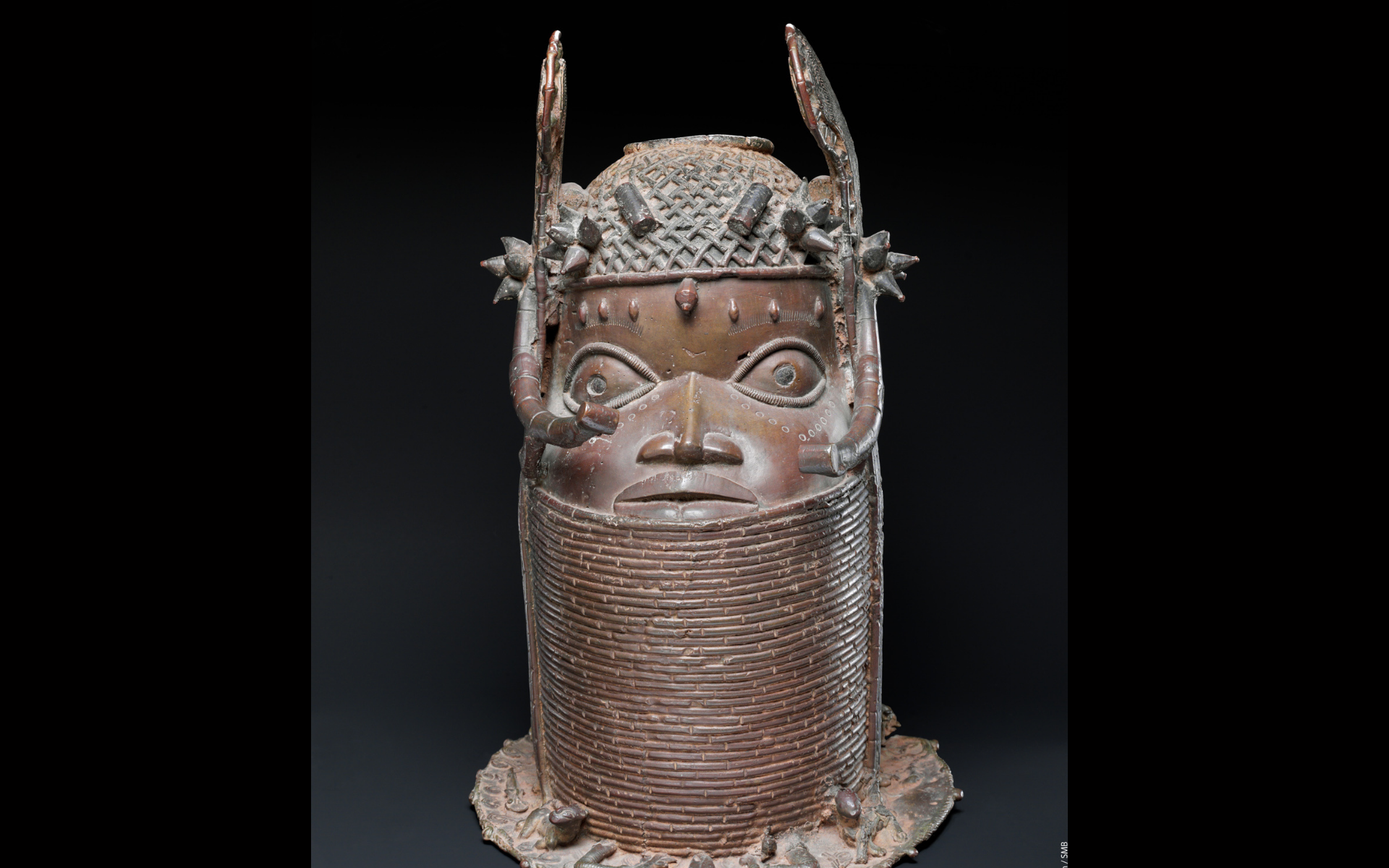
Four continents in 90 minutes: the new guided tour “Cultures of the World at the Humboldt Forum – Highlights from Asia, Africa, the Americas and Oceania” invites you to explore the collections of the Museum of Ethnology and the Museum of Asian Art at the Humboldt Forum. From Benin bronzes to the Luf boat and the Mandu Yenu throne – a tour exploring the history of the collections, dialogue and cultural cooperation.
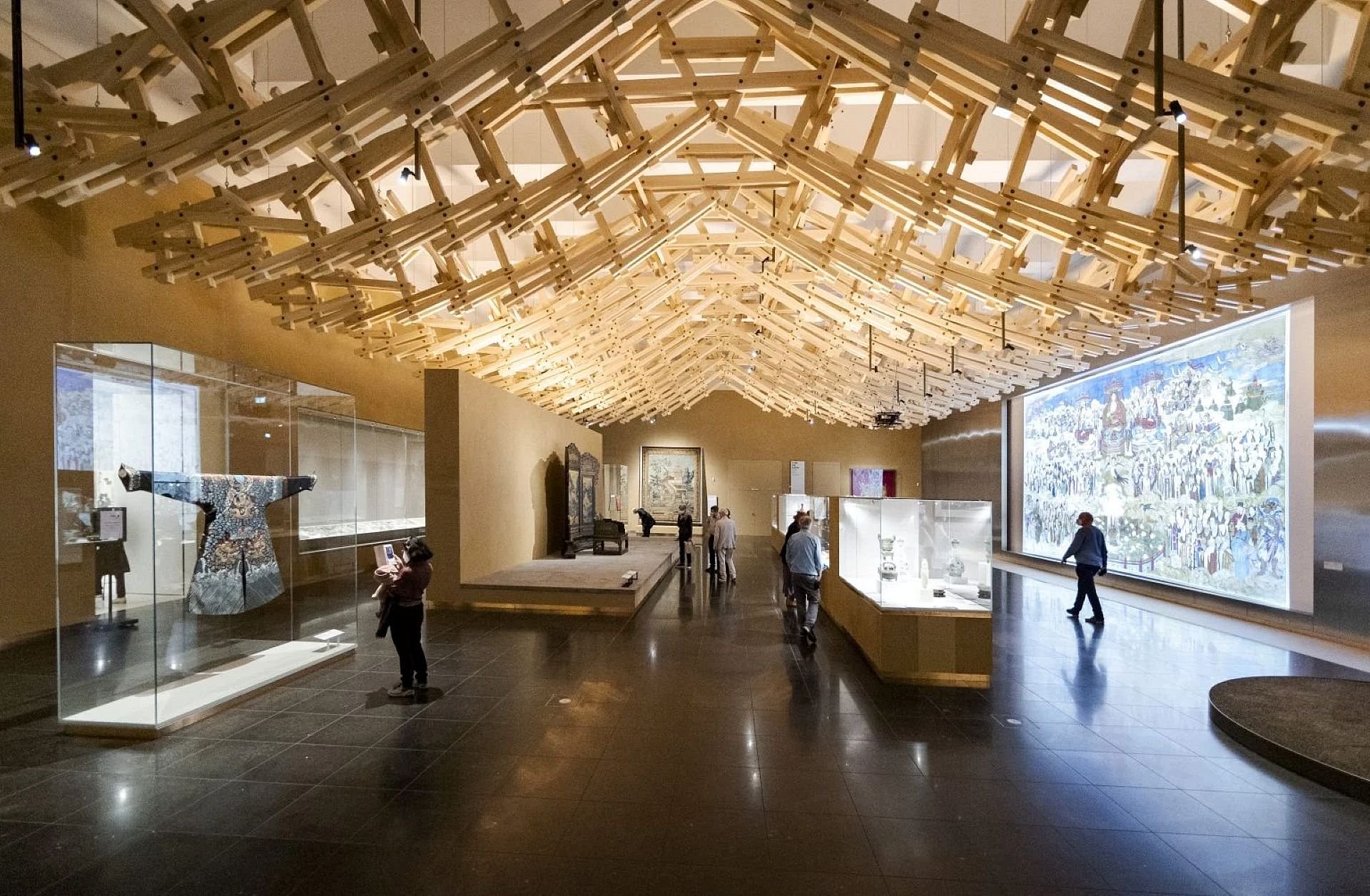
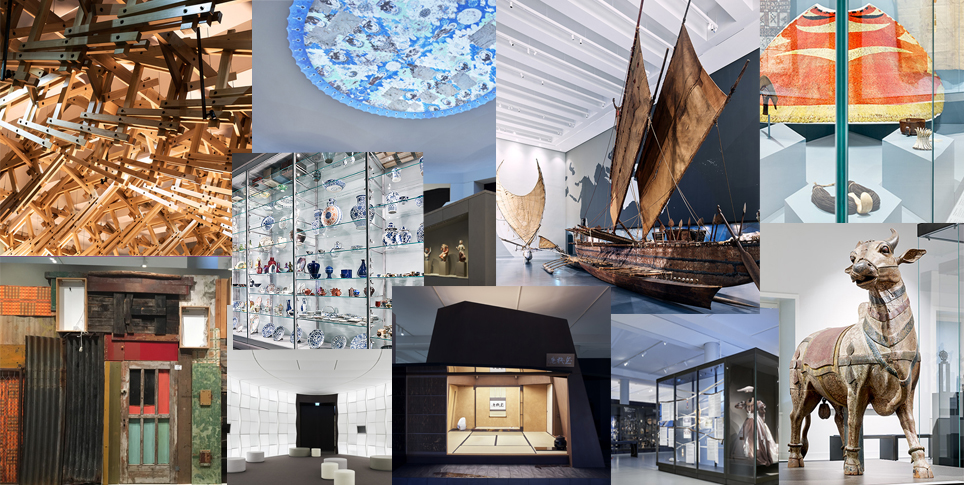
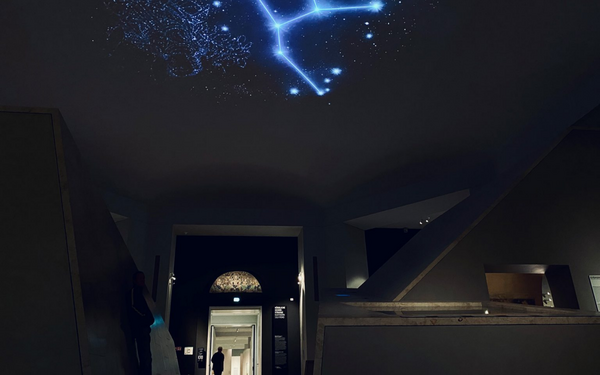
View of the ceiling structure designed by Chinese architect Wang Shu in the ‘Chinese Court Art’ module of the Museum of Asian Art at the Humboldt Forum
© Wang Shu, Amateur Architecture Studio / Staatliche Museen zu Berlin, Museum of Asian Art / Humboldt Forum Foundation at Berlin Palace / Photo: Janine Schmitz / phototek.de
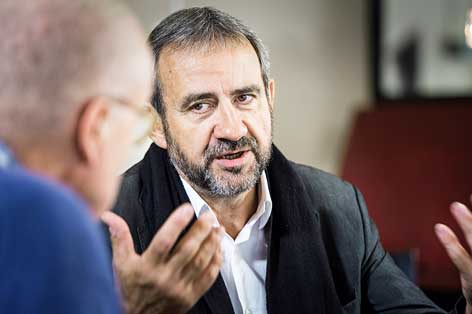
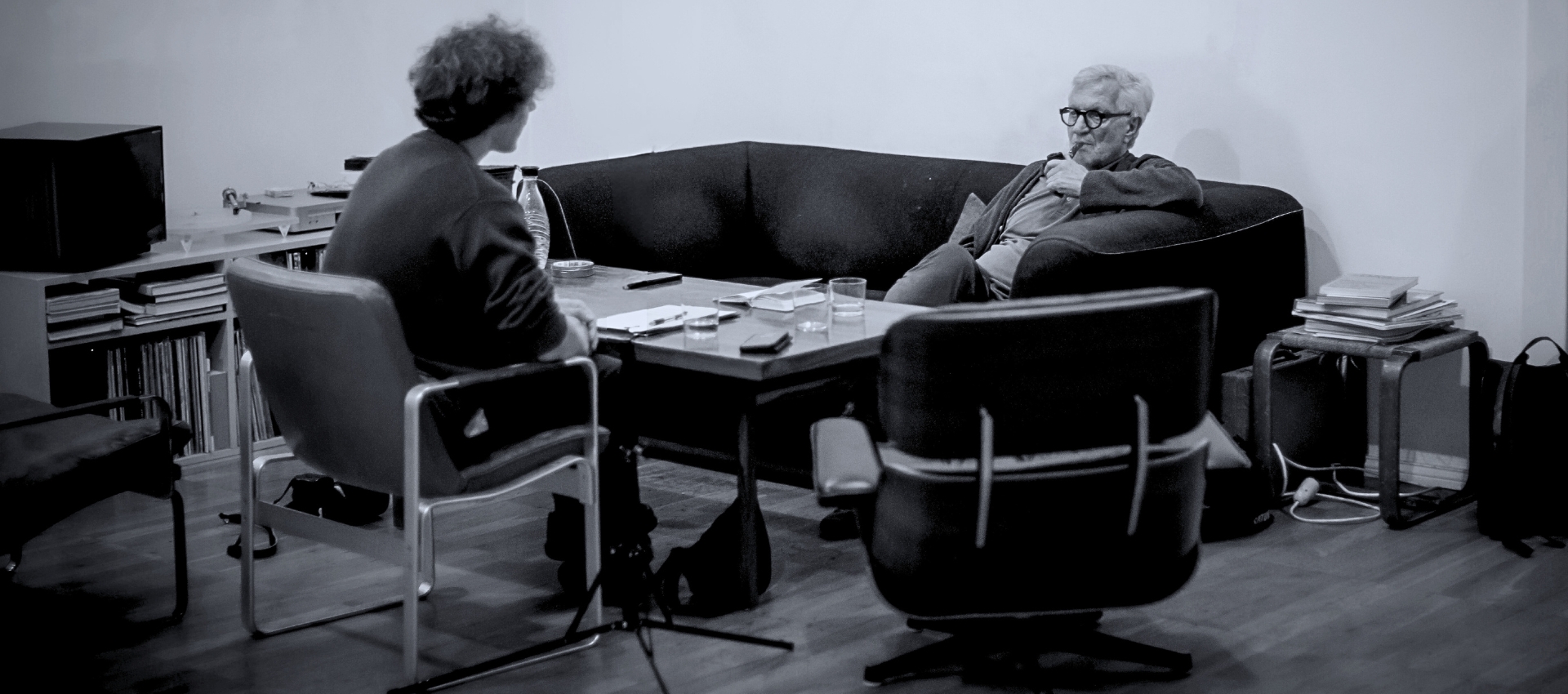
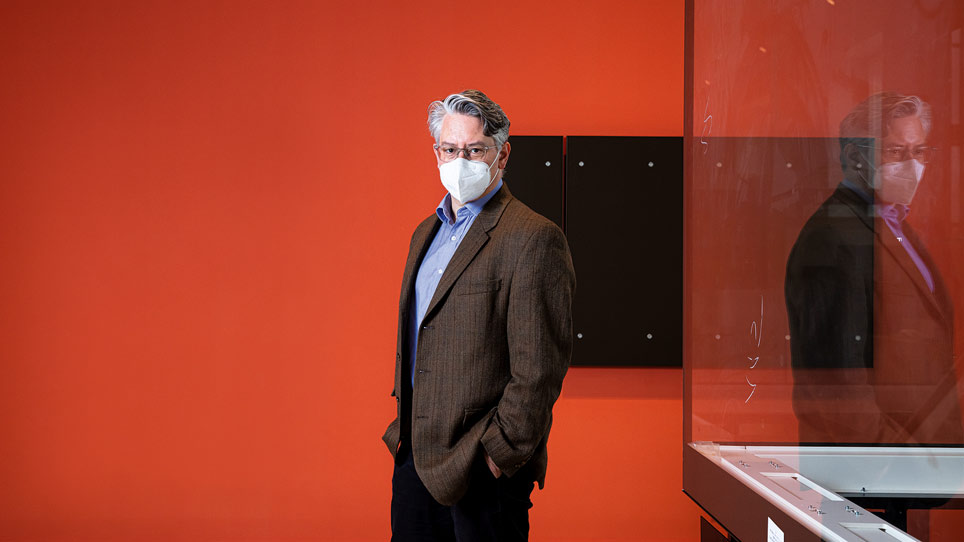
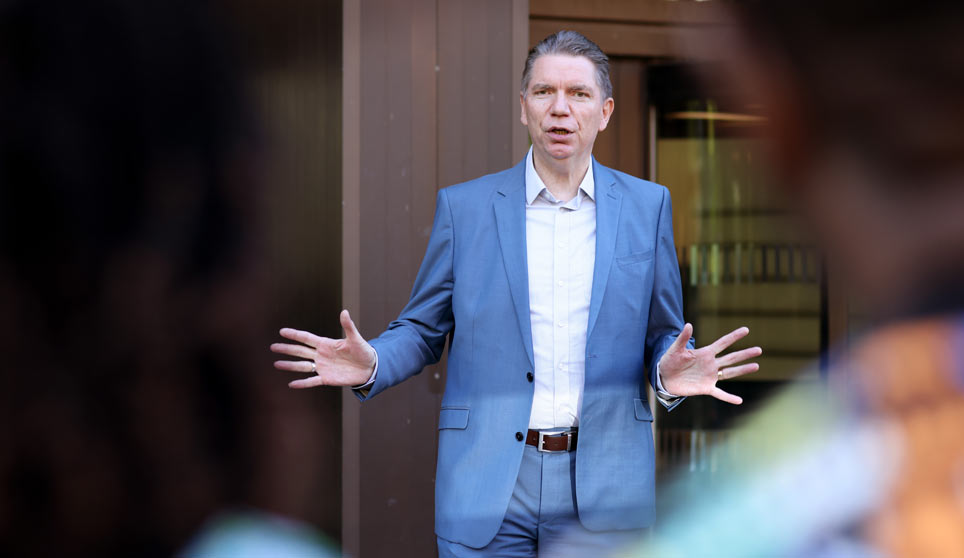
Oliver Glatz, a historian and now an educator, is also testing the waters. The new guided tour at the Humboldt Forum, which showcases highlights from the collections of the Museum of Ethnology and the Museum of Asian Art, is initially aimed at finding out “what works and what doesn’t” – in other words, which exhibits visitors find particularly fascinating and which they find less so.
The new educational format was launched at the start of 2026. Over 90 minutes, the tour takes visitors to the highlights of the collections from four continents. It tells the stories behind the cultural objects, such as how they came to be in the museum. The tour also offers fascinating insights into the museums’ international collaboration, which has become a flagship initiative over the past three years under the name “The Collaborative Museum”. It is aimed at both Berliners and tourists who wish to rediscover the Ethnological Museum and the Museum of Asian Art and gain an initial introduction to the collections, explains Valerie von Stillfried, who conceived the format.
The first highlight leaves you gazing up in awe, as the Haida Nation’s totem pole reaches right up to the ceiling. The intricately carved wooden pole originally comes from the Haida Gwaii archipelago, located off the coast of Canada. Its impressive size raises the question of how it ended up in the museum: The totem pole was acquired through normal channels – not unusual at the time, as such poles were regularly replaced by the communities, explains curator Oliver Glatz. The totem pole is so tall that it had to be brought into the hall of the new castle building through a window, as it was too tall for any other entrance. It’s a good thing it’s to remain here in this room.
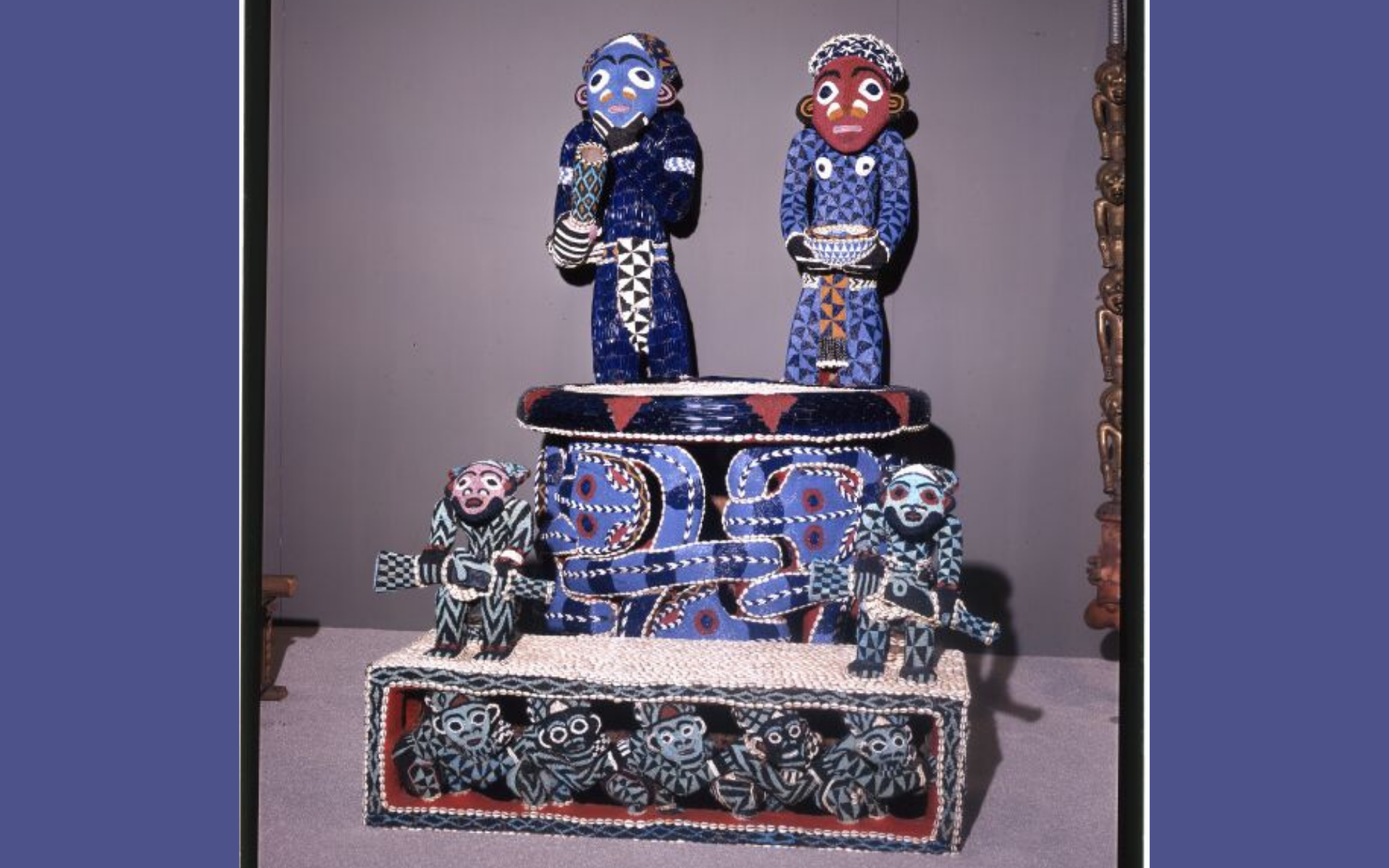
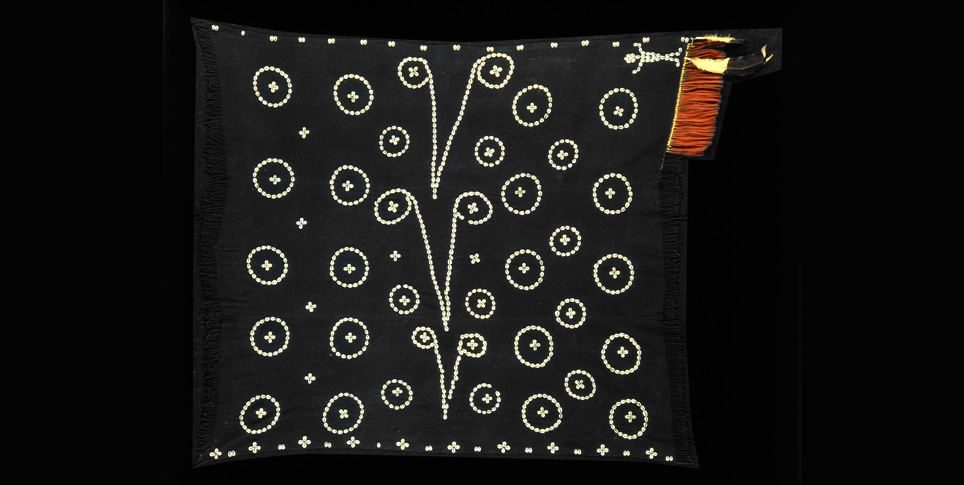
‘Mandu Yenu’: The Royal Throne of Bamum
This throne, known as the "Mandu Yenu", consists of two parts: a seat and a footstool, both carved from solid wood. The carvings feature symbols of the Bamum kings, such as the two-headed snake and the earth spider, a symbol of wisdom. The entire throne is embroidered with precious glass beads from Europe and cowrie shells from the Indian Ocean.
Photo: Staatliche Museen zu Berlin, Ethnologisches Museum
Following this impressive start, Oliver Glatz takes visitors on a journey from one Pacific island to the next – at least in the flow of his narrative, as the tour spans from North America via New Zealand to Australia. The tour concludes with West Africa and then South America, including Peru.
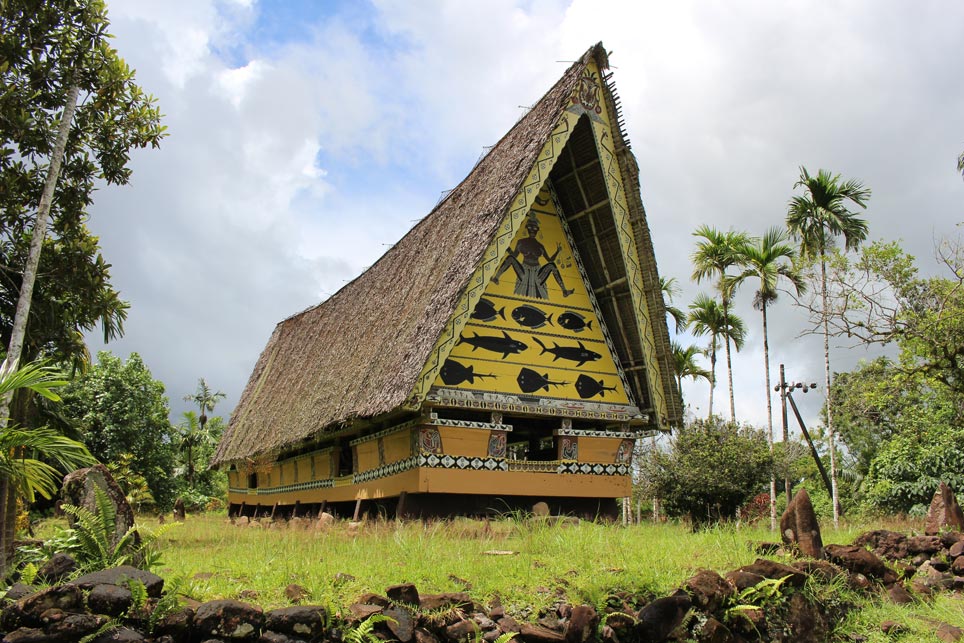
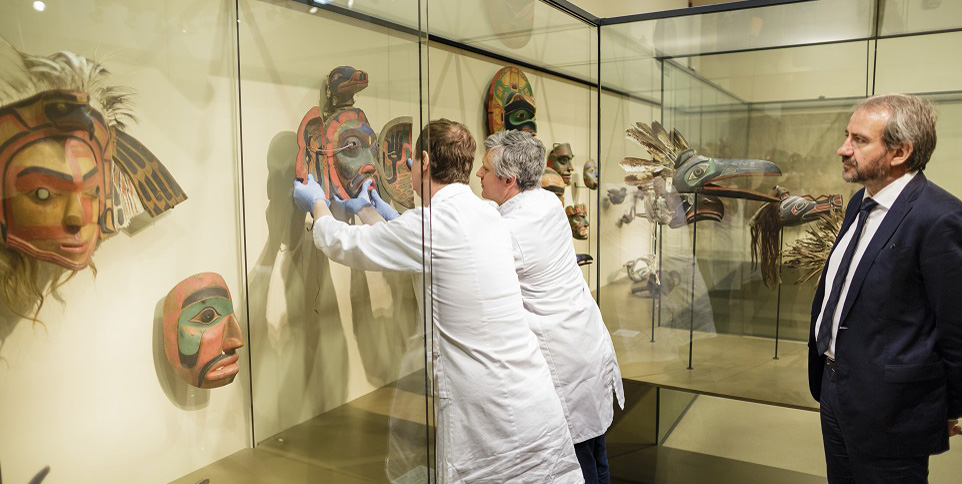
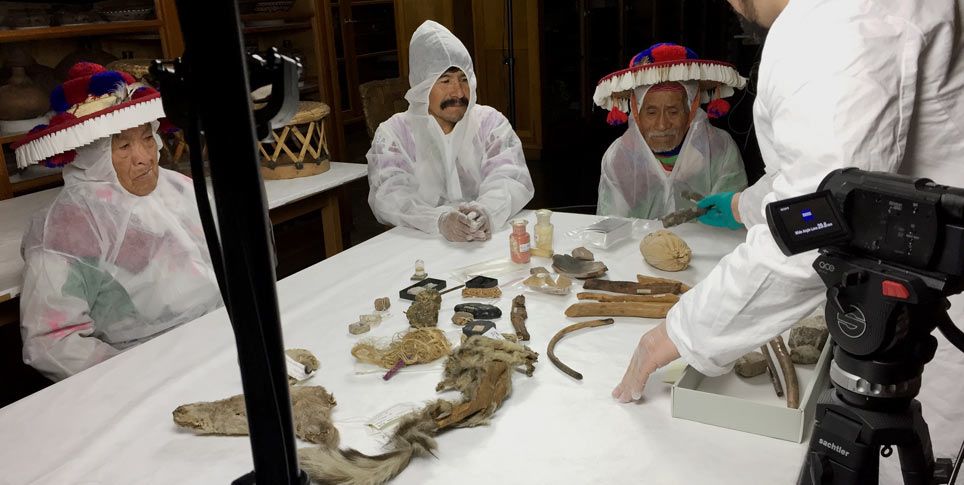
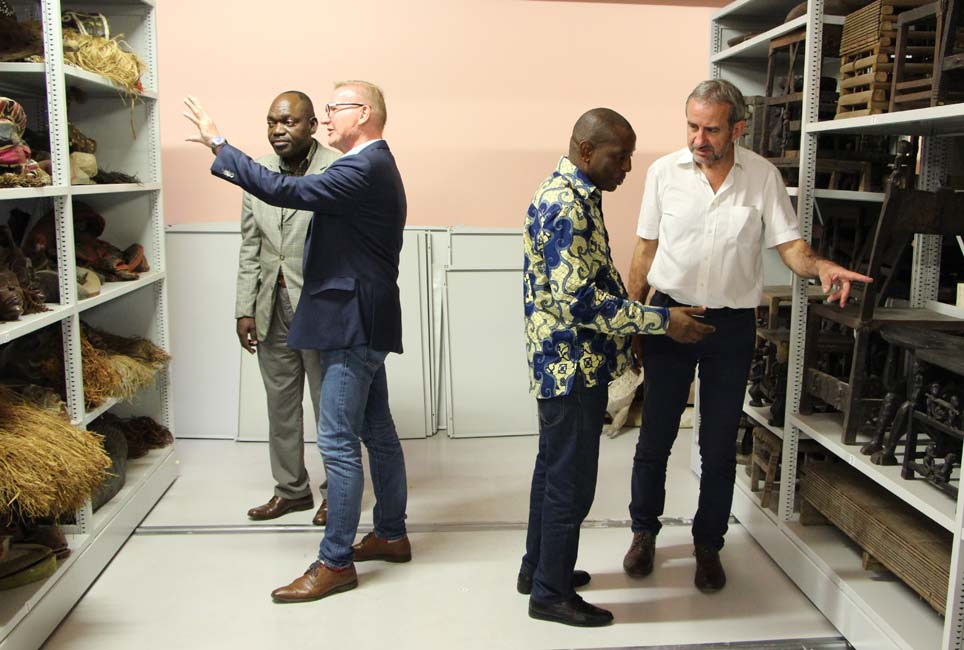
But the focus is above all on the context behind the highlights: according to guide Glatz, “questions of collection practices and the colonial appropriation of museum objects come to the fore, as does the issue of human remains in museums – and the question of what this means for us today.” Museums recognise the value of their collections for the global community and the communities of origin. The so-called ‘objects’ or ‘exhibits’ should not be reduced to mere things or artefacts, but recognised as ‘cultural belongings’: they convey relationships between people, places, and cultural and artistic practices that relate to the past, present and future. Appropriate handling of these cultural belongings also implies a commitment to the care and protection of the associated places and habitats. Today, great importance is attached to this cultural exchange. For example, the houses from Palau and Papua New Guinea were re-thatched at the Humboldt Forum in 2019 by men from Palau.
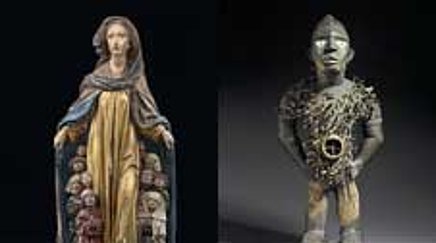
Many of the Cultural Belongings on display have a strong spiritual significance that is not immediately apparent from a European perspective, as the necessary cultural background knowledge is lacking. They are associated with spirits, ancestors or deceased rulers and were regarded as vessels of spiritual power. One such example is the Mandu Yenu throne from the Kingdom of Bamun (Cameroon), decorated with Bohemian glass beads and cowrie shells.
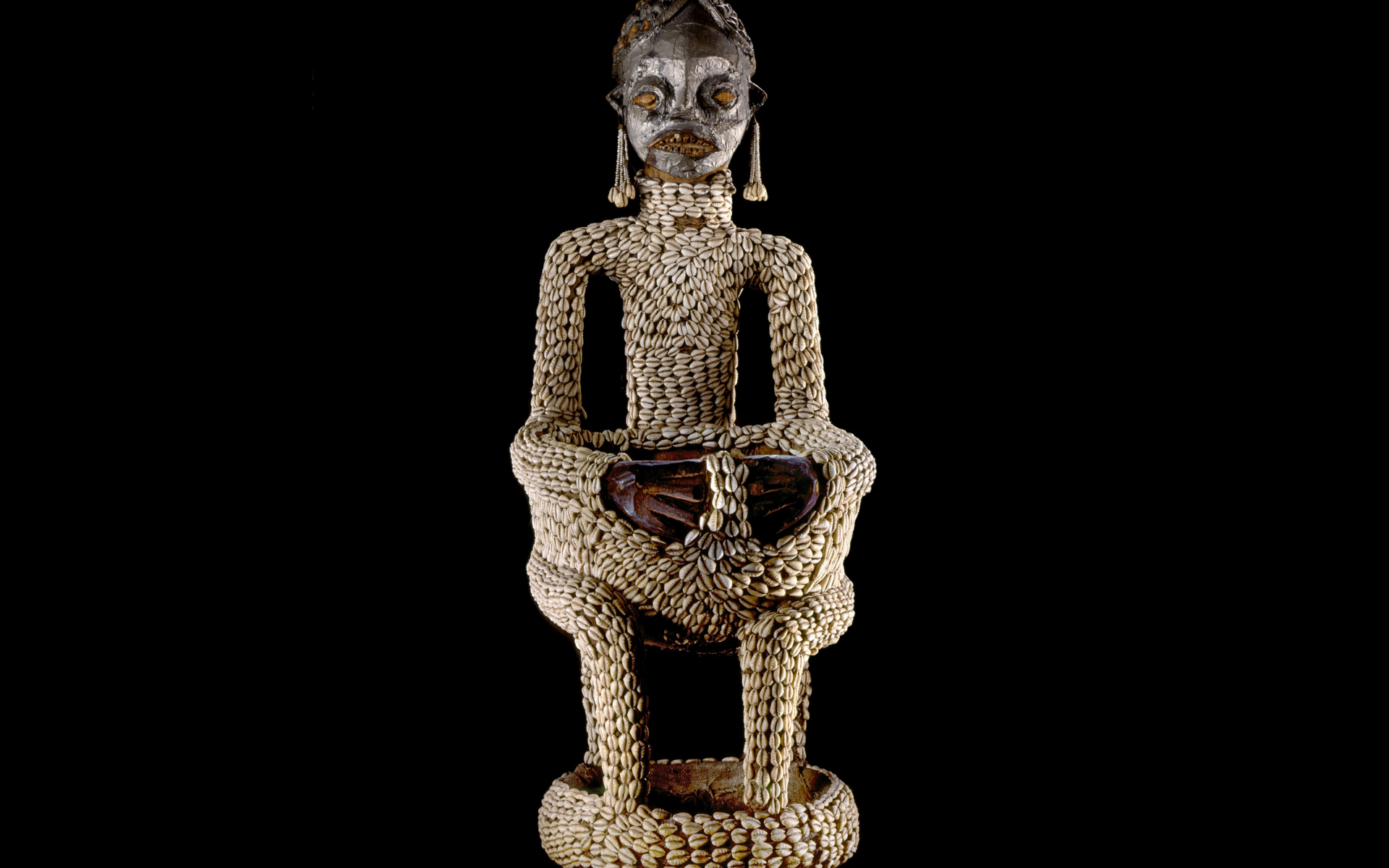
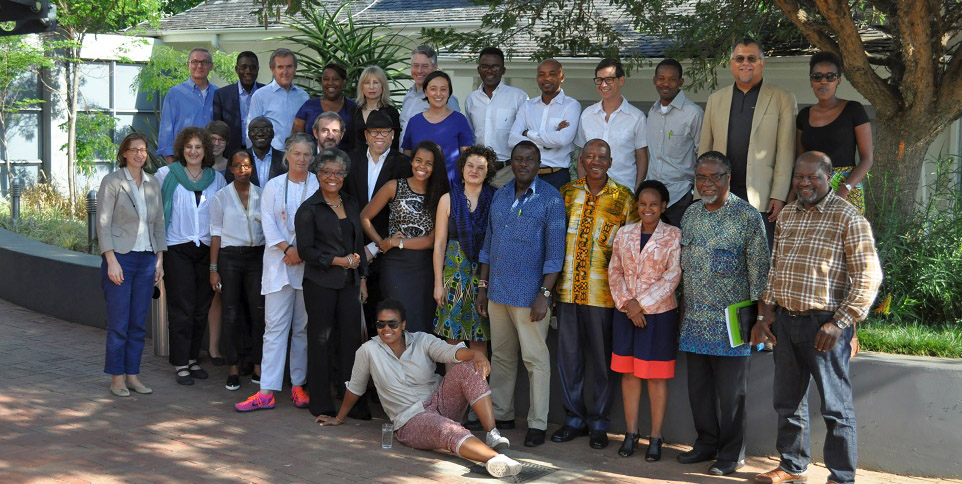
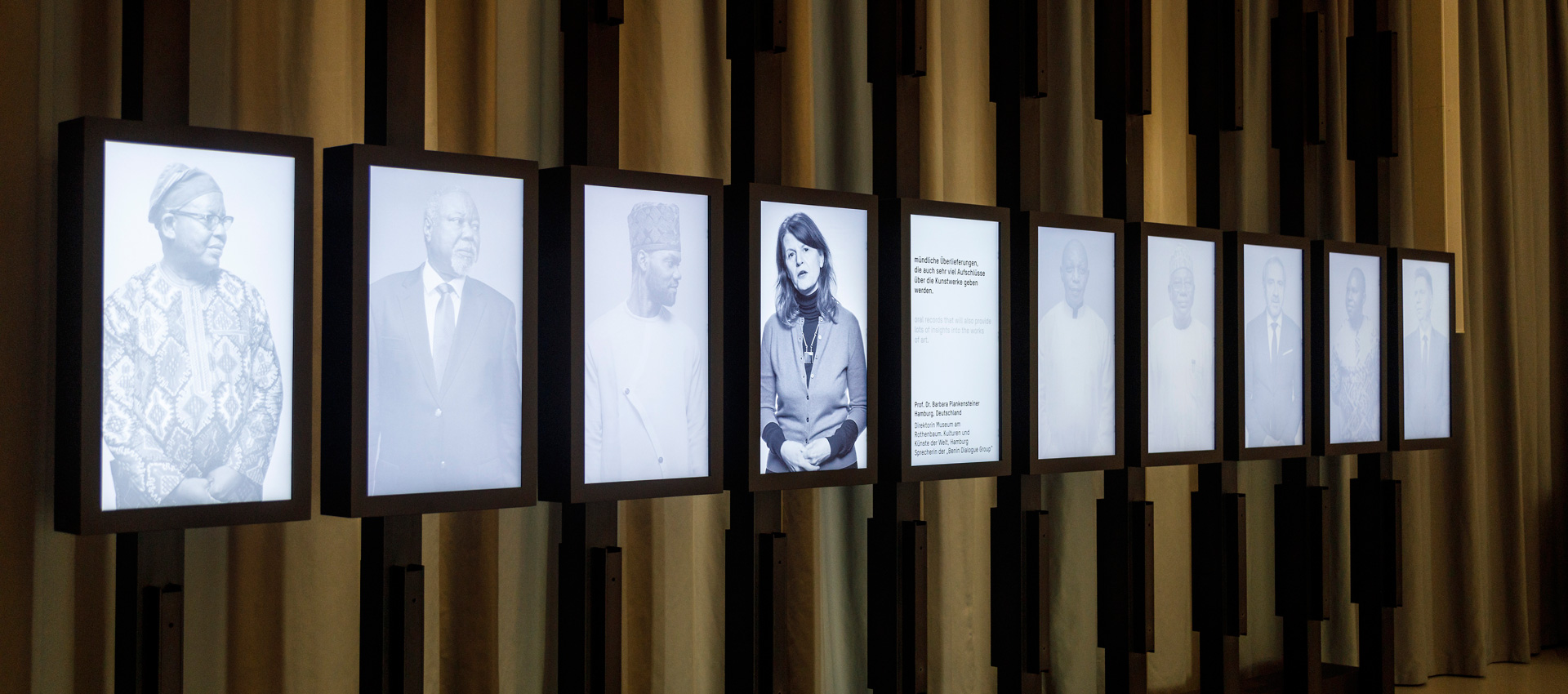
Ngonnso’, a female figure from the historic Kingdom of Nso’ in north-western Cameroon, is one such example: she plays a central role for the Nso’ people, as she is regarded as a mother goddess. Partly because of this spiritual significance, the SPK, to which the Ethnological Museum belongs, decided to return the figure following several years of intensive contact with representatives of the Nso’ and the Cameroonian government. It is now up to the Cameroonian side to determine when and how this is to take place.
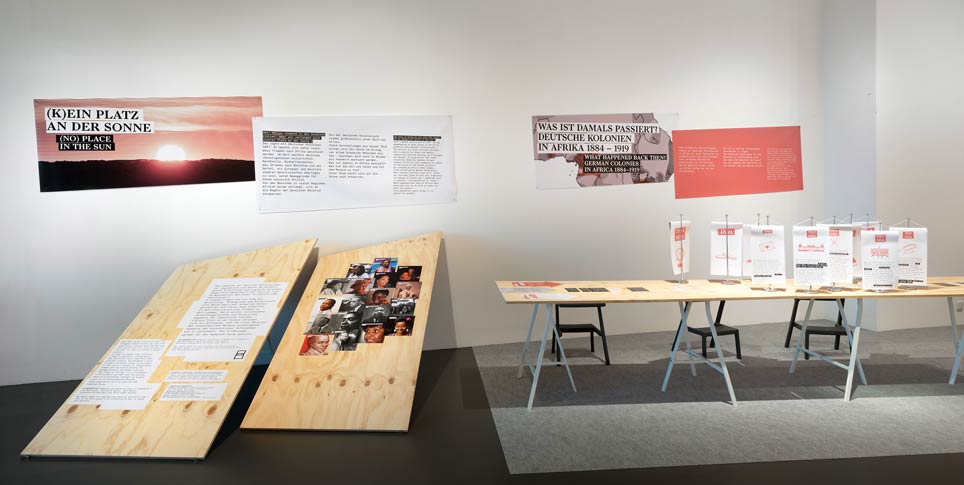
The special exhibition “History(ies) of Tanzania” demonstrates another form of cooperation with countries of origin. The collaboration between the Humboldt Forum Foundation, the Ethnological Museum and the National Museum of Tanzania in Dar es Salaam presents artefacts exclusively with the consent of the communities of origin and in close cooperation with them, in order to preserve the spiritual integrity of the cultural belongings.
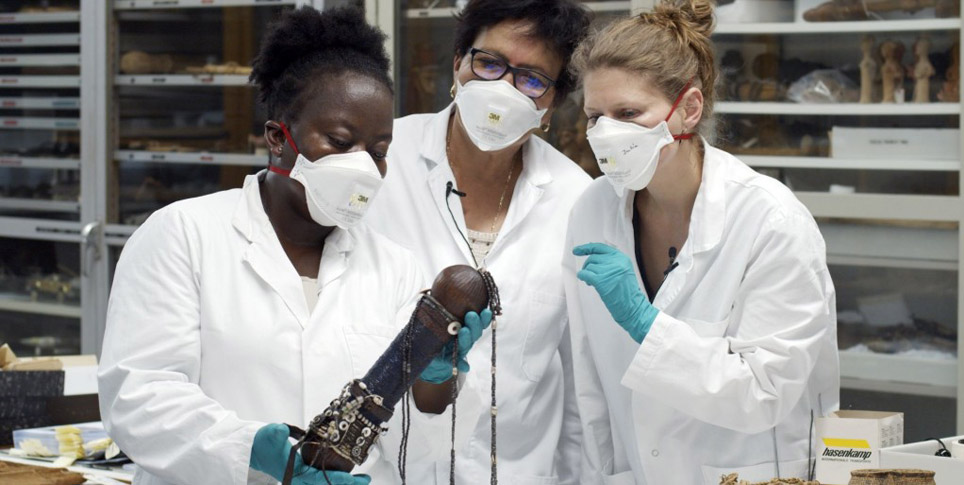
© Staatliche Museen zu Berlin, Ethnological Museum, photo: Valerie von Stillfried.
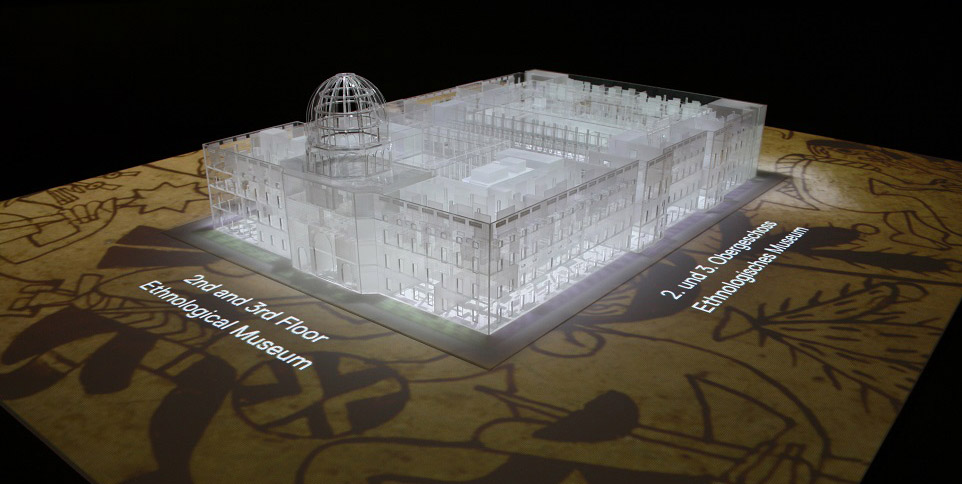
The Highlights tour not only showcases outstanding exhibits, but also illustrates the history of the Ethnological Museum and the Museum of Asian Art. Both institutions are now united within the Humboldt Forum, operate under joint management and share exhibition spaces on the 2nd and 3rd floors of the new Berlin Palace building. Their collections have grown over time: some objects were already part of the Hohenzollern family’s Brandenburg-Prussian Kunstkammer as early as the 17th century. Whilst the Ethnological Museum opened its doors near Potsdamer Platz in the 19th century, Wilhelm von Bode, Director-General of the Royal Museums, founded the Museum of East Asian Art in 1906. The Museum of Asian Art was then established in 2006 through a merger with the Museum of Indian Art. Interwoven narratives and interwoven collections: it becomes clear just how closely the histories of the Ethnological Museum, the Museum of Asian Art and now also the Humboldt Forum are linked. The guided tour thus offers a comprehensive perspective that broadens our view of cultural history.
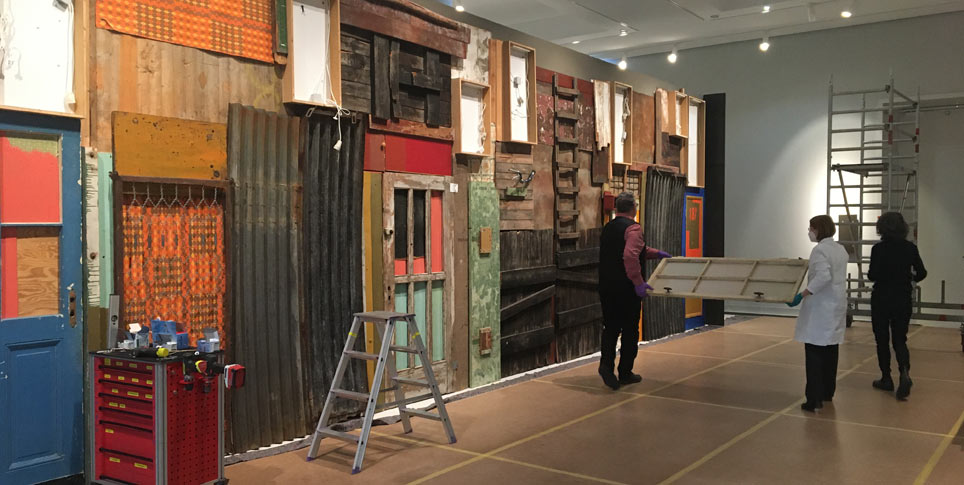
This history is still unfolding today: Oliver Glatz thus focuses not only on historical objects but also on contemporary art. The ‘Teahouse’, for example, is an iconic work by Ai Weiwei, arguably the most famous Chinese conceptual artist of the moment. This presentation, too, fits perfectly with the aim of showcasing the collections in a new light through the intervention of contemporary artworks and fostering a dialogue between tradition and modernity. This contemporary art is deliberately integrated, allowing the collections to continue to grow and making cultural change visible – as is the case with an Australian dot painting, a technique that only emerged in the 1970s. For Oliver Glatz, the work is a personal highlight and is therefore included in his tour. After all, what constitutes a highlight remains subjective, and the diverse team of freelance art educators always has a variety of exciting perspectives in store for visitors.
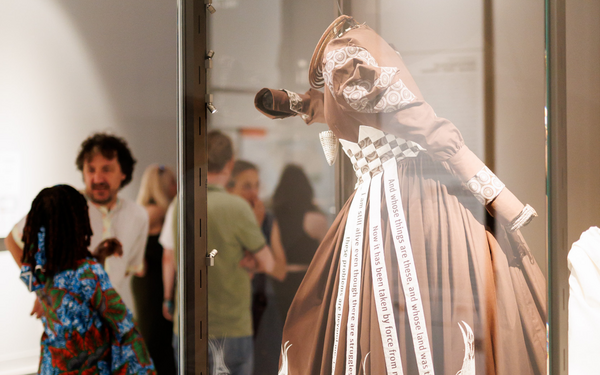
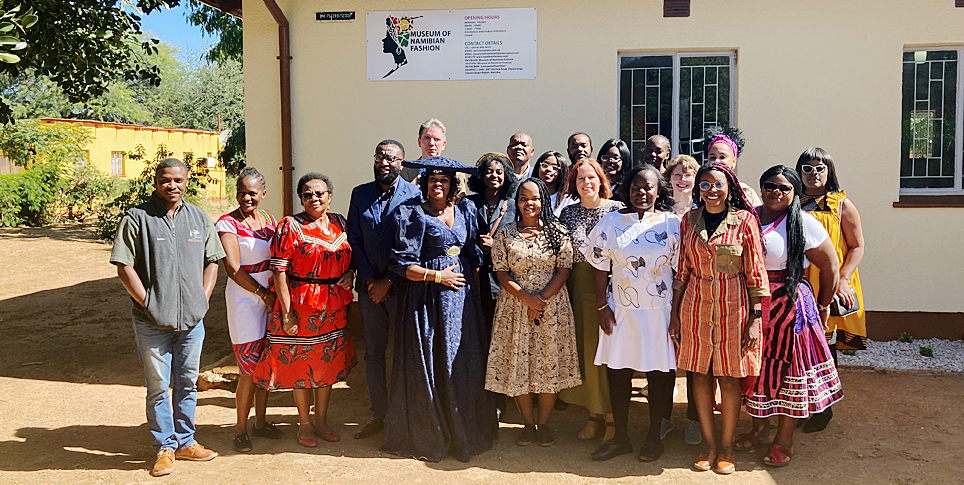
© Staatliche Museen zu Berlin, Ethnological Museum, Photo: Frank Sperling
By the end of the 90 minutes, it becomes clear that the ‘Highlights’ tour at the Humboldt Forum offers fascinating insights into different cultures, artefacts and works of art. At the same time, it sheds light on the many facets of museum work and encourages dialogue with the public. Visitors leave the tour with a deeper understanding of culture, history and the ongoing dialogue between communities of origin and the museum.