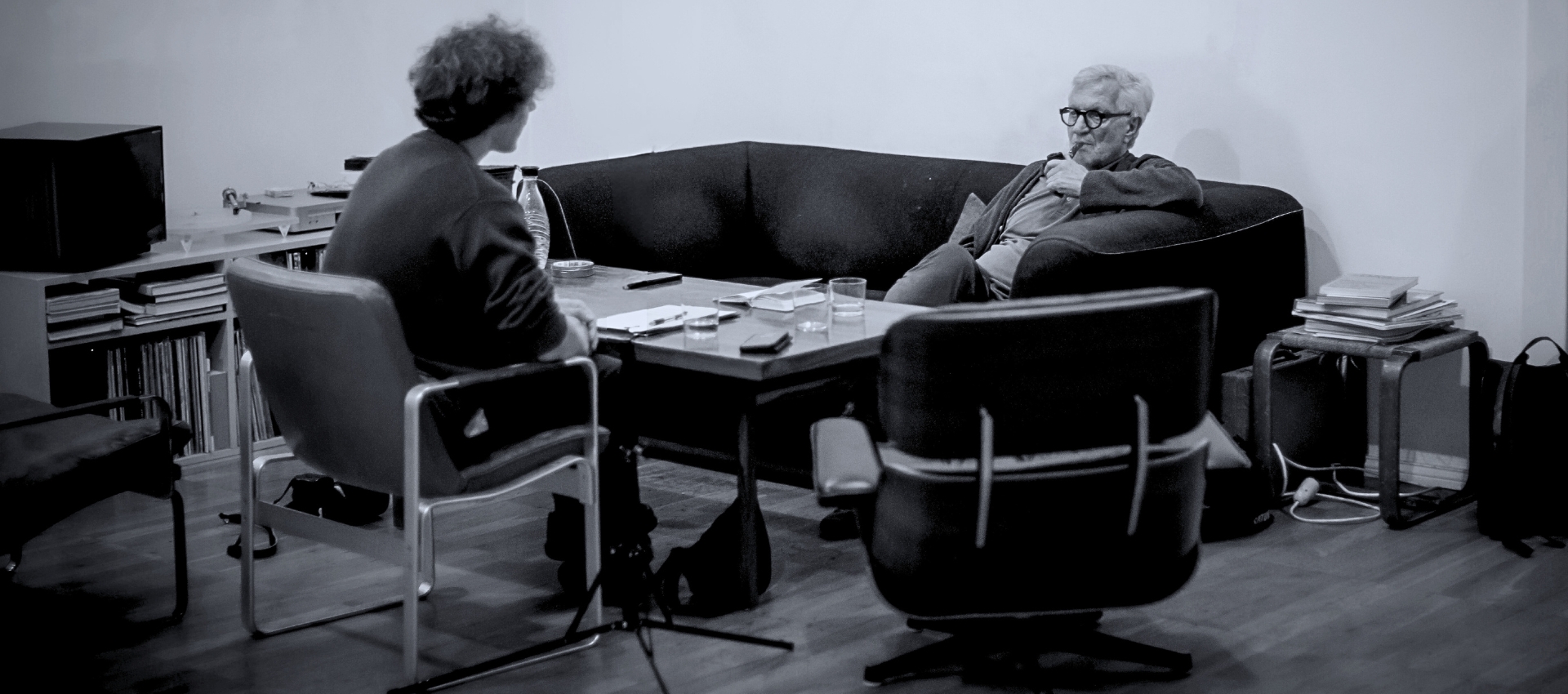
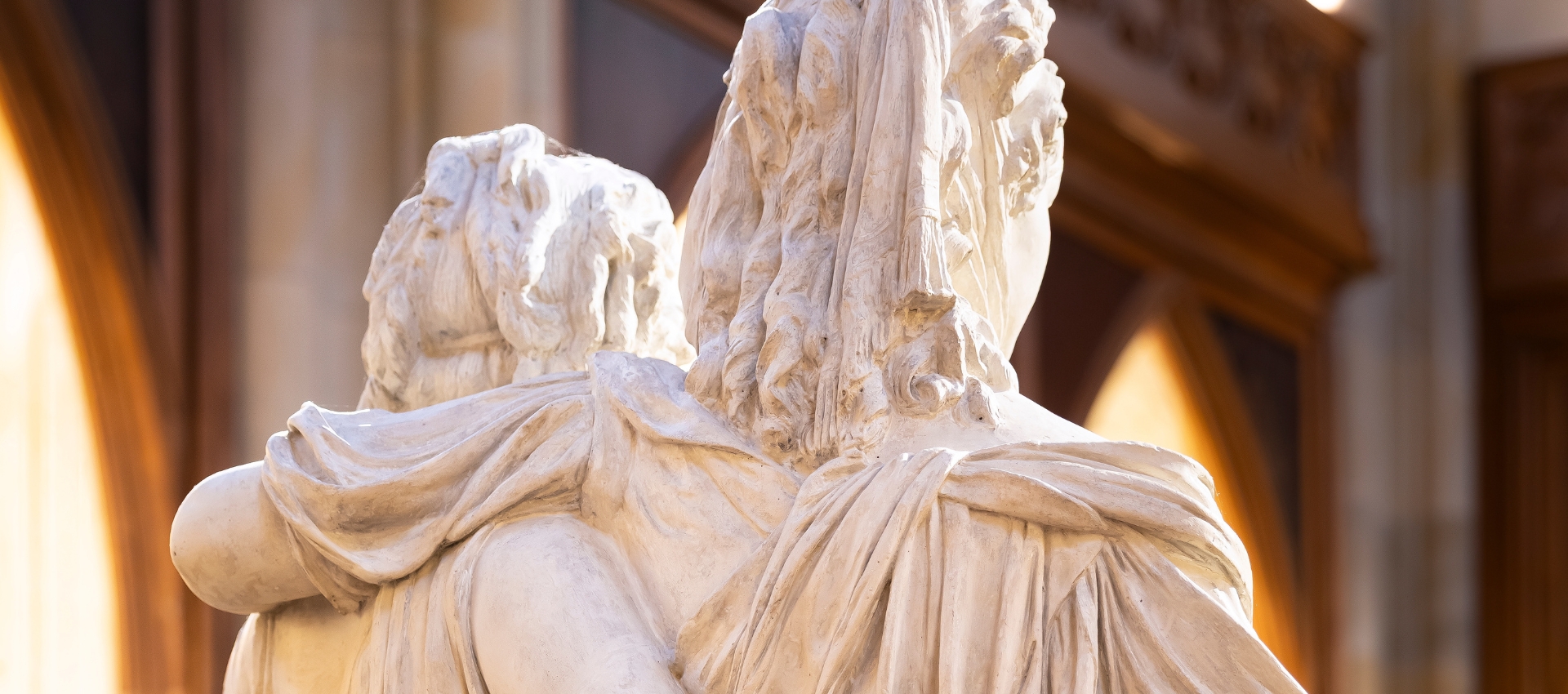
What links African and European sculptures? In this interview, Michael Eissenhauer, Director General of the Berlin State Museums, explains the concept behind the exhibition “Africa at the Bode Museum”.
Until the opening of the Humboldt Forum, the Bode Museum will host an exceptionally curated exhibition: sculptures from Africa enter into a dialogue with sculptures from Europe. In this interview, Michael Eissenhauer discusses the exhibition concept and explains to what extent this unique collection will offer a foretaste of the future Humboldt Forum.
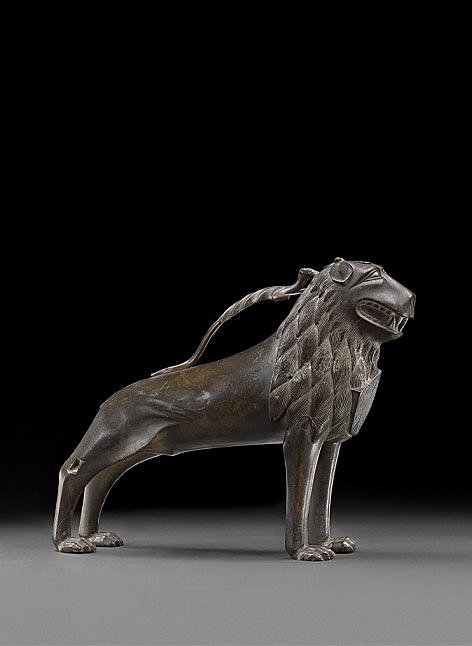
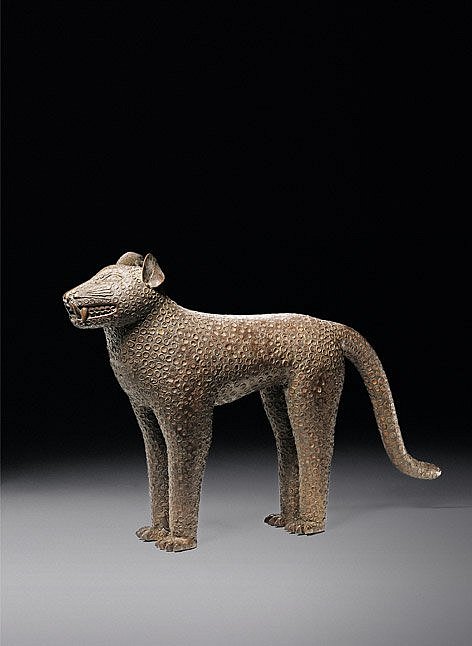
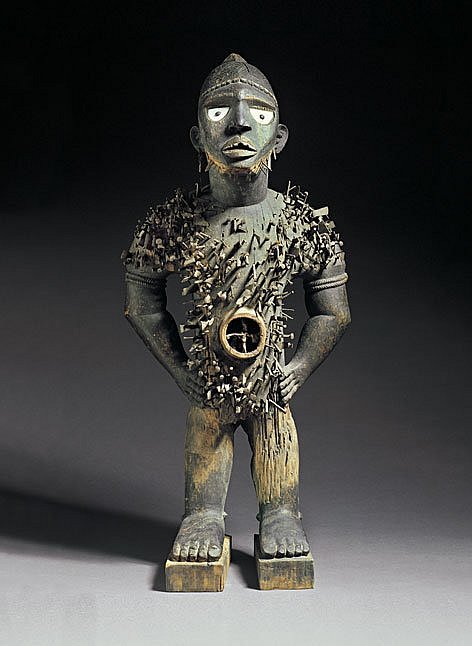
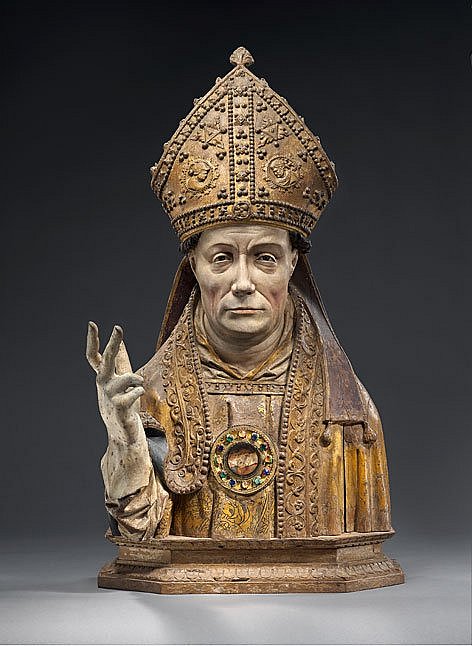
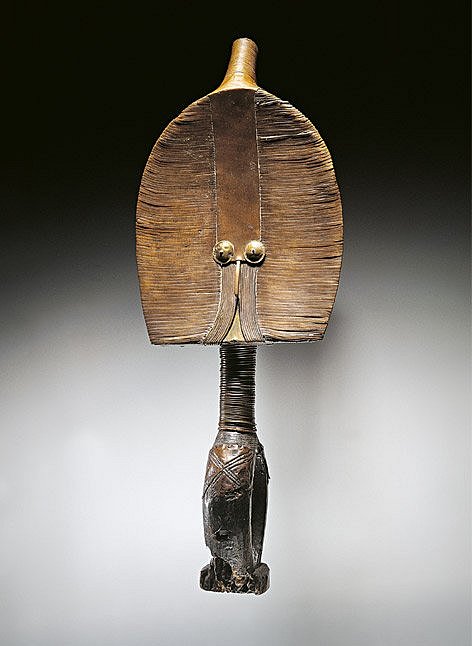
This arrangement is reminiscent of the presentation style of the Royal Kunstkammer, which dates back to the 16th century in Berlin and formed the core of the later collections of the State Museums.
That’s right. Even back then, no distinction was made between high and low culture. Everything exciting, beautiful and captivating in the world was brought together. The aim at the time was to understand the world as a whole. And we want to take up this idea again at the Humboldt Forum. There, the cultures of the world are to be brought into close proximity with the ancient cultures of Europe. The exhibition at the Bode Museum, which is generously supported by the Prussian Cultural Heritage Foundation, will offer a foretaste of this.
The exhibition is therefore a good opportunity to try out new forms of curatorial
collaboration. Art historians and ethnologists are working together as a team to develop innovative and, hopefully, exciting exhibition concepts. What have we been able to learn from one another so far through this process?
The real appeal of the exhibition lies in this collaboration. Here, the art-historical gaze meets the ethnological gaze. The methods and approaches are quite different. Ethnologists, for instance, first ask about the function of an object and its integration into concrete everyday life. Art historians, on the other hand, are interested in stylistic history, iconography or composition. These are approaches that not only differ; in some respects, they are even alien to one another. But these differences can broaden our horizons. The exhibition is a collegial reaching out towards the other discipline.
One might object that such an approach leads to arbitrariness and capriciousness. You yourself spoke earlier of the ‘associative links’ according to which the sculptures were assembled. Is free association a scientific method?
The exhibition does not claim to establish a dialogical cultural transfer, let alone prove its existence. It is not about the metamorphosis of forms or about proving that one form has evolved from another. Rather, we are searching for archetypal primal forms. Similar demands placed on the respective sculptures have, in some cases, resulted in similar forms. The search for beauty, representation or function has led to comparable solutions across very different cultures.
Could you perhaps illustrate this with an example?
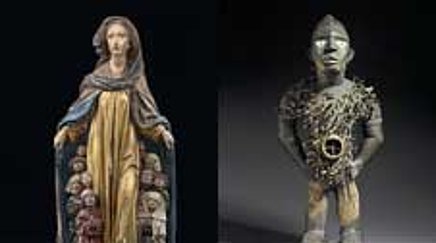
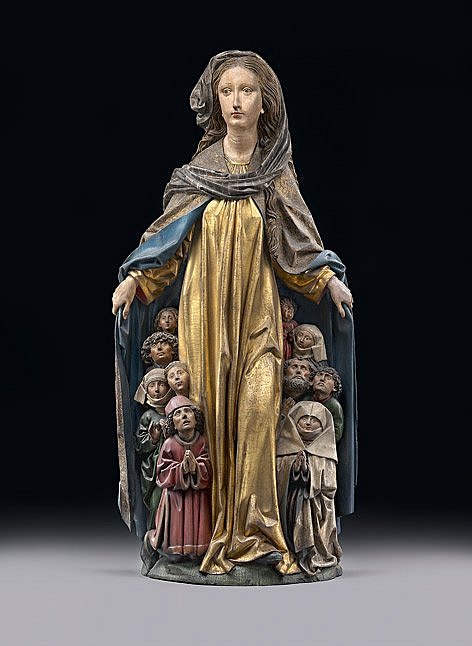
Among other things, the exhibition will feature a juxtaposition of protective figures – a Madonna with a protective cloak from the late 15th century meets a so-called ‘power figure’ from the Congo of the 19th century. The two figures bear little formal resemblance. But the underlying idea – namely that a revered figure can develop a protective character for people due to its specific design – is something both sculptures have in common. In both Europe and Africa, such a figure was associated for a long time with feelings of comfort, security and safety.
The pursuit of beauty, representation or function has led to similar solutions across very different cultures.
Such archetypes can be traced back to
the very beginnings of art history. Consider, for example, the megalithic cultures or the Venus figurines of the late Palaeolithic period. Are there any cultural-historical explanations for this fascinating phenomenon?
There are two key explanatory models: one was formulated by Aby Warburg with his so-called ‘migration of forms’ in his Mnemosyne Atlas; the other comes from C. G. Jung and his search for humanity’s archetypal primal and dream symbols. I believe that both approaches have their merits. There is no one-dimensional answer to your question. Ultimately, however, this phenomenon shows that people from very different cultures and ethnic groups are subconsciously connected. And such a connection can generate an immense amount of understanding for what is perceived as ‘the other’.
Bode Museum
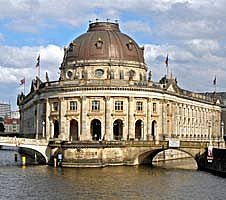
The Bode Museum, part of the Berlin State Museums, crowns the northern tip of Museum Island. Completed in 1904, the building now houses the Sculpture Collection, the Museum of Byzantine Art and the Numismatic Collection. It also displays around 150 paintings from the Picture Gallery.
The design of the building, originally constructed as the Kaiser Friedrich Museum, was based on ideas put forward by Crown Princess Victoria in the early 1880s, which Wilhelm von Bode brought to fruition. In 1956, it was renamed after its spiritual creator, a name it retains to this day: the Bode Museum.