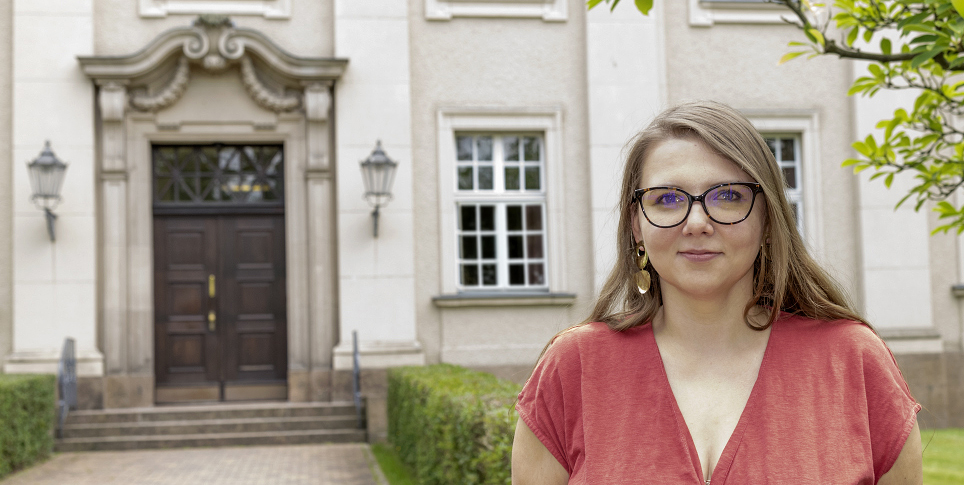
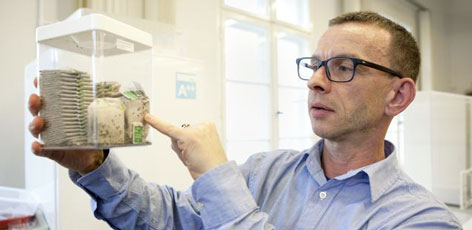
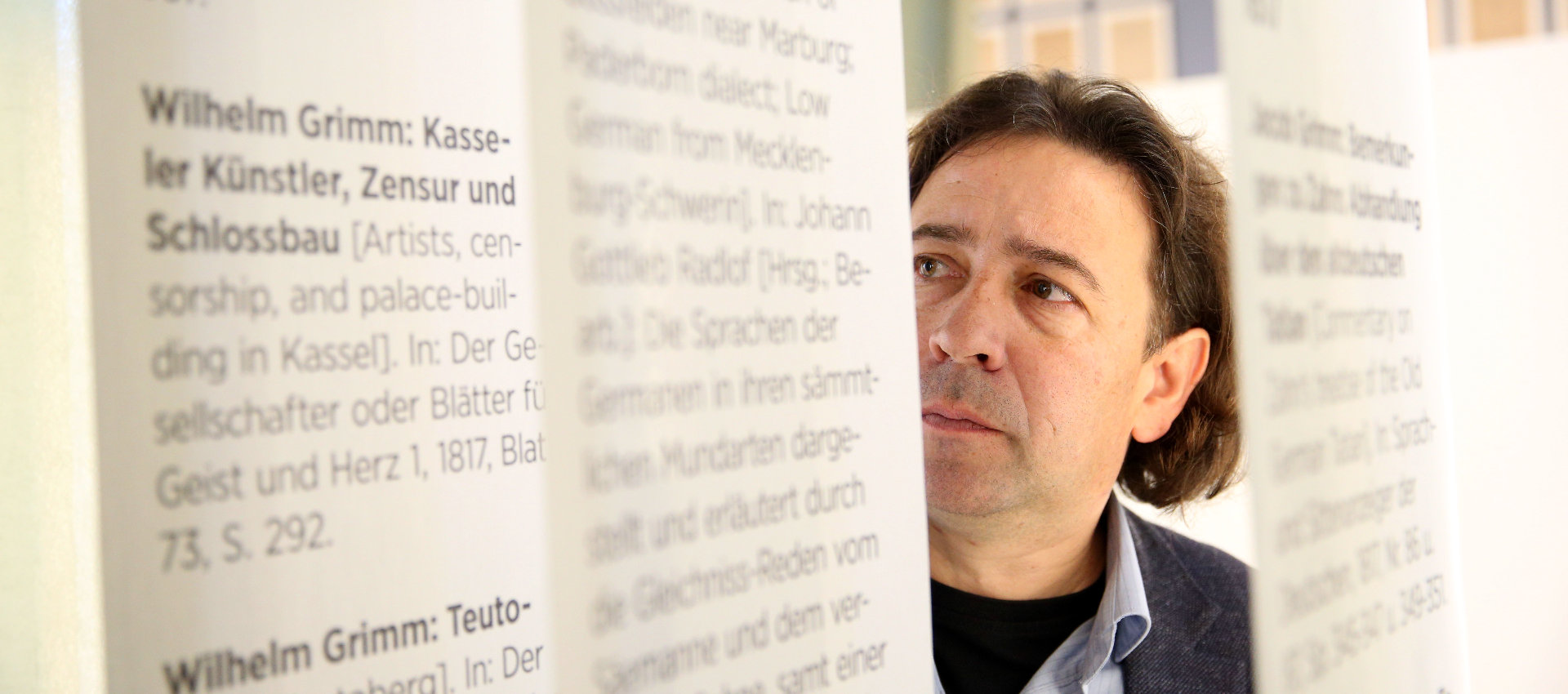
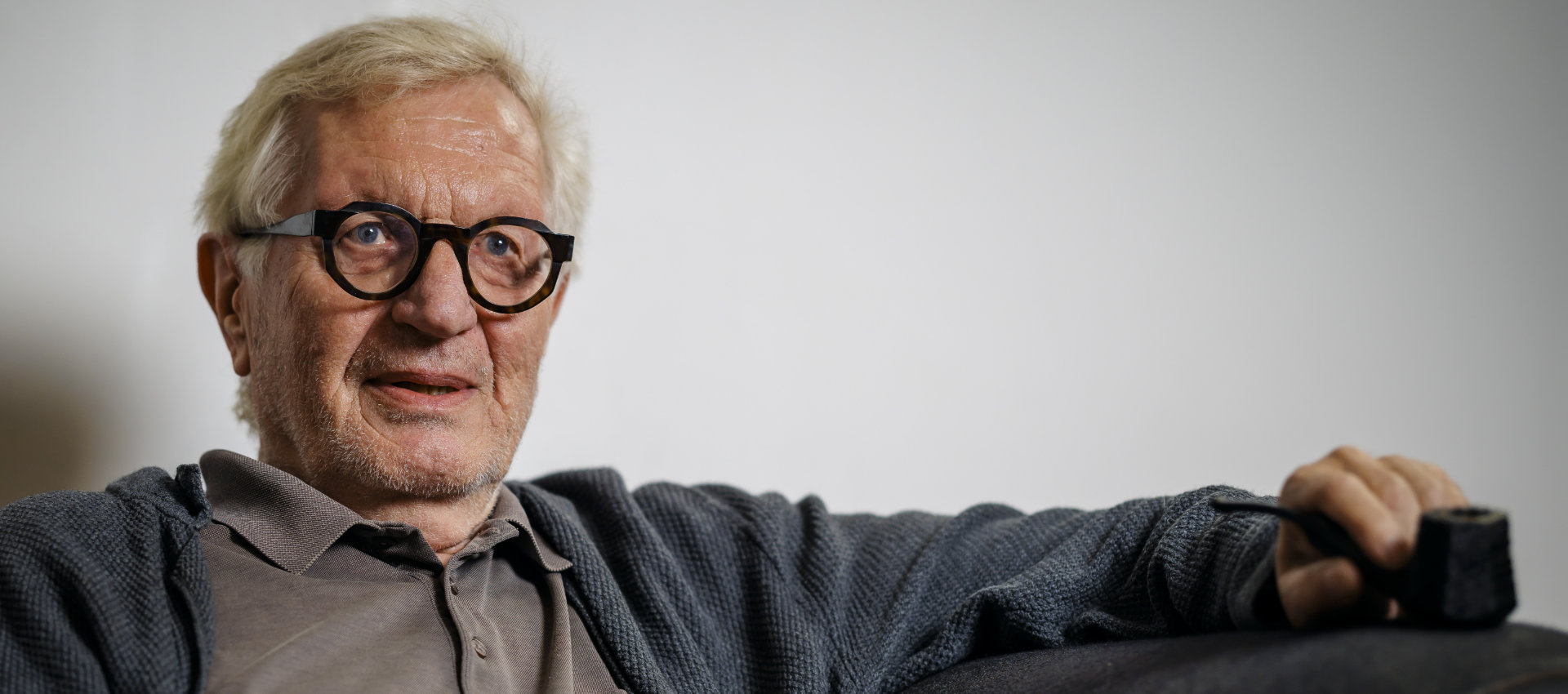
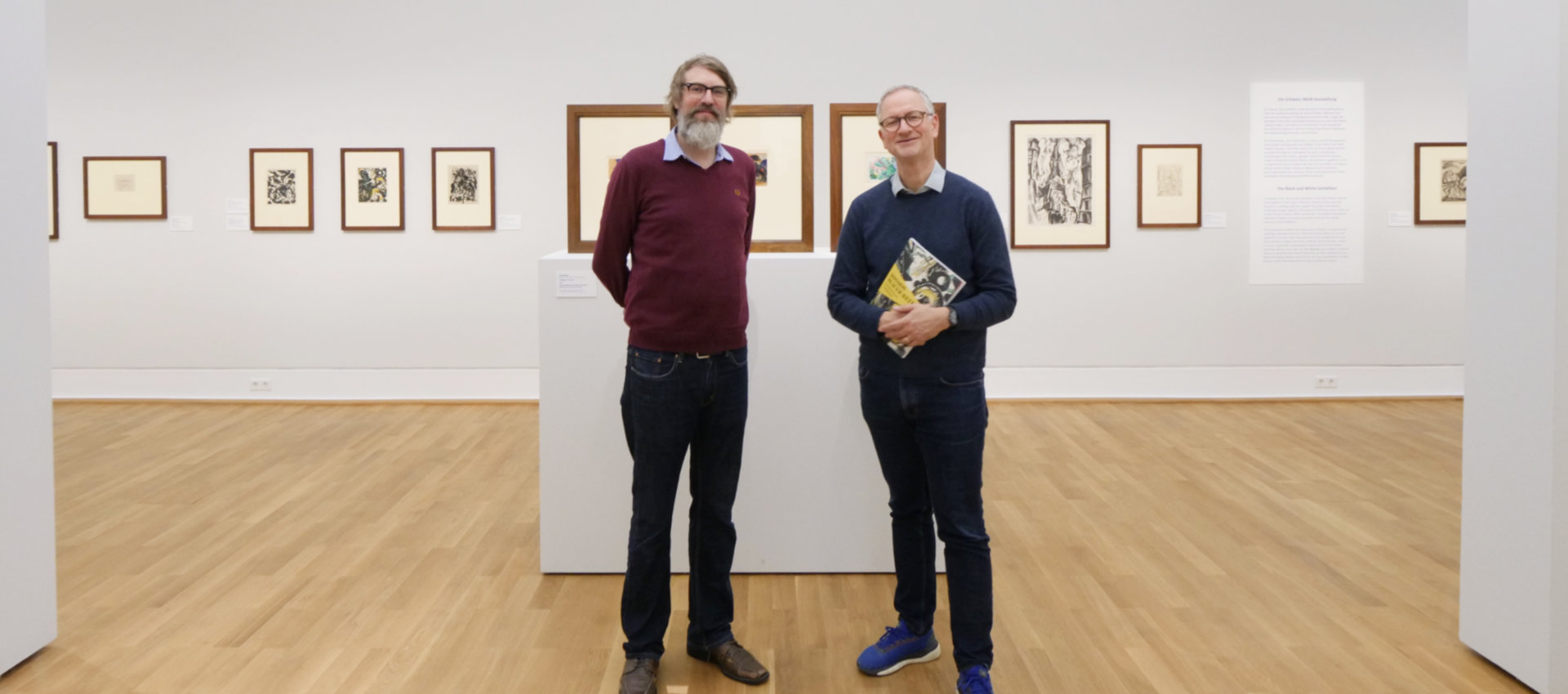
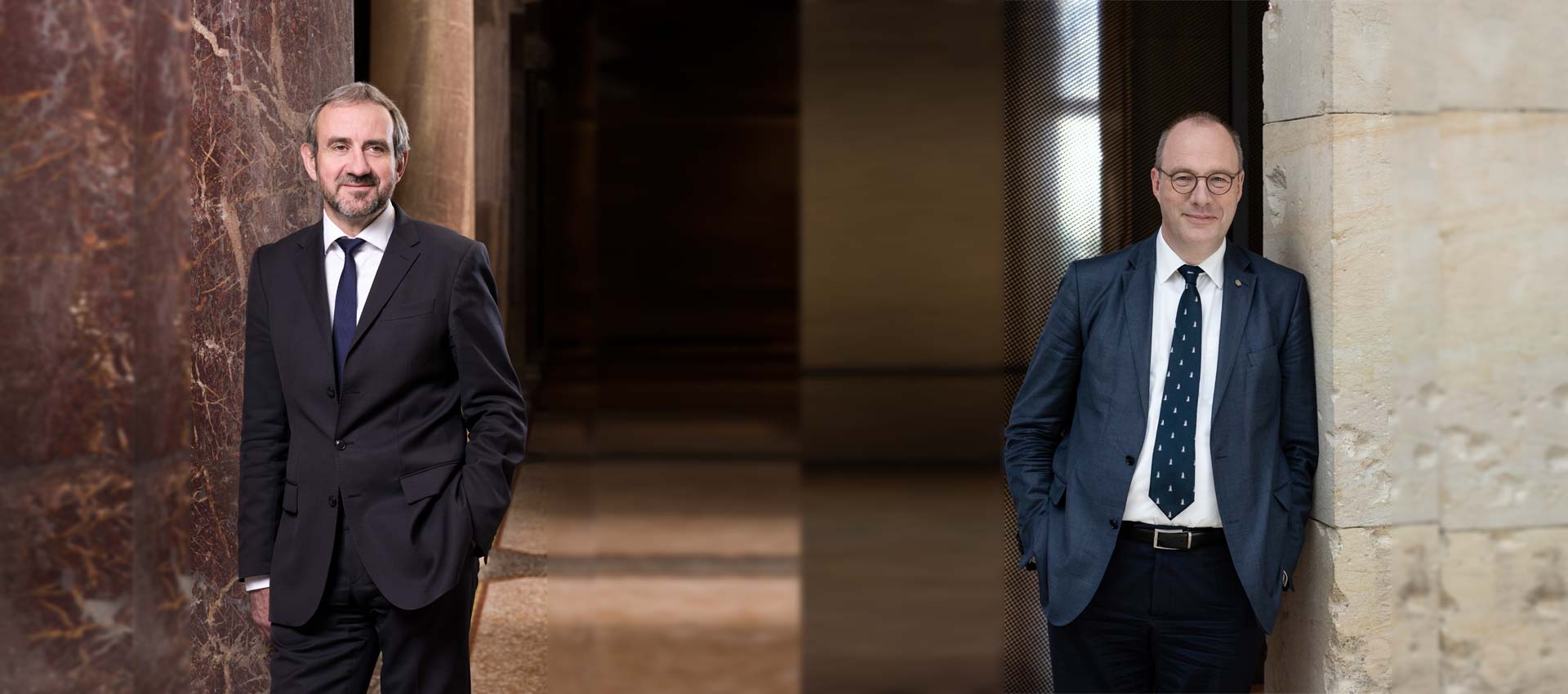
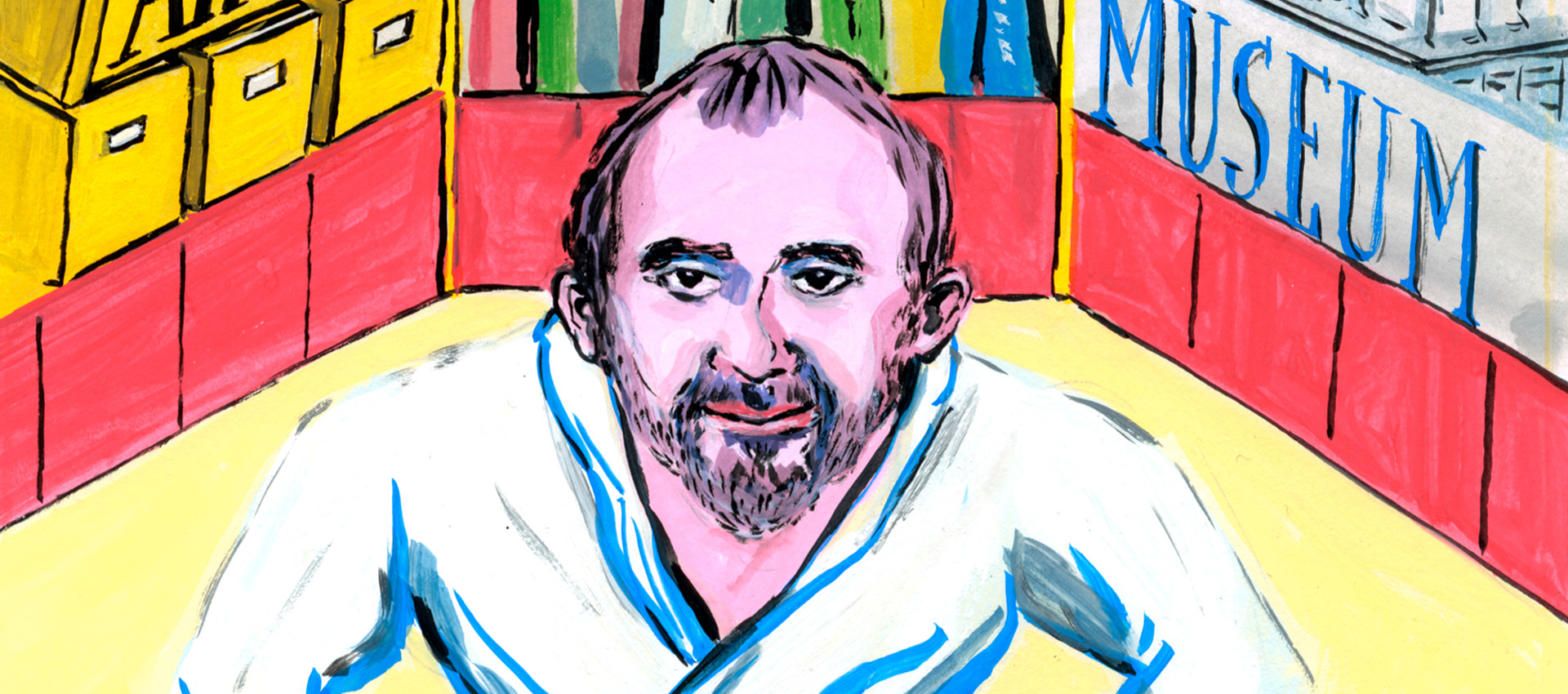
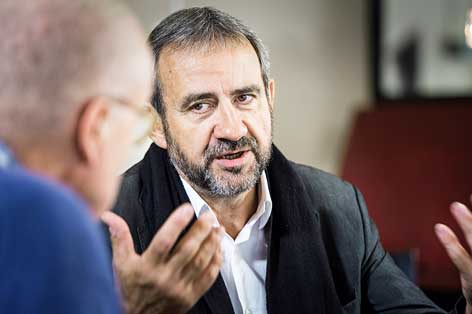
Holger Ehrhardt is a professor of German studies at the University of Kassel, specialising in the ‘Works and Influence of the Brothers Grimm’. His research frequently takes him to Berlin, as this is where the estate of the two giants of fairy-tale literature, Jacob and Wilhelm Grimm, is held. In this interview, Ehrhardt, who was awarded the European Fairy Tale Prize in 2023, reveals what fascinates him about Grimm’s fairy tales and why there is still much we do not know about the mysterious original versions of the stories.
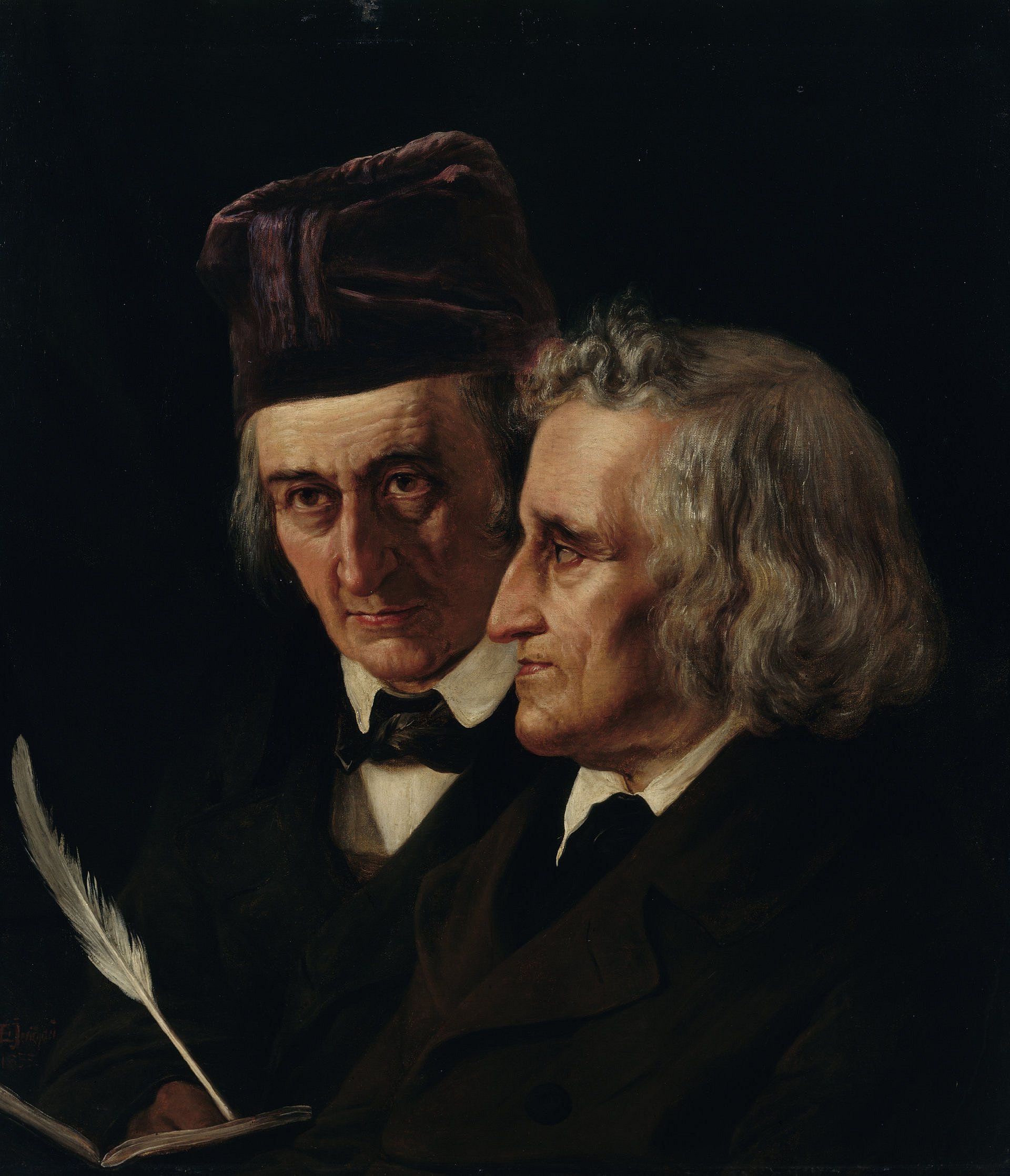
The two brothers, Jacob (1785–1863) and Wilhelm Grimm (1786–1859), were Germany’s most famous collectors of fairy tales and legends.
Double portrait by Elisabeth Jerichau-Baumann, 1855. Photo: bpk / Nationalgalerie, SMB / Andres Kilger
First of all, it’s remarkable that such a specialised professorship exists in Kassel. How did you end up there?
Holger Ehrhardt: The Brothers Grimm worked in Kassel for many years and the city feels a strong connection to this heritage. At some point, a citizens’ initiative decided to establish an endowed professorship – which I then took up. This was made permanent, and so I am now a fully integrated member of the Institute of German Studies at the University of Kassel.
What fascinates you about the Brothers Grimm?
I came across the subject by chance many years ago, as often happens in research. But my grandfather’s surname was Grimm, and my mother was born a Grimm. That may well have played a part subconsciously.
Is there a family connection?
No, I’ve checked that, of course (laughs). But my grandfather always read me the fairy tales and also told me he was related to the Brothers Grimm. Even as a child, I eventually realised for myself that couldn’t be true. Nevertheless, there is a special connection. Whilst studying German, I ended up back with the Grimms.
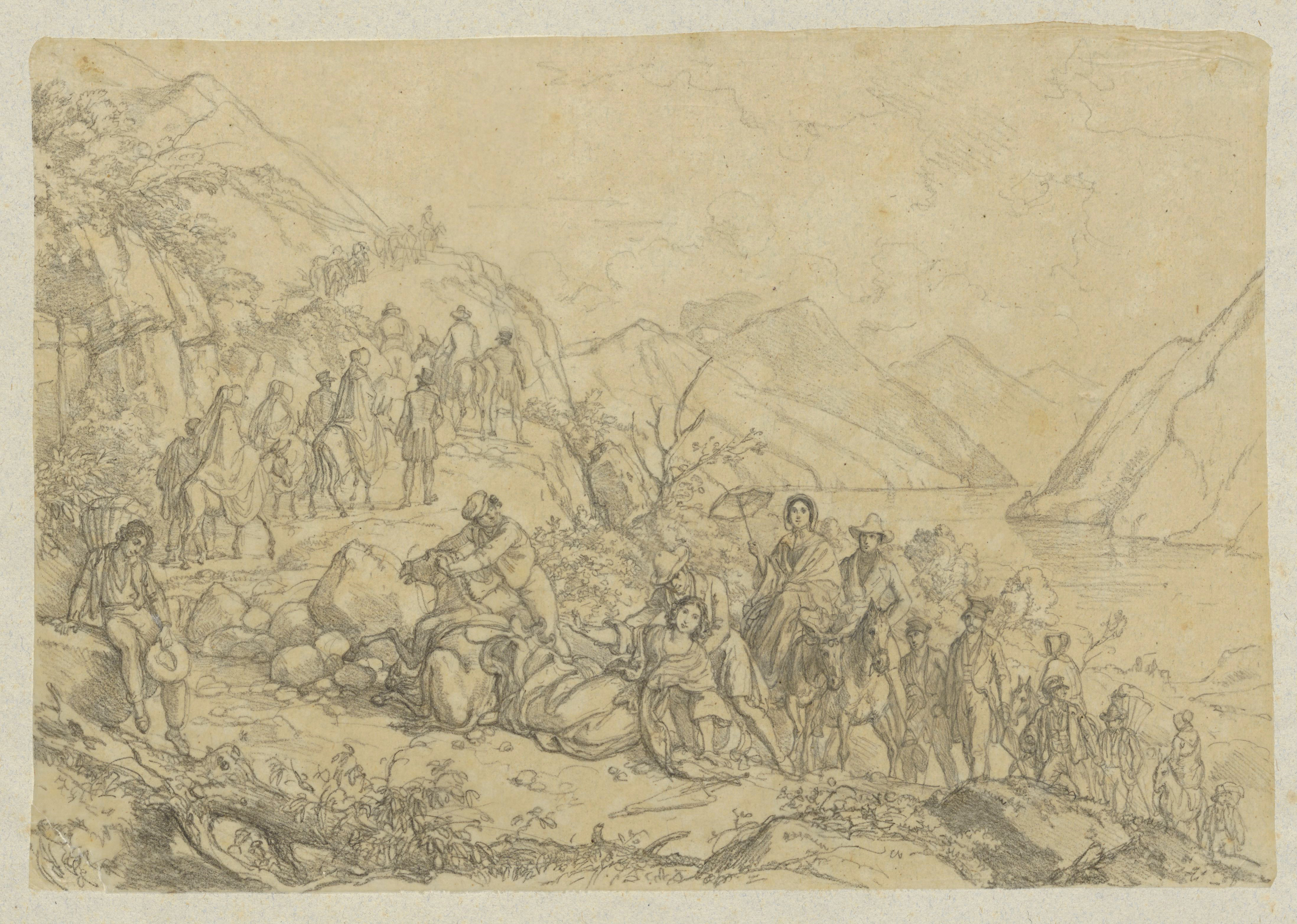
Photo: bpk
Photo: bpk / Dietmar Katz
Photo: bpk / Art Library, SMB / Knud Petersen
Photo: bpk / Dietmar Katz
You have conducted extensive research into the brothers’ written estate in Berlin. What makes Berlin so important for Grimm scholarship?
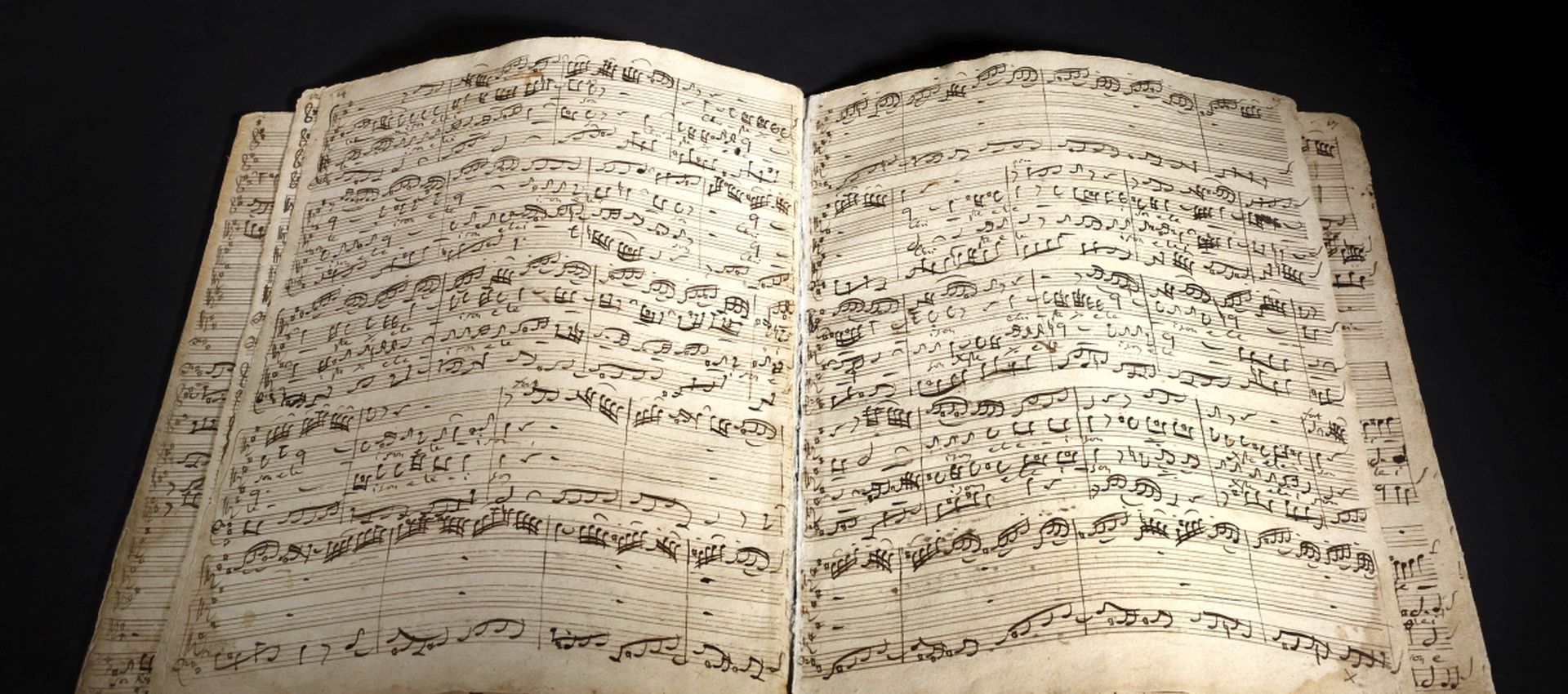
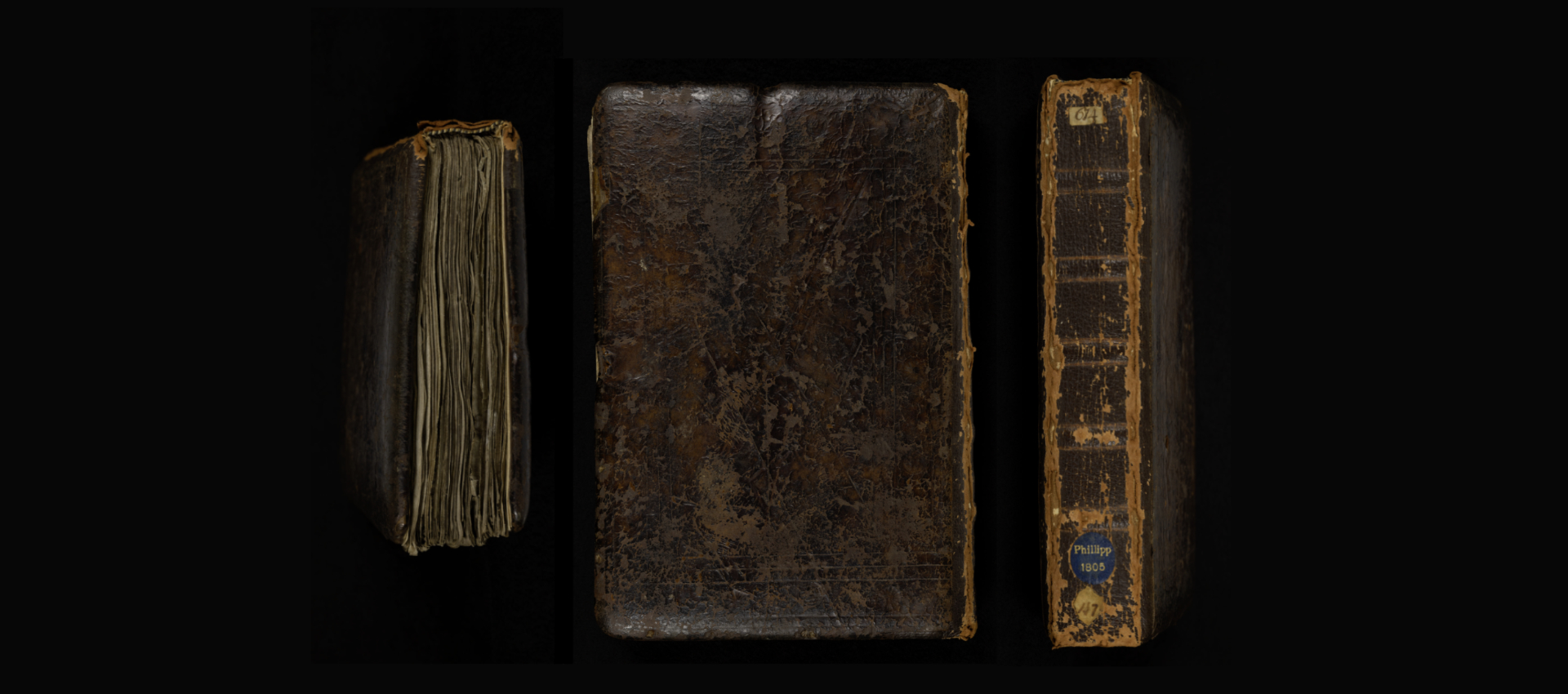
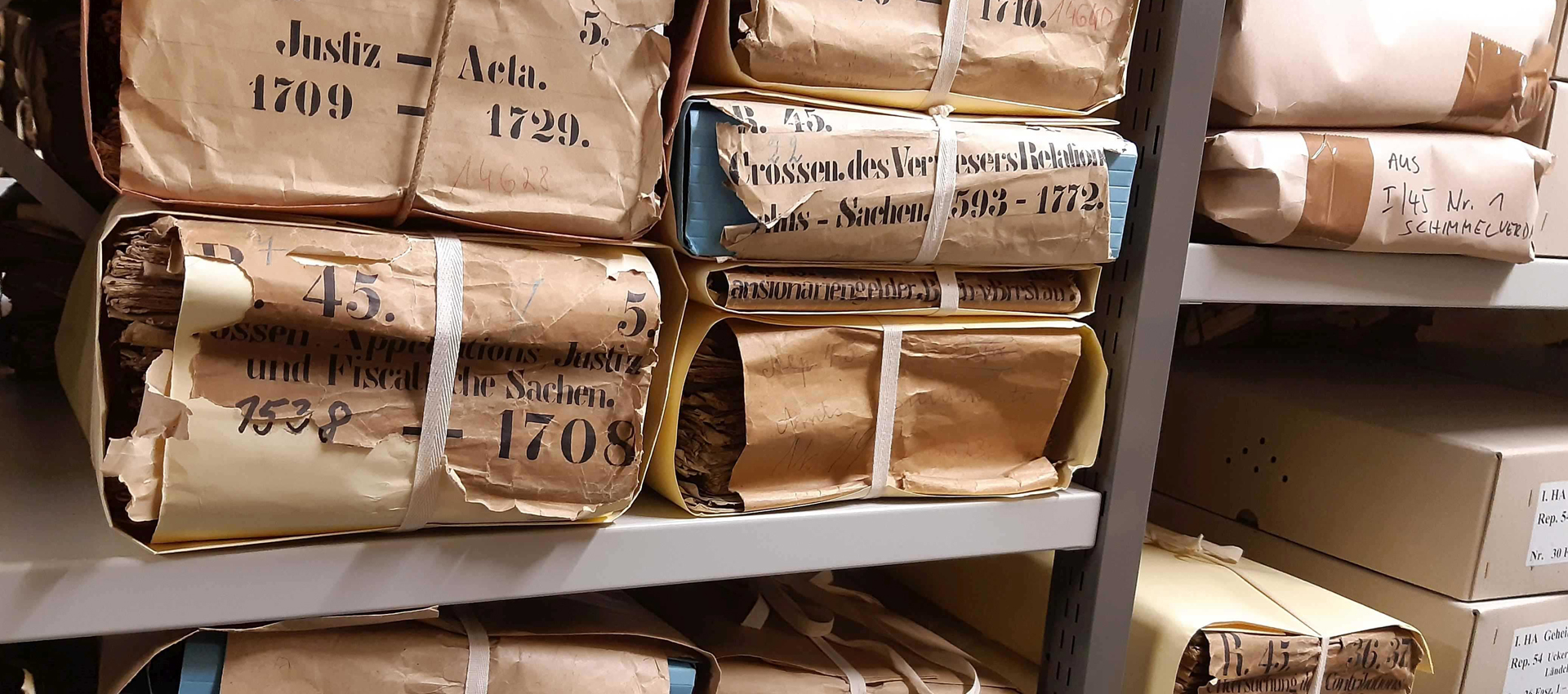
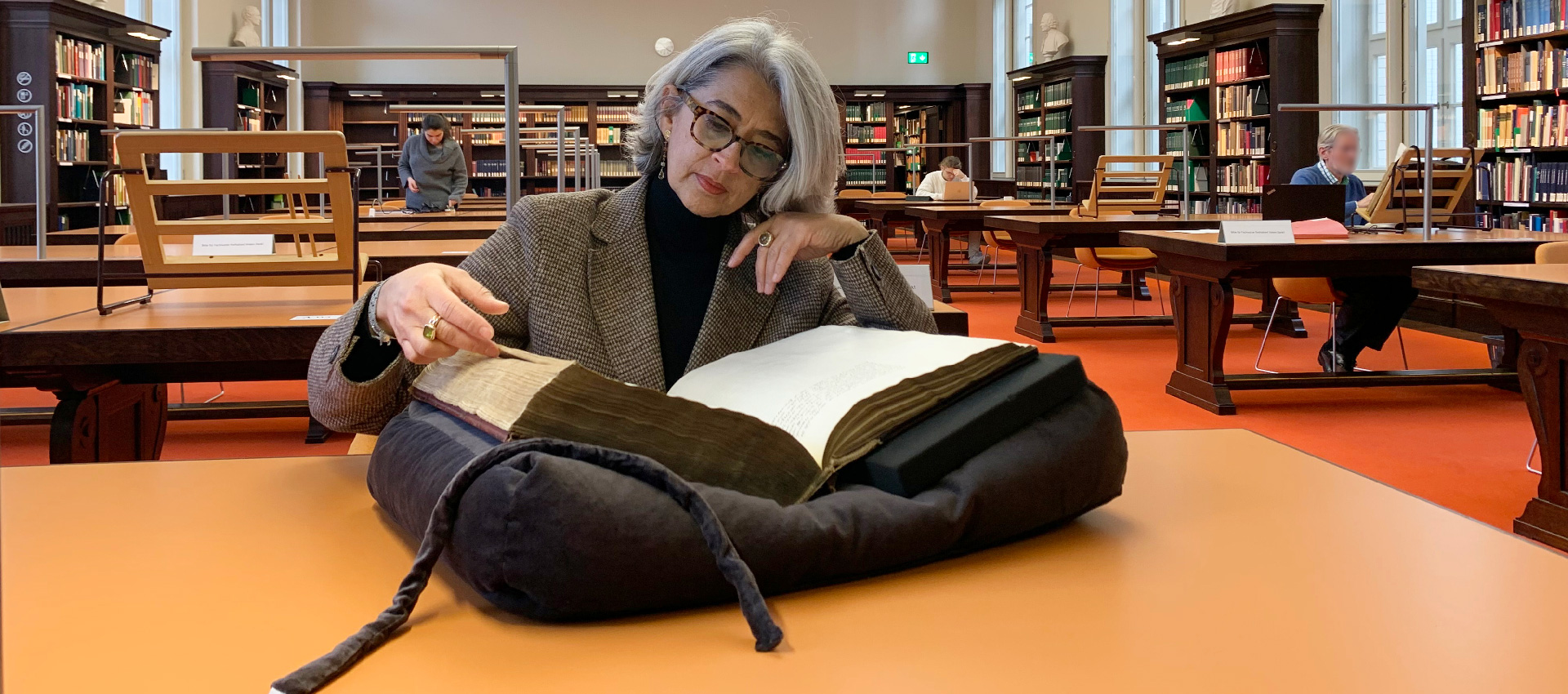
The written estate of the Brothers Grimm came into the possession of the Berlin State Library, or rather its predecessor, the Royal Library (the Grimms spent their final years in Berlin and are also buried there, editor’s note). Their private reference library was taken over by the University of Berlin and is now part of the collection of the Humboldt University Library in Berlin. Parts of the Grimm estate are also located in Kassel and Marburg, but the majority is in Berlin. And if you’re researching the Grimm fairy tales, you simply cannot ignore this estate. It contains many manuscripts that represent the precursors to the fairy tales – including (in some cases) unpublished fairy-tale drafts. And that is what my research project is about. I am attempting to compile all the handwritten drafts of the later printed versions. About half of them have not yet been published.
How do you go about this?
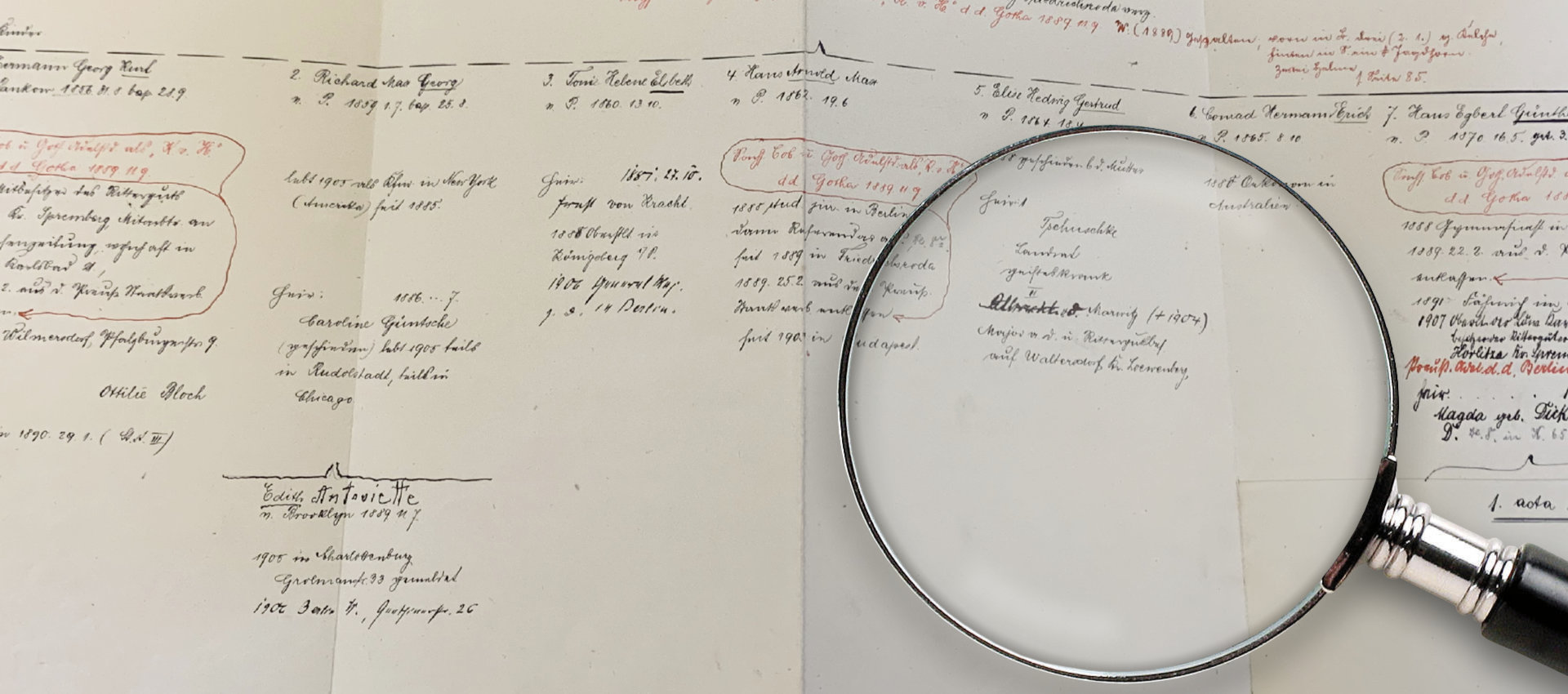
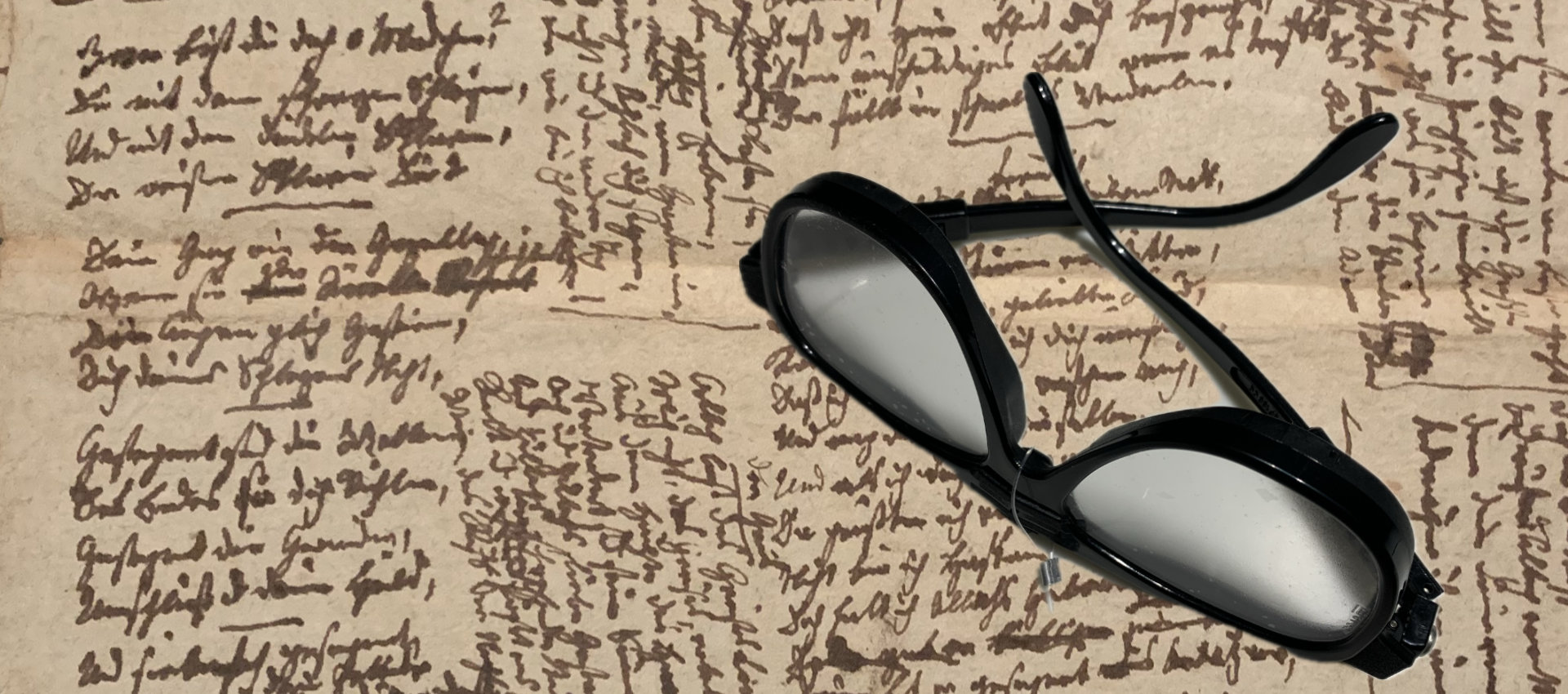
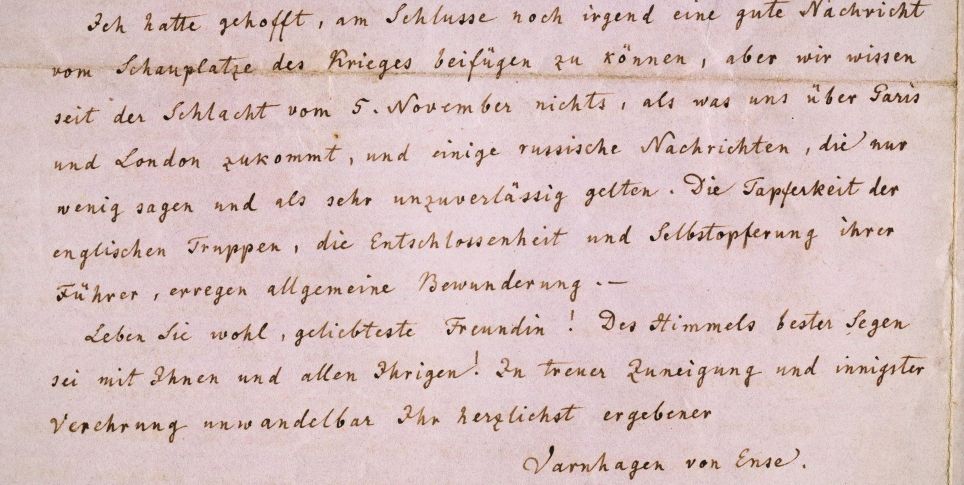
In recent years, I have been working intensively on the so-called contributors – that is, the people who sent the Grimms their fairy tales and legends. As part of this, I am also examining the manuscripts. Handwriting is a personal trait and contains many clues. It tells me who wrote what, or even when something was written – based on changes in handwriting. It is a very exciting, but also a very complex task, to edit these texts by different writers with varying levels of education using a consistent approach.
The original versions reflect over 40 years of the developmental history of the Children’s and Household Tales. In some cases, I have to verify texts using very complicated methods, for example, Lachmann’s so-called textual criticism. I have to check whether the texts are truly original versions or whether the printed versions might in fact draw on other sources, and then I try to compile this into a coherent whole. That is why I am now taking a research semester and will return to Berlin to continue working on this corpus.
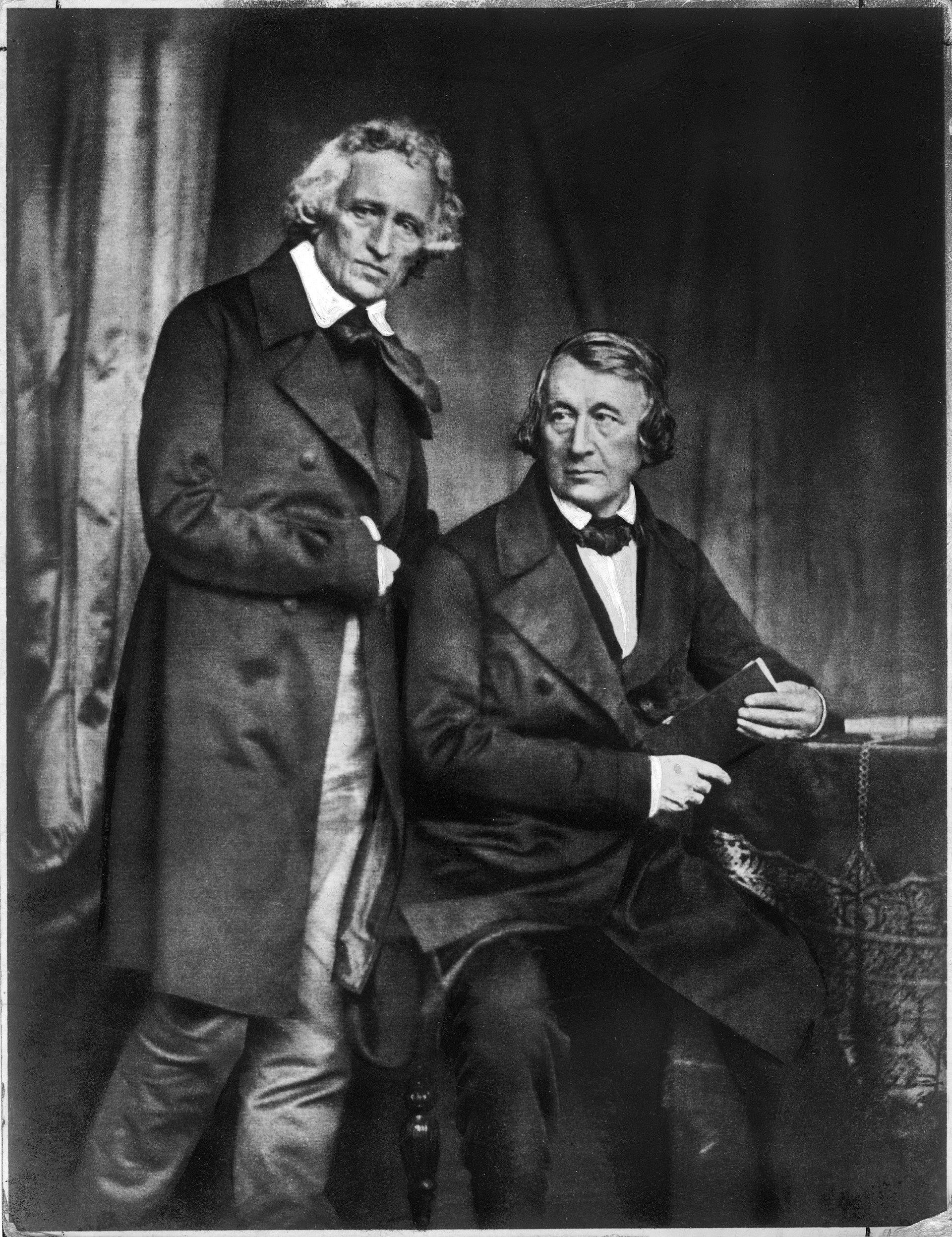
Photo: bpk / Hermann Biow
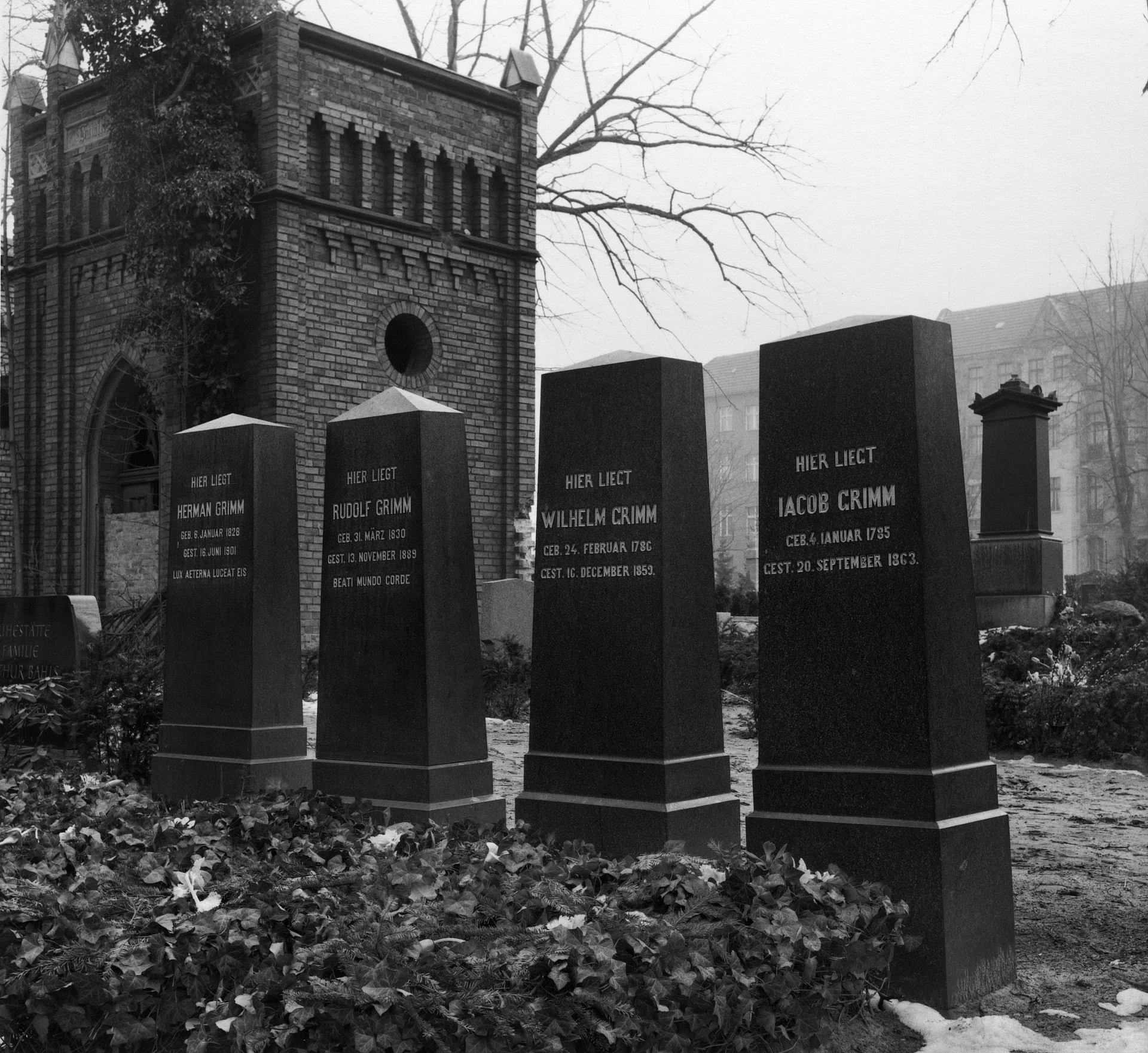
Photo: bpk / Liselotte and Armin Orgel-Köhne
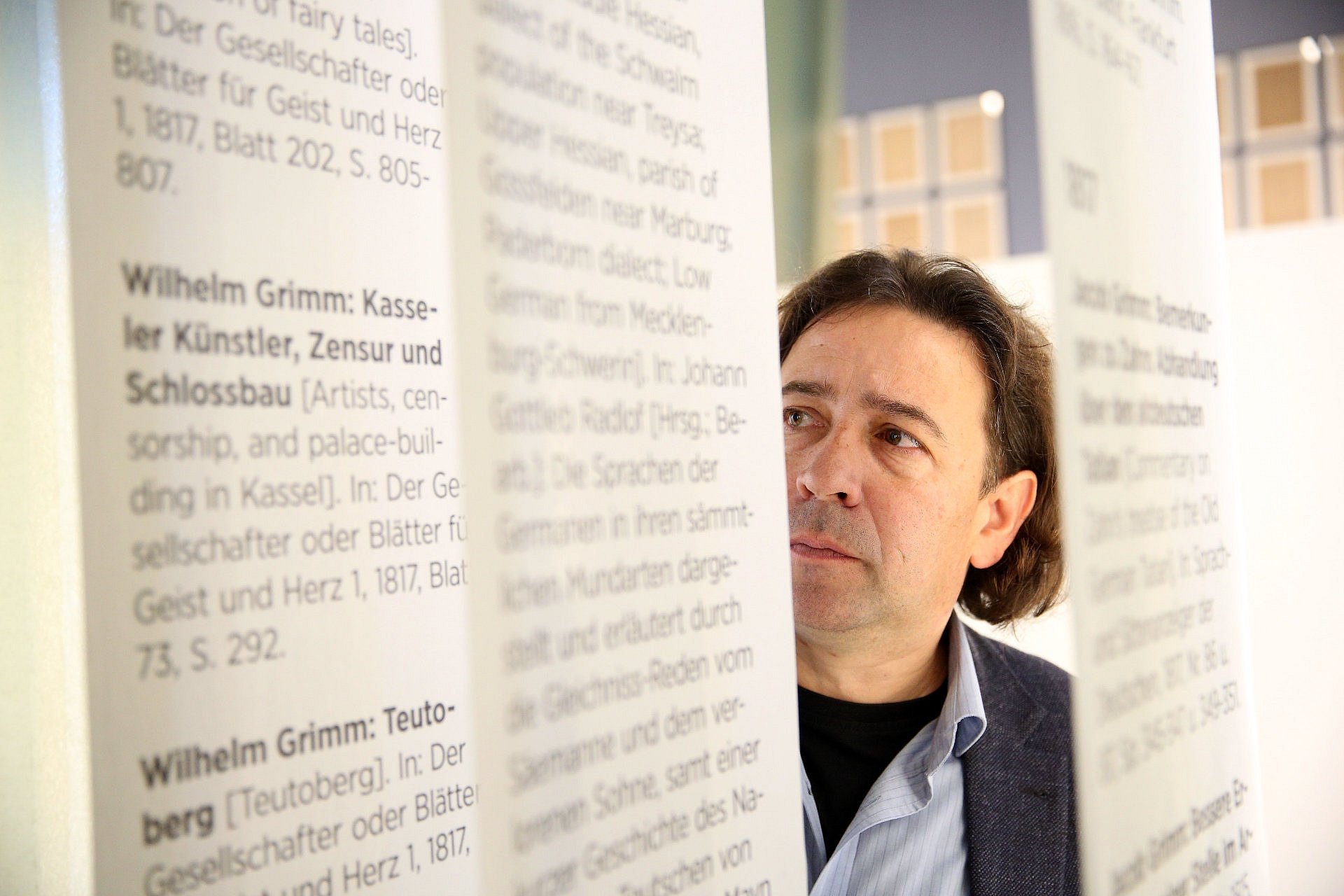
Photo: Andreas Fischer
Why do you have to travel all the way to Berlin for this? Surely many of the estate documents have been digitised by now.
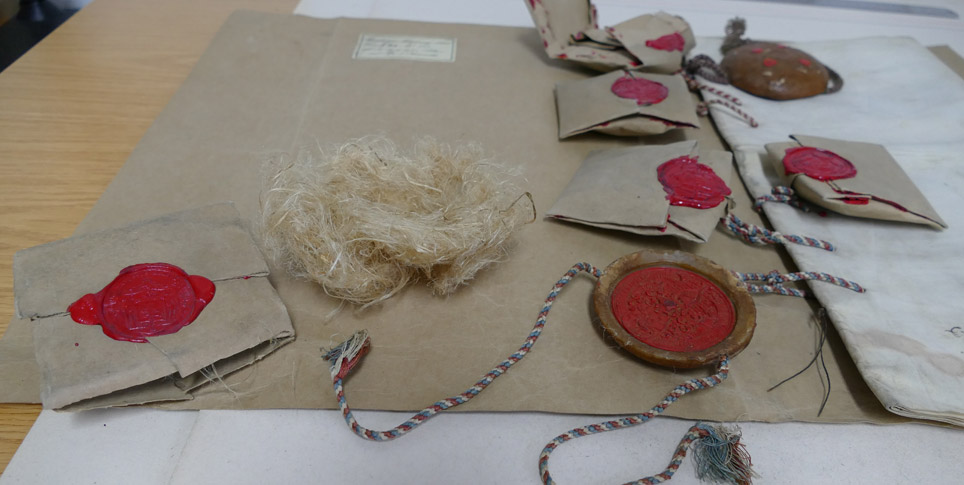
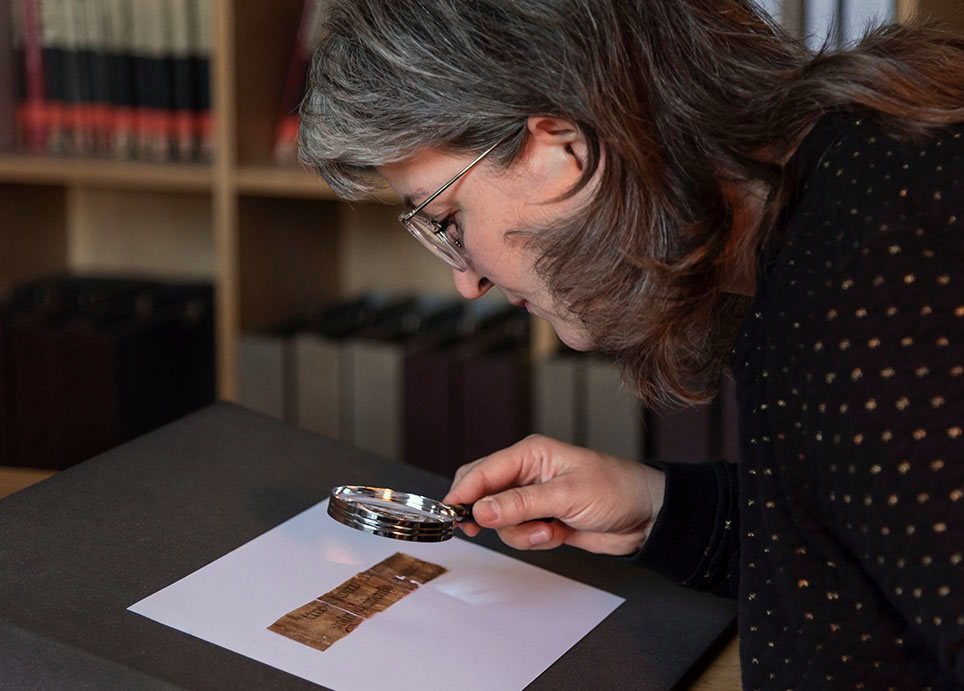
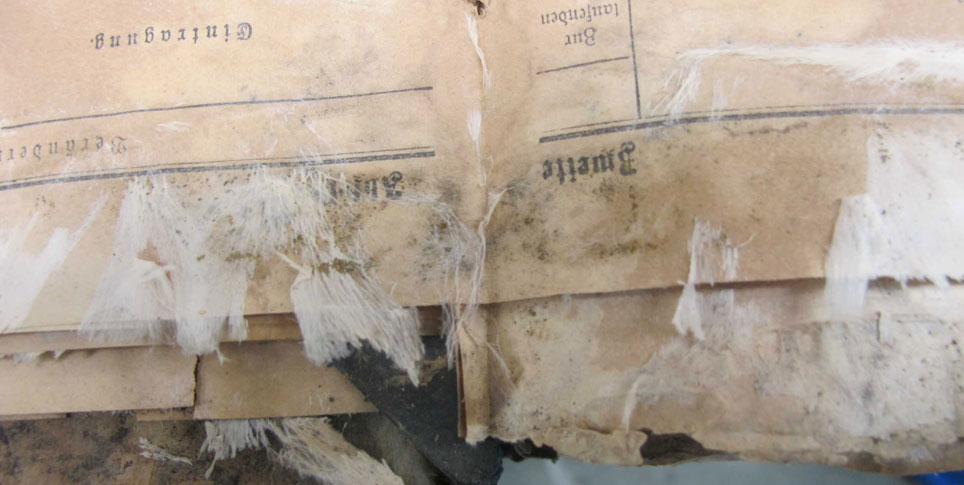
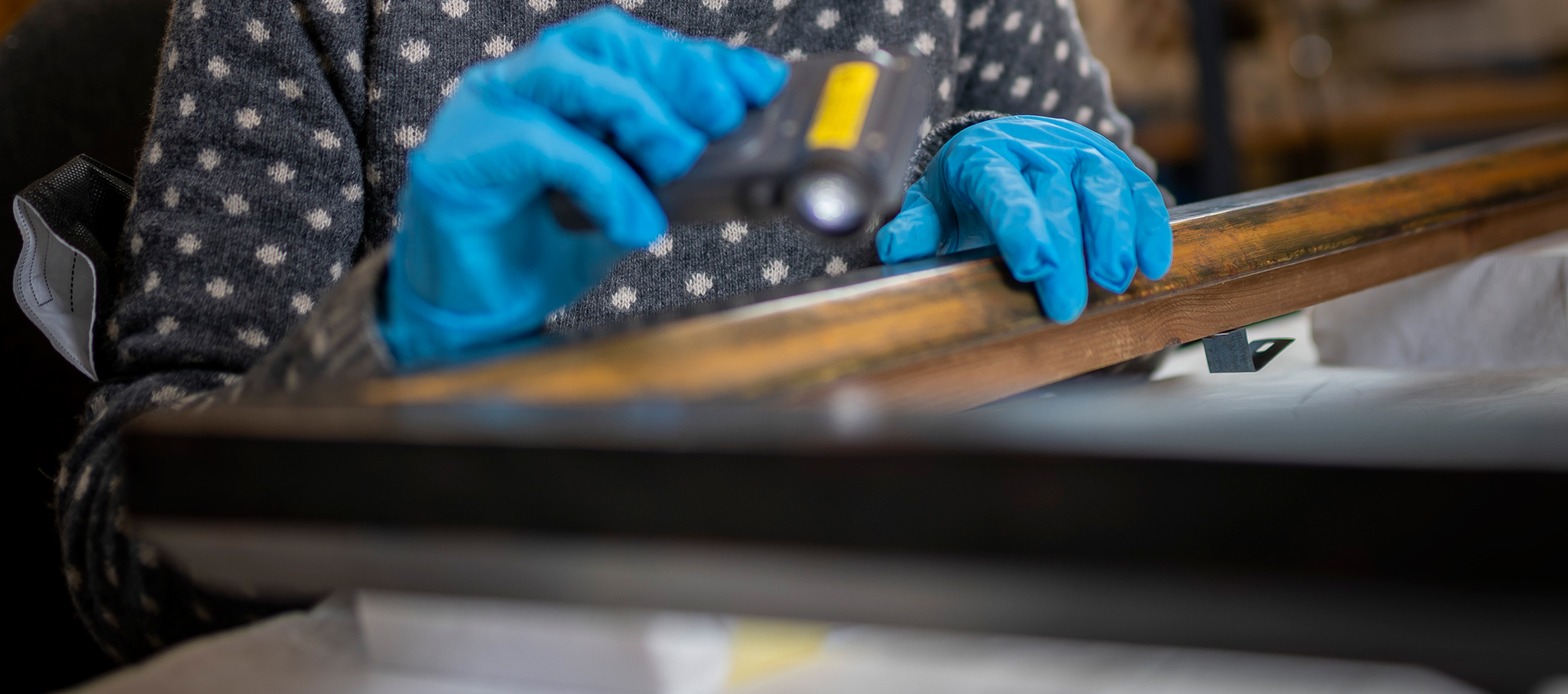
It is essential for me to be on site and to handle the manuscripts myself. In doing so, I examine the manuscripts closely. Among other things, I also need to determine the paper quality and watermarks. All these characteristics help me to date the documents, as they are not organised in one place within the estate, but scattered across various locations. This allows me to draw conclusions about the chronological classification of the texts based on the quality of the materials.
On the other hand, I still have to proofread these texts again – even if high-resolution digital copies are available. They never provide reliable information about punctuation, for example: ‘Is that a comma or not?’ You have to be on site for that. For the edition I’m working on, I may have to collate another 300 to 400 pages of manuscripts (carefully comparing a copy with the original manuscript, editor’s note). I was much better at that when I was younger than I am now. Everyone knows the effect: you see a word and recognise it without having read it properly. And that mustn’t happen to me when collating! I have to record and compare every single letter. It’s extremely strenuous work that requires a great deal of concentration.
What different original versions of the fairy tales are there?
Most of the documents are manuscripts from contributors that reached the Grimms by post or in person. But there are also the transcripts. The Brothers Grimm listened to the fairy tales and wrote them down at the same time. You can tell this from the style and speed of their handwriting.
Occasionally, we have not only oral but also written contributions – that is, fairy tales already published in literature that served as a basis for the *Children’s and Household Tales*. Not everything has been found there either. For example, a few days ago I was in Hildburghausen and photographed a book that exists in only one copy in the world, to determine whether the transcript from the estate can be traced back to this book. So I get to travel all over Germany as a Grimm researcher!
The fairy tale floated about in the ether for centuries before finally finding its way to the Grimms
One of the best-known contributors was the storyteller Dorothea Viehmann. What have you discovered about her?
To date, we know of 37 fairy tales that she told. The Grimms recognised immediately that they had an exceptional storyteller before them. Nevertheless, her fairy tales are not the most popular today. ‘The Goose Girl’ is perhaps still the best known. But she told very fine fairy tales, and we really owe her a large part of the stories in the second volume. She set a certain tone, a very beautiful fairy-tale language. There is still much to explore regarding her. I can already reveal that there are further stories by her in the estate that have not yet been published.
What have been the most surprising findings from your research into the estate so far?
Firstly, that the fairy tale *The White and the Black Bride* was written by Dorothea Viehmann. I established this on the basis of linguistic evidence. Until now, this fairy tale has been regarded in the specialist literature as originating from Mecklenburg and Paderborn. But that cannot be correct. A wealth of evidence shows that the fairy tale was told by Dorothea Viehmann.
I have also found another manuscript in which a very old fairy tale is recounted, one that previously existed only as a Middle High German poem. The poem is 400 years old and there is no further written record of it after that! That is absolutely fascinating: she tells stories she cannot have read. It is often claimed that fairy tales merely draw on other literary sources. But here, a fairy tale floated around somewhere in the ether for centuries and eventually found its way to the Grimms. It was they who first collected and compiled many such stories.
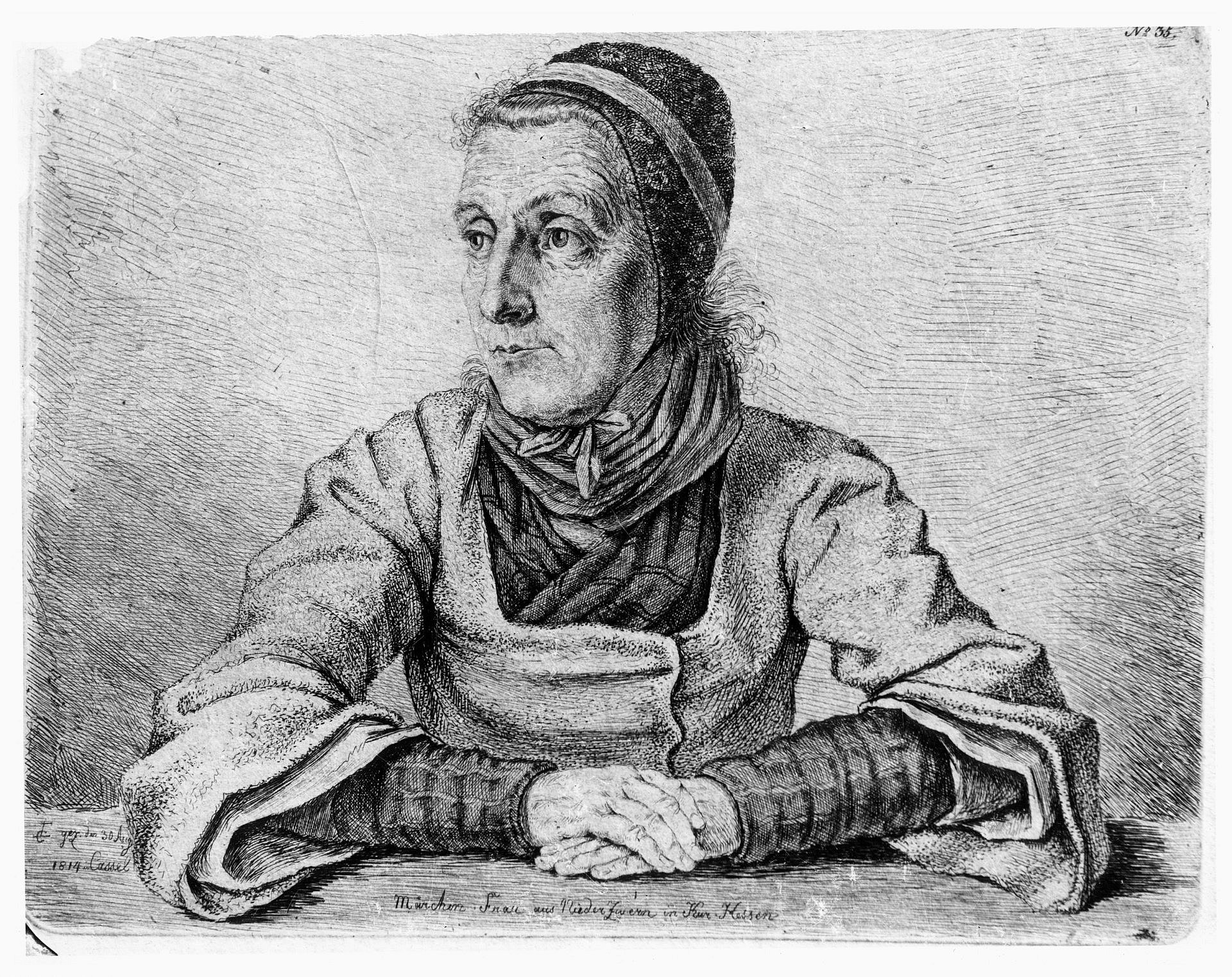
Photo: bpk
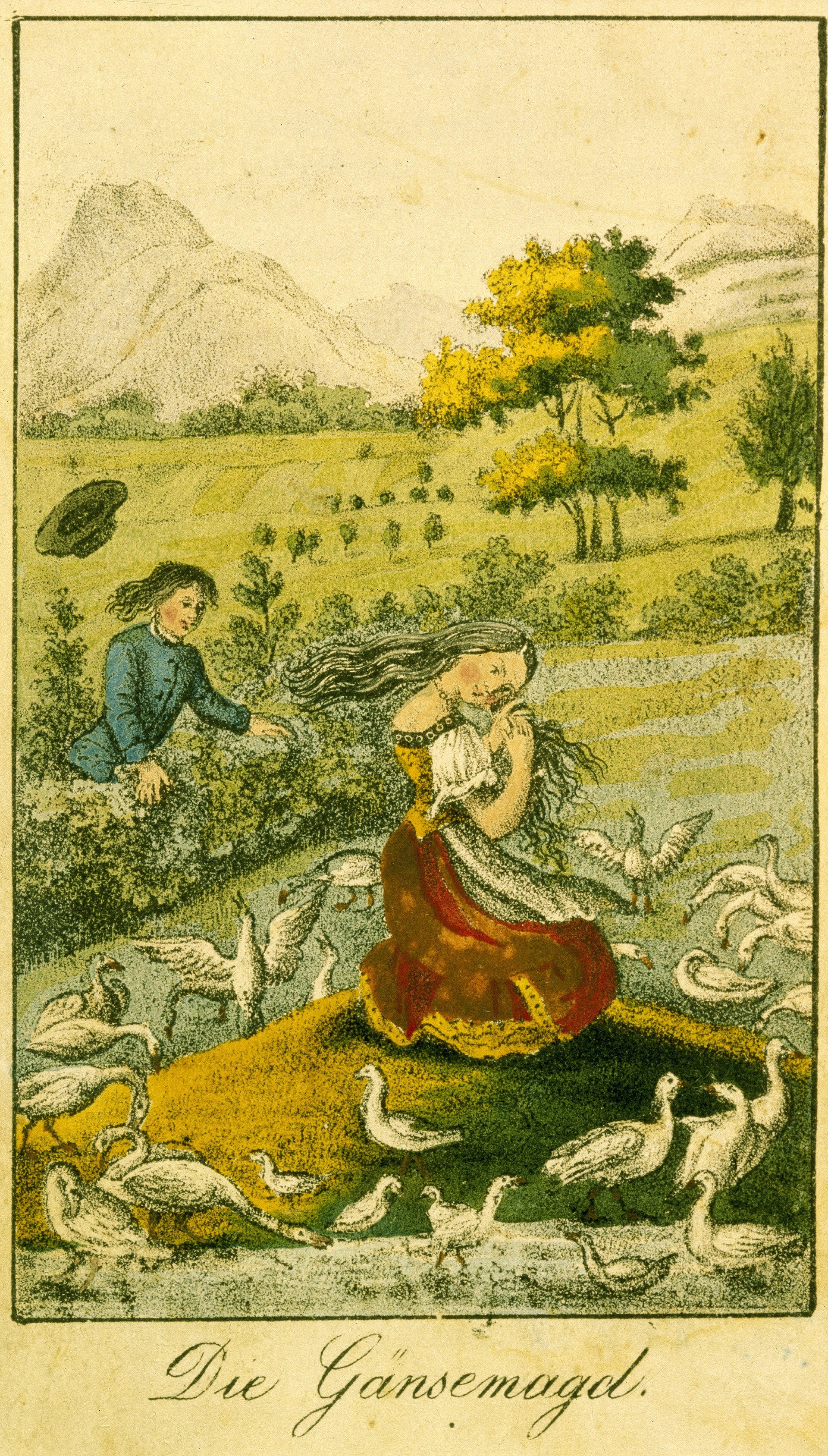
Photo: bpk
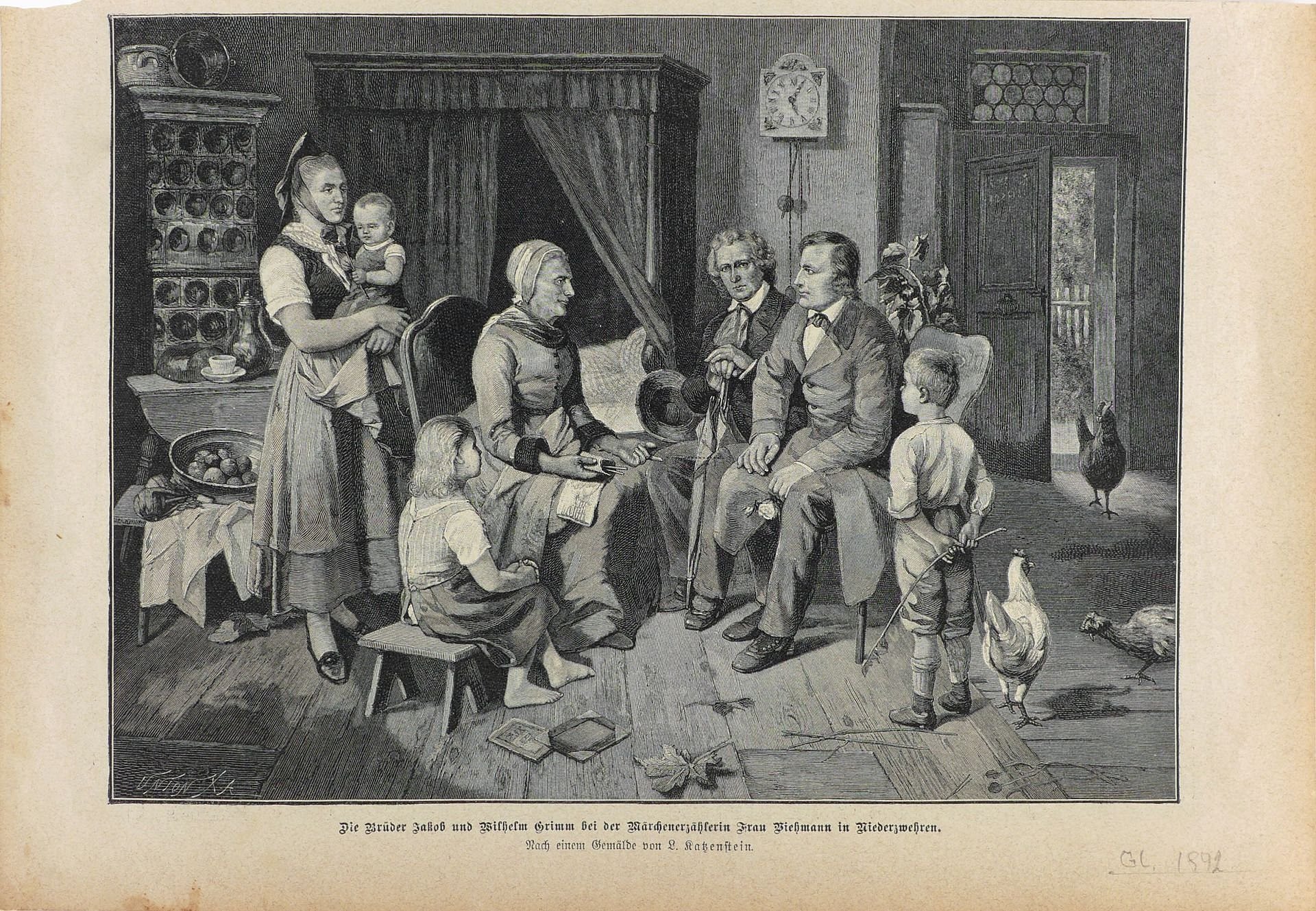
Photo: bpk / Museum of European Cultures, SMB / Michael Mohr