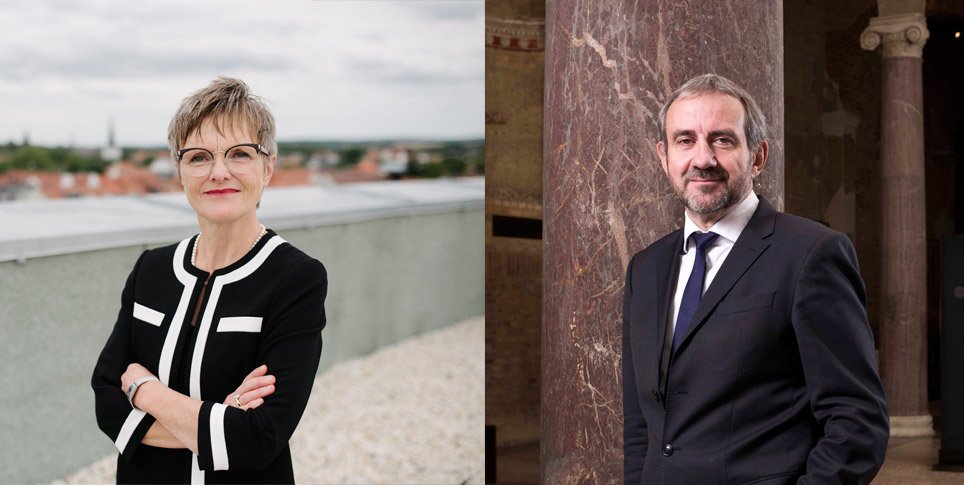
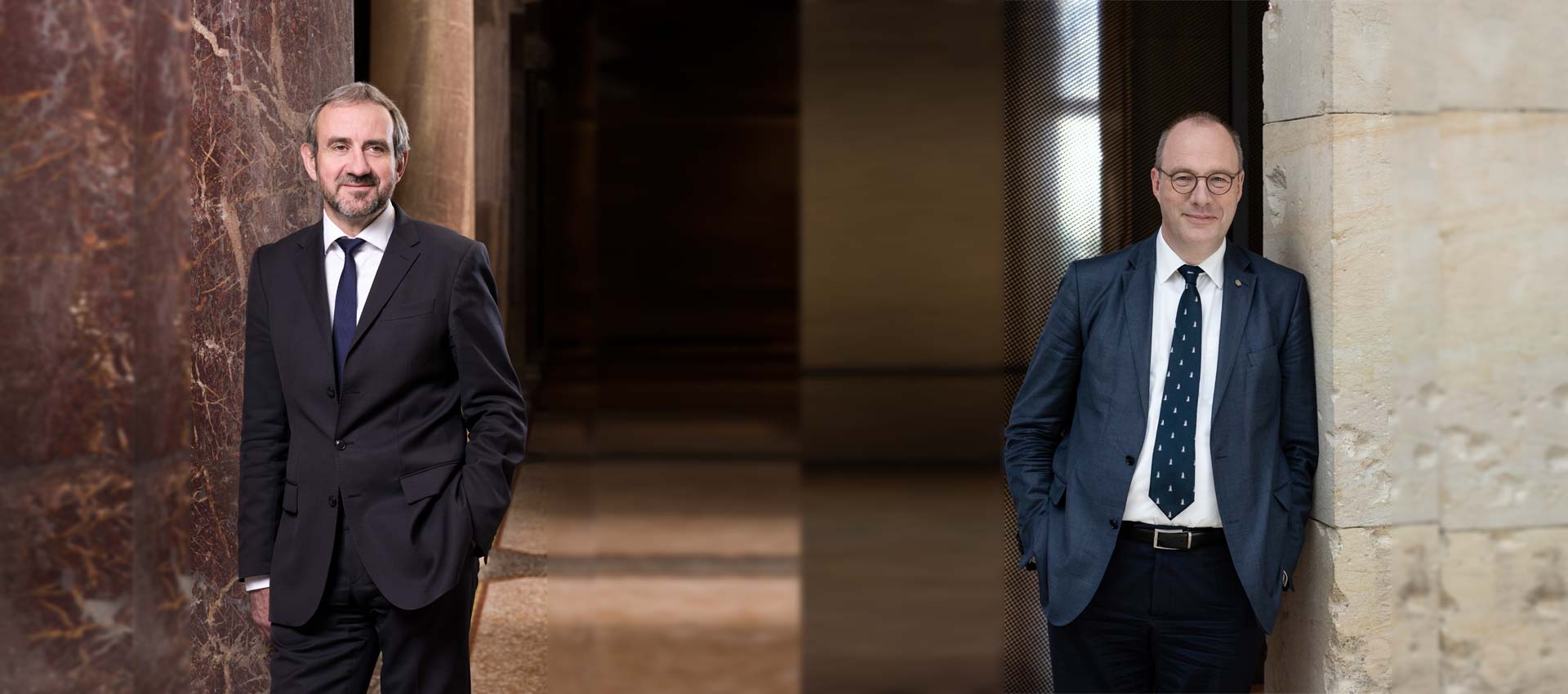
In the summer of 2017, the handling of non-European collections was a particularly hot topic in the German arts pages. The debate, which had been sparked by art historian Bénédicte Savoy in relation to the Humboldt Forum, centred primarily on objects from a colonial context. This is an issue that the Prussian Cultural Heritage Foundation has been addressing for several years. We spoke to Viola König, director of the Ethnological Museum of the Berlin State Museums until the end of 2017, and Jonathan Fine, who has been curator of the West African, Cameroon, Gabon and Namibia collections and coordinator of provenance research at the museum for the past three years.
Ms König, has really so little been done in recent years as has been claimed?
Viola König: The Ethnological Museum has always conducted provenance research. There is simply no other way when dealing with a collection from a scholarly perspective. But I still remember well the time when the word ‘restitution’ was frowned upon in cultural policy. A lot has changed since then. Not only in Germany, but in various European countries, against culturally and historically diverse backdrops.
Let’s get specific. Recently, the Board of Trustees of the Prussian Cultural Heritage Foundation approved the return of grave goods to the Chugach community in Alaska. Are restitution claims the norm or the exception?
König: One cannot claim that our museum is constantly faced with restitution claims. In this particular case, we found references in Johan Adrian Jacobsen’s travel accounts indicating that he had acquired objects through grave robbery. Once we had identified these objects here with representatives of the Chugach community, it was absolutely clear to us that we would return them, and the federal and state-level Foundation Board also agreed to this. Museums must be able to provide detailed information regarding the provenance of their collections. There is no question that this is our responsibility. However, what stance politicians will take on this and what consequences this will have for the handling of the objects is the question for the coming years.
The Ethnological Museum has always carried out provenance research. There is simply no other way
Jonathan Fine: When I started at the Museum of Ethnology in late 2014, I was surprised by how few restitution claims there were. However, I also believe that the public tends to treat the issue of restitution in a rather sweeping and undifferentiated manner.
Now, critics might argue that there are so few restitution claims because representatives of the societies of origin are simply unable to obtain information with the necessary level of detail?
Fine: That isn’t always true. I recently read a museum catalogue from a museum in Cameroon that described the history of the conquest. I was surprised to find that even our inventory numbers were listed there. There may well be a great deal of knowledge about our collection that largely complements our own. But it is our job to make this possible, which means we must create the greatest possible transparency worldwide.
But what do you need to achieve that?
König: Once again: a great deal has been achieved and published in the field of provenance research. The focus now must be on locating this knowledge, which is scattered internationally, and making it digitally accessible.
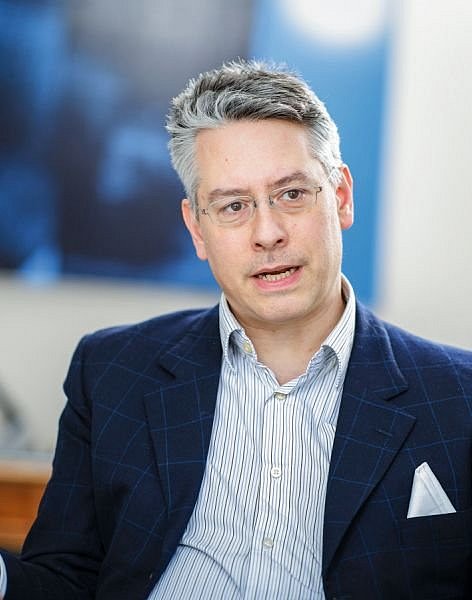
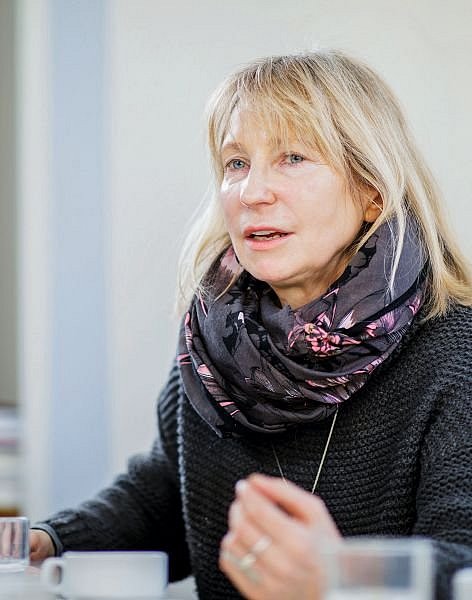
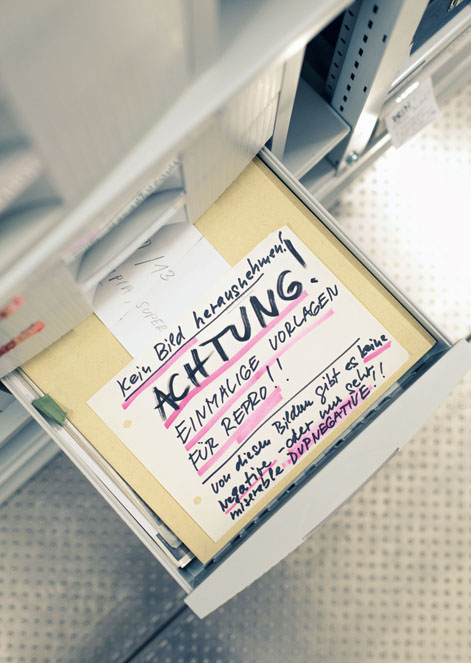
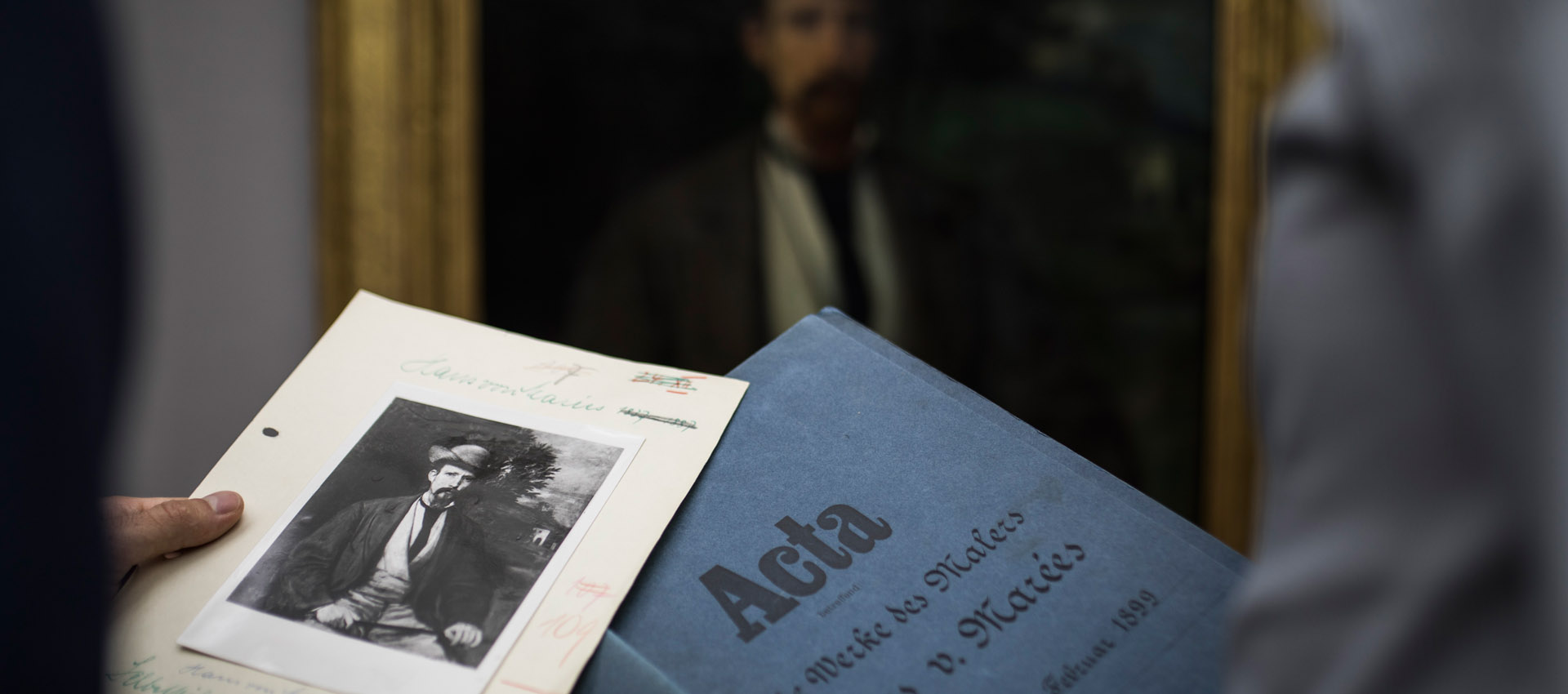
The German Research Foundation has, in fact, just awarded you funding to carry out this work for the Ethnological Museum’s archive. All documents dating up to 1947 are to be digitised: that amounts to around 1,300 thread-bound file volumes, 200 volumes of so-called main catalogues, and 85 volumes of incoming mail registers.
Fine: That is a huge help, but only a first step. It means the files can be accessed from anywhere. At the same time, however, the transcription and translation of these documents are still missing. That means if I cannot read cursive script, I am lost in the handwriting of the colonial officials. Generally speaking, it must be said that researchers in Germany and in the societies of origin need new ways to exchange their knowledge. We must now establish these. And it is important that people from all over the world no longer have to come to Berlin to work on a collection here; rather, we should take the collections out into the world.
We’re already getting into the finer details. Let’s go back to the summer of 2017. What has changed as a result of Bénédicte Savoy’s criticism?
Fine: There is now greater interest in this issue; it is, after all, listed as a point in the coalition agreement. Politicians have clearly realised that museums need more support – both in terms of staff and funding.
And what specifically would you like to see? Is it really just about money, or do priorities also need to be set in provenance research? For instance, contexts of violence first, or collections in which there is particular interest.
Fine: I think this is a very Eurocentric debate. To clarify where we set our priorities for provenance research and which contexts are important, we cannot do without our colleagues from the countries of origin. If we understand the dialogue with the societies of origin not just in theory, then we must take it quite literally at a practical level.
König: It is important that universities and museums demonstrate a strong commitment to jointly training the next generation. We need staff familiar with the subject matter who can take on these tasks relatively quickly. Unfortunately, an entire generation of now-emeritus professors did not regard the academic study of material culture as a serious discipline. Fortunately, this has changed in recent years. Now we are cooperating.
Fine: Museum collections are – for example, compared to archives – a source for world history that has so far been relatively little researched. That, too, is a topic of provenance research.
You mentioned that dialogue with the societies of origin should be conducted in a very practical manner. What experiences have you actually had so far?
König: There have never been aggressive, accusatory or lamenting conversations, but always a willingness to cooperate. There are also setbacks at times; some contacts have fallen dormant again. However, it is important that we keep such collaborations alive, which is of course not always easy given the long distance. People involved come and go on both sides. One must strive for perseverance and long-term relationships.
Fine: I’ve experienced a whole range of emotions – from curiosity to deep sorrow. Some people who came were simply very interested in seeing what was actually there; with others, mostly personal items linked to family history, there was a very, very deep sense of sadness.
But if the objects trigger such personal emotions, why are there so few demands for their return?
Fine: I believe there are many reasons. There is often a lack of information. It is also possible that a difficult past is being brought to light, one that people do not wish to revive. Or they fear political consequences that they wish to avoid. For us, the duty lies in being proactively transparent about our collections. And we should also challenge the common belief that there is no art left in its place of origin: there are, of course, regions in Africa where a great deal was taken and the objects can almost exclusively be seen in Europe, but for many regions in West Africa, the best collections of African art and cultural artefacts are still there. But in most cases they are not accessible. It may well be, for example, that a collection in Cameroon is more difficult to access than one in Paris or Berlin. Many African states lack the financial and academic support needed for local museums and the permanent public display of their artefacts.
Shouldn’t German museums also be stepping up here?
Fine: There are many areas in which we can support our colleagues in Africa, but also vice versa. Conservation and restoration, for example. I would very much welcome it if we could also involve them in our conservation processes. There is a great need for this.
It will never be finished, because you can delve ever deeper into the history of the object if you wish.
König: That is absolutely crucial. When restoring Indonesian shadow puppets, one can, of course, use natural egg white to treat the colours, as is done locally, or opt for durable chemical substances, as German restorers did for a long time. Curators today want the traditional expertise of the societies of origin to be taken into account. This requires a shift in mindset among restorers.
We have now talked a great deal about dialogue with the societies of origin, but not enough about the methodology of provenance research. When is a provenance actually considered established?
Fine: You can’t make a blanket statement about that. New information always leads to new interpretations. If it is simply a matter of clarifying whether an object originates from a context of direct violence, then that can possibly be done relatively quickly. But that alone is not provenance research. To answer your question: it will never be finished, because one can always delve deeper into the history of the object if one wishes to. And that then repeatedly leads to different perspectives.
All right, but at the Humboldt Forum you will have to make it clear to visitors where the objects you are displaying come from.
Fine: We certainly will. We will explain the history of how the objects were acquired and go into further detail in specific exhibition areas. For example, in the Cameroon section. There we will show visitors who collected the objects, under what – often varying – circumstances, why they were collected and, where known, from whom they were acquired. It’s not just about the German actors, but also the various African ones. There must be exhibitions that show how varied the circumstances of acquisition were – from gifts and purchases to removal and looting. This requires new approaches, both in the exhibition itself and in the educational programmes. Showing provenance does not mean simply hanging a label on the wall listing all known owners one after the other.
One final question: must and can everything that comes to the Humboldt Forum be fully researched?
König: If we only exhibit objects that have been fully researched, then we cannot show the important messages that the objects convey at all. Furthermore, I think it is important that visitors learn how far research has progressed. But it will be just as important in the future to add new findings or to revise outdated knowledge. And one more thing: in provenance research, too, we may well come up against the sensitive issue of interpretative authority. Who will authorise what is to be seen and read at the Humboldt Forum?
Corrigendum:
The 2017 Annual Report presents the museum4punkt0 project. In addition to museums from Bremerhaven, Munich, Görlitz, Berlin and Bad Dürrheim, the Fasnachtsmuseum Schloss Langenstein near Eigeltingen is also involved.
Note regarding the illustration on page 72 “Lothar Meggendorfer: In the City Park. A pop-up picture book with cut-out figures, Braun & Schneider, Munich 1887. 3D visualisation: BeWeB-3D project, Berlin State Library, in cooperation with ZEDIKUM, Berlin State Museums”: Meggendorfer’s “Stadtpark” belongs to the category of pop-up picture books, whose binding allows the scene to unfold in various ways. To preserve this interactive dimension in the digital realm, the individual pages were digitised and linked using animation software. As part of the museum4punkt0 project, research is being conducted into how the interactive principles of pop-up books can be used as a basis for game prototypes within a museum context.