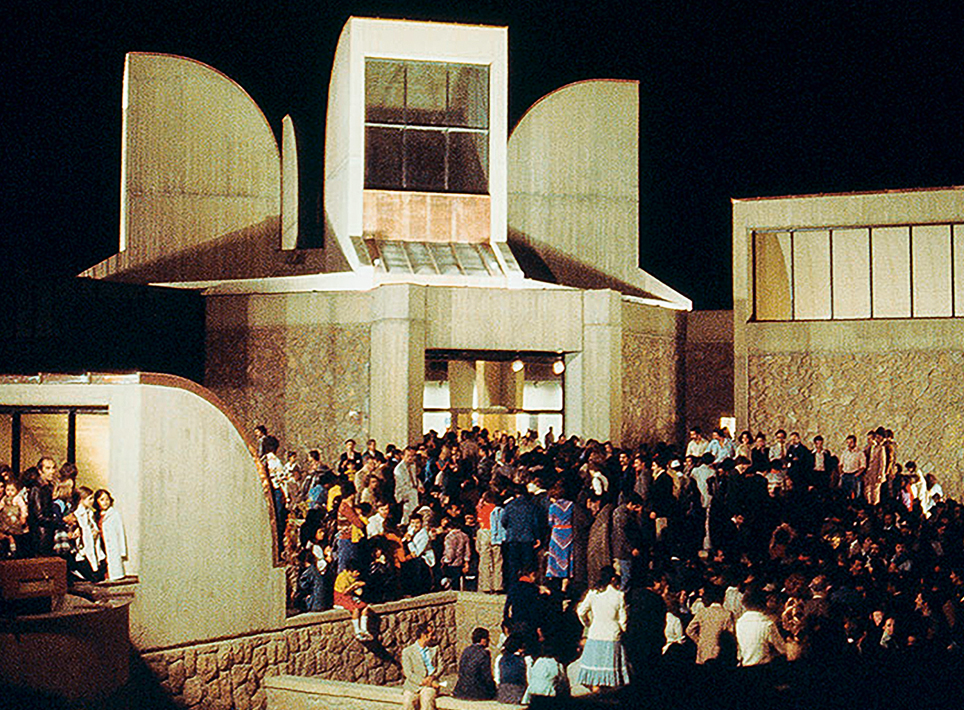
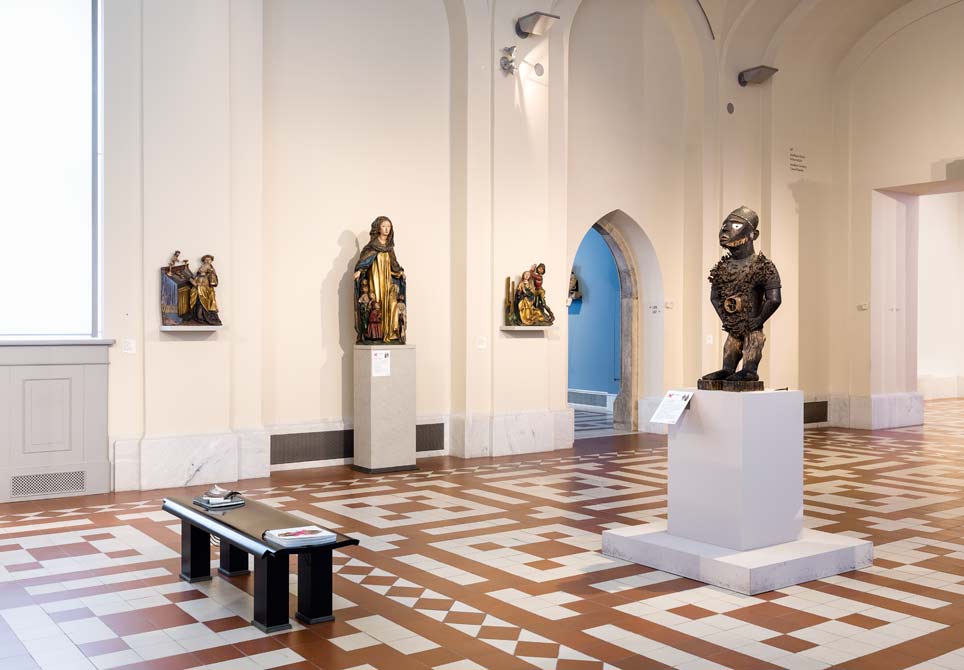
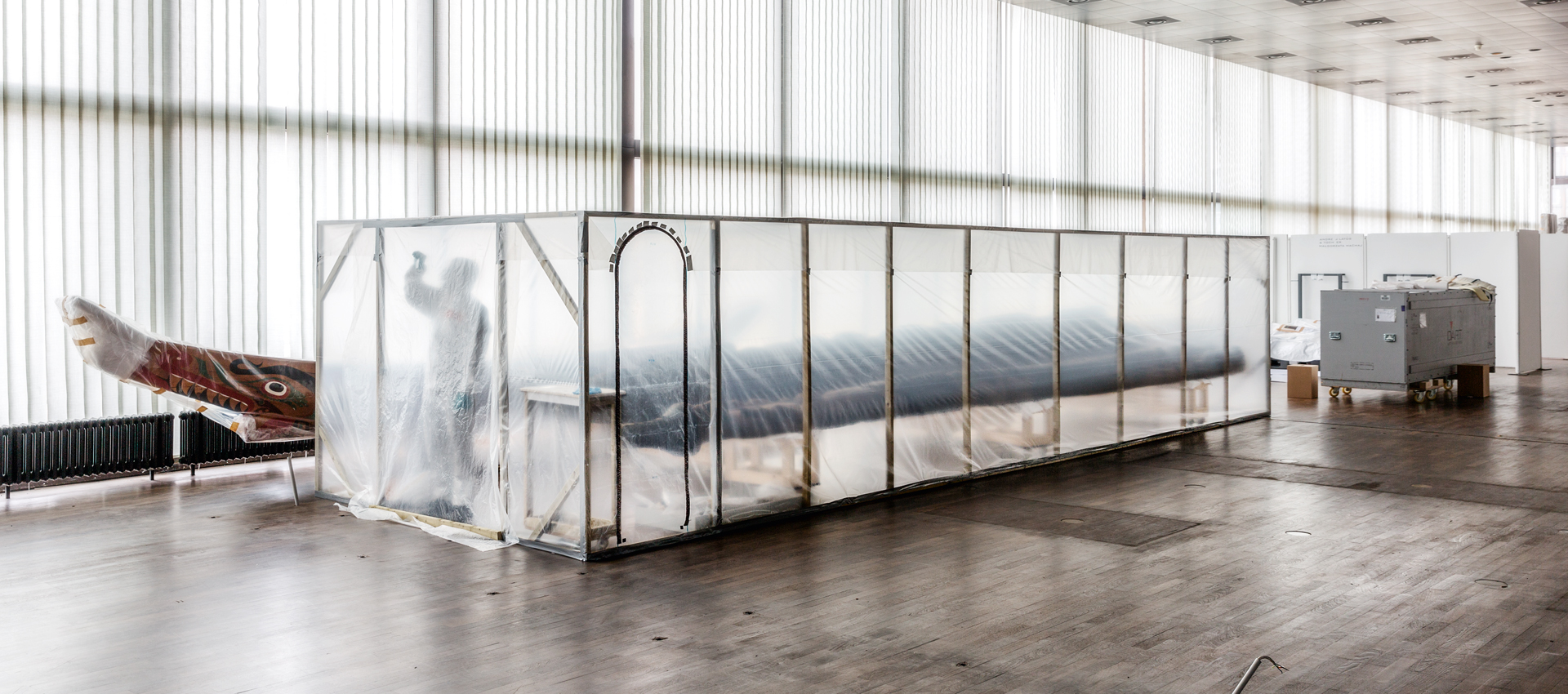
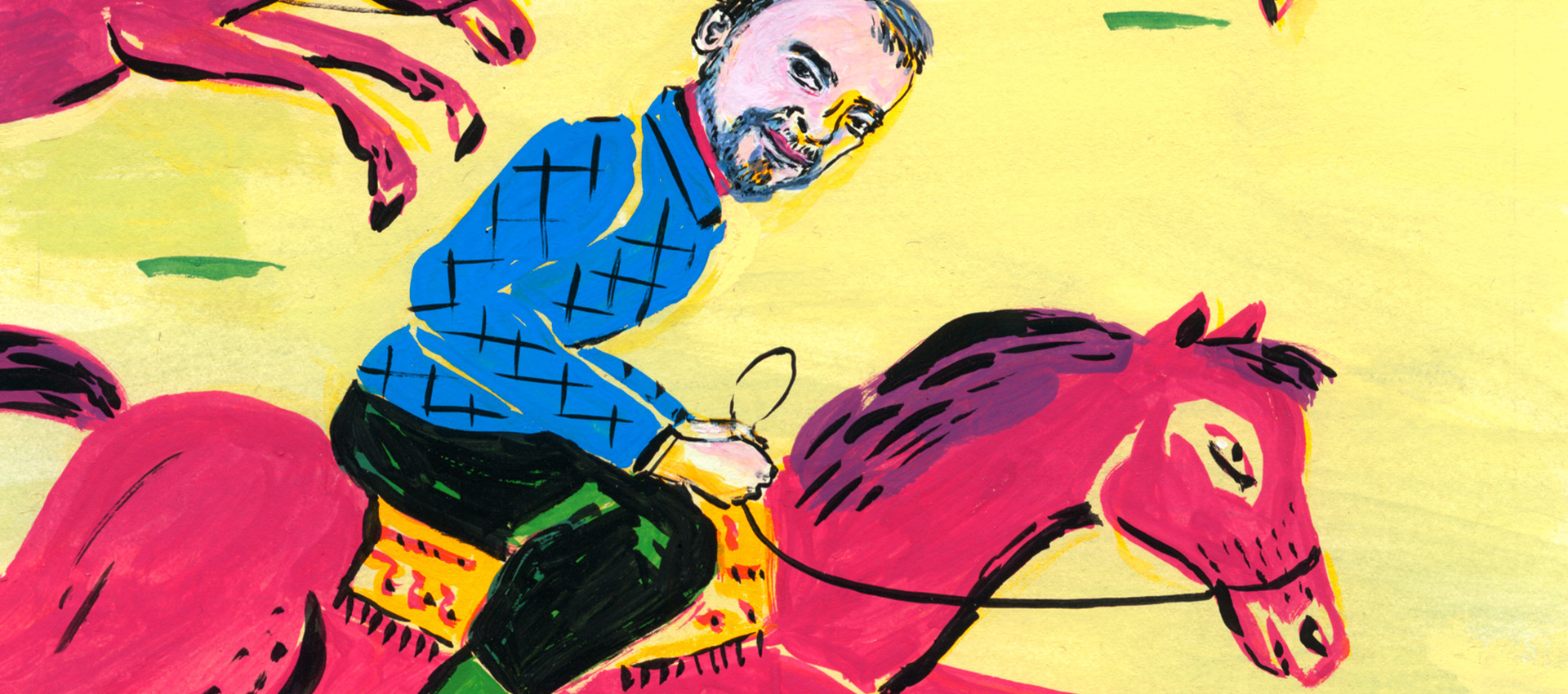
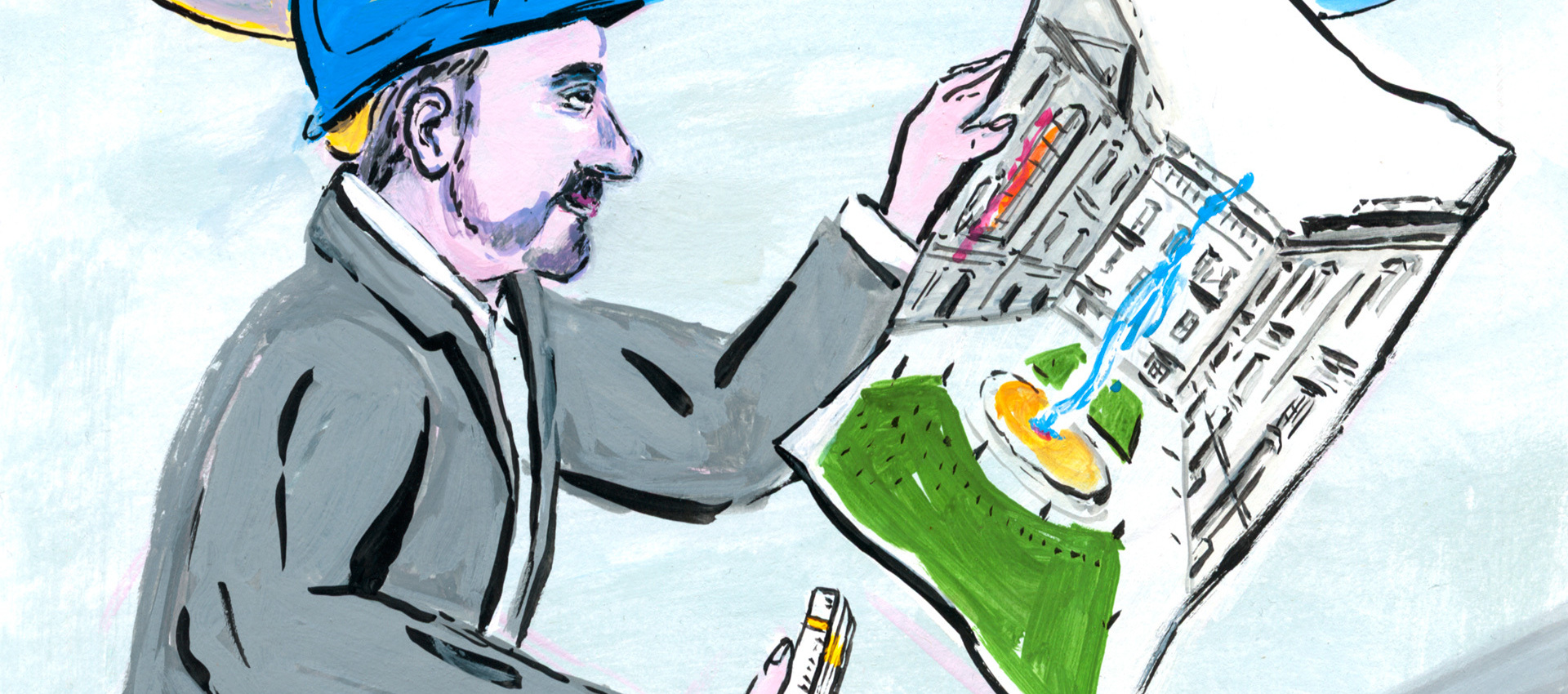
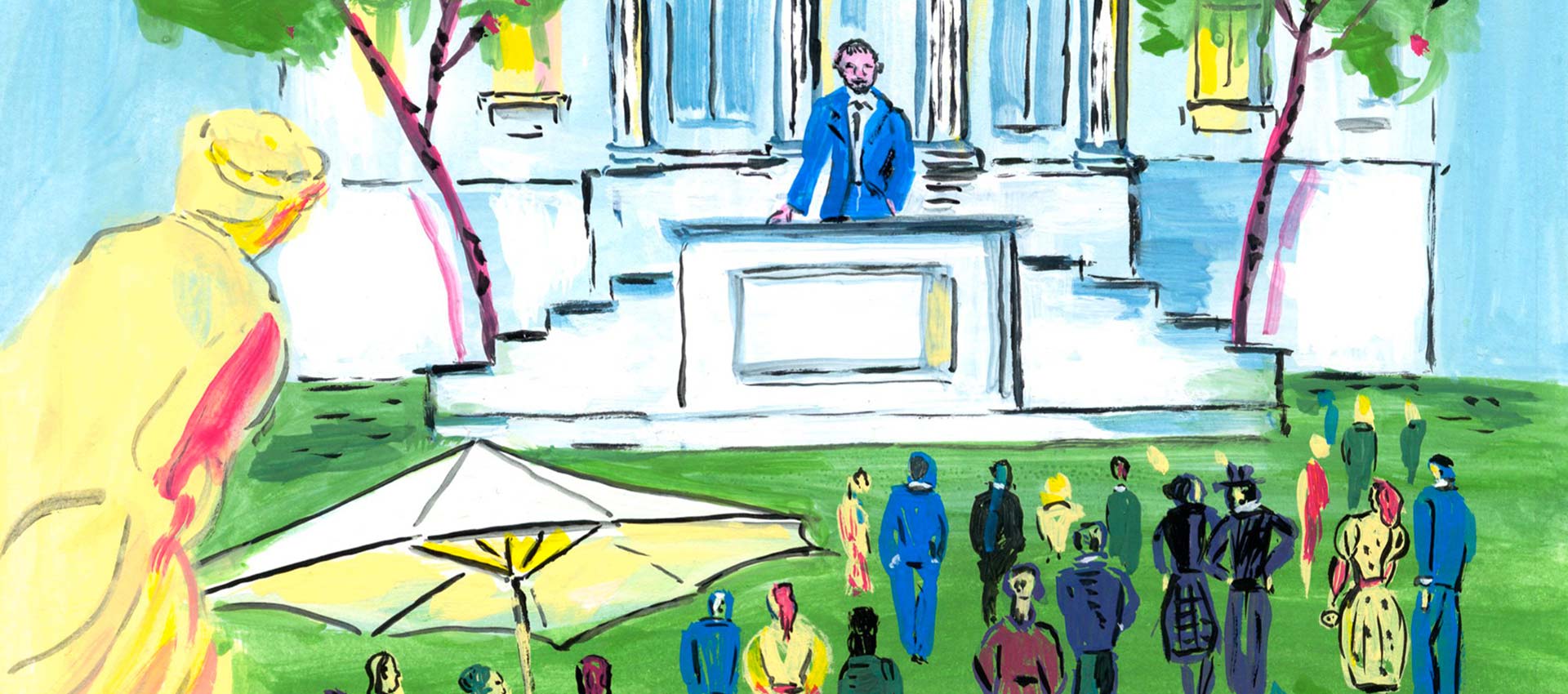
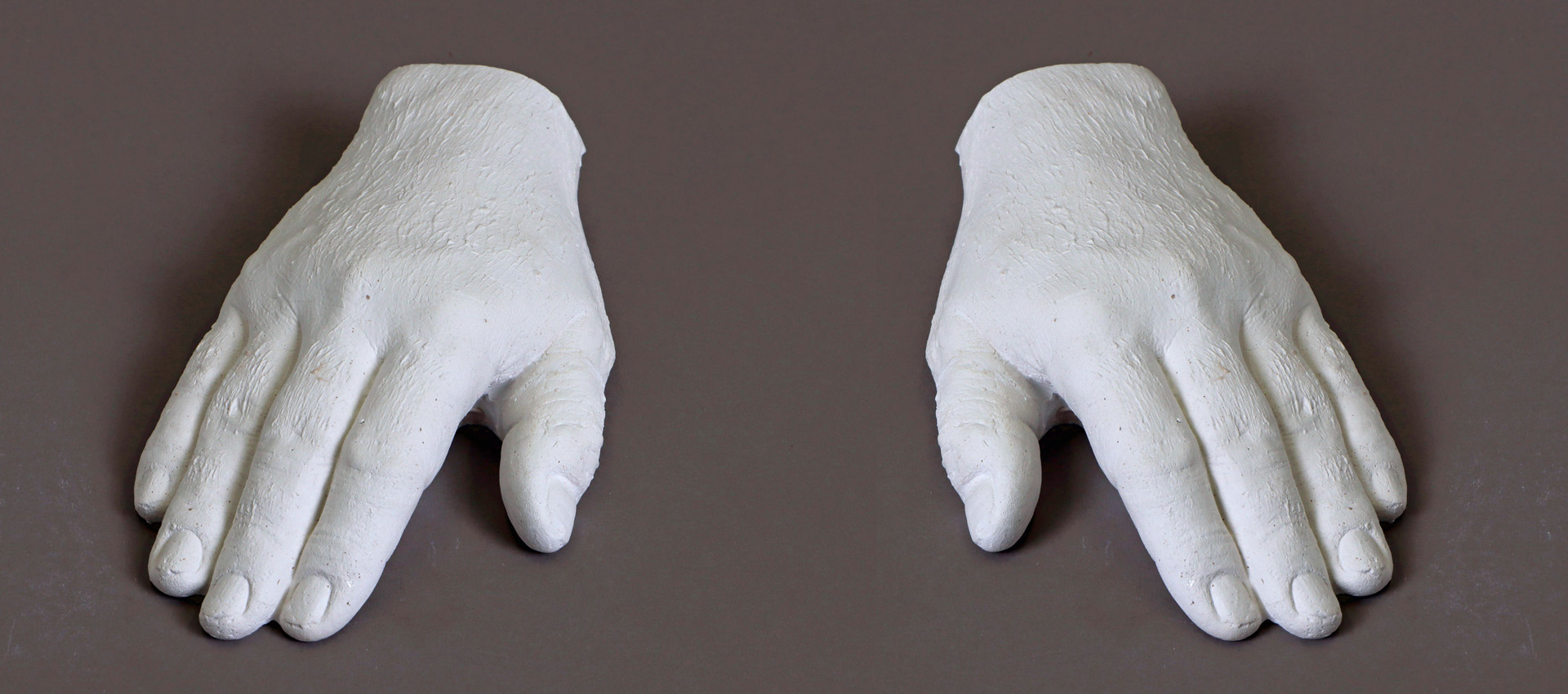
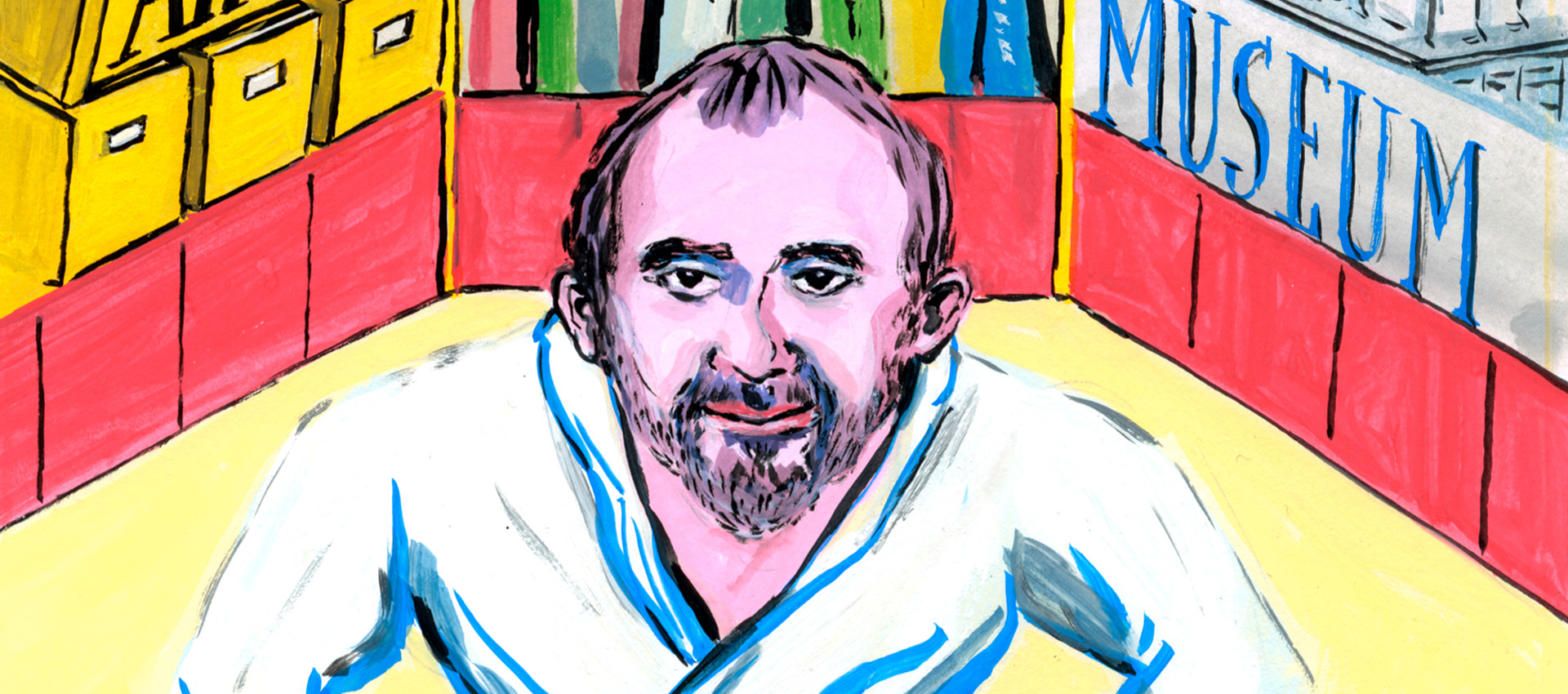
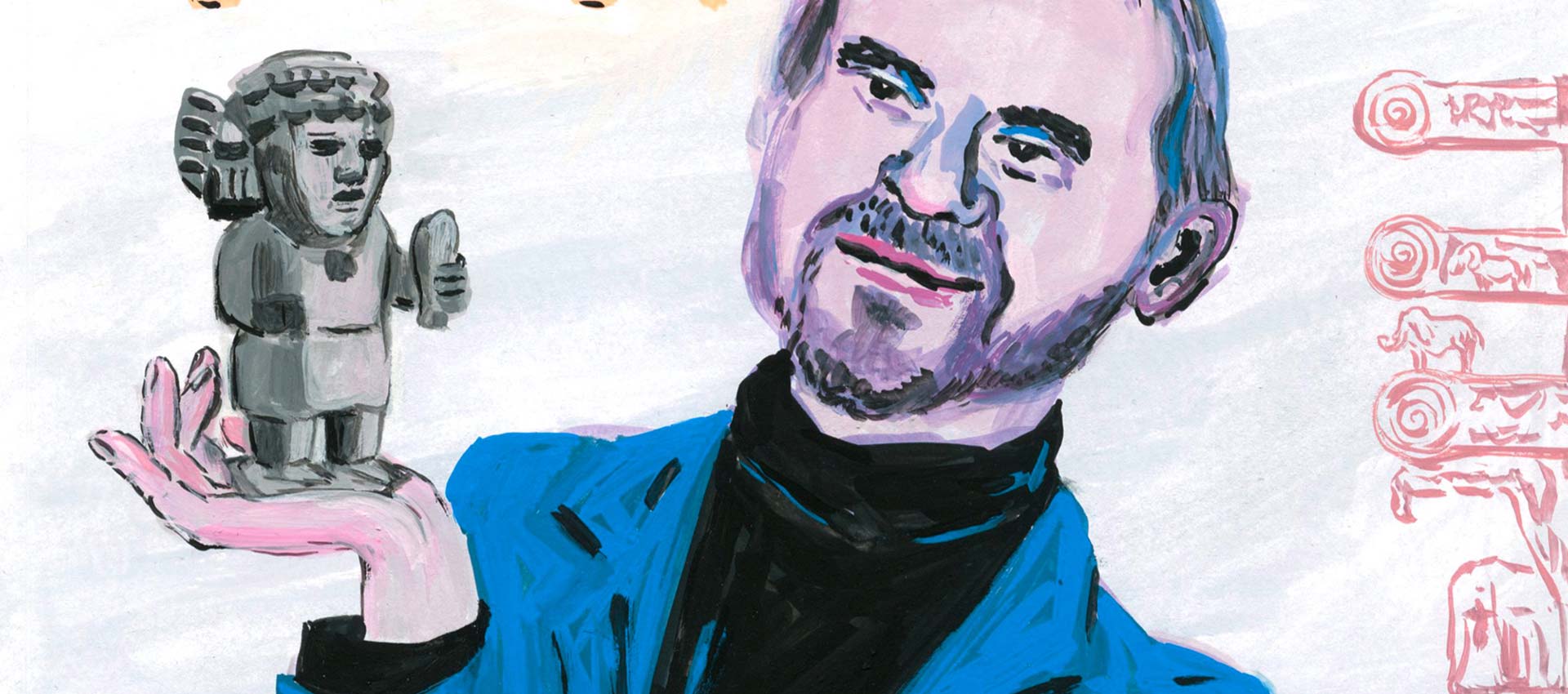
This photo series by Berlin-based photographers Guido Borgers and Andreas Müller explores the history of various objects from the ethnological collections of the Prussian Cultural Heritage Foundation. Their aim is to place the factual and documentary aspects of provenance research within a new context of meaning by staging the objects at the actual sites where they were found. The arrangement as a triptych references an artistic form of representation that creates a connection between its parts.
The cotton cloth, measuring approximately one and a half metres square, originates from the Naga, a minority group in the region of present-day north-eastern India and Myanmar. It is not possible to assign it definitively to one of the 30 different sub-groups of the Naga; it is likely to be a cloth belonging to the Ao-Naga. The V-shaped patterns and the stylised human figure made from cowrie shells clearly indicate that this is the cloak of a successful headhunter. These V-shaped decorations also appear as typical chest tattoos of warriors. The hornbill feathers used at one corner remain particularly valuable to the Naga to this day.
© Guido Borger / Andreas Müller
Naga warrior’s shawl
19th century. Made by a Naga weaver,
used in ceremonies by Naga warriors
Second half of the 19th century: S.E. Peal, British tea plantation owner
1892 Otto Ehrenfried Ehlers (1855–1895)
1895 Eduard von Ohlendorff-Gresse
1896 Donated to the Royal Museum of Ethnology;
recorded in the inventory book
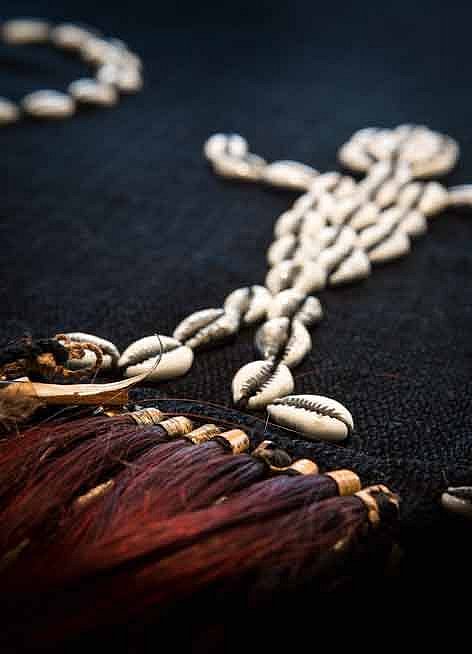
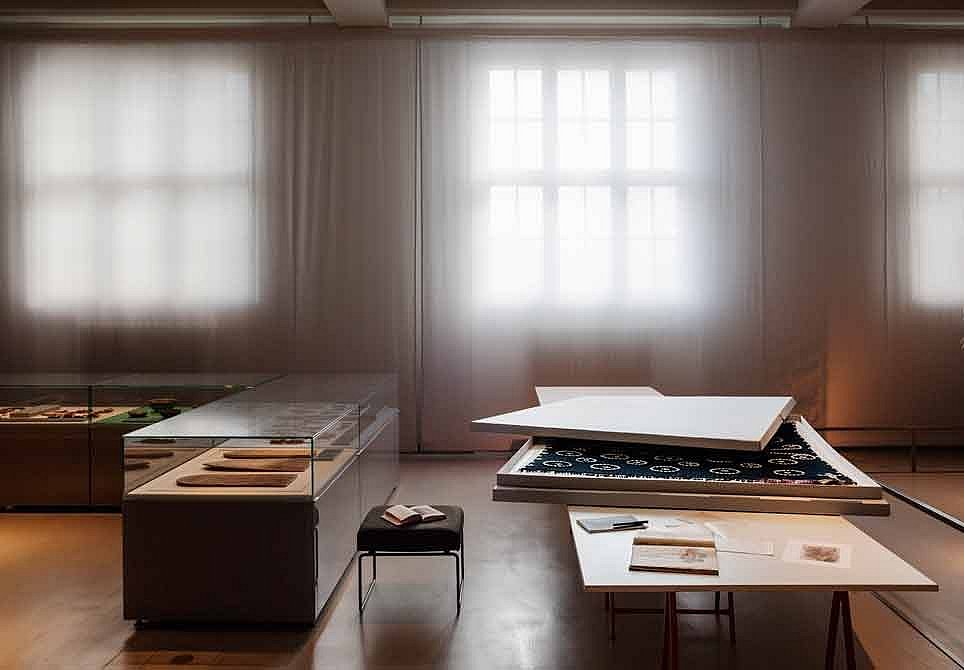
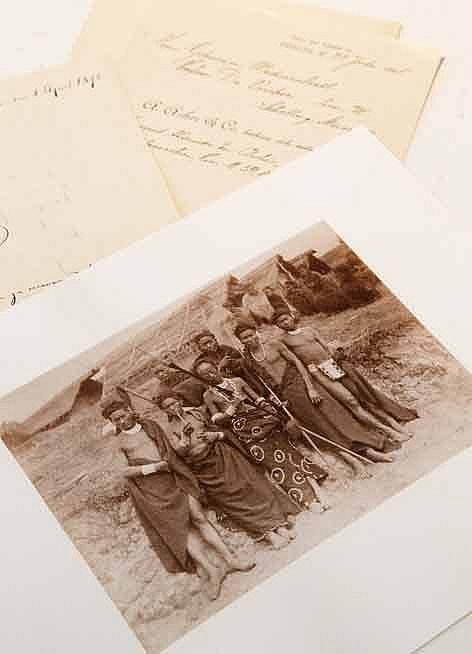
The object comes from the collection of Otto E. Ehlers, who travelled through the region in 1892 on behalf of Adolf Bastian, then director of the Museum of Ethnology. Over a hundred historical photographs from Ehlers’s journey are still held in the museum today. However, nothing is known about the actual process by which the cloth was acquired from the Naga. It is possible that the owners converted to Christianity in the course of the ongoing missionary work. Many traditional objects were then no longer considered significant, and were destroyed as supposed devil’s work or sold.
Around 1,500 Naga objects are now housed in the Ethnological Museum, which is planning an open-access platform dedicated to them. Together with the Naga, the museum will continue to investigate the many unanswered questions: What is its name in the local language? What significance does the object hold for the Naga today? How can people today make use of it? All of this is also to be incorporated into the exhibition at the Humboldt Forum.
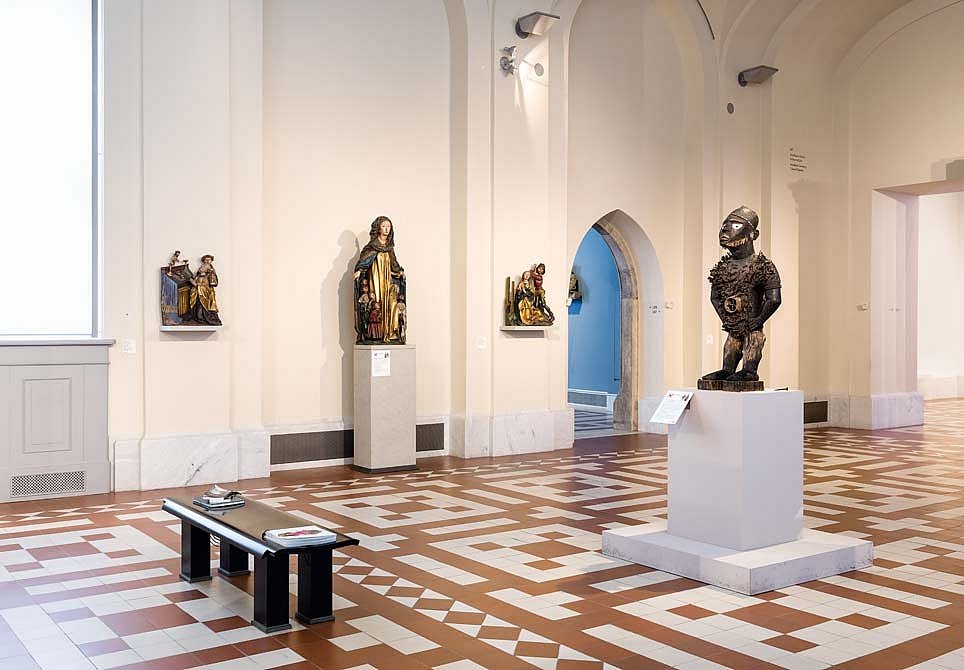
Mangaaka (spirit figure)
Second half of the 19th century (?) Manufactured, in collaboration with a religious specialist, by an artist from the Yombe group in the region of the Chiloango River, Democratic Republic of the Congo, Republic of the Congo or Cabinda, Angola; used as a power figure, probably in the possession of a religious specialist
1902/03 Robert Visser (1860–1937)
1904 Donated to the Royal Museum of Ethnology
1945/46 transferred to the then Soviet Union due to the war
1977/78 Returned to the Museum of Ethnology, Leipzig
1990–1992 Returned to the Ethnological Museum
He was meant to uphold justice and order and ward off misfortune. Such expressively carved figures of power were particularly widespread in the Kingdom of Kongo. These objects imbued with power, known as minkisi or minkondi, are typical products of a transcultural contact zone in which, although Christianity had already been adopted by the end of the 15th/beginning of the 16th century and even elevated to the status of state religion, indigenous religious beliefs and practices were simultaneously preserved.
He was supposed to uphold justice and order and ward off misfortune. Such expressively carved power figures were particularly widespread in the Kingdom of Kongo. These objects imbued with power, known as minkisi or minkondi, are typical products of a transcultural contact zone in which, although Christianity had already been adopted by the end of the 15th/beginning of the 16th century and even elevated to the status of state religion, indigenous religious beliefs and practices were simultaneously preserved.
When the European colonial powers recognised the significance of these power figures, they confiscated and destroyed many of them. 17 mangaaka found their way into Western collections. Before they were handed over, the nganga removed the potent materials. Thus the objects became ineffective, mere empty shells.
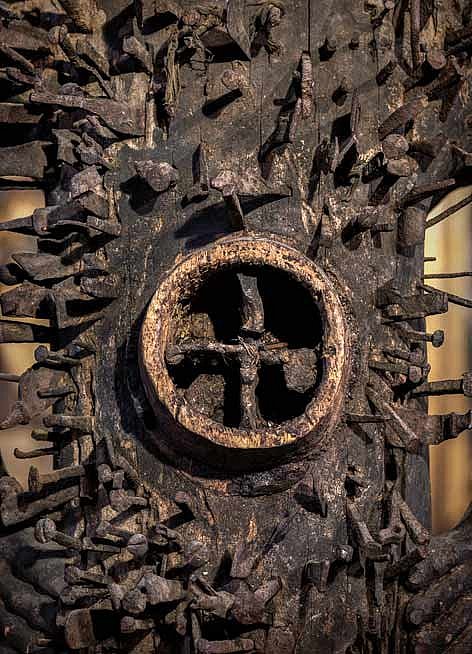
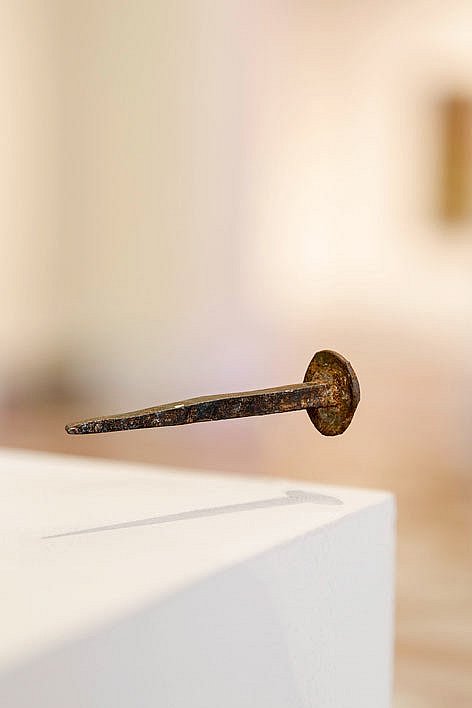
The nails, however, remained and bear witness to the intense cultural interconnections – they are imitations of a European import, just as the mirrors, which often covered the centre of power in minkisi, were also imported goods. Seen in this light, mangaaka are hybrids that incorporate European objects as ingredients of their power.
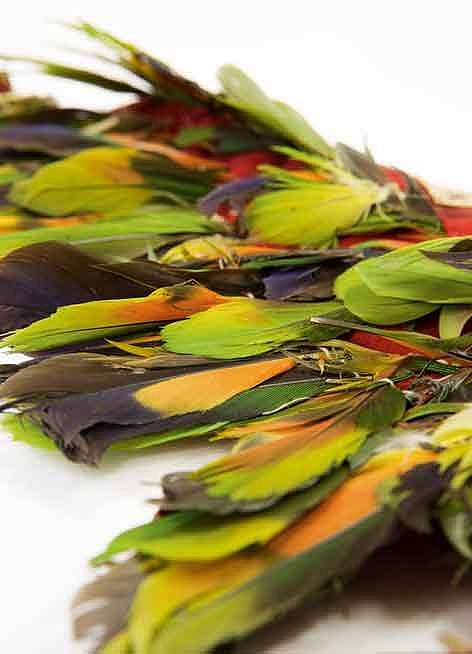
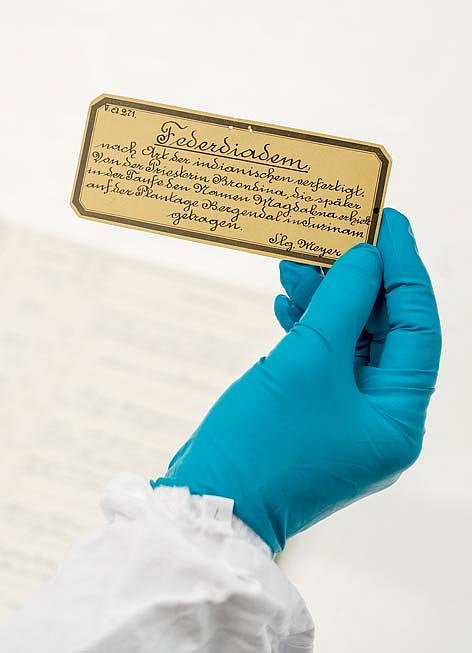
According to the museum’s historical label, a woman named Brondina once wore the colourful headdress made of parrot feathers, which entered the Royal Cabinet of Curiosities as early as 1861. It was one of numerous objects collected by the Herrnhut missionary Johann Jansa on the grounds of the Bergendal plantation in what was then the Dutch colony of Suriname. In the mid-19th century, this plantation, complete with a school and church, served as an important base for missionary journeys into the territory of the Saamaka Maroons, descendants of escaped slaves who had come from various regions of Africa.
Jansa’s travel diaries contain his description and perspective on the events: “We visited the old Negress Brondina, the last idol-priestess on this plantation, in whom a remarkable change had taken place. She had previously been a staunch enemy of the Gospel. Against all admonitions (…) she frequently showered Sister Hartmann, who was trying to help her, with insults.” According to Jansa, a serious illness, during which Brondina was cared for by Sister Hartmann herself, was the cause of a change of heart: “She immediately asked Sister Hartmann to visit her (…) She openly confessed her sins and handed over all her idolatrous objects.”
One of these objects was almost certainly the feather headdress. Presumably, the hoop and feather trim were made by the indigenous population, whilst the red fabric was sewn on by Brondina – possibly an indication of its use in certain rituals. Incidentally, the collector “Meyer” mentioned on the historical label never existed. Due to a transcription error from the Kunstkammer’s register, the racist term “Neger”, which was common at the time, was mistakenly written as “Meyer”. At the Humboldt Forum, the headdress is on display alongside 27 other objects, including 16 from the Jansa Collection, under the title “African American Diaspora. The Afterlife of Slavery in Suriname”.
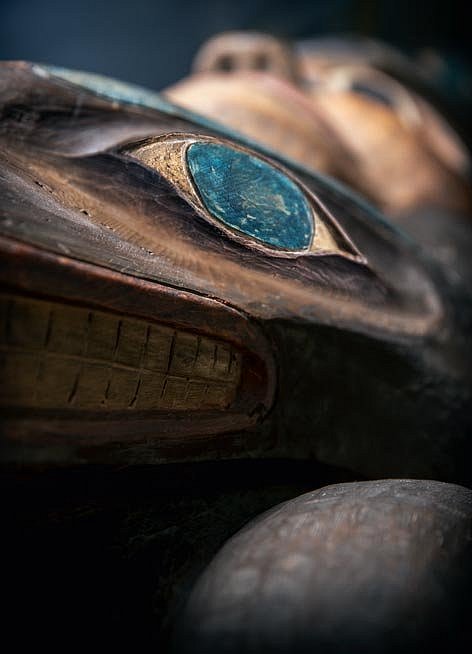
Haida totem pole
Commission from Chief Stilta to Charles Edenshaw to carve a totem pole on the occasion of the rebuilding of his house
1875/76 Erection of the totem pole in Old Masset on Haida Gwaii (archipelago off British Columbia, Canada)
1881 Acquired by J.A. Jacobsen from Stilta’s brother during a collecting trip following Stilta’s death
1883 Entry in the inventory book of the Berlin Museum of Ethnology
1939 Moved to the anti-aircraft bunker at the zoo
1945 Relocated to St Petersburg due to the war
1975 Transported to the GDR to the Grassi Museum in Leipzig
22 August 1990 Returned to Berlin as the first part of the ‘Leipzig repatriation’
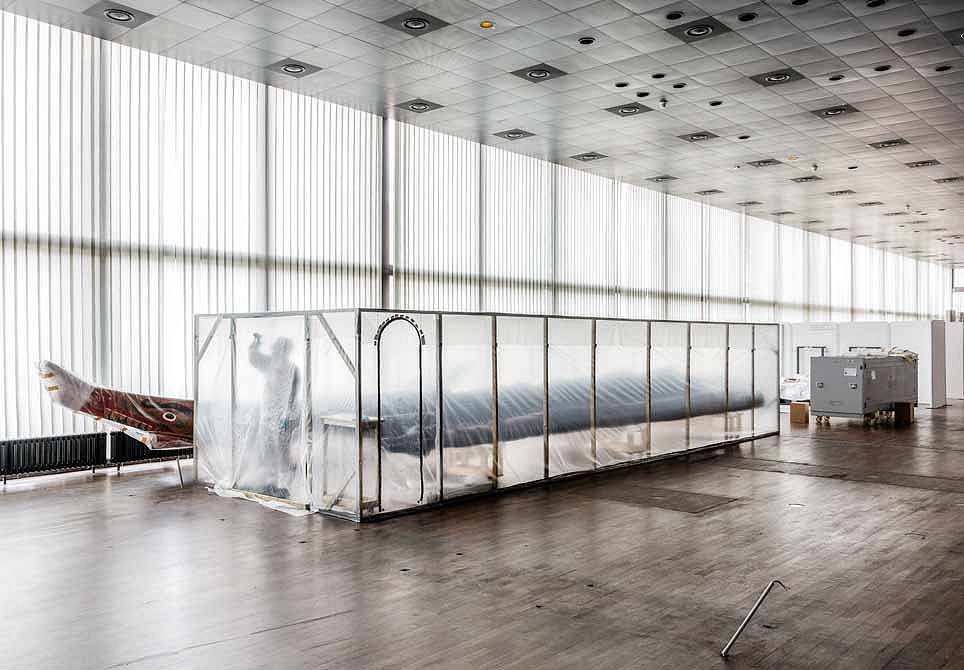
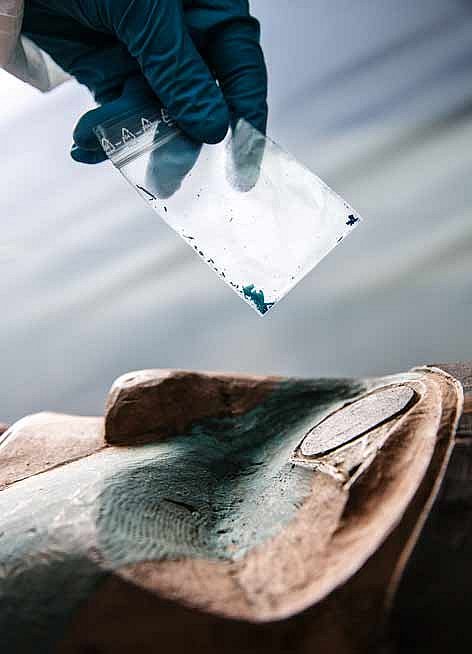
Artifacts from the American Pacific Northwest are distinguished by their rich carving tradition, which continues unbroken to this day. The collection of the Ethnological Museum includes two totem poles, each almost 9 metres in height. The Haida totem pole (IVA 2299) was one of the first objects of its kind to reach Europe and is therefore of particular significance not only for Berlin but also for international museum history. Whilst research into its provenance is now well advanced, many questions remain unanswered regarding the second totem pole (IVA 7098). Its provenance history and its previous attribution to the Tsimshian are currently the subject of intensive research. Archival research as well as paint and wood analyses are methods used to determine its origin more precisely. It is at least as important to trace the history of the pole through indigenous knowledge.Totem poles such as these are heraldic or commemorative poles; they present clan history and identity and honour the ancestors. Contrary to widespread assumptions, they are not sacred, are not worshipped, and have no protective function; they do not ward off misfortune and are not ‘read’ as illustrated history. The two poles in the Ethnological Museum are, not least, the result of the encounter between their indigenous creators and the Europeans. The collections from the North-West Coast are closely linked to the early history of the Royal Museum of Ethnology and its then director, Adolf Bastian. Adrian Jacobsen’s journey to North America was the museum’s first specific collecting mission. In the future Humboldt Forum, the two totem poles will be exhibited for the first time since 1992. Their provenance stories will offer visitors an insight into museum provenance research.