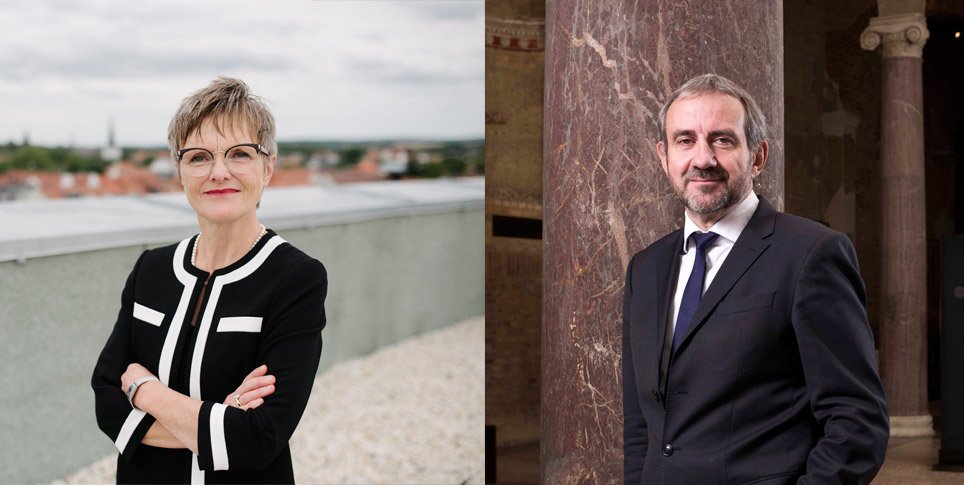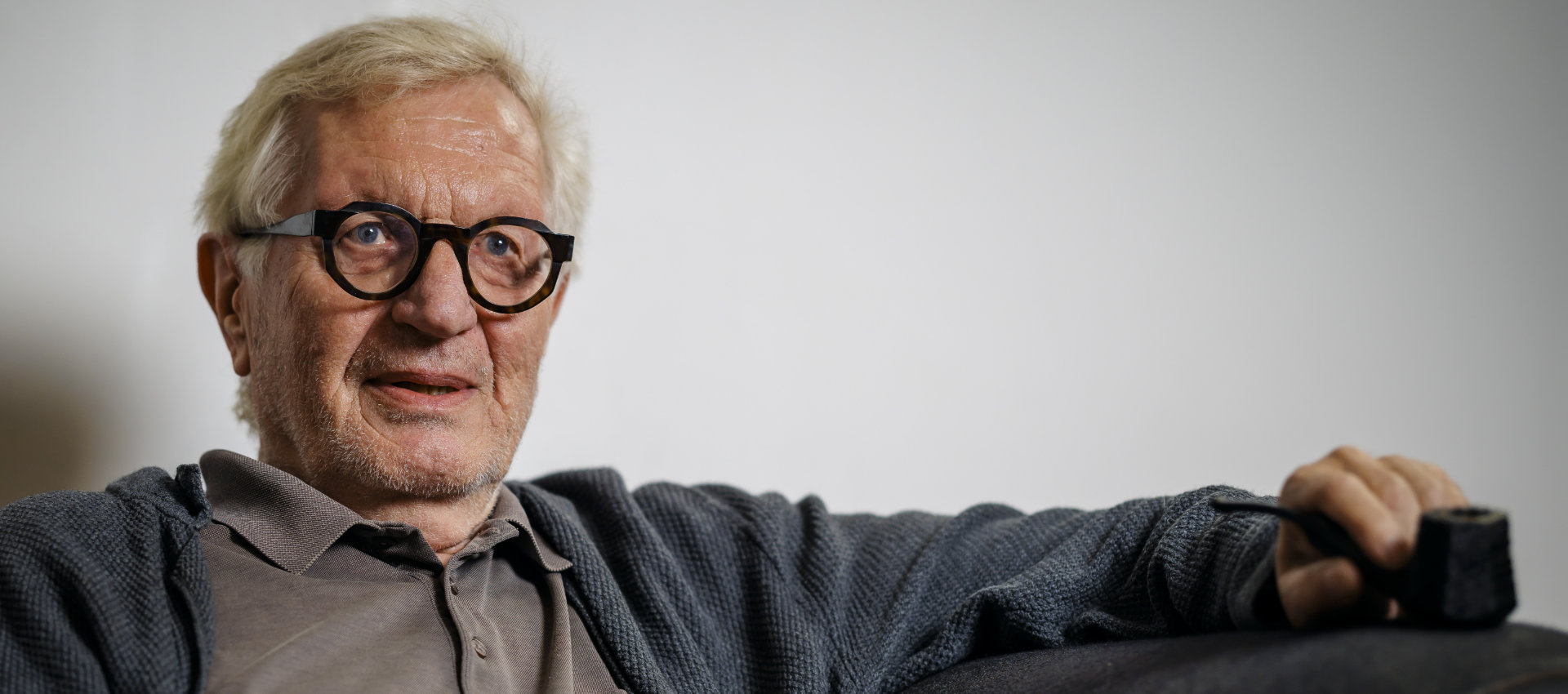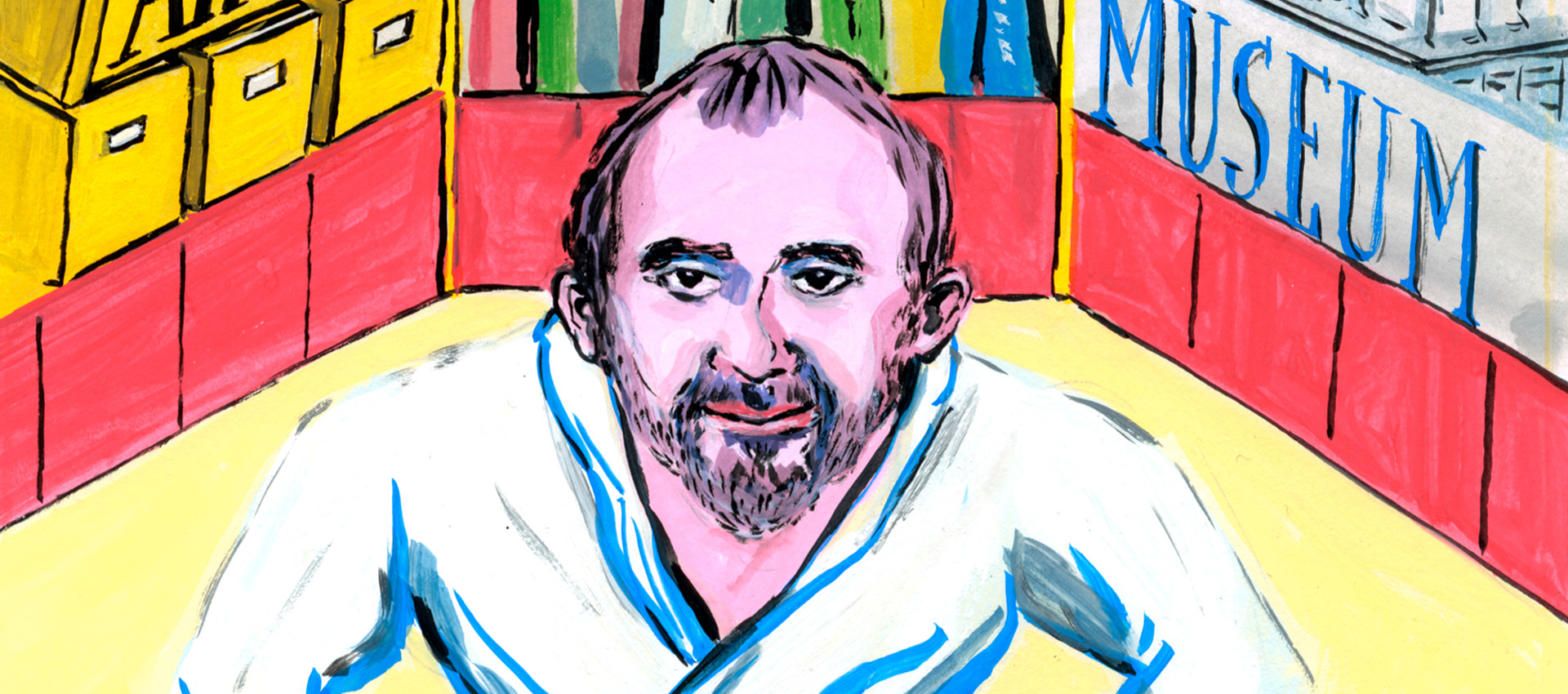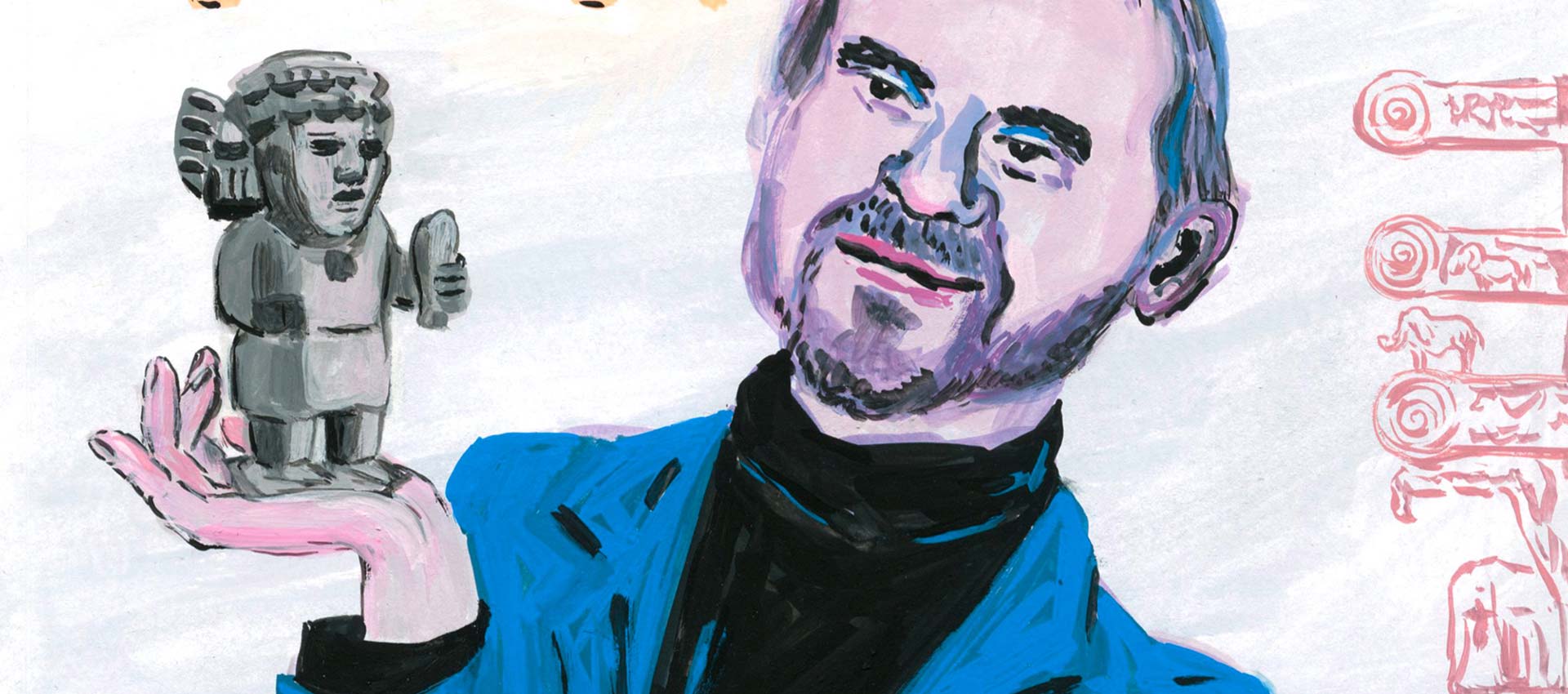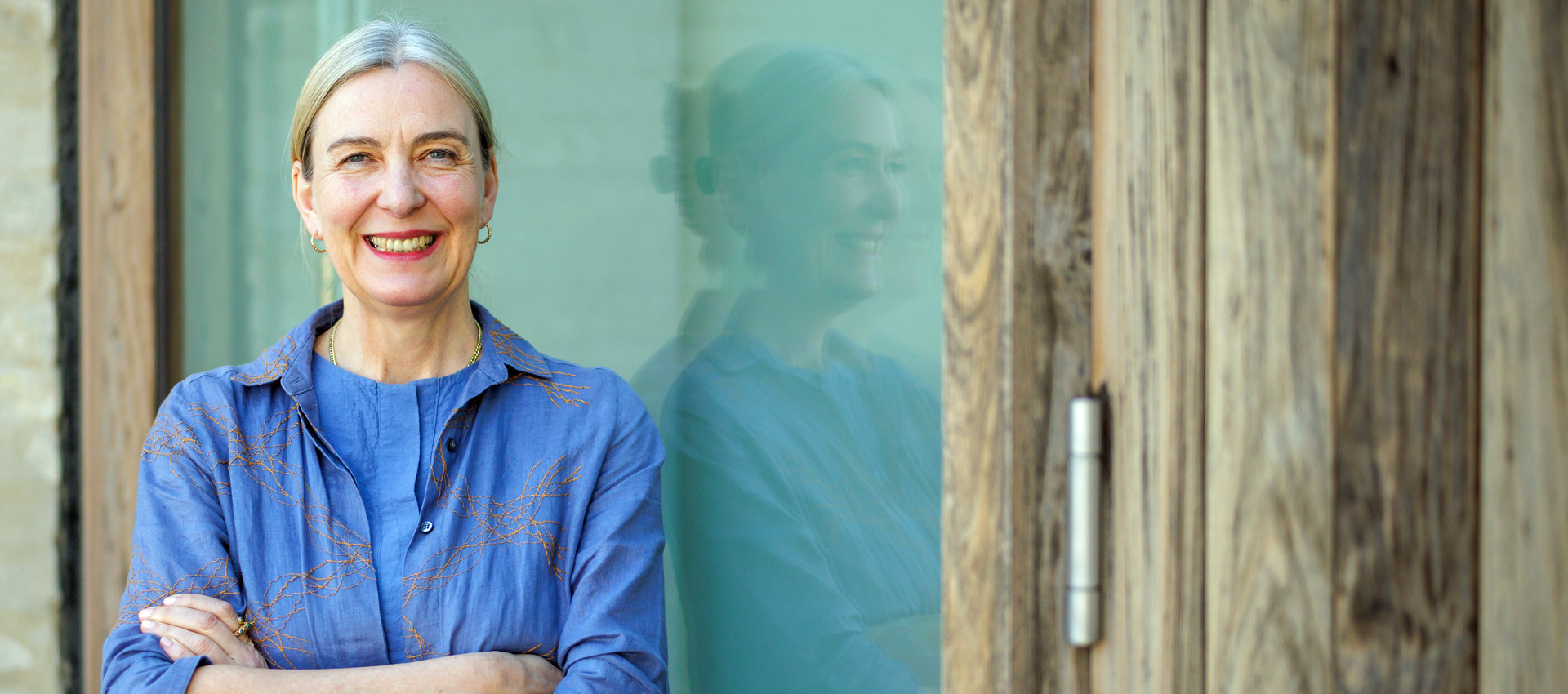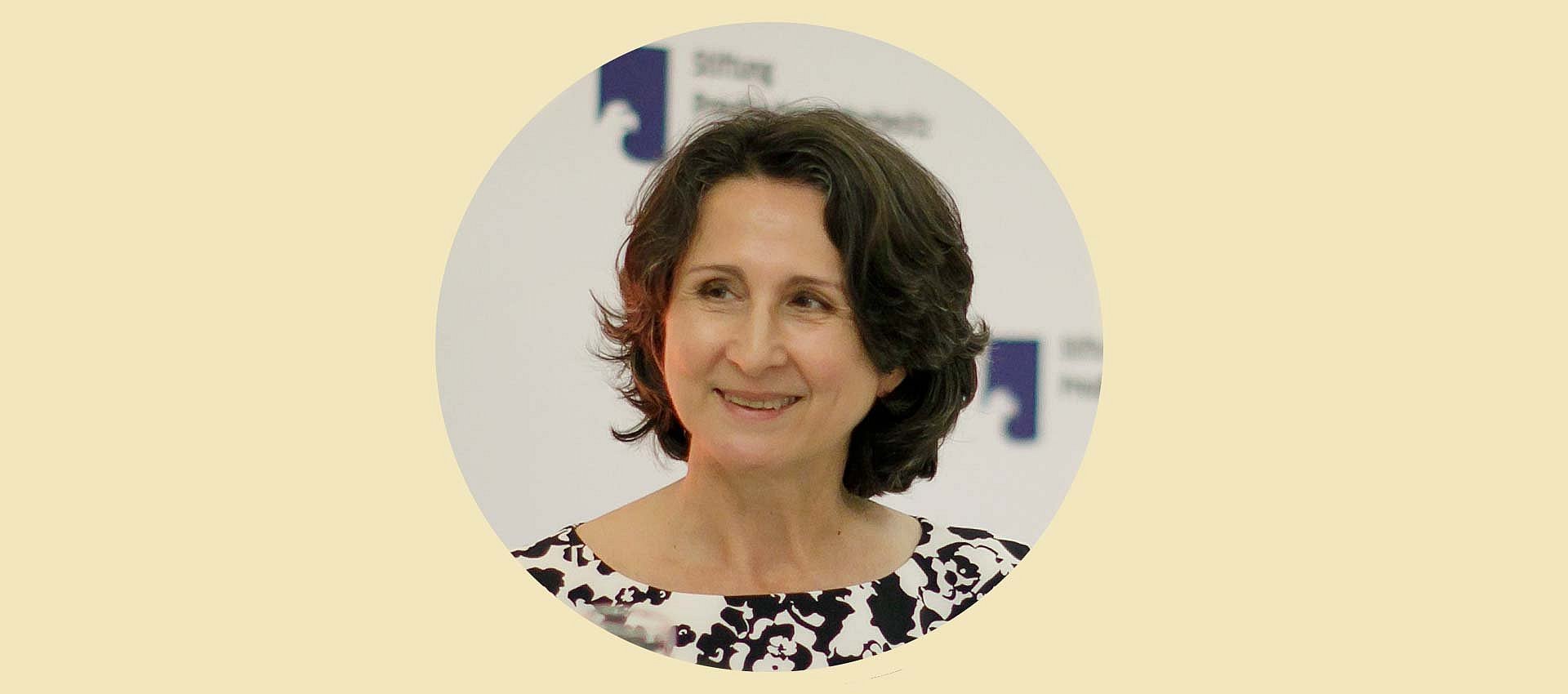
Stefanie Heinlein is an art historian. From 2002 to 2022, she served as press officer for the SPK, with a particular focus on communications relating to the building. Here she writes about Hermann Parzinger, whom she supported throughout his tenure until 2022.
Photo: SPK/photothek/Thomas Koehler
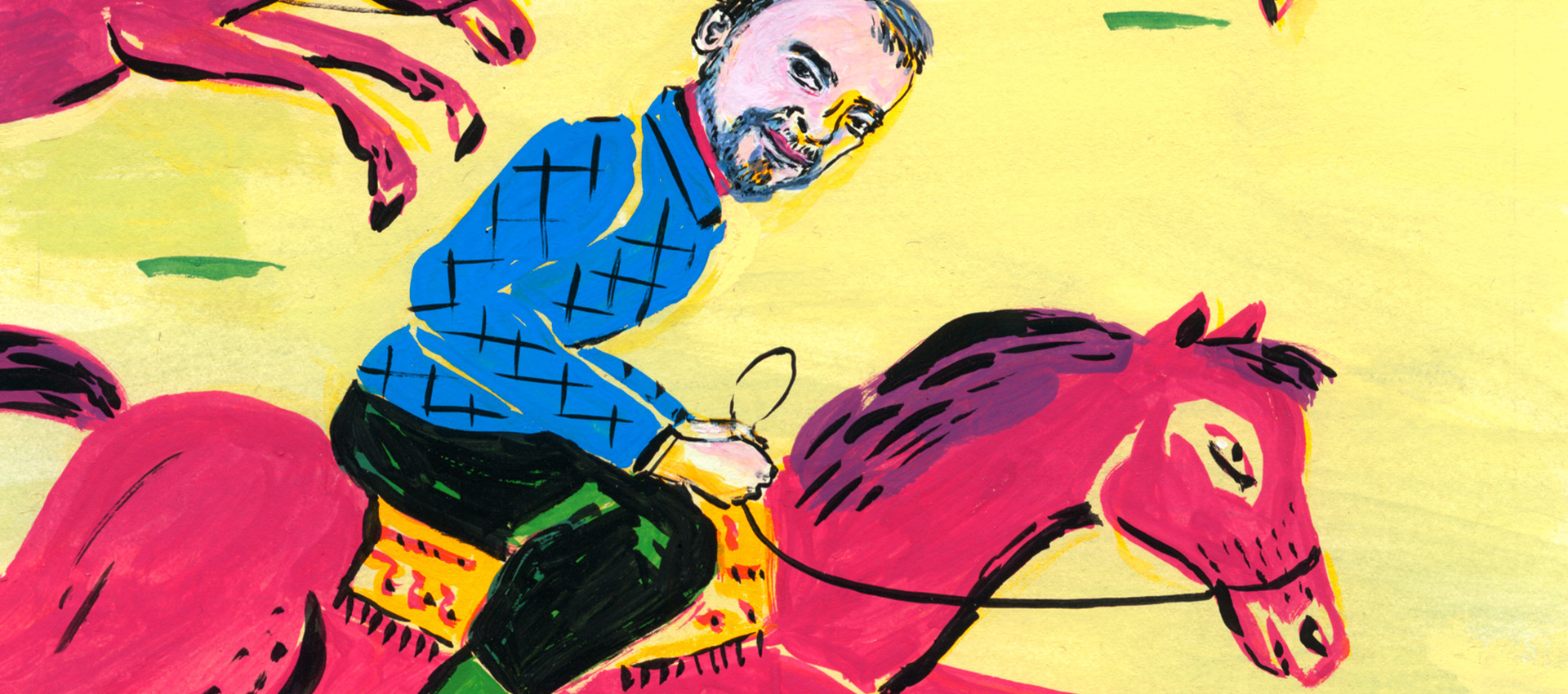
With his appointment as President of the SPK, archaeologist Hermann Parzinger has moved from the world of kurgans in the vast expanses of Siberia to the world of the Kolklin windows on Museum Island. We do not know whether this transition was an easy one for him.
One thing is certain: he was immediately able to grasp all the Foundation’s complex construction issues and, practically from day one, play a decisive role in shaping the public discourse on the matter. Although he could not, in and of itself, exert all that much influence over the actual construction processes. As is so often the case, the lead role in this regard falls to the Federal Office for Building and Regional Planning (BBR).
Nevertheless, it was he who found himself in the media crossfire whenever construction progress was delayed and additional costs had to be justified. Yet Parzinger almost always managed to parry these challenges with almost playful ease and to appease the public.
Let us just recall certain phases during the construction of the James Simon Gallery and the Pergamon Museum. Here, it was, of all things, the problems in the ‘archaeological depths’ of Museum Island that drove the engineers involved to despair and hampered the completion of the central entrance building.
Yet time and again, critical questions on this matter were put to the Foundation’s President. But even in these difficult times, Parzinger cut a fine figure. Time and again, Parzinger benefited from his finely honed rhetorical skills. And, of course, his generally positive media presence, as well as his ability to explain his position convincingly, both spontaneously and in print.
And if this happened to be in Spanish, English, Russian or French, well, then so be it – no problem at all.
Glory and vexation, joy and frustration – in construction, they lie very close together. Hardly any other project illustrates this better than the Neues Museum. Years of tough discussions, protests and vigils outside the building site lay behind the SPK when the new president, Parzinger, grandly opened the Neues Museum – restored by David Chipperfield Architects – in the presence of the Chancellor in 2009.
Visitors, the media, experts and politicians were immediately enthusiastic. It was suddenly almost impossible to imagine the fierce criticism the project had faced over the years.
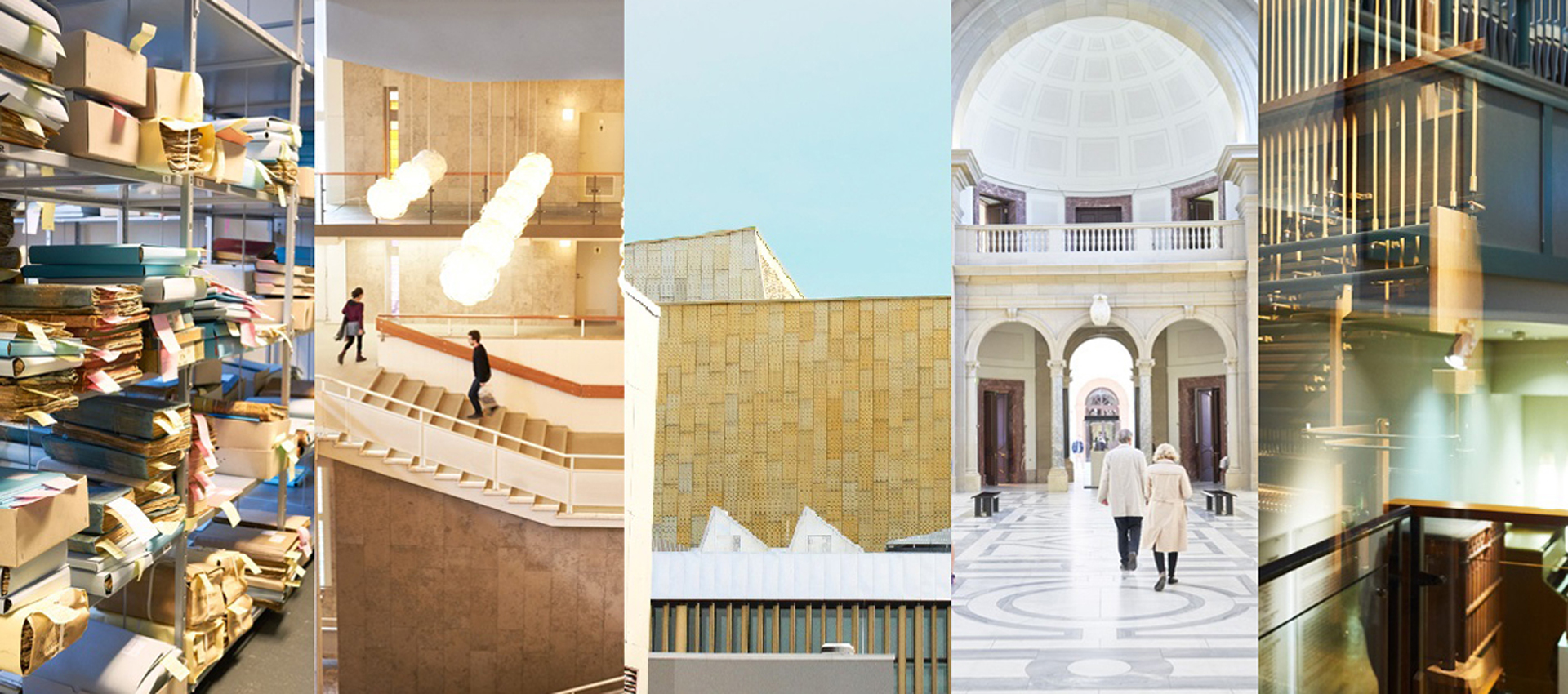
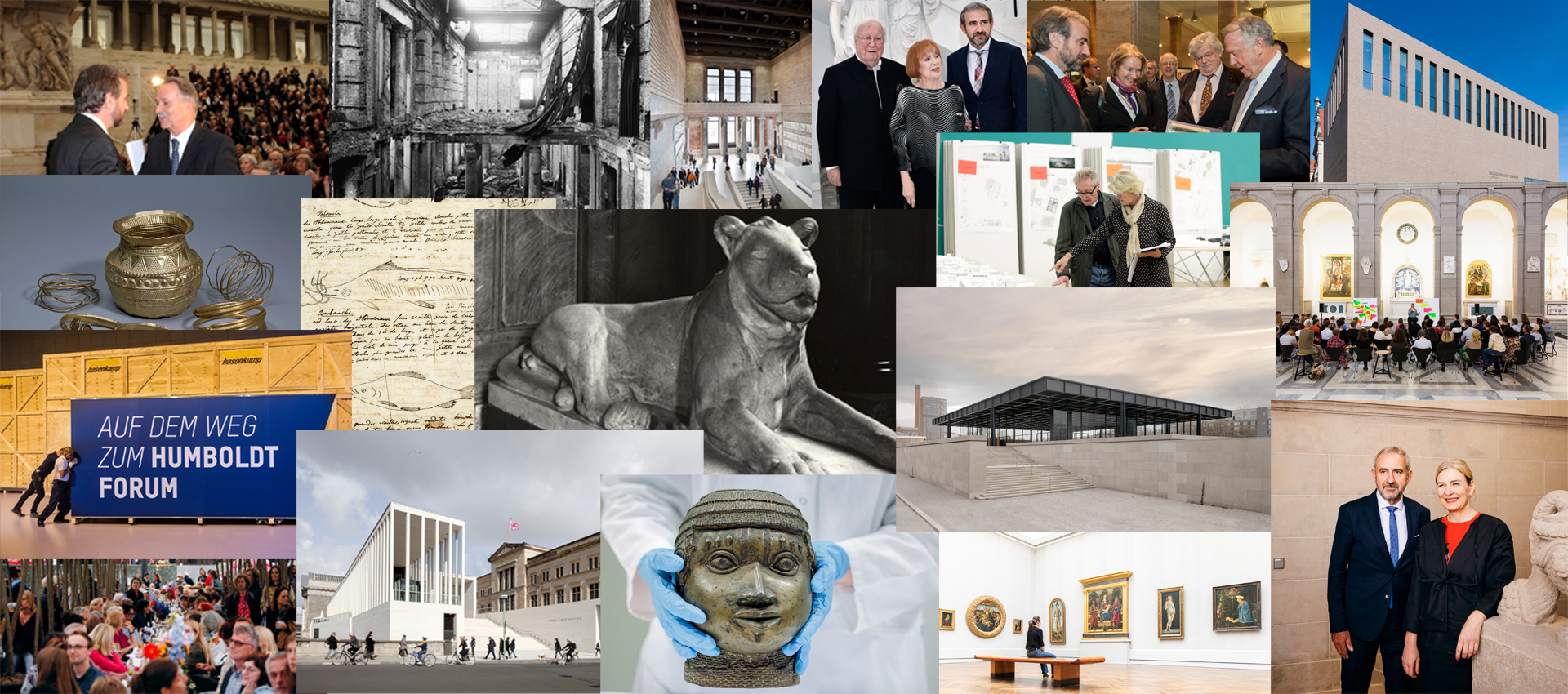
Reorganising the museum landscape after the war and the East-West division and adapting it to the demands of our time was a relay race involving several presidents. The 1999 Museum Island Masterplan remains the blueprint to this day. During the Parzinger era, the construction of the James Simon Gallery, designed by David Chipperfield Architects, was a significant step that enabled Museum Island to develop decisively.
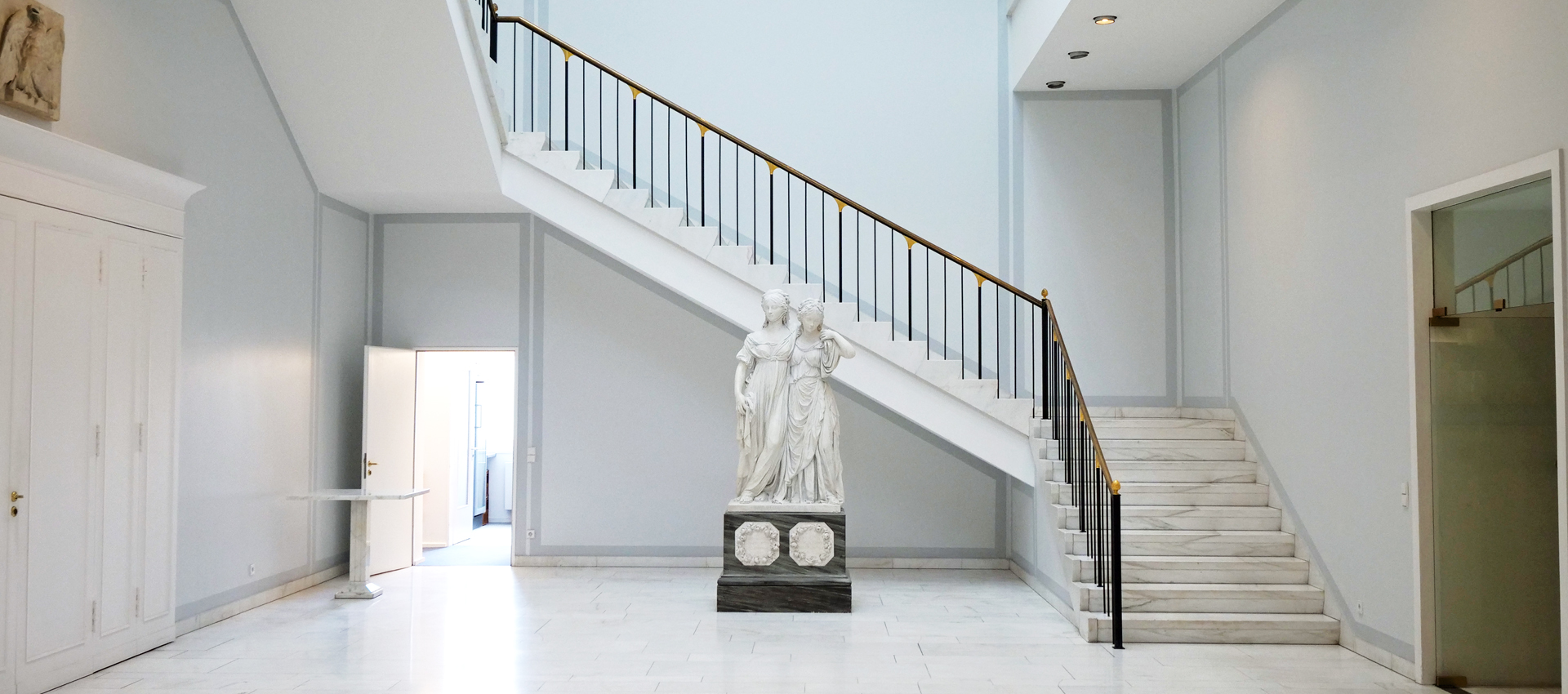
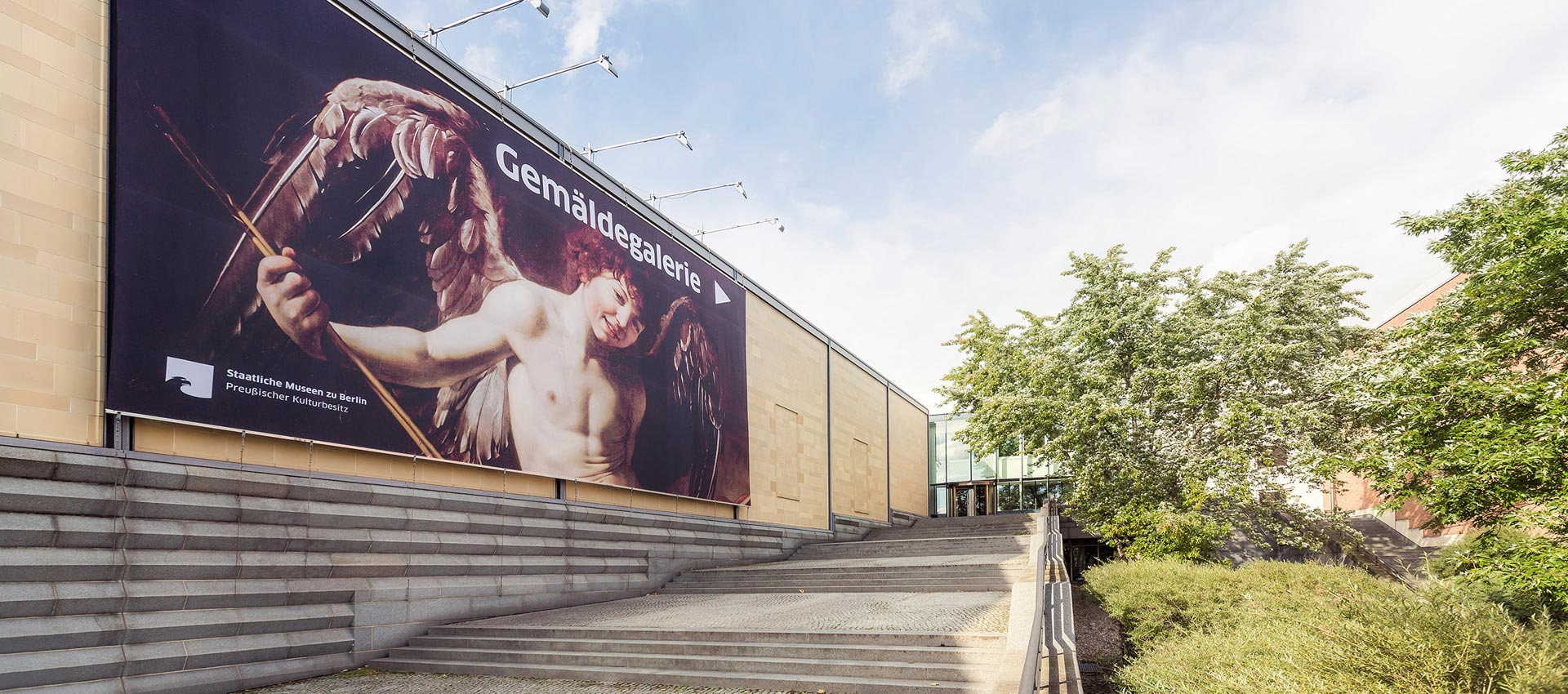
The extensive work has paid off. The building serves as a reception centre for visitors to the entire island, offering hospitality and guidance as well as space for exhibitions and events. In 2019, the James Simon Gallery finally opened. Since then, it has welcomed the public with its grand open staircase. Expressed in the transparent design language of our time, it blends effortlessly into its historic surroundings. The building has rightly been awarded numerous prizes.
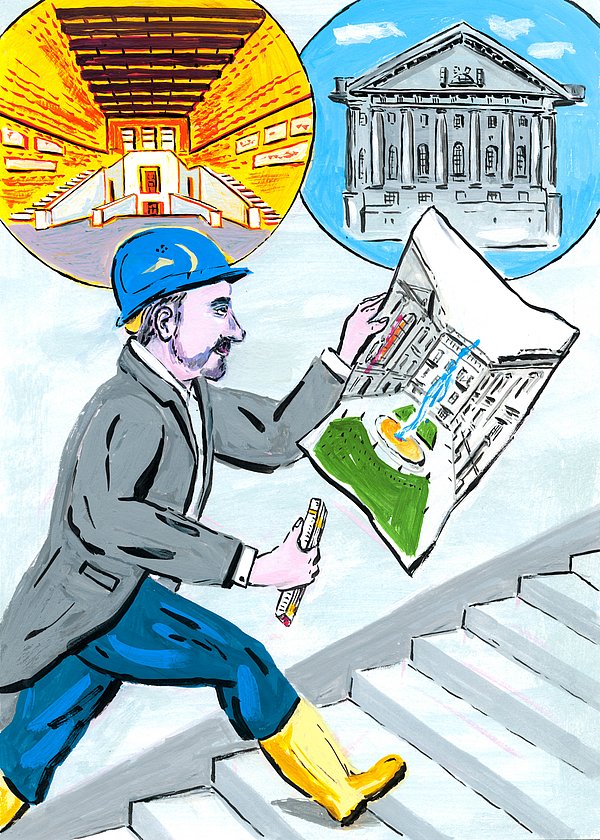
No less significant during the Parzinger era is the refurbishment of the Pergamon Museum, which began in 2013. This colossal building at the heart of Museum Island is a structure of superlatives – and not just because of its size.
The building was erected during the Great Depression under difficult financial conditions on unstable ground dating back to the Ice Age. The GDR was only able to make makeshift repairs to the damage sustained during the Second World War. Consequently, the renovation of the building presents those involved with considerable challenges – both technical and logistical, and of course financial.
The renovation extends from the foundations to the roof and includes the installation of modern technology as well as the addition of a fourth wing. Furthermore, the work must not endanger the permanently installed architectural monuments such as the Pergamon Altar and the Ishtar Gate, and has been carried out over many years whilst the museum remained open.
More than 700 new micropiles, reaching up to 30 metres into the ground and which, if laid end to end, would stretch for 14 kilometres, now provide a stable foundation. Not least, it is also thanks to the successful work of the outgoing president that the completion of the first half of this mega-project is now in sight.
From spring 2027, the Museum of Islamic Art will be able to display its treasures throughout the entire north wing, and the Collection of Classical Antiquities will once again occupy the Pergamon Hall and the Hellenistic Hall.
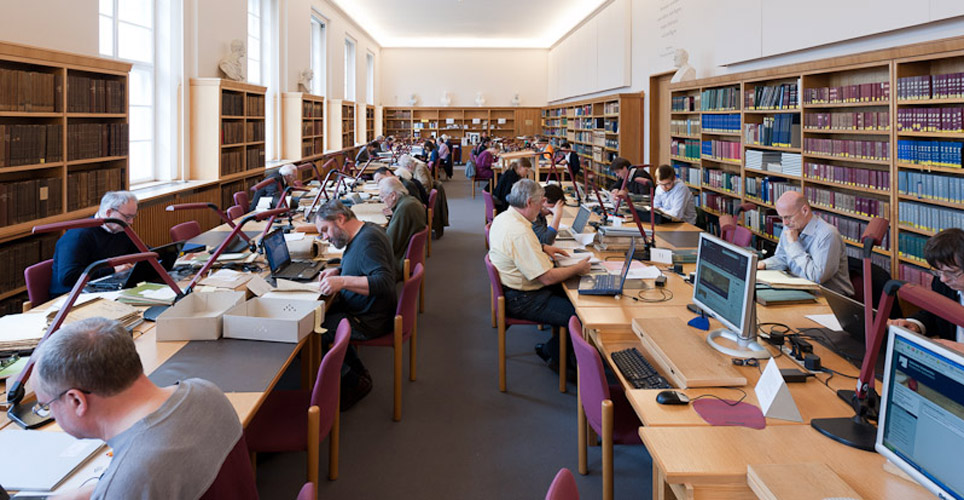
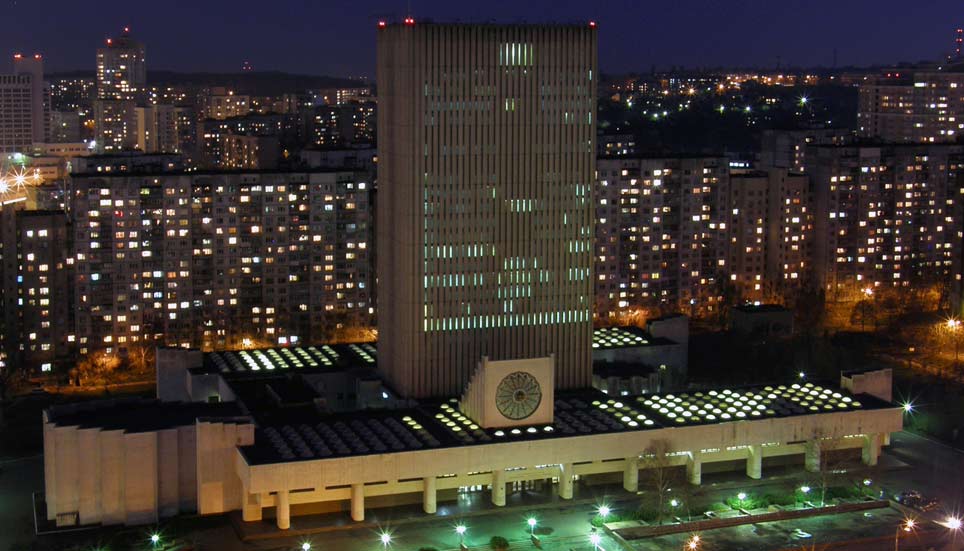
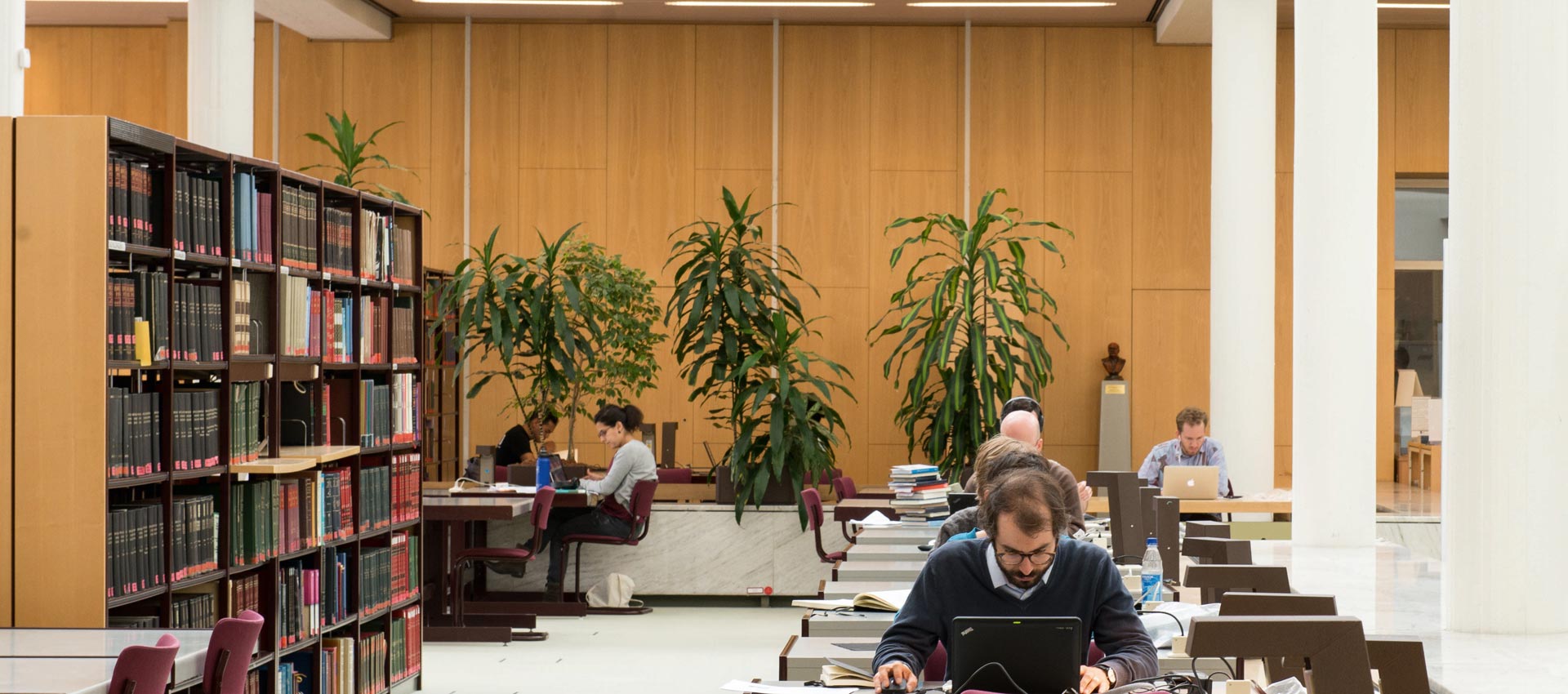
The renovation work on the State Library on Unter den Linden had been underway for a good two years when Hermann Parzinger took up his post as president. Here, too, he was dealing with a vast historic complex on which clear traces of the war were still visible.
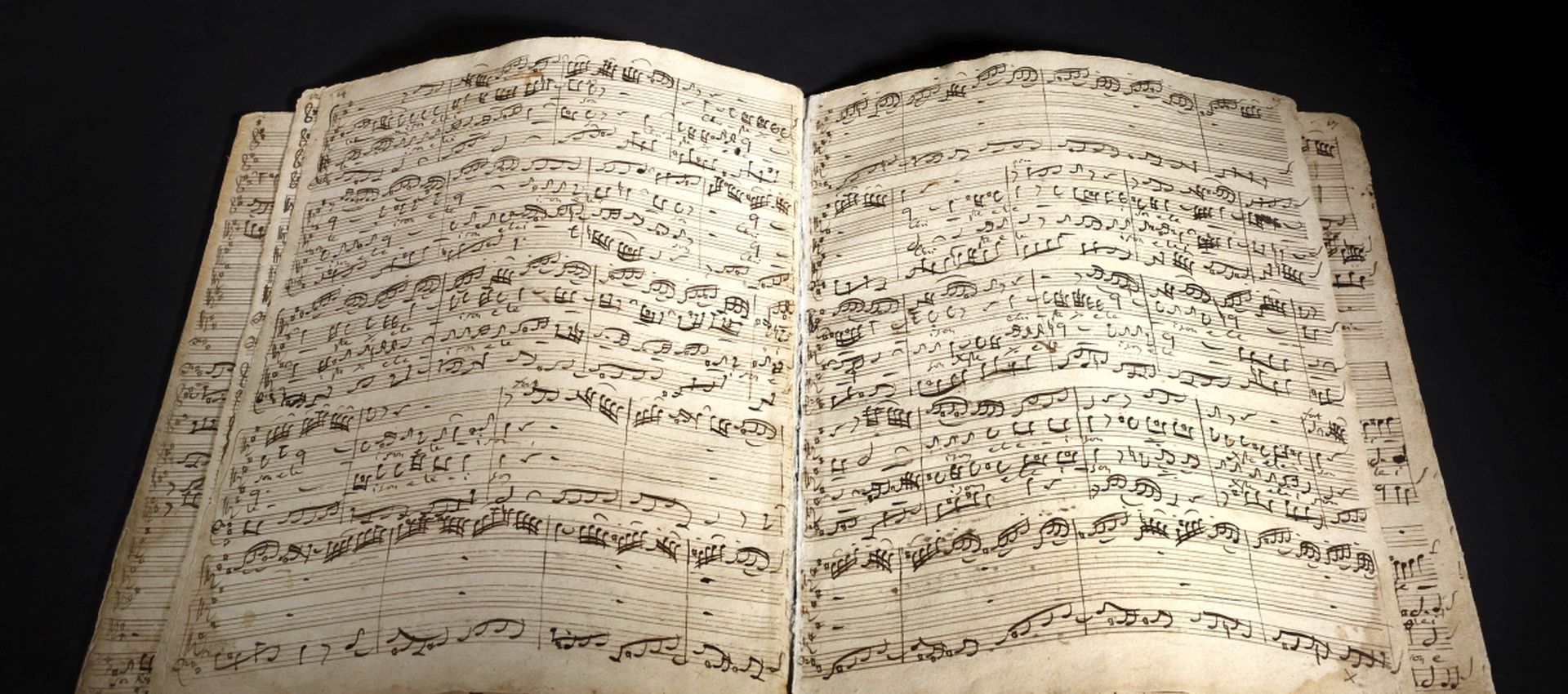
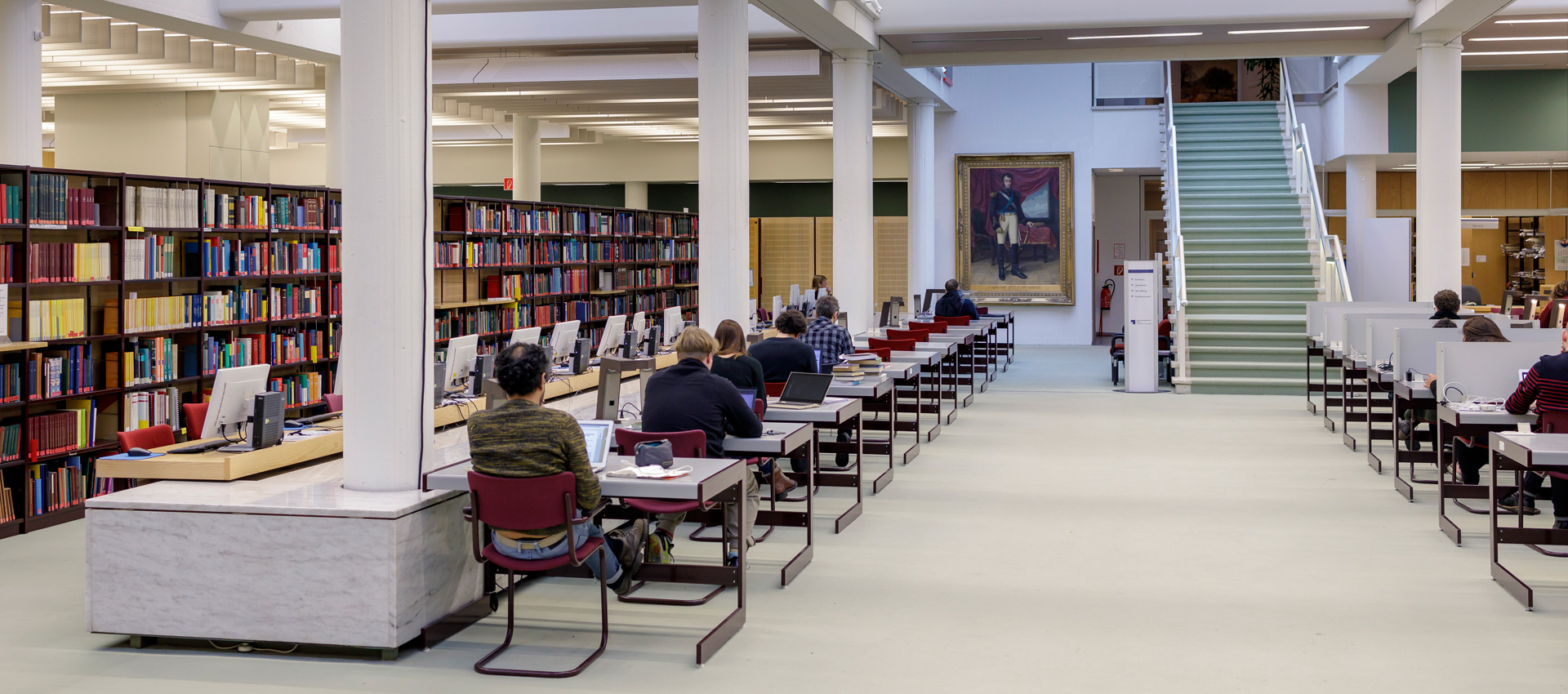
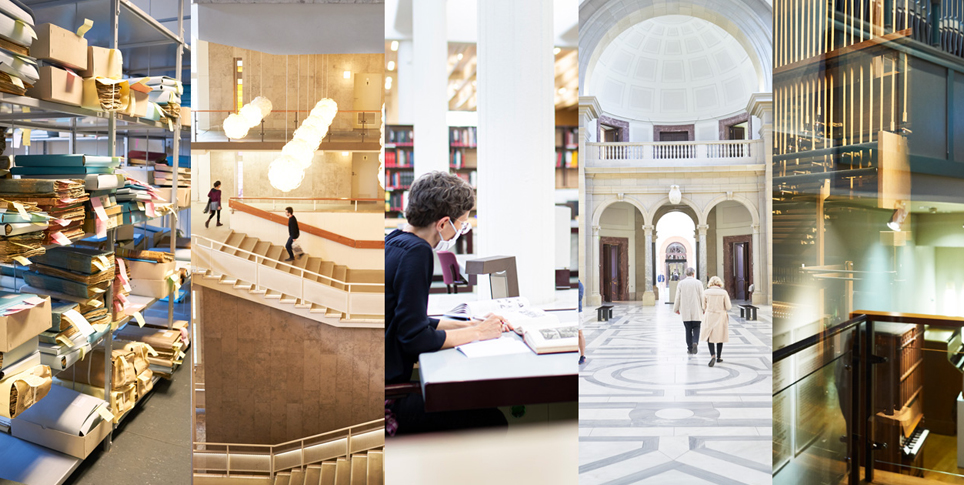
The building was now to be converted into a state-of-the-art library: featuring several reading rooms, exhibition and event spaces, a 1.7-kilometre-long book transport system invisible to users, a digitisation centre and vaults for valuable cultural heritage such as the original manuscripts of Bach, Beethoven and Mozart, and, as its centrepiece, a large central glass cube replacing the dome reading room destroyed in the war.
Surprising discoveries in the historical collection often necessitated changes to the plans and new cost estimates. Once again, all the work – based on plans by architect HG Merz – was carried out whilst the library remained open. It was successfully completed in 2019. Today, many users enjoy the modern library every day.
For the State Library building on Potsdamer Straße, designed by Hans Scharoun, measures to secure the structure and remove asbestos had already been necessary for years in order to maintain operations when, in 2019, a competition selected the architectural firm gmp for the comprehensive refurbishment.
Extensive planning has been underway ever since. The sheer scale of the building alone, with its characteristic open structure (800 reading places, 5 million books, 650 staff), gives an idea of the magnitude of the task. The building had not only begun to show its age after four decades of continuous operation. Since the fall of the Berlin Wall, it has found itself in a completely transformed urban environment and will therefore open up generously towards the east in future.
Where the Berlin winter wind used to seem to blow all year round, ‘berlin modern’ will be a meeting place that combines artistic experiences with a warm welcome
For Hermann Parzinger, upholding Prussian heritage in the name of the institution was also a clear commitment. The origins of the collections were to remain ever-present, even though Parzinger’s vision was thoroughly modern: interdisciplinary scholarship, networking with national and international partner institutions, and establishing the SPK as a major non-university research institution.
This fell on fertile ground among the committed young staff at the institutions, though some felt threatened in their ivory towers. Taking all staff members with him on the journey towards the SPK’s future was a priority for Hermann Parzinger, though, of course, aspiration and reality did not always go hand in hand.
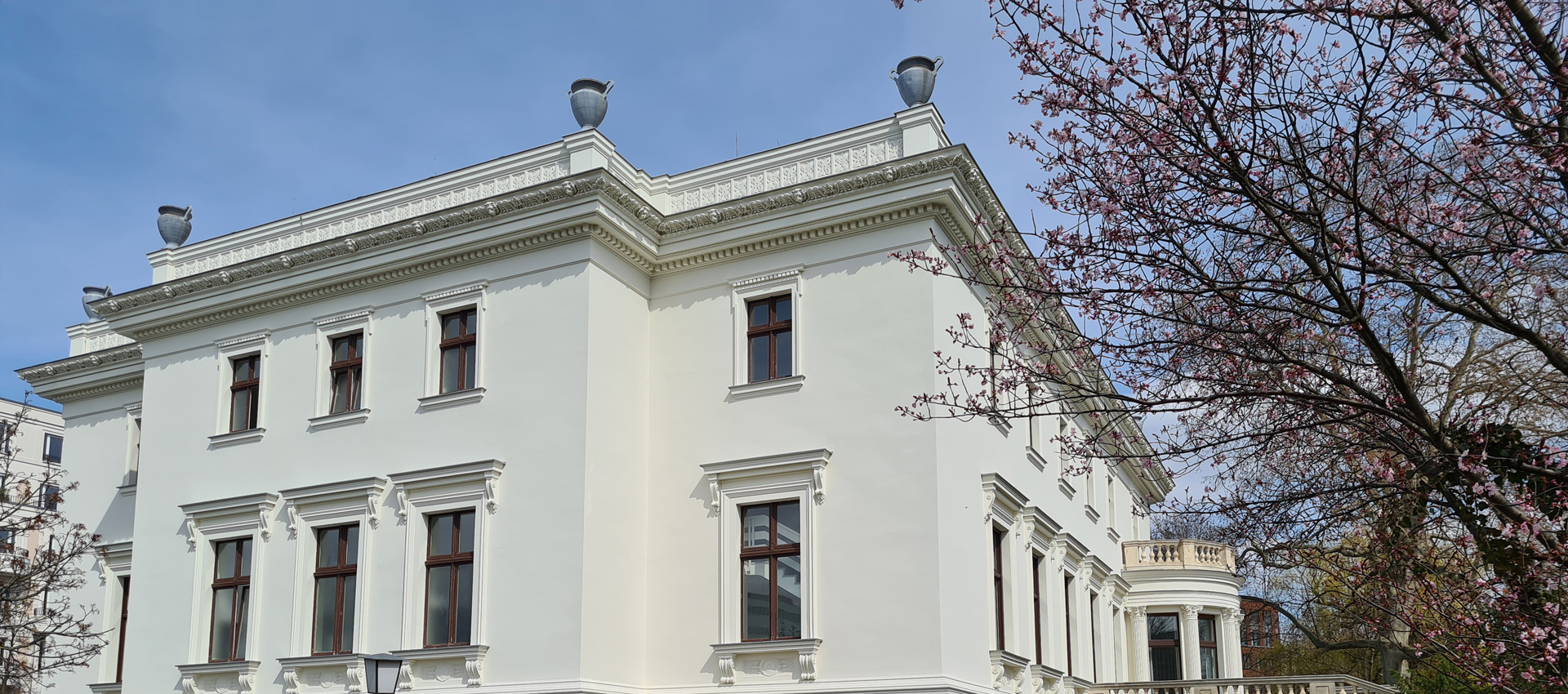
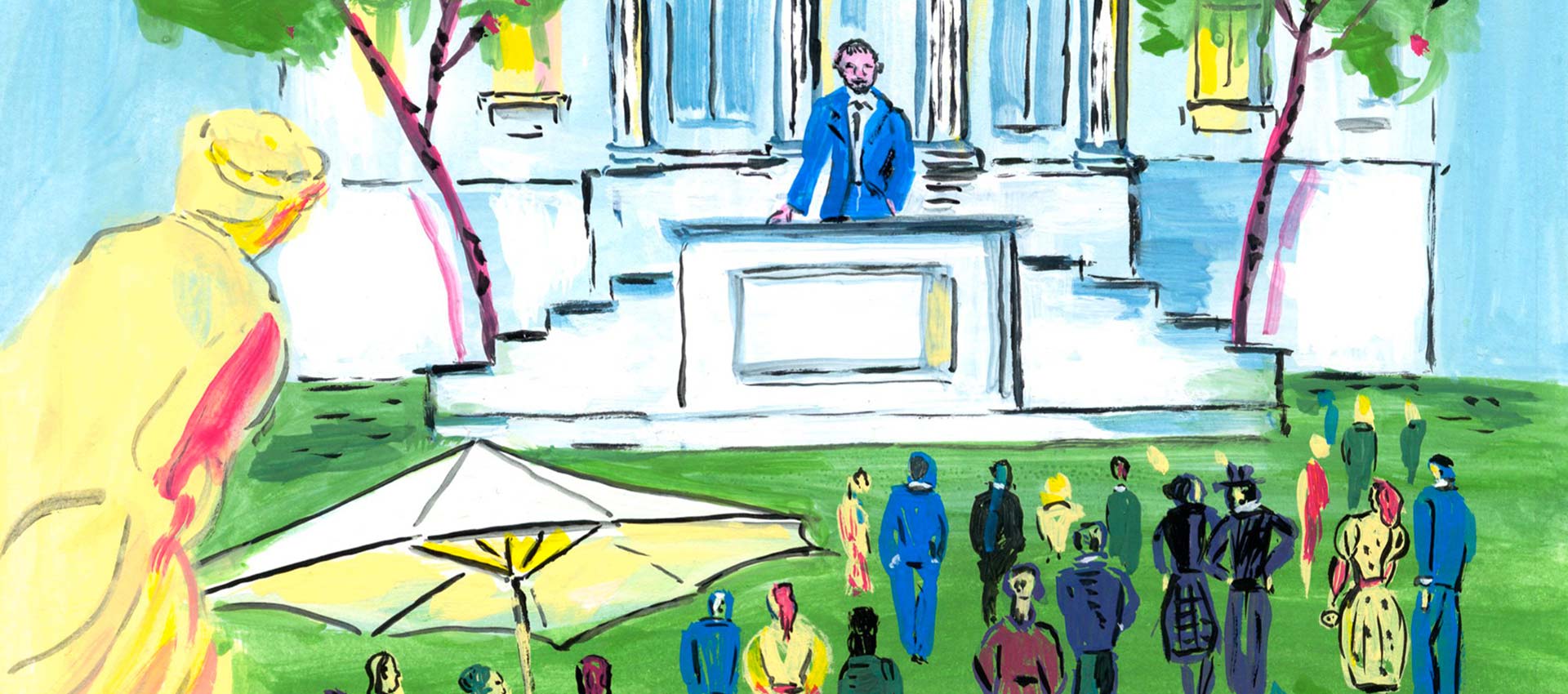
From 2008 onwards, there were several brilliant innovations, such as the President’s garden reception – which became a classic after just a few years – and the Notturno concert series with the German Symphony Orchestra – formats developed at Villa von der Heydt under Hermann Parzinger. The garden reception was both used and appreciated as a networking opportunity for experts, politicians and businesspeople alike, and the number of those wishing to be invited grew year on year.
But the annual staff barbecues on the spacious terrace outside the windows of the President’s office also enjoyed growing popularity – the Villa von der Heydt became a place of exchange. The President proved approachable.
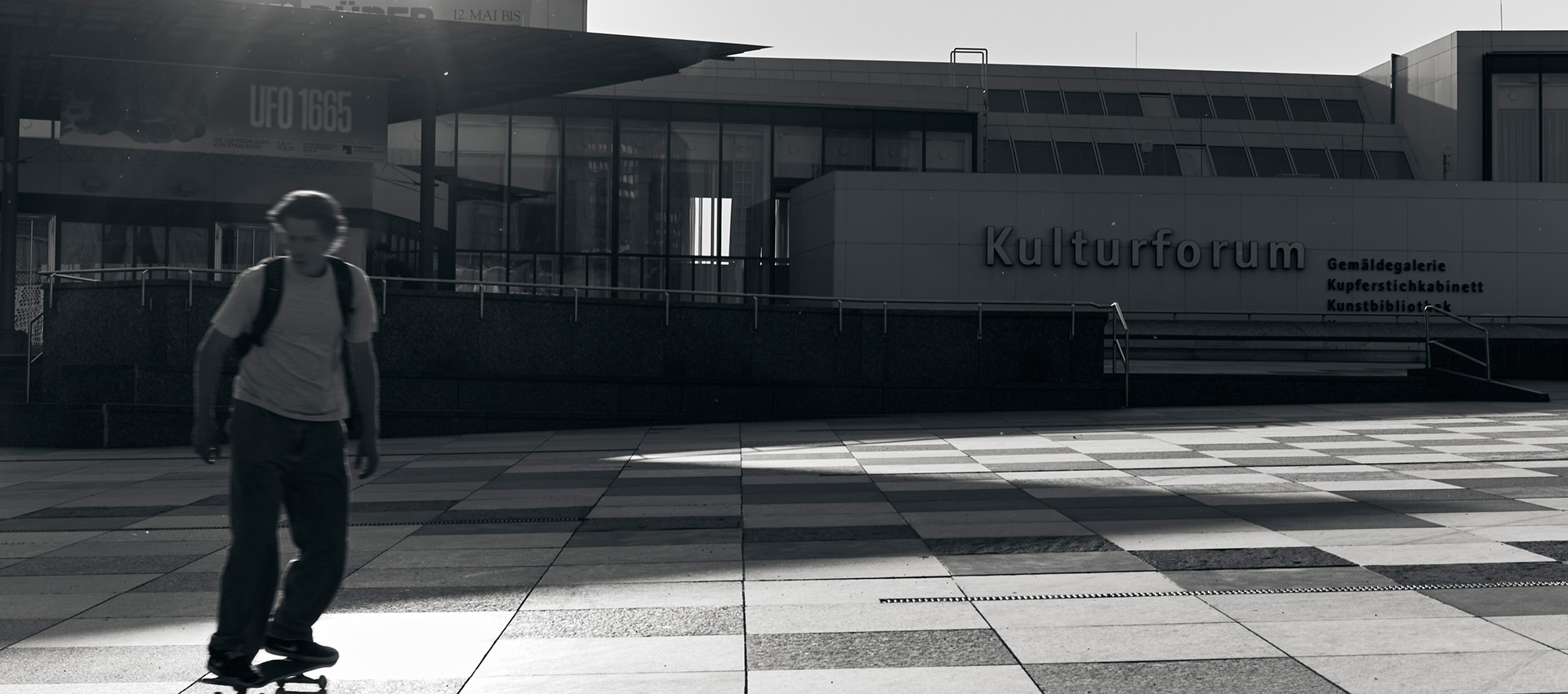
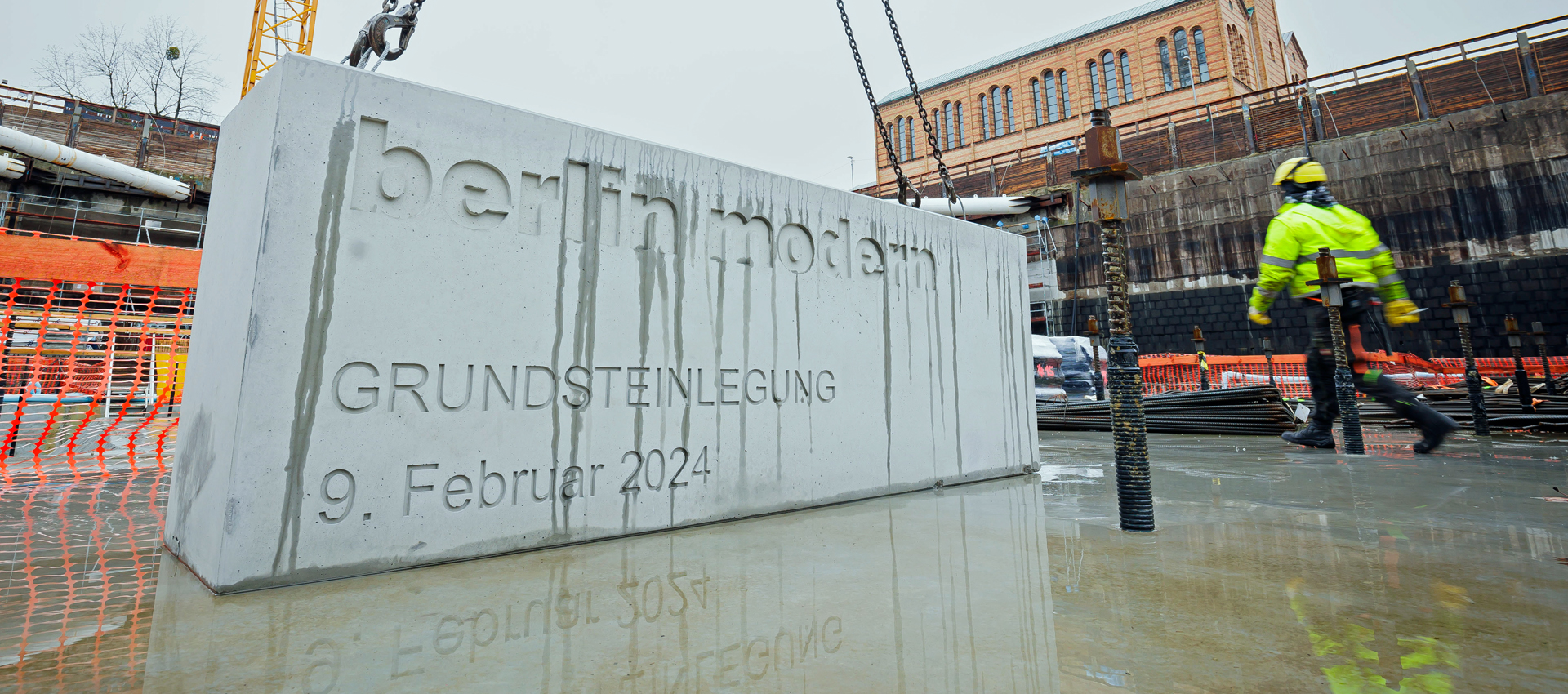
At the Kulturforum, Hermann Parzinger pulled off a real coup in 2014. A new museum building dedicated to 20th-century art is rising from the excavation pit. When one recalls the heated debates that preceded it, what the SPK President achieved here may well seem like the cutting of the Gordian knot: a solution to a long-standing shortcoming in Berlin’s museum landscape that had been lamented by all for decades. Modern art can now be presented appropriately.
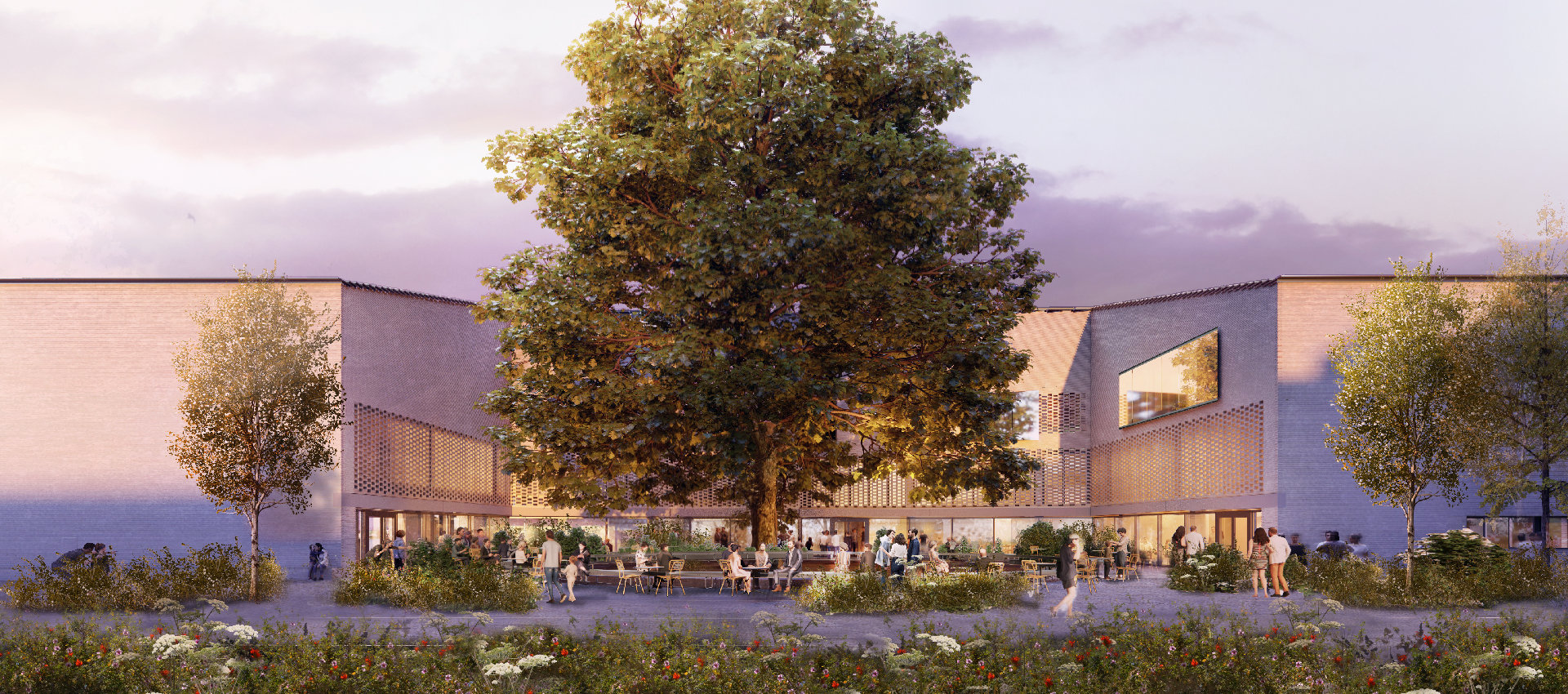
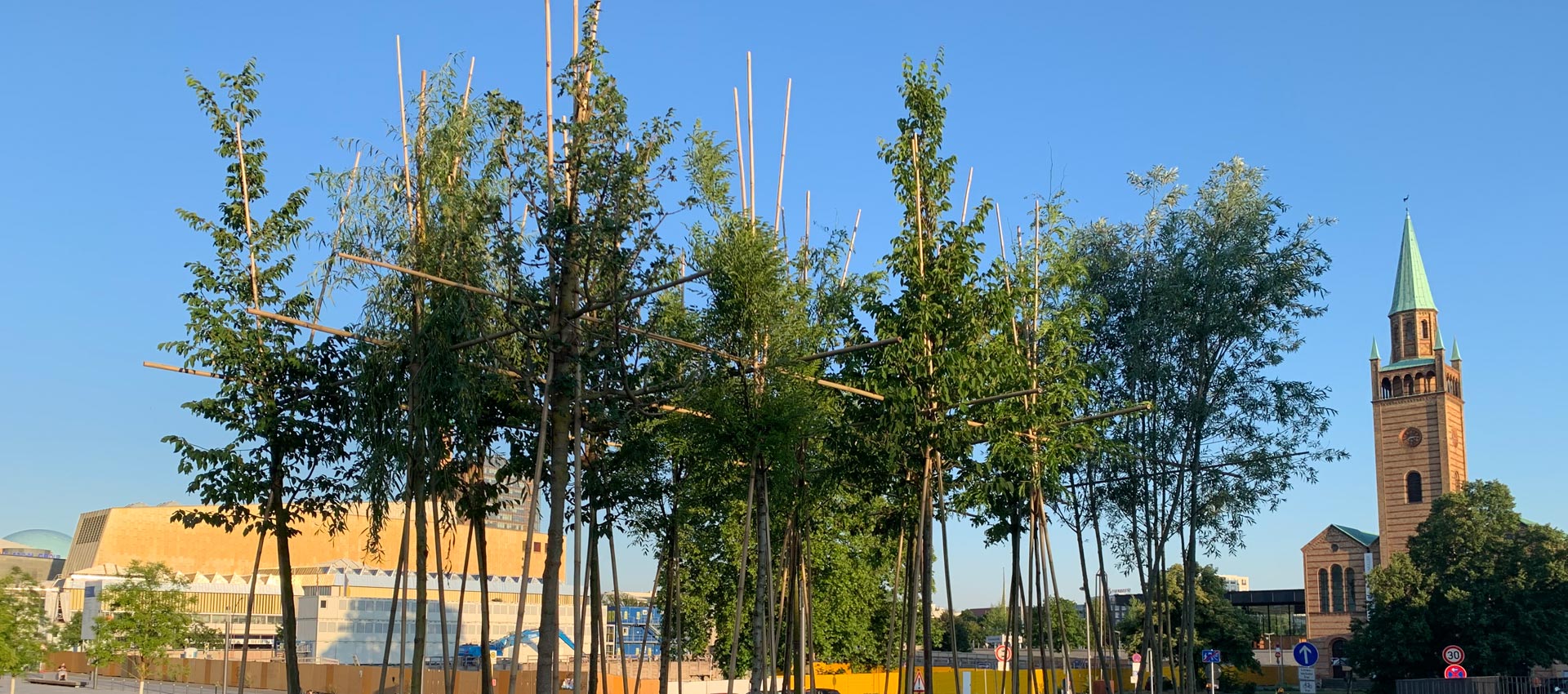
With ‘berlin modern’, not only is another venue being created for the National Gallery, housing the collections of Pietzsch, Marx and Marzona, as well as for the Kupferstichkabinett and the Kunstbibliothek. It also puts an end to the inhospitability of the site, which has been a cause for complaint for decades. Where the Berlin winter wind seemed to blow all year round, the new museum will be a meeting place that combines the art experience with a warm welcome.
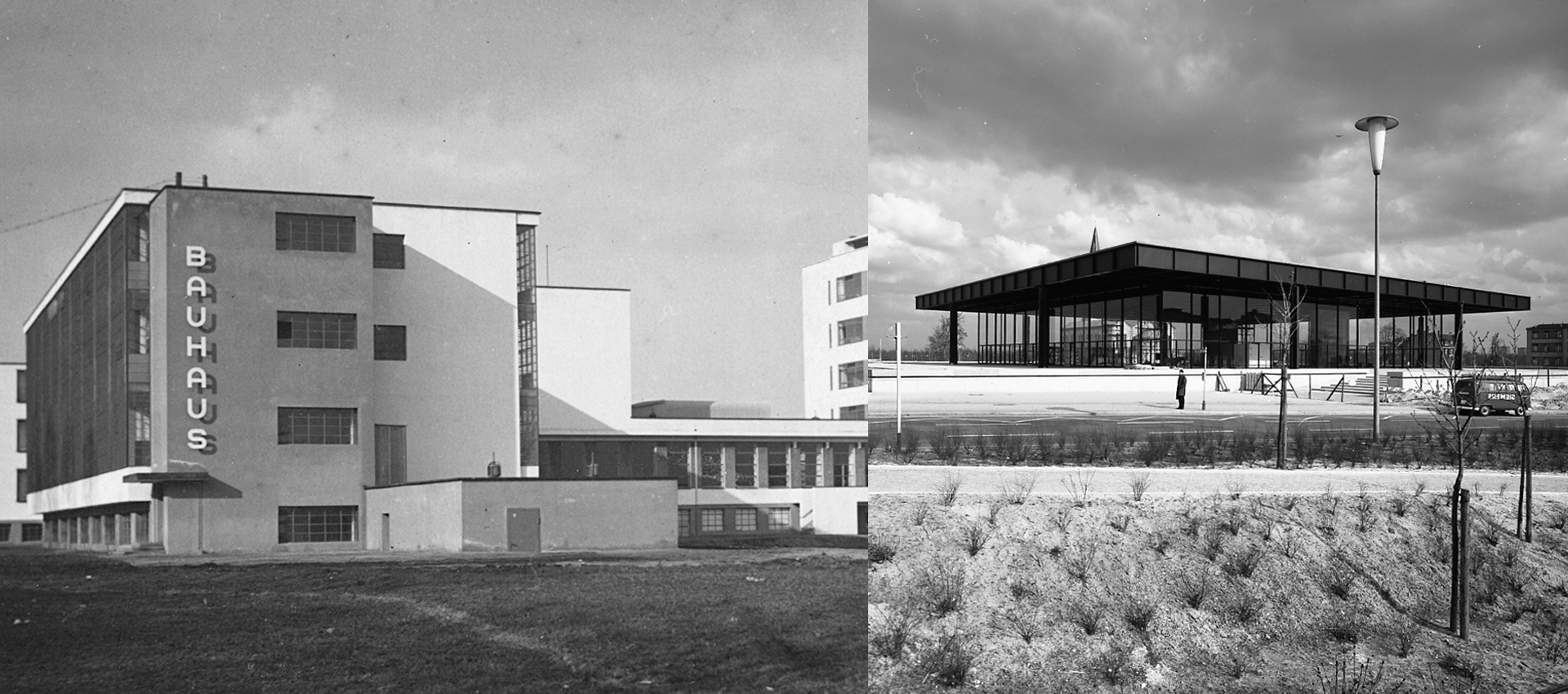
Herzog & de Meuron’s design envisages two intersecting boulevards within the building. In this way, the building will not act as a barrier, but rather as a kind of communicator between its neighbours: the Mies building, the church, the Philharmonie and the State Library.
During the planning process, ecological aspects have been significantly strengthened. The roof is intended to generate energy, the use of concrete as a building material has been reduced, and trees in the outdoor area will provide pleasant shade and create a link to the nearby Tiergarten.
However, it is not only the major projects that are crucial to the functioning of the SPK complex. Many other construction projects, often completed within budget and on schedule, also contribute to this. They can only be mentioned briefly here:
Opening of the Scharf-Gerstenberg Collection in the Stülerbau Ost (2008) and the Kaisersaal in the Museum of Photography (2010). New construction of the Archaeological Centre opposite Museum Island, comprising libraries, workshops and storage facilities (2012). Refurbishment of the Dahlem Museums (2012). Extension of the Berggruen Museum (2013). Opening of the newly built library and storage building in Friedrichshagen (2014). Redesign of the foyer and the Fashion Gallery at the Museum of Decorative Arts (2014). Concept for the Dahlem Research Campus (2017). Refurbishment of Mies van der Rohe’s Neue Nationalgalerie (2021). Securing the Hamburger Bahnhof museum site (2022). Start of the major refurbishment of the Berggruen Museum (2022). Topping-out ceremony for the new museum depot in Friedrichshagen (2023). Competition decision for the renovation and extension of the plaster cast workshop (2023). Restoration of the colonnades on Museum Island (2010/2024).
What the Prussian kings began, the president of the foundation continued.
The scale of the SPK’s task in providing suitable accommodation and modern, attractive presentation facilities for its vast collections is evident not only from this long list of projects.
It is also reflected in the fact that the Foundation spends well over a quarter of its expenditure on construction. The Foundation’s President has the wonderful task of continuing what was once begun by the building activities of the Prussian kings.
Many of the SPK’s buildings now shape the city’s skyline. They are at the centre of public interest, and many a heated debate has been sparked by them. And where does one argue more passionately about architecture than in Berlin?
It is therefore a good thing to have, as Hermann Parzinger does, a seemingly boundless reservoir of energy. But also a keen sense of the social processes that influence construction. Not least, his astute strategic approach, his negotiating skills and his decisiveness have often made the decisive difference.
And in the end: he has completed no fewer than fourteen construction and renovation projects during his almost seventeen-year tenure and steered many more onto the right track. What an impressive track record.
Hermann Parzinger was certainly no ‘figurehead president’; he was, in fact, a man of action.
In day-to-day life, the villa was a place where people were challenged and supported – it was less of a pleasant venue for official functions and more of a genuine workplace. A workplace that was genuinely appreciated by most staff, however, a place where everything was close at hand, where you might unexpectedly bump into Hermann Parzinger, and where a quick hello or even a longer “how are you” was always in order.
Hermann Parzinger was certainly no ‘figurehead’, but rather a hard worker. Whatever he did, he did at a rapid pace; emails often came back within minutes, enquiries were dealt with almost round the clock – whether it was Christmas, during holidays or on his birthday. He was always online. Emails beginning with ‘by the way’ soon became infamous. Here he wanted answers, and he wanted them immediately! Just as quickly, his replies became legendary, ending with a “basta”. In this way, the boss made it clear that this was exactly how he wanted the matter decided or dealt with.
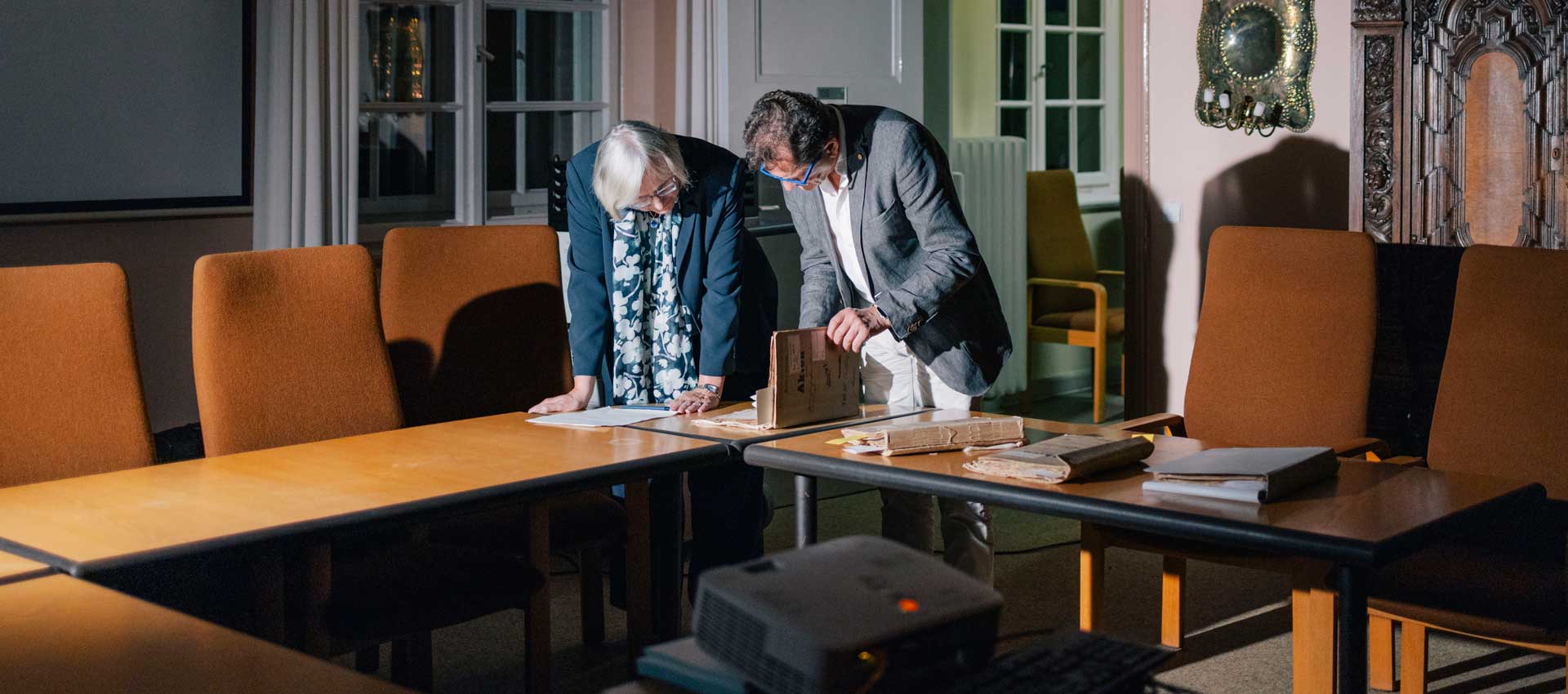
This was perhaps not always easy for the staff, but Hermann Parzinger always bore full responsibility and stood by his word and behind his team. All this took place in the villa. A place where small and large working groups gathered, where discussions took place, where arguments flared up, where struggles ensued, not least and very often concerning the future of the Prussian Cultural Heritage Foundation.
It was here that the Scientific Council met in 2019/20, as did the Foundation Council on numerous occasions under the chairmanship of various Ministers of State for Culture, together with representatives of the federal government and all the federal states; it was here that SPK history was made, right up to the very end of Hermann Parzinger’s long tenure, which will come to an end in May 2025 after more than 16 years.