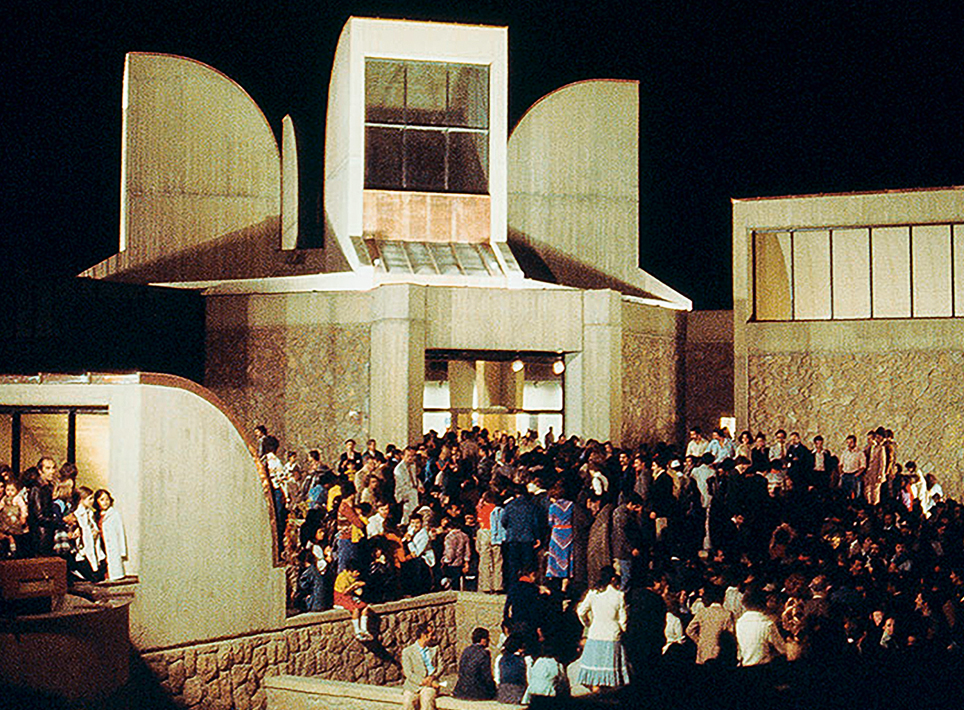
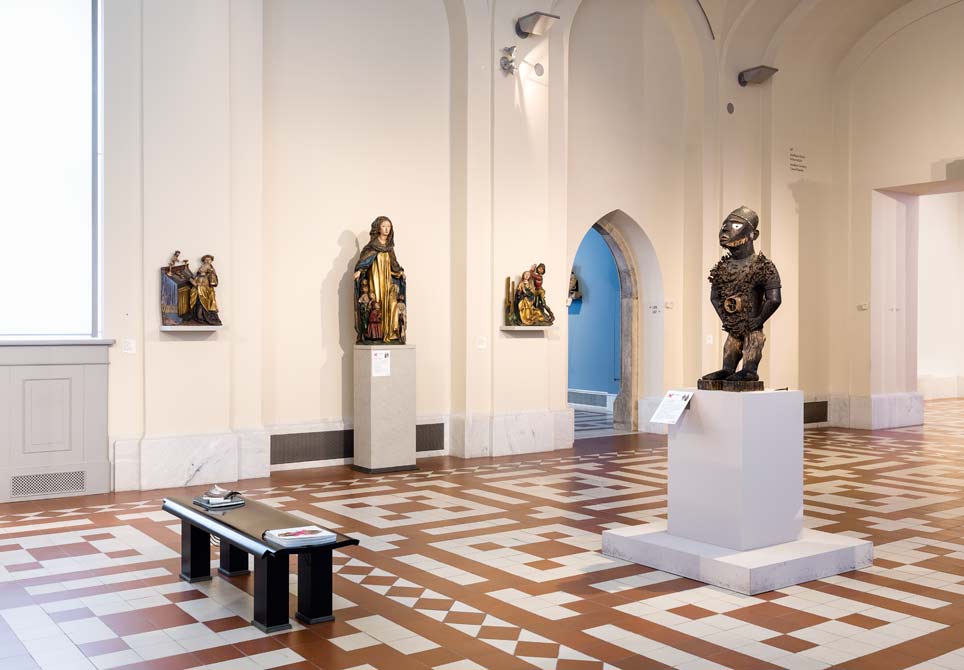
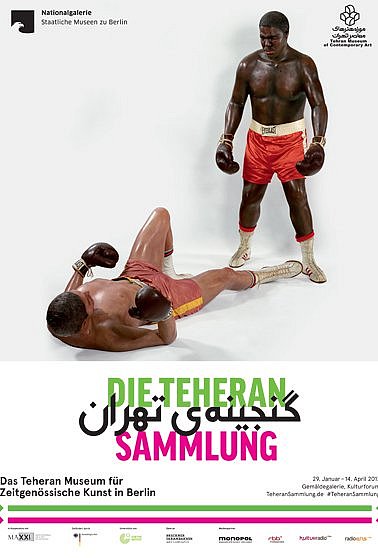
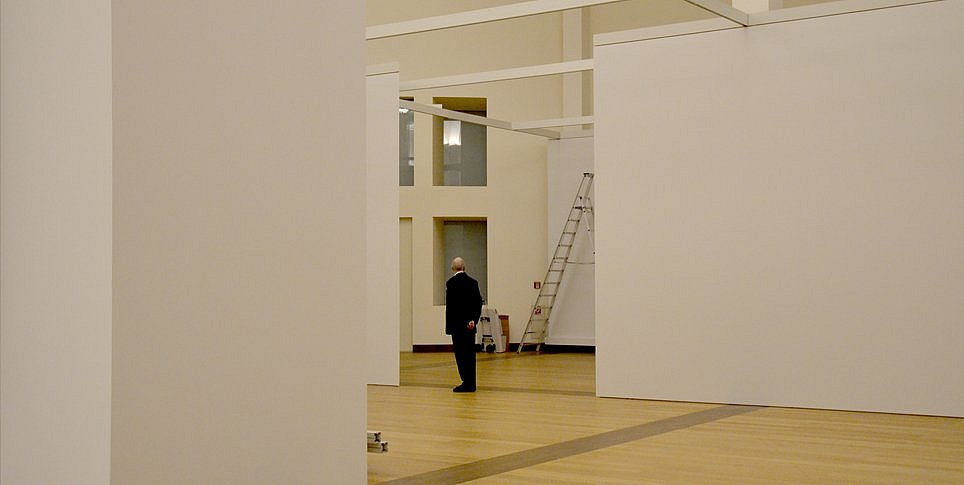
May 2016. The Prussian Cultural Heritage Foundation announces that the collection of the Tehran Museum of Contemporary Art (TMoCA) is to be exhibited in Berlin. The Foundation’s President, Hermann Parzinger, explains that never before has a Western museum been in a position to display European and American modern art collected in Iran – which has largely remained hidden – and to juxtapose it with Iranian art. The then Federal Foreign Minister, Frank-Walter Steinmeier, wants to create “space for freedom in the pre-political sphere”, whilst Minister of State for Culture Monika Grütters speaks of a “strong cultural-political signal”. Seven months later, the walls of the Gemäldegalerie’s foyer remain empty; Iran has not granted an export licence for the artworks, the SPK has had to cancel the exhibition, and the project has fallen through. What remains of this initiative, and what lessons can be drawn from it for cultural exchange with ‘difficult’ countries?
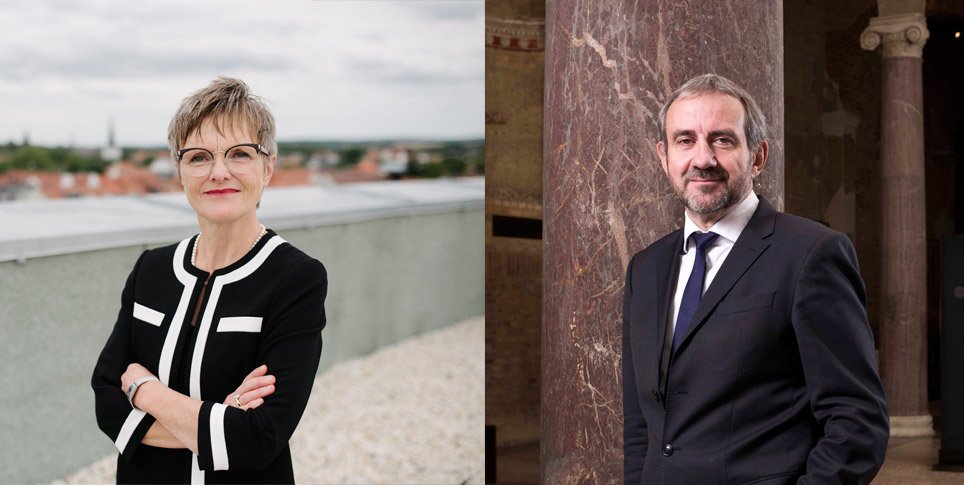
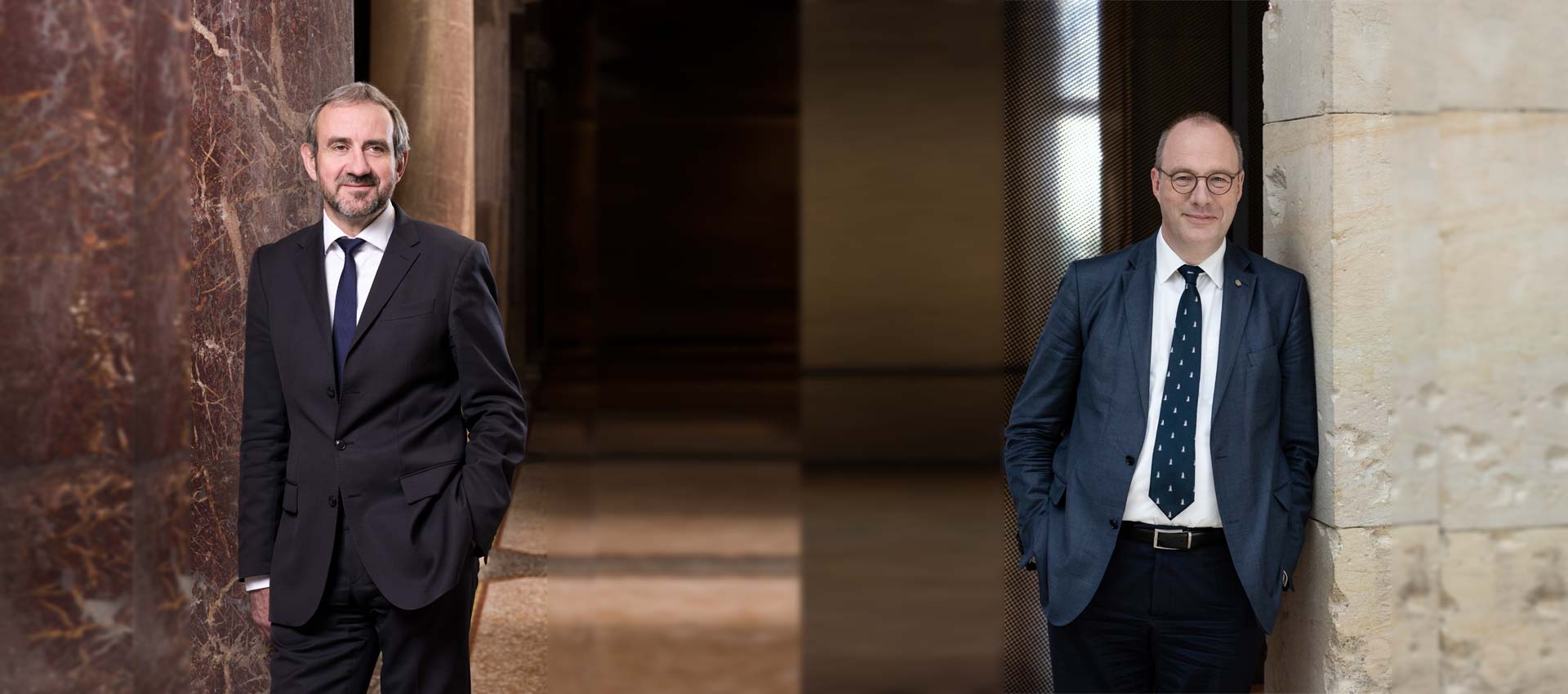
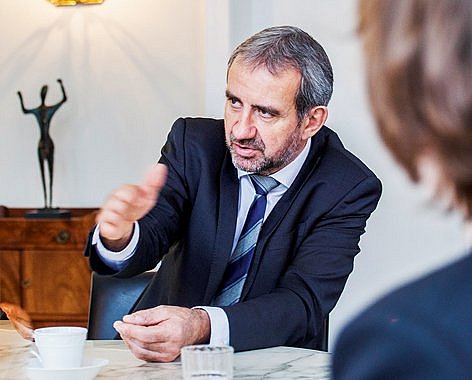
Hermann Parzinger
President of the Prussian Cultural Heritage Foundation
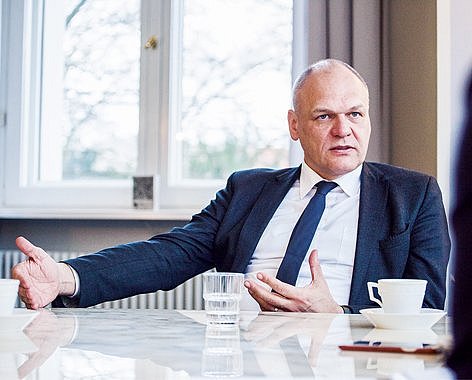
Mr Parzinger, when you had to cancel the exhibition, the critics were quick to speak out – they had always known that no agreements should be made with Iran. Were you really too naive, or what did you learn from this project?
Parzinger: It was worth the effort. When you undertake complex projects with ‘difficult’ countries, there is always a risk. Nevertheless, you have to tackle them. For my part, I learnt a great deal about the inner workings of Iran. When it came to the export licence for the works, nobody in Iran wanted to take political responsibility. Nevertheless, there was a strong faction that advocated cooperation with Germany and Italy, where the exhibition was due to go after its Berlin stop. Another positive aspect was that there was a great deal of discussion here about the Tehran Museum, the collection and how it is managed. Which exhibition project in recent years has kept Germany on such tenterhooks as this one? And when the show planned for Berlin, entitled ‘The Berlin-Rome-Travellers’, is finally displayed at the TMoCA in spring 2017, that will actually be a fine outcome.
Johannes Ebert
Secretary General of the Goethe-Institut
What were your experiences regarding the Goethe-Institut, Mr Ebert?
Ebert: The overall package agreed between the SPK, the Goethe-Institut and the Federal Foreign Office was extremely interesting to me. We had the opportunity, on behalf of the Goethe-Institut, to organise a contemporary programme, which did in fact take place in the end – unfortunately without the exhibition. And yet we discussed Iranian modernism and how this museum came into being in the first place.
We organised 25 events covering literature, music, philosophy, film and other disciplines, which were very well received. Of course, we did consider at the outset whether or not to get involved in the project, but I believe that cultural exchange is extremely important for understanding between societies and civil societies, which is why we responded positively to the SPK’s initiative.
After all, the Goethe-Institut operates in many countries that we might consider ‘difficult’ – in Afghanistan, Egypt and Turkey. It is precisely when things are particularly difficult in a place that the Goethe-Institut is especially important, because we offer a space of freedom that local artists and cultural practitioners can rely on. Of course, things sometimes go wrong. But that doesn’t mean you don’t learn from it or that you don’t grow closer.
I very much agree with Hermann Parzinger on this. In Germany, people have realised just how diverse, contemporary and youthful this Iranian cultural scene is. And conversely, the Iranian artists found it immensely positive that their work met with such great interest here and was discussed openly on so many levels. This allowed us to build the credibility that is so important for our work. For us, the cultural programme was a success even without the exhibition. And if you ask me personally: I would do it all exactly the same way again
Farhad Payar
Journalist and actor
What sparked the debate about the exhibition in Iran?
Payar: Everything in Iran is political, including art. Even the way people dress. At first, I was therefore very sceptical and didn’t believe it would work. Nevertheless, I thought it was good that an attempt was made at all to bring the collection to Germany. Even though the exhibition didn’t go ahead, there is no other event, no high-culture or artistic activity, that has brought cultural creation in Iran into the global spotlight quite like this project. Iranian artists have told me that, for the first time, they had the opportunity to say what they think. And everyone has benefited from it: the reformers have shown that they have allies abroad. The hardliners were able to prove that they can also stop such an undertaking.
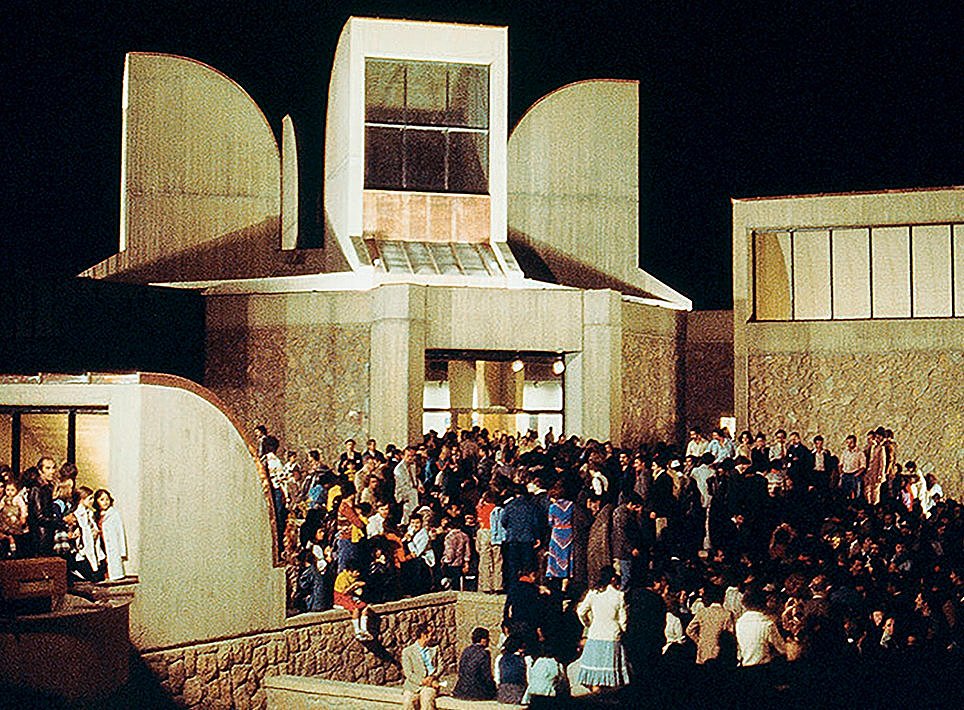
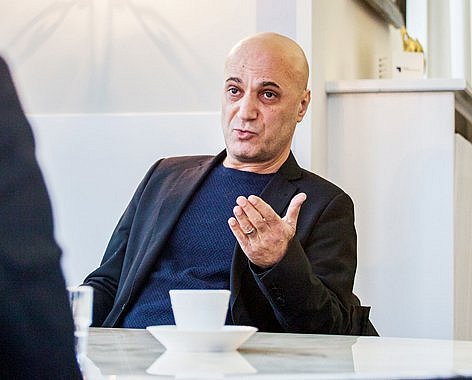
And the Federal Republic has shown that it is not only interested in economic cooperation with Iran. Not least, the TMoCA has also benefited, as it has never experienced such a surge in popularity as it has over the past six months. I have now read that a few months ago a delegation from the Iranian parliament visited to ensure that the works were being treated properly. The only ones who missed out were the art lovers in Berlin and Rome who would have liked to see the works.
One outcome of the debate, as Mr Parzinger mentioned, was that the exhibition, as planned for Berlin, was shown in Tehran. What were the reactions?
Payar: According to official figures, 15,000 people visited the exhibition within the first ten days. A huge success!
In Iran, there are people who think in modern terms, even if modern art receives little attention. The exhibition has triggered something here that will have a positive long-term effect: Iranian society is being perceived differently and in a more nuanced way.
Parzinger: I’ve heard that many Germans who have since travelled to Iran – and who aren’t necessarily interested in contemporary art – now want to see the TMoCA and not just archaeological sites. That’s another effect! Otherwise, I completely agree: the crucial thing about cultural policy is that art triggers something that changes the way people think. In that respect, looking back, I can only say: it would have been great if we’d been able to stage the exhibition, but the impact of the project alone was worth all the effort.
They all agree that cultural exchange with ‘difficult’ countries can be useful. Here in Germany, there are quite a few voices that repeatedly warn against it, whether it concerns Azerbaijan or China. Time and again, it is said that the West would be abandoning its values if it cooperated too closely with dictatorships. Western exhibition organisers have even been accused of disregarding moral considerations in the pursuit of artistic success. Is this a debate from the “European armchair”, as Foreign Minister Steinmeier once put it?
Ebert: In many countries, people know a great deal about us, but we know very little about them. With regard to Iran, Jürgen Habermas spoke of this asymmetry of perception. If we only engage in cultural exchange with countries that share the same values as us, there won’t be many left before long. That is why we must seek exchange without compromising our values. We have our position, our stance, but we do not proselytise.
Through our selection of artists, we demonstrate what Germany stands for. And then we engage in a discussion that may well be contradictory. We are not alone in this world, but find ourselves in the midst of globalisation. Against this backdrop, it is important that Germany makes its positions clear. Cultural work has the advantage that one works in a field where one can occasionally go to extremes without immediately triggering a diplomatic crisis. International cultural exchange has never been as important as it is today.
Do you see it in a similar light, Mr Parzinger?
Parzinger: In a way, yes. International cultural cooperation has always played a role for the SPK. We are, after all, a universal museum and a universal library with collections from all cultures, from all continents, from all eras. This always raises the question: how do we deal with countries of origin, cultures of origin and contexts of origin? How did the objects come to Berlin? What does this mean for our cooperation? This is not just about provenance research and restitution, but above all about making cultural heritage the foundation for intensive cooperation.
The primary aim is, after all, to know more about one another. Particularly in countries such as Iran or Russia, which handle freedom of expression differently from us, it is crucial to provide people with alternative avenues of access. And in this regard, engaging with cultural artefacts can play a decisive role. For me, it is not about exhibition X in year Y in city Z, but about the sustainable development of cultural relations. The Humboldt Forum also embodies this new perspective, because dialogue with the societies of origin must be the central theme of the exhibitions. This form of multi-perspectivity is simply a different means of cooperation than if I were to send a few Expressionist paintings to Tokyo.
Ebert: Cultural engagement abroad has changed massively in recent years. We have long since moved away from the mere presentation of German culture. Today, we primarily promote cultural cooperation. Often, it is also a matter of supporting the cultural infrastructure – that is, local theatres, festivals or arthouse cinemas – through projects in ‘difficult’ countries.
Are there actually any red lines in cultural exchange? The participation of the Tehran museum director in a competition featuring Holocaust caricatures did, after all, throw the exhibition project here into serious trouble. He was replaced by another negotiating partner. How far can you go?
Ebert: For us, a red line is crossed when staff members or partners are at risk. In the Ivory Coast, we lost a colleague in a terrorist attack a year and a half ago. In her honour, we are now establishing the Henrike Grohs Prize for African artists. Such threats have increased, and as Secretary-General I am confronted with them time and again. Every time there is an attack in Cairo or Istanbul, I ask myself: has anything happened to our people? In terms of content, however, there are few red lines. The case of the Tehran museum director Mollanoroozi would be an example, though; that was unacceptable to us …
Parzinger: … yes, Majid Mollanoroozi touched upon the very foundations of our self-image. The denial of the Holocaust or the attempt to ridicule its victims is unacceptable to us. We condemn this in the strongest terms. Such individuals can no longer be our partners. I demand respect from my partners. Conversely, I grant it as well.
Iran had heard your protest, Mr Parzinger, at the time, and withdrew Mollanoroozi. Was that a surprising gesture, Mr Payar?
Payar: No, because the government did want the exhibition. It was a positive sign on your part that you insisted on Mollanoroozi being replaced. At the same time, we mustn’t be under any illusions. The Iranian regime, which rails against every form of Western lifestyle whilst simultaneously enjoying everything that comes from the West – from medical equipment to intercom systems – will naturally not take a hard line with the museum director, as he is, after all, acting in its interests. The West will never see eye to eye with the political leaders in Tehran, which is why dialogue on a meta-level is so important. The Iranian opposition and artists critical of the regime have gained momentum through the exhibition project and have been able to show their faces. That was a good thing.
Time and again during the project, it was emphasised that this was a collaboration between the Berlin National Gallery and the TMoCA. With such connections, how can one prevent an unpopular regime from benefiting after all?
Parzinger: It was a collaboration between two museums. Museum professionals all over the world share common values. Their interest in art unites them. Of course, political backing was also needed for this project, but I always resisted the idea of a grand state ceremony. I often found myself thinking of the exhibition ‘The Art of the Enlightenment’, which we had conceived together with Dresden and Munich and which opened to great fanfare in Beijing in 2011. Just as the then Foreign Minister Westerwelle had boarded the plane, Ai Weiwei was arrested. In that instance too, I defended the exhibition against all criticism. But because the opening was such a state-sanctioned event, the artist’s arrest immediately afterwards seemed all the more serious.
Ebert: I think that in cooperation, the decisive factor is which partners we choose. Naturally, we rely on critical and innovative people who are ideally outside the government and its direct sphere of influence. But even within the so-called apparatus, there are often people who want change. When you work with the authorities, you can sometimes expand the scope for action. You can, so to speak, push the boundaries. When I was working in Cairo, it was always important to me to initiate discussions even on difficult issues, because that is the only way to develop an understanding of the other person’s position. These boundaries are often fluid, and culture is an important platform for exchange here too. Sometimes, however, one feels rather uneasy in such situations.
Parzinger: Cultural practitioners should shape cultural policy, not global politics. Otherwise, you risk being co-opted or failing immediately.
In cultural policy, more is sometimes possible than in politics itself. Take Russia, for example.
Parzinger: What we are currently doing there is virtually counter-cyclical to political and economic relations. We have more projects than ever; three exhibitions featuring our existing collections alone are in preparation. Of course, we still don’t know where all our treasures are located in their entirety, but there is now an opportunity to research and restore, for example, Donatello sculptures and reliefs from the Bode Museum or the gold hoard from Eberswalde from the Museum of Prehistory and Early History. The fact that the Russian side is involving us in this shows that cooperation is also important to our colleagues there. A great deal of trust has been built up through this work, and so it is that an exhibition label now reads: ‘Until 1945, Staatliche Museen zu Berlin’.
Back to the Tehran project. When will we see the collection in Berlin?
Parzinger: As we all know, hope dies last. We are still in contact; our representatives have also paid further visits. Interest remains very high. But the question remains: who makes the decisions in Tehran? We would now need an invitation and a clear signal from the Iranian side; then we would travel there again at the highest level.
Payar: The Iranian government is now indebted to you. You should make the most of that! At a meeting of the Ministry of Culture with gallery owners and experts, a very famous Tehran-based gallery owner and opponent of the exhibition said: If only ten pictures had been exhibited in Berlin, we would have had no objection. Ten pictures could be given away; then the treasure trove would not be empty should they not be returned. Perhaps the SPK could simply organise an exhibition in three phases, each featuring 20 works by independent Iranian artists.