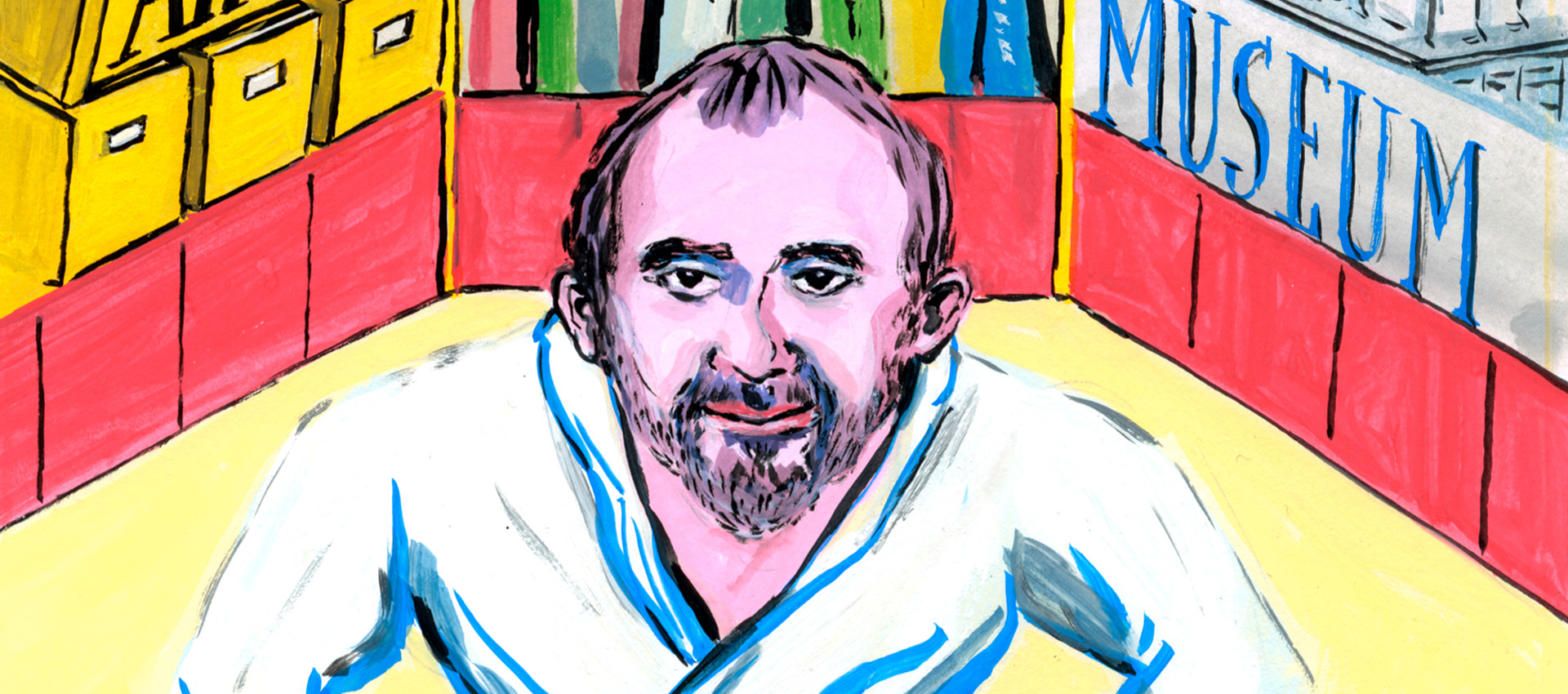
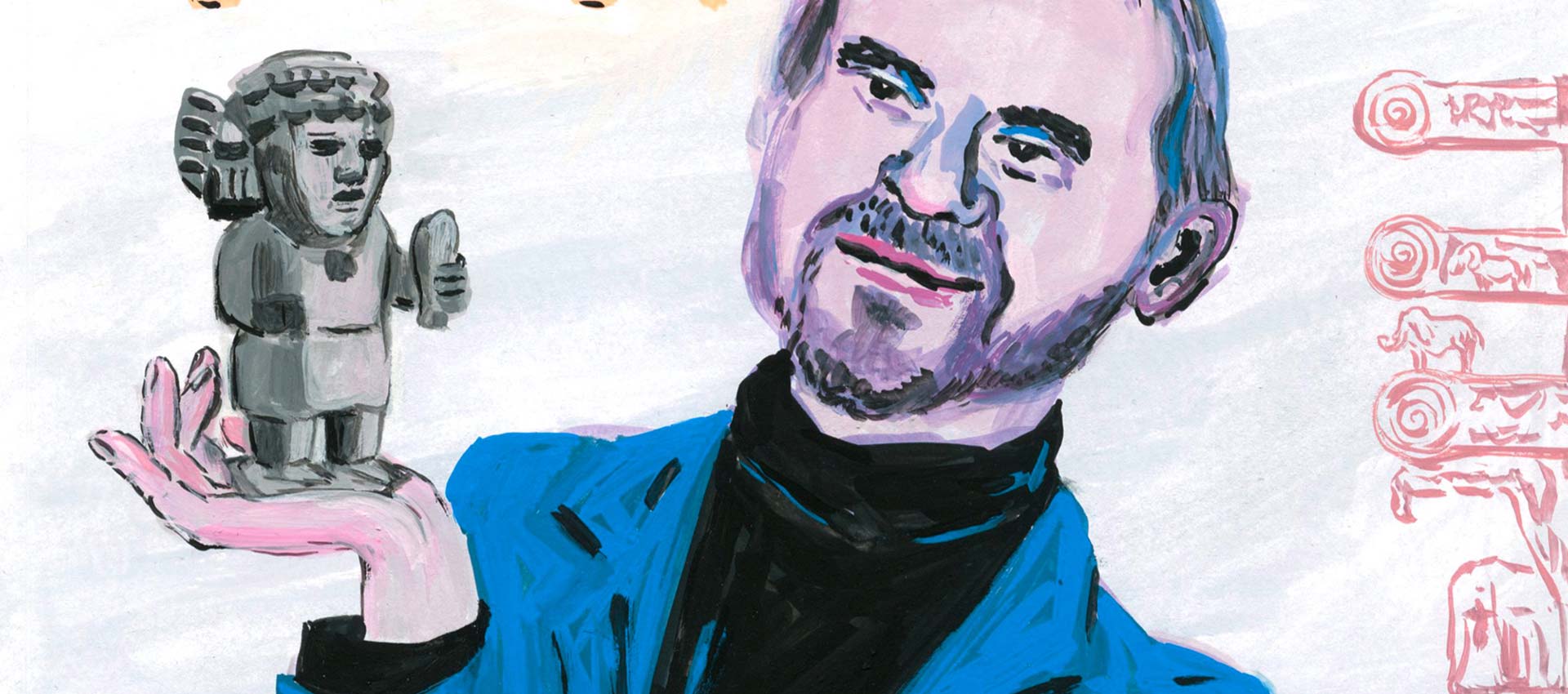
“In the beginning was the Word.” This is how Hermann Parzinger begins his global history, *The Children of Prometheus: A History of Humanity Before the Invention of Writing*, published in 2014. In the book, he guides the reader with meticulous care and expertise through millions of years of human history across the entire globe.
Among the great achievements of the Palaeolithic era was the mastery and utilisation of fire, which was to shape and influence the survival strategies of early communities in a significant way. It was fire, too, that had kindled a passion for archaeology in the young Hermann Parzinger at the end of his school days, a passion that would accompany him throughout his future life as a researcher.
Fascinated by the fragmentary nature of the sources and the possibilities of developing insights into the lives of long-gone cultures from mere traces, Hermann Parzinger embarked on the path from a student of prehistory and early history to becoming one of the leading prehistorians of our time.
With foresight, the former DAI President recognised early on the virtually limitless possibilities that might arise from exploring the vast territories of the Soviet Union, which had just collapsed – a region that had remained largely terra incognita during the Cold War.
Under his leadership, numerous excavations and research expeditions took place across the Eurasian region – ranging from the investigation of the significant Late Bronze Age and Early Iron Age settlement of Čiča in western Siberia, to the excavation of the Scythian-era sanctuary at Bajkara in northern Kazakhstan, from research into early tin mining in Uzbekistan and Tajikistan to the excavation of the ice mummy of a Scythian warrior in the Altai Mountains of Mongolia, and the excavation of the large kurgan Barsučij Log in the Siberian region of Khakassia.
The thematic diversity of his research topics was as vast as the area he chose to investigate, although a focus on the world of the equestrian nomadic Scythians is evident. His most spectacular find came in 2001, when, during the excavation of the Aržan 2 kurgan in the ‘Valley of the Kings’ in the Autonomous Republic of Tuva, the undisturbed Grave 5—containing the remains of a woman and a man—was opened.
The princely tomb contained more than 9,300 objects, nearly 6,000 of which were made of gold, including true masterpieces of animal-style art. This makes the complex one of the richest tombs of the Scythian period and one of the most outstanding archaeological discoveries in Eurasia. This sensational find brought Hermann Parzinger fame far beyond the archaeological community.
For him, however, neither gold treasures nor the discovery of mummies in the ice were the aim or motivation for his work, nor did he see himself as a new Heinrich Schliemann. Rather, he regarded the discoveries made during his research as pieces of a mosaic in the process of clarifying questions about human history.
To this end, Parzinger always placed great emphasis on the use of modern excavation and prospecting methods and the integration of scientific disciplines.
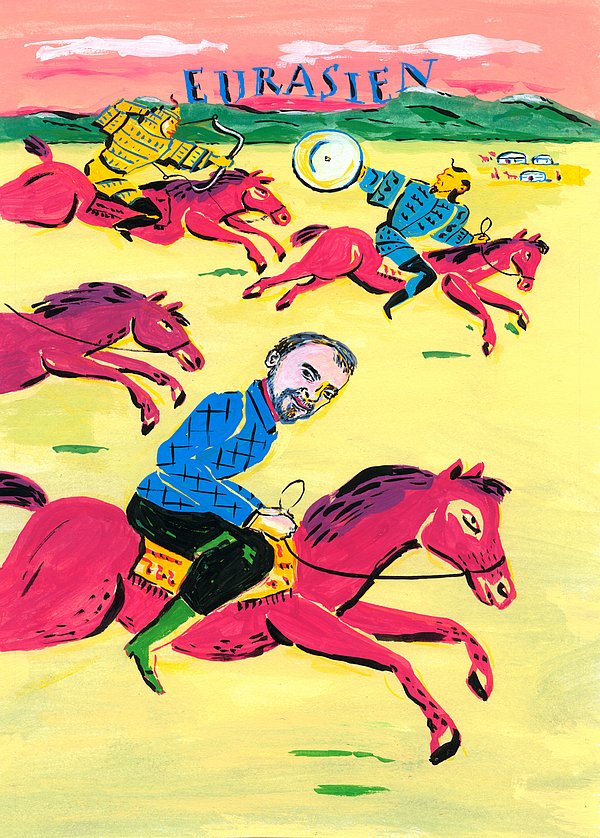
For several decades now, Hermann Parzinger has made a significant contribution to the study of prehistoric cultures through his passion for archaeology and his characteristic analytical insight.
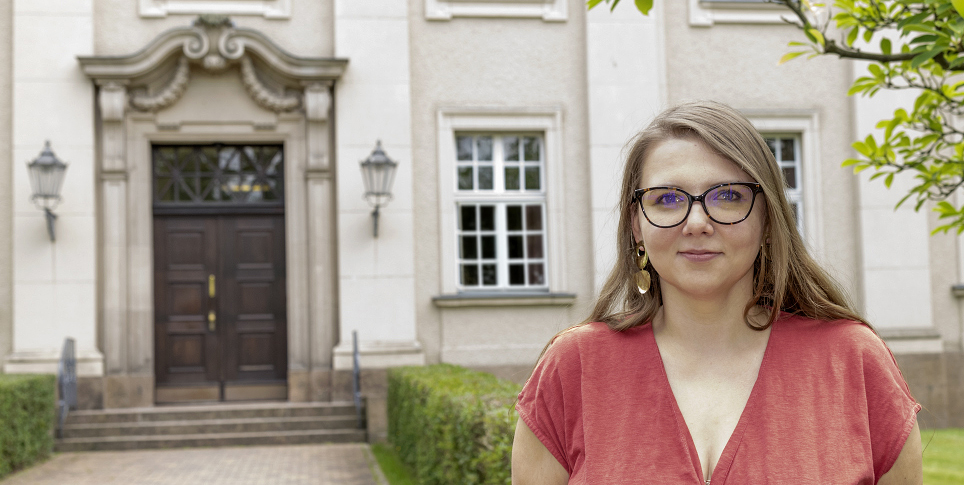
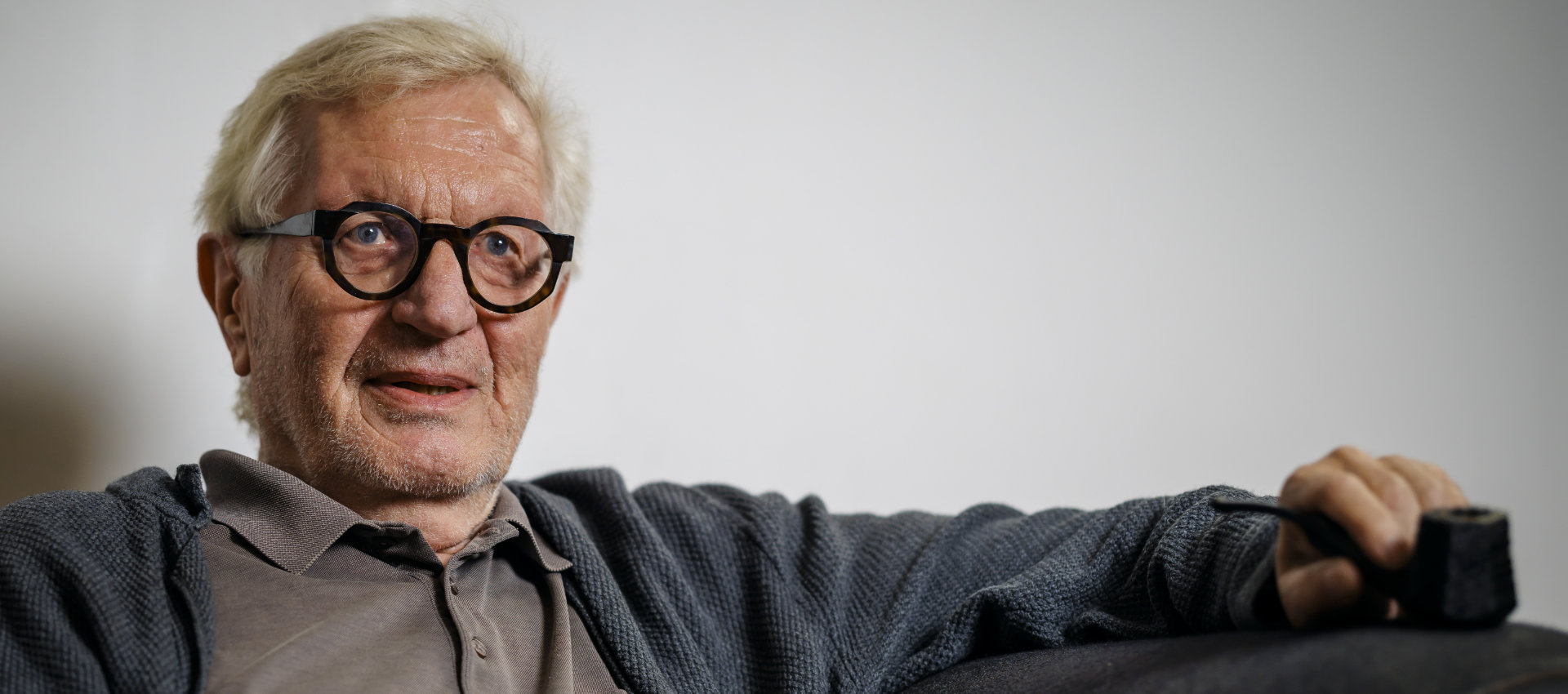
Manfred Nawroth on Hermann Parzinger
The gold from the princely tomb at Aržan 2 was also the focus of the special exhibition *In the Sign of the Golden Griffin*, which Hermann Parzinger, as President of the German Archaeological Institute, presented to the public in 2007 at the Martin-Gropius-Bau in Berlin in collaboration with the Museum of Prehistory and Early History.
It was not the first exhibition on the Scythians, nor would it be the last – but it was the first in the world to present the history and culture of this horseriding people in such a comprehensive manner, from their regions of origin along the Yenisei to the gates of Central Europe.
At the heart of this exhibition, featuring almost 10,000 individual objects gathered from seven countries, were the most significant grave goods from the princely tombs as well as the magnificent new discoveries of the turn of the millennium. It was a show of superlatives; at its opening in July 2007, Hermann Parzinger was still President of the DAI, and by the time it closed in May 2008 at its third venue, the Museum für Kunst und Gewerbe Hamburg, he was already President of the SPK.
At his new post, he found himself confronted with an entirely different set of challenges: the wounds inflicted on the collections of the Staatliche Museen zu Berlin by the aftermath of the Second World War. The Museum of Prehistory and Early History had already begun cooperating with Russian museums in the 1990s to recover lost cultural treasures – such as the ‘Treasure of Priam’ – and make them accessible to the public in exhibitions.
During his presidency, Parzinger worked tirelessly towards these goals in close cooperation with his partners at the Russian museums. As a result, thousands of cultural artefacts displaced by the war were located in Moscow and St Petersburg and displayed in the Bronze Age (2013–14) and Iron Age (2020–21) exhibitions, as well as being published in comprehensive catalogues.
The good and trusting cooperation between the German and Russian partners was characterised by great mutual respect. Hermann Parzinger’s vision of developing creative solutions for a joint approach to the issue of war losses, transcending politics, was abruptly ended by Russia’s war of aggression against Ukraine. This, however, does not detract from his great merit as a bridge-builder.
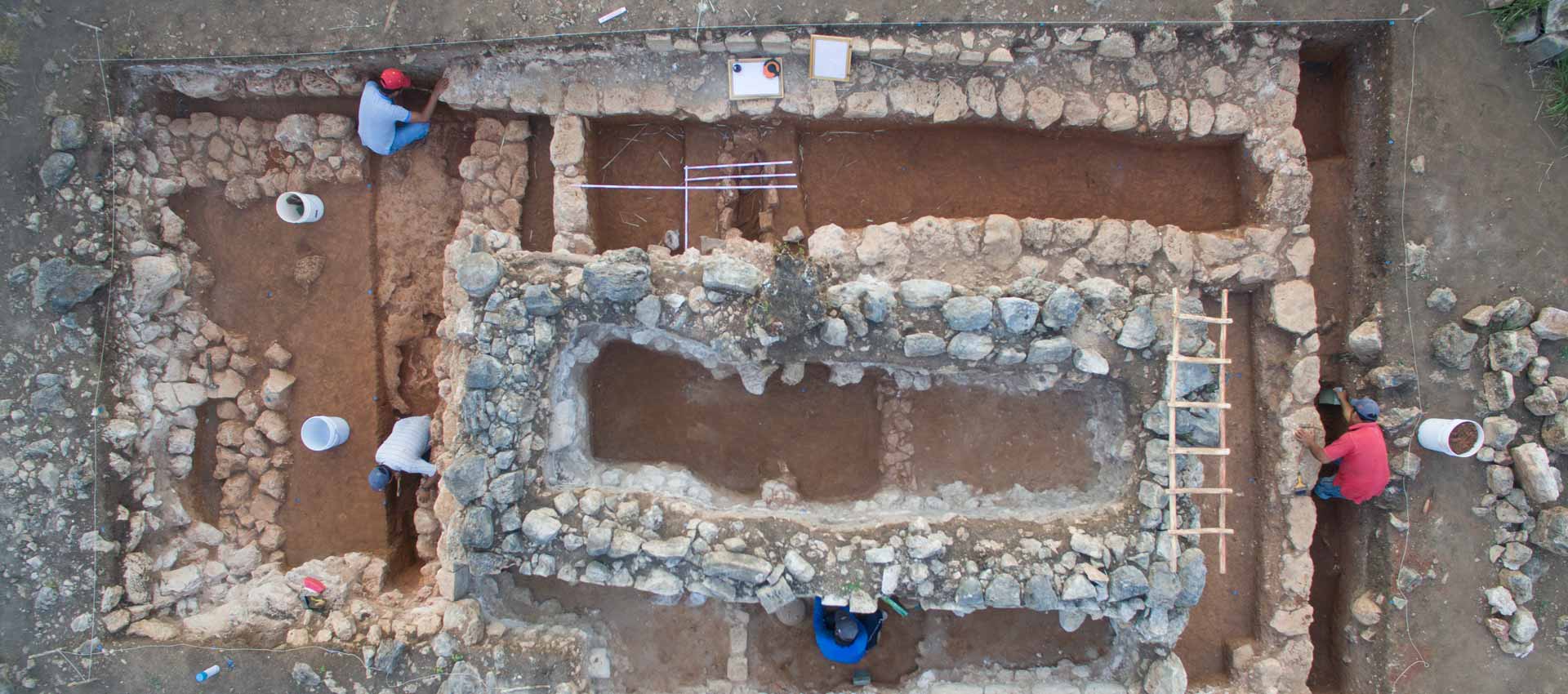
Even as President of the SPK, Parzinger remained connected to archaeological research – as far as his duties permitted. Among other things, he was involved in the Berlin Cluster of Excellence “Topoi”. Within this framework, he took part in excavations in Čilik and Kegen in south-eastern Kazakhstan, in which the Museum of Prehistory and Early History was involved alongside the DAI.
Later, he worked on an interdisciplinary research project involving palaeogenetic studies into the mobility of equestrian nomadic populations in Eurasia.
For several decades now, Hermann Parzinger has made a significant contribution to the study of prehistoric cultures through his passion for archaeology and his characteristic analytical foresight. This is also evident in the large number of his publications, comprising 25 monographs and over 400 essays. These impressive figures also bear witness to his systematic and analytical thinking. In 2006, for instance, he published the monumental 1,045-page work *The Early Peoples of Eurasia: From the Neolithic to the Middle Ages*.
He regularly wrote large sections of it whilst on excavations in the vast expanses of the Asian steppes. Whilst other members of the excavation team enjoyed socialising well into the evening hours, Hermann Parzinger would eventually withdraw and write continuously, chapter by chapter. Without this self-discipline, this handbook – unique in the field of Eurasian archaeology – could scarcely have come into being.
Even though Hermann Parzinger will probably not be organising any more excavations after the end of his professional career – we archaeologists look forward to the further books he has announced himself and the inspiration they will bring, granted to us by his perspective on lost cultures.