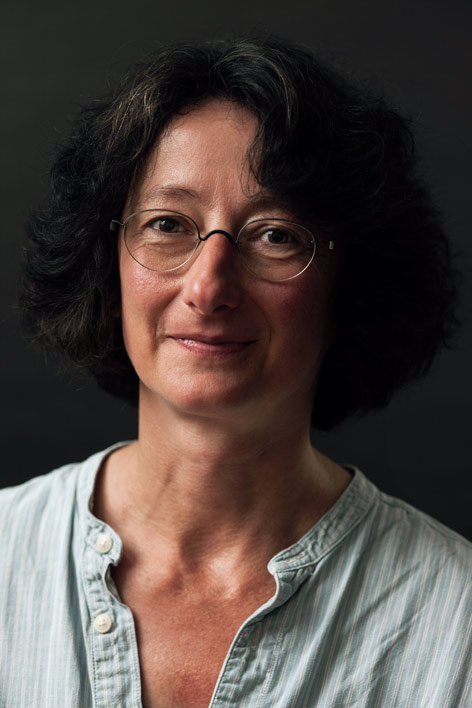
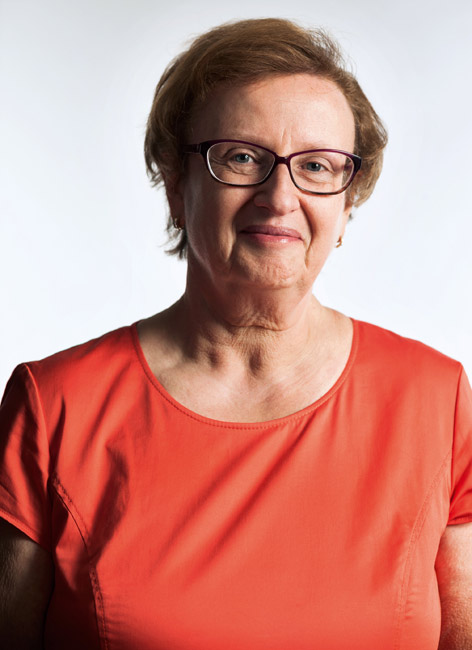
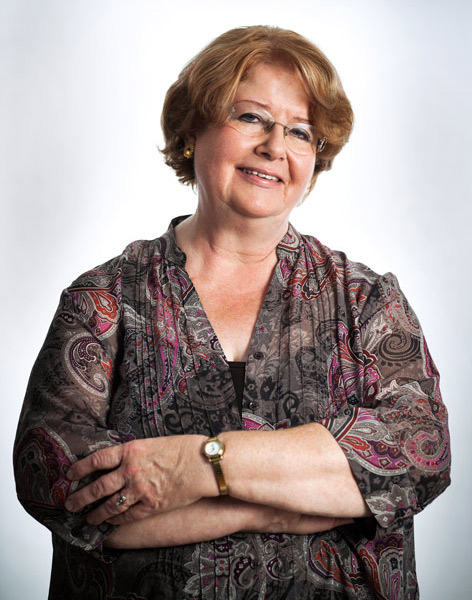
Marian Bertram from the Museum of Prehistory and Early History on her first glimpse of a collection she had previously only seen in photographs.
I watched the press conference on 9 November 1989, in which Günter Schabowski announced the new travel regulations, on television. He said that people were not allowed to simply cross the border without an approved application. Although I lived near Bornholmer Straße at the time, I was therefore already fast asleep when the Wall fell. My surprise the next morning was correspondingly great. Nevertheless, I waited a few more days before making my first trip to the western part, until the mass rush at the border crossings had subsided. For years, we had only been able to see our West Berlin friends at our place, always glancing at the clock late in the evening, as they had to be back by midnight. Now I could finally get to know their world. And it wasn’t all that different.
The thought of finally being able to visit the other half of our museum in West Berlin was incredible. Despite the strict ban, however, there had already been an exchange of information beforehand. The West Berlin chief curator, Klaus Goldmann, had repeatedly sought contact. It was he who invited us to Charlottenburg shortly afterwards. After a warm welcome, the tour began: offices, storage rooms and finally the exhibition.
Here, too, I encountered much that was familiar. In the archive were copies of the collection catalogues that had been microfilmed before the war; the original volumes had been our daily working tools. In contrast, here in a huge wall cupboard lay the pre-war acquisition files, the important information from which had been inaccessible to us for so long. In the storage area and the exhibition, I encountered many ‘old acquaintances’ once again. For all those years, day in, day out, I had had the ‘lost’ collection objects before my eyes through the illustrations in our catalogues. It was, after all, not uncommon for finds from one and the same grave inventory, or even parts of a single object, to be scattered across museums in East and West.
This first visit was soon followed by others. The extensive library opened up some wonderful opportunities for research. I also returned to the exhibition in the Langhans building a short while later to view it at my leisure. On my very second visit, I met my future director, who had come to Berlin to inspect his new place of work.
When Wilfried Menghin applied for the post in September 1989, he could not have imagined what turbulent times lay ahead. He took up his post on 1 April 1990 and tackled the unexpected challenge with incredible energy. I later learnt from him that my East Berlin director had intended to put me on the redundancy list and instead secure jobs for all party members, regardless of their qualifications. But fortunately, no one lost their job, and as early as 1991, the Museum of Prehistory and Early History began working together to reunite its collections.
1990 was the big Schliemann year: the 100th anniversary of his death. We had prepared a special exhibition in both East and West; the Museum of Prehistory and Early History was collaborating with the National Museum in Athens, though without any prospect of my travelling to Greece. With the opening of the Wall, that changed overnight. Just before the exhibition catalogue, containing my texts on Mycenae, Tiryns and Orchomenos, went to press, I suddenly found myself standing at the original sites of Schliemann’s excavations. The opening of the German-Greek special exhibition, which had been scheduled long in advance, took place as planned on the evening of 2 October 1990 at the Altes Museum. In the Lustgarten and on Unter den Linden, people celebrated the Night of German Unity – for me, an unforgettable evening.
Museum of Prehistory and Early History
The Museum of Prehistory and Early History on Berlin’s Museum Island is home to one of the world’s largest collections of prehistoric archaeology from the Ancient World. The collection traces the development of prehistoric and early historical cultures from the Palaeolithic Age to the High Middle Ages.
Highlights include the famous Neanderthal skull from Le Moustier, Heinrich Schliemann’s collection of Trojan antiquities and the ‘Berlin Gold Hat’. Recent excavation finds from Berlin extend right up to the present day.