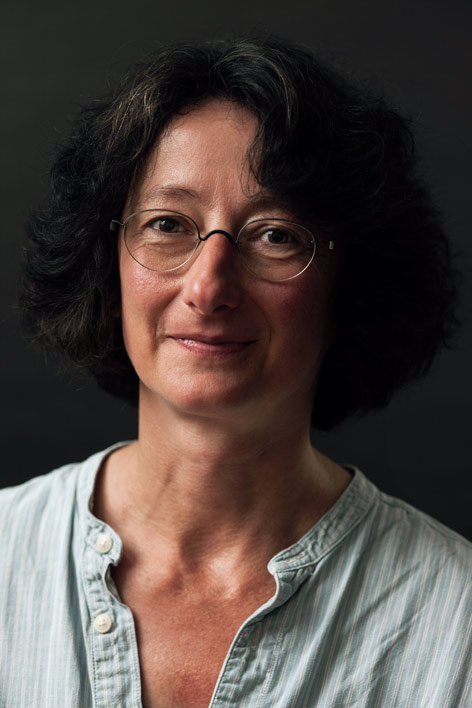
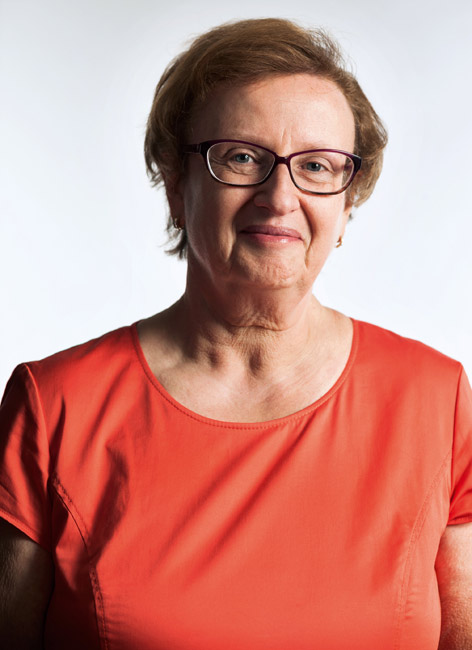
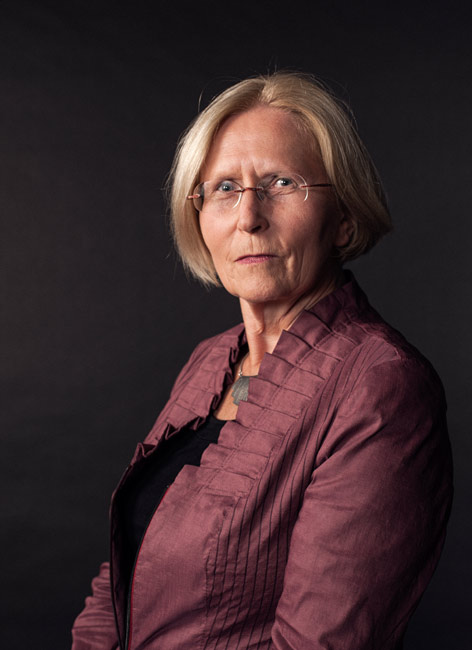
A brave new world of work: Sabine Dettmann, a graphic designer at the Altes Museum in 1989, recounts how she discovered the PC for herself after the fall of the Berlin Wall.
It was already past ten o’clock in the evening when friends rang me and said the Wall was open. I was living in Pankow at the time and set off straight away, taking the packed tram to Bornholmer Straße. At the border crossing, I stood there hesitating at first, because I was afraid I wouldn’t be allowed back in if I crossed over. It was only when I happened to bump into a colleague that we plucked up the courage to head west together.
At Bornholmer Bridge, I then met friends who were standing there crying with joy. We immediately fell into each other’s arms and I burst into tears too, which I actually thought was totally stupid. Because whenever you saw people coming to the West on TV back in the GDR days, they’d start crying straight away, and we found that totally embarrassing. And now we were feeling the same way ourselves, because we were completely overwhelmed emotionally. After this long period of agony, stagnation and hopelessness, something had finally started to happen – the feeling was indescribable.
I soon lost sight of my friends in the throng of people and carried on alone, but at the end of the bridge it was pitch black – no shops, no pubs, nothing. So I thought, ‘Right, you’ve been to the West,’ and went home again. I still wonder today how other East Berliners managed to get to the Kudamm that night. I wouldn’t have had a clue where it was or how to get there.
The next morning I went to work as usual, and that day was actually even better. From then on, it was clear that the borders really were open.
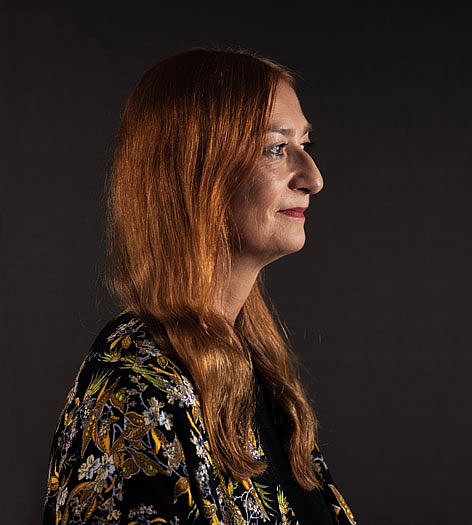
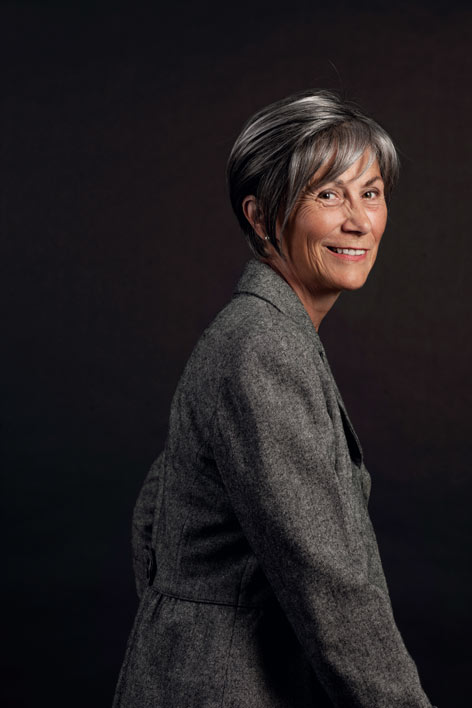
Sabine Dettmann
Born in 1955 in Schneeberg
. Since 1978, supervisor at the Egyptian Museum (East Berlin). From 1983 to 1985, graphic designer at the Altes Museum; studied; from 1989, at the General Directorate of the State Museums.
One young colleague didn’t even turn up for work; he phoned in the afternoon to say he’d got stuck in Kreuzberg. On that day, it didn’t matter at all; nobody was concerned about working hours. There was a sense of euphoria and excitement. That lasted a few weeks, during which people would occasionally pop over and spend the 100 West German marks welcome money that everyone received. Later, however, scepticism and concerns began to emerge: what would become of the businesses and factories? Would everyone lose their jobs? But it was clear to me from the outset: museums cannot be wound up, so my job was secure.
During this time, the head of the Publishing and Advertising Department came from West Berlin to visit us at the Altes Museum. She was looking for people for her department and offered me a job as a graphic designer. She said I would then be able to work with computers – I was immediately hooked.
It was like a parallel revolution: until ’89, my tools of the trade had been paper, a scribe, a slide rule, a typometer, whiteout, ink and rub-on letters. Designs had to be sketched on paper in such a way that one could imagine what they would look like in print afterwards. You had to scale up photos to the required size yourself. For the final artwork, you’d stick on the typeset lines and draw lines by hand or cover up any messy bits.
After this long period of agony, stagnation and despair, things have finally started to move forward – the feeling was indescribable.
I went to Dahlem and worked on a computer there for the first time. It wasn’t much faster at first, because there were no layout or image-editing programmes. But I was fascinated by the immediacy of it all – the fact that you could design something and then print it out and reproduce it straight away.
In the GDR, we always had to produce as many copies of every sign and every label as were actually needed. There was, admittedly, the Robotron combine, which manufactured computers. But these weren’t intended for ordinary users, but for industry. Computers for private use were unimaginable in the GDR – there weren’t even video recorders.