Does the Gemäldegalerie belong at the Kulturforum or on Museum Island? Jan Kelch on a heated post-Reunification debate.
When the Wall fell, I was sitting in Dahlem, pondering the move of the Picture Gallery to the Kulturforum. We had just gone through a change of architects. Rolf Gutbrod had stepped down and been replaced by the Munich firm Hilmer, Sattler & Albrecht, which could only have been good for a museum building such as we art historians had in mind. Then, right in the middle of it all, came 9 November 1989 and with it the completely unexpected prospect of reuniting the collections that had been torn apart for decades. On Museum Island, of course! Where else?
Until 1939, the Picture Gallery and parts of the Sculpture Collection had been housed on Museum Island, in the Bode Museum and the northern section of the Pergamon Museum. That was the ‘German Museum’. I saw no alternative but to abandon the plans for the Kulturforum and restore the pre-war situation.
But ‘Museum General’ Wolf-Dieter Dube and Foundation President Werner Knopp would have none of it. They stuck to the plans for a new building on the Kulturforum. A debate ensued that was so fierce and intense as is actually uncommon amongst civil servants.
The Foundation and the General Directorate threatened us with disciplinary proceedings; we continued to distribute leaflets and campaign in the press for the move to Museum Island. To push through the Kulturforum location and discredit it internationally, Dube then brought the leading experts from the museums in London, Washington and Paris to Berlin, including, incidentally, Neil MacGregor.
It then became clear, however, that our colleagues from the Collection of Classical Antiquities, the Museum of the Ancient Near East and the Museum of Islamic Art were not prepared to give up part of the Pergamon Museum in order to link up with the ‘Deutsches Museum’. There was no talking to them about it. And when Knopp then convincingly explained that the funding promised for the new gallery building would be withdrawn if we didn’t keep quiet now, I ceased my protest.
Ultimately, the unification of the collection and the differentiated exhibition were more important to me than the building itself. I have to say that today, even though the Kulturforum location did not entirely satisfy me and I continued to have my eye on the ‘Island’. Back then, we had already worked out whether paintings and sculptures would fit together in the Bode Museum or whether the new building would have to be moved 1:1 from the Kulturforum to the former barracks site opposite Museum Island.
All water under the bridge – just like the idea of moving the Picture Gallery into the palace to be rebuilt. That would have been the solution, I still think. That is where it belongs, on the upper floors bathed in natural light. The works were collected for the palace, even if Frederick the Great then took a large part of them to Sanssouci. In the palace, the proximity to Museum Island would have been established, the link to collections of older art and culture. Gone.
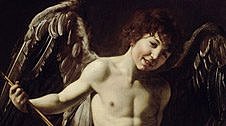
Back to the Kulturforum. When we finally opened the Gemäldegalerie at the Kulturforum in 1998, it also marked the end of one of the most outstanding planning phases I have experienced in my time at the museum. Architects and art historians had worked together to create a building that had truly been designed in harmony with the currents of art history.
And from the Bode Museum (East) and the Gemäldegalerie Dahlem (West), the two parts of a collection came together, meshing like two cogs. Suddenly, the systematic nature of the collection became apparent; it had been assembled largely independently of changing tastes, based on art-historical criteria.
Large-scale works also found their way from the Bode Museum into the new building, which now help to somewhat compensate for the Gallery’s wartime losses in this very area. Works such as Lucas Cranach’s ‘The Last Judgement’, Paris Bordone’s ‘Mary Enthroned’, Rubens’ ‘The Handing Over of the Keys to St Peter’, several large-scale works from the Rembrandt school, and Thomas Gainsborough’s life-size ‘Portrait of John Wilkinson’ all contribute to the Gemäldegalerie’s new, yet timeless, richly orchestrated profile. Seeing all this come together was deeply moving, a wonderful feeling.
I believe, however, that the dream of the ‘island’ will never be abandoned in the Gemäldegalerie. A few years ago, there was renewed talk of bringing painting and sculpture together in the Bode Museum and an extension. I am certainly a supporter of this merger, which was primarily championed by the staff of the sculpture collection.
However, it only makes sense for the Middle Ages, as the genre became independent during the Renaissance. Whatever the future holds, the Picture Gallery must once again arouse greater interest. This can only be achieved through good exhibitions, but above all through spectacular new acquisitions. The attitude of effectively placing this institution under conservation order and not allowing it to develop further is fatal. It must move forward!
Picture Gallery
The Picture Gallery houses a world-renowned collection of European paintings from the 13th to the 18th century. Masterpieces from all periods of art history, including paintings by Jan van Eyck, Pieter Bruegel, Albrecht Dürer, Raphael, Titian, Peter Paul Rubens, Rembrandt and Jan Vermeer van Delft, are on display here. In particular, German and Italian painting from the 13th to the 16th centuries, as well as Dutch painting from the 15th to the 17th centuries, can be admired here to great effect. Since 1998, the paintings in the collection have been on display at the Berlin Kulturforum.
Website of the Gemäldegalerie of the Staatliche Museen zu Berlin