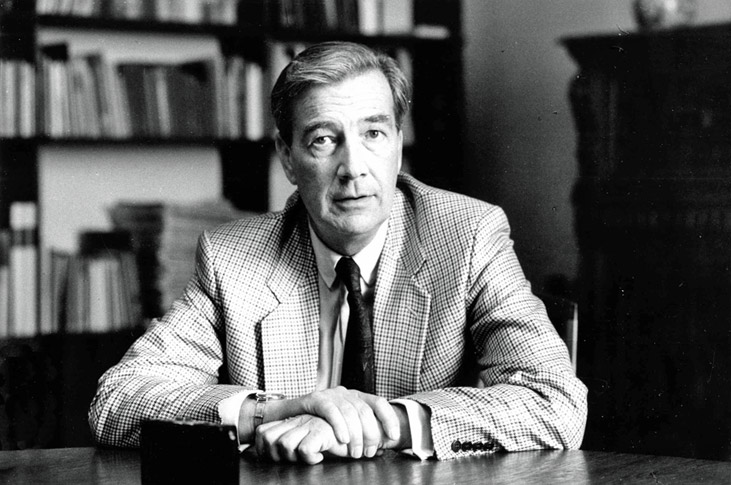
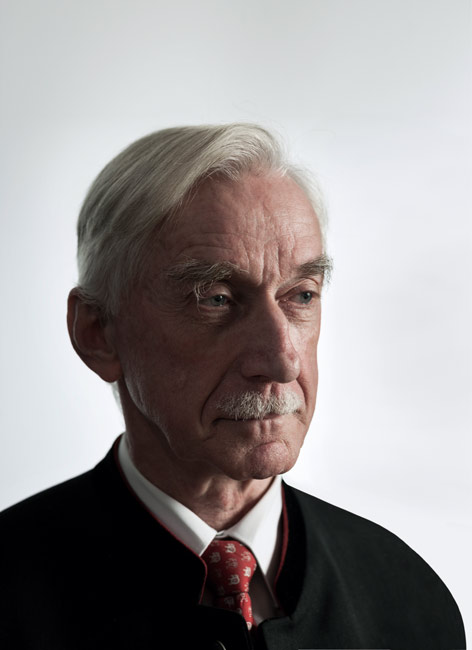
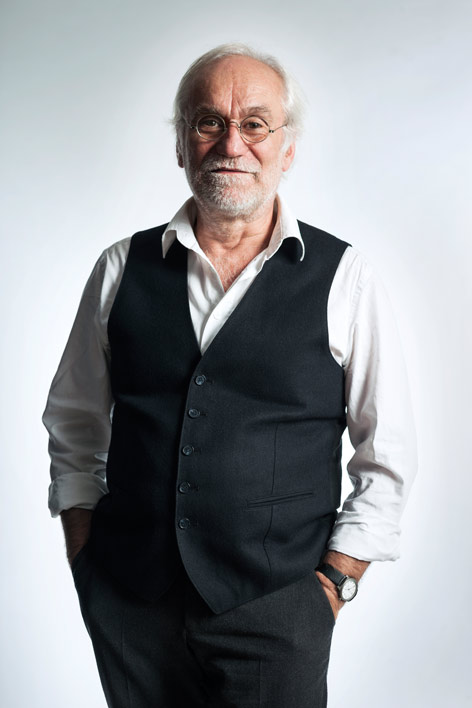
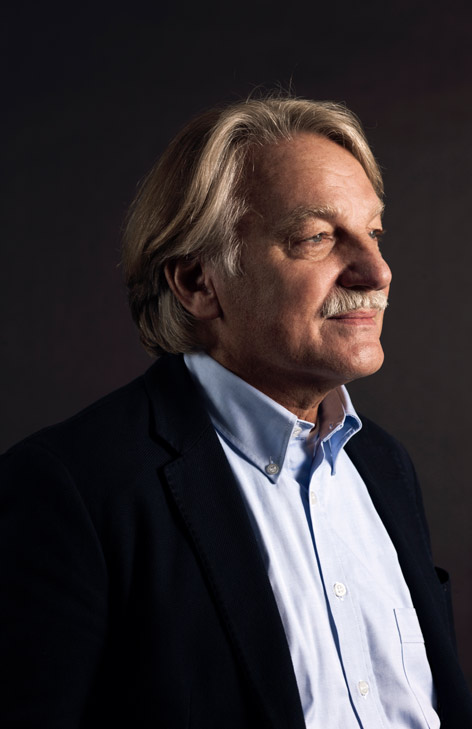
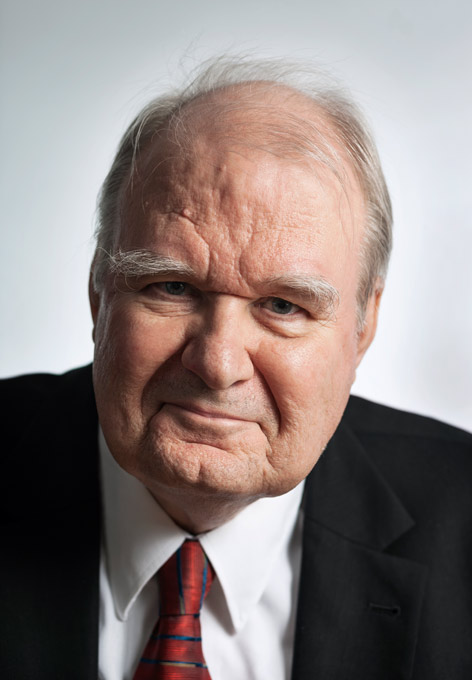
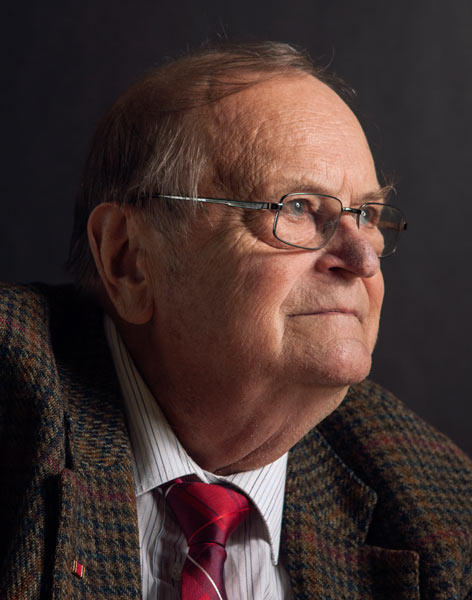
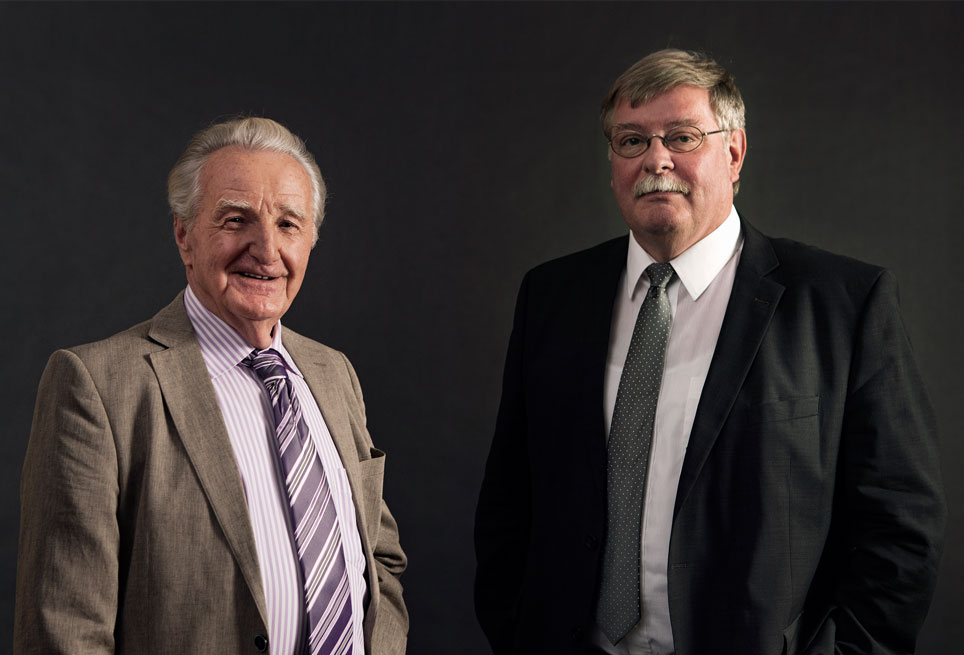
Jens Kröger explains how the shifting political climate in the GDR made itself felt at the Pergamon Museum.
I came to Berlin in the mid-1960s to study Islamic art. However, as this subject was not yet taught in West Germany or Berlin at that time, I introduced myself at the Museum of Islamic Art in Dahlem. The former director advised me to study art history and offered me a job at the museum alongside my studies. Very soon, I was confronted with the unique nature of Berlin’s museums.
Many collections were spread across both parts of the divided city, and if one wished to examine certain works of art, one could not do so without the partner or twin museum. The large objects from the Museum of Islamic Art had remained in the Pergamon Museum, whilst the museum in Dahlem had been founded with the holdings that had been moved to the salt mines towards the end of the war. However, the Pergamon Museum also housed the documentation, excavation records and photographs.
I wanted to write my dissertation on an excavation by the Islamic Department at Ctesiphon in Iraq, the capital of the Persian Sassanid dynasty from the 3rd to the 7th century. This meant that I had to conduct my research primarily in the eastern part of the city. “You are welcome to do so,” said Volkmar Enderlein, the then director of the museum in the east.
Contrary to any political claims that the museums had had no contact with one another, this was no problem at all for me. I was able to work through the material there and visited the Pergamon Museum sometimes as often as once a week. This allowed me to get to know the staff, the conservators, and also the art objects. That was a great stroke of luck, because it meant I could familiarise myself with both parts of the collection. Contact between the twin museums had already been very close beforehand. Ernst Kühnel, the former director of the Pergamon Museum, had stepped down in 1951, but had continued to work on a voluntary basis and had also reopened the exhibition in 1954.
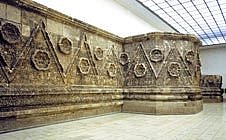
And he did the same in Dahlem. He lived in West Berlin and looked after both collections on a voluntary basis. It was not until 1958 that a new director was appointed and the museum was incorporated into the Prussian Cultural Heritage Foundation. Even after completing my doctoral thesis, I continued to visit the Pergamon Museum regularly, partly to maintain good relations with my colleagues.
Later, I began to notice changes in the GDR; for instance, I was given to understand: ‘You’d better not attend an exhibition opening.’ Or – this was already in the 1980s – I noticed the many young people working as attendants in the exhibitions. I was told: ‘These are all people who had applied to leave the country; naturally, they were no longer allowed to remain in their actual jobs and were shunted into the guard service.’ But actually, not much was said about the changes. Well, you never knew who was what... My colleagues in the East couldn’t really know at first whether I could be trusted either.
Later on, I began to notice changes in the GDR; for instance, I was given to understand that I’d be better off not attending an exhibition opening.
For me, the era of the divided collections is closely associated with Friedrich Sarre, the first director of the Islamic Department. At the beginning of the 20th century, Sarre was an influential and well-known figure in Berlin. Wilhelm von Bode was only able to establish the Islamic Department in 1904 because Sarre had placed his extensive collection on permanent loan to him. Bode appointed Sarre as the first head of the department. He ran the department on a voluntary basis until 1921, and when he subsequently became the official director, he donated 750 works of art to the museum.
I have always been interested in the house where Sarre lived with his family in Neubabelsberg from 1905 onwards, a large Renaissance-style villa where social life was in full swing. He lived there until 1945, when the Russians seized it for the Potsdam Conference. The entire contents of the house ended up in the rubbish tip; diaries, the library and much else were sadly lost, including, of course, many important works of art, some of which we are not even aware of.
After the war, the German Film Academy took over the house. I had always been interested in visiting this house, but it was impossible to get there because it was situated on the shores of Lake Griebnitz in the border zone. Once, I was at the border with one of Sarre’s daughters and saw the house from a distance. We were able to drive as far as the woods near the Wall and make out the house’s tall tower in the distance across Griebnitzsee. When the Wall finally fell, we naturally went there straight away in 1990.
That was in winter. We first looked for Sarre’s grave in the Klein-Glienicke cemetery right by the Wall and then drove to the house. It was uninhabited, locked up and empty, but we were able to walk around the garden and look at the artworks on the house. It was a very moving moment: that we were finally there!
The house has since been sold and is now used as a private residence. Only recently did we have the opportunity to see the house from the inside as well. That was, of course, a lovely culmination of our attempts to get there. The current residents are very interested in the Sarre family. The house used to be full of works of art, and the lovely thing is that someone who has a close connection to art now lives there.
Museum of Islamic Art
The Museum of Islamic Art, part of the Berlin State Museums, presents masterpieces of art and archaeological objects from Islamic societies dating from the 8th to the 19th century at the Pergamon Museum on Museum Island. The collection covers a region stretching from Spain to India.
The museum is one of the leading research institutions in its field. It is committed to the protection of cultural heritage and is active in the areas of restoration, international cultural exchange and (inter)cultural education in Germany.