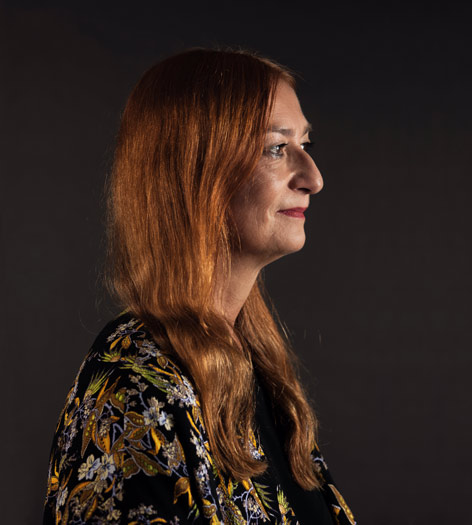
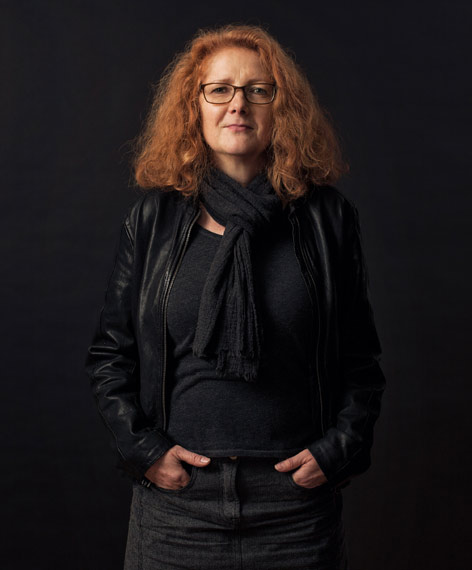
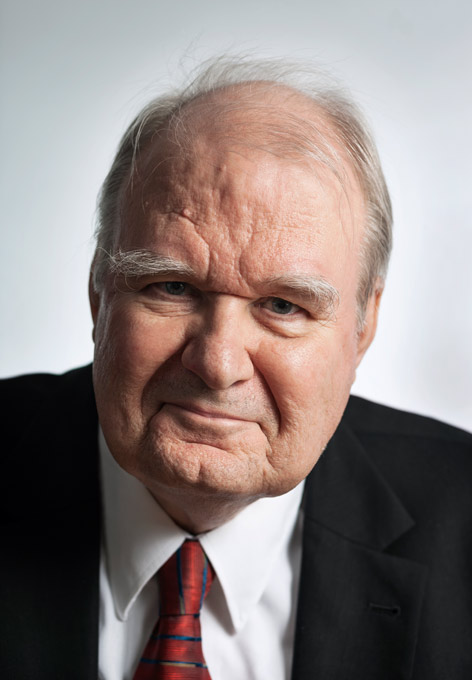
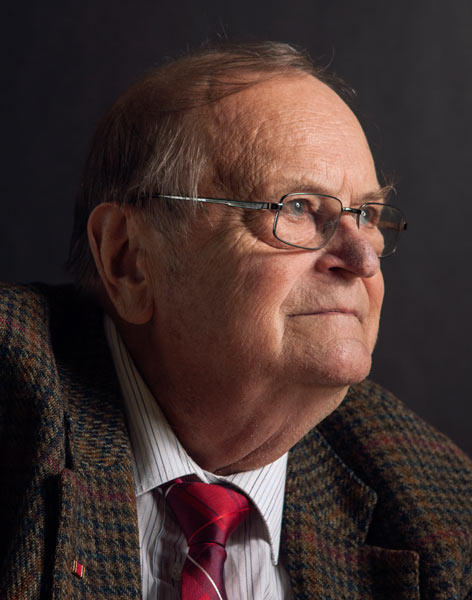
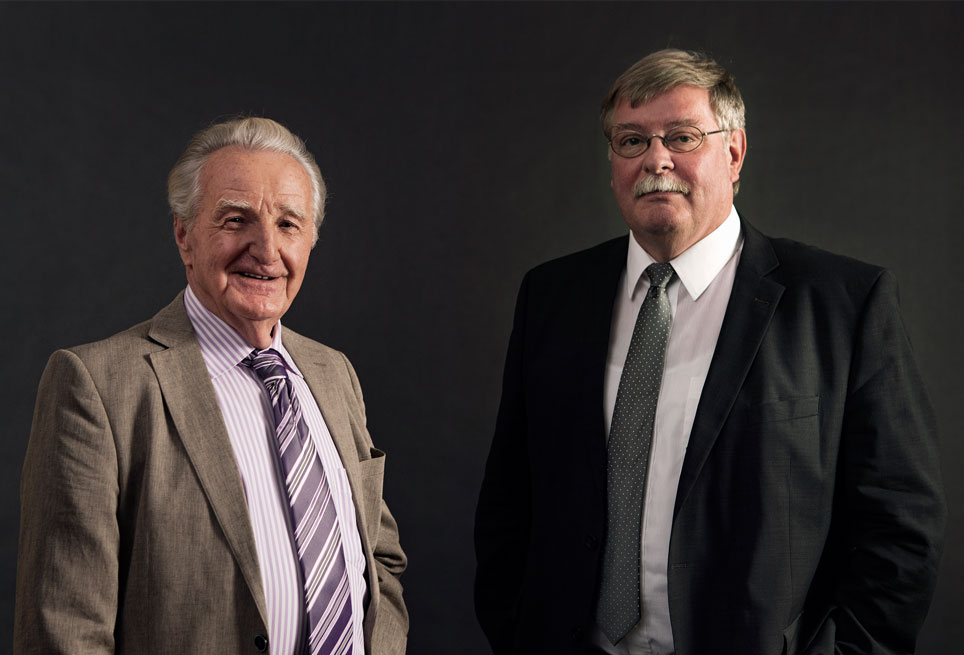
Suddenly in pole position: Dagmar Droysen-Reber on the new role of the State Institute for Music Research at the Kulturforum following the fall of the Berlin Wall.
You know, on the day the Wall was opened, I’ll be perfectly honest with you, I sat in front of the television and cried. On 10 November, there was great unrest among the staff at my institute. People ran to the Brandenburg Gate, saw the crowds, came back and asked themselves: What happens now?

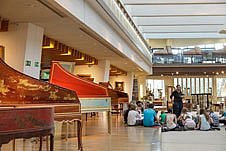
When the Musical Instrument Museum opened in 1984, the building was still situated right next to the so-called ‘relief road’, which had become necessary for traffic management in West Berlin following the construction of the Wall. And right behind it, opposite us, stood the Wall.
After 9 November, it disappeared just as quickly as it had been built. Without the Wall, our building had become completely new and much more accessible! It suddenly stood on the vast wasteland of Potsdamer Platz and we could suddenly look out as far as the Gendarmenmarkt. It’s hard to imagine that today. The distance seemed short, but the wasteland was huge and very difficult to traverse.
In the 1970s, I had asked the then President Hans-Georg Wormit why the Institute had been built right next to the Wall of all places.
He said, ‘You’ll see, once reunification comes, we’ll soon be in close contact with the museums and the State Library’ – and he was right! Shortly after the fall of the Wall, I found the 1888 inventory catalogue of the Musical Instrument Museum in the State Library on Unter den Linden. And a little later, the head of the music department rang me and said they’d found books in the storeroom stamped ‘Music Research’. Whether that was us. We should pop round, he said. So in 1992 we went there with large laundry baskets and carried basketfuls of books back to our institute!
State Institute for Music Research
The State Institute for Music Research is the largest non-university research centre for musicology in Germany. It is dedicated to the historical and theoretical study of music and its dissemination. To this end, its Museum of Musical Instruments presents the development of European art music from the 16th to the 21st century to a wide audience. Founded as early as 1888, the museum houses over 3,000 historical musical instruments and offers a diverse range of events – from academic symposia and concerts to interactive sound installations.