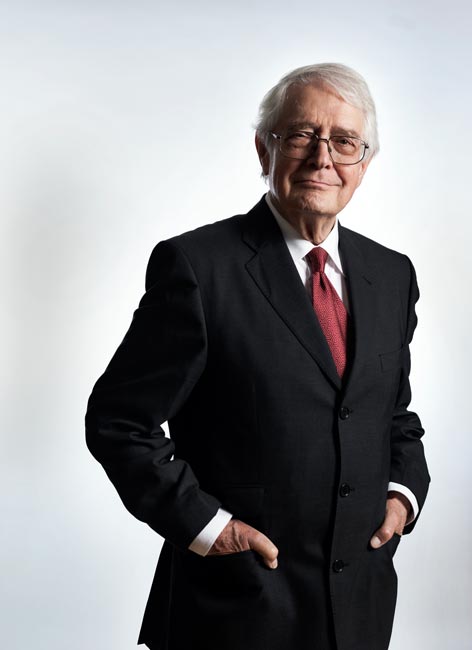
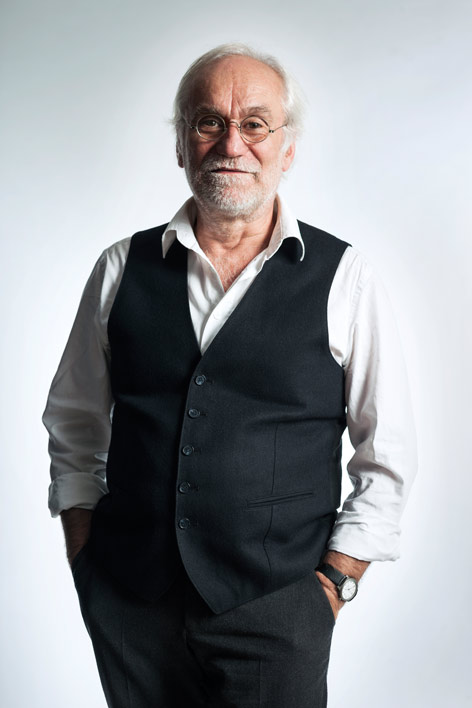
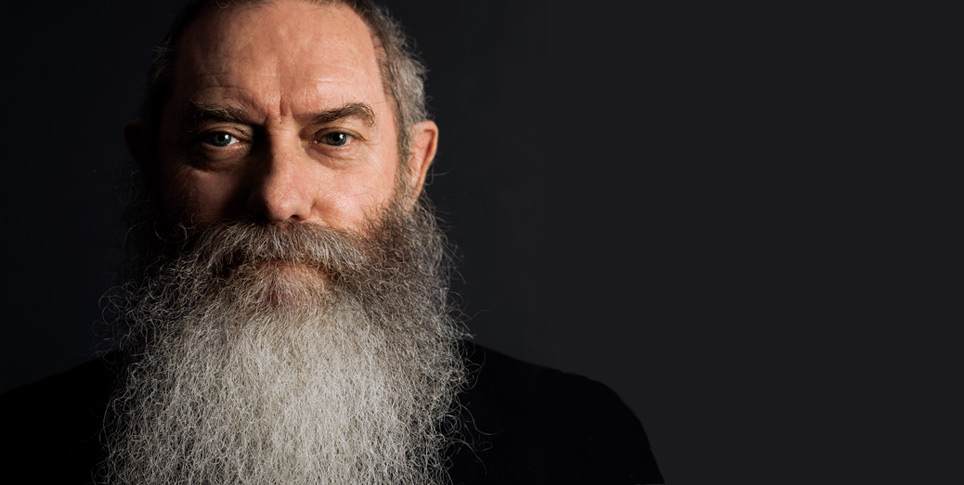
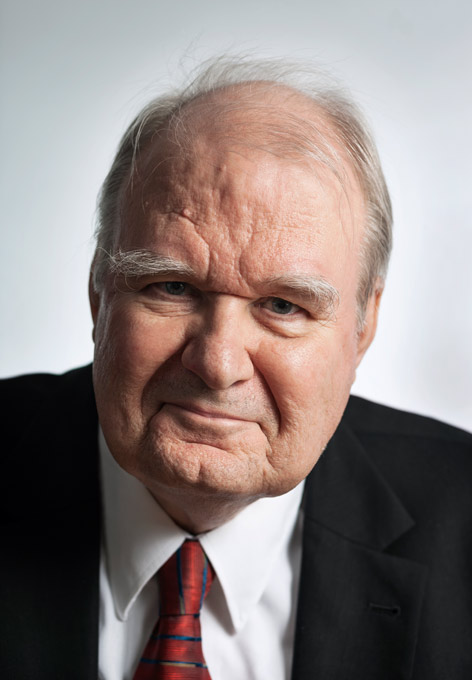
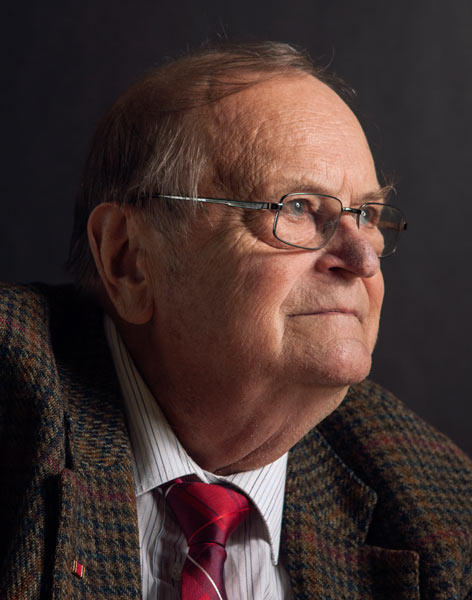
Unity – a relay race. Dietrich Wildung on stages successfully completed and grand plans for Museum Island.
On 9 November 1989, my wife rang me at home in Fasanenstraße from Munich at 9.30 pm: “Are you at home?” “Yes, why wouldn’t I be at home?” “Don’t you know what’s going on over there? Open the window. The Wall is open.” I went out onto the balcony and heard the chorus of car horns on the Kudamm.
It was clear, of course, that muddling through in the Charlottenburg idyll was no longer an option, that something completely new and immensely fascinating could now begin. Since my student days, since the early 1960s, I had maintained very good contact with my Berlin colleagues in the eastern part of the city. With the Academy of Sciences, with colleagues from Humboldt University and, above all, with colleagues on Museum Island. For an Egyptologist, Berlin is the premier destination worldwide alongside Paris, especially the eastern part of the city at that time: the archives, the libraries, the collections. Against the backdrop of a very good relationship with my East Berlin colleagues, the first steps were therefore relatively straightforward.
Two things were clear: that the collections had to be reunited as quickly as possible, and that this reunification could only take place on Museum Island. This clear statement on my part was something that caused me unexpected difficulties for years. For in the post-war period, thanks to Nefertiti, the Egyptian Museum in Charlottenburg had become a symbol of the West. I completely underestimated how strongly Nefertiti had become part of West Berlin’s identity after the Wall was built. The Friends of the Egyptian Museum, which at the time had over 1,000 members, was, after all, a purely West Berlin club! And when I announced to them in our in-house magazine that the opening of the Berlin Wall had finally made it possible to prepare for the museum’s return to Museum Island, there was an outcry.
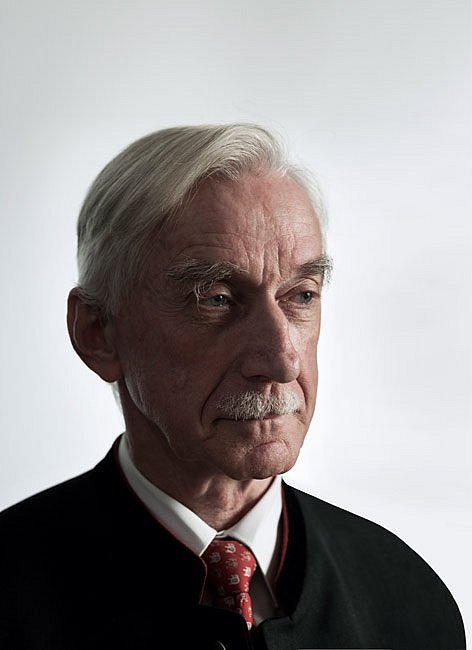
Little by little, I then tried to introduce my West Berliners – particularly the older ones – to the island. I moved the evening lectures from Charlottenburg to the Magnus-Haus opposite the Pergamon Museum. But at first people complained: ‘There isn’t even any street lighting there! What a gloomy hole!’ Gradually they started coming, but it was a slow, years-long process.
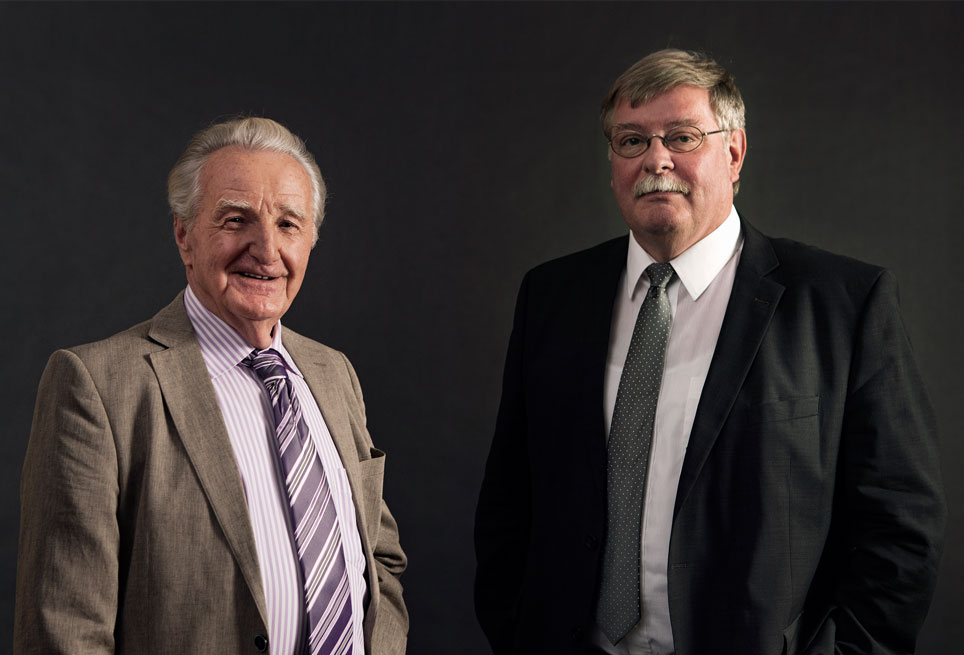
My colleagues in East and West, on the other hand, soon formed a close-knit community – Karl-Heinz Priese, the director of the museum in the East, and I always turned up together, like the Egyptian twins. It was clear to us that a return could only take place to the Neues Museum, and because everyone pulled together, the plans for the reconstruction and the concept for the Neues Museum were implemented incredibly swiftly. Nevertheless, it all took up ten years of my working life, together with the architect David Chipperfield.
However, the plans extended far beyond the Neues Museum. Even before the fall of the Wall, there had been discussions about how to make Museum Island an integral whole again. Max Kunze, the director of the Pergamon Museum, Arne Effenberger, the director of Late Antiquity and Byzantine Art, and my colleague in the Egypt Department, Karl-Heinz Priese, had a plan for the individual museums to network much more closely, and when I joined after the fall of the Wall, we founded an ‘AG-Arch’. Within this ‘Archaeology Working Group’, the idea developed to create a connection stretching from the Bode Museum through the Pergamon Museum and the New Museum to the Old Museum – not only conceptually, but also architecturally. One day, the term ‘Archaeological Promenade’ occurred to me, and this term has been part of the Museum Island masterplan ever since.
If you go into the rebuilt Neues Museum today, down to the basement, then following the Egyptian Courtyard with its theme of ‘The Afterlife and Eternity’, you will see a staircase leading down from the basement once more, ending at a large door that is currently locked. From this door, the route will continue in future – into the Pergamon Museum and the Bode Museum. The plan is: from the Altes Museum via the Neues Museum, through the basement of the Pergamon Museum, then under the S-Bahn, where a large hall on the theme of transport links in antiquity will be created.
It will be possible to walk through the entire ancient world in a single journey. And each of the rooms has a theme represented by the various ancient cultures. Millennia come together in these rooms under a single thematic heading. The willingness to cooperate between the individual museums was fantastic. That was something that shaped the years following reunification.
I didn’t want to wait until October 2009 for Nefertiti to move to the rebuilt Neues Museum. I therefore arranged, in consultation with Mr Dube and later with Peter-Klaus Schuster, for her to be housed temporarily in the Altes Museum from August 2005. And to speed things up a little further, we moved Nefertiti to the Kulturforum for a few months in early 2005. When Nefertiti left Charlottenburg for this purpose in February 2005, the second – but also the final – outcry came from my friends. From West Berlin. ‘The museum in Charlottenburg is closing down! Terrible!’
This point is important, because it shows that the animosity between the two parts of the city was very great. I would almost say: the West Berliners begrudged the East having Nefertiti. That has settled over the years; today, Museum Island is once again the only fitting location for the Egyptian Museum for all Berliners.
Egyptian Museum and Papyrus Collection
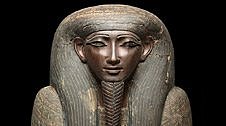
The impressive collection of the Egyptian Museum and Papyrus Collection can be admired in the Neues Museum. It comprises masterpieces from various periods of ancient Egypt: ornate statues, colourful reliefs and delicate objects of decorative art, fragile papyri, stone sarcophagi weighing several tonnes, and monumental works of Egyptian architecture bear witness to the period from 3000 BC right up to Roman times. Alongside the world-famous bust of Queen Nefertiti, whose paintwork has survived intact since the Amarna period without restoration, the portrait heads of the royal family and members of the royal court are unique.