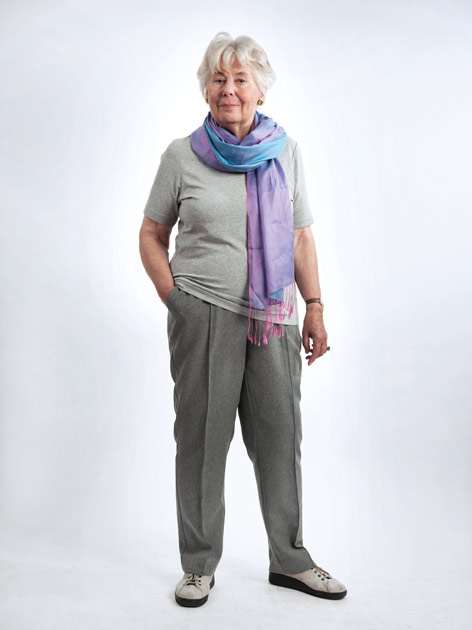
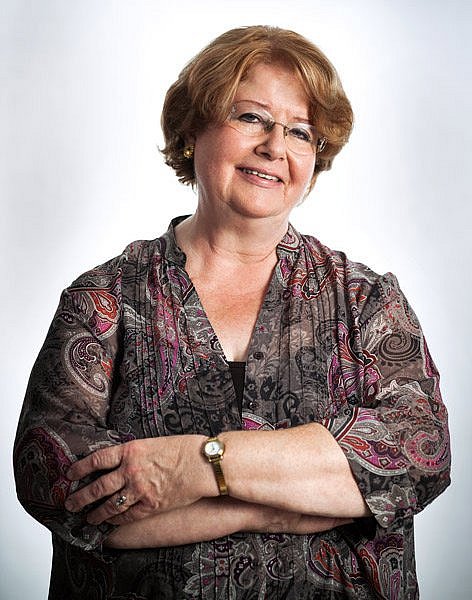
No Greek visa in her passport: Ursula Kästner recounts how she explored the ancient world during the GDR era.
I decided to become an archaeologist when I was ten. What fascinated me about the profession was that by looking deep into the past, one can also decipher the mechanisms of the present day. In 1977, I joined the Collection of Classical Antiquities on Museum Island and found it a relief that we never had to work in isolation here, but were always part of an international network – our director Elisabeth Rohde, a bridge-builder between worlds, ensured that too.
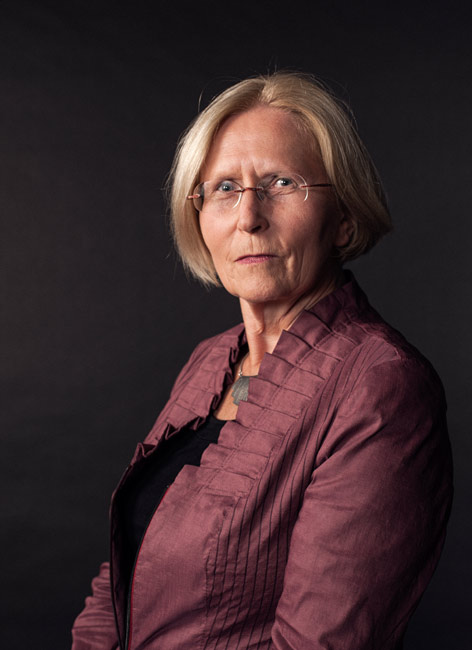
She lived on Bundesallee in West Berlin and worked at the Pergamon Museum in East Berlin. We were also always allowed to welcome visitors from the West without restrictions. One such visitor was Wolf-Dieter Heilmeyer, the head of the West Berlin Collection of Classical Antiquities, who came to us in his capacity as a professor at the Free University rather than as a museum director. I spent a great deal of time studying vase painting from Southern Italy, that is, from a region that had been colonised by the Greeks.
I was interested in how an interaction between the local and the immigrant communities, an acculturation, came about there. When you’ve been working on the Mediterranean region for years but are only ever allowed to look at provincial Roman artefacts in Hungary or Bulgaria and never a temple in Sicily or on the Acropolis, you naturally started calculating how many years were left until retirement and when you’d finally be free to travel. It was only shortly before the end of the GDR that I was granted a courier trip to Italy, even though I was neither a member of the Party nor the FDJ and was therefore not part of the travel cadre. It was probably a matter of ‘letting off steam’.
I was familiar with the western part of the collection only from photographs, but I was convinced that the collections would eventually be reunited. When I attended a conference in Bulgaria in 1982, I showed a vase from the West Berlin collection and said: ‘Currently in West Berlin’.
A West German prehistorian, who was also attending the conference, rushed up to me during the break and asked how I could say such a thing. I replied that, as far as I was concerned, the items belonged on Museum Island and that the day would come when that would happen. Well, I didn’t think at the time that I would live to see it, but somehow it was clear to me that the collections belong together and must return to their home.
The day after the Wall came down, there was a meeting at the Bode Museum about new travel opportunities for academics. The mood was: we don’t want to sit around here, let’s get over there quickly, because the Wall might be closed again in a few days. I went to the Collection of Classical Antiquities in Charlottenburg, which I’d only ever seen in photos. It was a strange feeling. Some things seemed bigger, some much smaller than I had imagined. It was such an emotional moment that I was moved to tears.
In December 1989, we met our West German colleagues for the first time and immediately agreed on the first exchanges – pieces from the Telephos Frieze from West to East, fragments of the Exekias Panels in the opposite direction.
After the People’s Chamber elections, it was clear that everything we scholars had wanted to change would be rendered meaningless. We had to adapt to the existing conditions on the other, the Western side, and wavered between frustration, curiosity and fear. The Western director Wolf-Dieter Heilmeyer and our Eastern head Max Kunze, who had got on brilliantly before the fall of the Wall, now became rivals.
During this turbulent time, I developed a habit that I still practise today. Whenever a work-related matter gets me down, I take my key and go to the vase storeroom. There I look around and think: these are objects that have passed through many hands over thousands of years. You’re part of a chain; you have to do your bit to ensure these items are well preserved and continue to have an impact on future generations. It’s a wonderful feeling.
Collection of Classical Antiquities
The Collection of Classical Antiquities at the Berlin State Museums is one of the world’s most significant collections of ancient Greek and Roman art.
The Collection of Classical Antiquities exhibits architecture, sculptures and vases, inscriptions, mosaics, bronzes and jewellery on Berlin’s Museum Island: in the Altes Museum and the Pergamon Museum. Its objects also complement the cross-collection presentation in the Neues Museum. There, it primarily displays art from the provinces of the Roman Empire and works from its extensive Cyprus collection.