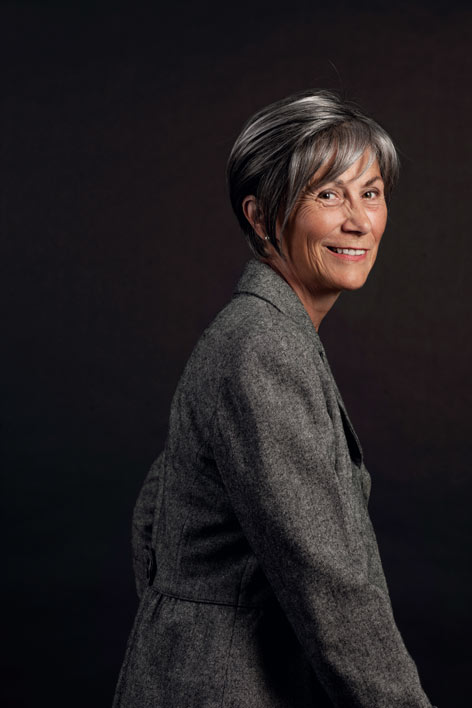
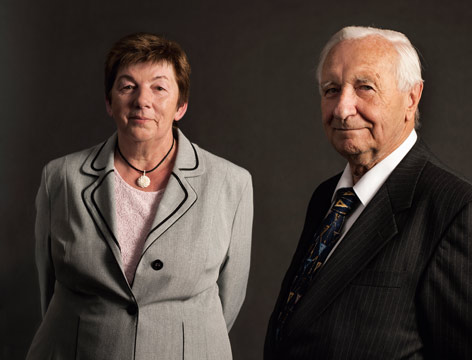
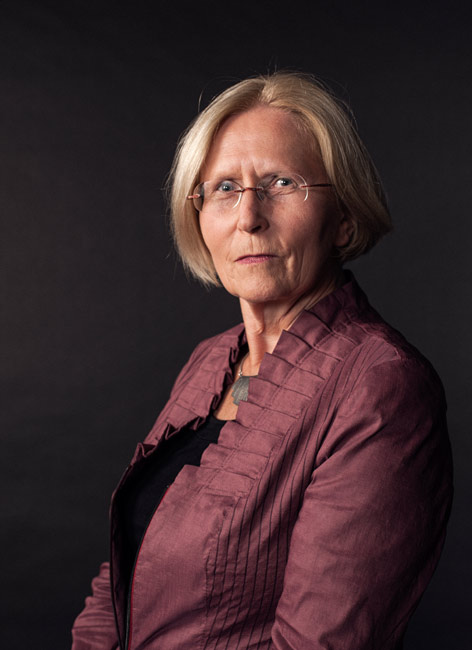
Evelyn Klengel recounts how she made her mark as director of the Museum of the Ancient Near East.
In the GDR, women were always supported; I never felt disadvantaged in that respect. On the contrary, I was able to gain qualifications and complete a degree, which eventually took me from being a research assistant to holding positions of responsibility. The support measures included research fellowships for women, which allowed one to take leave to complete one’s dissertation and return to work, often to a higher-ranking post. There were quite a number of female directors at the State Museums, but of course that was not the norm in the GDR either. I am speaking here specifically of Museum Island, where the Museum of the Ancient Near East is located. Furthermore, there were not many archaeologists specialising in the Ancient Near East or cuneiform scholars in the GDR. With these somewhat exotic specialist subjects, we were in a position less exposed to political pressure than our colleagues in the modern art collections.
Contact with the Prussian Cultural Heritage Foundation in West Berlin was forbidden. But the same applied in reverse. Nevertheless, there were numerous encounters, particularly on business trips or at excavations. I was frequently invited to Iraq, where I met, for example, Ms Strommenger at conferences; she was in charge of an Ancient Near Eastern collection at the Museum of Prehistory and Early History in West Berlin.
On one occasion, we even shared a room in an excavation house. Officially, however, these contacts did not exist, and whenever there were requests to loan objects from our collections, the first question was always whether the West Foundation was involved. If so, the Ministry of Culture, to which the museums were subordinate, usually refused. The Ministry also decided whether one was allowed to travel, whether one was part of a so-called ‘travel cadre’. A dreadful expression.
By the late 1980s, we realised that the situation in the GDR was deteriorating rapidly, including in the museums. The general mood among the population had become more hopeless, and the supply situation was growing increasingly precarious. The fact that we were effectively locked in also weighed heavily on all of us. As the situation came to a head in 1989, I thought: this can’t go on much longer. I believed that the GDR would eventually collapse economically, but nobody expected that this state would then come to an end so suddenly and in such a peaceful manner.
Of course, back in 1989 we also wondered what would become of the museums. At first, everything remained as it had been: Schade was Director-General and almost everyone stayed in their posts. But when it became clear that we would be joining the Prussian Cultural Heritage Foundation, there were naturally some upheavals and fears.
That was hardly surprising, as virtually all the collections had two sets of staff, and it was always the West German directors who, under the civil service laws in force at the time, took over the director posts of the merged collections, since there had been no civil service status in the GDR. We did not have that concern at the Museum of the Ancient Near East, as there was no parallel museum in West Berlin. However, this also meant that we did not see an increase in staff numbers, as was the case in almost all other collections.
I then attended the first directors’ conferences, where I sometimes had to state very clearly: ‘The Museum of the Ancient Near East is here now too!’ None of this was easy, because we were suddenly confronted with different regulations, different colleagues and a different management. I still remember how, at one of the meetings where funding was also being discussed, I spoke up and requested money for the permanent exhibition. I was met with astonishment, as funds were only available for special exhibitions and not for the modernisation of the collections. It took a long time before it was recognised that the permanent exhibitions were also in urgent need of modernisation. Bit by bit, we managed it nonetheless and redesigned individual sections of the museum.
I believe that, as a woman, I had to prove myself anew in these discussions. There were, in fact, relatively few women among the group of directors from across the whole of Germany. And I had the impression that the men – even if one shouldn’t perhaps generalise – stuck together more and had already discussed many things before the meeting had even begun. So I had to find new ways to negotiate and assert myself.
Museum of the Ancient Near East
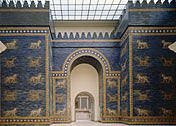
The Museum of the Ancient Near East houses one of the most significant collections of Oriental antiquities. It also presents a wonder to behold: the walls of Babylon. They were once counted among the Seven Wonders of the Ancient World, until they fell into ruin. However, part of them has been salvaged and reconstructed: the colourful Ishtar Gate and the Processional Way of Babylon. Together with numerous other objects, they paint a picture of 6,000 years of art and cultural history in Mesopotamia, Syria and Anatolia. The Museum of the Ancient Near East displays its collections in the Pergamon Museum on Museum Island.