A conversation about secret contacts and what happened just hours after the fall of the Wall.
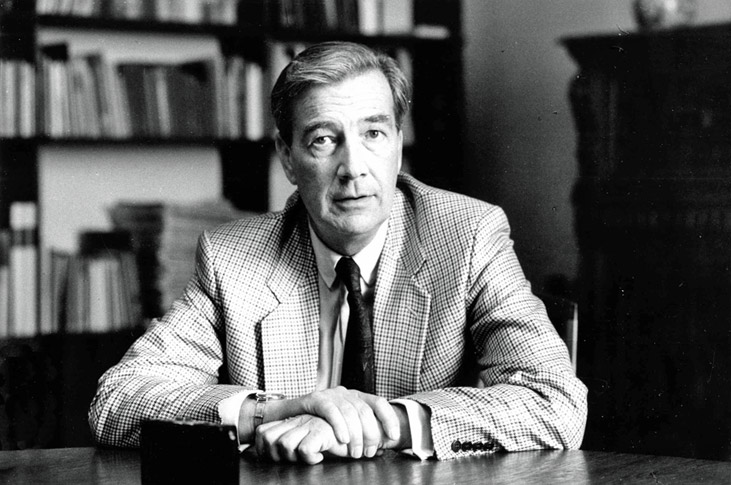
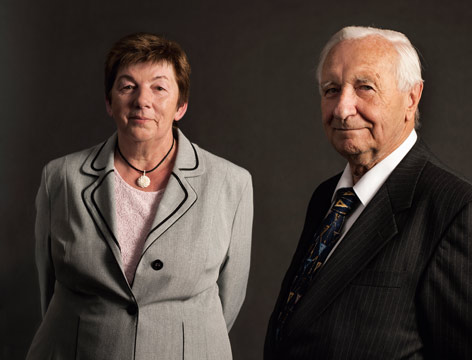
9 November 1989: Günter Schade is Director General of the State Museums (East Berlin), Günther Schauerte is an advisor in the General Directorate of the State Museums (West Berlin).
Before anything can come together, it must first have been separated. What did Berlin’s museum landscape actually look like originally – before the division?
Schauerte: Since the second half of the 19th century, Berlin had produced the largest museum complex in Europe. The impetus that shaped Europe and North America came from Berlin. The Museum of Islamic Art was conceived in Berlin, as was the Museum of East Asian Art.
Schade: There is a wonderful quote from Ludwig Justi – for him, the Staatliche Museen zu Berlin, with the Museum Island at its heart, were an ‘intellectual world-building in diversity and unity, unrivalled in Germany and of the highest artistic value, a cultural creation of the first order’. It was this original unity that we wanted to build upon after the division.
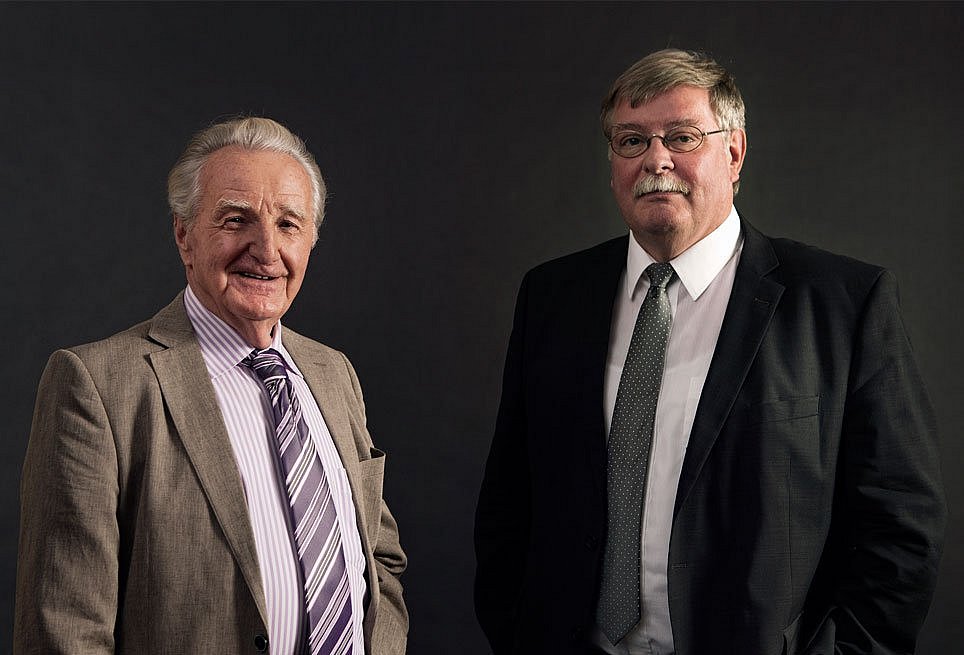
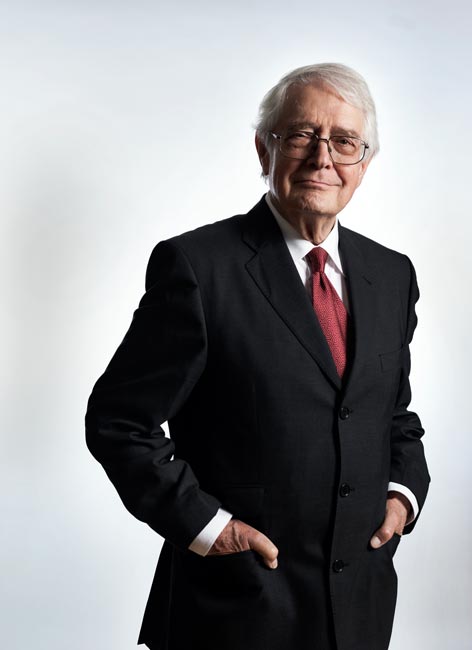
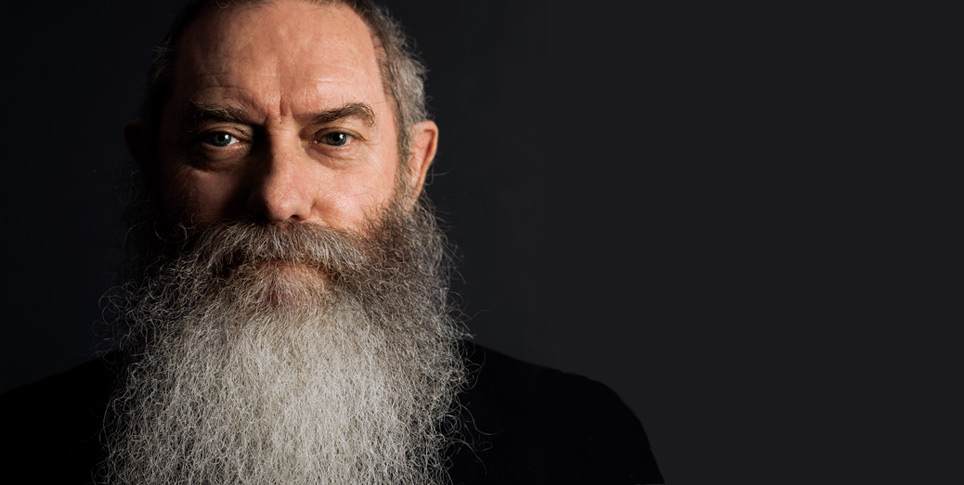
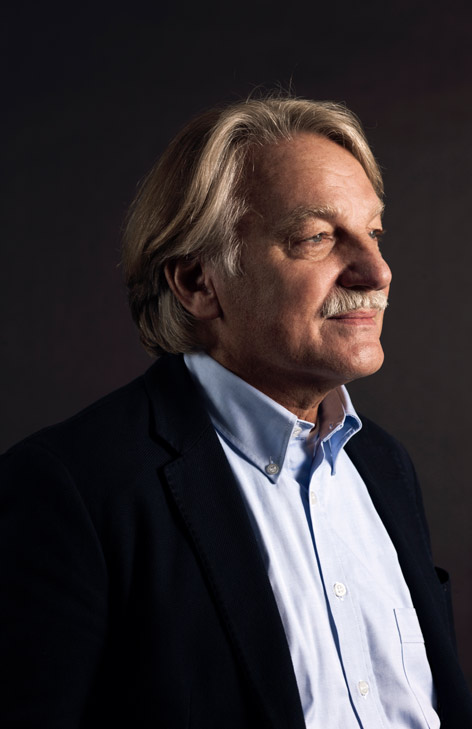
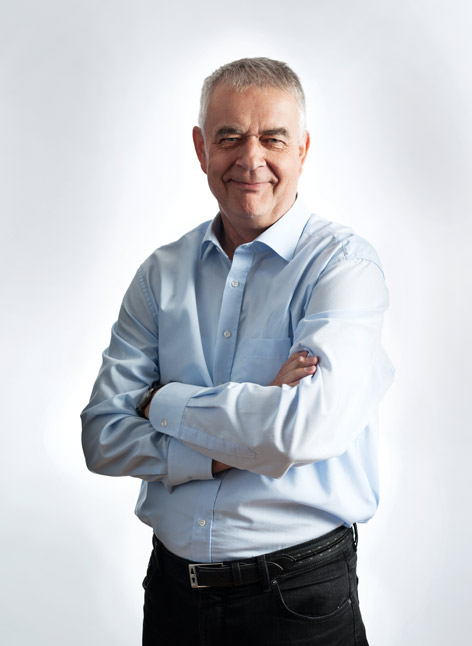
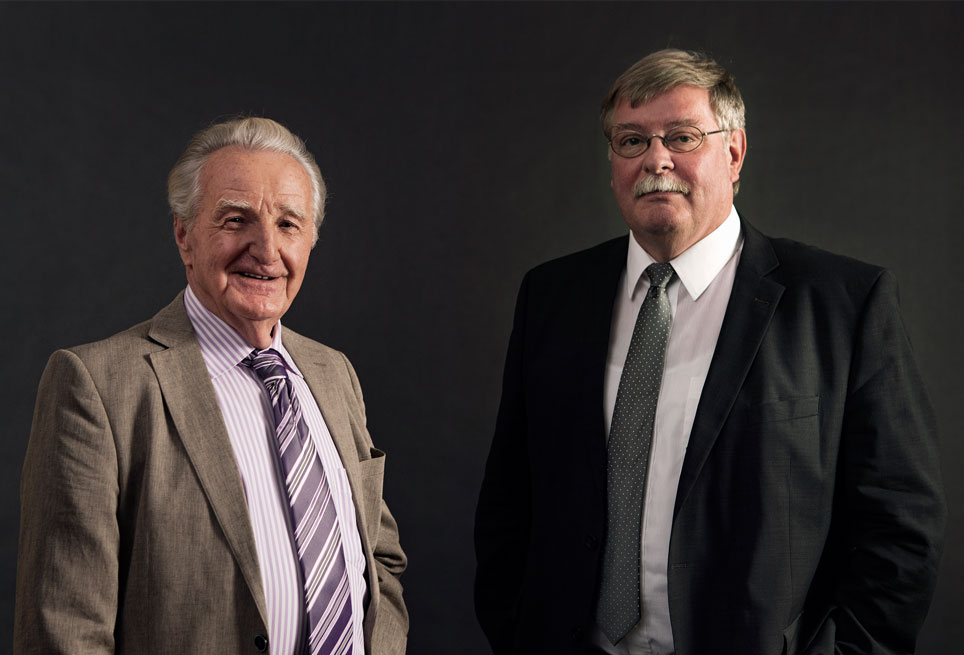
Günter Schade (left) and Günther Schauerte © SPK / Werner Amann
The Negotiators
Günter Schade
Born in 1933 in Frankfurt an der Oder. Director of the Museum of Decorative Arts since 1962. Director-General of the State Museums from 1983 to 1992, Deputy Director-General until 1998
Günther Schauerte
Born in 1954 in Fredeburg. From 1986, advisor to the Director-General of the State Museums; Deputy Director-General from 2002 to 2011. Subsequently Vice-President of the SPK.
Let’s stay with the subject of dispersal. During the war, museum collections were moved to safe locations for their protection. In the process, collections were also split up. According to what criteria?
Schade: The directors of the individual collections were responsible for this. This led to the distribution of items across palaces, castles and mines. The aim was to spread them as widely as possible so that, should one part be destroyed, significant collections would remain in other locations. No one could have foreseen at the time that Germany would be divided after the war. That is why the collections were separated, and we then had to make do with them in East and West.
How were the divided collections presented in East and West?
Schauerte: West Berlin had the major disadvantage that there were very few usable exhibition venues. The Gropiusbau was a huge pile of rubble; the Ethnological Museum next door and the museum complex in Dahlem had essentially been architectural ruins since the First World War. So new venues had to be created for the art collections remaining in West Berlin and those relocated to West Germany, in addition to Dahlem – and that is where Charlottenburg came into the picture. Before 1961, plans were made there for a wide-ranging exhibition centre for European art, intended to replicate the Museum Island on a smaller scale.
It is a pity: the State Museums in East Berlin were able to draw on the holdings that were still available after the war. Added to this was the large-scale restitution of looted art from the Soviet Union in 1955–58, which restored Museum Island to its status as an institution of global renown: the Pergamon Altar, the Collection of Classical Antiquities, and the Egyptian collections. The Picture Gallery in East Berlin, however, consisted only of the gallery’s second-rate works, as the masterpieces were in West Berlin.
Was the presentation of the separate collections also linked to a form of instrumentalisation – against the other side?
Schade: I wouldn’t say that was the case during the early years of the war. After all, everyone felt committed to a shared tradition. There was close collaboration between colleagues in East and West Berlin. We exchanged incomplete inventories, photos, literature. The political aspect only came into play when the GDR government demanded the return of the collections that had been moved westwards by the State Museums. On Museum Island, staff were then exploited by being forbidden from contacting our colleagues!
Schauerte: We from the West were allowed to travel – but the conflict manifested itself here too, sometimes in small ways. When I started at the Foundation in 1986, my first task was to go through a book on the museum landscape in West Berlin to check whether it was politically correct to use ‘Berlin (West)’ everywhere, rather than ‘West Berlin’, as the East Berlin terminology dictated.
What happened when the Wall fell?
Schade: It’s worth noting that I’d already been in contact with Wolf-Dieter Dube, the Director-General in the West, despite the official ban. I first met Dube in Budapest in 1986, and from then on we spoke regularly on the phone. So even before the Wall came down, we’d been discussing what it would be like if the museums were united. That was the dream we were chasing...
Schauerte: On the morning of 10 November, I went to the office. I can remember what happened next as if it were yesterday: from 8.30 am onwards, we tried to ring Mr Schade. At 11 am the line finally connected, and then the two directors-general – just 16 hours after the historic press conference with Günter Schabowski – spoke to one another and said: “Now what we’ve talked about so often has happened. The Wall has fallen.”
Even before the Wall came down, we used to talk about what it would be like if the museums were united. That was the dream we held onto...
Schade: On 6 January 1990, Mr Dube and I gave a joint interview to *Die Stimme der DDR* in Nalepastraße, where we discussed our vision for the reunification of the museums. As early as 6 January 1990! The first joint directors’ conference took place at the Bode Museum on 6 February.
Shortly after the Wall came down, a phase of new beginnings and reorientation began on the eastern side. You, Mr Schade, were criticised within the institution as Director-General and were asked to resign by the Minister for Culture. Was that ever an option for you?
Schade: No. Never. Because I was not aware of any wrongdoing on my part, neither politically nor professionally. I’d actually never had any disputes before with the people who emerged from the museums as critics. Why should I resign? Just because someone says: ‘You were in the party’? Sure, people were upset, but I hadn’t failed politically. Should I leave after having worked for the museums for 30 years and having driven the reunification process so far forward with my colleagues from West Berlin?
You then developed a plan together with Mr Dube on how the reunification should proceed. What did that look like?
Schade: Following that directors’ conference in February, we were tasked by the President of the SPK with bringing together the various views into a common approach. What might reunification look like? We couldn’t very well restore the old situation; we had to build on what had emerged anew on both the western and eastern sides. So we formed working groups, and they held discussions.
Was it immediately clear that there should be three major sites?
Schade: That just happened naturally. Museum Island had previously been the main hub; after the war, the division led to the formation of the new complex at the Kulturforum. The non-European collections were in Dahlem, whilst the Kulturforum housed significant parts of the European art collection. The path was already mapped out. But the merger involved not only a curatorial challenge but also a massive construction project – stretching from the Kulturforum to Museum Island.
Schauerte: Half a billion marks were invested on Museum Island within a decade! And with the masterplan, it became clear that the final figure would be 1.5 billion euros. No other museum site, no other institution, no other country had to tackle anything comparable.
Schade: The enthusiasm that had gripped us all! Everyone knew: we now had the chance to bring together something that had been torn apart for almost half a century.
How did the merger of the staff take place? Most museums and collections had two, meaning there were also two directors.
Schauerte: One thing was dictated by employment law: if someone had held a director’s post with civil servant status in West Germany, then they were simply entitled to that position. So we had to bow to that principle. The East Berlin colleague became the deputy. But even that was an achievement, as virtually all staff were retained. For that, we owe a great debt of gratitude to Professor Knopp, the president of the foundation. His line was: “No one will be made redundant.” The differing pay scales in East and West were, however, a serious problem. That was a misjudgement in terms of collective bargaining policy.
Schade: And for the staff in the East, it was unfamiliar that not all employees were regarded as equals anymore: farm workers, academics, conservators – in the GDR, everyone felt equal. And now the staff were being categorised! Can you imagine the look on some people’s faces on Museum Island when they were suddenly classified as manual workers?
Is reunification complete today?
Schade: We can only speak of completion once the master plans have been realised. Once the Humboldt Forum has opened, once Museum Island is intact and we have completed all the new buildings in which the reunified collections present themselves to the public on an entirely new educational level.
Schauerte: In the minds of those who work here, and probably also for the visitors, it is complete. A new generation has already grown up. Basically, we are in a period of transition. Some old measures have not yet been completed, whilst others can no longer be justified by historical events – such as the construction of a new museum for 20th-century art at the Kulturforum.