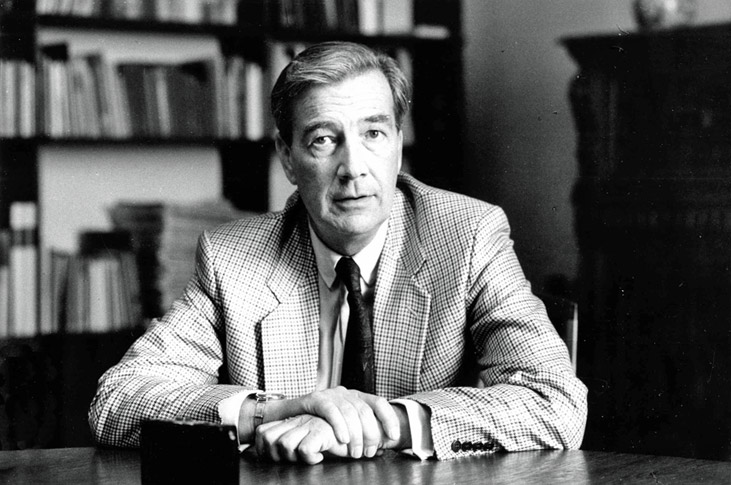
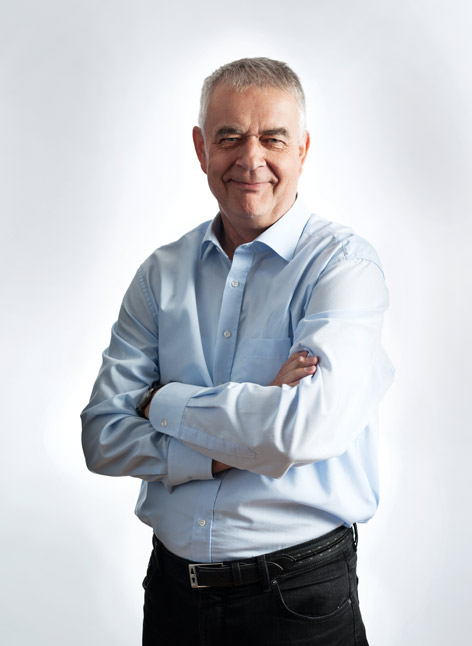
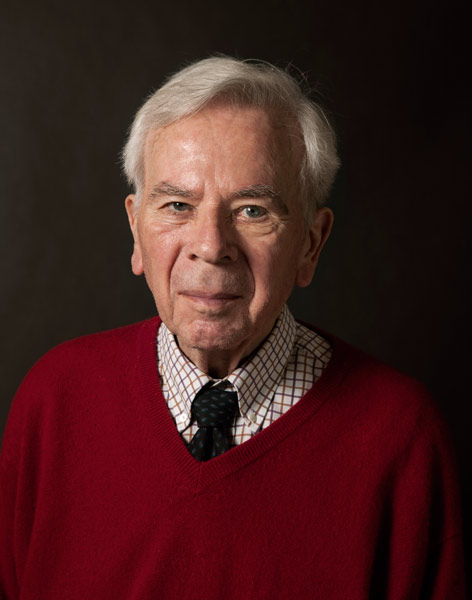
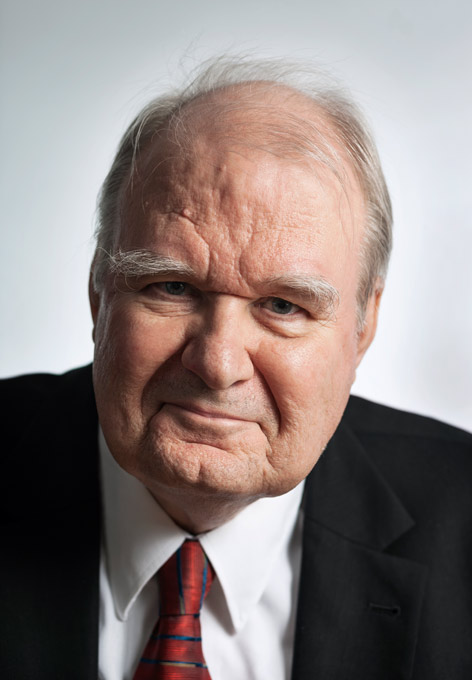
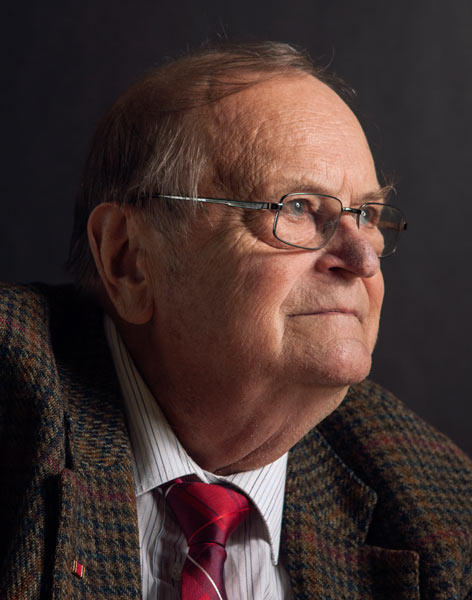
Without Wolf-Dieter Dube, the reunification of the collections would be virtually inconceivable – and yet we must do without his account.
Prof. Dr Wolf-Dieter Dube has passed away. The level-headed Mecklenburg native, born on 13 July 1934 in Schwerin, died unexpectedly on 9 September 2015. Due to the year of his birth, he experienced and suffered through the Nazi regime, the war and its aftermath, with the division of Germany first in East Germany and then, in the early 1950s, in the West. His family suffered under the National Socialist and Socialist systems; his father’s early death was a direct consequence of this. However, this also gave him the necessary insight and strength to deal appropriately with the events and consequences of 9 November 1989 for the State Museums.
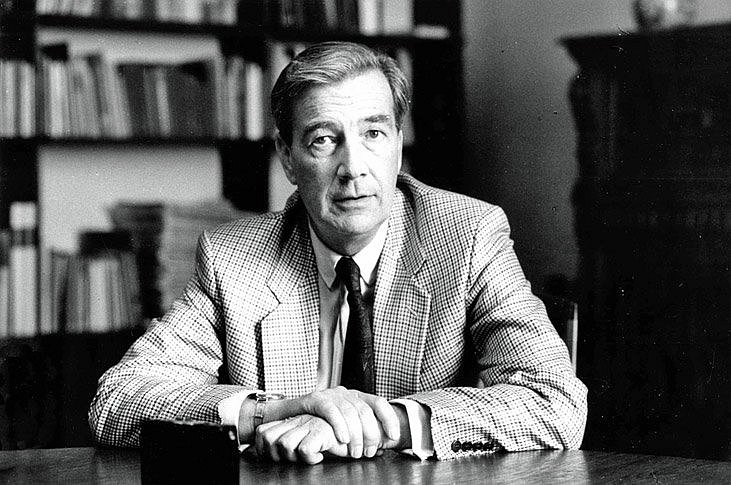
He completed his studies in art history, classical archaeology and Christian archaeology in 1963 at the University of Göttingen, obtaining his doctorate. From 1969, he directed the State Gallery of Modern Art in Munich, and in 1976 he was also appointed Deputy Director-General of the Bavarian State Painting Collections.
In 1983, he took up his post as Director General of the State Museums of the Prussian Cultural Heritage Foundation, appointed to complete the Kulturforum museum project. No one could have guessed what tasks awaited the Director General six years later.
His approach, put succinctly, was a sense of tradition coupled with a forward-looking outlook. To this end, he made it clear who was in charge. And finally: “Quality, quality, quality”. In office, he was incorruptible, a ruthless realist, with a fair share of cold-bloodedness. What would have been pure utopia for others was thus achievable for him. This included acquisitions such as the painting ‘Potsdamer Platz’ by Ernst Ludwig Kirchner. Dube is credited, among other things, with the takeover of the Hamburger Bahnhof, as well as the acquisition of Erich Marx, Klaus F. Naumann and their magnificent collections.
The most impressive example of this was undoubtedly his initiative to bring Heinz Berggruen and his collection back to his hometown of Berlin, which provided the impetus for the relocation of further collections, such as those of Helmut Newton and Friedrich Christian Flick, to name but a few. Wolf-Dieter Dube’s heart, however, burned for museum architecture. He was able to immerse himself in the organic nature, the function and the impact of the buildings, understanding architectural plans like no other.
Whilst the construction of the Gemäldegalerie at the Kulturforum may be controversial due to its location, in terms of its functional integration, the quality of its execution and its sensitive dialogue with the art, the building, which was inaugurated in 1998, remains unrivalled by today’s standards.
The unexpected fall of the Wall, the gift of German reunification with the manifold tasks it entailed, could not have befallen a better incumbent than Wolf-Dieter Dube, the ‘General’. With incredible ease, he transformed from the architect of the museums into the architect of reunification. Wolf-Dieter Dube was a museum man with heart and mind; he consistently embodied a holistic view of the museum encompassing art acquisition, cultural preservation, research, presentation and education, and knew how to put this into practice time and again for the benefit of his institution. In doing so, he provided direction in a time of great upheaval. He was the right man in the right place.