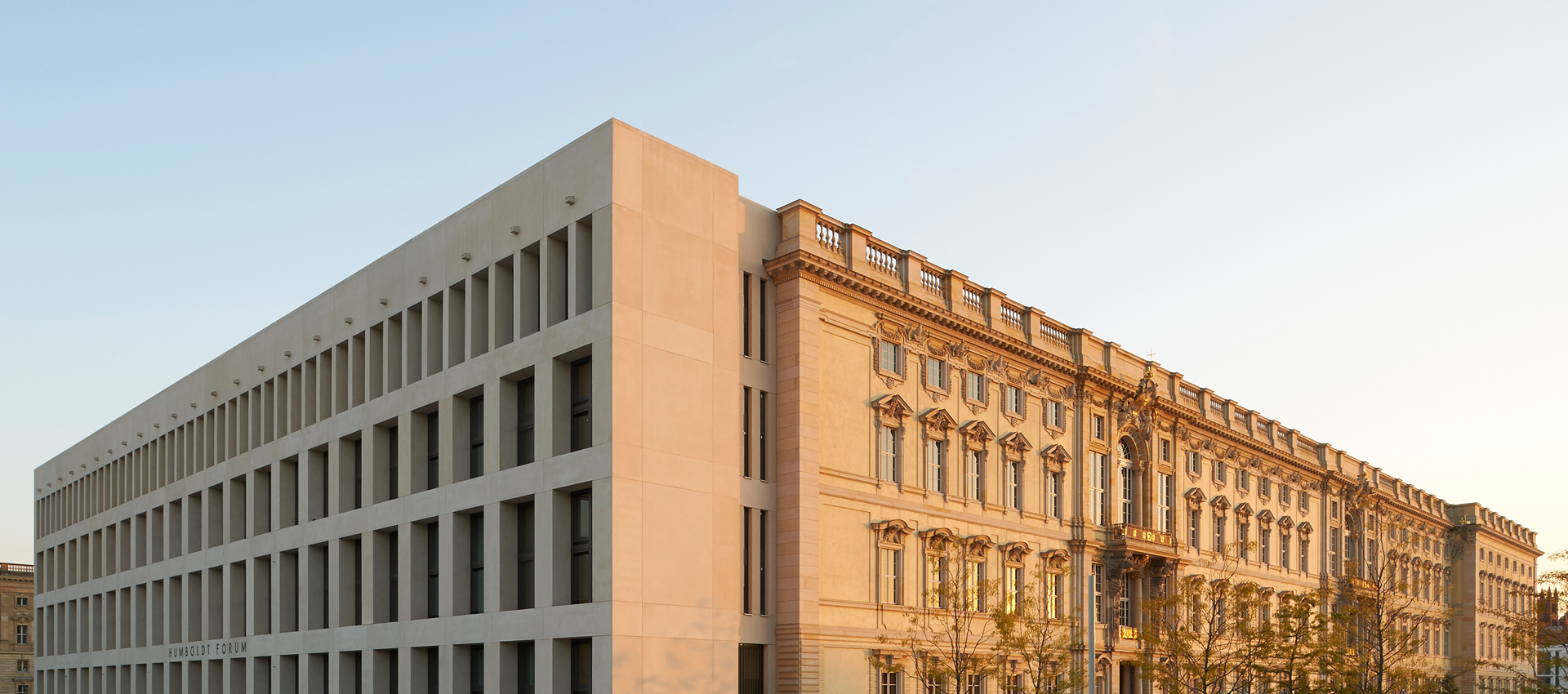
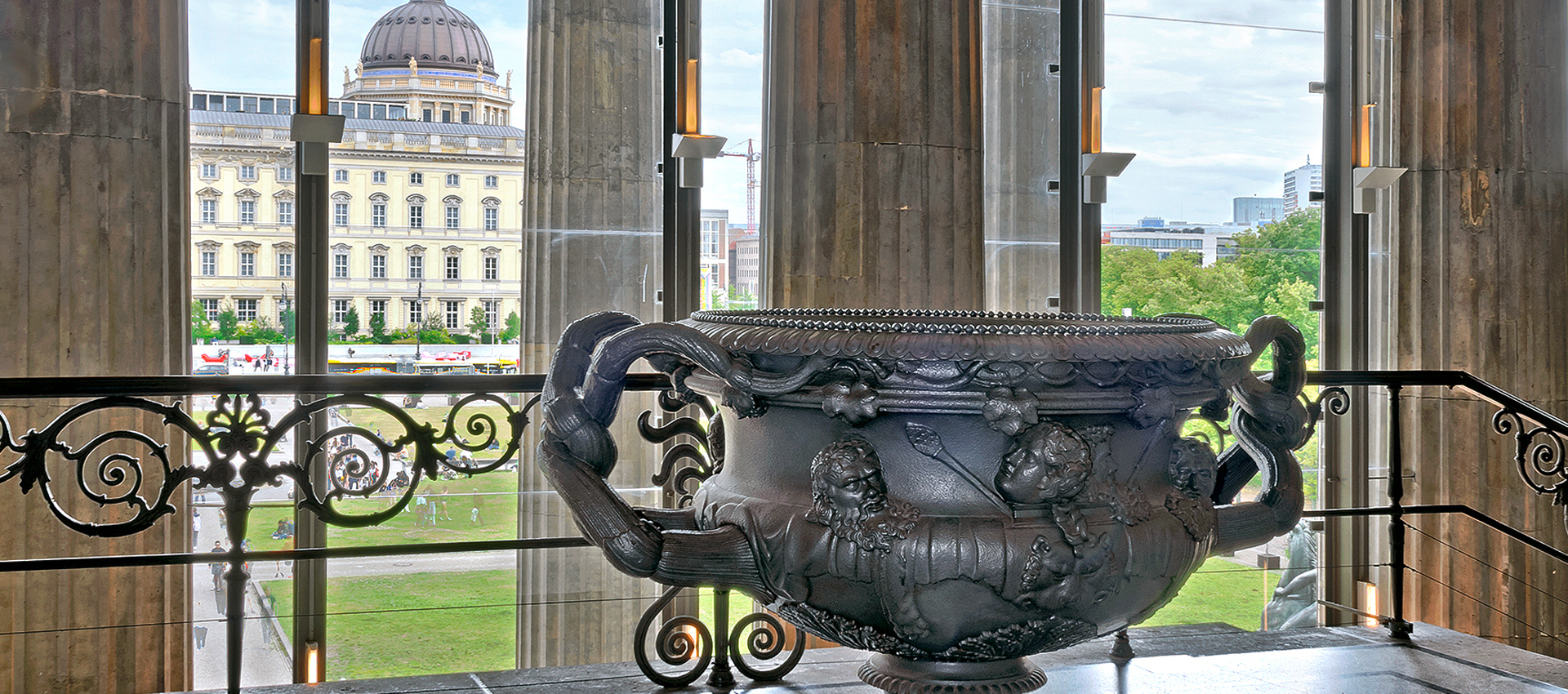
The attempt to transform a former seat of power into a new kind of museum is not limited to Berlin’s Humboldt Forum: a promising arts and culture centre opened in Lomé, Togo, at the end of November 2019.
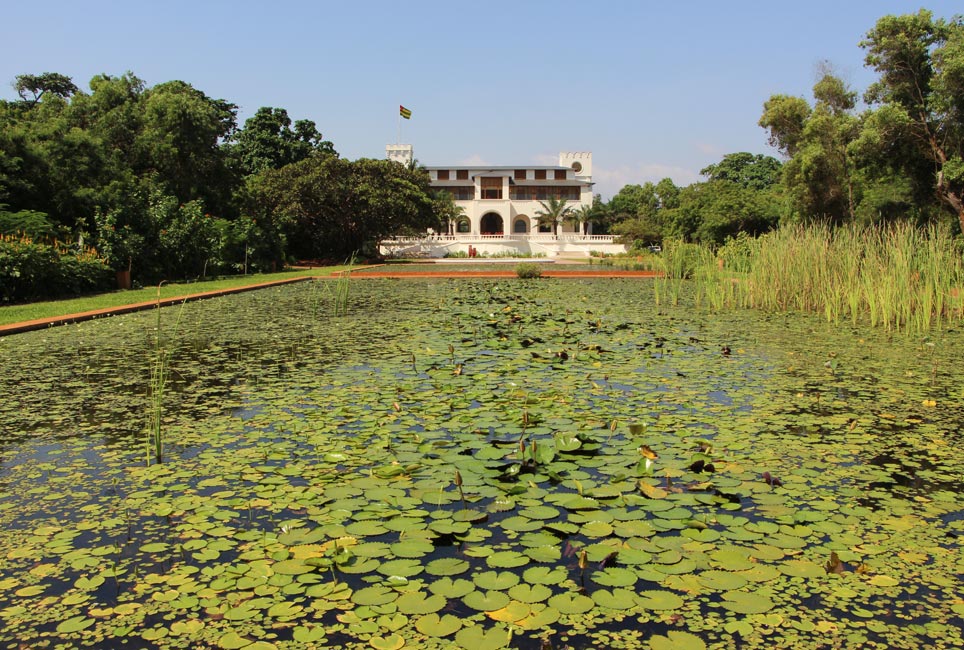
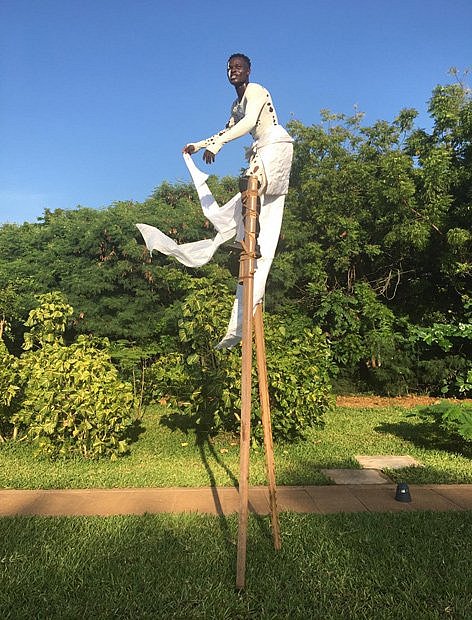
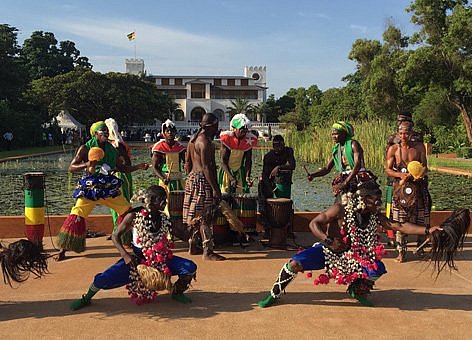
Separated from Lomé’s seemingly endless city beach only by the coastal road, a sprawling park stretches towards the city centre, with a gleaming white palace at its heart. The sound of drumming and singing drifts across the wide water basins covered in water lilies; some distance away, three stilt walkers stride gracefully across the neighbouring lawn. The opening of the Palais de Lomé was attended by many prominent politicians, diplomats, journalists and cultural figures. For around 120 years, this magnificent building was a place inaccessible to the general public. Constructed from 1898 onwards during German colonial rule over Togo, the building served as a seat of power for around 100 years before being abandoned following severe damage in the wake of social and political unrest, and subsequently falling into disrepair.
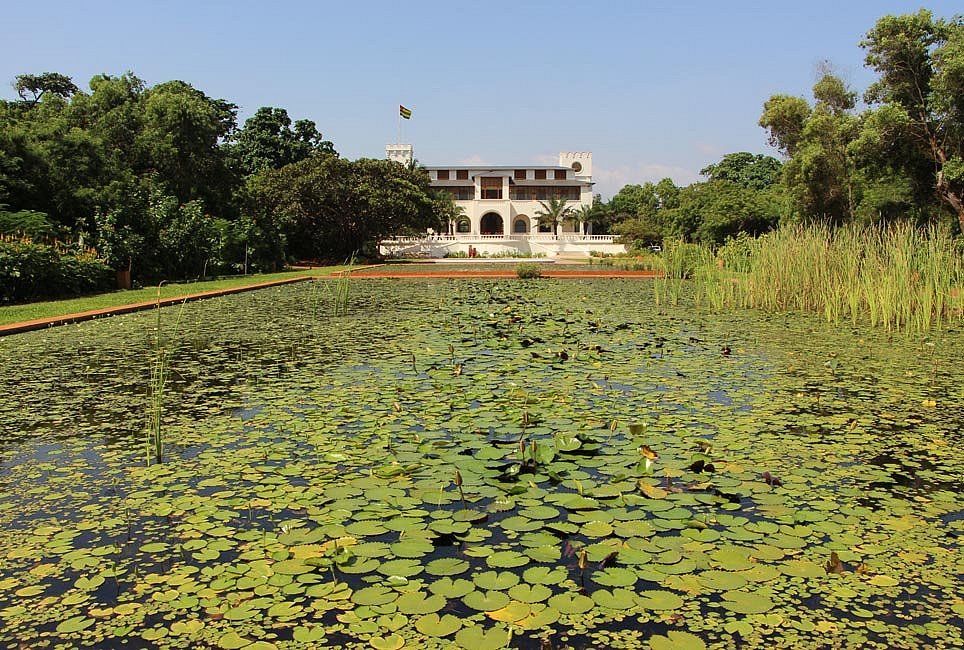
Anyone approaching the Palais de Lomé from the town beach must first pass the three water lily ponds © SPK / Stefan Müchler
Anyone visiting here again these days after a long absence will scarcely believe their eyes. The former Governor’s Palace has been rebuilt, its interior carefully restored, and the overgrown vegetation in the park cleared away. What was once regarded in Togo as a symbol of oppression is now imbued with art and culture. “It was a place of exclusion, a place that was closed off and off-limits, and now, for the first time since it was built, it is open to everyone,” says Sonia Lawson, director of the Palais de Lomé and the driving force behind the tax-funded project. Her proposal was not only to establish a museum here, but also to incorporate the park and create dining facilities. “For me, the park is just as important as the building itself,” says Lawson, who plans to combine culture and nature in the true spirit of Humboldt. The eleven-hectare botanical garden, with its great biodiversity, is unique in the entire region. Everywhere else in West Africa, such central parks have gradually been built on as prime plots of land and thus taken away from the public.
Three star-shaped avenues lead from the former seat of power to the nearby city centre of Lomé. “With its wide avenues, the new Lomé was planned from the palace according to the colonial rulers’ vision – one of the avenues leads straight to the cathedral, which was also built by the Germans. We will soon be exploring the eventful urban history of traditional and colonial-era Lomé in the Lomé+ exhibition,” reports Sonia Lawson. Early photos of the residence show the park with newly planted saplings. Now grown into mighty giants, they line the streets within the park and provide pleasant shade with their almost closed canopy. As dusk falls, dozens of flying foxes rise from their crowns, circling the grounds in large swarms.
It was the largest and most imposing governor’s palace in the entire German colonial empire and was intended to impress the crews of passing ships even from a distance. To compensate for the strategically unfavourable location on a completely flat coastline, a base over three metres high was specifically designed, upon which the actual palace was erected using largely imported building materials. The design was by Governor August Köhler, who envisaged a prestigious yet functional building featuring both German and Oriental-style elements. Thanks to the projecting arcades and open pergolas, no direct sunlight fell on the interior rooms, thus ensuring a relatively pleasant climate. The central courtyard provided additional, constant ventilation. The palace was flanked on both sides by two striking 18-metre-high towers – one in the style of a knight’s castle, the other architecturally more reminiscent of the Arabian Peninsula.
Shortly after Lomé was designated the capital of ‘Togoland’, construction began in 1898 and was completed in 1905 under Köhler’s successor, Count von Zech. The Germans were followed by the British and finally the French governors, until the magnificent building served as the seat of two Togolese presidents following the country’s independence in April 1960. It was only Gnassingbé Eyadema who had a new presidential palace built in the immediate vicinity, and from then on the building was used to accommodate high-ranking guests. Franz Josef Strauß, who was a great friend of Togo and President Eyadema, also resided here during his numerous visits. With the end of Eyadema’s reign, the palace’s first life as a seat of power also came to an end, and it fell into disrepair – having been riddled with bullets by the Togolese military during bloody uprisings.
Its slumber was ended some 20 years later by none other than Eyadema’s son, Faure Gnassingbé, the current President of Togo, who allocated around 3.5 million euros for the renovation. “Opening the palace to the public was the President’s idea,” says Sonia Lawson. “We researched extensively but could not find any other arts and culture centre in Africa that was built exclusively with taxpayers’ money.”
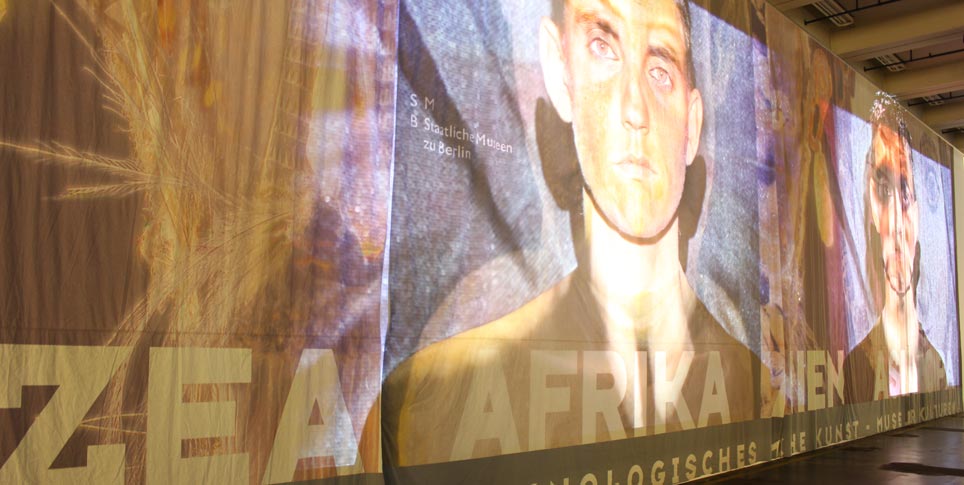
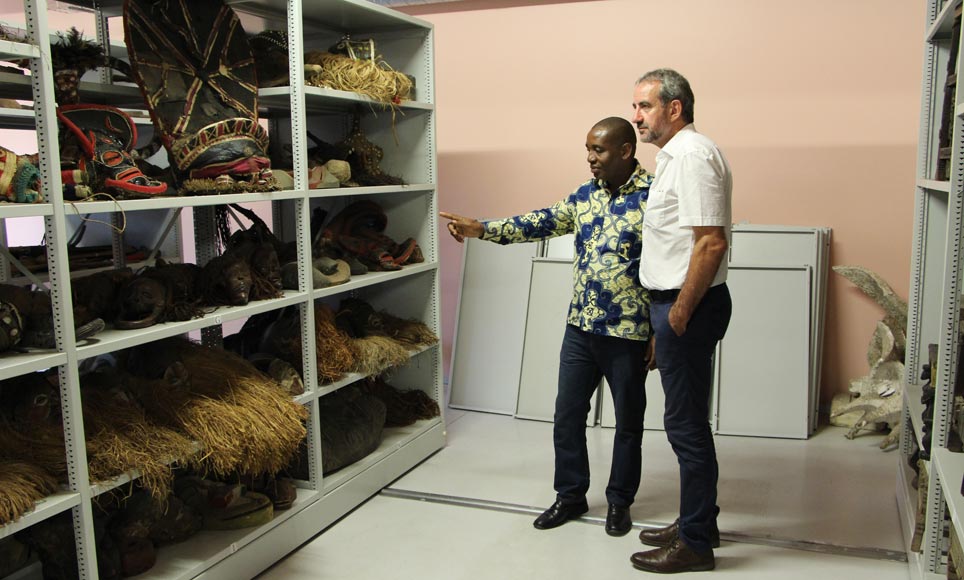
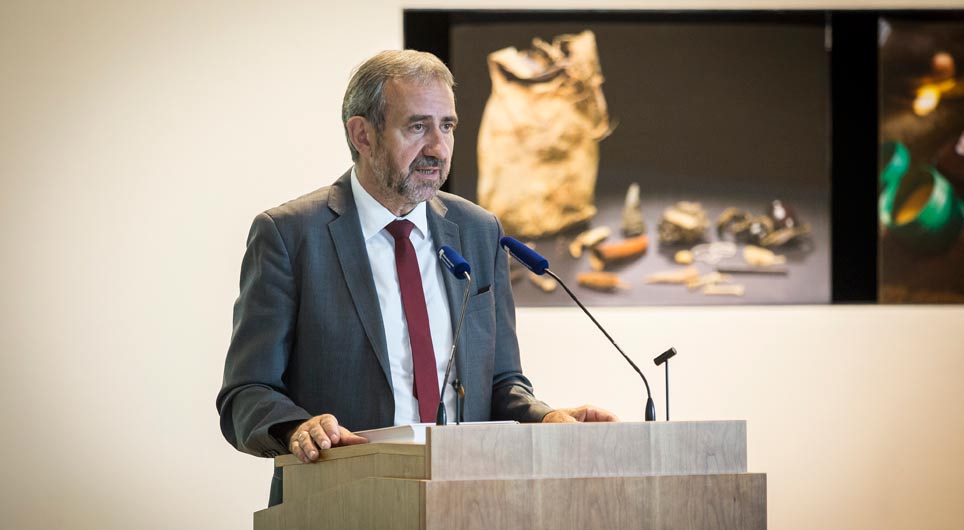
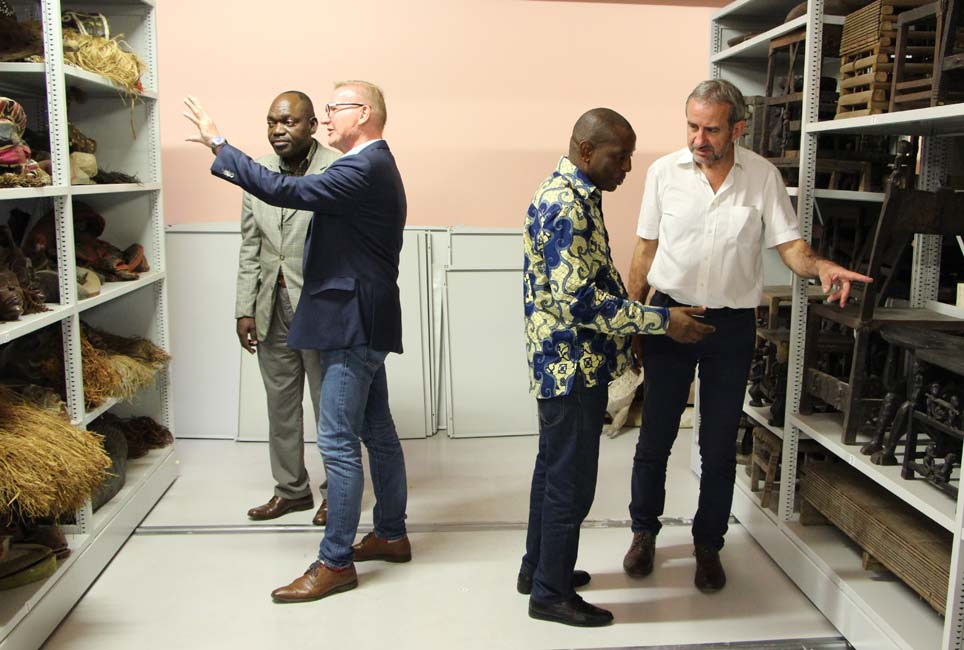
During a state visit to Germany last year, President Gnassingbé met with Hermann Parzinger, President of the Prussian Cultural Heritage Foundation, to introduce him to the Palais de Lomé and to encourage cooperation between the two institutions. In this context, the delegation also visited the construction site of the Humboldt Forum. In the exhibition area of the Ethnological Museum, the Africa display gallery will in future also exhibit a number of objects from Togo.
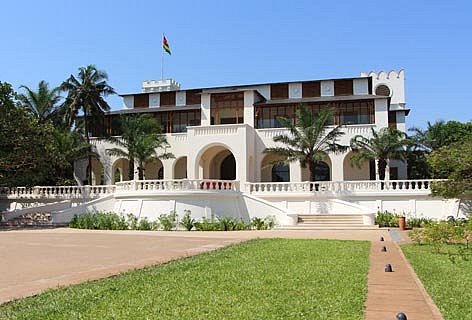
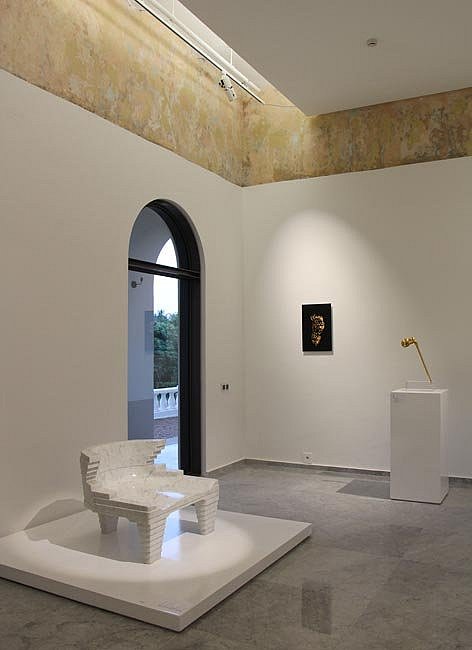
A central aspect of Lawson’s concept was to preserve the traces of the past. Indeed, the history of the site is of great importance and is conveyed by specially trained guides. Visitors should be able to see and feel that they are not in a new building – which is why some of the patina has been left intact. “The striking iron banister of the central staircase, for example, was very rusty and had small holes. However, we decided not to repair it, but simply to repaint it.” It is typical Art Nouveau, manufactured in Hanover in 1903; Lawson’s team was able to trace the order form in the builders’ well-preserved documentation.
Lawson was inspired by David Chipperfield’s reconstruction of the Neues Museum on Berlin’s Museum Island, the results of which she studied closely during visits. This led her to decide not to have some walls painted completely and to leave sections of the ceilings as they were found. “That’s very unusual for us, and our painters were initially very worried that visitors would think they hadn’t done their job properly,” Lawson says with a smile.
The renovation was carried out by a team of French architects and landscape planners. The arcades, which had been partially closed off during French colonial rule, were restored and now resemble their original state once again. During the project, the planners worked exclusively with local contractors and commissioned Togolese companies to carry out the work. The result is an open, inviting building with an elegant staircase, airy exhibition halls and countless views into the surrounding park. From the veranda and balcony, there is a direct view across the Gulf of Guinea with its numerous cargo ships anchored in the roadstead. Rarely has the fusion of past and present, of looking back and a vision of the future, come together so perfectly.
“We are using a building of oppression to showcase Africa’s future. By transforming it into a cultural centre, we have changed the building’s significance – now it is a symbol of shared heritage,” explains Lawson. Although the Palais de Lomé does not have its own collection, this gives it the freedom to exhibit a wide range of themes and showcase diverse forms of creativity. The debates on restitution have naturally been followed in Togo, and it is a very important issue. “But there are so many forms of collaboration and ways of dealing with objects from the past. For me, circulation is important. From Europe to Africa, from one African country to another. We often still know far too little about one another,” says Sonia Lawson.
The centre’s focus on pan-African integration is underscored by the exhibition “Three Borders”, which brings together works by six artists from four neighbouring West African states. Ghana, Togo, Benin and Nigeria are linked, on the one hand, by a shared colonial past; at the same time, they are divided by three borders that were arbitrarily drawn during that very colonial era. Reflecting on the idea of a borderless Africa, curator Aminat Agsondern seeks to materialise a discourse on cultural continuity across space and time through the works on display in the group exhibition.
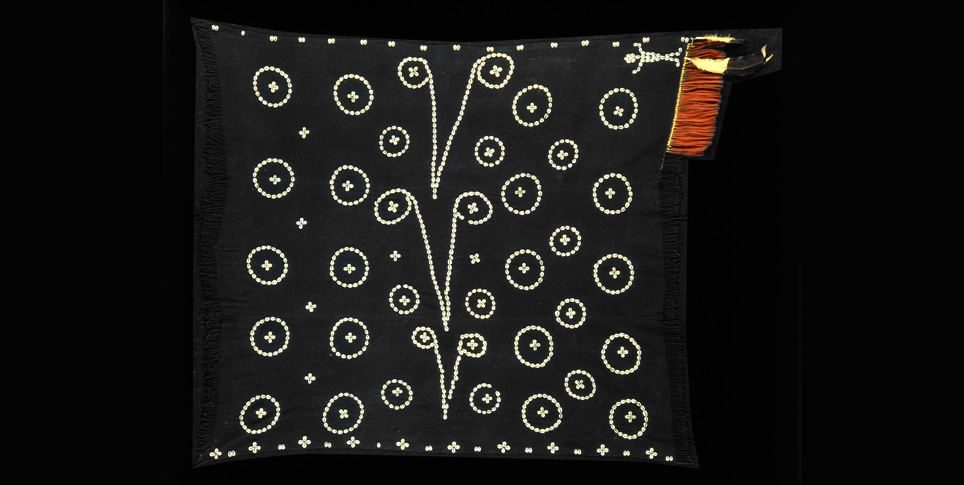
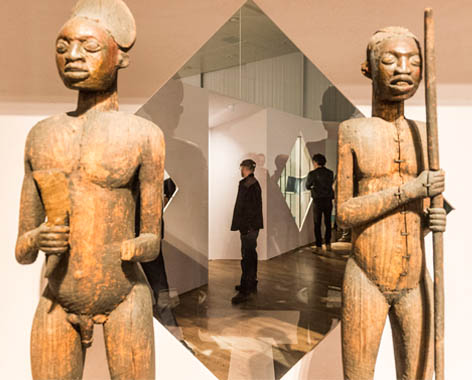
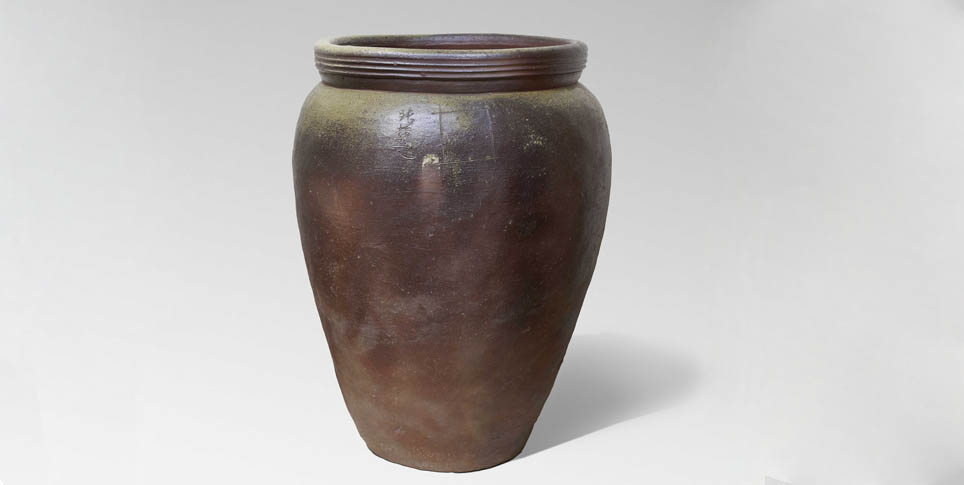
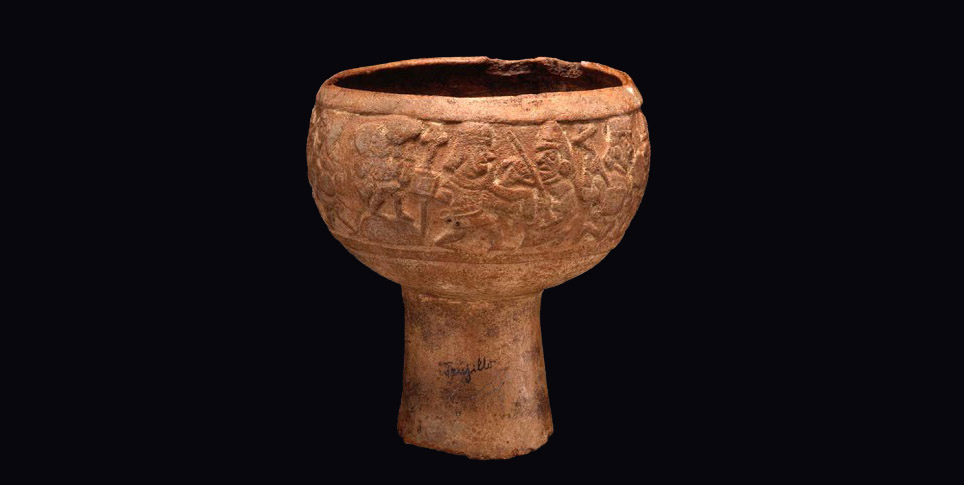
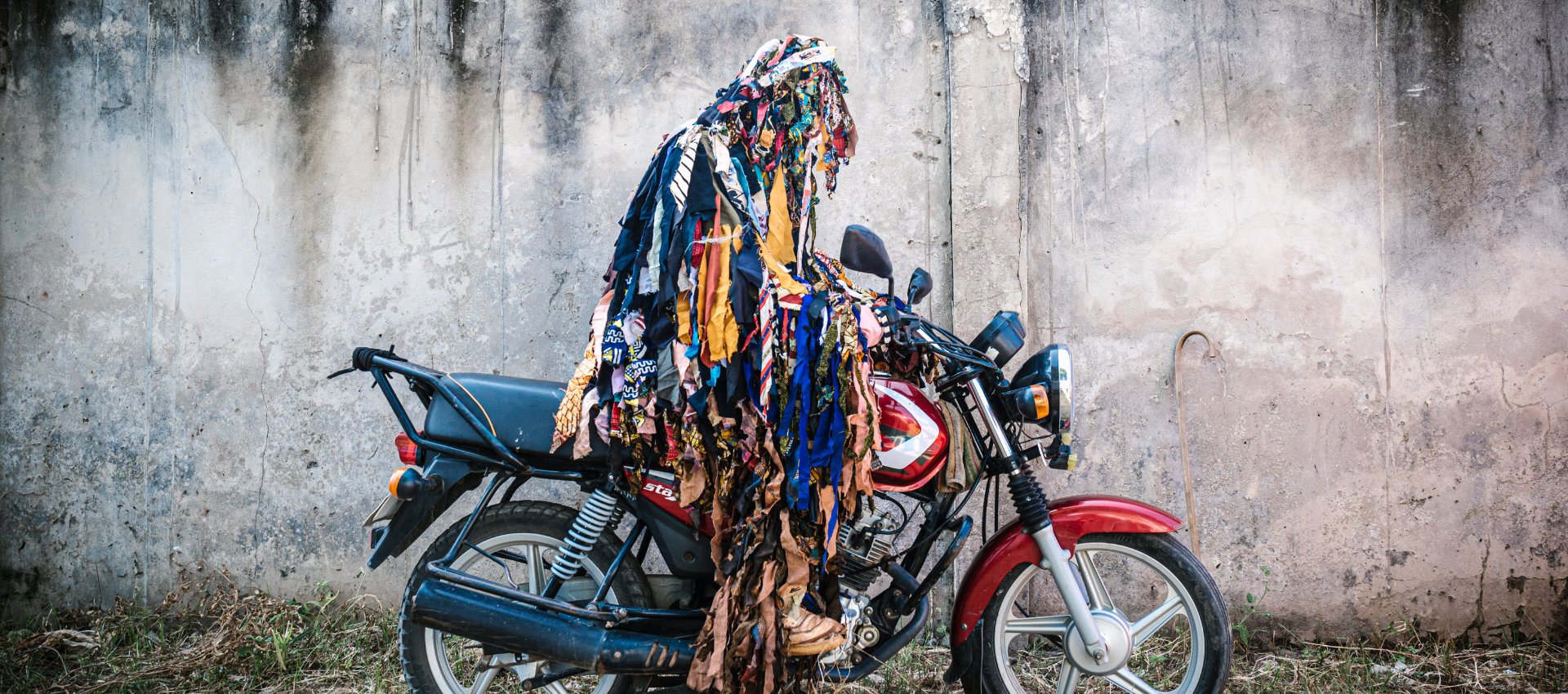
Perhaps the most remarkable of the four opening exhibitions is “Togo and the Kings”. Across 400 square metres, Kangi Alem displays traditional artefacts from Togolese kingdoms, borrowed directly from local dignitaries and communities. If, for example, they are required for a ceremony, the Palais de Lomé temporarily returns them to their owners before they can be put on display again after use. As “living objects”, they remain the property of the communities whilst simultaneously reflecting the cultural wealth of this small country.
For the first time in Africa, a solo exhibition curated by Sandra Agbessy pays tribute to the work of the renowned Togolese designer Kossi Aguessy, who passed away in Paris a few years ago. The amorphous forms of his artworks and his focus on sustainability brought him international renown, and his works have been included in the collections of the Museum of Modern Art (MoMA) in New York and the Centre Pompidou in Paris, amongst others. “Infinity: Kossi Aguessy (1977–2017)” showcases some of his most outstanding works and simultaneously inaugurates the exhibition space permanently dedicated to contemporary design from West Africa.
Photographs documenting the reconstruction of the Palais de Lomé form the subject of the fourth exhibition at the Palais. They trace the building’s journey from a crumbling relic of colonial rule to the remarkable artistic exhibition space it has become today. In January, this will be followed by Lomé +, an exhibition on the urban development of Lomé and the everyday lives of its residents.
The Palais de Lomé has everything it takes to become one of the most significant centres of art and culture in West Africa. After 120 years of being shut out, the people of Togo will probably first have to get used to reclaiming this central location in their capital. The barriers to entry should be kept as low as possible. “We will have to charge an admission fee, but we will set it as low as possible and will definitely offer one free admission day each month,” explains Sonia Lawson. “Of course, we will also grant free admission to children and school groups, as education and outreach work are our top priorities.”