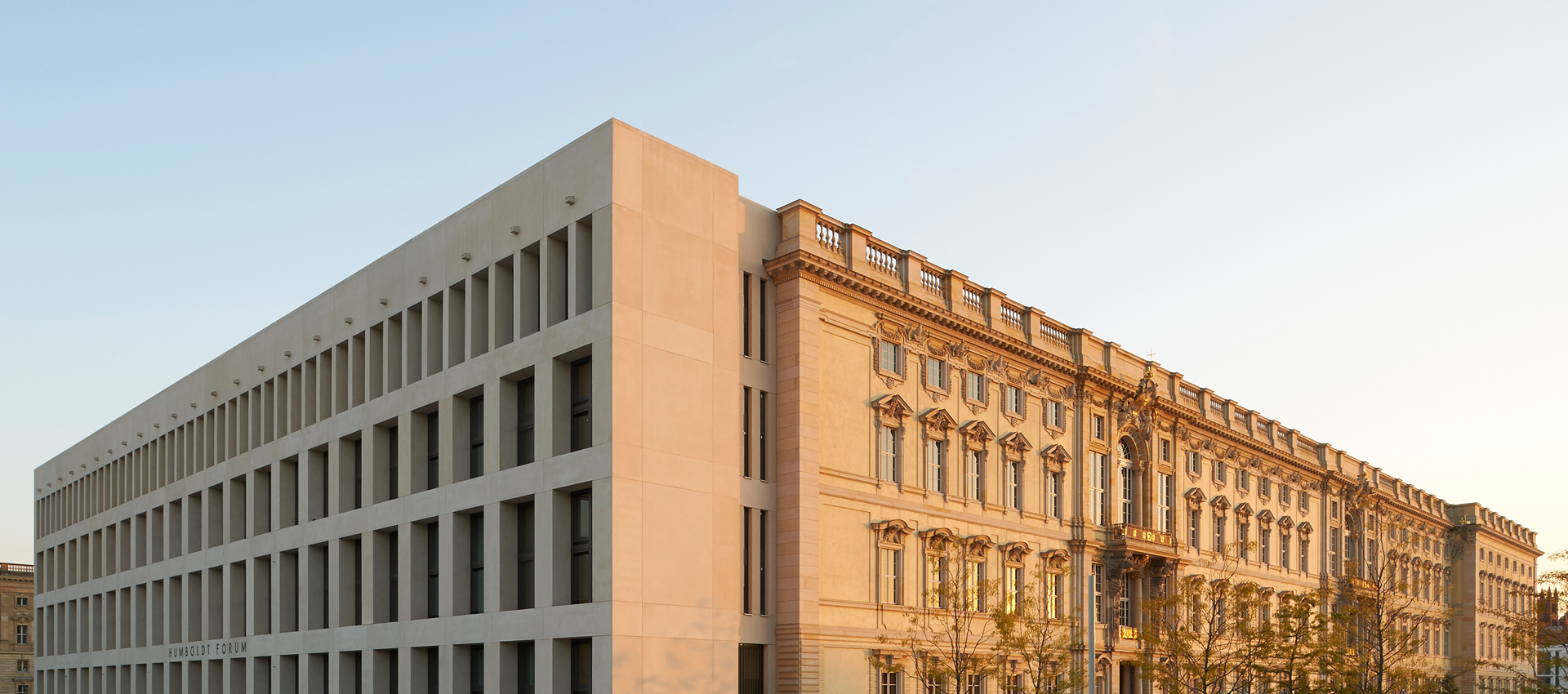
It is incredibly colourful, astonishingly large and a multifaceted historical reference: the Coromandel lacquer screen, which will grace the Humboldt Forum from 2020. Until then, it can be seen in the ‘Vis-à-Vis’ exhibition at the Museum of Decorative Arts.
At the Humboldt Forum, visitors will not only experience the vastness and diversity of the world, but also witness the intertwining of history – on several levels. A beautiful example – in both senses of the word – is the 17th-century Chinese Coromandel lacquer screen recently acquired by the Ernst von Siemens Art Foundation.
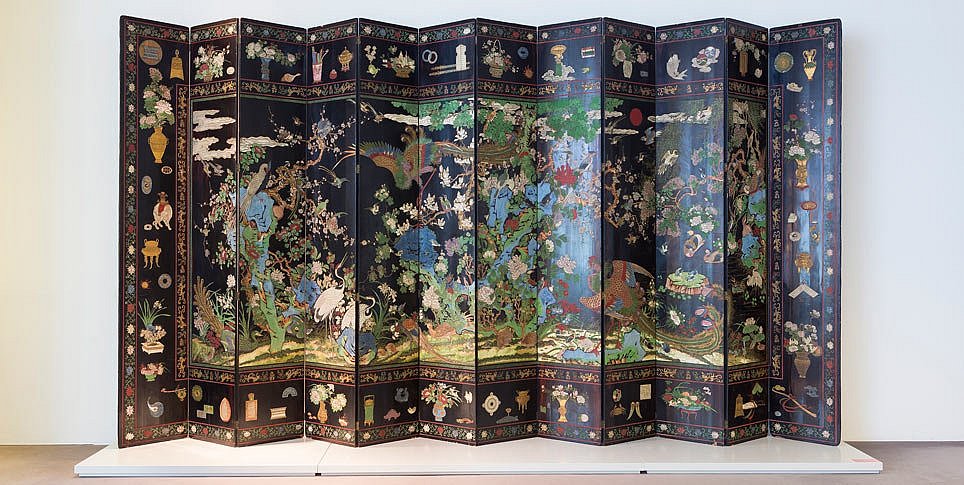
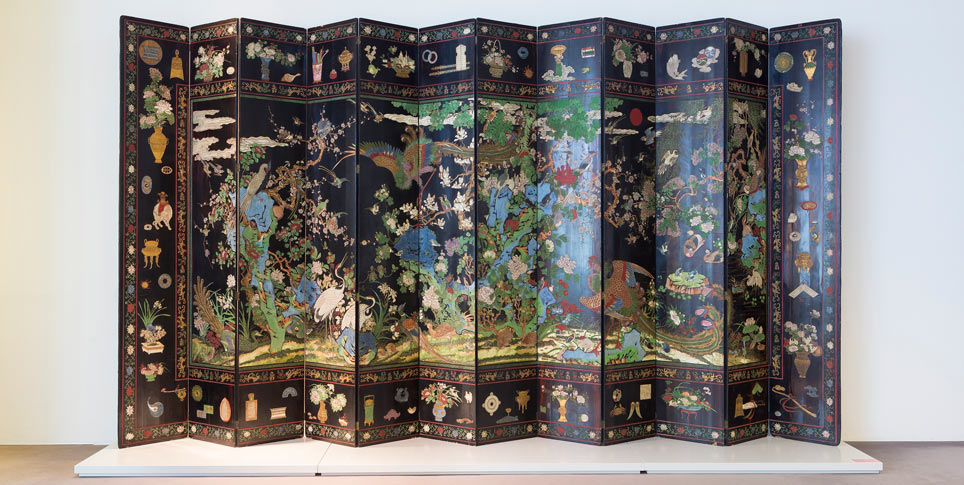
A twelve-panel folding screen depicting a pair of phoenixes surrounded by birds and flowers, late 17th century. Coromandel lacquer on wood, 272 x 569 cm © Staatliche Museen zu Berlin, Museum für Asiatische Kunst, Photo: David von Becker
On the one hand, it demonstrates the aesthetic excellence of 17th-century Chinese craftsmanship: in the Coromandel lacquer technique, a layer of chalk mixed with glue, several millimetres thick, is applied to wooden panels, followed by a thin layer of black lacquer. The pictorial designs are carved into the chalk layer through the lacquer layer. The exposed areas of the light-coloured underlayer, separated by black surfaces or ridges, are coloured with pigments and partly gilded. These screens were often used as gifts in China, mainly for birthdays or investitures. Among the wealth of East Asian export goods that reached Europe in the 17th century, folding screens decorated with Coromandel lacquer were by far the largest and most prestigious objects.
The folding screen for the Humboldt Forum is also quite large, measuring a good three by six metres. It impresses with its richness of motifs and colour, as well as its excellent overall condition. The screen is also special because its main motif is a pair of phoenixes – an absolute rarity. Framed by several border bands, the depiction of the main motif occupies a large area. Whilst the female phoenix has settled upon a rock, the male is depicted still half-hovering at the moment of landing. Their majestic appearance, with peacock-like long tail feathers, most impressively reflects their role as rulers of the feathered creatures and, as such, symbolises the imperial couple.
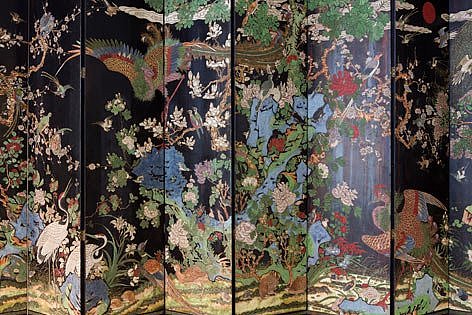
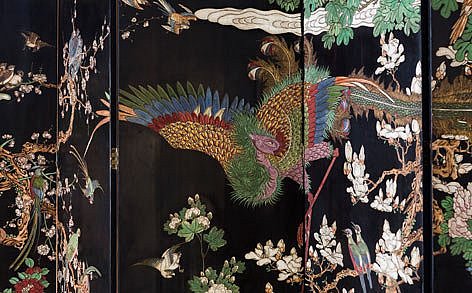
Set against a backdrop of lush, verdant and blossoming flora, the other birds have gathered – appearing in pairs themselves – to pay their respects to the phoenix couple. There are exactly one hundred birds, carved into the black lacquer as precisely identifiable species and adorned with colour, to represent the theme of ‘One Hundred Birds Paying Homage to the Phoenix’ – a motif associated with good fortune – in a rare display of completeness.
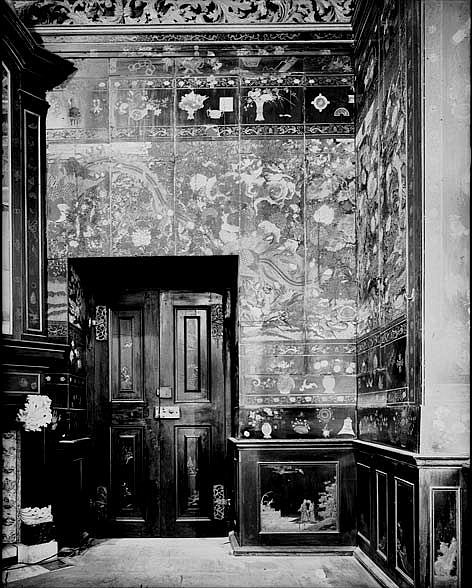
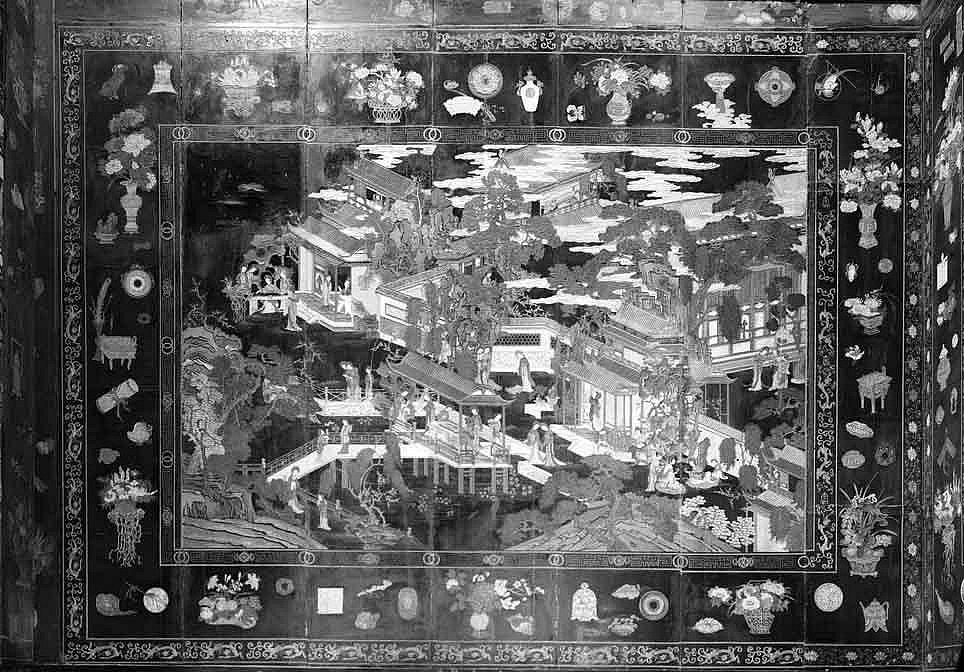
So much for the aesthetic aspect of the screen – but its history is also interesting. The Great Elector of Brandenburg, who created the conceptual nucleus of the Humboldt Forum with the Brandenburg-Prussian Kunstkammer, was in fact a great lover of East Asian art. That is why, around 1695, he established the first lacquer cabinet in a German palace at all in the Berlin City Palace – with two Chinese Koromandel lacquer folding screens as its centrepiece. One of these was a phoenix lacquer screen. The lacquer cabinet and the screens were destroyed during a bombing raid in the Second World War. Only the black-and-white photographs taken in 1944 were able to convey an impression of the Chinese Cabinet and the phoenix screen housed within it.
The folding screen now acquired is virtually identical to the one in the Great Elector’s lacquer cabinet. With it, the Humboldt Forum pays homage to the Brandenburg-Prussian Kunstkammer in the City Palace, which was so crucial to its creation – whilst at the same time documenting the high status of East Asian art in the early days of Berlin’s art collections.