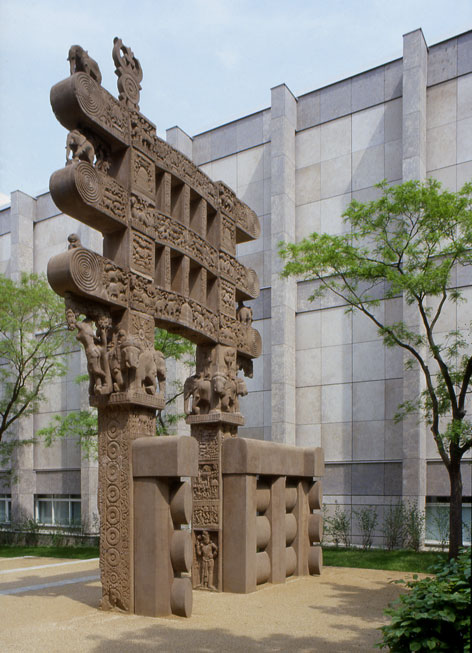
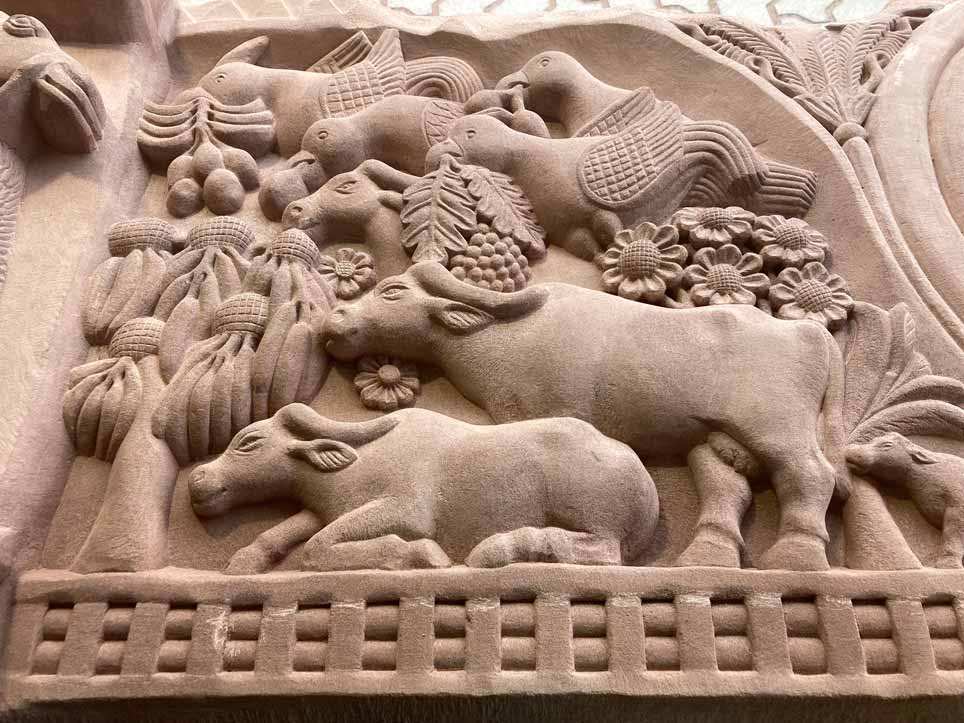
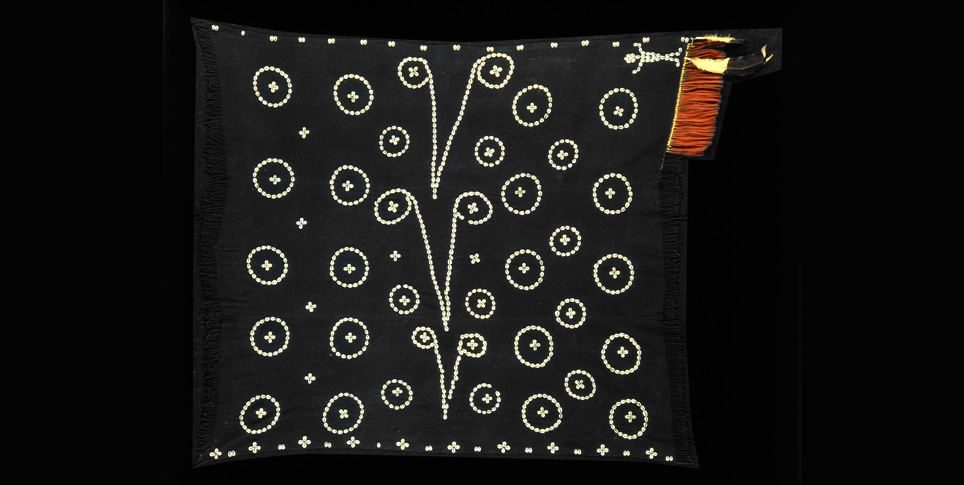
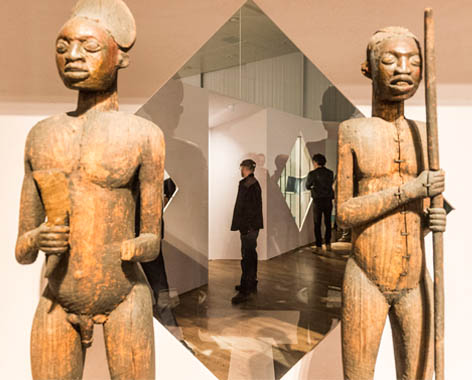
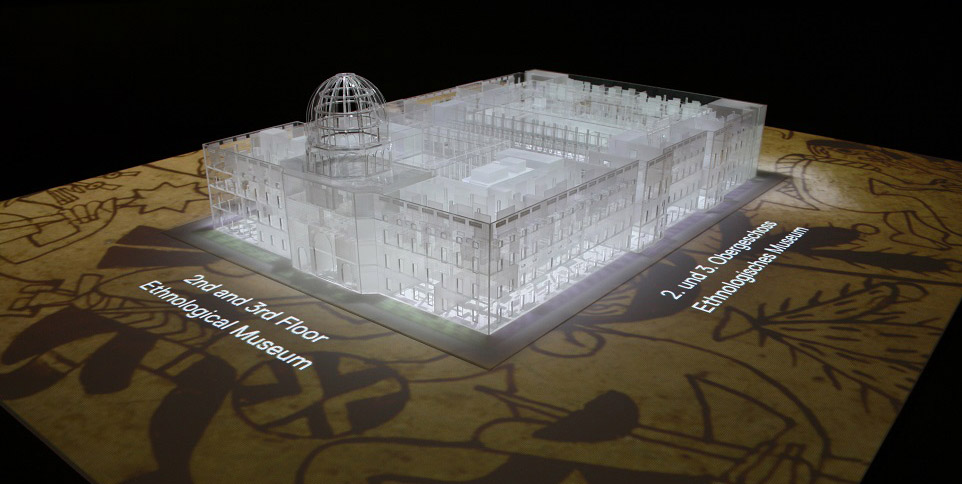
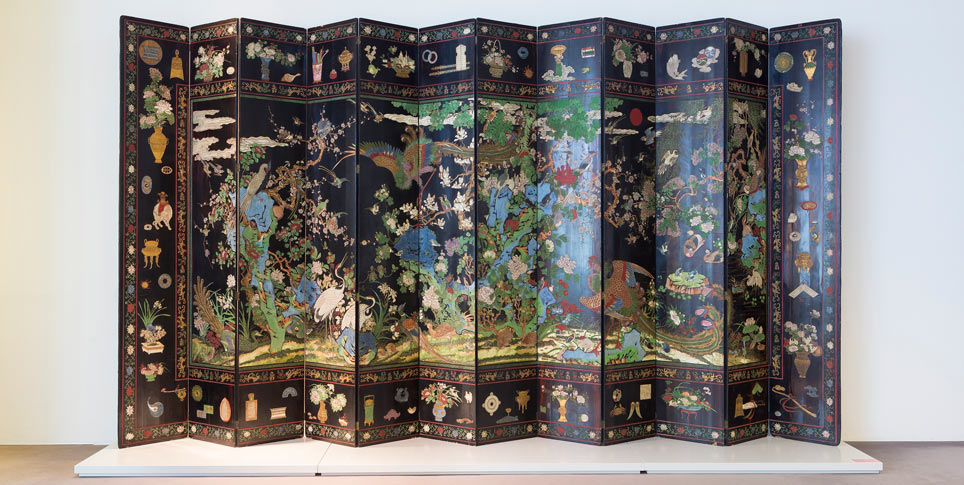
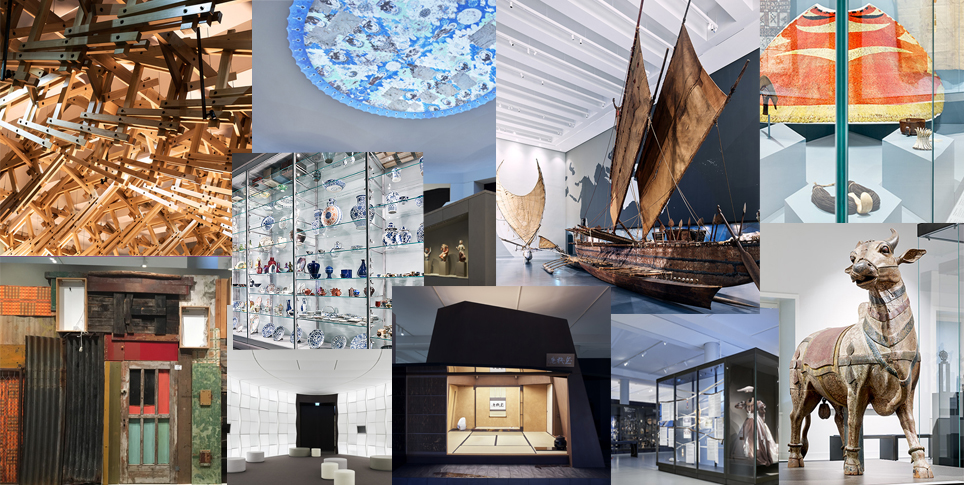
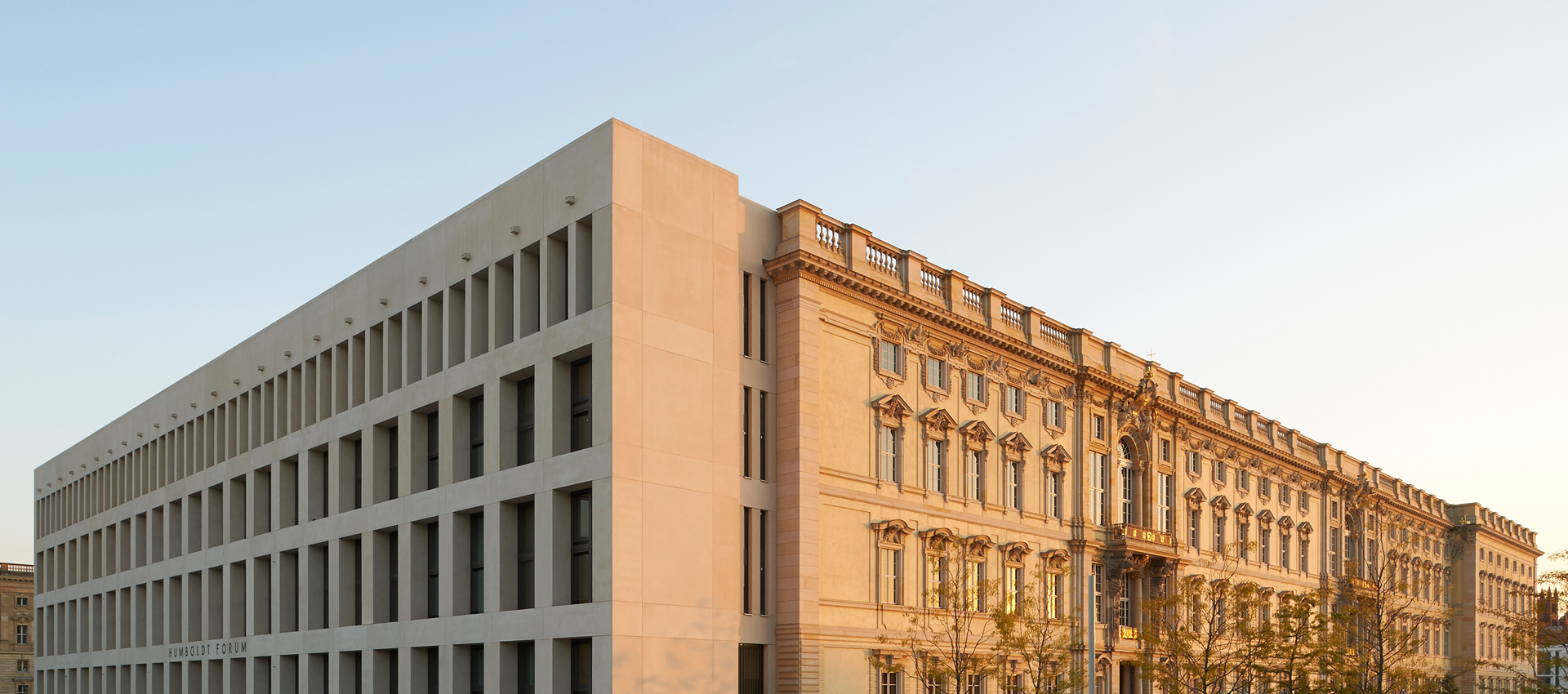
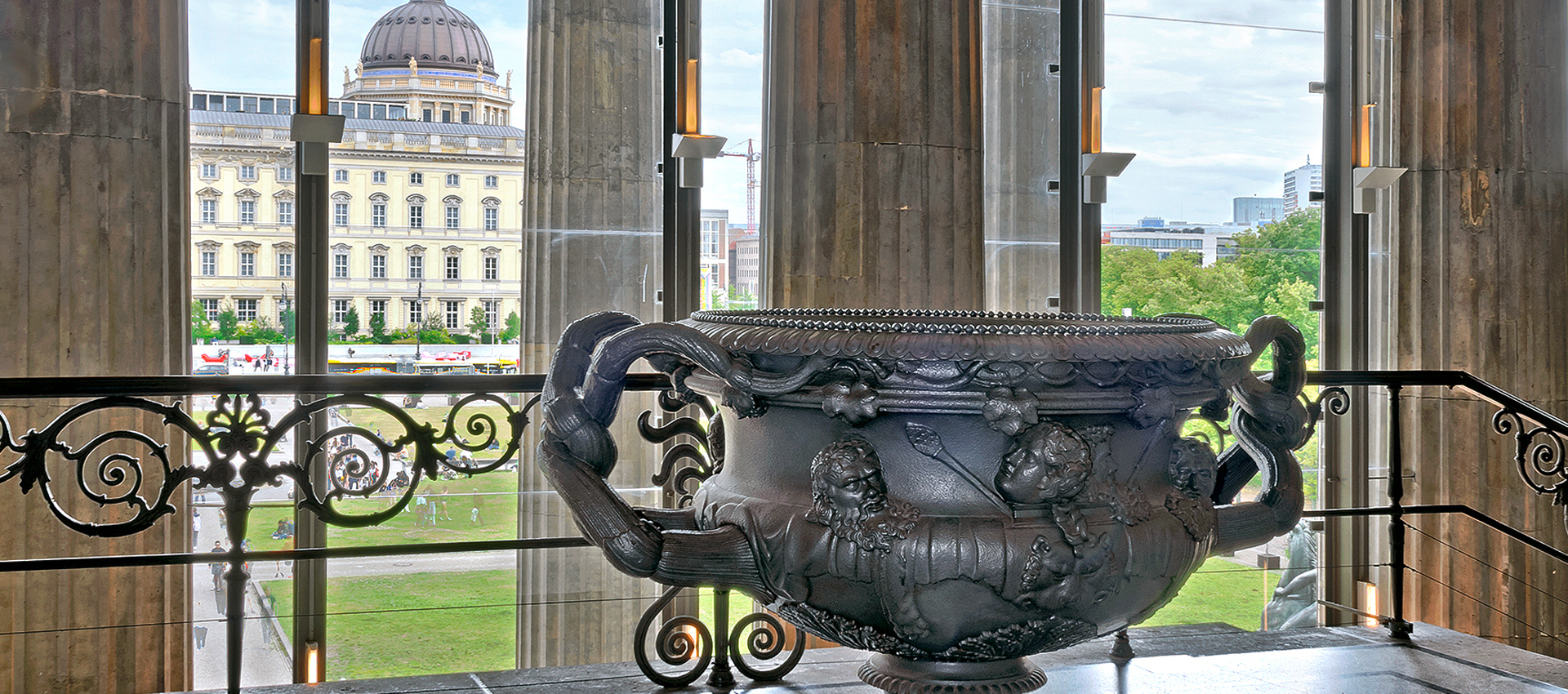
The exhibition space of the Berlin State Museums at the Humboldt Forum is vast, the diversity of the collections on display is enormous, and there are also contemporary installations. Here is a brief guide
Africa Display Gallery
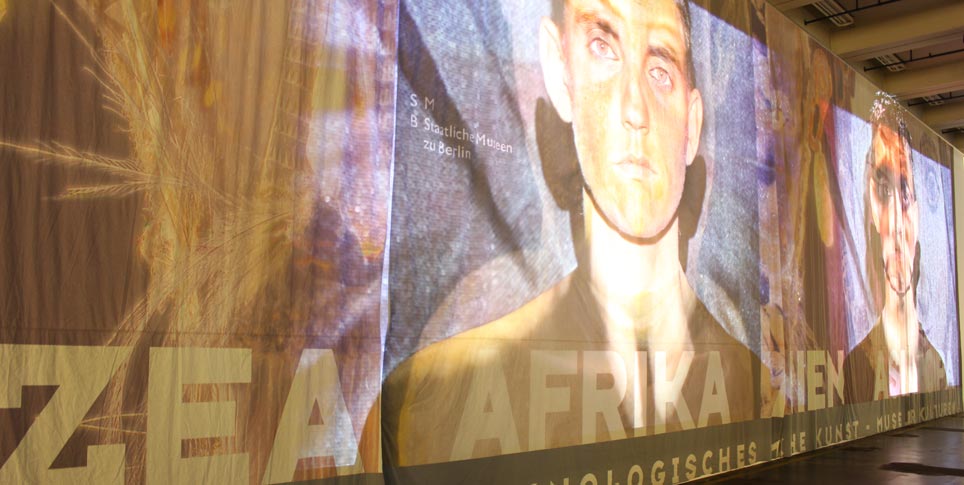
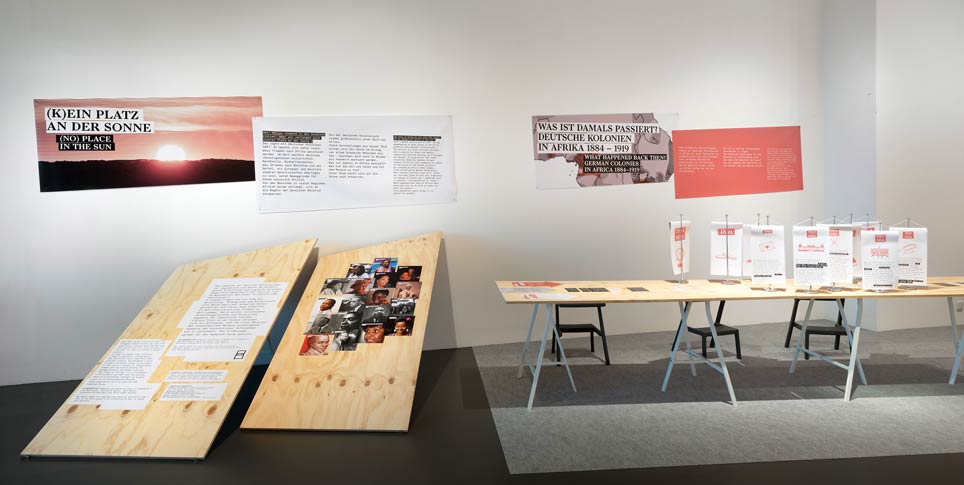
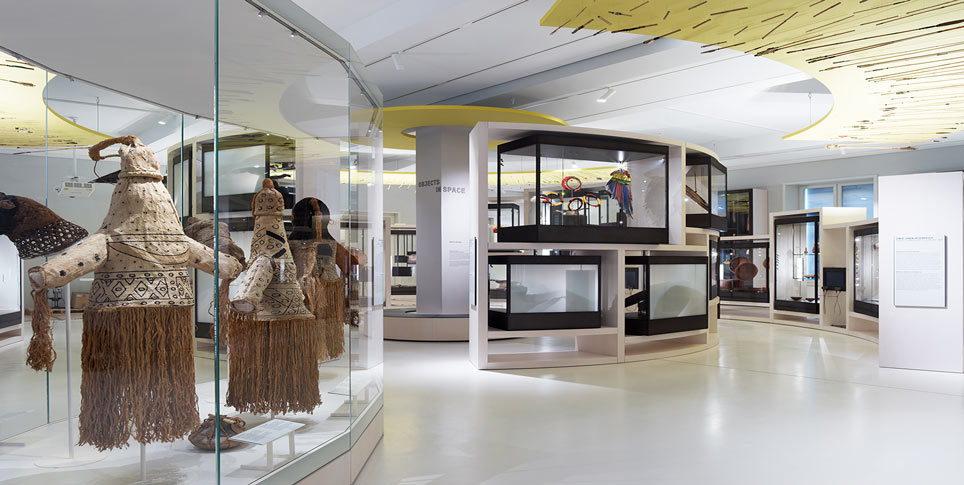
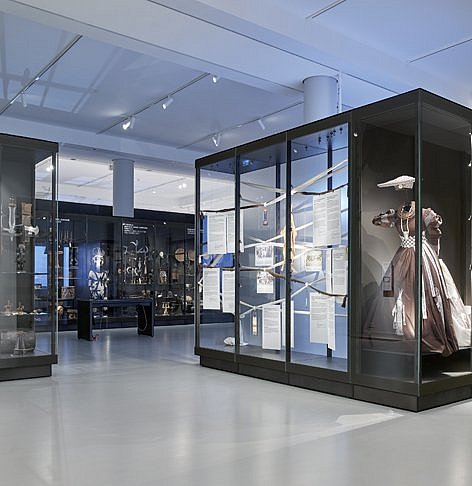
Collecting as a means of appropriating and constructing the world, as a form of asserting hegemony as well as of self-presentation by imperial Germany, is discussed in connection with the Africa Display Gallery, as is the question of interpretative authority and control over the collections.
© State Museums of Berlin / Humboldt Forum Foundation at Berlin Palace / Photo: Alexander Schippel
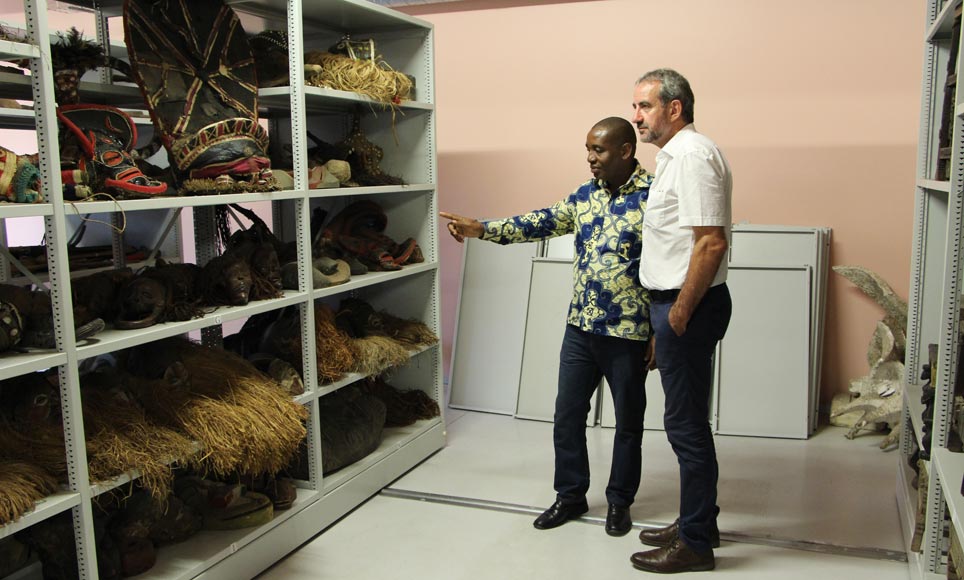
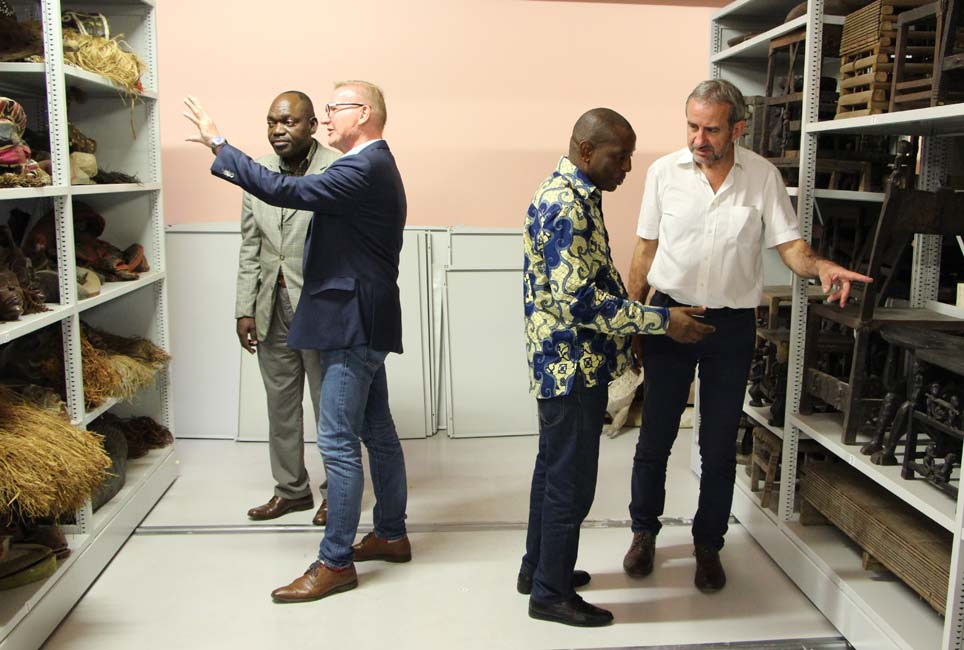
The exhibits not only show how people in Africa lived, but also reflect the worldviews of those who collected and acquired them. For this reason, the exhibition is supplemented by a digital component providing information on the individual objects, the collectors, the history of their acquisition and the contexts in which they were collected.
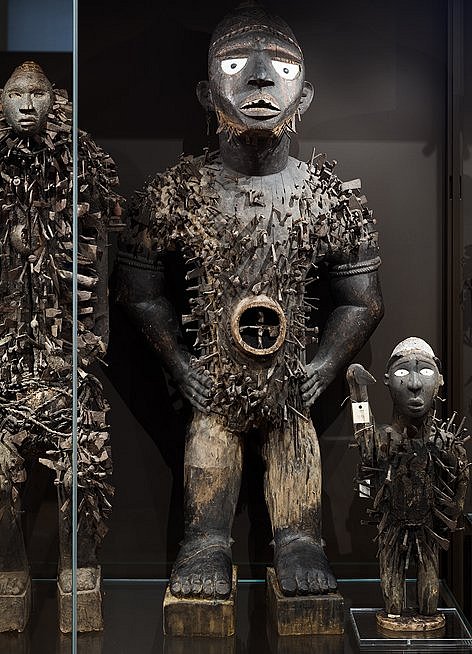
Mangaaka figures emerged in response to the advance of Western-dominated capitalism and colonialism along the West African coast of the former Kingdom of Kongo. This sculpture, one of only 17 surviving Mangaaka figures worldwide, was probably made in the second half of the 19th century. The enormous, palm-sized porcelain eyes are directed straight at the viewer, and there is a hole at the level of the navel. Originally, this was the storage place for a wide variety of potent substances intended to imbue the figure with power so that it could protect the community from enemy attacks and criminals. The iron nails and blades inside the body were used to seal oaths or contracts and for other legal purposes. By driving a new piece of metal into the figure, one activated the fearsome power of Mangaaka. Anyone who spoke untruths or failed to honour a contract exposed themselves to persecution by this power.
Dome Hall
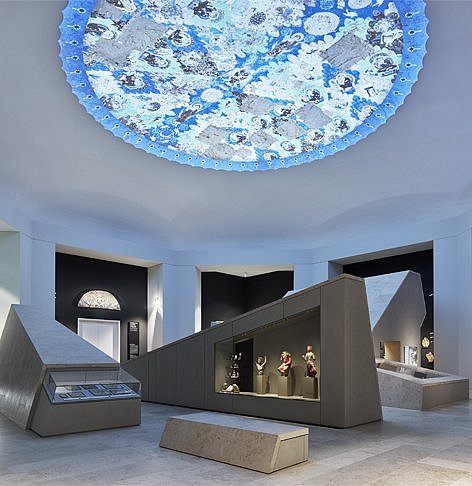
Beneath the dome of the reconstructed palace architecture lies what is arguably the most beautiful hall in the Humboldt Forum: a journey from oasis to oasis along the Northern Silk Road is evoked beneath a dome projection inspired by images of the sky and stars from the region. Testimony to this multicultural and multireligious region are the 1,000–1,500-year-old fragments of manuscripts and wooden tablets in over 20 scripts and languages, which have been preserved in the dry desert climate.
The structures in the centre of the room are inspired by the region’s mountain landscapes; here, part of a 1,400-year-old Buddhist cave temple has been reconstructed using a newly developed technique incorporating original wall paintings. Originally, the so-called ‘Cave of the 16 Sword Bearers’ was part of a Buddhist temple complex, situated at that time in the Kingdom of Kucha. The patrons, the so-called ‘Sword Bearers’—Indo-European Tocharians, originally depicted in their caftans cut in the Iranian Sassanid style within the narrow side corridors—look upon us.
The caves were dug into the soft rock of the mountains. Some served as accommodation or meditation rooms for the monks, whilst others, adorned with wall paintings, were larger rooms used for rituals. Albert Grünwedel, Director of the Indian Department of the Museum of Ethnology, documented them during the German ‘Turfan Expeditions’. Following the fall of the Chinese Empire (1911), these murals were removed from the walls as panels in 1913, transported via Russia to Berlin, and there restored, conserved and scientifically researched. During research trips to China, museum staff documented the cave in cooperation with the relevant local authorities and the Kucha Research Institute. A Sino-German-Russian publication released in China this year presents the results of 10 years of collaboration: all the wall paintings from Kizil in the Museum of Asian Art in Berlin have been published and digitally reconstructed therein. Further publications are in the pipeline.
Also unique to the Dome Hall is the wooden ceiling, painted with Buddhist motifs, dating from the eighth to the tenth century. It originally served as the ceiling structure of a gateway porch in a Buddhist temple. It was studied, reconstructed and extensively restored as part of an international research project. Thanks to a barely visible support structure, it has now been installed in such a way that it appears to be floating.
Divinity in Polynesia – Feather Cloak
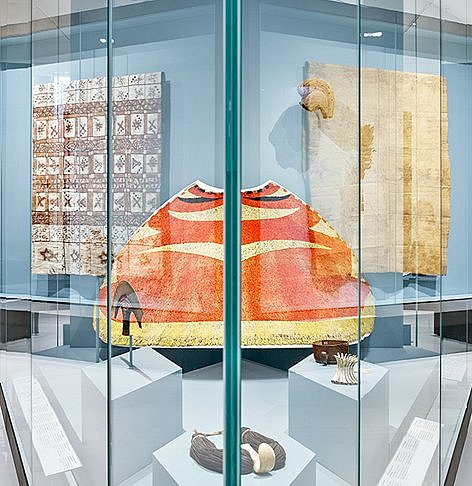
The module ‘Divinity in Polynesia’ explores the relationships between objects, people and deities, the life-giving and life-taking power ‘mana’, and the sacred state ‘tapu’: Polynesian societies were strictly hierarchical until the 19th century. At the top stood the hereditary nobility, from which the rulers also descended. The ruling men and women were regarded as being of divine origin: through them, the deities and deified ancestors made contact with the people. They guaranteed and watched over the people’s health, success and prosperity. They were honoured and appeased through offerings, ceremonies and tributes. Objects stood at the centre of these relationships between rulers and deities.
One of these impressive objects can now be admired at the Humboldt Forum: a feather cloak from Hawaiʻi. Feather cloaks (ʻahu ʻula) are among the most fascinating artefacts from Hawaiʻi. Women prepared the feathers and men attached thousands of them to a kind of fishing net, crafting them into these rare cloaks. The cloaks were symbols of the rulers’ power and divinity and were usually worn only by high-ranking individuals during ceremonies. Together with a helmet, they protected a ruler’s most sacred body parts: the head and spine. The cloaks were rare and were passed down among high-ranking individuals.
A feather cloak for Frederick William III.
Feather cloaks were also important items of exchange in Hawaiʻi right up until the 19th century, used to forge relationships or honour individuals. Honolulu was a centre of German trade, which Prussian merchant ships called at as a stopover on their way to East Asia. King Kamehameha III (reigned 1824–1854) of Hawaiʻi presented this cloak to King Frederick William III of Prussia in 1828; it is said to have once been worn by his father, King Kamehameha I (reigned 1795–1819). To this end, he handed the cloak over to Wilhelm Oswald, who brought it to Berlin on the Prussian merchant ship Princess Louise, along with other items, and presented it to Frederick William III. In return, in 1831 Kamehameha III received from the Prussian king, among other things, a guard’s uniform, an oil portrait of King Frederick William III, a portrait of General Blücher, a saddle, a sword and pistols, as well as Prussian manufactured goods such as an armchair, a hat, a dress and jewellery.
Listening Room / Ethnomusicology
In the ethnomusicology exhibition area, visitors leave the supposedly safe ground of the objects behind. Here, the focus is not on regional cultural peculiarities, but on the material, sonic and aesthetic diversity of musical cultures in a global sense.
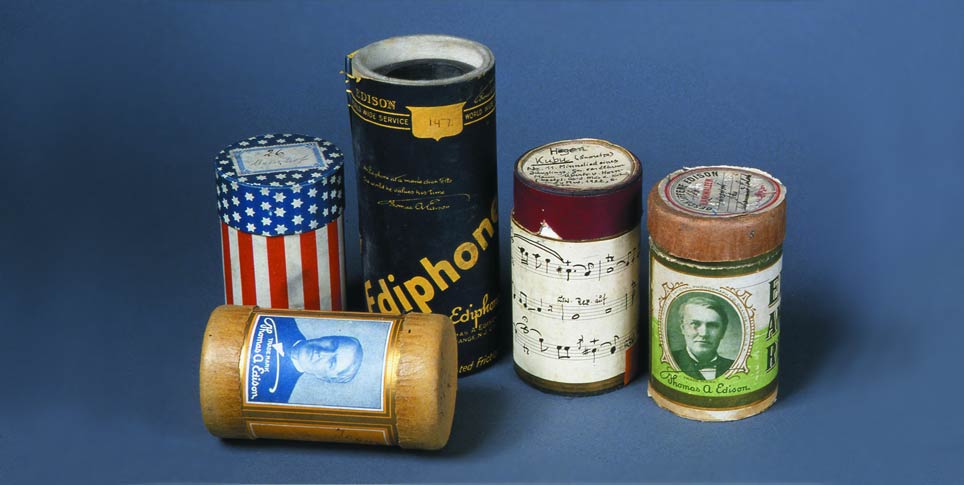
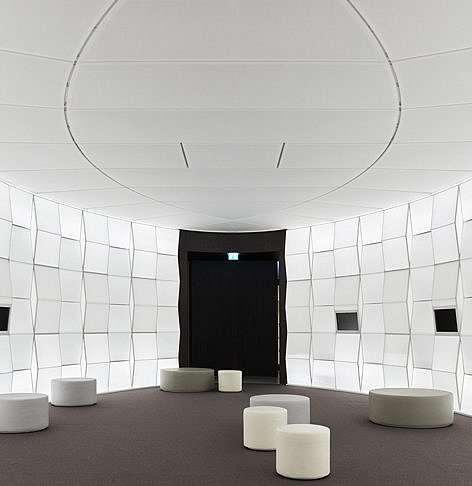
At the heart of the presentation is an elliptical listening room where visitors can truly immerse themselves in the experience of sound. This is made possible by a sound reproduction system specially designed for this space by the Audio Communication Department at TU Berlin, which is capable of distributing sound across all three dimensions of the room. Information on the programme schedule for the various sound installations, each lasting around 15 minutes, can be found at the entrances. A conscious decision has been made to avoid large-scale reproduction of visual content in this listening space. Instead, visitors have the option to control six monitors integrated into the walls and to programme the multicoloured light sources recessed into the ceiling. A display cabinet on the outer wall of the listening room is dedicated to various classifications of musical instruments, enabling a multi-perspective exploration of the subject. Display cases relating to musical instrument making are integrated into the concave wall opposite. Media stations provide information on current research projects and the history of the Berlin Phonogram Archive.
Township Wall
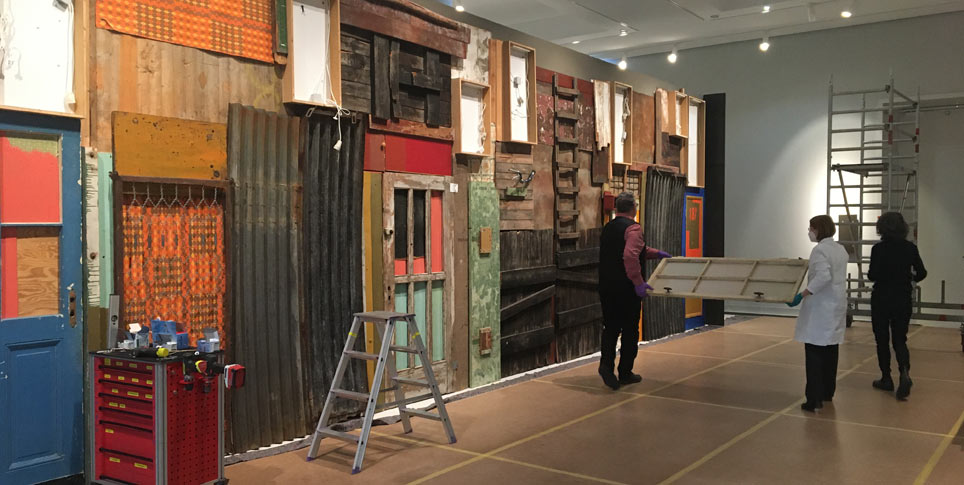
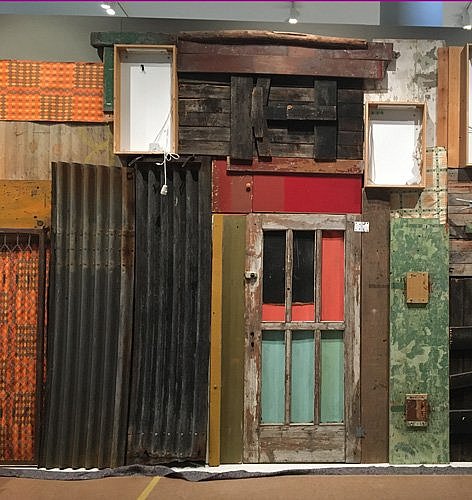
The installation ‘Township Wall’, consisting of around 100 individual parts and over 10 metres long, is by the Angolan artist António Ole. He created it in 2001 for the exhibition ‘The Short Century’ at the Gropiusbau. As a gift from the artist to the Ethnological Museum, it has now found a new home at the Humboldt Forum, having been slightly revised by him.
António Ole has created several “Township Walls” in various cities around the globe. He designed the first wall in 1994 for his work “Margem da zona limite” (Edge of the Border Zone). The title alludes to the civil war in Angola (1974–2002), when many people sought refuge in the capital Luanda and the city’s outskirts simultaneously formed the boundaries to an area of mortal danger. For his “Walls”, the artist always uses materials from everyday life that are no longer needed and are therefore regarded as bulky waste, scrap or rubbish. The “Township Wall” describes experiences that can be transferred from Ole’s hometown of Luanda in Angola to Chicago in the USA and Berlin in Germany. Who owns the city? And what shapes it? The firmly cemented city centres or the ever-changing architecture in the nooks and crannies and on the fringes of the city? Is it not the “fringes” where one finds creativity, innovation and freedom?
With the installation “Township Wall”, the Ethnological Museum is incorporating a work of contemporary art from Africa into its permanent exhibition for the first time. This underlines the museum’s commitment to presenting non-European societies and cultures in their historical and contemporary forms and in their transregional and global relationships, thereby transcending the narrow concept of the ‘ethnological’.

Art in Clay
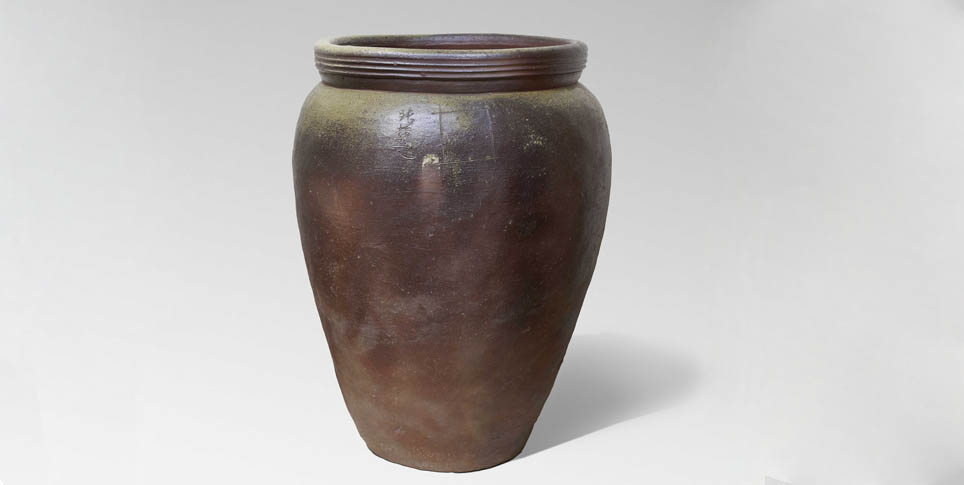
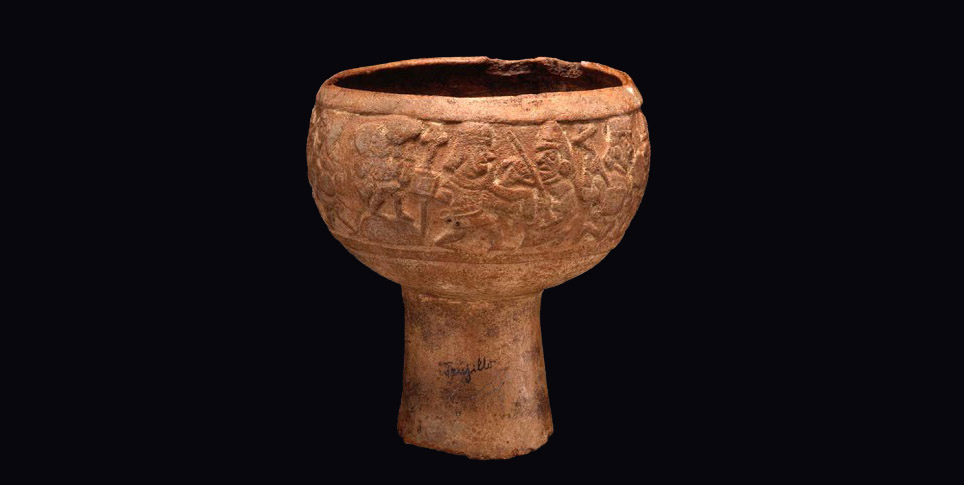
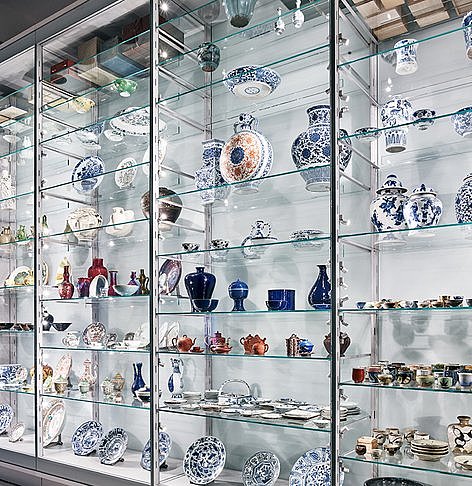
This comprehensive exhibition of ceramics from the East Asian study collection brings to light a wide variety of objects that would otherwise remain in the museum’s storeroom, accessible only to researchers. It also offers the opportunity to make art-historical comparisons and highlight cultural-historical connections.
The history of ceramics stretches far back; it was already widespread in various Neolithic cultures in China several thousand years ago. Ceramics were used in daily life, served to decorate living spaces and were also used as grave goods. However, an aesthetic appreciation of ceramics developed early on in China, which in turn fostered the development of the material, technical sophistication and stylistic diversity of the products. The world’s first genuine porcelain, mass-produced in Jingdezhen since the 14th century, became an important commodity and a global conduit for East Asian culture and artistic ingenuity.
Porcelain with cobalt-blue underglaze painting flourished in particular, and its popularity contributed decisively to the development of European porcelain. In the Netherlands in particular, Chinese blue-and-white porcelain had a major influence on local ceramic production, as illustrated by a Chinese bowl from the 17th century and a bowl produced in Delft in the 18th century. Both feature banner-like bands along the rims with ornamental and figurative designs. The decoration on the Chinese Kraak bowl, featuring an elephant and two monks, was replaced in the Delft piece by a lion in front of a temple.
Tea House
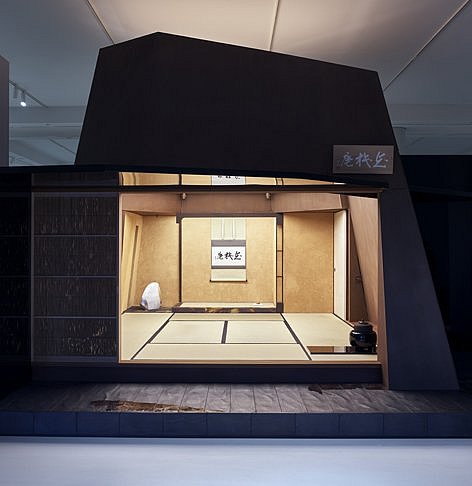
In a sense, this tea house embodies the Humboldt Forum’s overall ethos: it unites tradition and modernity, brings together different people and cultures, and facilitates shared sensory experiences in a place of absolute tranquillity, right in the heart of the historic centre of the bustling capital, Berlin.
With the tea house designed specifically for the new collection presentation at the Humboldt Forum, the tradition of public tea ceremonies already practised by the Museum of Asian Art in Dahlem is continued. Designed by a team of architects led by Jun Ura from Kanazawa and realised with the participation of artists and craftspeople from Japan, the tea house establishes subtle connections between Japanese and German history and culture, as the exterior walls and roof, made of rust-red Corten steel, echo the octagonal form of the tower ruins of Berlin’s Kaiser Wilhelm Memorial Church as a monument to peace. Alongside traditional materials such as handmade paper and lacquered wood, modern building materials predominate. The interior walls of the main room are fitted with eight traditional rice straw mats (in Kyoto dimensions), which have been coated with European clay.
The tea house consists of a preparation room and the main room, where the tea gatherings take place. Here there is a fire pit set into the floor and a wall niche in which outstanding works of art are displayed. In this place of tranquillity and enjoyment, visitors can experience the Japanese tea ceremony with all their senses and forget the daily grind for a moment.
Nandi
To this day, the highlight of Hindu temple festivals remains the grand processions. During these, the gods, in the form of bronze statues seated upon their wooden mounts, leave the sanctuary and can now be seen and worshipped even by marginalised groups who are not normally permitted to enter the temple.
Nandi, according to legend a white humped bull of immense strength and virility, is Shiva’s mount and at the same time his most devoted worshipper. In the myths, he frolics with the divine family on the sacred Mount Kailash and carries Shiva from place to place. Nandi stands for stability and the upholding of the pious order and is regarded as a mediator between the faithful and their god. Visitors to the temple therefore offer sacrifices not only to Shiva but also to him on festival days. In front of many Shiva temples in India, a Nandi—usually made of stone—stands before the sanctuary, his gaze turned towards the sanctum. In the Humboldt Forum, too, his eyes are fixed firmly on Lord Shiva.
This white bull strides out elegantly. In true bovine fashion, he licks one nostril with his tongue. He is festively adorned: the paintwork depicts magnificent bridle gear around his head and neck, a saddlecloth edged with borders, and the straps from which bells hang. This processional figure was donated in 1987 by a Swiss collector to what was then the Museum of Indian Art and is now a particular eye-catcher at the Humboldt Forum.
Wang Shu Hall
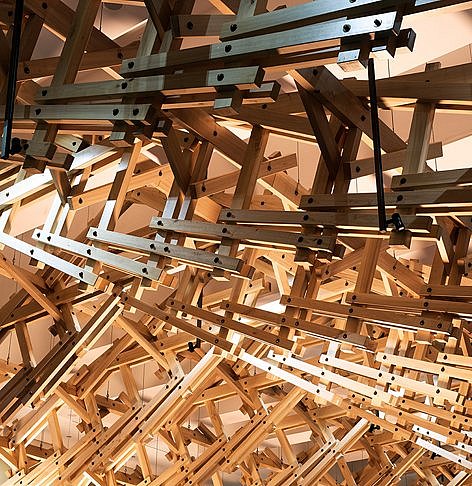
The Throne Hall, designed by the Chinese architect and Pritzker Prize winner Wang Shu and named after him to showcase Chinese court art, differs completely from the adjacent exhibition rooms in its layout, materials and appearance.
The space is dominated by the massive roof structure, inspired by the Chinese pagoda form, which appears to float beneath the hall’s ceiling. It was crafted from poplar wood and consists of 1,300 individual parts, joined together by 1,500 screw connections. Each of the 11 bays has a total length of 17 metres and a height of 4 metres. The entire structure weighs around 16 tonnes and is suspended from the floor slab at 176 points, each secured by four anchors.
The floor, made of black natural stone, is surrounded by walls plastered with clay. A niche framed in stainless steel houses the large-scale mural ‘The Buddha’s Sermon’ by the court painter Ding Guangpeng (active 1708–1771). The work (543 x 1015 cm) is extremely sensitive to light and is displayed only a few times a day. The throne in the centre of the room is the only one in European collections that still stands in front of the screen originally intended to accompany it. In delicate colours, it depicts the “Paradise of the Daoist Immortals” – when the Emperor sat before it, he was symbolically admitted into their realm. The enormously intricate inlays of countless tiny pieces of mother-of-pearl, gold and silver leaf make this imperial ensemble a work of exceptional artistic splendour.
Boat Cube
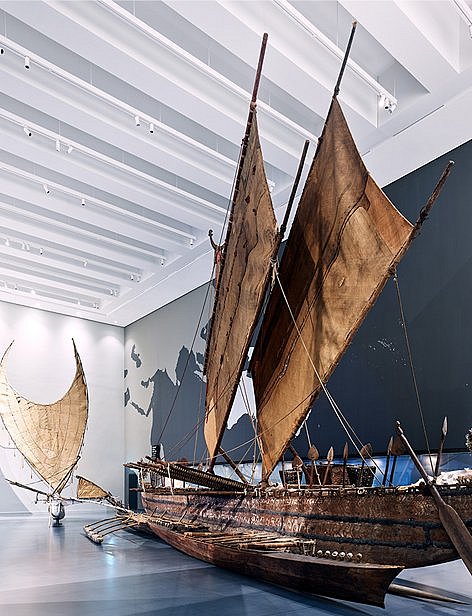
Particularly striking in this room is the view from above of the ships, which, rather than standing on the dark floor, seem to be floating in the Pacific. The focus here is on the significance of the sea for the inhabitants of the Pacific islands – as a means of communication, a route for migration, a source of raw materials, but also as a threat and a shaper of identity.
At the centre of the spectacular spatial architecture stand six boats originating from various regions of Oceania; from 2022, there will also be a walk-in replica of a boat from Fiji, specially built for children. One wall serves as a map of Oceania, impressively illustrating the scale of the many islands in relation to the vastness of the sea. Providing a striking colour contrast to this are the almost radiant, genuine coral skeletons, lined up in an 18-metre-long wall display case, which draw attention to coral bleaching caused by climate change.
Outrigger canoe from the island of Luf
This outrigger canoe comes from the island of Luf, which today belongs to Papua New Guinea. In 1881, the trading company Hernsheim & Co established a trading post on the island. The local population resisted this. At Hernsheim’s instigation, soldiers of the Imperial Navy raided the island in 1882–83 as part of a ‘punitive expedition’, destroying a large number of houses and boats, killing residents and plundering the villages. Construction of this large outrigger canoe began eight years after this raid. It is said that the men intended to use it to bury their leader Labenan, who had died shortly before, at sea. However, this did not happen because there were too few of them to launch the enormous boat. The population had declined dramatically due to imported diseases and the consequences of the military raid. For the next few years, having been deprived of its intended purpose, it likely remained in the boathouse. In 1903, it was acquired by Max Thiel of Hernsheim & Co and sold to the Berlin Museum of Ethnology. The circumstances surrounding the boat’s acquisition on Luf are not documented. The construction and acquisition of the boat are the subject of a media station in the ‘Oceania – People and Sea’ room. Interviews conducted by filmmaker Martin Maden from Papua New Guinea with Luf inhabitants on the island of Manu are also shown here.