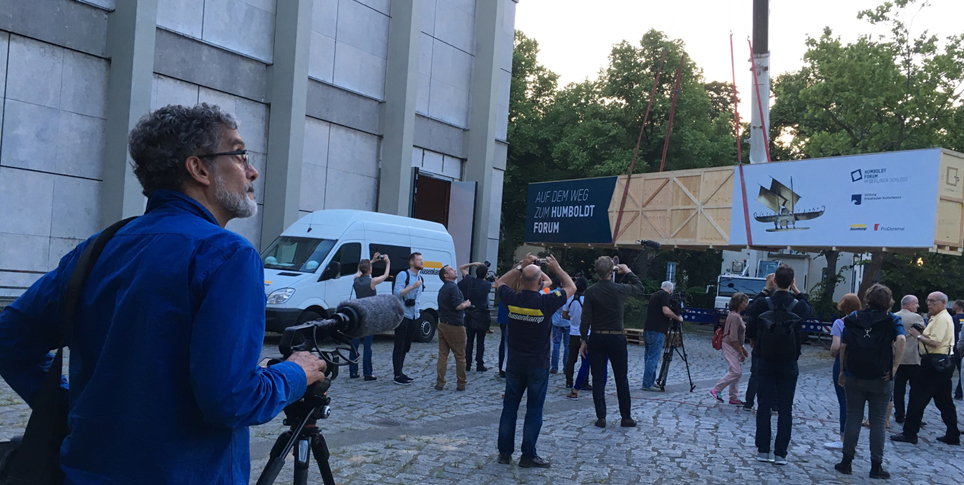
“A logistical masterpiece” has almost become a catchphrase by now, referring to the relocation of the objects from the non-European collections from Dahlem to the Humboldt Forum. The first test will be the transport of the Luf-Boat on 28 May. Ronald Kliemann, from the art and cultural logistics specialists at Hasenkamp, explains how this extraordinary challenge will be tackled.
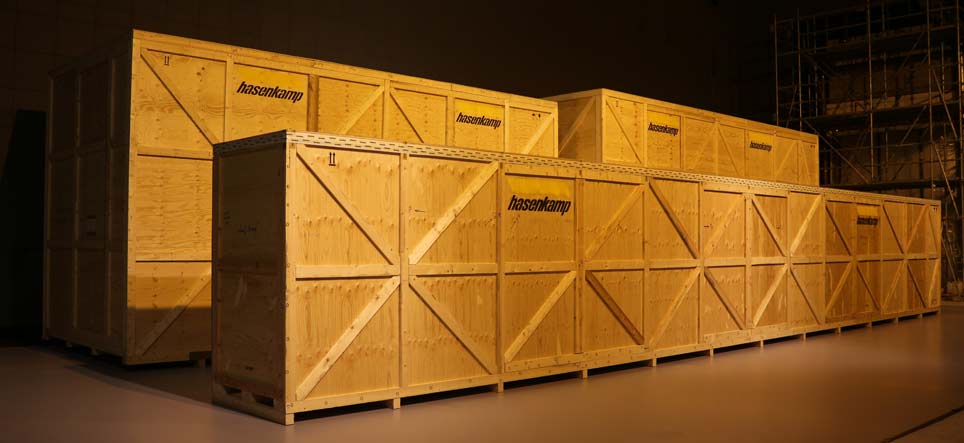
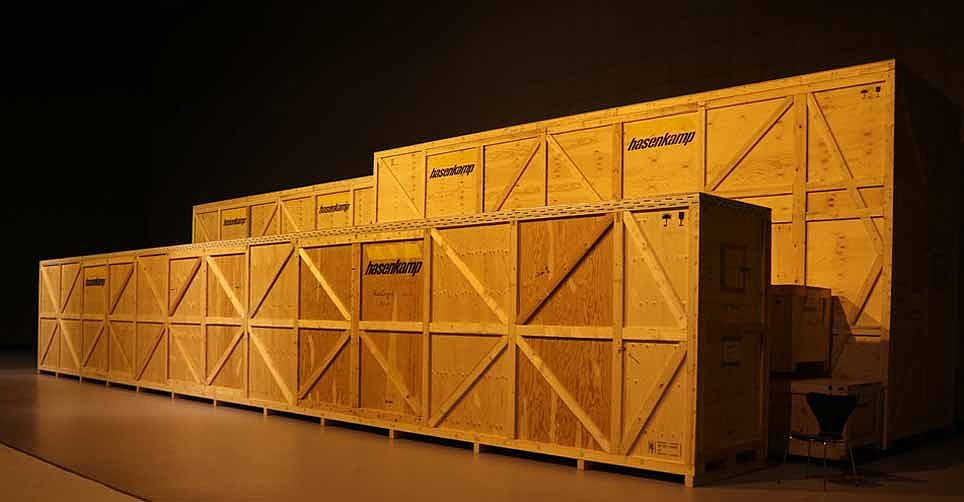
Mr Kliemann, Hasenkamp has, of course, been in the art transport business for a long time. Is a project like the move of these large objects to the Humboldt Forum anything special for you at all, or does it stand out because of its scale – the crate for the Luf-Boot is almost 16 metres long – and the sheer number of objects involved?
Yes, moving crates and objects of this size is something we don’t do every day. In terms of dimensions, it’s the biggest for me personally. Of course, I can’t speak for the whole of Hasenkamp; it may well be that we’ve handled something of this scale before. But for Berlin and for me, it’s one of the biggest projects.
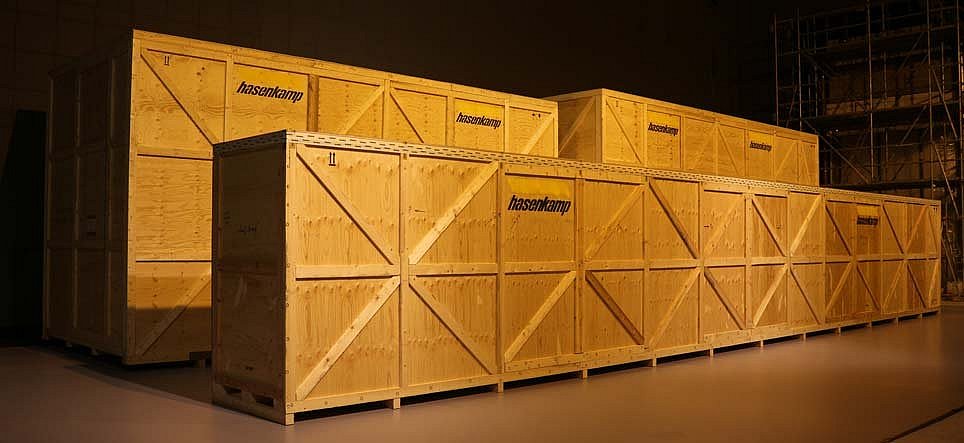
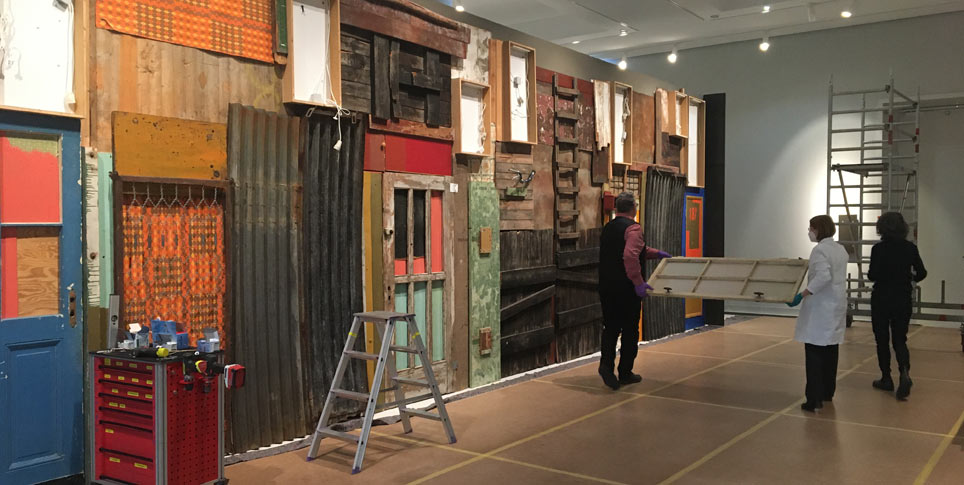
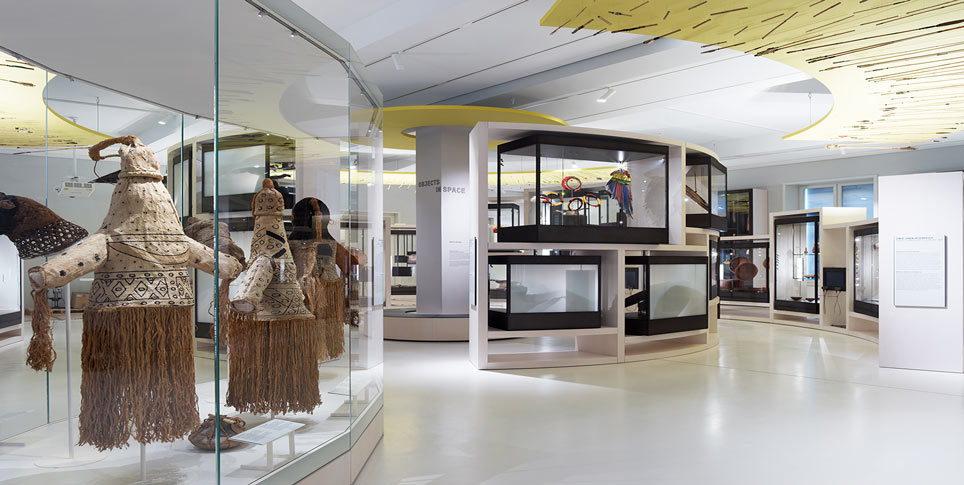
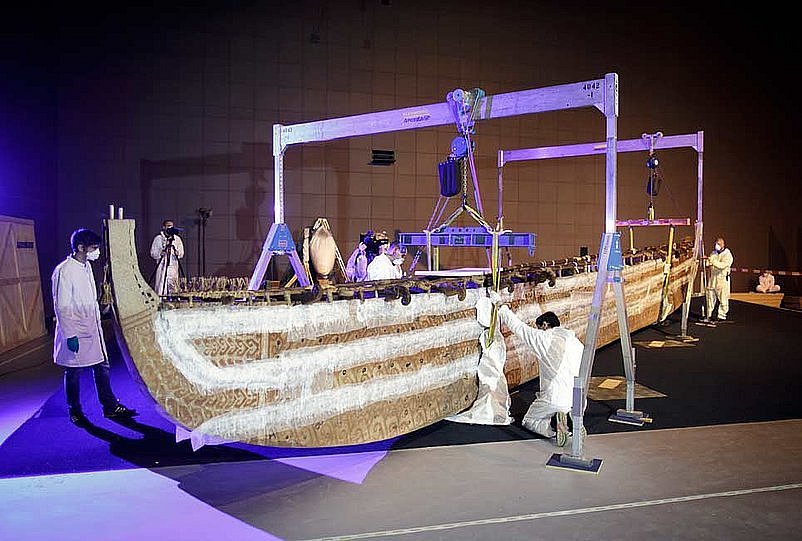
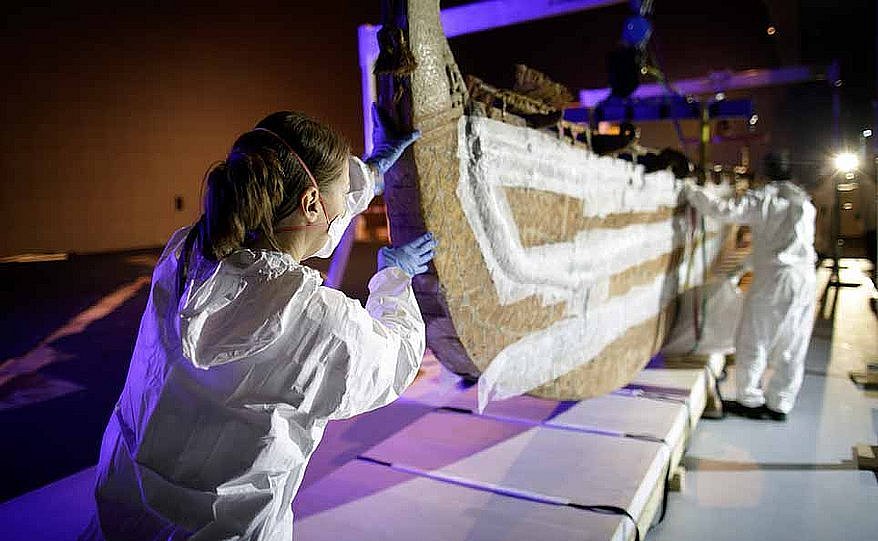
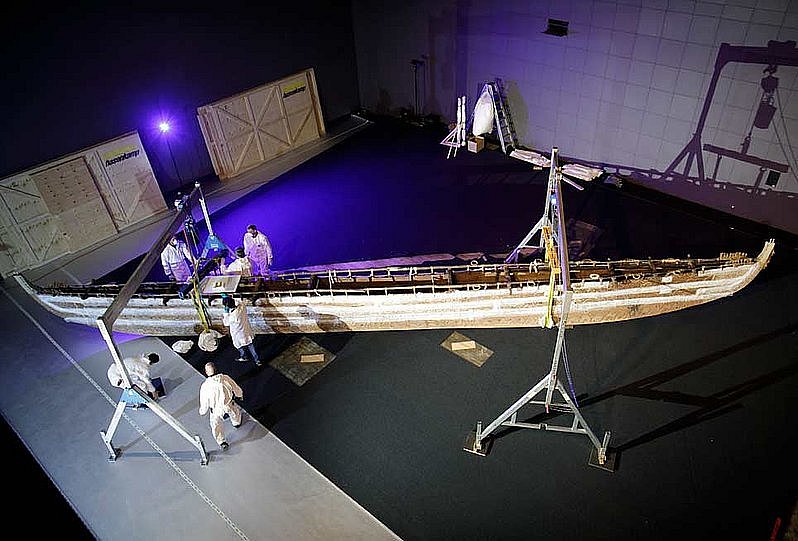
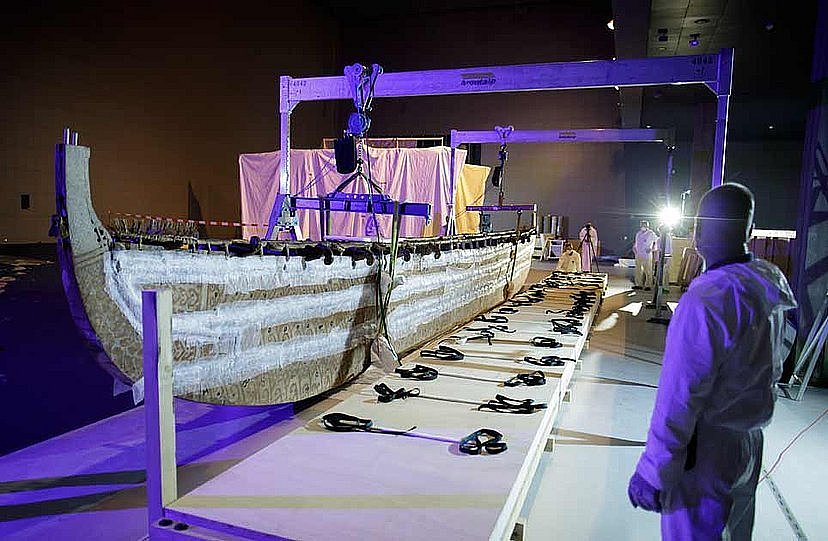
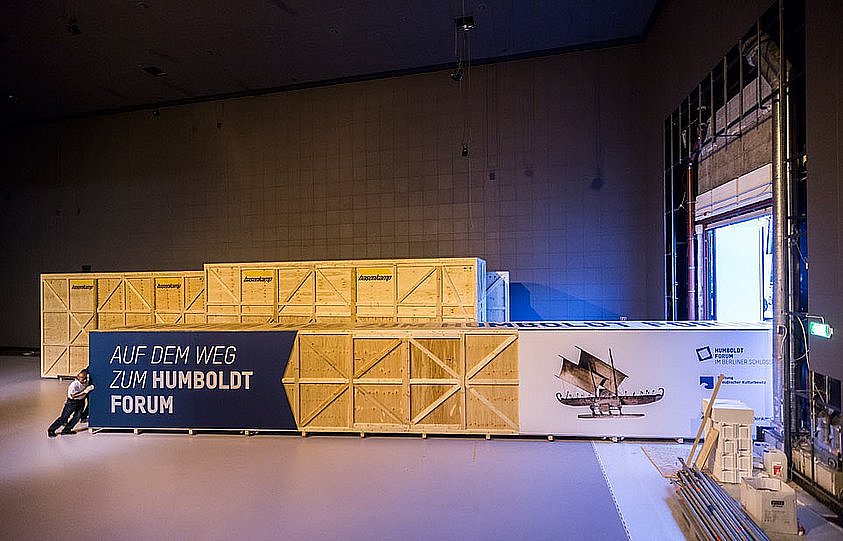
The former South Seas exhibition area before the large objects were moved: the Luf-Boot, securely packed, awaits transport © Stiftung Preußischer Kulturbesitz / Stefan Müchler
How does the planning of such a major project work, and when does the planning actually begin? And what planning steps need to be taken into account?
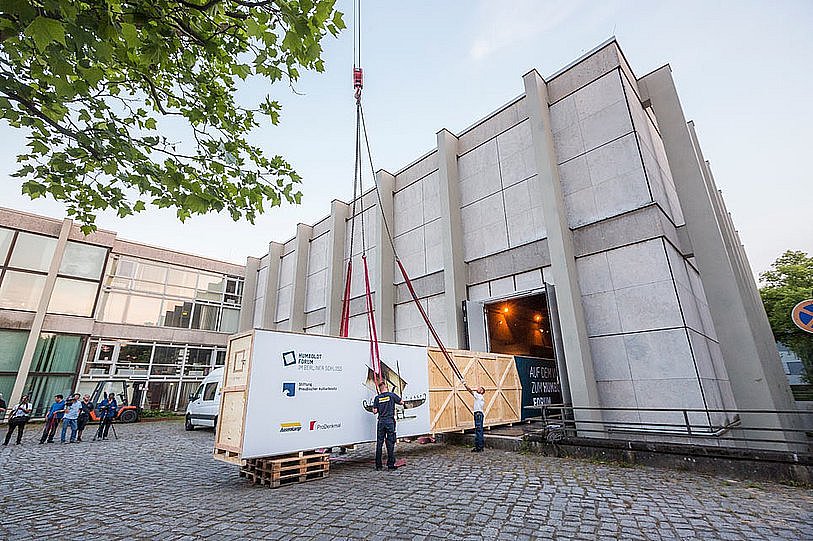
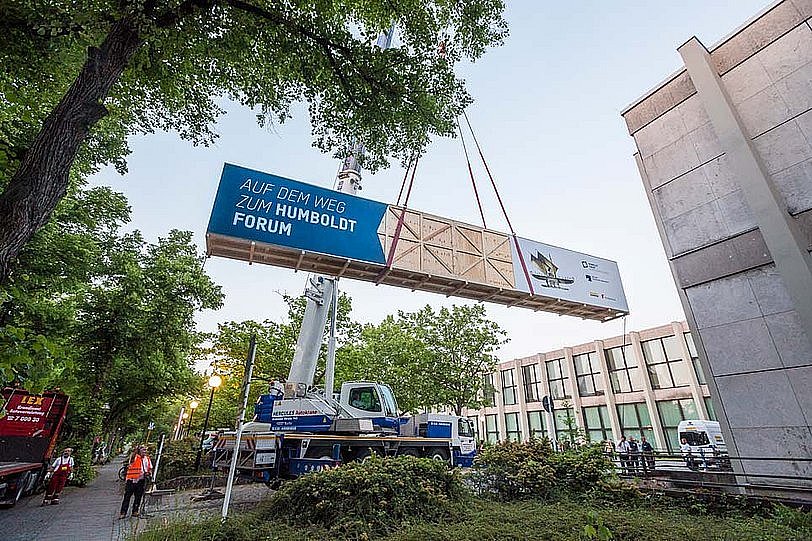
Planning has been underway since August 2017 – so we have a nine-month lead time. First, you have to consider how the objects will be packed. And whether the move is even feasible in the way we envisage it. In this case, we’re using a crane. That’s why the structural integrity of the crates must be planned precisely – naturally always in consultation with the conservators, including how the objects could or should be packed inside the crates. Then we need to talk to the joinery workshop that’s making the crates. We need to talk to the crane company. And find out how tall the crates can be. After all, we can’t drive through Berlin with crates of unlimited height. And so it goes on and on. That naturally takes a lot of time.
So it also requires very close coordination with the conservators?
Absolutely. The restorers are our first point of contact, so that we even know where and how we can approach the object. Take the boats, for example, with their sails: can they be rotated? Otherwise the crates would be ten metres high. All of that has to be agreed in advance, of course.
How can one practically imagine planning the route with all the trees and overhead lines in Berlin and given the sheer dimensions of the crates – how long did you spend on it and who was involved?
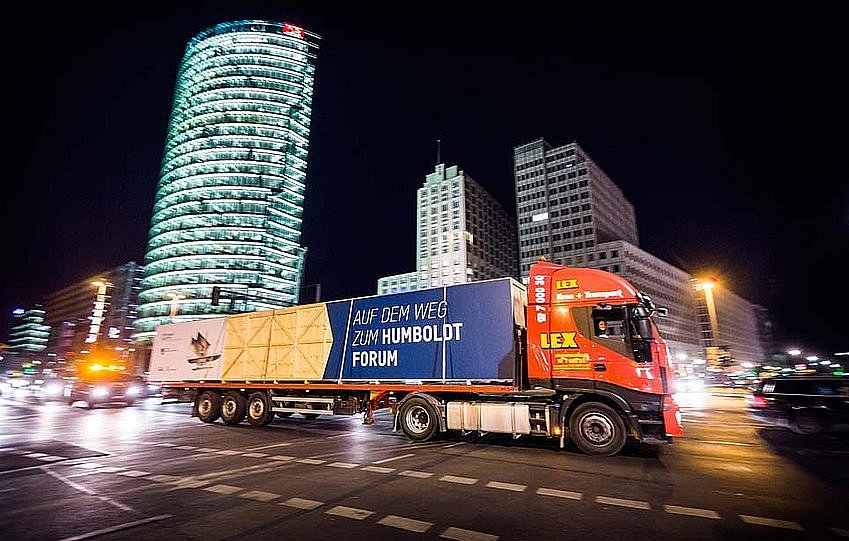
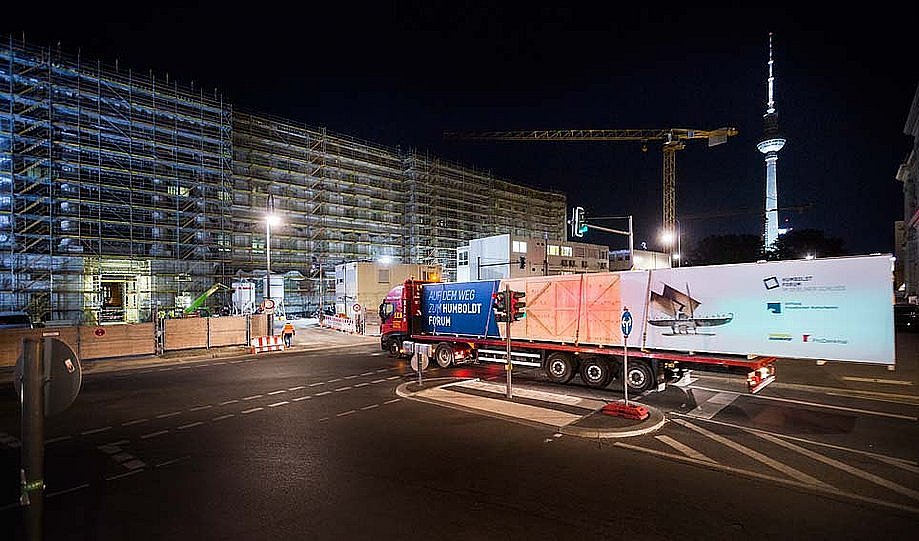
That was relatively straightforward for us: we needed a transport permit, which we obtained from the Berlin authorities – and they also specified the route for us. They told us, ‘You can drive along this and that route at such and such a time.’ And we’re not allowed to drive anywhere else. We simply suggested a route that we’d measured out beforehand: how high the traffic lights are, trying to avoid bridges. But that was all we could do. If the police tell us to take a different route, we have to take it.
So the boxes are handmade and don’t have standard dimensions – what actually happens to the huge boxes after the move?
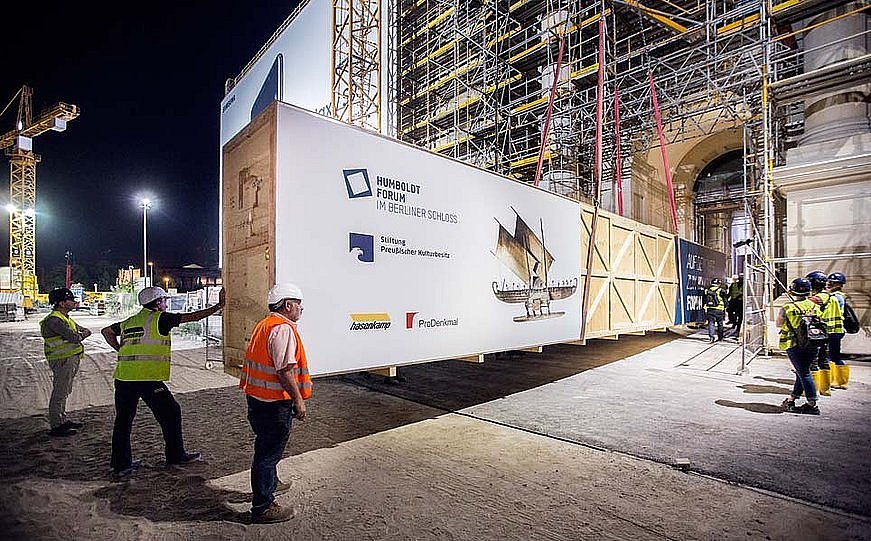
Given their size, we unfortunately can’t reuse them. We certainly won’t need a six-by-ten-metre crate again. They’ll probably be disposed of.
What distinguishes a large-scale art transport from a standard art transport or a standard large-scale transport?
Whether large or small – all art transports are carried out with the same care. One difference: we can’t transport the large objects in our own lorries because they won’t fit. Otherwise: the same care as with any art transport. You have to work just as slowly, not let yourself be rushed, and think twice – or rather three times – about how we tackle it, how we carry it, where we put it down, and so on.
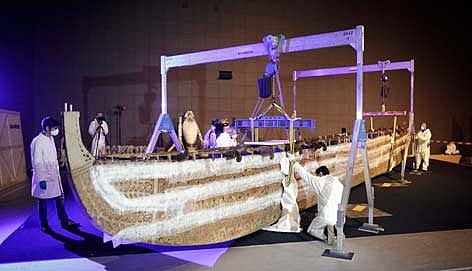
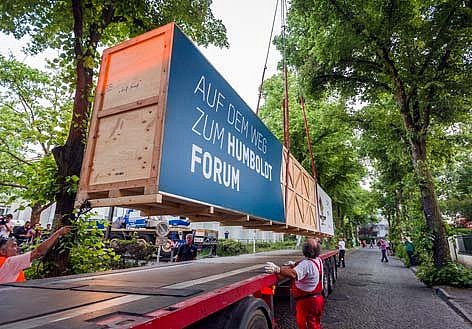
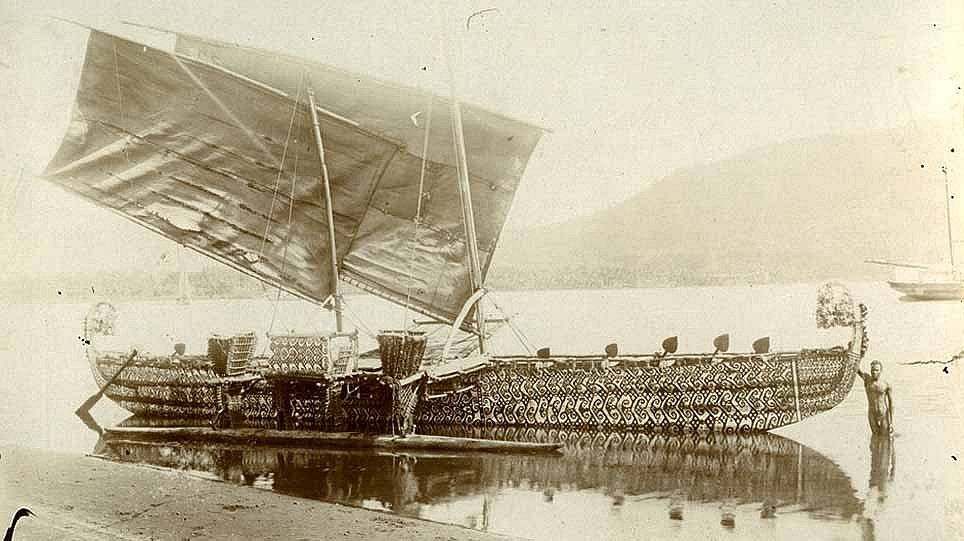
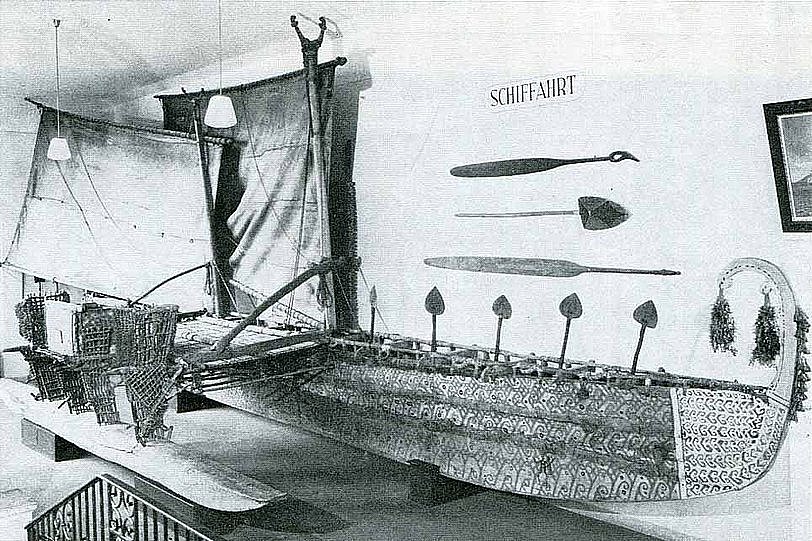
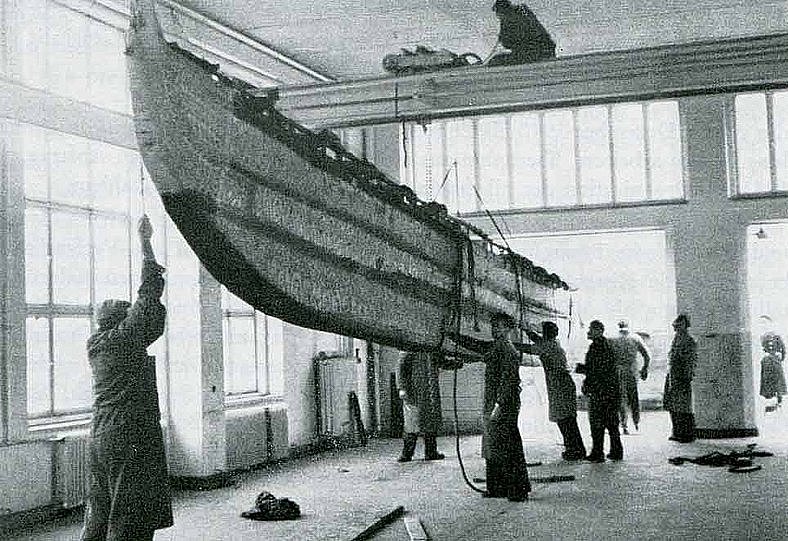
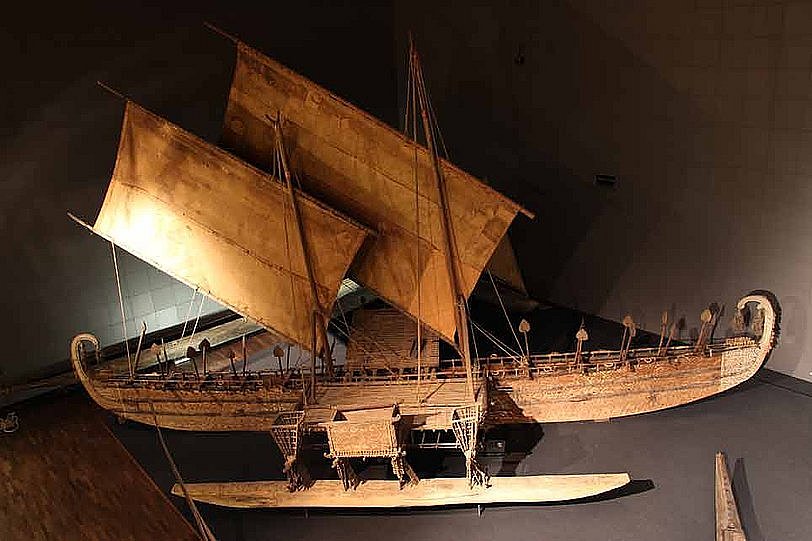
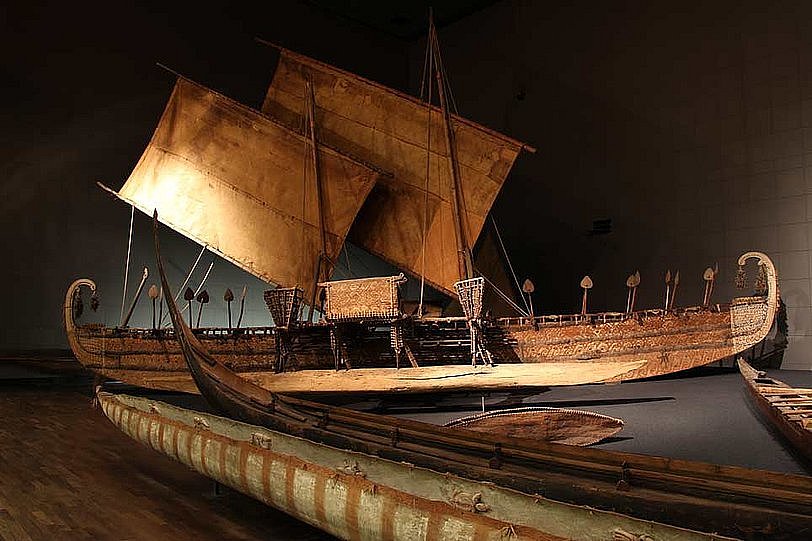
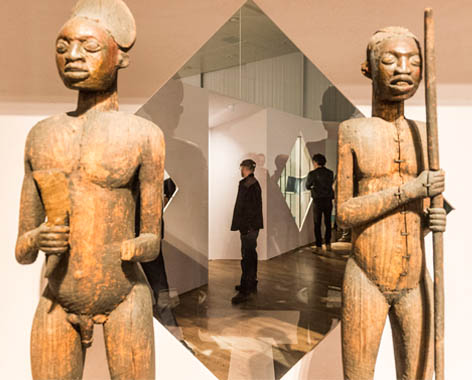
You’re referring to the 2013 installation “Springer: Mirror Ball” as part of the Humboldt Lab Dahlem, where experimental exhibition formats were tested for the Humboldt Forum. What was that about?
It was a simple project: I hung a disco ball in the museum. It was placed very deliberately in the South Sea Boats room, so that the light reflections produced by the disco ball looked like the stars that sailors used to navigate and thus discover new lands. So there was this connection between the playfulness of the disco ball – which is, after all, typical of Berlin – and the stars used for navigation.
Some of the objects are very fragile and had to undergo months of restoration work in preparation for the move. Do your staff – from crane operators to lorry drivers – receive special training on how to handle them?
Our staff receive regular training. Of course, we don’t just hire any crane company; we’ve already worked with the current one, for example, and know they handle things properly. Pest control and so on are all procedures that take place beforehand. We’re then responsible for packing. Everything that happens after packing is planned in advance, so that ultimately it all runs smoothly.
The crates do need to be properly secured during transport – to ensure nothing happens due to the ground, temperatures or air pressure. Is it difficult to predict such things, given that you can’t really factor in the weather?
In bad weather, i.e. when it’s raining, we don’t drive. That’s been agreed from the outset. Crates of this size obviously can’t be weatherproof climate-controlled crates, because they’re incredibly heavy and also prohibitively expensive.
How much leeway do you have with the weather, and when is the decision made to call it off?
Partly to save costs, we try to decide three days in advance whether we’ll go or not. But sometimes there’s a sudden thunderstorm or a sudden downpour. As a rule, we don’t move anything at all in the rain. There’s absolutely no leeway there. The only thing we decide is whether we can set off once it stops raining. Then the question arises as to whether we can make it over to the Humboldt Forum without getting our feet wet or not. If that’s not the case, we’ll have to cancel the entire transport schedule. We hope it doesn’t happen, but it could.
What are you most looking forward to when the move gets underway? And what are your concerns about what might go wrong?
Nothing will go wrong (laughs). I don’t want to waste a single thought on anything going wrong, but of course we’ve prepared everything to ensure it all runs smoothly. We’re pleased that it’s finally getting underway and I’m looking forward to it! It’s an exciting transport job, the sort you don’t come across every day, and it’s going to be an exciting few days!