The curator of the South America collection of the Ethnologische Museum (Ethnological Museum) talks to Stefan Müchler about pottery, El Niño, and why a poorly cleaned goblet was a lucky find.
What are you going to exhibit in the Humboldt Forum?
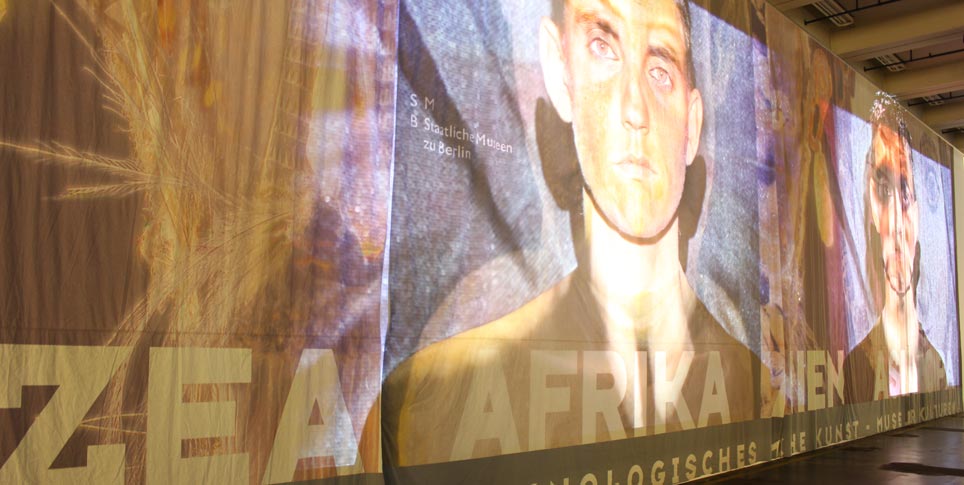
Manuela Fischer: The pre-Hispanic cultures on the west coast of South America were influenced in many ways by the Humboldt Current. The flow of cold water from the Antarctic along the coast results in a predominantly desert climate. The arid conditions have helped to preserve countless pieces of textile and organic material. They form the core of the collection, in addition to a rich stock of pottery and stone objects with painted or carved décor. These items and Humboldt Current are at the focus of the "Extremes!" exhibition, which has been showing in the Humboldt Box since November 2016.
Our subsequent presentation in the Humboldt Forum itself will draw on the inventory of around 70,000 objects in the South American archaeological collection. Primarily, we are taking a historical approach, raising questions such as: Why and under what circumstances did this huge quantity of objects come to Berlin? Who were the collectors at the time? Besides that, we wish to make it clear that these finds were not collated during scientific excavations, but were picked out by collectors who were mainly following aesthetic criteria. So we are also asking what consequences this has for research nowadays.
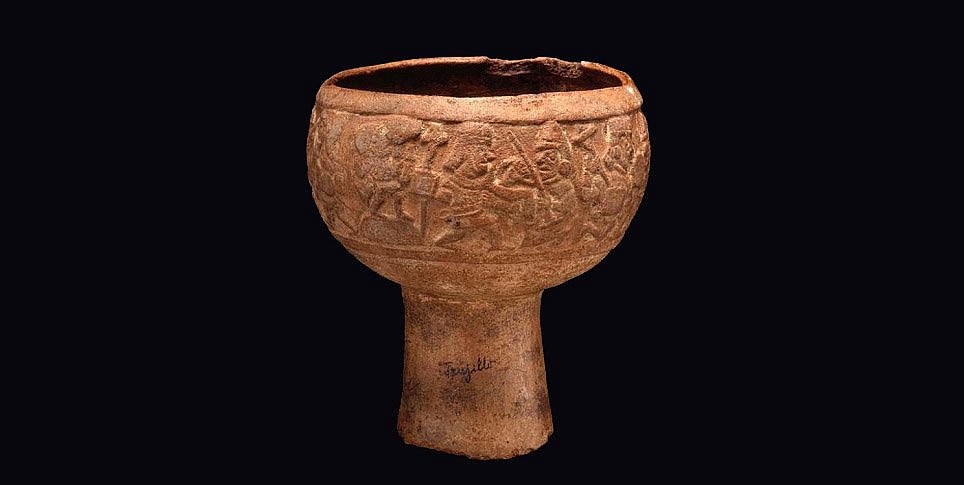
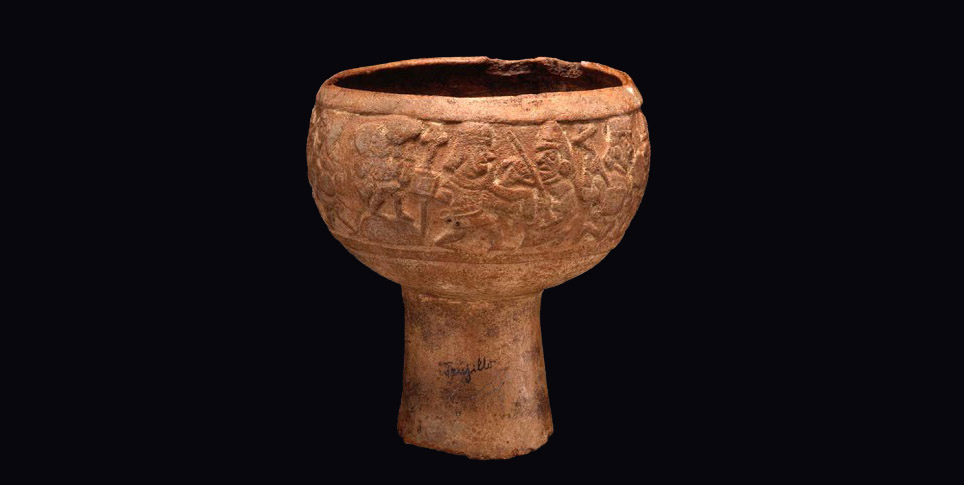
Pokal mit Relief; Kampfszene, Ton, Identnr. V A 47985 © Stiftung Preußischer Kulturbesitz, Ethnologisches Museum / Foto: Martin Franken
How does the new presentation differ from the previous exhibition in Dahlem?
The Dahlem exhibition opened in 1969/70 and its viewpoint was essentially that of art history. It mainly presented clay objects from pre-Hispanic cultures, and it did so in the classic chronological format. In the Humboldt Forum, in contrast, we will show exhibits in the context of specific scientific issues or regional aspects. One of them is the climate, which was a crucial factor in preserving these objects. Phenomena such as El Niño, however, also affect the daily lives of the people who live there today.
What has all this got to do with the way we live now?
The matter of present-day relevance is essential to all three of the subject areas covered in the exhibition module titled "Alongside the Humboldt Current." Looking at the northern stretches of the coast, we encounter the issue of ecology and how people cope with the consequences of climate change. The pre-Hispanic cultures are well suited as case studies to show how a disastrous climatic event simultaneously creates opportunities for new approaches to using the land and natural resources.
Along the central section of the coast, we address the topic of death and the various ways of dealing with it in different cultures. In the pre-Hispanic agricultural cultures, people stayed in contact with their ancestors. The deceased were kept involved in the daily lives of their descendents by means of offerings in the form of food, gifts, or libations. Objects dating from the Spanish conquest of the Inca empire show vividly how different cultures treated each other and what forms of appropriation were current. This coexistence – not always peaceful – was also constantly giving rise to something new. From our perspective, five hundred years later on, this process can be demonstrated quite clearly and maybe it even offers us food for thought today.
What is your favorite object and why?
Curators like to dodge questions like this one by answering, as a parent would: "I love all my children." For me, a favorite object is one that doesn't seem like much at a first glance, but then reveals something that you would not even have guessed at. In the current exhibition, there is a goblet that looks totally inconspicuous, but it gave the answer to a central question facing researchers into the Moche culture. Did the Moche practice human sacrifice, and if so, how did they treat the victims? The goblet in Berlin provided proof that human blood was drunk as part of a ritual. So we are very glad that the goblet was not cleaned too thoroughly at the time.
What does all this have to do with our lives today?
For all three areas featured in the ‘Am Humboldtstrom’ module, the question of contemporary relevance is crucial. Looking at the north coast, the focus is on ecology and how people cope with the effects of climate change. The pre-Spanish cultures provide a good illustration of how a climate catastrophe also always presents an opportunity to interact differently with the landscape and resources.
The section on the central coast focuses on the theme of death and the cultural ways of dealing with it. In pre-Spanish agricultural cultures, people maintained contact with their ancestors. The deceased continued to be incorporated into the daily lives of the living, whether through food, gifts or libations. Objects from the period of the Spanish conquest of the Inca Empire vividly illustrate how different cultures interacted and what forms of appropriation took place. This coexistence, which was not always peaceful, invariably gave rise to something new. With the benefit of 500 years’ hindsight, this can be clearly illustrated and may even offer illuminating insights for the present day.
What is your favourite object and why?
Curators tend to sidestep such questions and answer like parents: “I love them all”. For me, a favourite object is always one that at first glance looks like nothing in particular, but then reveals something you would never have expected. In the exhibition, there is a cup that appears rather unremarkable at first glance, but which was able to answer a key question in Moche research. Were human sacrifices made, and how were these sacrifices handled? The Berlin Cup provided evidence of the ritual drinking of human blood. We are therefore very glad that the chalice was not cleaned too thoroughly back then.
Exhibition: ‘Extreme! Nature and Culture along the Humboldt Current’
Since 2 November 2016, the exhibition “Extreme! Nature and Culture on the Humboldt Current” at the Humboldt Box has been tracing Alexander von Humboldt’s journey to Peru. Unique objects from the Ethnological Museum and other Berlin collections bring to life the Humboldt Current – named after the explorer – and its impact on people, animals and plants. The exhibition marks the start of a new series of exhibitions by Humboldt Forum Kultur GmbH, offering a foretaste of the Humboldt Forum.
News “We are Humboldt: New exhibition series offers a preview of the Humboldt Forum” (14 July 2016)