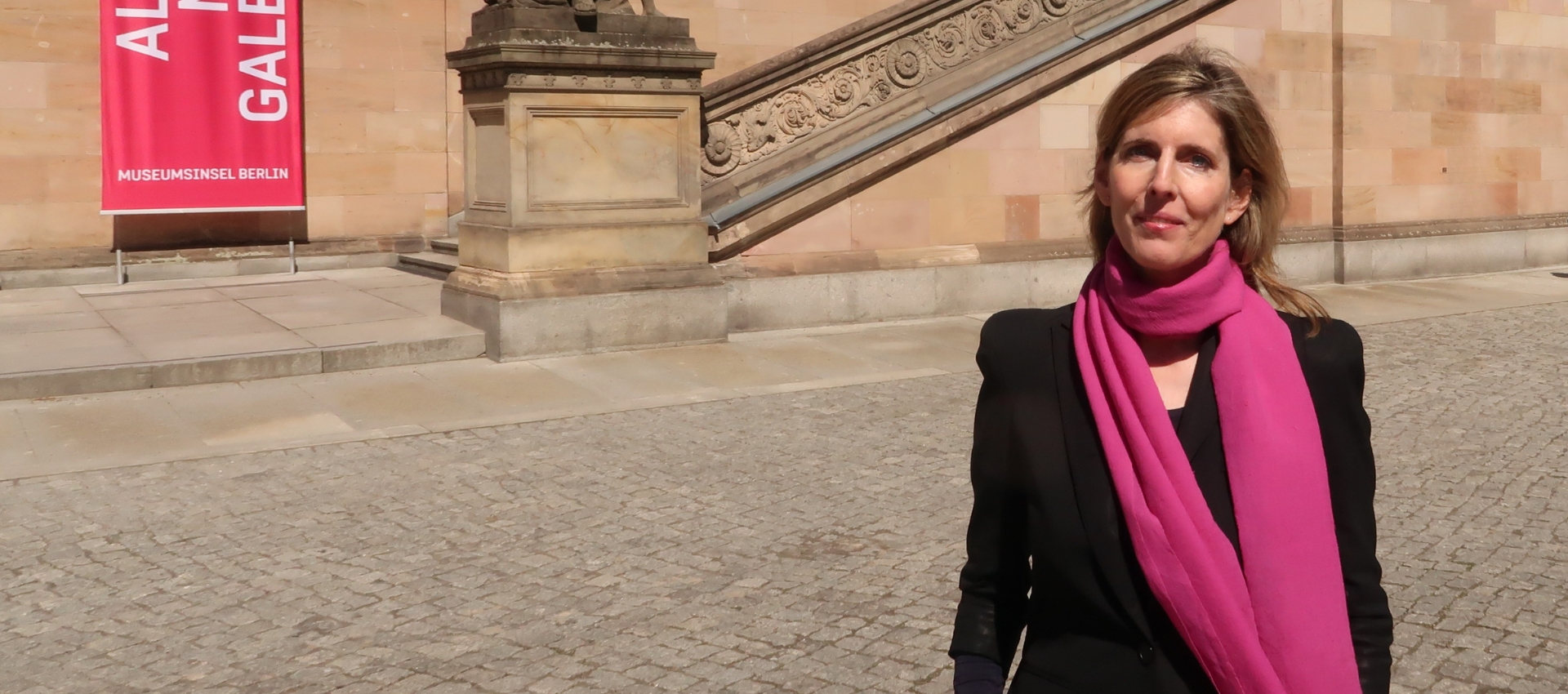
The Omaha (Umoⁿhoⁿ) are fighting for the survival of their culture in the USA. A historic collection of artefacts in Berlin is now offering a delegation from Nebraska Indian Community College a deep insight into the Umoⁿhoⁿ’s past.
Wynema Morris had to cry when she saw the leggings. She was immediately reminded of her own youth on the Omaha (Umoⁿhoⁿ) reservation in Nebraska. “When we wanted to go to a powwow, my sister and I used to sew our own dresses,” she said. “We copied what we’d seen others do, but our mother always said, ‘You must sew leggings! Umoⁿhoⁿ girls wear leggings with their skirts.’” Morris and her sister didn’t believe their mother. Who knew exactly what their ancestors had really worn, how they had actually lived? Over 100 years of US assimilation policies, combined with everyday experiences of violence, racism and oppression, had caused the old traditions and inherited knowledge to fade. Only a few memories had survived on the reservation.
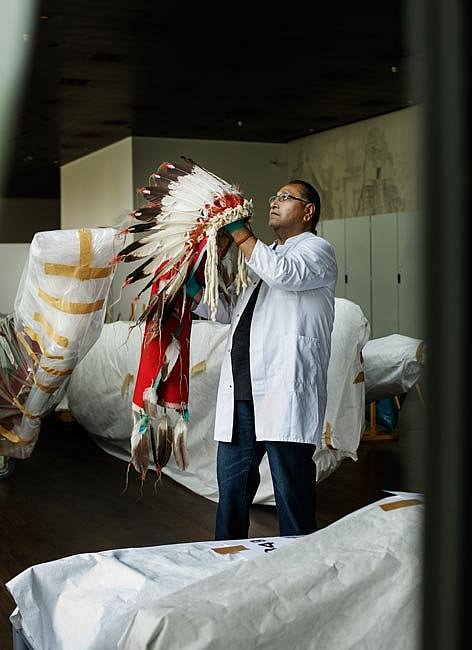
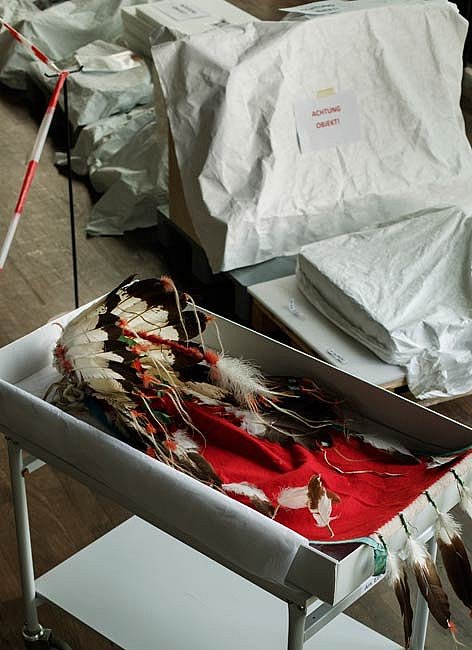
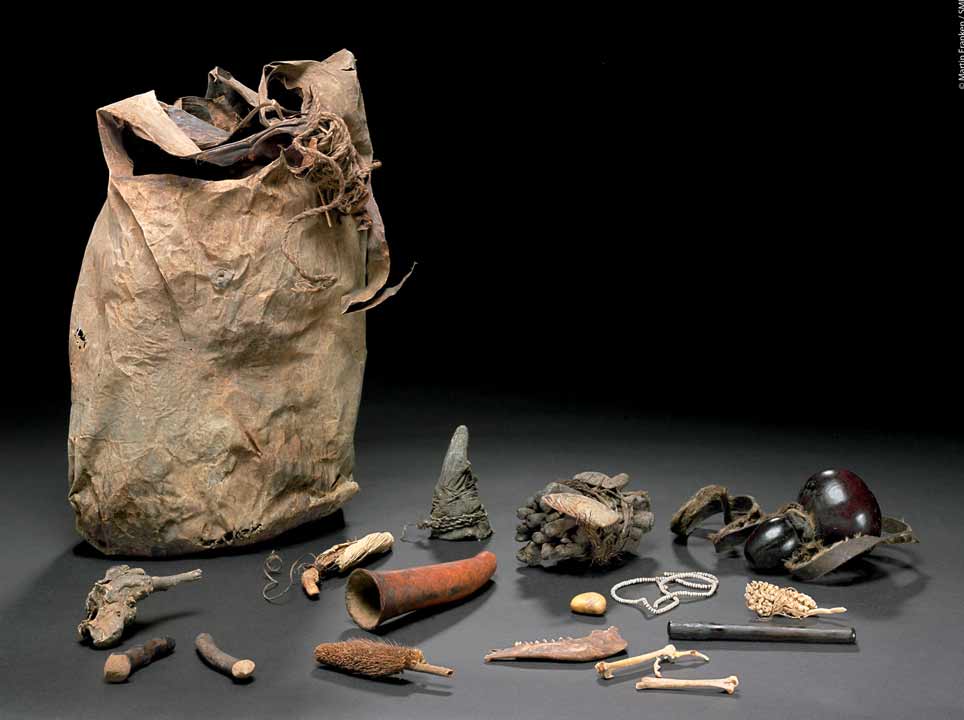
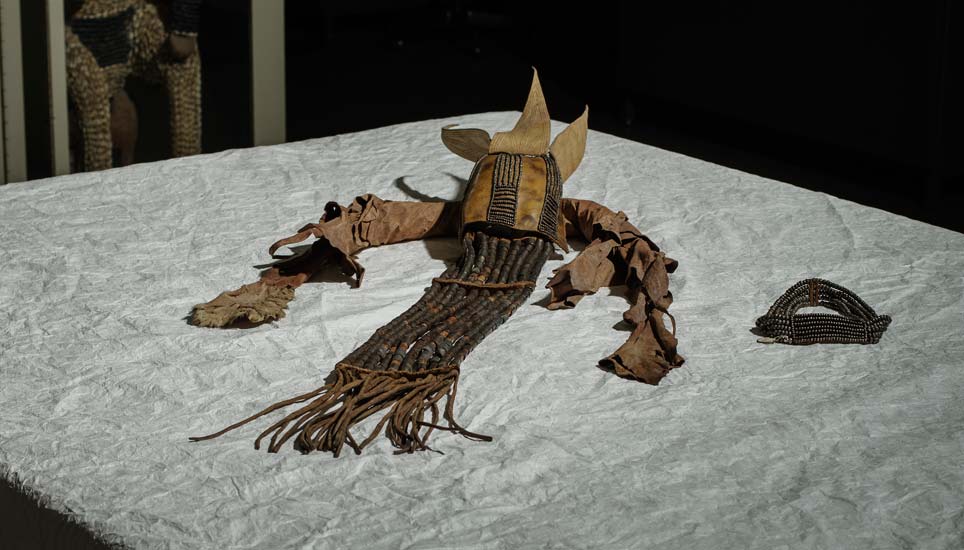
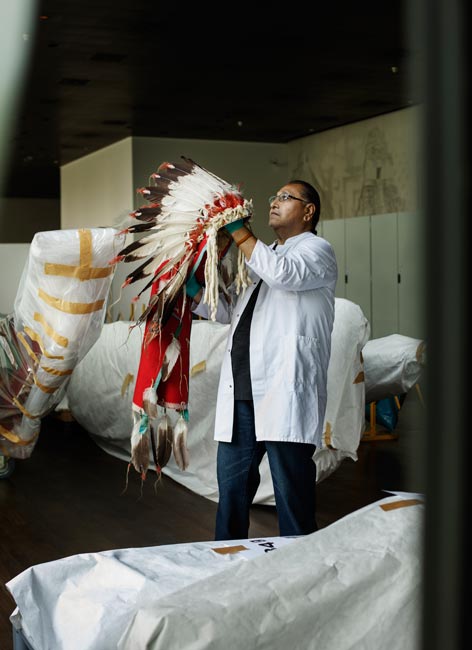
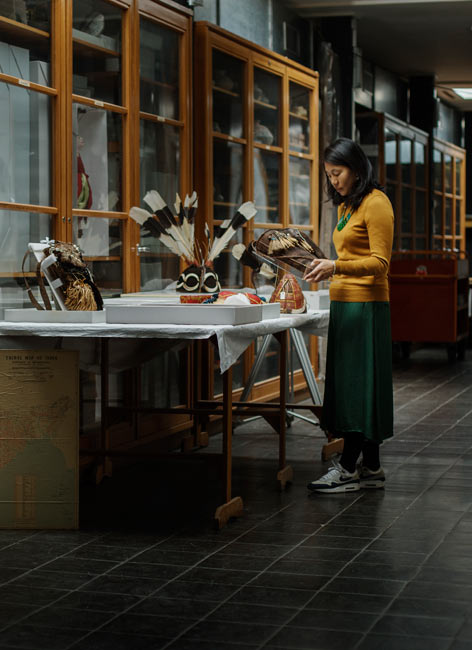
But on that November day in 2018, in the storeroom of the Ethnological Museum in Dahlem, it dawned on Wynema: her mother had been right – Umoⁿhoⁿ girls had indeed worn trousers to the powwow. And many other lost memories of her own culture were also brought back to life during the visit by the delegation from the Nebraska Indian Community College (NICC). For the Berlin museum’s storeroom houses not only original garments, but a total of 60 objects representing the everyday culture of the Umoⁿhoⁿ. They represent aspects of life such as ceremonies, war, food and play, and were acquired by the museum 120 years ago.
The ethnologist and founding director of the Berlin Museum of Ethnology, Adolf Bastian, had commissioned the American ethnologist Francis La Flesche to compile the collection in 1898. What makes this arrangement special is that La Flesche was himself an Umoⁿhoⁿ, having grown up on the reservation in Nebraska; from the 1880s onwards, he worked as an ethnologist at the Smithsonian Institution and championed the preservation of indigenous traditions. La Flesche organised the Berlin collection with the aim of representing the ways of life and traditions of his culture.
Yet La Flesche’s collection was not a reflection of the actual reality of life on the Umoⁿhoⁿ reservation, but rather produced a nostalgic image of a culture that had already ceased to exist in this form by the end of the 19th century. The Umoⁿhoⁿ had abandoned their traditional way of life as buffalo hunters on the prairie decades earlier – not least because the animals had been virtually exterminated through excessive hunting. Nevertheless, the objects are in a good state of preservation and extensive documentation, compiled by La Flesche himself, contains further in-depth information. Thus, the collection offers a detailed glimpse into the past of Umoⁿhoⁿ culture.
The Umoⁿhoⁿ face the same situation as many other Native Americans: their culture is scarcely valued, and in some cases their very right to exist has been denied. As a result, much knowledge has been lost and Native Americans are fighting to preserve their ways of life. Wynema Morris is a lecturer in Umoⁿhoⁿ Tribal History and Culture at the NICC. She and her companions were not only surprised by the women’s trousers when they saw the Berlin artefacts for the first time. “The feather-trimmed warrior shirts here in Berlin are extraordinary,” said Wynema, “I’ve never seen any in such a state of preservation. All the ones I knew were faded and yellowed. The fact that they were apparently always green or blue, as La Flesche also describes, completely surprised me.”
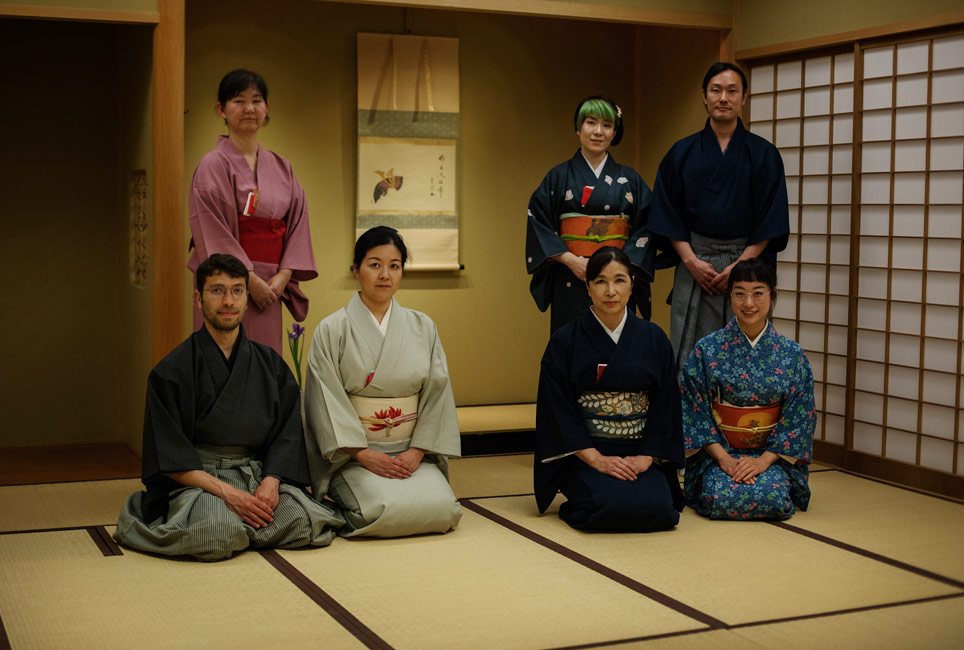
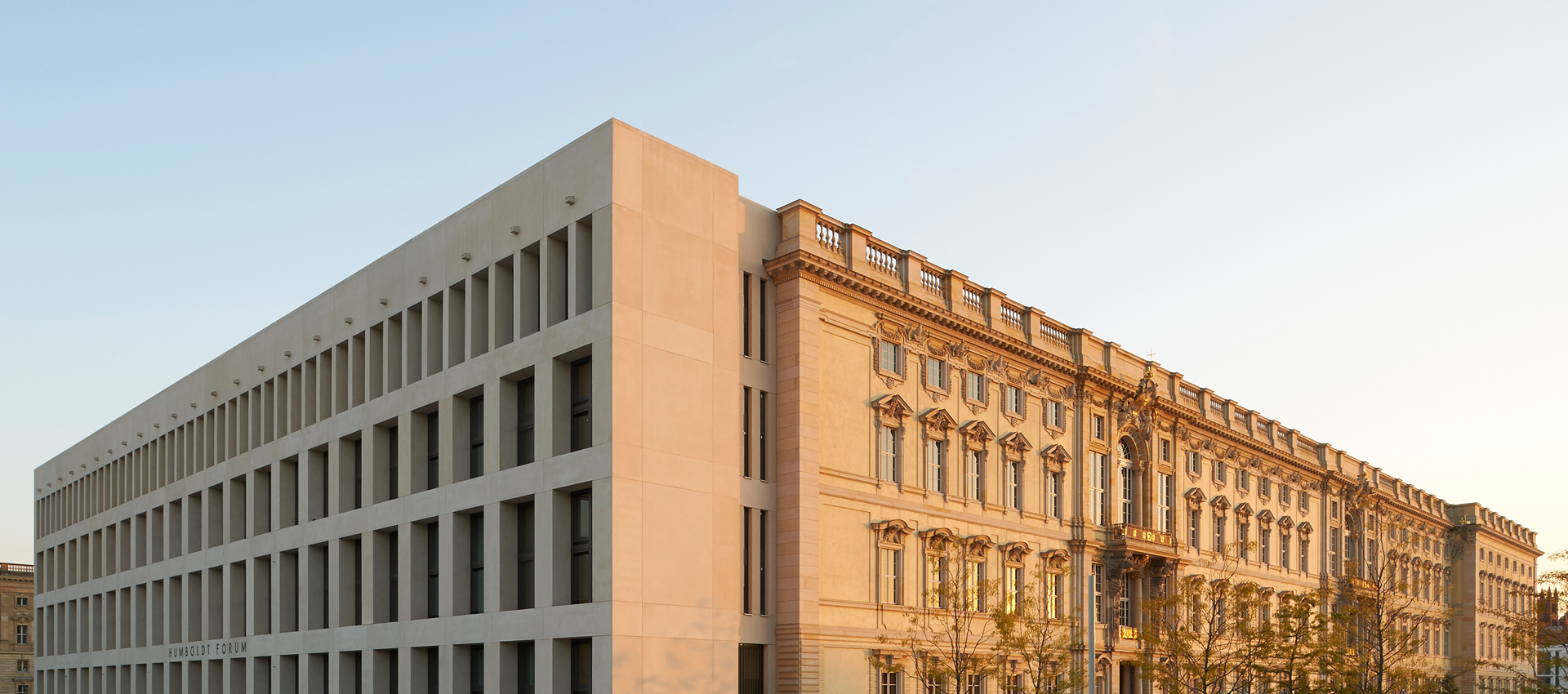
The Berlin collection will form part of the exhibition at the Humboldt Forum. This is why representatives of the NICC have come to Berlin: they were invited to design the presentation together with curator Ilja Labischinski and a team from the Ethnological Museum and the Humboldt Forum Foundation. It is intended to bridge the gap between past and present, as those working on the exhibition wish to show that, despite assimilation policies in the USA, they are still there. Beyond that, however, it is also about asking fundamental questions: Do the people on the reservation feel represented by the objects? Do the objects belong in a museum? What story should be told through them?
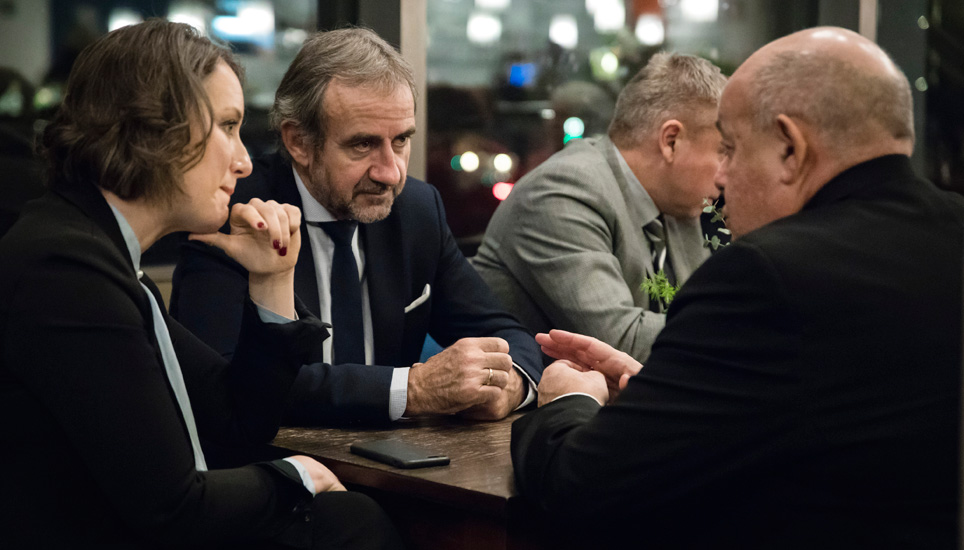
After the NICC delegation was able to examine the La Flesche collection for the first time in November and December 2018 and took valuable information back to Nebraska, representatives were invited again in June 2019. Discussions continued to focus on plans for the exhibition design and the expansion of cooperation between the Staatliche Museen zu Berlin and the NICC. Among other things, the programme included a workshop discussion in Dahlem with Hartmut Dorgerloh, Director of the Humboldt Forum, and Lars-Christian Koch, Director of the Ethnological Museum. Here, the guests once again emphasised how important the Berlin collection is to them. Pierre Merrick, a grandson of Francis La Flesche, was also present on both visits. He expressed his delight that the unique objects have been preserved and are being ‘treated with dignity’ in Berlin. At the same time, he reminded those present that there are also voices calling for the objects to be returned in the future.
The fact that the exhibition of the objects at the Humboldt Forum can be conceived in collaboration with the Umoⁿhoⁿ and La Flesche’s descendants is a stroke of luck for the museum’s work. This will allow the often purely European perspective on objects and cultures to be overcome, resulting in an engaging and appropriate presentation, which is scheduled to open in late 2020. Until then, there will certainly be further meetings where Berliners and the Umoⁿhoⁿ can learn a great deal from one another.