What tapestries tell us about modern-day Egypt: The exhibition “Threads of Life on the Nile” at the James Simon Gallery showcases woven art from the Ramses Wissa-Wassef Art Centre in Cairo. Their vibrant colours and rich variety of forms are a real feast for the eyes.
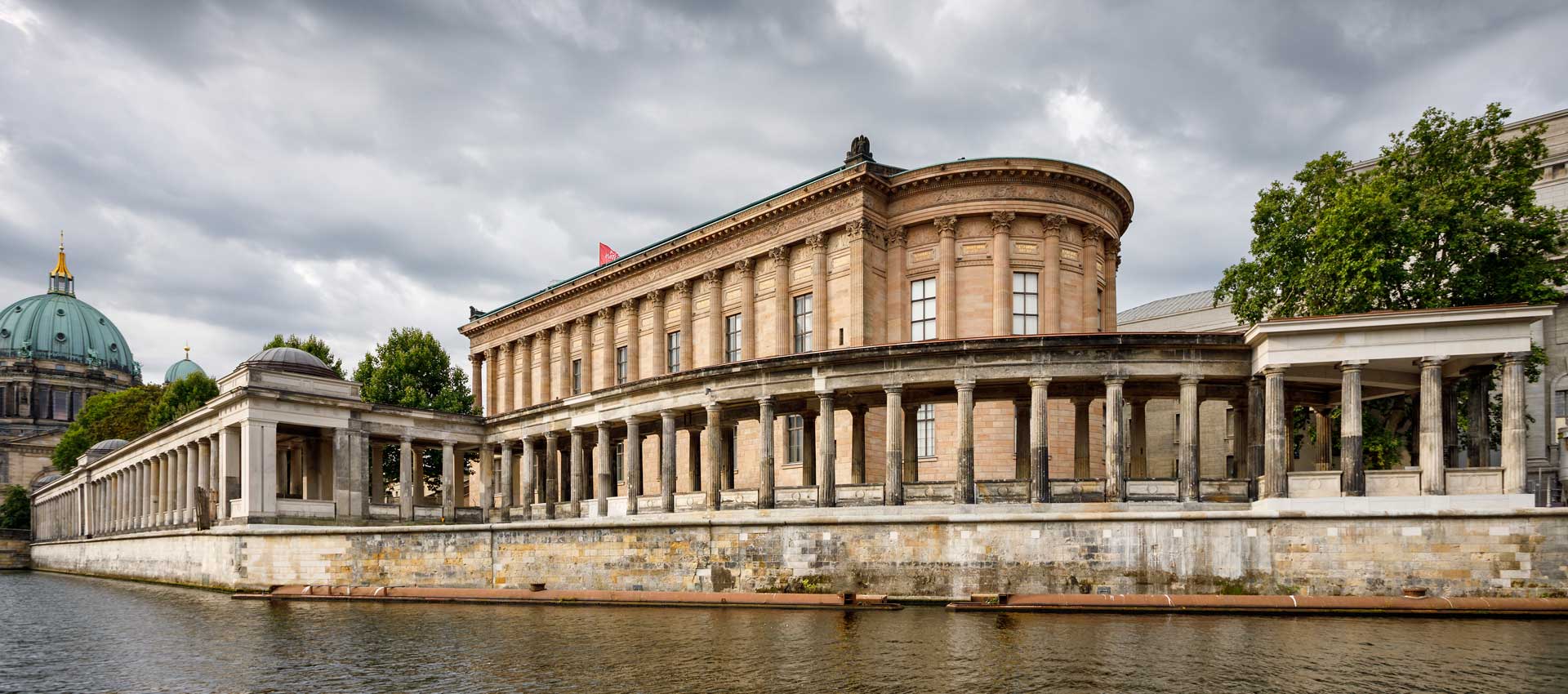
Anyone strolling across Museum Island and thinking of Egypt will probably first recall the bust of Nefertiti in the Neues Museum. And the other masterpieces from various eras on display there in the Egyptian Museum, ranging from delicate objects of applied art to stone sarcophagi weighing several tonnes.
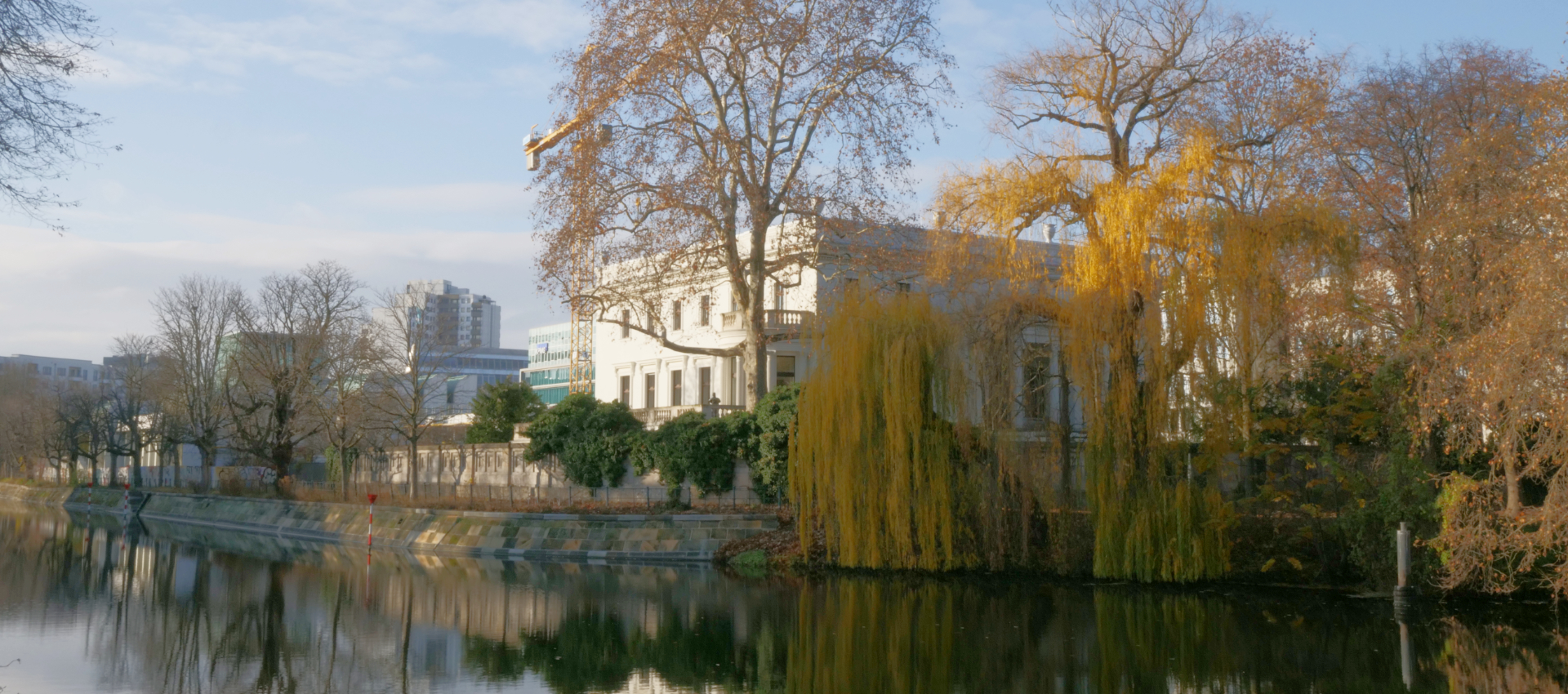
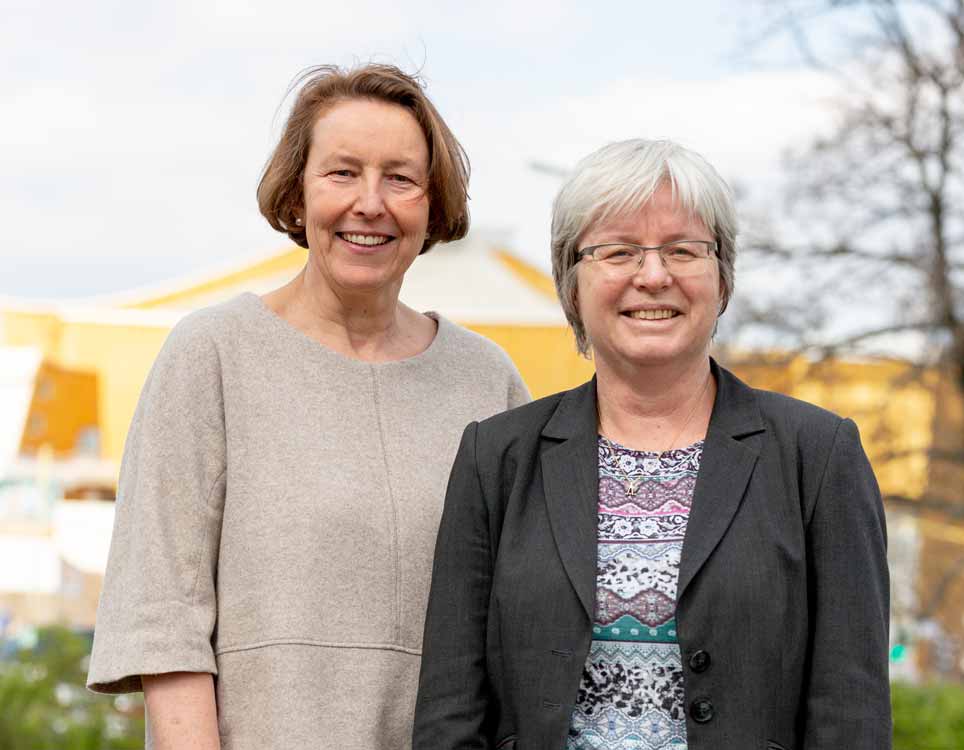
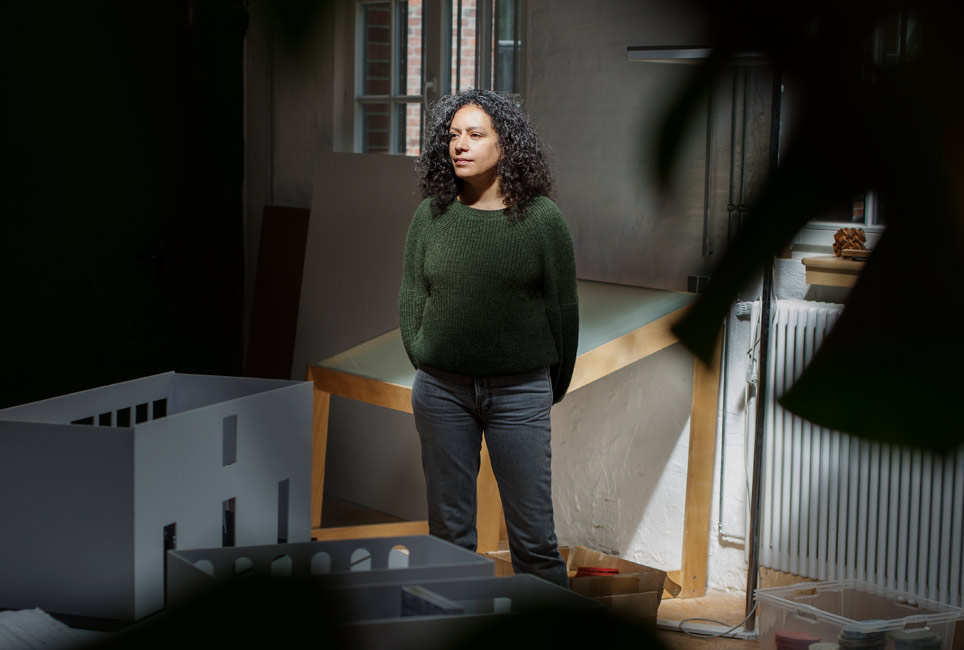
Yet Egypt has not only a glorious past, but also a fascinating present. A wonderful exhibition on the upper floor of the James Simon Gallery now showcases a small but exquisite part of this: ‘Threads of Life on the Nile’ displays tapestries and batiks from the Ramses Wissa-Wassef Art Centre in Cairo and was curated by Friederike Seyfried and Ilona Regulski.
The Art Centre was last represented in Berlin in 1978 with an exhibition, albeit in Charlottenburg, where the Egyptian collection was housed at the time. Now the Cairo-based institution can be rediscovered on Museum Island.
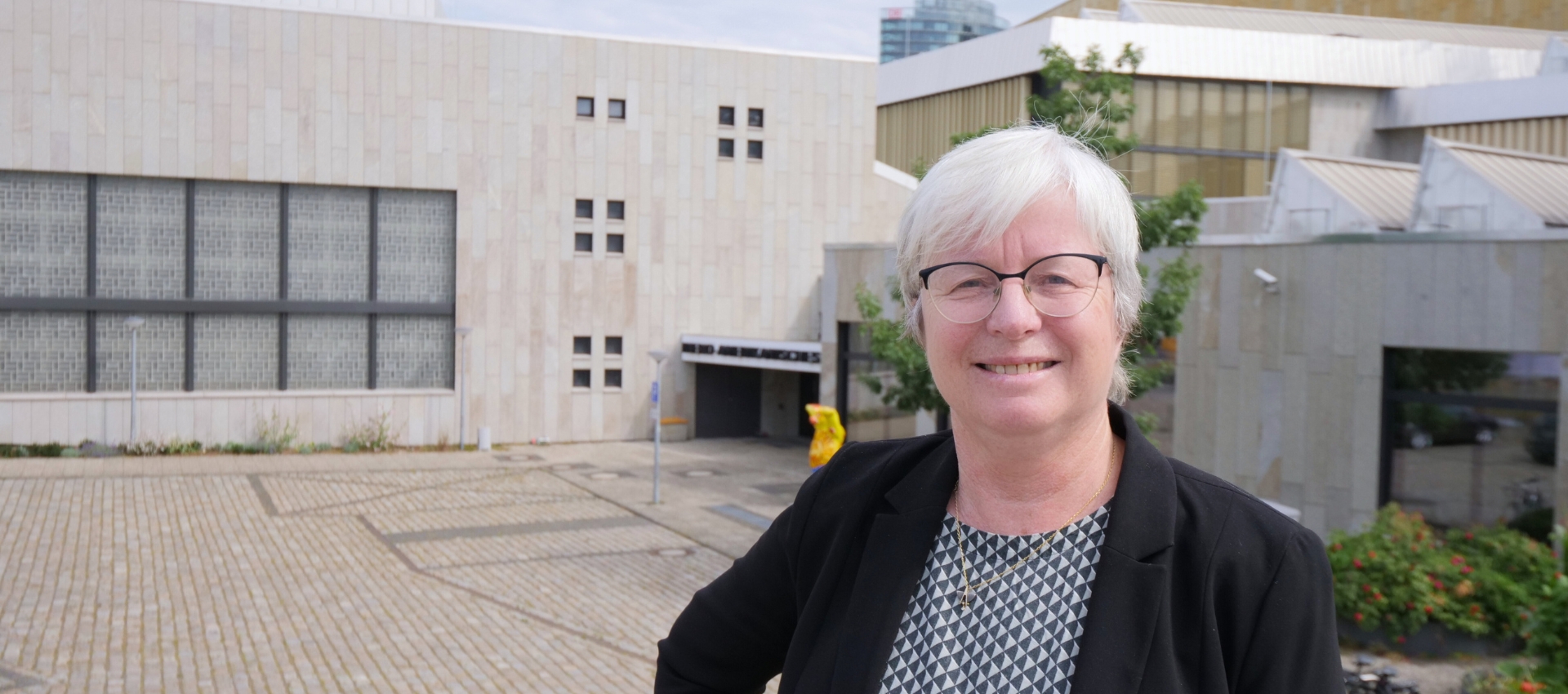
For Friederike Seyfried, Director of the Egyptian Museum, who has known and appreciated the Ramses Wissa-Wassef Art Centre since the mid-1980s, this is a source of great joy: “It is a place where art is created and experienced, but above all, it is about the individual people. Everyone is taken seriously, challenged and encouraged. This special atmosphere is palpable to all who visit. You walk through the gate and find yourself in an oasis you didn’t expect. Although the surroundings have changed, as Cairo continues to expand and high-rises have sprung up all around here too, it has remained a place of the greatest harmony!”
It is a place where people create and experience art, but above all, it is about the individuals themselves
Friederike Seyfried on the Ramses Wissa-Wassef Art Centre
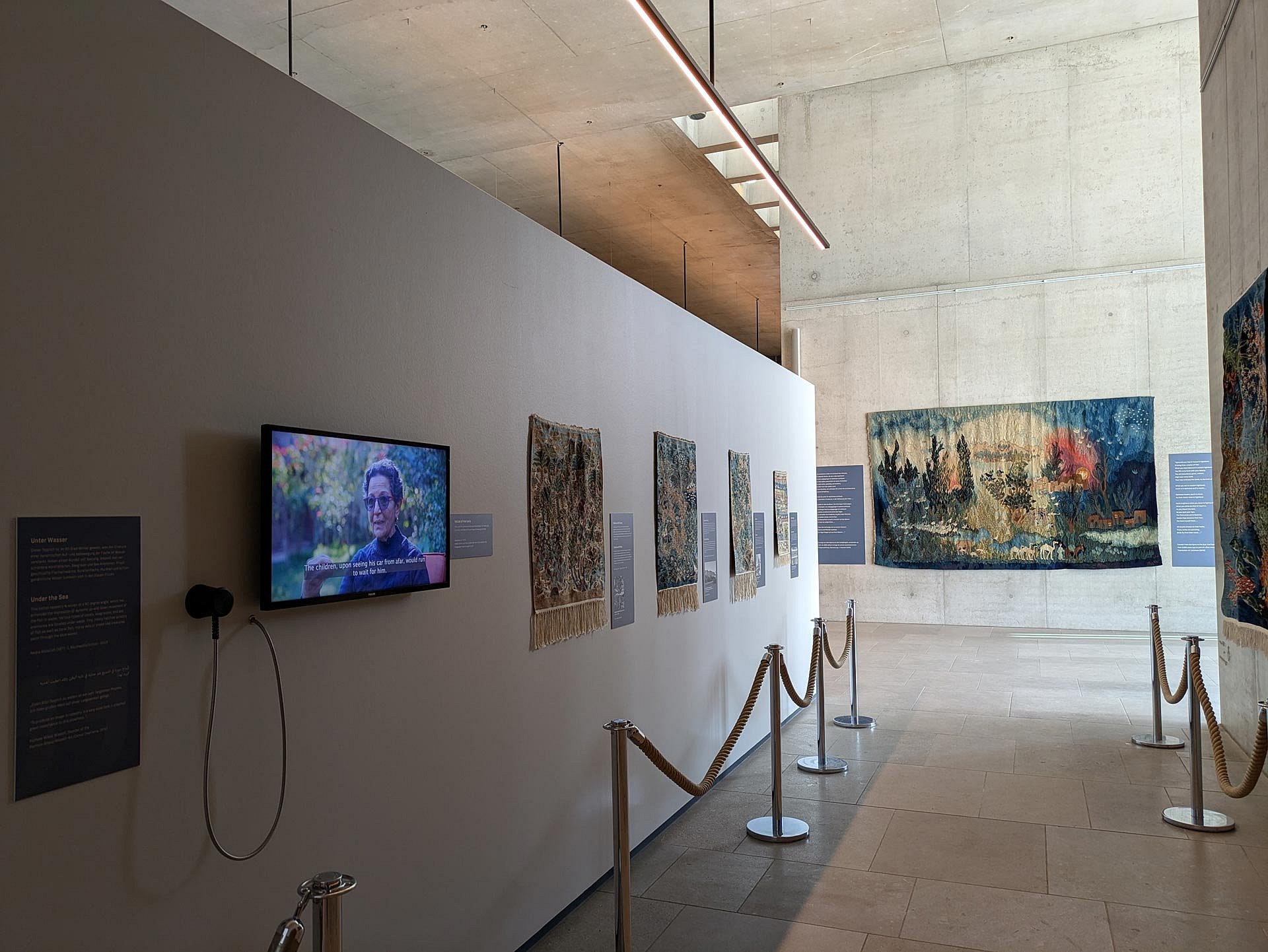
The architect, potter, weaver and designer Ramses Wissa-Wassef (1911–1974) founded a training centre in 1951–1952 in the small village of Harrania – not far from the famous Pyramids of Giza near Cairo. He wanted to familiarise children and young people there with the millennia-old technique of Egyptian weaving. So he bought a plot of land and had workshops and residential complexes built using traditional mud-brick construction methods.
Perhaps inspired by Waldorf education, the aim was for children aged ten and above to develop their artistic imagination in their free time, whilst at the same time honing their ability to concentrate and their problem-solving skills – for all of this is necessary when working at the loom.
Those who were interested began on small children’s looms and initially produced correspondingly small woven pieces before moving on to the large looms for the older children. There were only three rules that Ramses Wissa-Wassef laid down, and which still apply today: no preliminary drawings, sketches or existing photographs were to be used. The creative process was not to be influenced by external factors – such as visits to museums. Criticism from adults was also strictly forbidden. In complete freedom, the pupils were to follow their imagination alone and realise it step by step using wool or cotton threads.
Ramses Wissa-Wassef was firmly convinced that every single one of them possessed the potential to do this – it simply needed to be brought out. In this way, he effectively anticipated Joseph Beuys’s legendary statement: ‘Everyone is an artist.’
Social recognition and globally acclaimed quality
Ramses Wissa-Wassef must indeed have struck a chord with his potential pupils, for the children came – and mostly stayed for many years. Here they were able – without pressure – to develop their hidden talents; they experienced a caring and creative community to which they sometimes belong right up to retirement age, still drinking tea together, chatting and weaving.
Alongside communication and a sense of belonging, the economic aspect should not be underestimated. For once the creators had grown out of their infancy, mastered their craft over time and produced a carpet that could hold its own in public, they were, according to Friederike Seyfried, well paid for it – even if the carpet had not yet been sold.
As the Art Centre was also open to women, who often proved to be talented weavers, it could happen that they were the ones who suddenly helped support their families’ households – and relieved the men of the burden of the rather meagre income from farming. Following the initial scepticism towards the project, these substantial earnings led to high social recognition of the ‘Art Centre’ extending as far as the surrounding villages.
The works created in this way are truly magnificent. The children, now grown into adults, have become accomplished artists capable of mastering large-scale works and multi-layered narratives. We now speak of two generations who breathe life into the people-friendly Art Centre and ensure a standard of craftsmanship that is as fabulous as it is enchanting.
The quality of the weavings has long been renowned worldwide; they are held in high esteem and can be found in major art museums such as the Metropolitan Museum of Art in New York, or in London at the British Museum and the Victoria and Albert Museum, where exhibitions have also been held.
There are several reasons for the unique selling point of the exhibits from the Ramses Wissa-Wassef Art Centre: on the one hand, it is based on the singular imagination of the producers; on the other, on the high-quality materials used.
For wool and cotton are still dyed by hand using natural substances. Whilst such a production process could be replicated elsewhere, it cannot be transferred to the artists’ imaginative world.
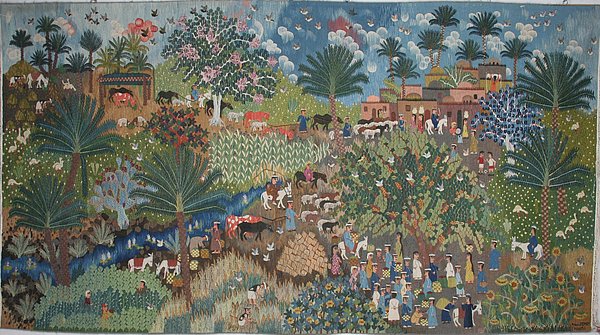
This is closely linked to the land and the people, drawing on a connection with nature and with regional customs and traditions. “During my childhood, I helped my father with the field work. Whilst doing so, I observed the people farming and going about all their other daily tasks. This was an inspiration for me, which I have kept alive in my memory,” says Mahrous Abdou, one of the weavers at the Ramses Wissa-Wassef Art Centre, about his wool carpet “Fields” (2002).
The threads of these unique pieces blend tradition and modernity
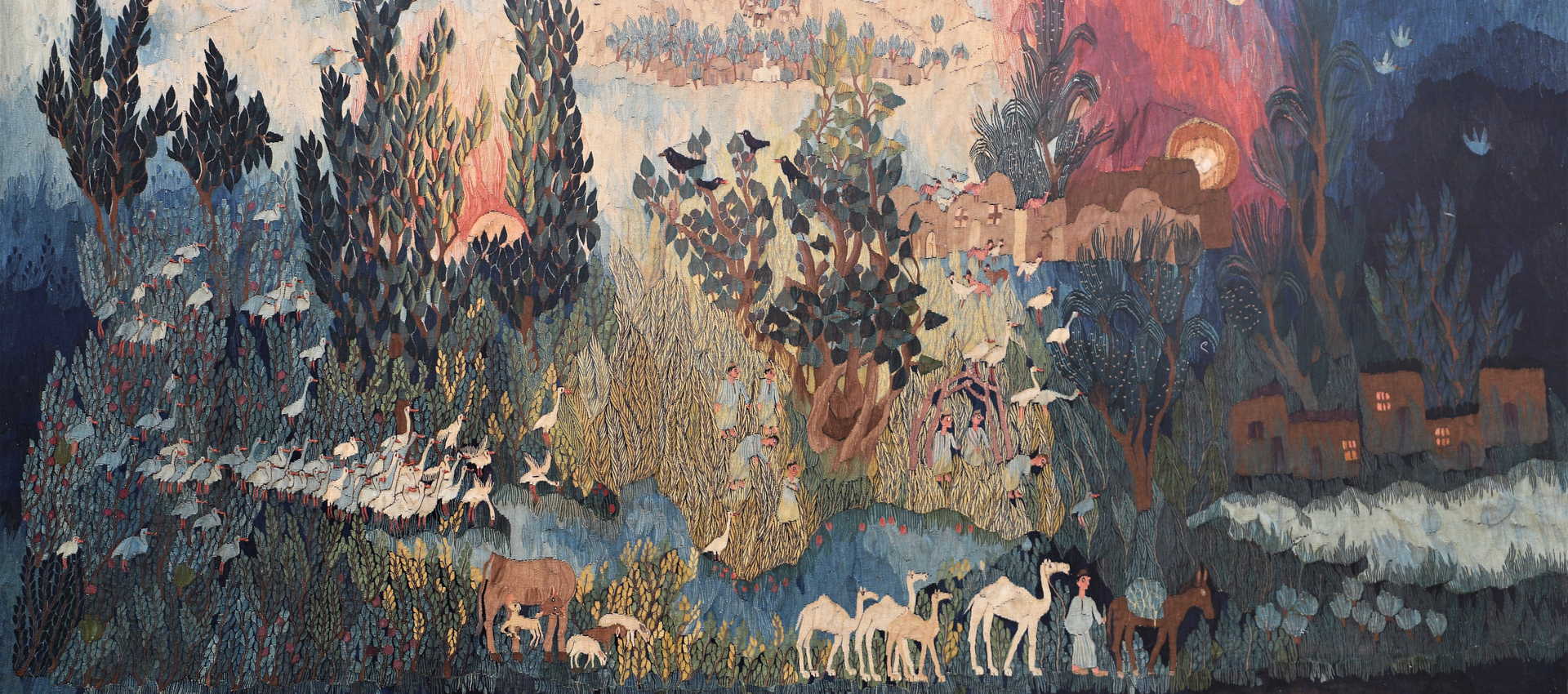
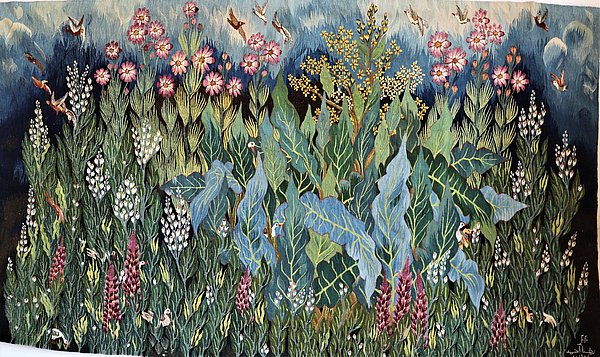
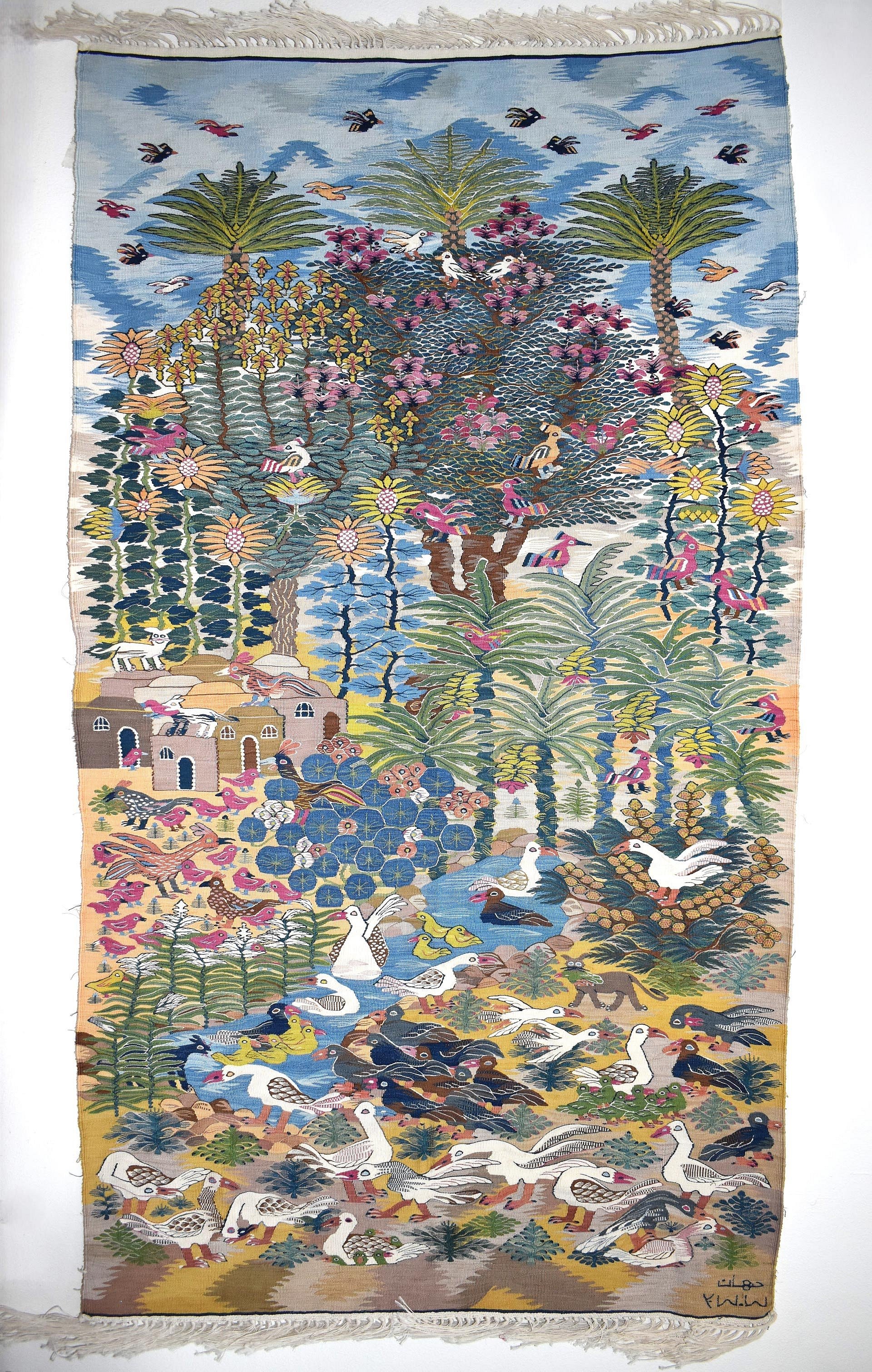
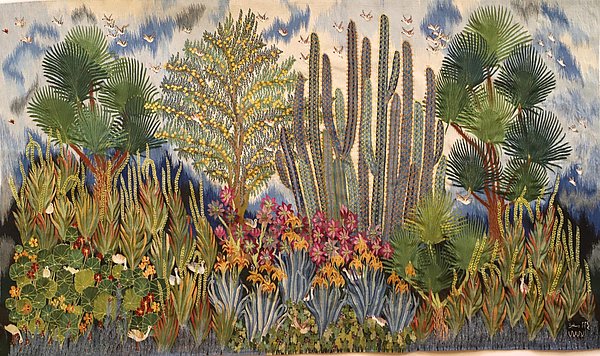
Alongside scenes from everyday village life, the tapestries now also feature pure landscape depictions, animals and plants. With almost no people, but instead a riot of colours and shapes, the cotton tapestry “The Garden” by Gehan Rezk from 2022 is a delight.
All around a mango tree, the plants bloom in all their splendour, causing the few farmers walking with their animals to almost disappear beneath the floral splendour. This charming tapestry welcomes visitors at the start of the exhibition – “and every day when I’m here, I discover something new,” says Friederike Seyfried.

Tradition and modernity come together in the threads emerging from the looms
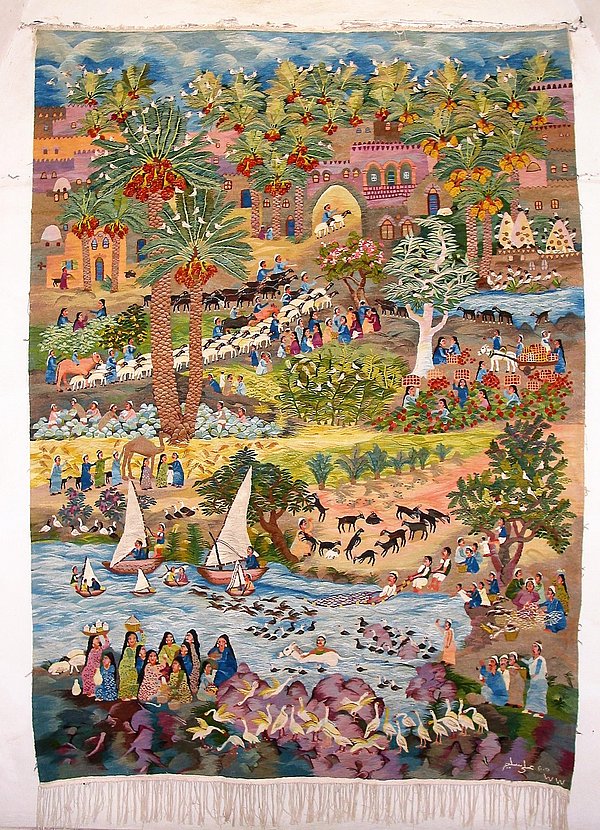
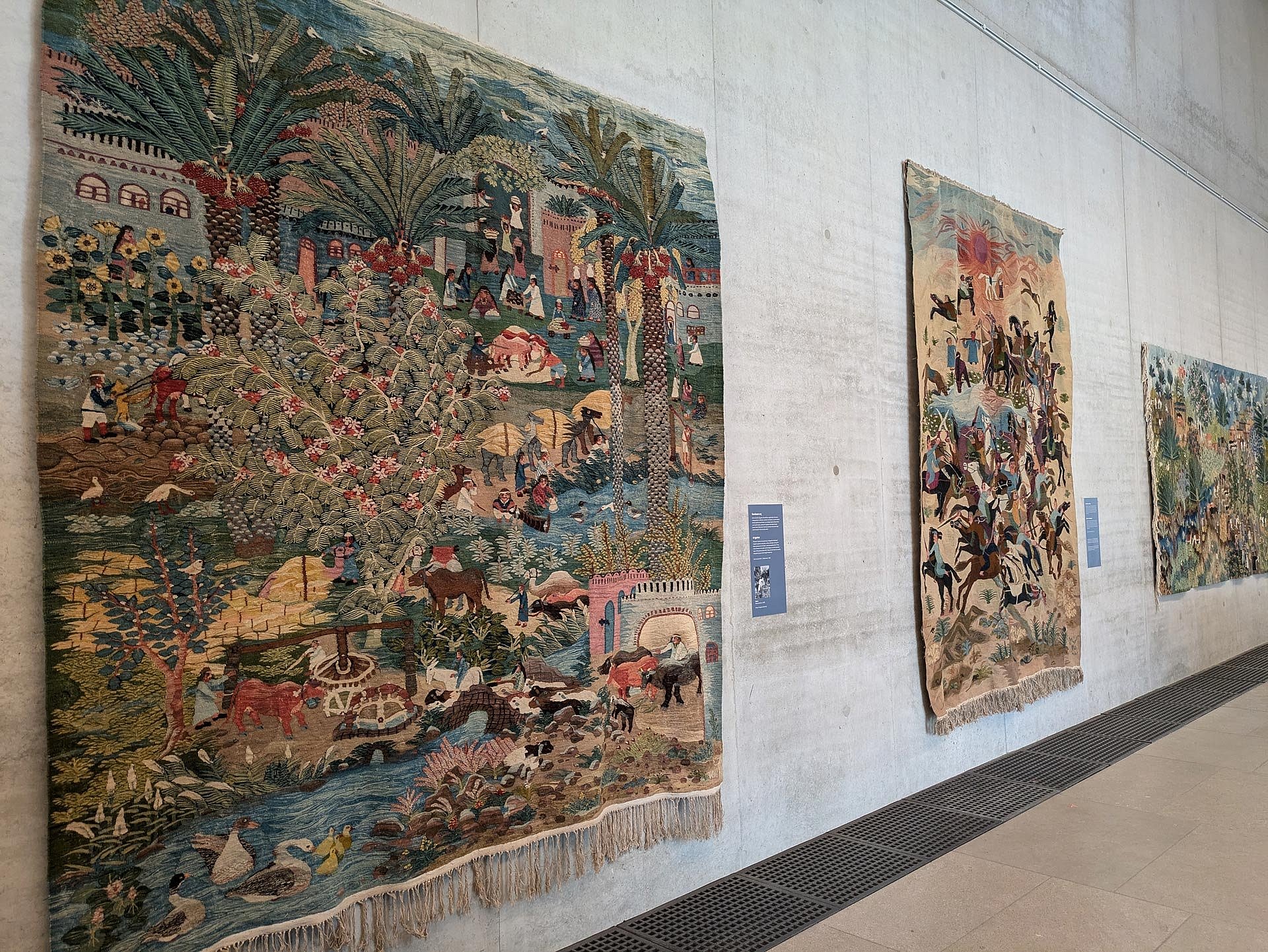
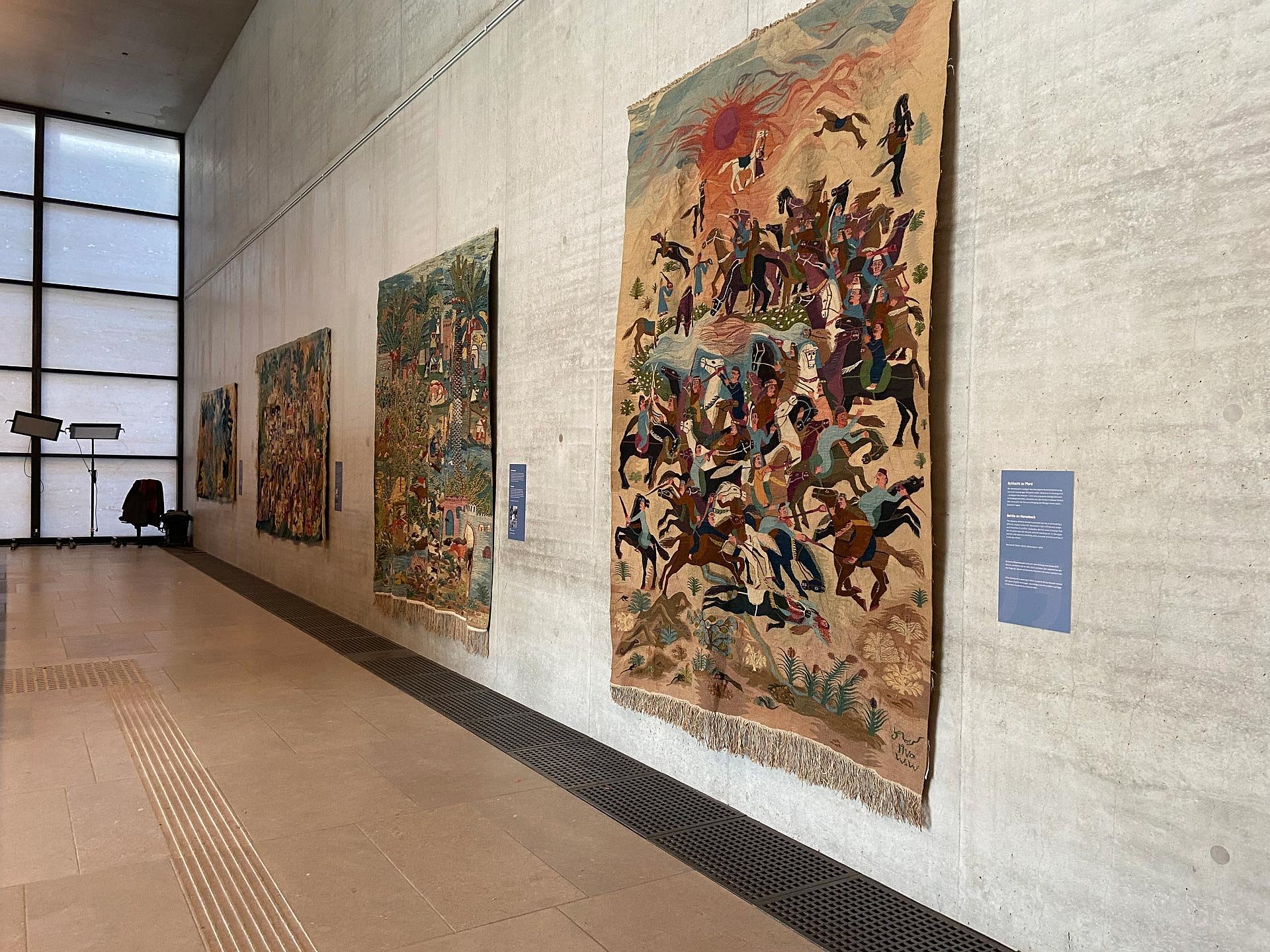
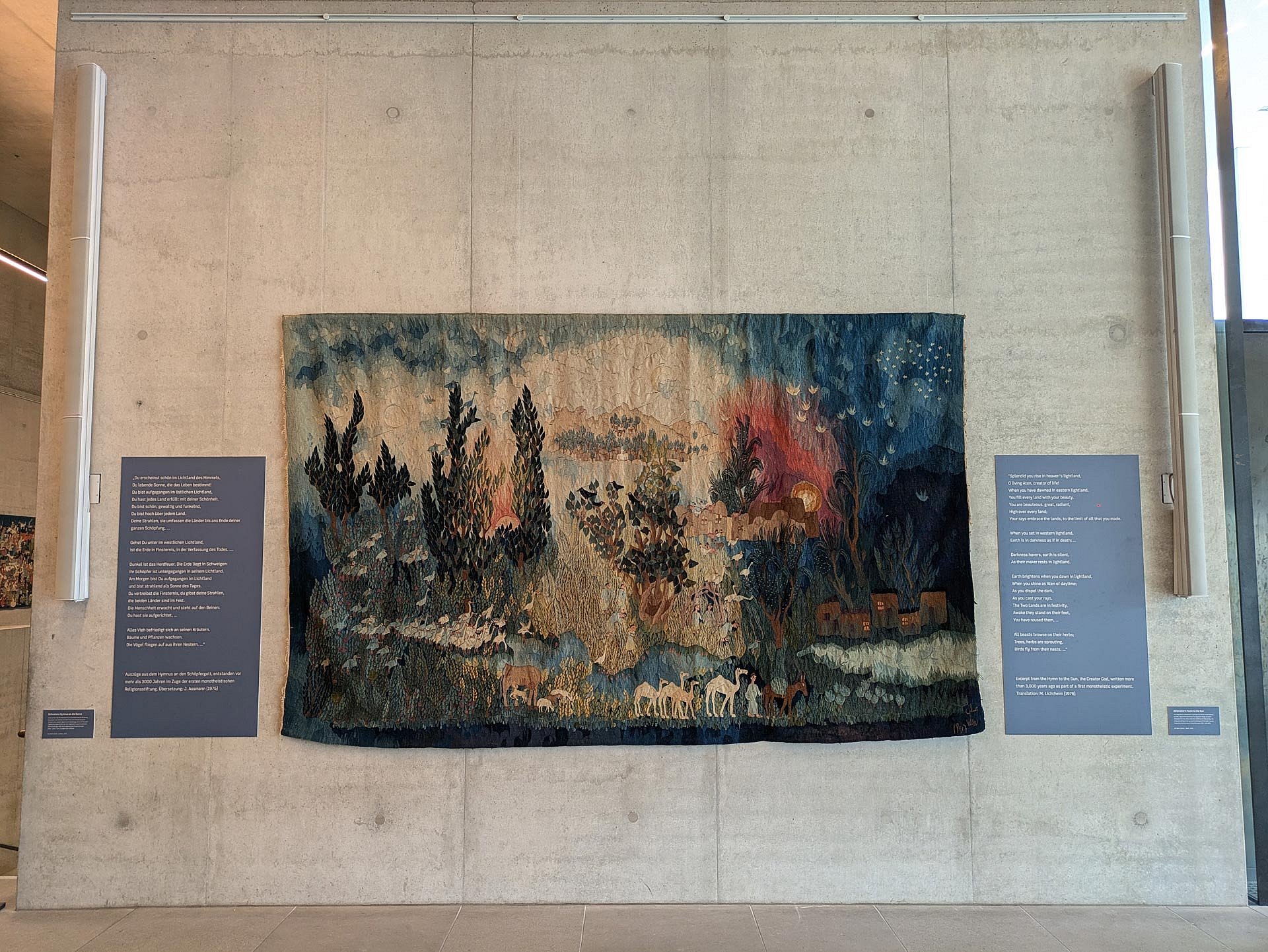
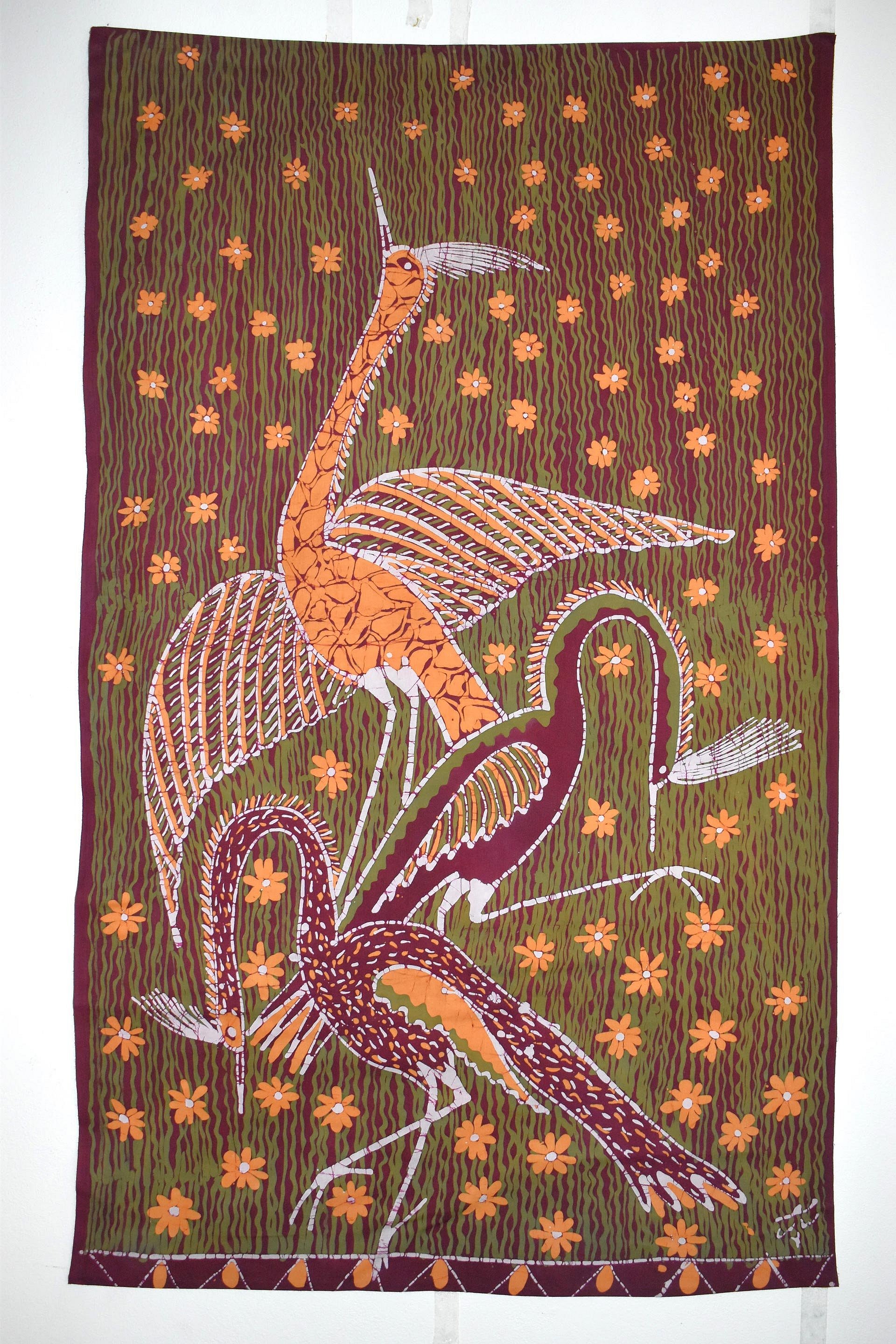
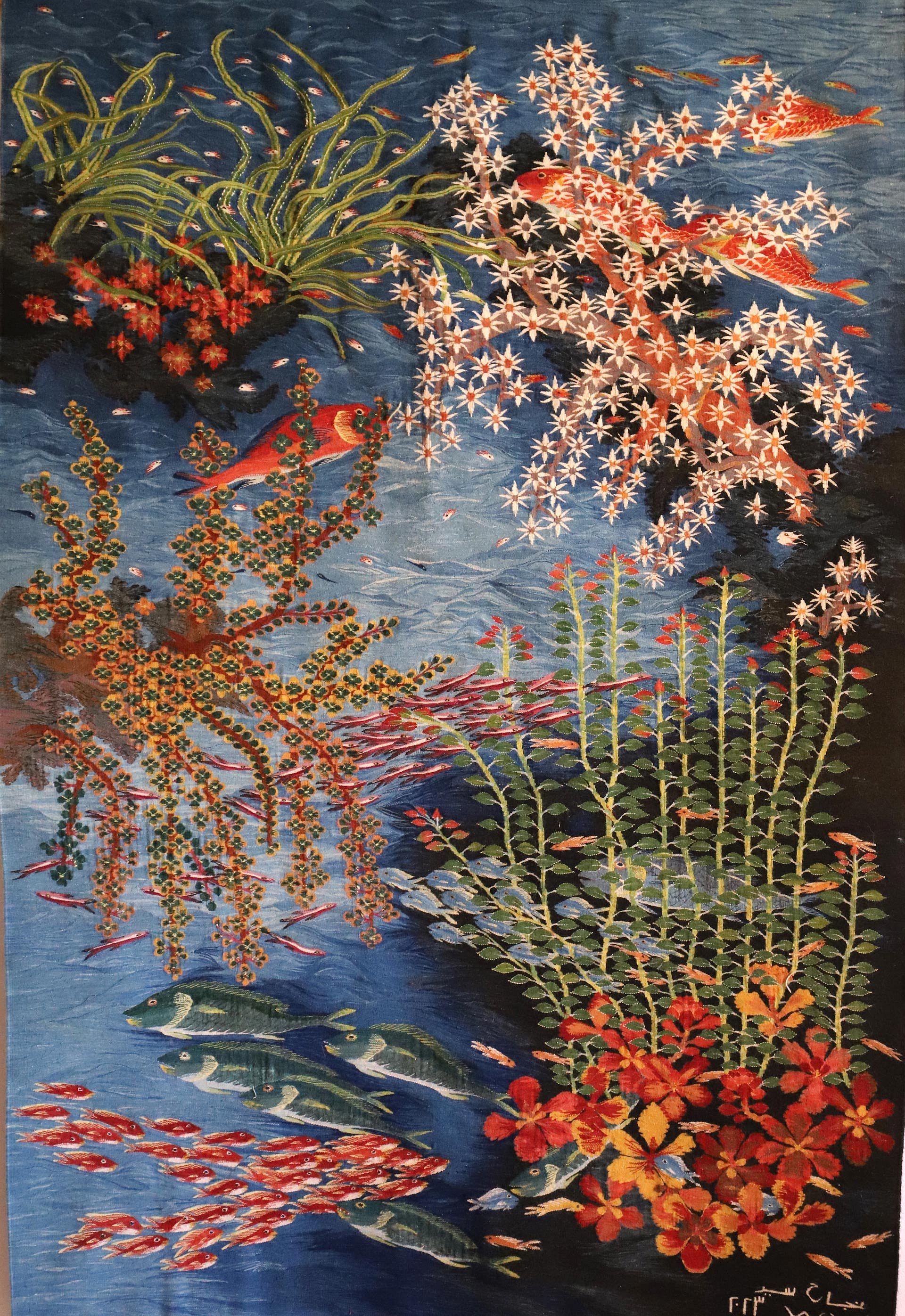
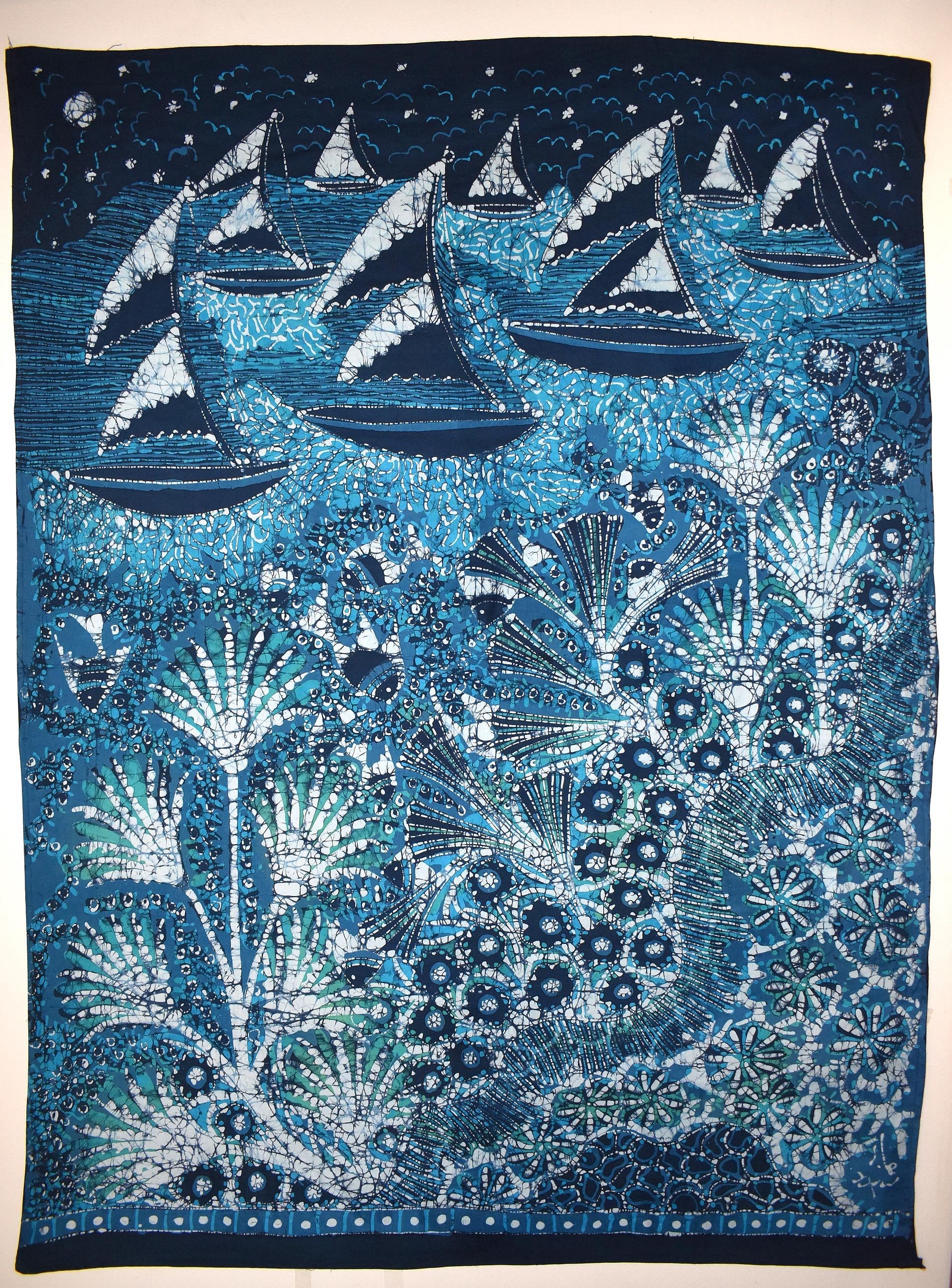
Despite their thematic diversity, the works of the Ramses Wissa-Wassef Art Centre are united by their richly developed, expressive figurative style. The 13 wool tapestries, the 12 cotton tapestries and the five batiks depict life on the Nile and within the family, flora and fauna, irrigation and markets, myths and traditions. The composition of the images is organically developed and always clear to the eye.
On the tapestry ‘Fishing Village’, for example, men can be seen pulling a heavy fish trap ashore from the Nile. Others are emptying a net on the bank, cleaning it and packing the fish into baskets. Behind them, women are depicted harvesting tomatoes and men are shown in a cabbage field. The palm trees are laden with yellow and red dates. Birds are present above and in the water, whilst a flock of goats frolics on land.
Whilst the works may at first glance be reminiscent of ‘naïve art’, a closer look reveals that they are anything but. This is because the depiction is closely tied to the respective materials, which do not allow for every artistic interpretation. For instance, fine structures and shadows are not possible due to the fabric, even when it consists of very fine cotton textures.
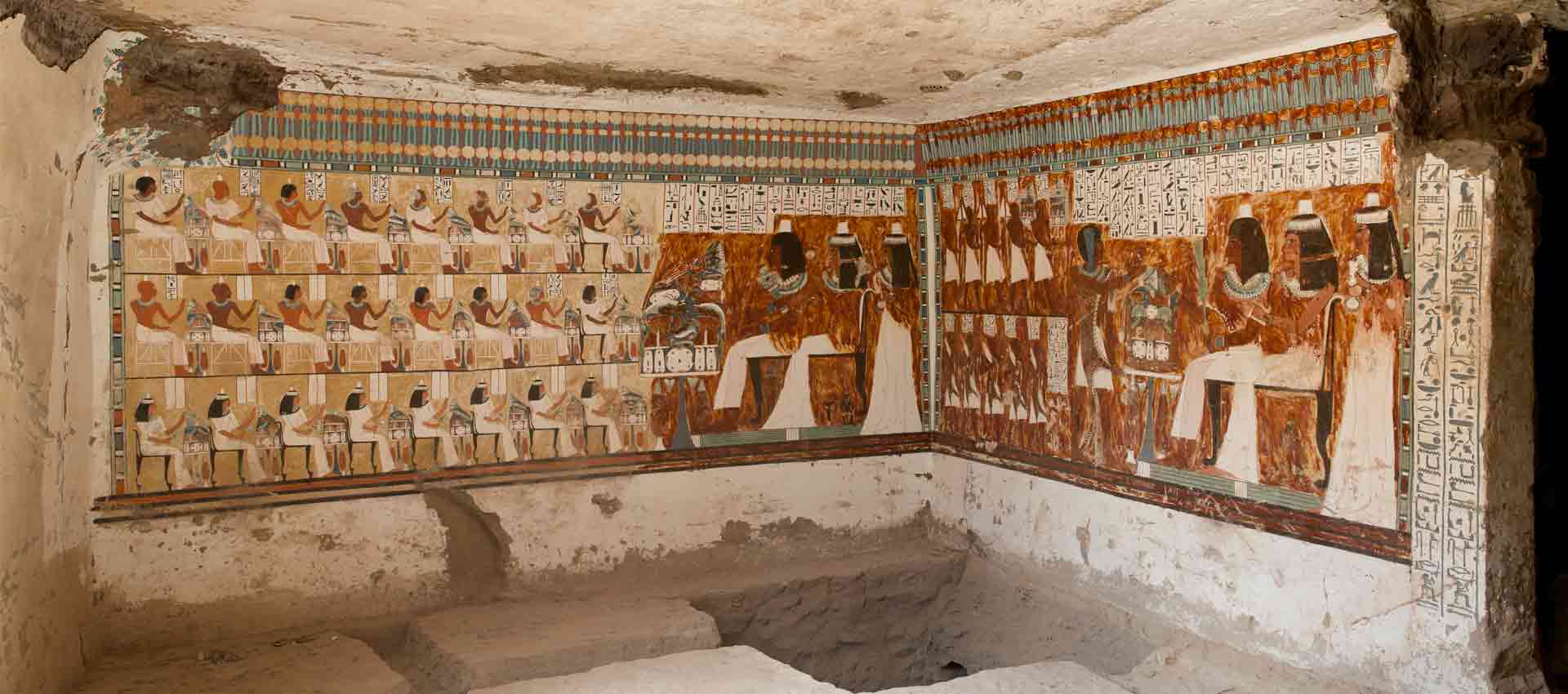
However, the works are reminiscent of Byzantine tapestries from the 7th to 9th centuries BC and of ancient Egyptian paintings. Tradition and the present merge in the threads emerging from the looms, which, as tapestries, seem to freeze time.
It can take a year for a carpet – each one unique – to be completed. Because there is so much to discover, the curators have devised treasure hunts for children of various age groups, enabling them to engage with these new Egyptian scenes in this way – and to be rewarded for their patience and attention with the most beautiful impressions.
So, where is the cat hiding that has snatched a little goose? Where is the fox that has stolen a chick and is fleeing with it across the rooftops? Where do the pigeons have their home? Come on, the Nile is just a stone’s throw away!