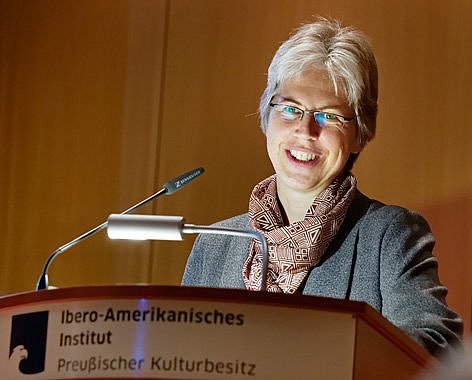
The Music Department of the Berlin State Library preserves and researches one of the world’s most significant music collections – featuring autographs by composers ranging from Bach to Beethoven and Mozart – all amidst the turbulent times of digital transformation facing libraries. Martina Rebmann has been the head of the department since 2008.
What has changed at the Berlin State Library over the last 10 years?
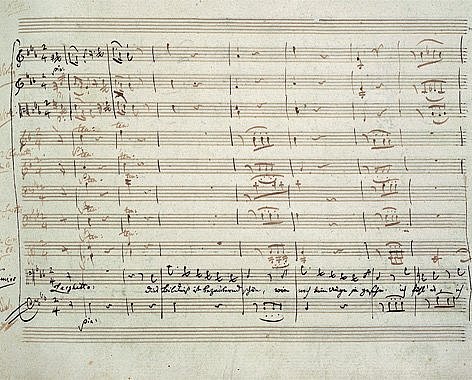
Digitisation has fundamentally transformed the world of libraries, and this has naturally been clearly evident at the Berlin State Library over the past 10 years. It is a great benefit for everyone that content and data are now more easily accessible via the internet. In the academic sphere, these are of course also research sources that can be accessed free of charge and from anywhere. But it is not only the manuscript of Beethoven’s 9th Symphony or that of Mozart’s Magic Flute, or the autographs of Bach’s musical works – around 80% of which are held at the State Library – that are now more easily accessible. Sources that are not yet the focus of attention today, but which begin to speak in connection with others, can also be made much more accessible or found much more easily. That is a fascinating development!

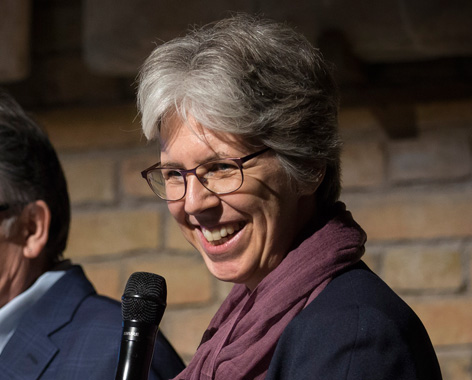
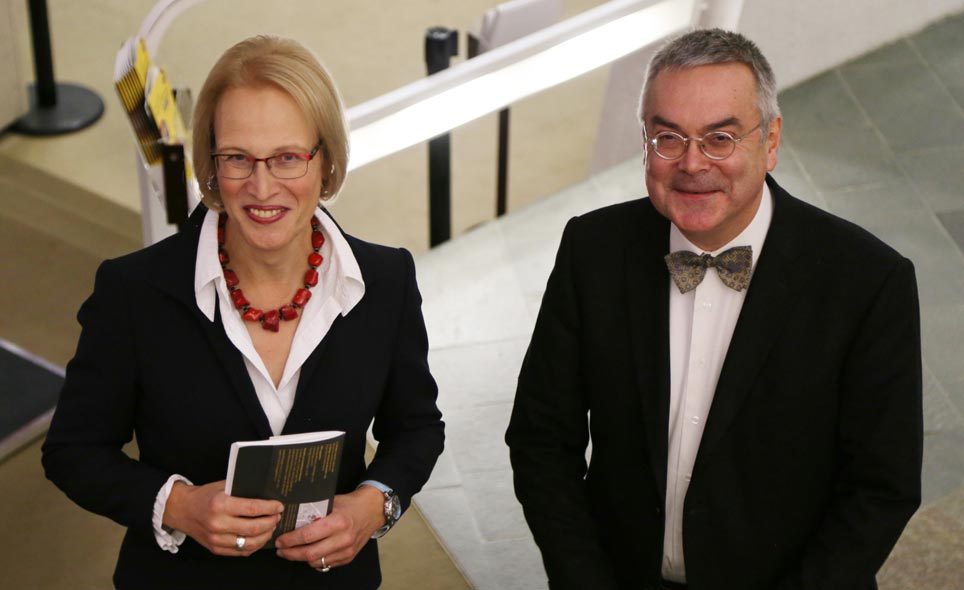
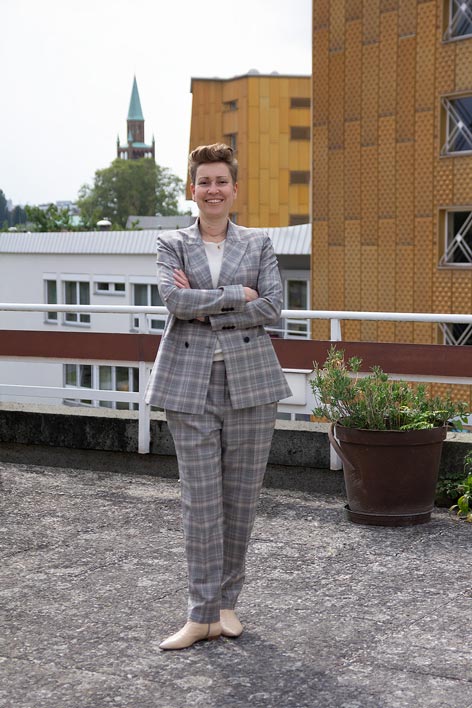
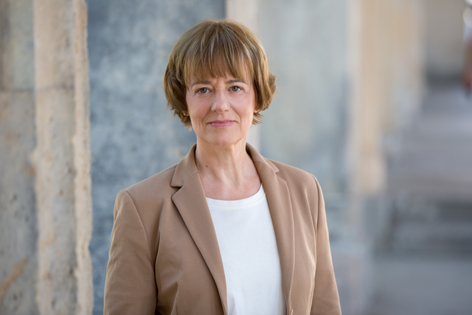
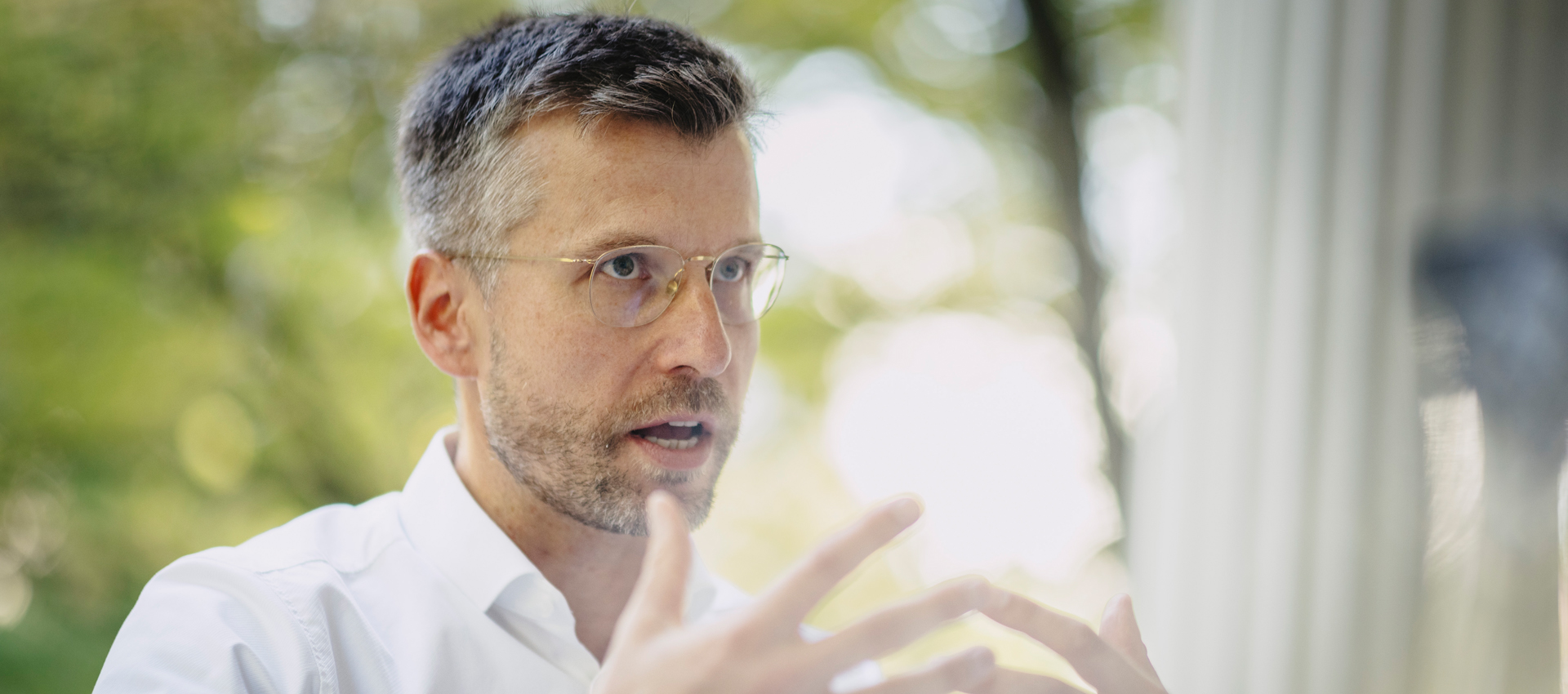
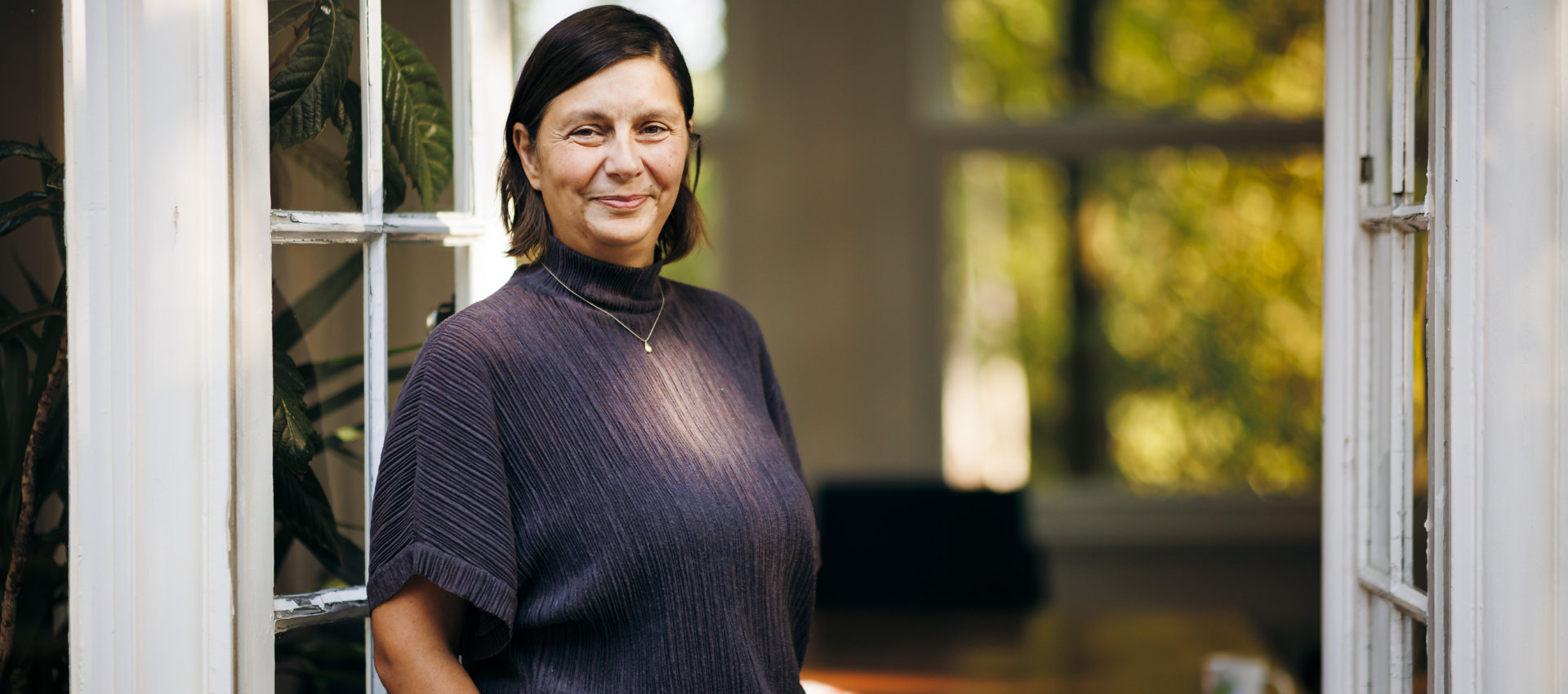
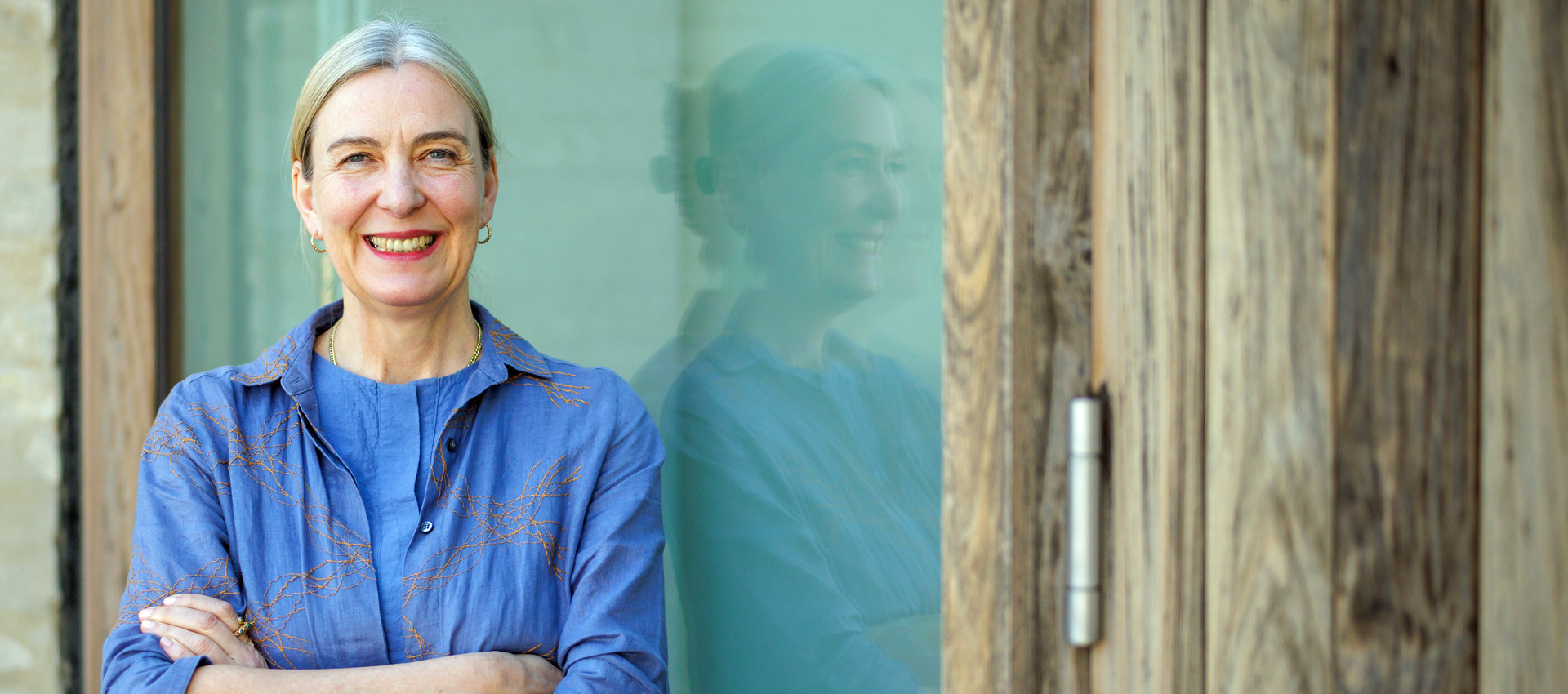
Martina Rebmann, Head of the Music Department at the Berlin State Library since 2008 © SPK/photothek.net/Florian Gärtner
Which project are you particularly proud of, and why?
In 2012, we launched a DFG-funded pilot project on the in-depth cataloguing of musical manuscripts, which will be completed this summer. Its name, ‘KoFIM’, reflects our aim in the Music Department: ‘Centre of Excellence for Research and Information in Music’. As part of the project, for example, we have examined in greater detail the handwritten scores of Luigi Cherubini, whose estate we hold, in order to establish a chronology based on the characteristics and stages of the handwriting.
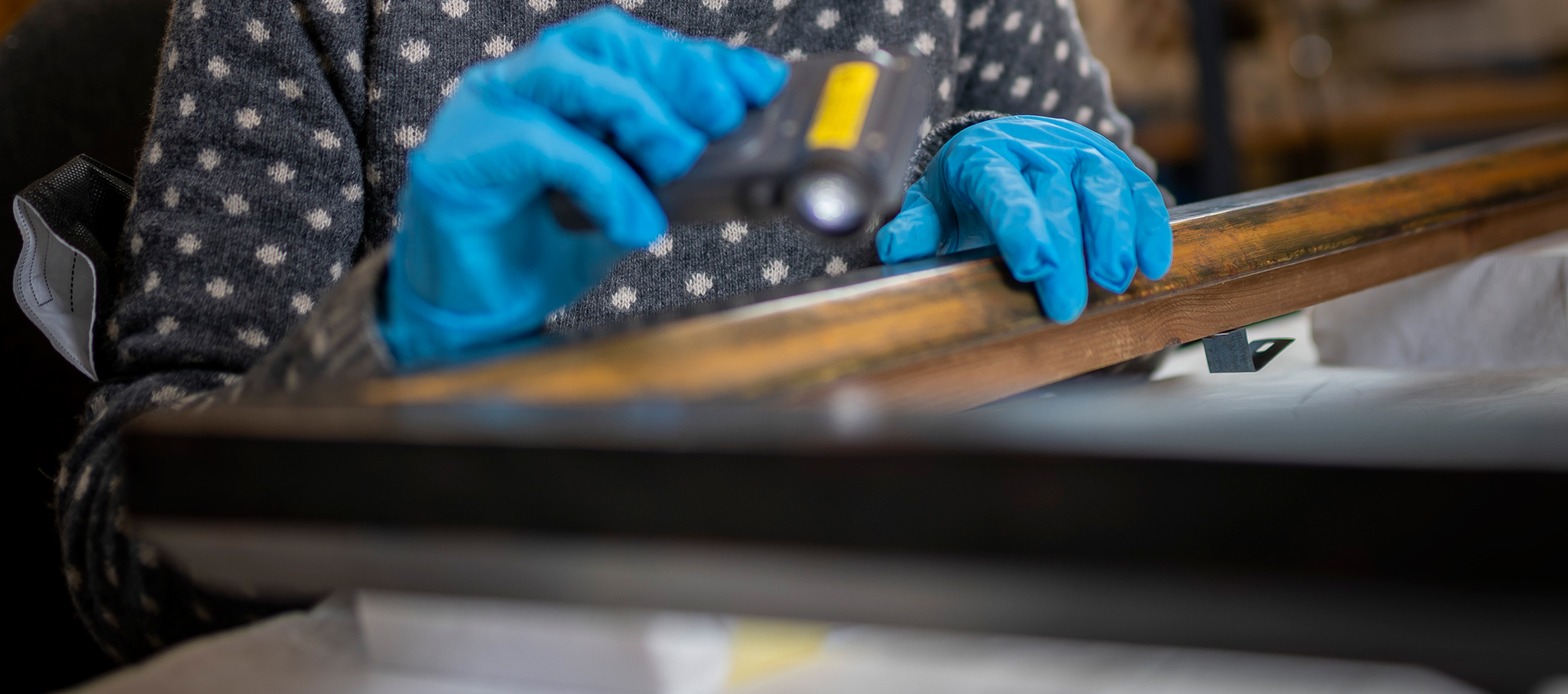
In addition to the study of handwriting stages, watermarks also played a significant role as dating features: we examined these in many thousands of music manuscripts in our collection and digitally recorded them using a thermographic camera. This has resulted in the first comprehensive database of watermarks from musical sources, which can serve as a reference for other institutions working on their own music collections: as a result, undated music manuscripts can be catalogued more effectively in future.
We have also conducted particularly in-depth research into the provenance of the music manuscripts in order to reveal lost connections or the geographical origin of sources in the collection. Other institutions have shown interest in our methods and objectives, and so many academic relationships have been established or strengthened through professional exchange.
What has been your most memorable failure?
My role also involves acquiring special collections, and in this context, personal contact with dealers, antiquarians and auctioneers (who are rarely women) is particularly important. In the very first weeks of my work here in Berlin, I therefore had many appointments in this regard; antiquarians came to the SBB, but I naturally also set out myself to visit these colleagues.
During a meeting with an antiquarian, I had unfortunately overlooked the fact that the street name in question appeared several times in Berlin – one could easily have spotted this from the postcode. So, as a newcomer to Berlin, I ended up in a completely different district and searched in vain for the address provided. When I rang the antiquarian to tell him about my mishap, I was so far away from his premises that we had to reschedule the appointment for another time.

What surprised you the most?
The fact that the State Library – and not just my department – has such a wealth of interesting collections; I was already aware of that. Even whilst studying musicology, I had used the music department of the SBB for research purposes. However, I could never have imagined that my life path would lead me to Berlin – until it actually happened. In my first few months here, there was so much new to discover that I hardly had time to ‘struggle’ with Berlin. And at some point, it became the case that, both professionally and privately – at concerts, exhibitions, or on the street – you’d bump into someone you knew. That was a good experience – and it made Berlin feel a bit smaller straight away!
Where do you see the State Library in 2028 – what should happen over the next 10 years?
Making our collections accessible begins with the digital cataloguing of our metadata – and we are currently in the process of converting 1 million index cards containing sheet music, books, libretti and sound recordings from the music department, in other words, making them available online. This magnificent project will keep me busy for the next 10 years – I am very much looking forward to the day, in a few years’ time, when we can offer researchers online access to our 500,000 printed music scores, 50,000 sound recordings, 20,000 libretti and, last but not least, the 120,000 books and journals from the Music Department.
Music Department of the Berlin State Library
The Music Department houses Germany’s largest music collection and one of the most significant in the world. It comprises autographs by important composers as well as numerous estates, deposits and the correspondence of prominent figures in the music world. Furthermore, the department is involved in national cataloguing projects and offers a large collection of specialist literature as well as services for academic research.